
How to Find Tire Diameter: Read the Sidewall in 30 Seconds
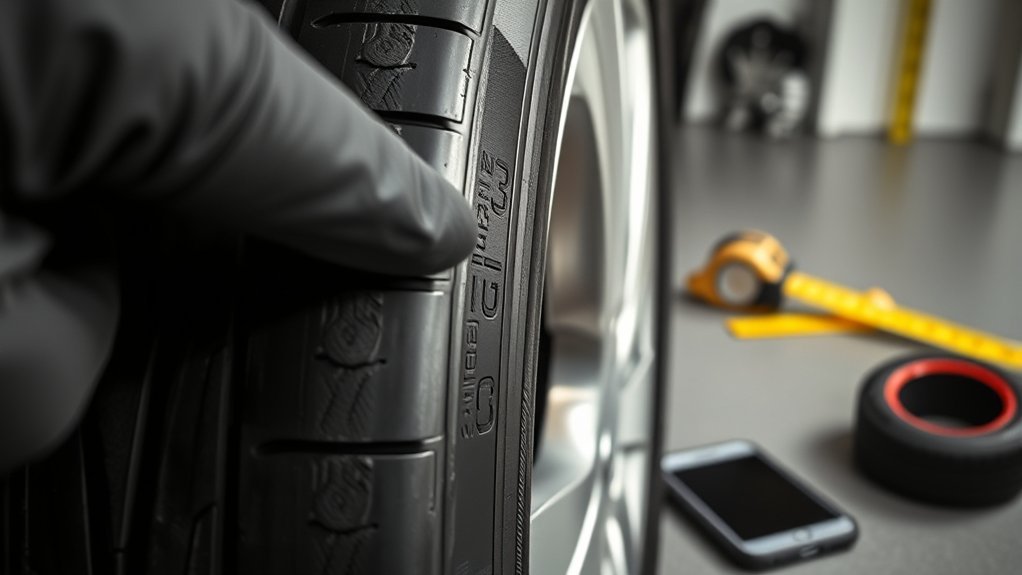
You can find tire diameter fast by checking the sidewall code, such as P225/70R16. Read left to right: 225 is the width in millimeters, 70 is the aspect ratio, and 16 is the rim diameter in inches. The 16 means wheel size, not overall tire diameter. To estimate total diameter, use sidewall height plus rim diameter. Match the size to your vehicle specs, and you’ll spot fitment, load, and age details that matter next.
Key Takeaways
- Find the tire size on the sidewall in the format width/aspect ratio R rim diameter, such as 225/70R16.
- The last number is the rim diameter in inches, not the full tire diameter.
- Calculate overall tire diameter with: (2 × sidewall height) + rim diameter.
- Sidewall height equals tire width × aspect ratio, divided by 100.
- Use the full size to match fitment, speedometer accuracy, and vehicle specifications.
How to Find Tire Size on the Sidewall
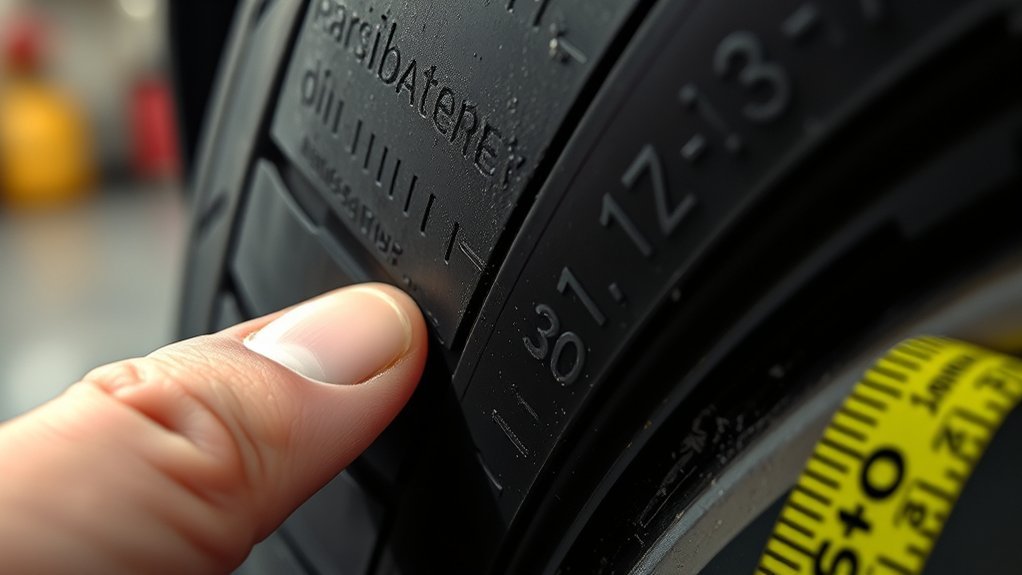
To find tire size on the sidewall, look for the stamped code that usually follows the format Width/Aspect RatioRim Diameter, such as P225/70R16. This tire size designation gives you the data you need to calculate diameter for passenger vehicles without guesswork. Read the width first; 225 means 225 millimeters across the tire from sidewall to sidewall. Next, note the aspect ratio; 70 tells you the sidewall height equals 70% of the width. The last number, 16, is the rim diameter in inches. Once you identify these values, you can calculate the tire’s overall diameter with a clear formula: Diameter = (2 × Sidewall Height) + Rim Diameter. The sidewall height comes from Width × (Aspect Ratio / 100). You don’t need extra tools—just decode the sidewall, extract each number, and use them to measure the tire precisely. Additionally, understanding all-season tire performance can help you select the right type for your driving conditions.
What the Tire Diameter Number Means
The tire diameter number is the last number in the size code and tells you the wheel diameter in inches, not the tire’s full outside diameter. When you read a tire size designation, you’re seeing the wheel diameter the tire must fit, which keeps your replacement choice precise and free. In metric tires, you estimate overall diameter by using section width and aspect ratio to get sidewall height, then adding it to the wheel diameter. For example, 225/70R16 means a 16-inch wheel, with a 225 mm section width and 70% aspect ratio. That sidewall height shapes the tire’s overall diameter, which affects speedometer accuracy, handling, and fuel efficiency. Understanding all-season tire performance helps you choose replacements that match, so you keep control and move with confidence.
The tire diameter number tells you wheel size, while sidewall height shapes your tire’s true overall diameter.
- Picture a 16-inch steel rim.
- Picture a tall black sidewall wrapping upward.
- Picture the tread tracing a larger circle.
- Picture your vehicle performance staying aligned with the fit.
How to Read Tire Size Markings
Tire size markings tell you three key things: width, aspect ratio, and rim diameter. You read them left to right on the sidewall. The first number gives tire width in millimeters; the second gives the aspect ratio as a percent; the last gives rim diameter in inches. Together, these tire size markings let you calculate overall tire diameter and choose correct tire replacement.
| Marking | Meaning | Unit |
|---|---|---|
| 225 | tire width | mm |
| 70 | aspect ratio | % |
| 16 | rim diameter | in |
Use the formula Diameter = (Width × Aspect Ratio) + (Rim Diameter × 25.4). That converts wheel size to millimeters and reveals the total size you’re working with. Reading the code this way helps you protect load capacity, preserve tire performance, and keep proper handling. When you understand the sidewall, you can fit upgrades with confidence and move on your terms. Additionally, knowing the treadwear warranty can help gauge the longevity of your tire investment.
How Width and Aspect Ratio Affect Diameter
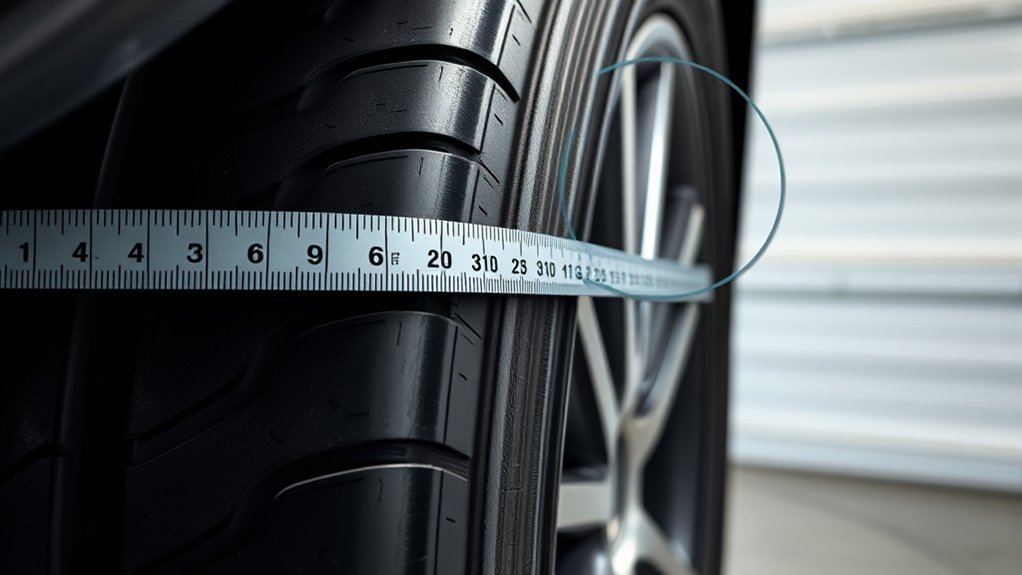
Width and aspect ratio directly shape tire diameter because they determine the sidewall height on both sides of the wheel. In metric sizing, you read the width of the tire in millimeters and the aspect ratio as a percentage of that width. The calculation formula is simple: Diameter = (Width × Aspect Ratio × 2 / 100) + Rim Diameter. That lets you compute tire diameter without guesswork.
- A 225/45R17 tire: 225 mm wide, 45% aspect ratio.
- A tire sidewall that measures 101.25 mm tall.
- Two sidewalls stacked around the wheel like rigid arcs.
- An overall tire diameter near 24.6 inches.
If you increase width to 255 mm and keep the same aspect ratio and rim diameter, your tire sidewall grows, and so does overall tire diameter. You get a larger footprint, but the math decides the height. This is crucial for tire performance characteristics, which can be impacted by changes in tire size.
Why Rim Diameter Matters for Fitment
Because the rim diameter sets the wheel size the tire must seat on, you need the correct inch measurement for a proper fit. If you match a 225/70R16 tire to anything other than a 16-inch rim, you risk improper seating, poor tire size compatibility, and compromised safety. The rim diameter also anchors the tire diameter calculation: overall diameter equals twice the sidewall height plus the rim diameter. That relationship helps you choose compatible tire sizes without guesswork. When you upgrade wheels, keep rim diameter correct so you avoid mechanical issues and preserve speedometer accuracy. The right rim diameter also shapes ride quality and vehicle handling. Larger rims usually mean lower-profile tires, which sharpen response but reduce comfort. You’re not locked into factory limits; you’re choosing a fit that supports control, durability, and freedom on the road. Precision here protects your tires, your vehicle, and your confidence. Additionally, understanding tire performance ratings can help you make informed decisions about tire upgrades and their impact on your vehicle’s performance.
Metric, LT, and Flotation Tire Sizes
Metric, LT, and flotation tire sizes use different formats, so you need to read each one correctly to confirm fitment. A metric tire shows section width, aspect ratio, and rim diameter, like 225/70R16. That means a 225 mm section width, 70% aspect ratio, and 16-inch rim diameter. You can estimate overall diameter from those numbers. LT tires use the same metric pattern, but the LT prefix marks light-truck construction and helps you judge compatibility with harder work. Flotation tires switch to inch-based sizing, like 33×12.50R15, where the first number is overall diameter and the second is width. Understanding load capacity is essential for ensuring safe performance based on your vehicle’s needs.
Decode metric, LT, and flotation sizes to match the right tire with confidence.
- Picture a sidewall stamp on a daily driver.
- Picture LT tires on a loaded van.
- Picture flotation tires under an off-road rig.
- Picture the right tire size matching your wheel.
When you decode each format, you liberate yourself from guesswork and choose the correct setup fast.
Check Load Index and Speed Rating Next
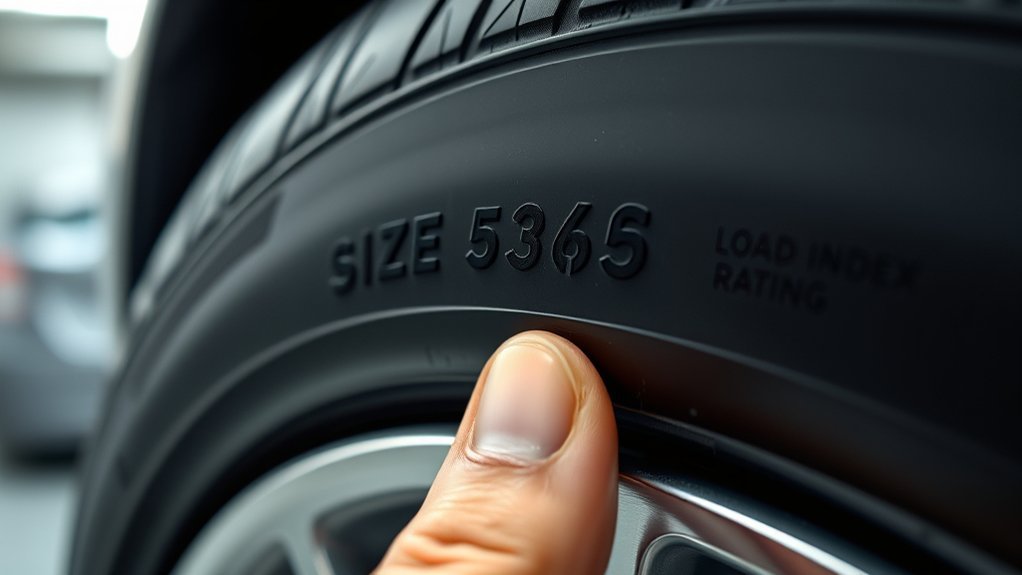
Next, read the load index on the tire sidewall to see how much weight it can support when fully inflated. Then decode the speed rating letter to confirm the tire’s maximum safe operating speed. You should match or exceed both ratings to keep the tire aligned with your vehicle’s load and performance requirements. Additionally, ensure the tire’s 380AA UTQG rating reflects a balance of durability and traction for optimal performance.
Read Load Index
The tire’s load index tells you how much weight it can safely carry when properly inflated; it’s a numerical code on the sidewall, usually ranging from 1 to 150. You’ll find it on the tire sidewall beside the size code. Read the load index to confirm the maximum load your tire supports, because matching weight capacity protects performance and keeps you free from overload stress. For example, 91 means 1,356 pounds (615 kg). Use this number when selecting the right tire for your vehicle and driving demands.
- Picture a sidewall stamp.
- See a small numeric load index.
- Match it to your vehicle’s weight.
- Choose a tire built for real-world demands.
Load index pairs with speed ratings, but don’t decode those letters yet.
Decode Speed Rating
Once you’ve checked the load index, read the speed rating beside it to see how fast the tire can safely run at its rated load. The speed rating letter on the tire sidewall tells you the tire’s maximum sustained speed under proper inflation and maximum weight. For example, L starts at 75 mph, while Y reaches 186 mph or more. When you’re decoding tires, pair the load index and speed rating as load ratings, not guesses. A mark like 94W means the tire supports 1,477 lbs and can run to 168 mph. Those tire specifications help you verify safety standards and preserve vehicle performance. Read both values exactly, because the sidewall encodes limits that matter every mile.
Match Ratings To Vehicle
Compare the tire’s load index and speed rating against your vehicle’s required specs before you buy or install it. Check the sidewall for the load rating and speed rating, then verify them in your owner’s manual or doorjamb placard. A load index like 91 supports 1,356 pounds; higher numbers carry more maximum weight. A W speed rating allows 168 mph, so it fits stronger performance needs. Match both values to your vehicle’s specifications for safe compatibility with tire diameter, suspension, and brakes. If you upgrade above stock, confirm the system can handle it.
- Read the sidewall code.
- Compare load index to load rating.
- Match speed rating to driving demands.
- Confirm compatibility before you roll.
Use the DOT Code to Check Tire Age
Locate the DOT code on at least one tire sidewall, since it includes the tire identification number and manufacturing date. Read the last four digits to decode the week and year of manufacture, such as 2524 for the 25th week of 2024. If the tire’s over six years old, inspect it closely for degradation, and replace it if it’s over ten years old. Regularly checking your tire age can help ensure proper tire maintenance and enhance safety during commutes.
Locate The DOT Code
Check the DOT code on the tire’s sidewall to verify its age and manufacturing details. You’ll find the complete DOT code on at least one sidewall, stamped in a compact mix of letters and numbers. That mark tells you the tire age, the maker, and other manufacturing details you need for inspection. Look for it before you trust tread depth alone, because rubber compounds can degrade even when the tread still looks serviceable.
- Run your hand along the sidewall edge.
- Spot the DOT code near the rim.
- Read the full code block clearly.
- Inspect for wear, cracking, and degradation.
Tires over five years old deserve closer inspection; tires over ten years old usually fail safety limits. Check every tire, stay informed, and keep control of your movement.
Decode Week And Year
The DOT code ends with a four-digit date stamp that tells you when the tire was made: the first two digits are the production week, and the last two are the year, so 2524 means the 25th week of 2024. Read those first two digits as the week and the last two digits as the year to identify the manufacturing date fast. This gives you tire age at a glance and lets you judge safety and performance without guesswork. If the tire is more than six years old, inspect it for wear and degradation. If it’s over ten years old, treat it as unsafe, even if tread remains. When you buy used tires, check the DOT code and reject anything too old.
Check Tire Age Safely
Because tire rubber degrades with age, you should verify the DOT code on at least one sidewall before use. Read the four-digit tire age stamp: the first two digits show the week, and the last two show the manufacturing date year. A code like 2524 means week 25 of 2024.
- Spot the DOT code near the bead, clean and legible.
- Compare the manufacturing date to today’s date.
- Inspect tires over five years old for cracking, hardening, or bulges.
- Reject tires over ten years old; their rubber compounds can’t deliver maximum safety.
When buying new tires, check they’re less than six months old. That quick inspection protects performance, reduces degradation, and keeps you in control.
Spot Winter and Special Tire Symbols
Look for special sidewall markings to identify tires built for specific conditions or vehicles. On the tire sidewall, M+S means Mud and Snow, so you know the tire’s tread is aimed at better mud and light-snow use. The three-peak mountain snowflake symbol goes further; it certifies snow traction performance for severe winter service. If you need higher load capacity, check for XL or Reinforced, which tell you the casing can carry more stress. OE markings, including brand-specific codes like Porsche fitment, show the tire was engineered for a particular vehicle model, not generic use. You’ll also see directional tread patterns or asymmetric designs labeled with inside or outside indicators, and those tire symbols matter because they control how the tread meets the road. Additionally, consider the stud design of winter tires, as it can significantly enhance traction on icy surfaces. Read them before mounting. Ignore them, and you give up the tire’s intended performance, stability, and control.
When to Replace Tires
Replace tires when the tread reaches 1.6 mm (2/32 inch), since that’s the legal minimum in many regions and a point where wet traction drops sharply. You can’t negotiate with physics: below this tread depth, braking distance grows and control fades. Monitor tread depth with a gauge, and replace tires before you hit the legal limit.
- A coin-thin groove with no grip.
- Sidewall cracks catching light.
- A bulge that hints at failure.
- Feathered edges showing uneven wear patterns.
Check tire pressure monthly; low pressure can cause uneven wear and force earlier replacement. Inspect for visible signs of wear, punctures, and cuts that compromise safety. Also track the tire’s age: rubber degrades after 10 years, even if the tread looks fine. If you want freedom on the road, keep your tires honest, and don’t wait for a blowout to decide. Consider the importance of selecting the right winter tires for enhanced safety and performance in cold conditions.
Frequently Asked Questions
How to Read Tire Size From Sidewall?
You read tire size on the sidewall by decoding each mark: tire type, tire width, aspect ratio, rim diameter, load index, and speed rating. For example, P225/70R16 91T means a passenger tire, 225 mm width, 70% aspect ratio, 16-inch rim diameter, 91 load index, and T speed rating. Check sidewall height to estimate diameter, and use the DOT code for production details and tread pattern verification.
How to Calculate a Tire Diameter?
You calculate tire diameter by turning the sidewall code into inches: convert section width, multiply by aspect ratio for sidewall height, double it, then add rim diameter. For 225/45R17, you’d get about 25 inches. Verify the theory by checking tire measurement methods, understanding tire specifications, and the impact of tire diameter. Account for tire pressure considerations, seasonal tire changes, tire tread depth, choosing the right tires, tire maintenance tips, and effects of tire wear.
What Is the 7 7 Rule for Tires?
The 7 7 rule says you should replace tires at seven years old and inspect them every seven months. You check the DOT code on the sidewall for age, then assess tire wear, tread depth, sidewall height, aspect ratio, load index, speed rating, tire pressure, seasonal tires, and tire rotation. This keeps you free from preventable blowouts and performance loss. Always follow your owner’s manual for exact intervals.
Are Tires Measured in Seconds?
No, you don’t measure tires in seconds; you measure them by Tire measurement methods, reading Sidewall markings for width, aspect ratio, and rim size. That Diameter significance affects fit, handling, and Tire performance factors. Inflation impacts, Tread depth, Seasonal variations, and Tire lifespan all matter. Use Maintenance tips to keep specs accurate, and convert markings to calculate diameter precisely. You’ll choose better tires when you trust the numbers, not the clock.
Conclusion
Reading your tire’s sidewall is like decoding a road map: the diameter, width, and aspect ratio all point you to the right fit. When you match the rim diameter, check the load index, speed rating, and DOT date, you protect your vehicle from imbalance and wear. Don’t ignore winter symbols or tread age. If the numbers no longer align with your driving needs, it’s time to replace the tire and stay safely grounded.

Related Articles
How to Determine Tire Diameter: Easy Calculation & Reading Guide
How to determine tire diameter from sidewall numbers and a simple formula, then discover the stock-size checks that can save your fitment.
Read More
How to Calculate Tire Diameter: Formula & Easy Guide
How to calculate tire diameter with a simple formula, and discover the quick check that could change your fit, handling, and speedometer accuracy.
Read More
DIY Tire Swing: How to Build One Safely at Home
Making a DIY tire swing safely at home means choosing the right tire, hardware, and tree limb—before you hang it, learn the crucial steps.
Read More