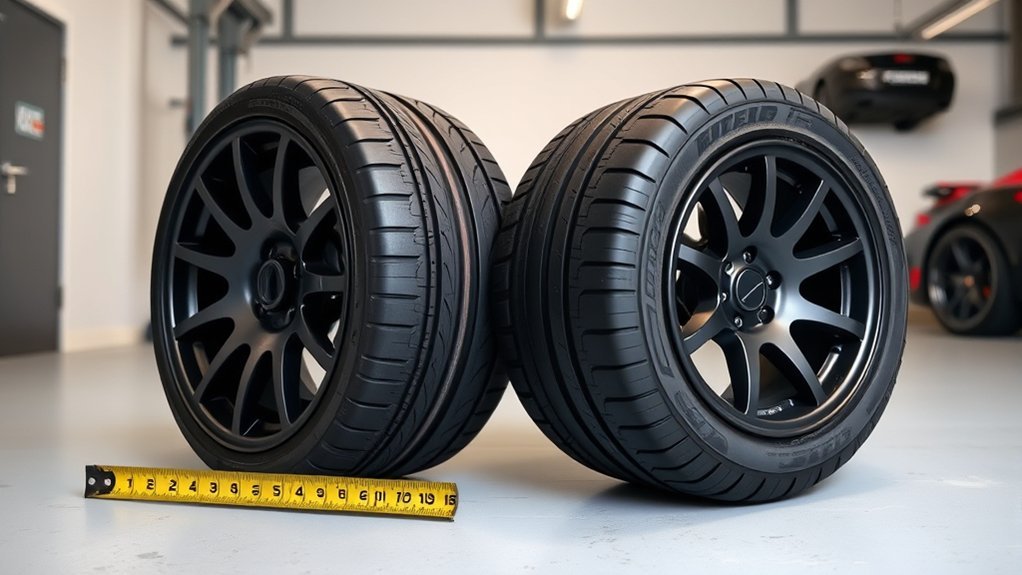
Comparing 265 vs 285 tires is not as simple as choosing a tire that is 20 mm wider. The first number is the tire’s nominal section width, while the aspect ratio, wheel diameter, construction, load rating, and actual tire model determine the rest of the fit. Your best choice depends on approved fitment, available clearance, road conditions, and the driving characteristics you value most.
Quick Answer
For most stock daily drivers, keep the manufacturer-approved 265 size unless a 285 is an approved alternative. A 285 is nominally 20 mm wider, but it is not automatically taller or better. Compare the full size code, wheel-width range, load index, clearance, and overall diameter before changing sizes.
265 vs 285 Tires: Key Differences at a Glance
Key Takeaways
- A 285 tire is nominally 20 mm, or about 0.79 inch, wider than a 265 tire.
- Overall diameter cannot be determined from 265 or 285 alone; you must compare the full tire size.
- A properly matched 285 can favor dry-road stability and lateral grip, while a 265 can favor efficiency and deep-snow performance.
- Wheel width, offset, suspension travel, load capacity, and fender clearance must all be checked before upsizing.
- Speedometer error comes from a change in rolling circumference, not from tire width by itself.
| Factor | 265 Tire | 285 Tire |
|---|---|---|
| Nominal section width | 265 mm | 285 mm |
| Typical road feel | Lighter, often more efficient | Broader footprint and planted feel |
| Deep snow | Narrower footprint can cut through more easily | Width can work against it in deep snow |
| Fitment | Usually easier when factory specified | Needs more lateral clearance |
| Speedometer effect | Depends on overall diameter | Depends on overall diameter |
What’s the Difference Between 265 and 285 Tires?
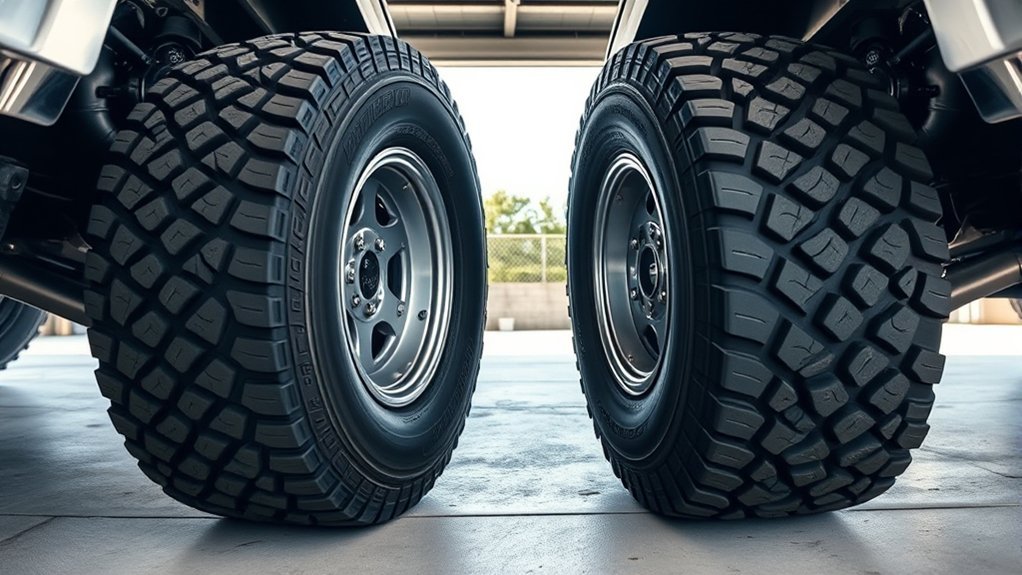
The basic difference is nominal section width. According to Michelin’s tire-marking guide, the first number in a metric tire size is the nominal section width in millimeters. That makes a 285 tire 20 mm, or about 0.79 inch, wider by designation than a 265 tire.
A 285 tire is nominally 20 mm wider than a 265, but the full size code determines its height and overall fit.
Do not treat 265 and 285 as complete tire sizes. For example, the “70” in 265/70R17 means the sidewall height is 70% of the section width, while “17” is the wheel diameter in inches. Changing any of those values changes the tire’s overall dimensions.
A 285 also does not guarantee a proportional increase in the total area touching the road. Tire load, inflation pressure, construction, tread design, and dimensions all influence the contact patch. Experimental research on tire contact area confirms that pressure and load are major factors.
What a wider tire clearly changes is the shape and width of the footprint. With comparable tire construction and a properly matched wheel, that can improve lateral stability and dry-road response. Compound and tread design still matter more than the width number alone in many real-world comparisons.
Will 285 Tires Fit Your Vehicle?
A 285 tire fits only if the complete size is compatible with your wheels and vehicle. You need enough space at the suspension, inner wheel well, fender, and body throughout the full steering and suspension range.
Start with the factory tire placard and owner’s manual. Michelin recommends using the manufacturer-specified tire size or an approved alternative and warns against choosing a smaller or lower-capacity replacement.
Check the following before buying:
- Approved tire sizes for your exact vehicle and trim
- The tire manufacturer’s permitted wheel-width range
- Wheel offset and backspacing
- Inner clearance to struts, control arms, sway bars, and brake components
- Outer clearance to fenders and liners
- Clearance at full steering lock
- Clearance during full suspension compression and rebound
- Overall tire diameter and rolling circumference
- Load index and speed rating
The load rating matters independently of width. A wider tire is not automatically rated to carry more weight. Michelin’s load-rating guidance says replacement tires should meet the vehicle’s required load capacity.
Warning: A tire that clears while the vehicle is parked can still rub during hard steering, braking, suspension compression, or when carrying a load. Verify dynamic clearance before treating a 285 conversion as safe.
Wheel offset is especially important. Moving the wheel outward may improve inner suspension clearance but reduce fender clearance. Moving it inward does the opposite. A lift or leveling kit also does not automatically solve every rubbing problem because steering geometry and wheel offset remain factors.
Products Worth Considering

Monitor tire tread wear with a smart, color-coded depth gauge that shows clear condition ranges at a glance. The bar is range marked for fast, easy readings, helping you maintain safer traction and performance. Each gauge is portable with a pocket clip, and the set includes 20 units for daily use and sharing.

The Continental Grand Prix 5000 is an allround road bike tire engineered for faster rolling, improved ride comfort, and enhanced puncture protection. It features a Vectran Breaker cut-protection layer, Lazer Grip micro-profile tread for confident cornering control, and Active Comfort Technology to damp vibration for smoother rides. BlackChili compound optimizes grip and speed for everyday performance and long-lasting confidence.
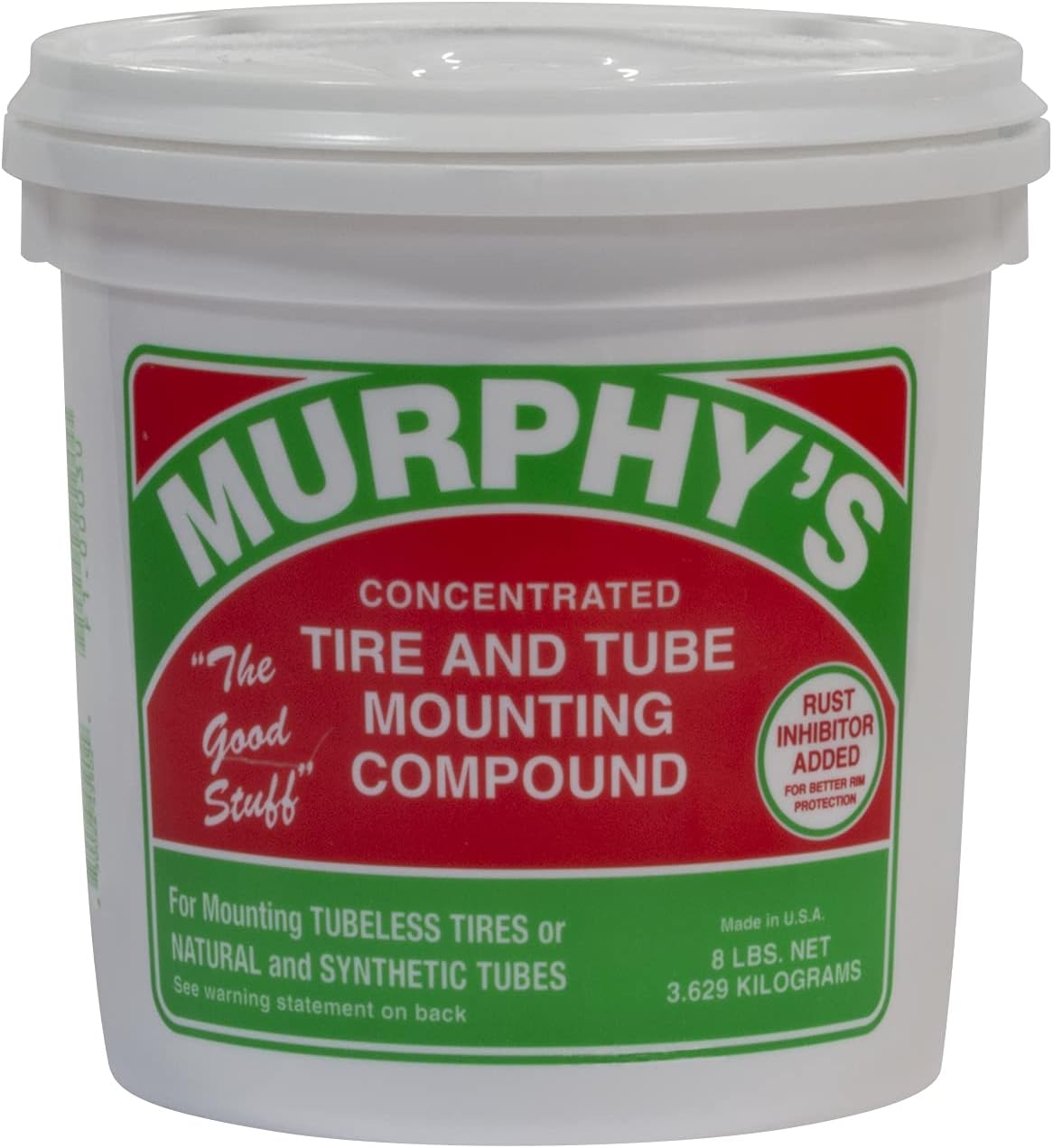
A concentrated tire and tube mounting compound designed to help simplify mounting rubber tires and tubes on passenger, semi truck, construction, and OTR applications. Its ultra-thick formula packs beads effectively and includes rust inhibitors to help protect against corrosion during use.
How Do 265 Vs 285 Tires Affect Handling?
Handling can change when you move between 265 and 285 tires, but width alone does not predict the result. Tire weight, wheel width, sidewall construction, tread compound, pressure, and overall diameter can all change steering response and grip.
In comparable tire models, a 285 gives you a wider footprint and can feel more planted. A 265 is usually lighter and may require less steering effort, especially on vehicles originally designed around the narrower size.
Steering Response
A 265 may feel lighter and more immediate in everyday driving, while a heavier 285 can add steering effort and make the vehicle follow road grooves more noticeably. However, a wider tire mounted on a wheel that supports it properly can still deliver sharp response.
| Tire Size | Typical Steering Response |
|---|---|
| 265 | Often lighter and easier to turn |
| 285 | Can feel heavier but more planted |
| Both | Depends strongly on wheel width, construction, and pressure |
Do not assume that wider always means slower steering. A poorly supported wide tire on a narrow wheel can flex more, while the correct wheel width can keep the sidewall better supported. Compare the wheel-width requirements of the exact tire you plan to use.
Cornering Grip
A 285 can provide stronger dry-road cornering potential when you compare similar tires on suitable wheels. The wider footprint can improve lateral stability and help a performance-oriented tire manage cornering forces.
Continental’s wide-versus-narrow tire guidance similarly identifies dry performance and stability as common advantages of wider tires.
Still, width is only one variable. A high-quality 265 with a stronger compound and tread design can outperform a less capable 285. Inflation pressure, alignment, temperature, road surface, and vehicle setup also affect the result.
Wet conditions change the priorities. A narrower footprint can move through standing water more easily in some situations, while tread grooves and compound have a major effect on water evacuation and wet braking.
Which Tire Size Improves Traction More?
Neither width wins every traction test. A properly matched 285 often favors dry-road lateral grip and flotation on soft surfaces, while a 265 can work better in deep snow, slush, or conditions where cutting through a loose layer is useful.
| Factor | 265 Tire | 285 Tire |
|---|---|---|
| Footprint shape | Narrower | Wider |
| Dry-road grip potential | Good | Often stronger with comparable tires |
| Deep snow | Can cut through more easily | Can float more on top |
| Soft sand | Less flotation | More flotation potential |
Off-road traction is especially dependent on terrain. Wider tires can be useful on sand because the broader footprint helps spread load. In mud or deep snow, a narrower tire may reach firmer material more effectively.
On rocks and trails, tread compound, carcass strength, pressure, and tread pattern can matter more than whether the sidewall says 265 or 285. Choose the tire category for the terrain first, then compare widths that your vehicle can safely support.
How Do 265 Vs 285 Tires Affect Fuel Economy?
A 285 can reduce fuel economy compared with a similar 265, but there is no universal MPG penalty. The outcome depends on tire weight, rolling resistance, tread pattern, inflation pressure, overall diameter, aerodynamics, and driving conditions.
Wider tires can create more aerodynamic drag, and many 285 truck tires are heavier than their 265 counterparts. Aggressive all-terrain or mud-terrain tread can add another efficiency penalty.
Rolling resistance also varies substantially between tire designs. Michelin’s fuel-economy guidance notes that underinflation increases rolling resistance and that low-rolling-resistance tire designs can reduce the energy needed to keep a vehicle moving.
- Compare the actual weight of the two tire models, not width alone.
- Use the vehicle or tire professional’s approved pressure for the new setup.
- Correct any speedometer or odometer error before comparing calculated MPG.
- Keep alignment within specification to avoid unnecessary drag and wear.
If efficiency is your main goal, the lighter and manufacturer-approved option is usually the safer choice. A 285 makes more sense when its traction, appearance, flotation, or load-related characteristics justify the tradeoff.
Do 285 Tires Ride Rougher Than 265 Tires?
Not necessarily. Tire width by itself does not determine ride quality. Sidewall height, carcass stiffness, load range, pressure, tread construction, wheel weight, and suspension tuning can matter more.
Width alone does not tell you whether a 285 will ride harsher or softer than a 265.
If the aspect ratio and wheel diameter stay the same, a 285 actually has a taller nominal sidewall than a 265. For example, a 285/70R17 has a taller sidewall than a 265/70R17 because 70% of 285 is greater than 70% of 265.
That does not guarantee a softer ride. Many 285 sizes are sold in heavier light-truck constructions or higher load ranges, and a stiffer casing can transmit more impact harshness even when the sidewall is taller.
If you switch to a 285 with a lower aspect ratio, the sidewall may instead become similar in height or shorter. That is why you should compare the complete size and exact tire specifications rather than width alone.
Road noise follows the same rule. A wider tire can produce more noise, but tread pattern, block spacing, compound, vehicle insulation, and uneven wear often have a larger influence.
How Does Tire Width Change Speedometer Readings?
Tire width alone does not change speedometer readings. The important measurement is rolling circumference, which is closely related to overall tire diameter.
A 285 can be taller, shorter, or nearly the same diameter as a 265 depending on the aspect ratio and wheel diameter. That means you must compare complete sizes such as 265/70R17 and 285/70R17, not simply 265 and 285.
Tire Diameter Effects
The tire-size code lets you estimate nominal diameter. Sidewall height equals section width multiplied by the aspect ratio, and the tire has one sidewall above and one below the wheel.
For example, comparing 265/70R17 with 285/70R17:
- 265/70R17 has a nominal sidewall height of 185.5 mm.
- 285/70R17 has a nominal sidewall height of 199.5 mm.
- The 285 therefore gains about 28 mm, or 1.10 inches, in nominal overall diameter.
- That is roughly a 3.5% diameter increase.
Those values describe nominal geometry. Actual mounted dimensions vary somewhat by tire model, wheel width, construction, load, and pressure.
Speedometer Calibration Changes
If overall diameter increases, the vehicle travels farther for each wheel revolution. A speedometer calibrated for the smaller tire can then show a lower speed than the vehicle is actually traveling.
Using the nominal 265/70R17-to-285/70R17 example above, the diameter increase is about 3.5%. An indicated 60 mph would therefore correspond to roughly 62.1 mph if the vehicle’s calibration did not compensate for the change.
A smaller overall diameter has the opposite effect: the wheels make more revolutions over the same road distance, so the indicated speed tends to be higher relative to actual road speed.
The same circumference difference can affect odometer readings and may matter to systems that use wheel-speed data. Depending on the vehicle, recalibration may be available through factory programming, an appropriate scan tool, or another manufacturer-supported method.
Real-World Speed Difference
The real-world difference depends on the two complete tire sizes. Switching to a 285 does not automatically create a speedometer error because you can pair a wider section width with a different aspect ratio or wheel diameter and keep the overall diameter close to stock.
- Larger rolling circumference generally makes actual speed higher than the uncorrected indicated speed.
- Smaller rolling circumference generally makes actual speed lower than the indicated speed.
- Similar rolling circumference produces little change even if section width is different.
Compare the manufacturer-published dimensions for the exact tires before installation. That is more useful than assuming every 285 behaves the same way.
Which Tire Size Is Better for Your Driving Style?
A 265 usually makes more sense if you prioritize factory-like steering, efficiency, easier fitment, and winter performance. A 285 can suit drivers who want a wider footprint, more dry-road stability, extra flotation on soft terrain, or a wider stance and have confirmed that the size fits safely.
| Tire Size | Best Fit |
|---|---|
| 265 | Daily commuting, efficiency, easier factory fitment |
| 285 | Dry-road stability, wider stance, sand and selected off-road use |
| 265 | Often preferable for deep snow when an approved winter size is available |
For highway and city driving, staying with an approved factory size avoids introducing unnecessary clearance and calibration questions. For off-road use, think about the surface instead of simply choosing the widest option.
In winter, tire type is more important than the 20 mm width difference. A dedicated winter tire with the correct compound and tread can deliver much more useful cold-weather traction than choosing between two otherwise unsuitable tires based on width alone.
Products Worth Considering

The Chemical Guys Gerbil Wheel & Rim Brush is designed to safely clean wheels, rims, exhaust tips, tires, and engine bay components without scratching delicate finishes. Its soft natural bristles help lift brake dust, grime, and buildup while conforming to tight spaces and intricate contours. A comfort grip handle delivers control for extended detailing sessions.

This car D-wheel lock nut key provides an anti-theft solution for D-shaped wheel lock bolts, helping keep your wheels secure. It features a flower-shaped internal pattern that resists micro-adjustment theft while allowing removal and mounting of compatible locking nuts. Made for reliable performance under high torque, it’s easy to use with standard socket wrench turning for quick tire maintenance and emergency repairs.

Measure tire tread depth quickly and accurately with this LUMITECO dial gauge that reads in 1/32" increments up to 14/32". The color-coded green/yellow/red zones make it easy to judge tire wear and know when replacement is needed. A rugged, compact design with a protective pouch helps keep the gauge ready for use on cars, trucks, motorcycles, and more.
How To Choose Between 265 And 285 Tires?
Choose between 265 and 285 tires by checking compatibility first and performance preferences second. If a 285 fails the vehicle’s clearance, wheel, load, or manufacturer requirements, its potential grip benefits do not make it a suitable upgrade.
Fitment comes first: compare the full tire size, approved wheel range, clearance, load capacity, and overall diameter.
- Check the factory specification. Read the tire placard and owner’s manual for approved sizes, pressure, and load requirements.
- Compare complete tire sizes. Do not compare only the 265 and 285 width numbers.
- Verify the wheel-width range. Make sure the exact tire is approved for your wheel width.
- Compare overall diameter. Determine whether the change affects clearance, gearing, odometer, or speedometer accuracy.
- Check offset and physical clearance. Inspect the inner suspension side and outer fender side at full lock and through suspension travel.
- Match load capacity. The replacement must meet the vehicle’s load requirements.
- Choose for your terrain. Favor the characteristics that suit pavement, snow, sand, mud, towing, or other regular use.
If your vehicle is stock and you mainly drive on pavement, the manufacturer-approved 265 is often the simpler option. A 285 is most useful when you have a specific reason for the extra width and have verified the complete fitment.
Products Worth Considering

This manual duck head tire changer kit makes tire installation and removal simpler by letting you embed the duck head into the tire with applied pressure. The integrated design and durable steel construction help reduce friction and improve efficiency and safety during use. Suitable for 16–21 inch wheels, it’s convenient for cars, trucks, SUVs, and ATV tires, with 24-hour after-sales support.

Keep your tires properly inflated with this analog VONDIOR tire pressure gauge, designed for fast, easy readings without batteries. The swiveling, two-axis hose and large glow dial help you measure at any tire angle with instant visibility. Built with a protective rubber shield, it supports durable, low-maintenance use for cars and trucks.

This professional wheel and rim brush kit makes it easy to lift brake dust, grime, and dirt from wheels and tires without scratching finishes. The brushes feature soft, metal-free wool heads and a flexible 360-degree rim brush design for reaching hard-to-clean areas. Includes multiple brush types plus accessories for thorough car, motorcycle, and general vehicle detailing.
Frequently Asked Questions
Can I Mix 265 and 285 Tires on the Same Vehicle?
Generally, no. Use matching tire sizes unless the vehicle manufacturer specifies a staggered setup with different front and rear sizes. Mixing rolling diameters can change handling and can interfere with ABS, stability-control, or AWD systems.
Do 285 Tires Cost More Than 265 Tires?
Often, but not always. Price depends on the tire model, construction, load range, wheel diameter, availability, and brand as well as width. Compare the exact 265 and 285 sizes you are considering instead of assuming every wider tire costs more.
Are 265 Tires Better for Winter Driving?
They can be better in deep snow when both sizes are suitable for the vehicle because a narrower footprint can cut through snow more easily. However, winter-tire compound, tread pattern, tread depth, and correct inflation matter more than the 265-versus-285 label alone.
Will Wider Tires Increase Road Noise?
They can, but width alone does not determine road noise. Tread pattern, compound, tire construction, pavement texture, inflation pressure, and uneven wear can all have a larger effect. Compare noise ratings or tests for the exact tire models whenever possible.
How Often Should I Rotate 265 or 285 Tires?
Follow your vehicle manufacturer’s rotation schedule first. As general guidance, Michelin recommends rotation about every 5,000–7,000 miles when the vehicle maker does not specify otherwise. Staggered or directional tire setups may limit which rotation patterns are possible.
Conclusion
The main difference between 265 and 285 tires is a nominal 20 mm increase in section width, but that number does not tell you the whole story. A 285 can provide a wider, more planted footprint, while a 265 often favors easier fitment, lower weight, efficiency, and deep-snow performance. Compare the complete size, wheel requirements, load rating, overall diameter, and actual clearance before making the swap.
Sources
- Michelin — Tire Markings Explained: Supports section-width, aspect-ratio, and wheel-diameter definitions.
- Michelin — Changing Tire Size or Specifications: Supports replacement-size, load-capacity, and tire-mixing guidance.
- Michelin — Tire Load and Speed Ratings: Supports load-rating requirements.
- Continental — Wide Tires vs. Narrow Tires: Supports dry, winter, efficiency, clearance, and handling tradeoffs.
- Procedia Engineering — Experimental Studies of Tire Contact Area: Supports the influence of load and inflation pressure on tire contact area.
- Michelin — Driving for Fuel Economy: Supports the relationship between inflation, rolling resistance, and fuel use.
- Michelin — Tire Rotation: Supports the general tire-rotation interval and manufacturer-first guidance.