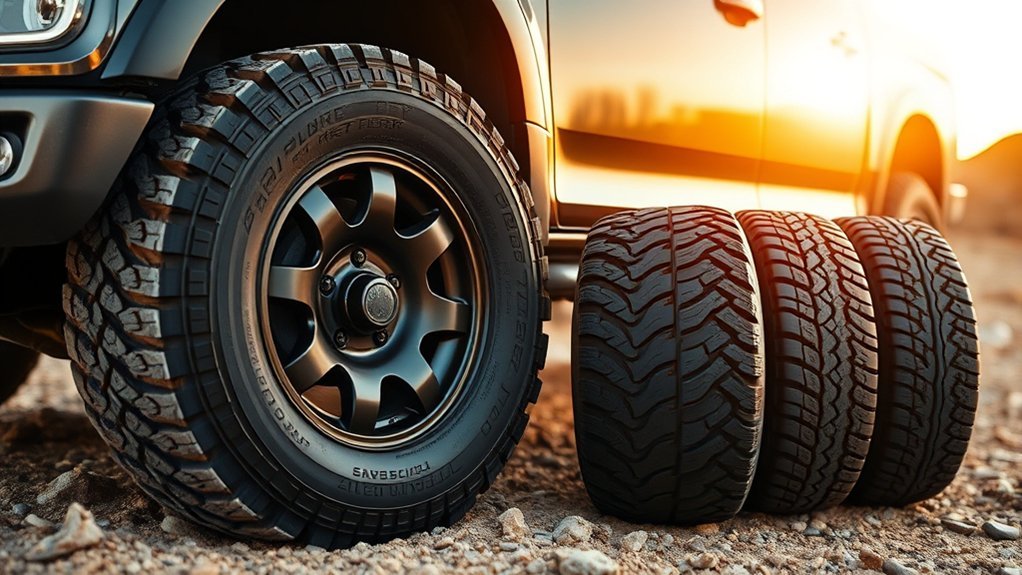
An R/T tire, also written as an RT tire, means rugged-terrain tire. It is built for drivers who want more off-road bite than a typical all-terrain tire without moving all the way to the noise, weight, and rougher road manners of a mud-terrain tire. If your truck, Jeep, or SUV spends time on pavement, gravel, dirt roads, job sites, and weekend trails, an R/T tire can be a smart middle-ground choice.
Quick Answer
An R/T tire is a rugged-terrain tire that blends all-terrain road comfort with some mud-terrain traction. It usually has larger tread voids, stronger shoulder blocks, aggressive sidewalls, and siping for mixed road and trail use. Choose R/T tires when you drive daily but still need better grip on dirt, gravel, rocks, and light mud.
Key Takeaways
- R/T means rugged terrain. It describes a hybrid tire category that sits between A/T and M/T tires.
- R/T tires favor mixed use. They suit pavement, gravel, dirt roads, light mud, rocky trails, and work-site driving.
- They are not the same as LT tires. R/T describes tread style; LT describes light-truck service/load construction.
- Winter labels matter. M+S is not the same as the three-peak mountain snowflake rating, and neither replaces a dedicated winter tire in severe conditions.
- Fitment comes first. Always match tire size, load index, speed rating, load range, rim width, and clearance to your vehicle before buying.
What Is an R/T Tire?
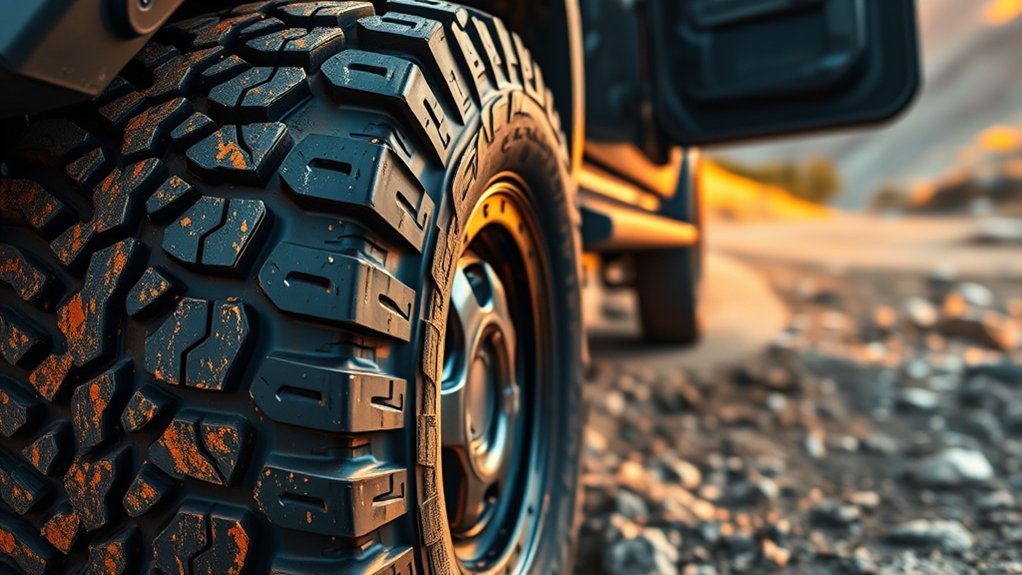
A rugged-terrain tire is designed to give you a stronger off-road tread than a standard all-terrain tire while keeping more pavement comfort than a full mud-terrain tire. Most R/T tires use a hybrid tread pattern with larger voids, staggered shoulder blocks, reinforced sidewall areas, and siping. That design helps the tire clear loose soil, bite into gravel, and hold better on uneven ground.
The goal is not to make one tire perfect for every surface. The goal is to reduce the biggest trade-offs. An R/T tire usually gives you more traction and a tougher appearance than an A/T tire, but it is often quieter and easier to live with than an M/T tire during highway driving.
Good examples of this category include manufacturer-labeled hybrid or rugged-terrain tires such as the Toyo Open Country R/T, Nitto Ridge Grappler, Falken WILDPEAK R/T, Kenda Klever R/T, and Venom Power Trail Hunter R/T. Each model has its own sizes, load ranges, warranty terms, snow markings, and ride behavior, so the label alone should never be the only thing you check.
Note: R/T is not a government-regulated tire category. It is a market category used by tire makers and retailers. Always verify the exact tire’s sidewall markings, specifications, warranty, and intended use before buying.
R/T vs A/T vs M/T Tires
The easiest way to understand R/T tires is to compare them with A/T and M/T tires. A/T means all-terrain, M/T means mud-terrain, and R/T means rugged terrain. The main differences are tread aggressiveness, road comfort, noise, mud performance, sidewall toughness, and daily-driving manners.
| Tire Type | Best For | Main Strength | Main Trade-Off |
| A/T | Daily driving, light trails, gravel, rain, mild snow | Best all-around comfort and tread life for most drivers | Less bite in mud, deep ruts, and rougher off-road terrain |
| R/T | Mixed pavement and trail use, work trucks, overlanding, gravel, light mud | More off-road grip and sidewall presence than A/T with better road manners than M/T | Usually heavier, louder, and less efficient than mild A/T tires |
| M/T | Mud, rocks, deep ruts, low-speed trail use, dedicated off-road builds | Maximum off-road void space and self-cleaning ability | More road noise, rougher ride, faster wear, and weaker wet-road comfort in many setups |
Tread and Traction Differences
R/T tires usually have larger tread voids than A/T tires, so they can dig into loose dirt, sand, gravel, and light mud more effectively. They also tend to use stronger shoulder blocks and more aggressive sidewall lugs. These features help when the tire is aired down for trail use or when the shoulder contacts rocks, ruts, or soft soil.
Compared with M/T tires, R/T tires usually use a less extreme pattern. That can improve highway stability, wet-road feel, and cabin noise. The trade-off is that an R/T tire will not clear deep mud as aggressively as a true mud-terrain tire.
Road Noise and Comfort
Road noise depends on the exact tread pattern, tire size, vehicle insulation, wheel offset, inflation pressure, and wear pattern. In general, an R/T tire is more likely to hum than a mild A/T tire but less likely to drone than a full M/T tire. Models such as the Nitto Ridge Grappler use variable pitch tread design to help reduce highway noise, while Toyo lists an optimized pattern arrangement for improved driving comfort.
Expect the ride to feel firmer if you move from a passenger-rated or mild A/T tire to a heavier LT-rated R/T tire. Extra load capacity and stronger sidewalls can help with towing, hauling, and trail durability, but they can also add stiffness.
Best Use Cases
R/T tires make the most sense when your driving is split between pavement and rougher surfaces. They are a strong fit for pickup trucks, Jeeps, body-on-frame SUVs, work trucks, hunting rigs, camping builds, and overlanding setups that still see highway miles.
- You commute during the week and drive trails or dirt roads on weekends.
- You need better gravel, rock, and light-mud grip than a mild A/T tire gives.
- You want an aggressive sidewall look without going full mud-terrain.
- You tow or haul and need a tire available in the correct LT size and load range.
- You drive on job sites, ranch roads, forest roads, or unpaved access roads.
What Makes R/T Tires Worth It?
R/T tires are worth it when they solve a real use-case problem. If your current all-terrain tires slip too easily in loose dirt, chunky gravel, wet job sites, or light mud, an R/T tire can add useful traction. If your mud-terrain tires are too loud or harsh for long highway drives, an R/T tire can bring back some comfort.
The value comes from the combined package: tougher shoulders, wider tread voids, more aggressive styling, and better mixed-surface grip. Many models also include features such as stone ejectors, sidewall protection, siping, dual sidewall designs, or mileage warranties. For example, Toyo lists a 45,000-mile warranty for the Open Country R/T, and Falken lists a 50,000-mile Limited Tread Life Warranty for the WILDPEAK R/T.
That said, an R/T tire is not always the best choice. If you drive almost entirely on pavement, a highway tire or mild A/T tire may be quieter, lighter, cheaper, and more fuel-efficient. If you spend most of your time in deep mud or technical rock crawling, an M/T tire may still be the better tool.
When R/T Tires Make the Most Sense
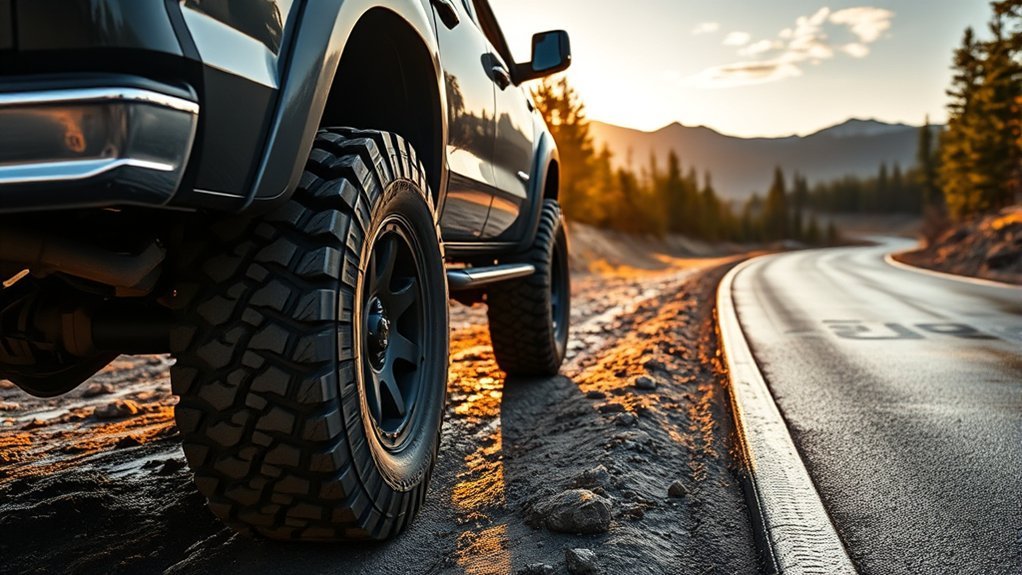
R/T tires make the most sense when you want one tire set for both road and trail. They are especially useful if your vehicle has added weight from bumpers, racks, recovery gear, tools, rooftop tents, trailers, or cargo. In those cases, you may need to think about load range and construction as much as tread design.
Warning: Do not choose an R/T tire only because it looks aggressive. Check your owner’s manual, driver-side door placard, wheel size, load index, speed rating, rim width, and clearance first. A tire that is too large, under-rated, or poorly matched to the wheel can create rubbing, handling, braking, and safety problems.
Choose an R/T tire if your driving mix looks like this:
- Mostly pavement with frequent dirt roads: R/T can work, but a quieter A/T may still be better if comfort matters most.
- Half pavement, half trail or work-site use: R/T is often the sweet spot.
- Mostly deep mud or extreme trail use: M/T may be more appropriate.
- Heavy towing or hauling: focus on LT sizing, load range, and inflation requirements before tread style.
- Winter roads: look for the three-peak mountain snowflake symbol if snow traction matters, and use dedicated winter tires where severe winter conditions demand them.
Popular R/T Tire Models to Compare
There is no single best R/T tire for every driver. The right choice depends on your vehicle, load needs, trail difficulty, climate, budget, and tolerance for noise. Use the models below as comparison examples, then confirm the exact size and spec sheet before buying.
| Model | Why Compare It | Important Note |
| Toyo Open Country R/T | Strong example of a rugged-terrain hybrid with on-road comfort and off-road traction focus. | Toyo lists a 45,000-mile warranty; 3-ply construction applies to LT-Metric and Flotation sizes, while P-/Euro-Metric sizes use 2-ply construction. |
| Nitto Ridge Grappler | Good comparison point if you want a hybrid terrain tire with aggressive sidewall lugs and highway-noise control. | Nitto lists UTQG only for metric sizes, so do not assume every LT size has the same rating format. |
| Falken WILDPEAK R/T | Worth comparing for towing, hauling, work trucks, and heavier pickups. | Falken lists a 50,000-mile Limited Tread Life Warranty on all sizes, plus road-hazard and ride guarantees with restrictions. |
| Kenda Klever R/T | Useful if you want an aggressive R/T option with 3-ply sidewall construction and all-weather design claims. | Kenda lists high sipe density and stud readiness, but you still need to verify winter legality and fitment by size. |
| Venom Power Trail Hunter R/T | A budget-minded rugged-terrain option to compare if aggressive sidewall styling and off-road void spacing are priorities. | Verify warranty, size availability, and installer support before choosing it over longer-established options. |
Pro Tip: Compare tires in the exact size you plan to buy. A tire can change significantly between P-metric, LT-metric, flotation, load range E, and load range F versions.
[Products Worth Considering]

The 22800 wheel stud installer makes replacing wheel studs quick and secure, saving time and effort during tire service. It uses a ratchet or impact wrench to pull new studs firmly into place, helping when existing studs are too long. Compatible with most automotive wheels and light-duty truck wheel studs, it’s designed for easy, tool-assisted installation.

Secure your vehicle during transport with this 4-pack of heavy-duty tire tie down straps designed for trailers and hauling. The ratchet system with flat hooks and D-rings helps you tension the straps quickly, while the wheel-friendly design protects tires. With high break strength and corrosion-resistant hardware, these straps provide reliable, confidence-inspiring tie-down security for cars, trucks, and UTVs.
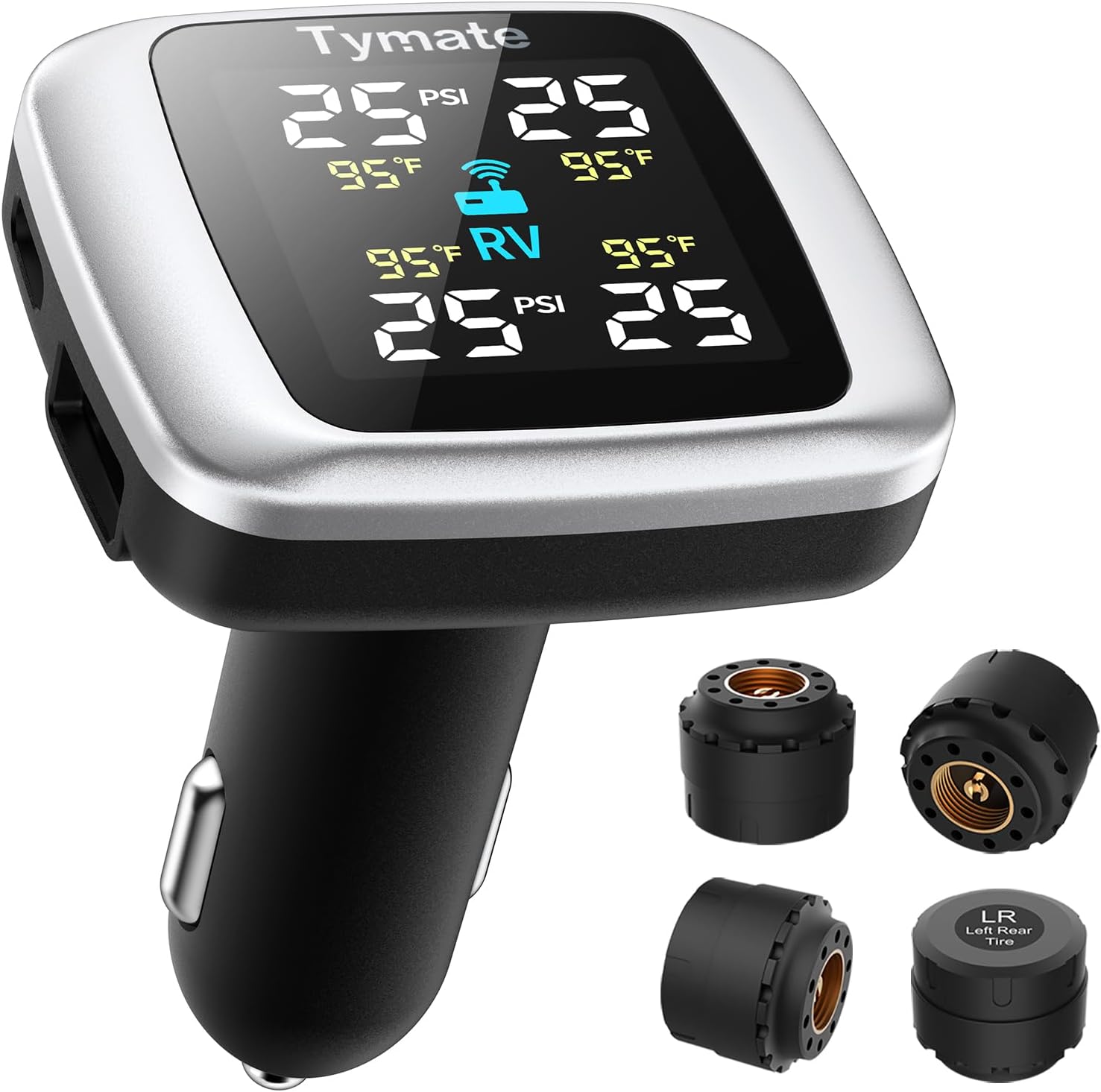
Tymate TM7 is a wireless tire pressure monitoring system that delivers real-time pressure and temperature readings for safer driving. It includes four external sensors, a bright color LCD display with adjustable backlight, and six alarm modes for high/low pressure, fast leakage, high temperature, and sensor signal or battery issues. The system covers a wide 0–144 PSI range and plugs into your vehicle’s cigarette lighter socket for quick DIY setup.
R/T Tire Features That Affect Traction and Noise
R/T tires are not all built the same. Two tires can both carry an R/T label but feel very different on the highway or trail. The biggest design factors are void ratio, tread-block stiffness, siping, shoulder design, sidewall construction, compound, and tire weight.
[Products Worth Considering]

Upgrade your vehicle’s style with sparkling rhinestone valve caps that add a unique luxury look. Built with an O-ring seal and rotating thread design, they help prevent air leakage while keeping dust and road grime out. The universal fit works on standard American tire valves for cars, trucks, SUVs, and motorcycles, and installs easily without special tools.

Upgrade your 2024-2026 Tesla Model 3 Highland with REEVAA all-weather mud flaps designed for seamless fit along the original body lines. The set of four delivers strong splash protection against mud, gravel, and road debris while using OEM-grade durable materials. Installation is non-destructive with original hole positions and snap-in clips, and the aerodynamic design helps minimize impact on efficiency.
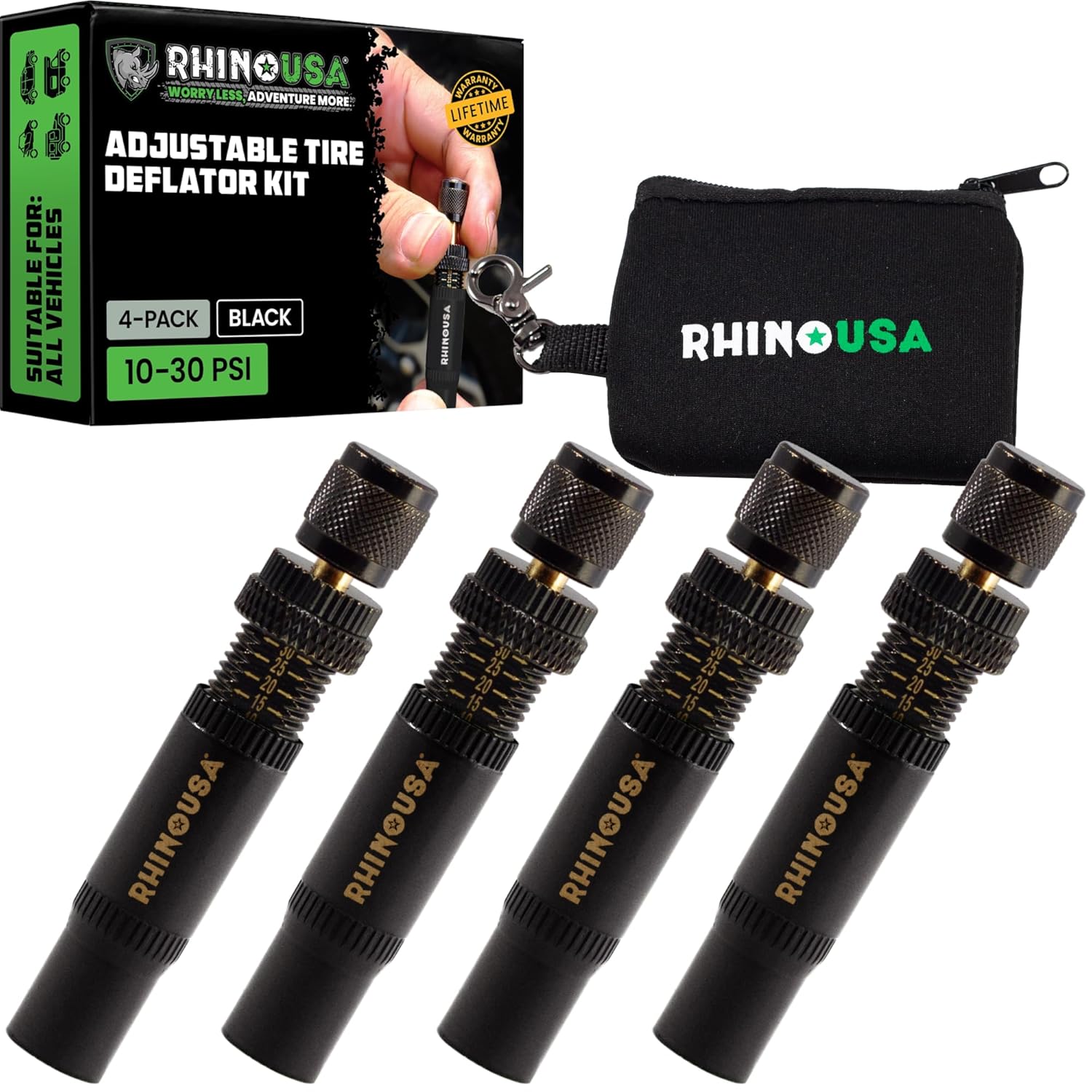
Use the Rhino USA adjustable tire deflators to air down all four tires at once by screwing one deflator onto each valve stem, letting you step away while the tires reach your preset pressure. Each deflator independently adjusts across a 10–30 PSI range with laser-etched indicators for quick setup and verification, making it ideal for beach, sand, and rocky off-road trails.
Tread Void Pattern
The void pattern is the open space between tread blocks. More open space helps the tire clear mud, loose dirt, stones, and snow. Less open space usually improves road feel, wet-road stability, and noise control. R/T tires try to land between those two extremes.
- Wider voids help with self-cleaning in loose terrain.
- Staggered shoulder blocks improve edge bite in ruts and gravel.
- Sipes add biting edges for wet pavement and light snow.
- Stone ejectors help reduce stone drilling in the tread grooves.
- Variable pitch patterns can reduce repetitive tread noise on the highway.
Sidewall Construction and Noise
Aggressive sidewalls are a major reason many drivers like R/T tires. They add visual toughness, help protect the sidewall area, and can provide extra traction when the tire is aired down or pressed against rocks and ruts. Some models also offer dual sidewall designs, letting you choose which side faces outward.
The downside is that tougher construction can add weight. A heavier tire may reduce acceleration, braking feel, and fuel economy. It can also make suspension parts work harder, especially if you jump to a larger diameter or wider tire.
The best R/T tire is not the most aggressive-looking one. It is the tire that matches your vehicle’s required size, load rating, speed rating, terrain, climate, and daily-driving needs.
How to Choose the Right R/T Tire
Choosing the right R/T tire starts with fitment and safety, not tread style. Before comparing designs, check the tire size and load information on your driver-side door placard and in your owner’s manual. Then confirm that the tire fits your wheels, suspension, brakes, fenders, and driving needs.
- Size: Match the approved diameter, width, and aspect ratio unless you have confirmed clearance for a different size.
- Load index and load range: Make sure the tire can carry your vehicle, passengers, cargo, trailer tongue weight, and accessories.
- Speed rating: Do not drop below the rating required for your vehicle and use case.
- LT vs P-metric: LT tires can handle heavier work, but they may ride firmer and require different inflation pressure.
- Wheel width: Confirm the tire is approved for your rim width.
- Clearance: Check full steering lock, compression, fender liners, mud flaps, and suspension travel.
- Winter rating: If snow matters, look for the three-peak mountain snowflake symbol, not only M+S.
- Warranty: Check whether the treadwear warranty applies to your exact size and vehicle setup.
- Road noise: Read owner reviews for your vehicle type, not just the tire model in general.
- Maintenance: Rotate, balance, align, and maintain pressure to reduce cupping, vibration, and uneven wear.
[Products Worth Considering]

Keep your RV, travel trailer, or fifth wheel securely in place with these heavy-duty X-shaped wheel chock stabilizers. Designed to clamp between tires, they reduce side-to-side movement for a steadier, level camping setup. The package includes a ratchet wrench, socket adapter, gloves, and a storage bag for easy installation and transport.

Protect tire valves from water, dust, and sand to help prevent leaks and support safe driving. These universal stem caps install quickly by hand and feature durable aluminum alloy construction with an inner sealing ring for better air retention. Compatible with cars, SUVs, trucks, motorcycles, and bicycles for everyday convenience.

Keep your tires properly inflated with this analog VONDIOR tire pressure gauge, designed for fast, easy readings without batteries. The swiveling, two-axis hose and large glow dial help you measure at any tire angle with instant visibility. Built with a protective rubber shield, it supports durable, low-maintenance use for cars and trucks.
M+S vs 3PMSF on R/T Tires
Many R/T tires carry an M+S marking, which stands for mud and snow. That marking can be useful, but it should not be treated as proof that the tire is a true winter tire. The stronger snow-traction symbol is the three-peak mountain snowflake, often called 3PMSF.
The 3PMSF marking means the tire meets an industry severe-snow service requirement based on snow traction testing. Even then, it does not make an all-terrain or rugged-terrain tire equal to a dedicated winter tire on ice, deep snow, or freezing slush. If you drive in severe winter weather, choose a tire built for that environment and follow local traction laws.
Note: Siping helps wet and light-snow grip, but tread compound matters too. A stiff off-road compound can still struggle in freezing temperatures even when the tread looks aggressive.
R/T vs LT Tires: What Is the Difference?
R/T and LT do not describe the same thing. R/T describes the tire’s tread category and intended terrain mix. LT means light truck and describes a service type or construction/load category used for vehicles that carry heavier cargo or tow trailers.
That means a tire can be both R/T and LT. For example, many rugged-terrain tires are sold in LT-metric sizes for pickups and SUVs. When shopping, treat these as two separate questions:
- Do I need R/T tread? Choose this based on terrain, road noise tolerance, and traction needs.
- Do I need LT construction? Choose this based on vehicle requirements, towing, payload, load range, inflation, and durability needs.
If you only commute and do not tow or haul, an LT R/T tire may be more tire than you need. If you tow, haul, or run a loaded overland setup, LT construction may be worth the firmer ride.
How to Maintain R/T Tires
R/T tires can wear unevenly if they are neglected. Their larger tread blocks are more likely to cup or feather when inflation, alignment, rotation, or shocks are off. Good maintenance keeps them quieter and helps protect your investment.
- Check tire pressure when the tires are cold.
- Rotate on the tire maker’s recommended schedule, or sooner if wear appears uneven.
- Rebalance after impacts, vibration, or wheel/tire changes.
- Inspect tread blocks for chunking, cracking, cupping, and embedded stones.
- Check alignment after lifts, leveling kits, suspension work, or hard trail impacts.
- Keep tires matched by size, load range, and wear level, especially on 4WD and AWD vehicles.
Frequently Asked Questions
Are R/T tires good for highway driving?
Yes, many R/T tires are suitable for highway driving, especially compared with full mud-terrain tires. Expect more road noise than a mild all-terrain tire, though. Highway comfort depends on the exact model, size, load range, tread wear, inflation pressure, and vehicle insulation.
What does R/T mean on a tire?
R/T means rugged terrain. It refers to a hybrid tire style that sits between all-terrain and mud-terrain tires. R/T tires are made for drivers who want better off-road traction than a typical A/T tire while keeping better road manners than a full M/T tire.
What is better, A/T or R/T tires?
A/T tires are usually better for mostly paved driving, long commutes, lighter road noise, and maximum all-around comfort. R/T tires are usually better if you regularly drive gravel, dirt, rocks, job sites, or light mud and want a more aggressive tire without jumping to a mud-terrain design.
What is the difference between R/T and LT tires?
R/T describes tread style: rugged terrain. LT describes light-truck service or construction for heavier load use. They are not opposites. Many R/T tires are also LT tires, especially in sizes made for pickups, Jeeps, and large SUVs.
Are R/T tires good in snow?
Some R/T tires do well in light snow, especially if they have enough siping and the three-peak mountain snowflake symbol. M+S alone is not the same as a severe-snow rating. For heavy snow, ice, and freezing winter roads, dedicated winter tires are still the safer choice.
Do R/T tires hurt fuel economy?
They can. Many R/T tires are heavier and more aggressive than highway or mild all-terrain tires. Extra weight, wider sizing, deeper tread, and higher rolling resistance can reduce fuel economy. The effect depends on the tire model, size, vehicle, inflation pressure, and driving style.
Conclusion
An R/T tire is a strong middle-ground option for drivers who want daily-road usability and real off-road toughness in one tire. It gives you more bite than a typical all-terrain tire, more comfort than a full mud-terrain tire, and enough versatility for gravel, dirt roads, light mud, rocks, job sites, and weekend trail use.
The key is choosing by fitment first and looks second. Match the correct size, load index, speed rating, load range, rim width, clearance, climate, and driving mix. When those details line up, an R/T tire can be one of the most practical upgrades for a truck, Jeep, or SUV that works and plays on mixed terrain.
Sources
- NHTSA TireWise — tire sizing, load-rated tire guidance, UTQG ratings, and tire-maintenance safety.
- U.S. Tire Manufacturers Association TISB 37 — severe-snow service and three-peak mountain snowflake marking criteria.
- Toyo Open Country R/T — warranty, construction details, sidewall design, and off-road/on-road feature claims.
- Falken WILDPEAK R/T — 50,000-mile Limited Tread Life Warranty and rugged-terrain feature claims.
- Nitto Ridge Grappler — hybrid terrain design, variable pitch tread pattern, UTQG notes, and sidewall features.
- Kenda Klever R/T — 3-ply sidewall, all-weather compound, siping, and stud-readiness features.