Quick Answer
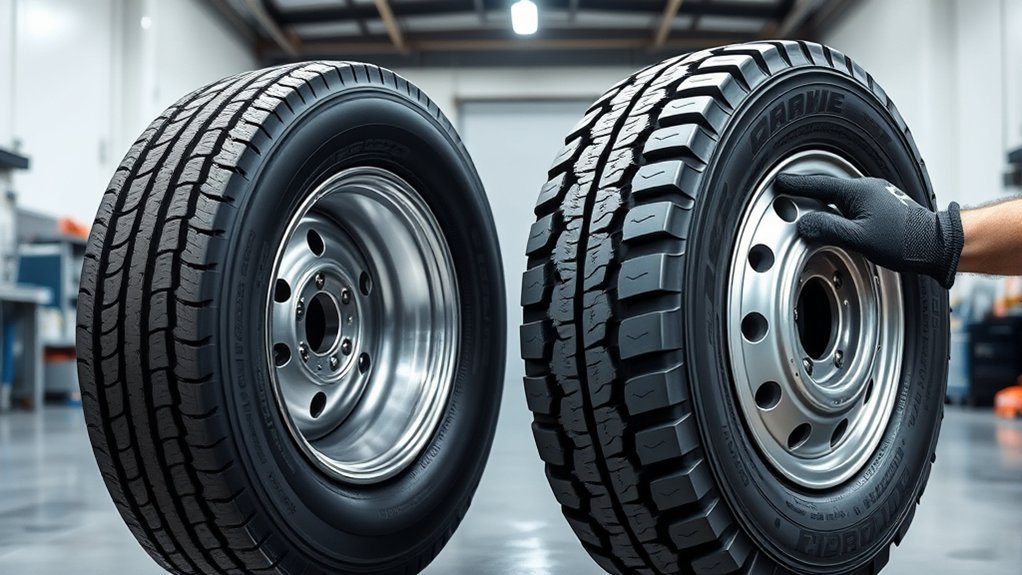
Use a 10-ply-rated Load Range E tire when it meets your vehicle’s required load capacity and approved fitment. Consider a 12-ply-rated Load Range F tire when your size and application genuinely require more load capacity or higher inflation capability. Do not choose by ply number alone; check the load index, sidewall limits, wheel limits, and vehicle placard.
Key Takeaways
Key Takeaways
- “10-ply” and “12-ply” are legacy strength ratings; modern tires can use far fewer actual body plies.
- Load Range E commonly matches a 10-ply rating, while Load Range F matches a 12-ply rating.
- A higher load range does not give one universal weight capacity. Tire size, load index, and inflation pressure determine the actual rating.
- Ride comfort, road noise, puncture resistance, tread life, and fuel economy depend on the specific tire design and operating pressure, not the ply label alone.
- Replacement tires should meet the vehicle manufacturer’s size and load-capacity requirements; a higher-rated tire does not increase the truck’s GVWR, GAWR, payload, or towing limit.
What Do Ply Ratings Mean?
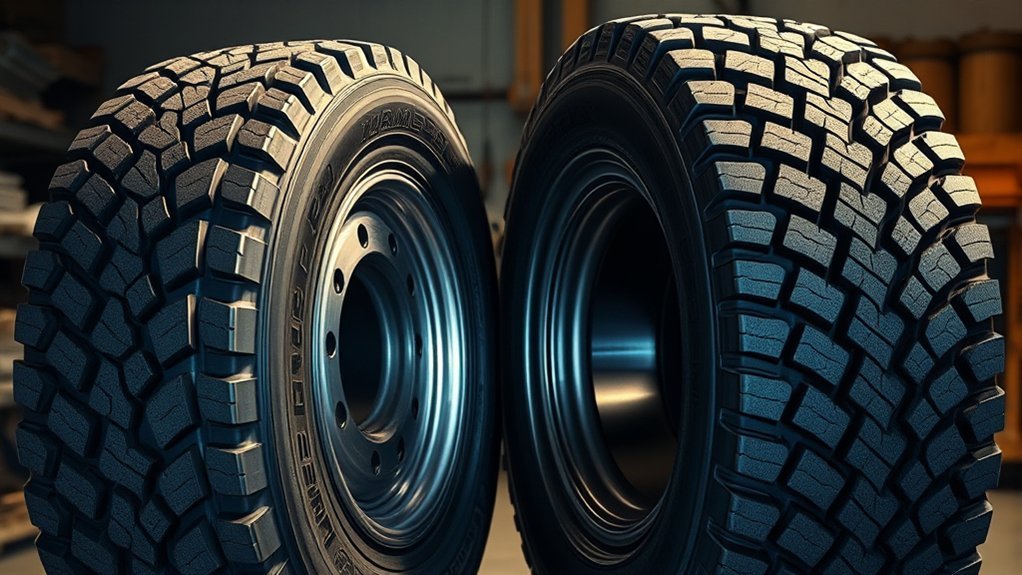
Ply rating is a legacy way to describe a tire’s relative strength and load capability. It no longer tells you how many physical fabric layers are inside a modern radial tire.
For light-truck tires, a 10-ply rating commonly corresponds to Load Range E, and a 12-ply rating corresponds to Load Range F. Falken’s Load Range F explanation also notes that the ply number is a classification, while load range and load index are used to describe what the tire can carry at specified pressures.
The important numbers on the sidewall are the tire size, load range, load index, maximum load, and maximum inflation pressure. The load index is the code tied to the tire’s maximum load-carrying capability under specified conditions, while the load range describes a load-and-pressure class.
That distinction matters because two tires can have different load ranges yet end up with the same load index in different sizes. So you should never assume that “12-ply” automatically means a specific number of extra pounds over “10-ply.”
10 Ply Vs 12 Ply Tires Compared
The clearest difference is that Load Range F is a higher load-range class than Load Range E. In common LT-metric applications, E is associated with a 10-ply rating and F with a 12-ply rating, but the exact load and pressure limits must come from the specific tire.
That means the practical comparison is not simply “lighter versus stronger.” You need to compare the two tires in the exact size you plan to use, then confirm their load index, maximum load, inflation requirements, wheel compatibility, and vehicle requirements.
Products Worth Considering

TP-M13W combination repair unit kit includes wrapped stems with matching patches for fast, reliable tire repairs. It’s suitable for both radial and bias ply tires and is designed for chemical or heat vulcanization. Gray vulcanizing gum with blue backing helps create a strong bond, with the stem portion wrapped for added effectiveness.

Monitor tire tread wear with a smart, color-coded depth gauge that shows clear condition ranges at a glance. The bar is range marked for fast, easy readings, helping you maintain safer traction and performance. Each gauge is portable with a pocket clip, and the set includes 20 units for daily use and sharing.

Accurately measure tire tread depth with a calibrated gauge marked from 0 to 1 inch in 1/32 inch increments. The color-coded bar helps you quickly identify tread condition ranges, supporting safe driving for trucks, motorcycles, automobiles, and passenger vehicles.
Load Capacity Differences
A 12-ply-rated tire can offer more load capacity than a 10-ply-rated tire in a comparable size, but there is no universal percentage increase. Load capacity changes with tire size, construction, load index, and inflation pressure.
For replacement tires, use the vehicle’s original equipment requirement as the baseline. USTMA replacement guidance says replacement tires should use the size, load index, and speed rating recommended by the vehicle or tire manufacturer and should not have less load-carrying capacity than originally specified.
A higher load range also does not raise the vehicle’s rated payload, axle rating, or towing limit. Those limits belong to the vehicle and its components, not just the tires.
Ride Comfort Tradeoffs
Many higher-load-range tires use construction designed to carry more load at higher pressure, so they can feel firmer when compared with a lower-range version of a similar tire. However, ply rating alone cannot predict ride comfort.
Tread design, tire weight, sidewall design, wheel diameter, suspension tuning, actual inflation pressure, and vehicle load all affect what you feel in the cabin. An overinflated Load Range E tire can ride harsher than a correctly inflated Load Range F tire in another application.
For daily driving, choose the lightest-duty tire that still meets the vehicle maker’s approved fitment and load requirements. That avoids buying extra capacity that you do not use.
Durability And Tread Life
Load range does not provide a universal tread-life rating. A 12-ply-rated tire is not automatically guaranteed to outlast a 10-ply-rated tire, because tread compound, tread depth, alignment, rotation, inflation, load, road surface, and driving style all affect wear.
The same caution applies to durability. A tire built for commercial or severe service may have features that improve casing strength or damage resistance, but those features come from the specific tire design. The load-range letter by itself does not tell you how resistant the tread or sidewall will be to cuts and punctures.
If long life matters, compare the exact tire models you are considering, including their manufacturer specifications and warranty terms, rather than using ply rating as a shortcut.
How Much Can 10 Ply Vs 12 Ply Tires Carry?
There is no single weight number for all 10-ply or 12-ply tires. The actual capacity is printed on the tire and tied to its size, load index, and inflation pressure.
| Tire Type | Typical Classification | What Determines Actual Capacity |
|---|---|---|
| 10-ply rated | Load Range E | Size, load index, sidewall maximum load, and pressure |
| 12-ply rated | Load Range F | Size, load index, sidewall maximum load, and pressure |
| Replacement fitment | Vehicle-specific | OE requirement, GAWR, wheel limits, and approved tire data |
For many conventional LT sizes, Load Range E is commonly associated with a maximum load pressure of up to 80 psi, while Load Range F is commonly associated with up to 95 psi. Those are not universal running pressures, and some sizes use different maximum load pressures.
Falken gives a useful example: an original-equipment LT tire with Load Range E and load index 125 can be matched by a differently sized Load Range F tire that also has load index 125. That shows why you should compare the actual load index and load/inflation data, not assume the F-rated tire always carries more simply because the letter is higher.
Products Worth Considering

Measure tire tread depth quickly and accurately with this LUMITECO dial gauge that reads in 1/32" increments up to 14/32". The color-coded green/yellow/red zones make it easy to judge tire wear and know when replacement is needed. A rugged, compact design with a protective pouch helps keep the gauge ready for use on cars, trucks, motorcycles, and more.

This heavy-duty tire pressure gauge combines measurement, inflation, and deflation in one compact tool for quick roadside and garage use. Its dual-head chuck helps reach inner and outer dual-wheel positions, while the clear indicator bar makes readings easy to see. Built for durability, it supports a wide pressure range and works across cars, trucks, RVs, SUVs, and motorcycles.
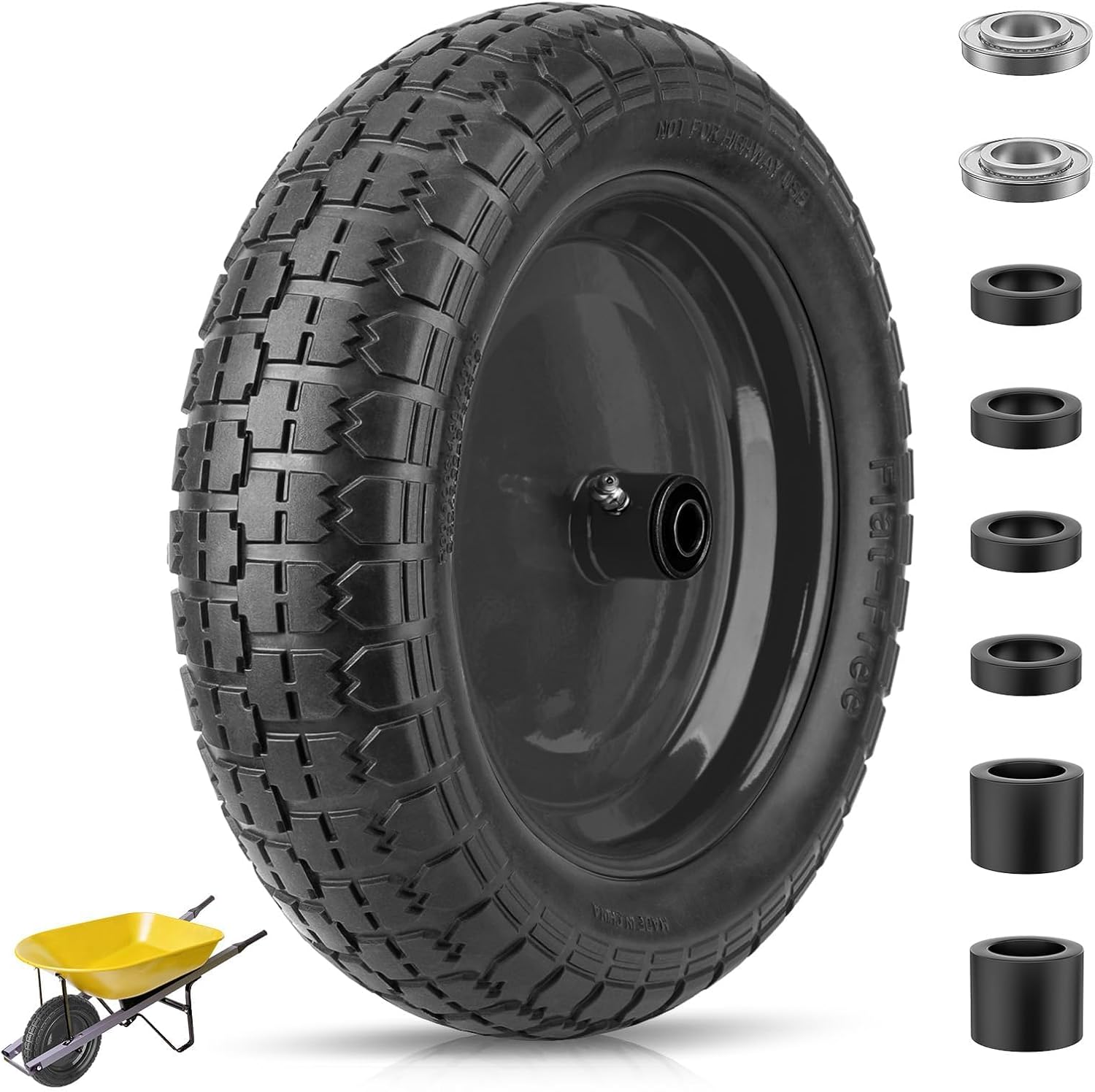
This flat-free TICONN wheelbarrow tire features durable polyurethane foam construction that never needs inflation, helping prevent punctures and reducing maintenance on rough outdoor terrain. With a 300 lb max load capacity and stable steel rim design, it supports safer transport for yard work and hauling tasks. An adapter kit with ball bearings and nylon spacers is included for easier fit and customization across common wheelbarrow and cart axle setups.
Which Tire Handles Punctures Better?
You cannot determine puncture resistance from 10-ply versus 12-ply rating alone. Load range is a load-and-pressure classification, not a standardized puncture-resistance score.
Some Load Range F tires may use heavier or stiffer construction than comparable E-rated versions, which can help in certain severe-service conditions. But another Load Range E tire may use dedicated sidewall protectors, stronger belts, or a compound designed specifically for rocks and jobsite debris.
If punctures are your main concern, compare the manufacturer’s construction details for the exact models. Look for documented sidewall reinforcement, belt packages, chip-and-cut resistance, and severe-service features rather than assuming that a higher ply rating guarantees better protection.
Correct pressure also matters. Underinflation increases flex and heat, while excessive pressure can make a tire more vulnerable to impact damage. The safest setup is the tire and pressure matched to the load and vehicle.
Products Worth Considering

Keep your tires properly inflated with this analog VONDIOR tire pressure gauge, designed for fast, easy readings without batteries. The swiveling, two-axis hose and large glow dial help you measure at any tire angle with instant visibility. Built with a protective rubber shield, it supports durable, low-maintenance use for cars and trucks.

The SAFELIFE dial tire tread depth gauge measures tread depth in 1/32 inch increments with clear, easy-to-read 2-inch dial face. Color zones using a traffic light system help you quickly judge whether tread is low, marginal, or ample for safer driving. Built with a durable zinc cast body and a metal detect probe for precise, comfortable use across cars, motorcycles, trucks, and buses.

This professional wheel and rim cleaning brush set lifts brake dust, grime, and dirt with soft, scratch-free microfiber and synthetic wool fibers. The rim brush bends up to 360 degrees for easy access to hard-to-reach areas around spokes, lips, and faces. Ideal for thorough cleaning of car, truck, motorcycle, bicycle, RV, and more wheel and tire surfaces.
How Do 10 Ply And 12 Ply Tires Ride?
A 10-ply-rated Load Range E tire often feels more compliant than a comparable 12-ply-rated Load Range F tire, especially on an unloaded truck. That is a common tendency, not a guarantee.
The actual ride depends on tire model, tread type, sidewall construction, inflation pressure, wheel size, suspension, and load. You should compare the exact tires rather than judging comfort only by the ply number.
Ride Comfort Differences
For daily commuting, Load Range E is often enough when it meets the vehicle’s required capacity. A tire with less unnecessary casing stiffness and lower required pressure can absorb sharp road inputs more easily.
Load Range F becomes useful when the tire needs additional capacity in the chosen size. In that situation, a firmer empty ride may be a reasonable tradeoff for carrying the required load safely.
Do not lower pressure just to make a heavy-duty tire feel softer unless the resulting pressure still supports the actual load and follows approved load/inflation data. Comfort should never come at the expense of load capacity.
Load Impact On Ride
As cargo, trailer tongue weight, or axle load increases, the tire must carry more force without excessive deflection. A higher-load-range tire can be useful when a lower-range option in the same intended fitment does not provide enough capacity.
However, tire capacity is only one part of the system. The truck’s GVWR, front and rear GAWR, wheel load rating, hitch limits, suspension, brakes, and towing specifications still apply. Fitting Load Range F tires does not convert a truck into a higher-rated truck.
For towing or hauling near the vehicle’s limits, weigh the loaded vehicle or trailer when practical and compare the axle loads with the vehicle and tire ratings. That is more reliable than choosing a tire by ply number.
Road Noise And Vibration
Road noise is influenced more by tread pattern, rubber compound, pavement, tire pressure, and vehicle insulation than by load range alone. A 12-ply-rated tire is not automatically noisier.
Vibration and harshness can increase when a tire has a stiff construction or is inflated higher than needed for the actual application. That is why comparing two specific tire models is more useful than assuming every 10-ply tire is quiet and every 12-ply tire is harsh.
- For comfort: prioritize correct pressure, appropriate load capacity, and a road-oriented tread.
- For heavy work: prioritize enough load capacity and a tire designed for the service.
- For mixed use: choose the tire that meets the heaviest realistic load without exceeding vehicle or wheel limits.
Best Uses for 10 Ply Tires
Ten-ply-rated Load Range E tires are a good fit when they meet the vehicle’s required load capacity and approved tire specification. They are common on pickups, vans, SUVs, and trailers that need more capacity than standard passenger-type tires can provide.
Choose a 10-ply-rated tire because its exact size and load rating fit the vehicle, not because “10-ply” sounds heavy-duty.
They can make sense for daily-driven trucks that also tow, haul tools, carry camping gear, or travel on rough roads. The key is that the selected Load Range E tire must support the required load at the pressure you will use.
They can also be a sensible choice when a Load Range F version would add capacity you cannot use because the vehicle, axle, hitch, or wheel is already the limiting component.
For off-road use, do not assume Load Range E alone makes a tire rock-resistant. Compare the specific tire’s sidewall construction, tread design, and manufacturer’s intended use.
Best Uses for 12 Ply Tires
Twelve-ply-rated Load Range F tires make sense when your application needs the capacity or inflation range that the specific F-rated tire provides. They can be appropriate for heavy-duty pickups, commercial work, large trailers, and other applications where the exact load calculation requires them.
The decision should come from the tire’s sidewall and load/inflation information, not from a broad rule such as “one-ton trucks always need F.” Original-equipment specifications vary by vehicle, tire size, wheel, and axle configuration.
Load Range F can also be useful when you move to a larger aftermarket tire size that needs a higher load range to preserve the original tire’s load index. Falken specifically discusses this situation for modern heavy-duty pickups.
- Confirm the vehicle maker’s required tire size or approved alternative.
- Confirm the replacement tire meets or exceeds the required load capacity at the intended pressure.
- Confirm the wheel is rated for the tire’s load and pressure.
- Keep the vehicle within its GVWR, GAWR, payload, hitch, and towing limits.
How To Choose The Right Ply Rating
Choose by the vehicle’s requirements first, then compare the exact tire specifications. A higher ply rating is useful only when it solves a real load-capacity or fitment need.
Start with the tire information placard and owner’s manual. Michelin’s replacement guidance says not to choose a tire with less load-carrying capacity than the original and recommends using the same size or an approved option from the vehicle manufacturer.
- Check the original specification. Note the tire size, recommended cold pressure, load index, and any front/rear differences.
- Know your real use. Include passengers, cargo, accessories, trailer tongue weight, and repeated heavy-duty operation.
- Compare exact replacement tires. Look at size, load index, load range, maximum load, maximum pressure, and speed rating.
- Check wheel limits. The wheel must be able to handle the tire’s required load and pressure.
- Keep vehicle limits separate. Extra tire capacity does not increase GVWR, GAWR, payload, or towing capacity.
Note: If you are changing tire size, moving between load ranges, or towing near an axle or tire limit, have a qualified tire professional verify the tire, pressure, wheel, and vehicle ratings together before installation.
Tire Pressure and Maintenance Tips
Correct pressure is more important than simply running the maximum number printed on a 10-ply or 12-ply tire. The tire’s sidewall maximum is a tire limit, while the vehicle placard gives the manufacturer’s recommended cold pressure for the approved fitment.
NHTSA tire-safety guidance says to check all tires, including the spare, at least once a month when they are cold. NHTSA defines “cold” as not driven for at least three hours and directs drivers to the Tire and Loading Information Label or owner’s manual for the proper pressure.
Warning: Do not inflate a tire or wheel beyond its rated limit. If a replacement tire needs a different pressure to carry the required load, verify that pressure with approved load/inflation data and confirm the wheel is rated for it.
For routine care, inspect for cuts, bulges, cracking, embedded objects, and uneven wear. Correct alignment or balance problems if the vehicle pulls, shakes, or develops irregular tread wear.
USTMA tire-care guidance recommends following the vehicle owner’s manual for rotation. If no interval is specified, USTMA recommends rotating tires every 5,000 to 8,000 miles and resetting inflation to the vehicle manufacturer’s specification afterward.
- Check cold pressure at least monthly and before long trips, heavy loads, or towing.
- Follow the vehicle maker’s pressure specification unless approved replacement-tire load data requires a different pressure.
- Inspect tread and sidewalls for damage and irregular wear.
- Rotate according to the owner’s manual or the tire manufacturer’s approved pattern.
- Recheck load and pressure needs when your towing, cargo, wheel, or tire setup changes.
Frequently Asked Questions
Are 12 Ply Tires Always More Expensive Than 10 Ply Tires?
No. Price depends on the tire brand, model, size, construction, retailer, and availability, so a 12-ply-rated tire is not guaranteed to cost more than every 10-ply-rated option. Compare the exact tires that fit your vehicle and judge value by their required capacity, intended service, warranty, and total installed cost.
Can I Mix 10 Ply and 12 Ply Tires on One Vehicle?
It is better to avoid mixing them unless the vehicle or tire manufacturer allows the combination. Tires should meet the required size, load index, speed rating, construction, and axle fitment. Different casing stiffness or rolling dimensions can change handling, and AWD or 4WD vehicles may have tighter matching requirements.
Do 12 Ply Tires Reduce Fuel Economy More Than 10 Ply Tires?
Not necessarily. Fuel economy depends on tire weight, rolling resistance, tread design, size, inflation pressure, vehicle load, speed, and driving conditions. A heavier F-rated tire may use more energy in some comparisons, but the ply rating itself does not provide a reliable MPG penalty.
Are 10 Ply Tires Better for Winter Driving Conditions?
No. Winter traction depends mainly on the tire’s tread pattern, rubber compound, tread depth, and winter-performance design, not whether it is 10-ply or 12-ply rated. Choose a tire that meets your load requirements and is designed for the cold, snow, or ice conditions you actually face.
How Long Do 10 Ply Versus 12 Ply Tires Typically Last?
There is no universal mileage range based only on ply rating. Tread compound, alignment, rotation, inflation, load, road conditions, driving style, and the specific tire model have a much larger effect on service life. Compare the manufacturer’s treadwear warranty and maintenance requirements for the exact tires you are considering.
Can I Put 12 Ply Tires on a Truck That Came With 10 Ply Tires?
Possibly, but the replacement must still be an approved fitment. Check tire size, load index, speed rating, pressure requirements, wheel load and pressure limits, and the vehicle manufacturer’s guidance. A higher load range can add unused capacity or change ride characteristics without increasing the truck’s legal or mechanical load limits.
Do 12 Ply Tires Increase My Truck’s Payload or Towing Capacity?
No. Higher-capacity tires can prevent the tires from being the limiting component, but they do not change the truck’s GVWR, GAWR, certified payload, hitch rating, brake capacity, or manufacturer towing limit. Your safe load is still controlled by the lowest applicable rated component in the vehicle and towing system.
What PSI Should I Run in 10 Ply or 12 Ply Tires?
Use the vehicle manufacturer’s recommended cold pressure for an approved original-size fitment unless verified replacement-tire load data calls for another pressure. Do not automatically inflate a Load Range E tire to 80 psi or a Load Range F tire to 95 psi just because those are common maximum load pressures for many LT sizes.
Conclusion
For 10 ply vs 12 ply tires, think Load Range E versus Load Range F, then verify the exact tire instead of choosing by the bigger number. Match or exceed the required load capacity, use the correct cold pressure, confirm wheel limits, and stay within the vehicle’s ratings. If Load Range E already meets those requirements, Load Range F is not automatically safer, tougher, longer-lasting, or better.
Sources
- Falken Tires: Load Range F Tires Explained: Load range, 10-ply/12-ply equivalence, load index, and load/inflation matching.
- U.S. Tire Manufacturers Association: Replacing Tires: Replacement size, load index, speed rating, and load-capacity guidance.
- Michelin USA: Changing Tire Size or Specifications: Replacement sizing, load capacity, and tire-mixing guidance.
- NHTSA TireWise: Vehicle placard pressure, cold-pressure checks, tire sizing, and maintenance guidance.
- U.S. Tire Manufacturers Association: Tire Care Essentials: Inflation, rotation, alignment, and inspection guidance.