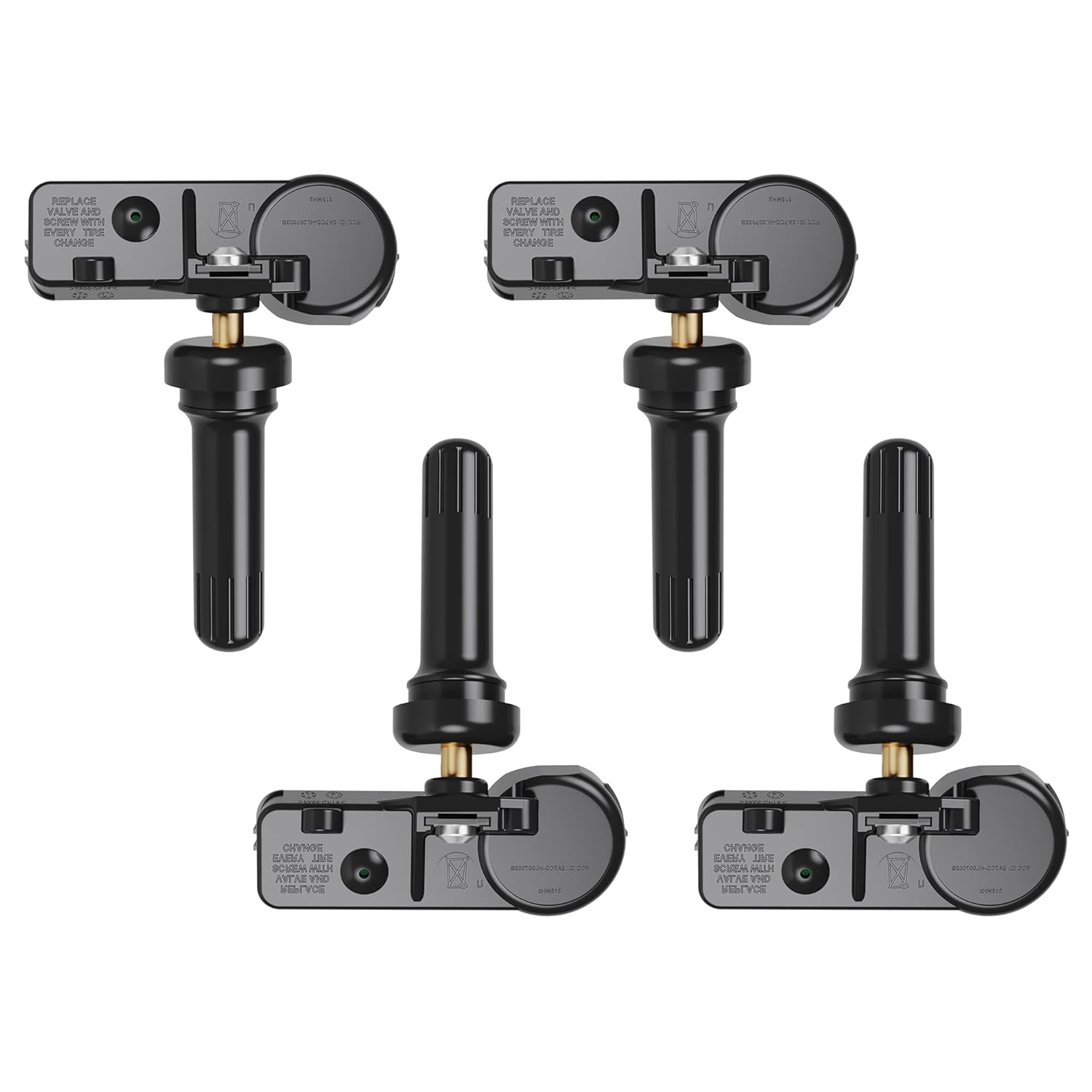
Replacing a Toyota Hilux TPMS sensor is part tire service and part electronic relearn. You need to confirm the fault, choose a sensor that matches your exact Hilux model year and market, install it without damaging the wheel or valve, then register the new sensor ID so the vehicle can read it correctly.
Quick Answer
To replace a Toyota Hilux TPMS sensor, first confirm the fault with a pressure check and TPMS scan. Match the new sensor by VIN, model year, frequency, and valve type. After installation, register the sensor ID with a Toyota-compatible scan tool or have a tire shop complete the relearn.
Key Takeaways
- Do not assume the TPMS sensor is bad until you check cold tire pressure and scan the system.
- Use the tire placard or owner’s manual for the correct PSI, not a universal pressure number.
- Match the sensor to your exact Hilux by VIN, production year, market, frequency, and valve style.
- A pressure reset is not the same as registering a new TPMS sensor ID.
- Let a tire shop handle dismounting and mounting unless you have proper tire-service equipment.
At a Glance
| Time Required | About 30–60 minutes per wheel at a tire shop; longer if diagnosis, parts matching, or ECU registration takes extra time. |
| Difficulty | Intermediate to advanced. Diagnosis is DIY-friendly, but tire dismounting and mounting require proper equipment. |
| Tools Needed | Tire pressure gauge, tire machine, valve service kit, TPMS scan/relearn tool, torque wrench or sensor tool, and wheel balancer. |
| Cost | Plan for parts, tire labor, balancing, and programming. Many repairs land around $80–$200+ per sensor installed, but dealer/OEM pricing and local labor can raise the total. |
Warning: Do not break the tire bead, dismount a tire, inflate a tire, or torque a TPMS valve without the right equipment and training. A damaged bead, cracked valve stem, or overinflated tire can create a serious safety risk.
How to Replace Your Toyota Hilux TPMS Sensor
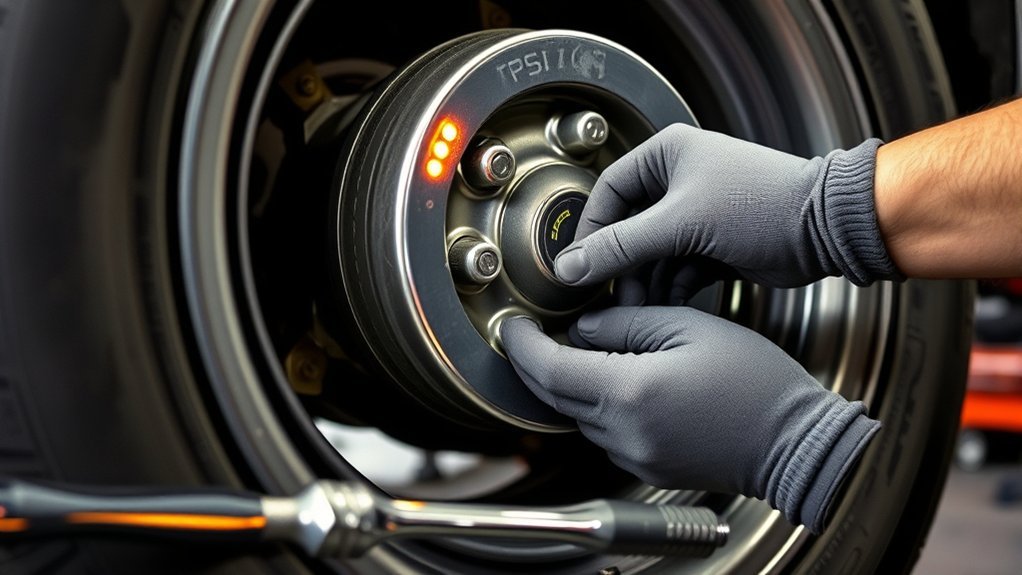
Start by confirming that the TPMS warning is not simply a low-pressure warning. Check all tires when they are cold, including the spare if your Hilux monitors it, and use the pressure listed on the driver-side placard or in the Toyota owner’s manual for your exact model. Do not use the maximum pressure printed on the tire sidewall as the target pressure.
If the pressure is correct and the warning light still returns, scan the TPMS system with a Toyota-compatible diagnostic tool, Techstream, or a shop-grade TPMS tool. The scan should show sensor IDs, live pressure readings when available, battery or signal faults, and which wheel position has the problem.
Before buying a sensor, match it by VIN, model year, market, wheel position, valve style, and sensor frequency. Some Hilux models use direct sensors inside the wheel, while other Toyota-market configurations may differ. A tire shop or Toyota dealer can usually confirm the correct part from your VIN.
Note: A TPMS sensor is not just a valve stem. It has an electronic ID that the vehicle must recognize. If the new ID is not registered, the warning light can stay on even after the new sensor is installed.
Before You Replace the Sensor
A proper diagnosis saves money because many TPMS warnings come from low pressure, temperature change, damaged valve hardware, or a failed relearn rather than a dead sensor. The National Highway Traffic Safety Administration explains that TPMS can use sensors in the tires or indirect vehicle sensor data, and that TPMS is not a substitute for regular pressure checks.
Check Cold Tire Pressure First
Use a quality tire pressure gauge before you scan or replace anything. Check the tires when the Hilux has been parked for at least three hours. If one tire is low, inflate it to the placard pressure and inspect for a puncture, bead leak, valve leak, or cracked valve stem.
Confirm the Light Pattern
A steady TPMS light usually means at least one tire is underinflated. A light that flashes for about 60–90 seconds and then stays on often points to a system malfunction, such as a failed sensor, missing sensor ID, or communication fault. If the light behavior changes after tire rotation or new tires, the system may need a relearn rather than a new sensor.
Verify the Right Sensor Before Buying
Use your VIN when ordering sensors. Check whether your Hilux needs an OEM-style direct-fit sensor or a programmable aftermarket sensor. Also confirm the valve stem type, sealing washer, grommet, retaining nut, valve core, and cap. Installing the wrong sensor can create leaks, warning lights, or failed programming.
Why You Should Reprogram Your ECU After a Sensor Change
After you replace a TPMS sensor, the vehicle must learn the new sensor’s unique ID. On many Toyota systems, this requires Techstream, a Toyota-compatible scan tool, or a TPMS relearn tool that can write or register the new ID. Without this step, the ECU may still look for the old sensor.
Ensure Sensor Recognition
Sensor recognition matters because the ECU uses stored IDs to decide which signals belong to your Hilux. If the new sensor is installed but not registered, the system may ignore it and keep the warning light on.
| Action | Why It Matters | Typical Tool |
|---|---|---|
| Read current sensor IDs | Confirms which sensor is missing, weak, or not transmitting | TPMS scan tool or Techstream |
| Install matched sensor | Prevents frequency, protocol, and valve-fit problems | Tire machine and sensor service tools |
| Register or relearn sensor ID | Allows the ECU to recognize the new sensor | Toyota-compatible scan/relearn tool |
| Verify live readings | Confirms the repair before the vehicle leaves the shop | Scan tool and pressure gauge |
Reset Vs Relearn
A pressure reset usually tells the system to use the current tire pressures as the baseline. A relearn or ID registration teaches the ECU which sensor IDs belong to the vehicle. If you replace a sensor, you normally need ID registration, not just a pressure reset button.
Prevent Warning Light Activation
Failing to register the new ID can lead to a persistent TPMS warning light. It can also make troubleshooting confusing because the sensor may be physically installed and inflated correctly while the ECU still searches for the old ID. If you do not have a compatible scan tool, a tire shop or Toyota dealer can usually complete the relearn quickly.
Essential Tips for Long-Lasting TPMS Performance
You can extend TPMS life by protecting the valve hardware, maintaining tire pressure, and avoiding products that contaminate the sensor. A sensor battery is sealed inside many direct TPMS units, so the usual repair for a dead battery is replacing the whole sensor.
Regular Sensor Inspections
Inspect the valve stem area during tire rotations, tire changes, and leak repairs. Look for corrosion, missing caps, cracked rubber, loose retaining nuts, and slow leaks around the valve hole. If one sensor is near the end of its life, ask the shop to scan all four sensors before you approve the repair.
Proper Tire Maintenance
Check tire pressure at least monthly and before long trips, towing, or heavy hauling. Use the cold pressure on your Hilux placard or owner’s manual. Underinflation can affect handling, fuel use, tire wear, and heat buildup, so do not rely only on the TPMS light to tell you when to add air.
- Use plastic or nickel-compatible valve caps rather than cheap metal caps that can seize on some valve stems.
- Replace the seal, grommet, retaining nut, valve core, and cap when servicing a clamp-in TPMS valve.
- Ask for a post-service scan that shows all sensor IDs and pressure readings.
- Keep a record of the new sensor ID if the shop provides it.
Avoid Sealant Usage
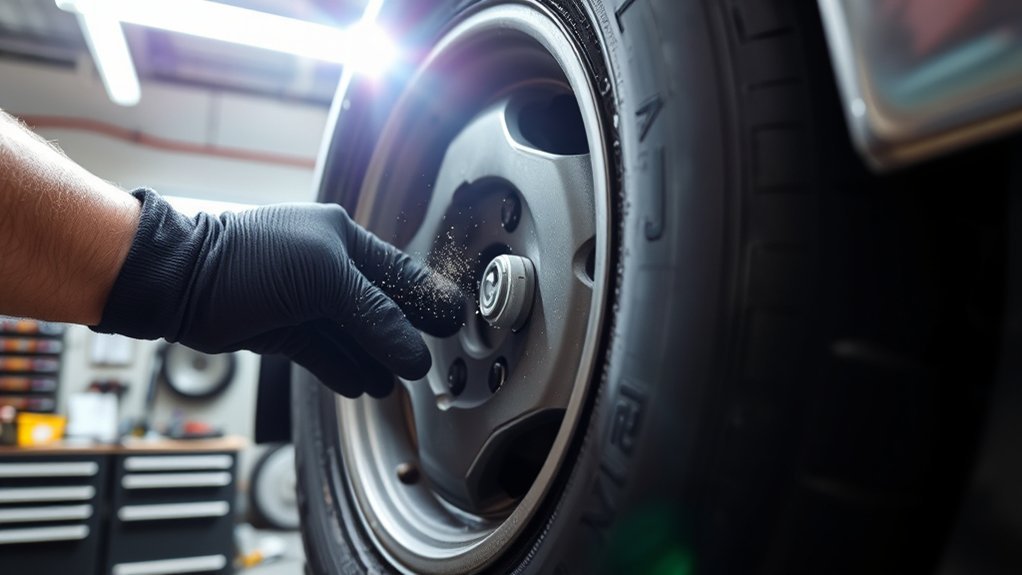
Liquid tire sealants can leave residue inside the tire and may interfere with a direct TPMS sensor. If you used sealant after a puncture, tell the tire shop before they dismount the tire. The technician should clean the tire and wheel carefully and inspect the sensor before deciding whether it can be reused.
Pro Tip: If one old sensor fails and the other sensors are the same age, ask for a full TPMS scan. Replacing all four can make sense when the sensors are old and you already have the tires off for replacement.
Step-by-Step: Replacing Your Toyota Hilux TPMS Sensor
Use this checklist to understand the repair process and to talk clearly with a shop. If you are doing the work yourself, follow the sensor manufacturer’s torque specs and your Toyota service information.
- Check cold tire pressure. Inflate each tire to the placard pressure and inspect for leaks.
- Scan the TPMS system. Identify the faulty, missing, weak, or unregistered sensor.
- Confirm the replacement part. Match the sensor by VIN, model year, frequency, protocol, and valve style.
- Dismount the tire safely. Deflate the tire, break the bead, and keep tools away from the sensor location.
- Remove the old sensor. Remove the retaining hardware and inspect the valve hole for corrosion or damage.
- Install the new sensor and service kit. Use new seals, grommets, nuts, valve cores, and caps where required. Torque the sensor hardware to the sensor maker’s specification.
- Remount, inflate, and balance the tire. Check for leaks around the valve and bead before reinstalling the wheel.
- Register the sensor ID. Use Techstream, a Toyota-compatible scan tool, or a TPMS relearn tool.
- Verify the repair. Confirm live pressure readings, clear stored faults, and test drive if the procedure requires it.
Cost of Replacing Your Toyota Hilux TPMS Sensor
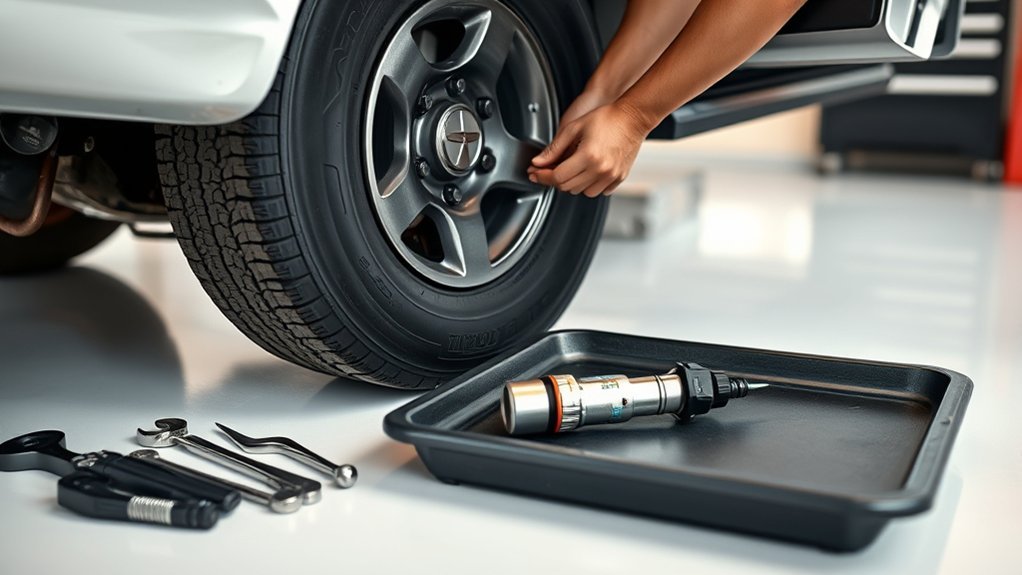
The cost of replacing a Toyota Hilux TPMS sensor depends on the sensor type, your market, labor rates, and whether the shop includes balancing and relearn programming. Dealer OEM parts usually cost more than programmable aftermarket sensors, but the correct choice depends on your VIN and system compatibility.
| Item | Planning Range | Notes |
|---|---|---|
| OEM-style TPMS sensor | About $50–$150+ each | Best matched by VIN; dealer pricing can be higher. |
| Programmable aftermarket sensor | About $25–$80+ each | Must be programmed to the correct Toyota protocol. |
| Install, seal kit, and balance | About $20–$60+ per wheel | Often billed with tire dismounting, mounting, and balancing. |
| Sensor ID registration | Free to $100+ | Some shops include it with installation; others bill diagnostic time. |
| Full set of four sensors | About $250–$800+ | Useful when all sensors are old or tires are already being replaced. |
Ask for a quote that separates the sensor, service kit, tire labor, balancing, and relearn. That makes it easier to compare a dealer quote with an independent tire shop.
[Products Worth Considering]

The UYYE TPMS relearn tool helps activate and relearn tire pressure monitor sensors quickly, typically in minutes. It supports TPMS learn mode resetting using a simple three-step process: enter learn mode, position the tool near the valve stem, and press the learn button. Designed for specific GM models, it streamlines sensor programming and reduces trips to dealers or tire shops.

The VEHLIVE SU-50448 II TPMS relearn tool provides a fast activation reset to restore accurate tire pressure monitoring after sensor replacement or tire rotation. It supports 315 MHz and 433 MHz GM series sensors and helps clear dashboard pressure warnings. With simple two-button operation and horn-confirmed relearning order, you can reprogram sensors conveniently at home.
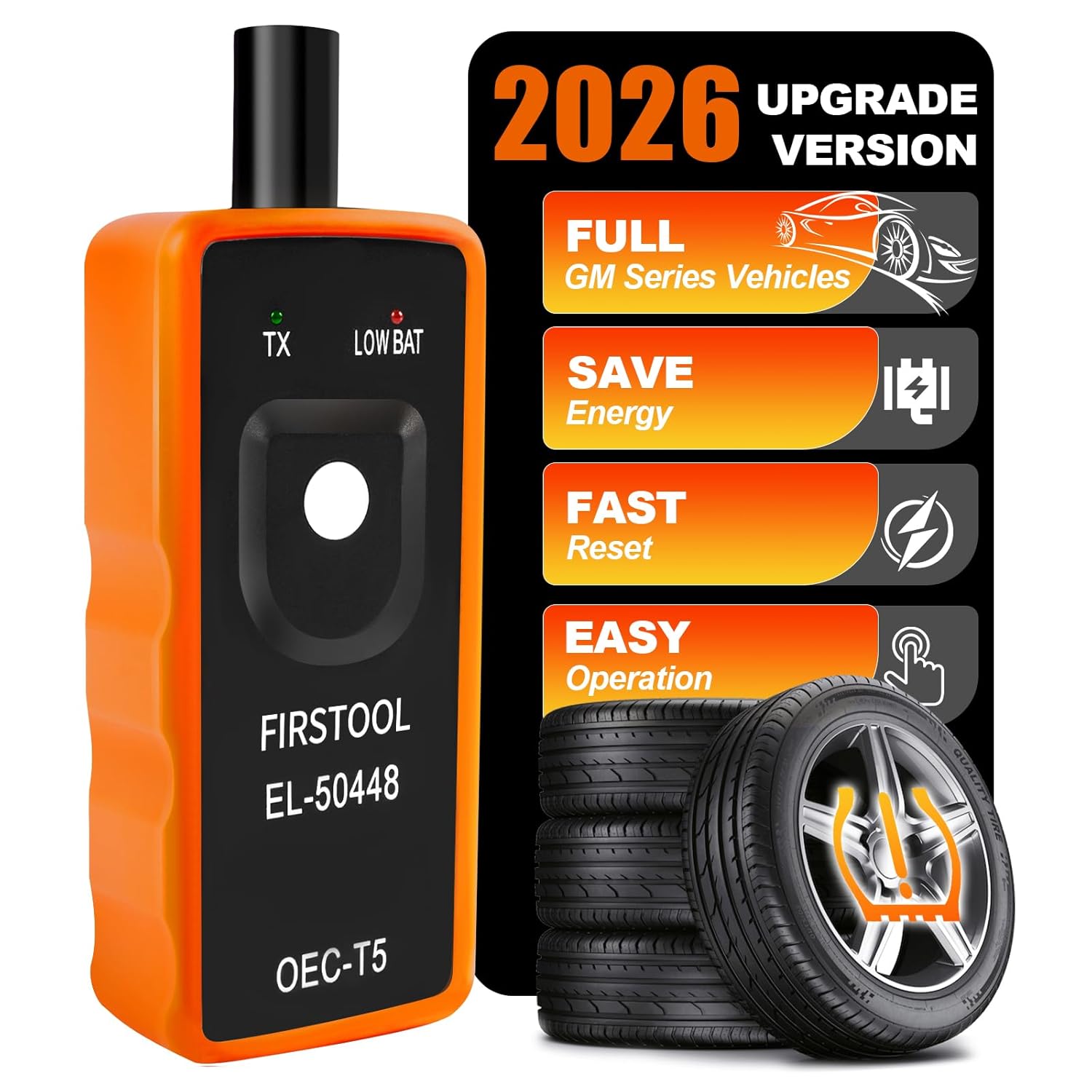
This TPMS relearn tool helps you quickly activate, match, and reset GM tire pressure sensors to keep the vehicle monitoring system working properly. It clears tire pressure alarms and dashboard warning lights after sensor replacement or tire rotation, and supports learning for common 315/433 MHz TPMS sensors. Designed for simple one-button operation, it can help you avoid unnecessary trips to repair shops.
Common Troubleshooting Tips for TPMS Issues
Use the warning light behavior to narrow the problem before you replace parts. Toyota warning lights are designed to alert you to possible system faults, but the exact repair depends on diagnosis, not guesswork.
| Symptom | Likely Cause | What to Do |
|---|---|---|
| TPMS light comes on steady | One or more tires may be low | Check cold pressure and inflate to the placard pressure. |
| Light appears on cold mornings, then goes off | Pressure may be near the warning threshold | Adjust cold pressure and recheck for slow leaks. |
| Light flashes, then stays on | Possible TPMS malfunction | Scan for missing, weak, or unregistered sensors. |
| Light started after tire rotation | Wheel positions or IDs may need relearn | Run the correct relearn procedure for your model. |
| Light stays on after sensor replacement | New ID may not be registered | Register the new ID and verify live readings. |
| Slow leak at valve stem | Bad seal, corrosion, cracked stem, or loose hardware | Replace the service kit or sensor as needed. |
[Products Worth Considering]

Replace your worn or missing TPMS sensors with pre-programmed, direct-fit sensors for compatible Ford, Lincoln, and select Mazda models. Each sensor comes ready to activate with a scan tool, helping restore accurate tire pressure monitoring and trouble-free installation. Built with a long-life CR2032 battery and tested before factory release, this set provides dependable performance with a one-year warranty.

Masoll Gen 2 external TPMS sensors are a DIY replacement set of 4 for select GM vehicles made after 2006, helping you shut off the TPMS warning light quickly. Simply screw the sensors onto the tire valves and sync to your car ECU using the included EL-50448 relearn tool. Dual-frequency 315/433 MHz design provides OEM-level performance with accurate readings and replaceable batteries for about two years.

This TPMS sensor training and relearn reset tool is customized for Ford, Lincoln, and Mercury vehicles to help activate tire pressure programming after sensor replacement or tire rotation. It can activate individual tire pressure sensors with one-button operation, helping prevent TPMS warning light illumination. It is not a sensor programming tool and cannot program replacement sensors—use it to trigger/activate sensors only.
Tools You Need for Toyota Hilux TPMS Sensor Replacement
The tools you need depend on whether you are diagnosing the system or physically replacing the sensor. You can check pressure and scan faults at home, but the actual sensor replacement usually requires tire-service equipment.
- Tire pressure gauge: Confirms cold tire pressure before diagnosis.
- TPMS scan tool: Reads sensor IDs, pressure data, battery status, and signal faults when supported.
- Techstream or Toyota-compatible scan tool: Registers new sensor IDs and clears relevant TPMS faults.
- Tire machine: Safely breaks the bead and dismounts the tire from the wheel.
- Wheel balancer: Rebalances the wheel after dismounting and remounting.
- Valve service kit: Includes seals, grommets, nuts, cores, and caps for the sensor style.
- Torque tool: Tightens the TPMS nut or fastener to the sensor manufacturer’s specification.
- Soapy water leak test: Checks the valve stem and bead after inflation.
[Products Worth Considering]
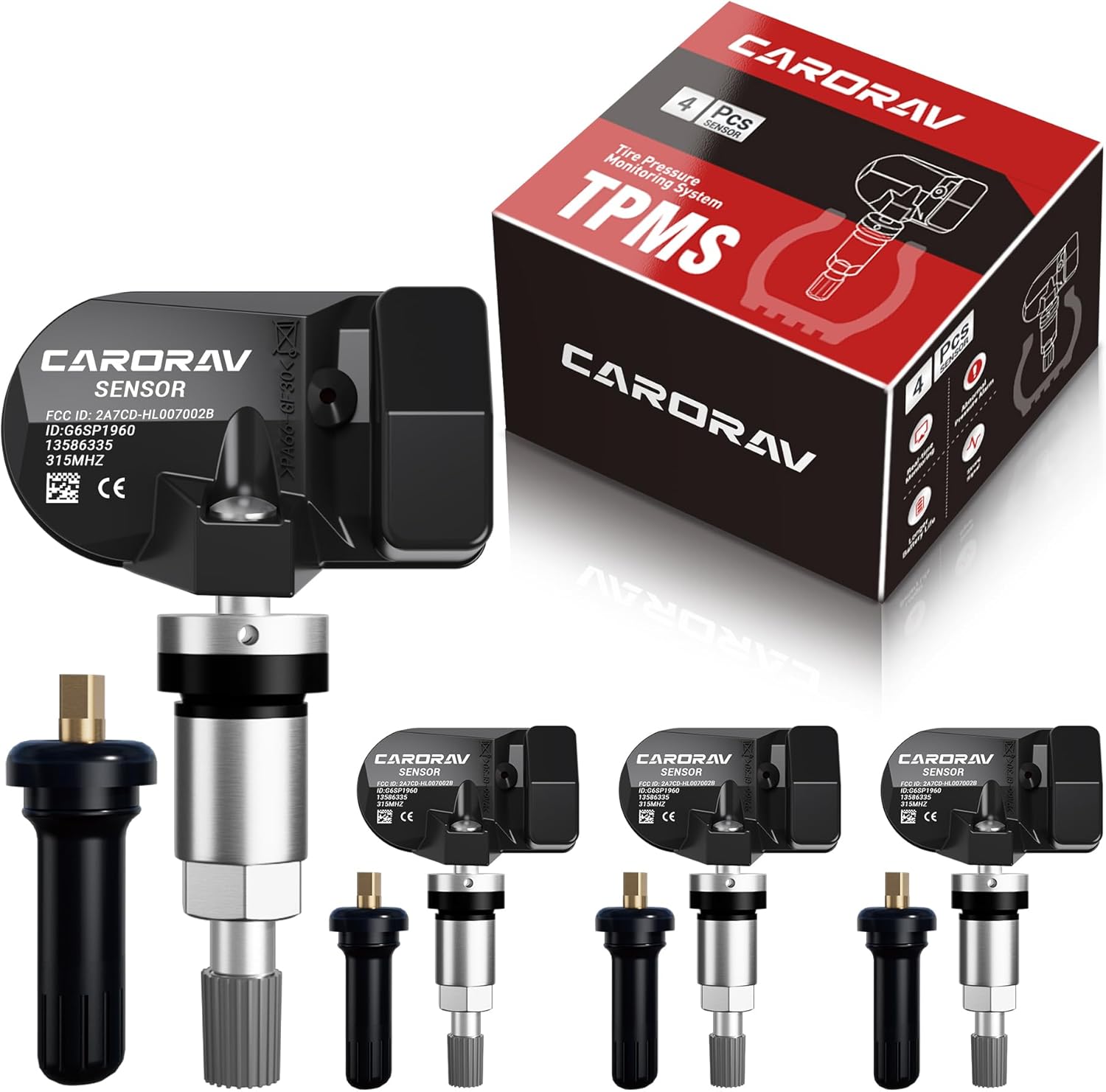
Replace worn or missing TPMS sensors with CARORAV pre-programmed GM-compatible sensors for a smoother installation experience. These 315MHz replacement sensors help monitor tire pressure in real time with long battery life, and they are designed to withstand harsh temperatures. Manual or OBDII relearn may be required to reset the system for proper recognition.

Marsflex brand TPMS replacement sensors help restore tire pressure monitoring for compatible Toyota, Lexus, Scion, and Pontiac models. Each sensor is pre-programmed for the vehicle application and includes a long-life battery for up to 8 years of normal use. Designed to replace common OE numbers and requires relearning using a TPMS scan tool after installation.

Replace worn or malfunctioning GM TPMS sensors with this 433MHz pre-programmed sensor set designed for compatibility with many Chevrolet, Buick, GMC, and Cadillac models. It includes guidance for proper OBDII relearning/pairing after installation and supports reliable long-term operation with a high-performance CR2032 battery. Quality tested for durability and performance to help restore accurate tire pressure monitoring.
Frequently Asked Questions
Can I replace Toyota Hilux TPMS sensors myself?
You can handle basic checks yourself, such as checking cold tire pressure, reading codes with a compatible tool, and confirming the warning light pattern. Replacing the sensor inside the wheel is different because the tire must be dismounted, remounted, inflated, and balanced. Use a tire shop unless you have proper tire-service equipment.
What is the life expectancy of a Toyota TPMS sensor?
Many direct TPMS sensors last several years because the internal battery is designed for long service life. Age, mileage, temperature, corrosion, impacts, and driving conditions can shorten that life. If your sensors are near 8–10 years old, ask the shop to scan all of them before replacing only one.
Do Toyota TPMS sensors need to be programmed?
Yes, a replacement sensor usually needs programming, ID registration, or relearn so the ECU recognizes it. Some aftermarket sensors must also be programmed before installation so they match the Toyota protocol. A simple tire-pressure reset may not register a brand-new sensor ID.
How do I know when to replace a TPMS sensor?
Replace a TPMS sensor when a scan shows no signal, a dead or weak sensor battery, a damaged valve stem, internal corrosion, or a sensor that cannot be registered. A flashing TPMS light followed by a steady light is also a strong reason to scan the system for a malfunction.
Can I drive with the TPMS light on?
You should stop and check tire pressure as soon as it is safe. If the tires are properly inflated but the TPMS light remains on, the vehicle may have a system fault. You can usually drive carefully to a tire shop, but do not ignore the light because you may miss a real low-pressure problem later.
Should I replace one TPMS sensor or all four?
Replace only the failed sensor if the others scan well and are not old. Consider replacing all four if the sensors are near the same age, the tires are already being replaced, or the scan shows weak signals from multiple sensors.
Conclusion
Replacing your Toyota Hilux TPMS sensor is straightforward when you treat it as a complete system repair. First, confirm the tire pressure and scan the sensor. Then match the correct replacement, install it with new valve hardware, register the sensor ID, and verify the live readings. That process prevents repeat warning lights and helps your Hilux keep accurate tire-pressure monitoring.
Sources
- NHTSA TireWise — TPMS function, cold tire-pressure checks, warning-light behavior, and tire maintenance guidance.
- Toyota Owners Manuals and Warranties — official Toyota manual access for model-specific procedures and vehicle information.
- Toyota UK Owner’s Manuals — official manual portal for Toyota models, including Hilux market support.
- Toyota UK Warning Signs and Sensors — Toyota dashboard warning-light guidance and dealer support direction.