
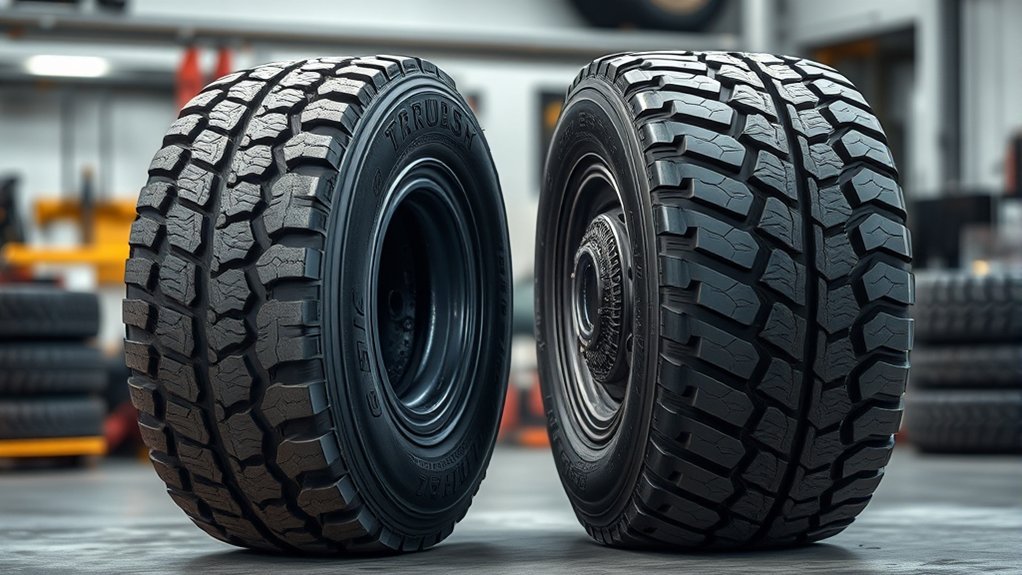
A recap tire, also called a retread tire, is a used tire casing that has been inspected, prepared, and fitted with new tread. You will see recap tires most often in commercial trucking, buses, trailers, and fleet work because they can lower tire costs and reduce waste when the casing is sound. They are not automatically unsafe, but they are not right for every vehicle, axle position, or driving condition.
Quick Answer
A recap tire is a retreaded tire made by bonding new tread to a carefully inspected used casing. It can be a smart choice for commercial fleets, trailers, and some truck applications, but you should check DOT markings, casing history, load rating, axle position rules, and retreader quality before buying.
Key Takeaways
- A recap tire uses a serviceable tire casing with new tread bonded to it.
- Retreads are most common in commercial fleets, truck, trailer, bus, and specialty service.
- Quality depends on casing inspection, repair limits, tread choice, curing control, and final inspection.
- U.S. passenger retreads must meet federal performance, labeling, and certification requirements under 49 CFR 571.117.
- Do not choose a recap only because it is cheaper; match it to load, speed, axle position, route, and service conditions.
What Is a Recap Tire?
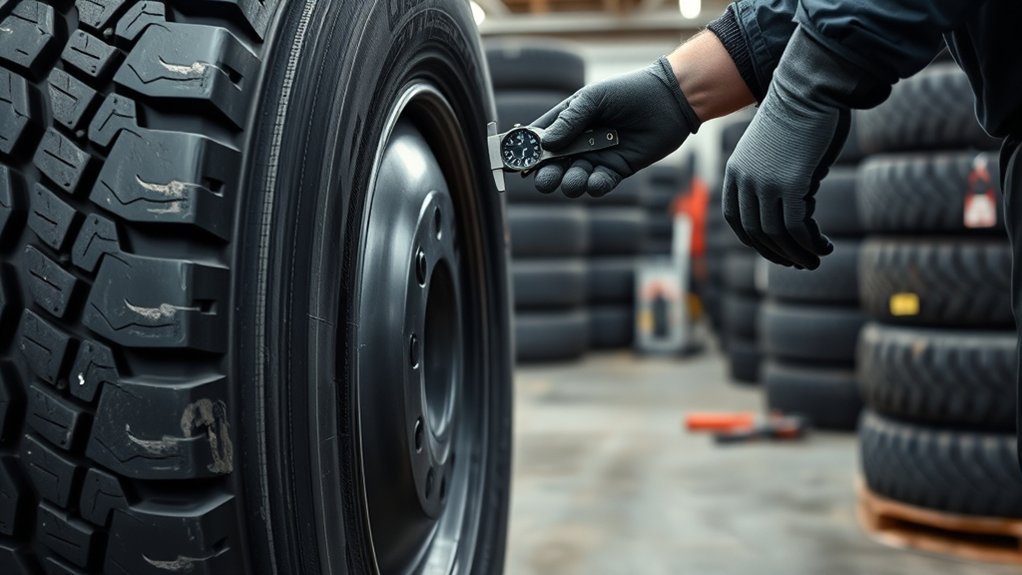
A recap tire is a tire rebuilt from an existing casing. The worn tread is removed, the casing is inspected, and a new tread layer is bonded to the tire. In federal wording, a casing is a used tire that can receive additional tread, and a retreaded tire is made by attaching tread to that casing.
Recapping works best when the casing still has strong structure, no unsafe damage, and the right history for the job. A casing that has been overloaded, run underinflated, damaged by road hazards, or repaired poorly may not be a good retread candidate.
You will see recap tires most often in commercial tire programs. Major commercial tire makers list retread and recap products for different positions and uses, including drive, trailer, regional, and line-haul service. That does not mean every retread fits every vehicle. It means retreads can work well when the retreader, casing, tread design, and application all match.
Are Recap Tires Safe and Legal?
Recap tires can be safe and legal when they meet the rules for their tire type and are used in the right application. In the United States, 49 CFR 571.117 covers retreaded pneumatic passenger car tires and sets performance, labeling, and certification requirements.
For commercial vehicles, you also need to check tire condition, tread depth, loading, inflation, speed restrictions, and axle-position rules. Under 49 CFR 393.75, no bus may operate with regrooved, recapped, or retreaded tires on the front wheels. That rule is important because some buyers wrongly assume a legal retread can go anywhere on any vehicle.
Warning: Never install a recap tire on a passenger vehicle, bus, truck, trailer, or steer axle without confirming the tire’s DOT marking, load rating, speed rating, axle-position suitability, and legal use with a qualified tire professional.
Safety Standards
A good recap starts before new rubber is added. The retreader should inspect the casing for exposed cords, separations, puncture damage, sidewall damage, belt issues, bead damage, repairs, age, and evidence of underinflation or overload. If the casing fails inspection, it should not be retreaded.
The final tire should match the vehicle’s required size, load rating, inflation pressure, and service type. For passenger retreads, federal rules require the retreaded tire to meet safety criteria similar to those for new pneumatic passenger car tires and to carry required labeling.
Legal Compliance
Legal compliance depends on the tire type and how you use it. A passenger-car retread must satisfy the passenger-retread standard. A commercial tire must also comply with the rules that apply to the vehicle and operation.
- Check for the required DOT marking on passenger retreads.
- Match the tire size, load rating, and inflation pressure to the vehicle.
- Follow axle-position restrictions, especially bus front-wheel rules.
- Do not exceed any speed restriction marked on the tire.
- For fleets, keep inspection, repair, and maintenance records when required.
Retread Performance
A high-quality retread can deliver dependable service, especially in fleets that track tire history and maintain proper inflation. Performance depends on casing quality, tread design, route type, load, speed, alignment, and driver habits.
A recap tire is not a shortcut around maintenance. If you overload it, run it underinflated, ignore tread depth, or use it in the wrong position, you increase heat, casing stress, and failure risk. Treat a retread as a managed tire asset, not a bargain-bin replacement.
How Recap Tires Are Made
Recap tires are made through a controlled retreading process. The exact equipment varies by retreader, but the core steps are similar.
A recap tire is only as good as its casing inspection, tread match, bonding process, and final quality check.
- Initial inspection: The retreader checks the casing inside and outside for damage, repairs, age, and structural problems.
- Buffing: The worn tread is removed to create a clean, even bonding surface.
- Repair and preparation: Approved minor injuries may be repaired, while unsafe casings are rejected.
- Tread application: New tread rubber is applied using a pre-cure or mold-cure process.
- Curing: Heat, pressure, and time bond the new tread to the casing.
- Final inspection: The finished recap is checked before it returns to service.
Common Recap Tire Types and Uses

The two common retread methods are pre-cure and mold-cure. Both can work well when the casing and process are right, but they suit different production needs and tread designs.
[Products Worth Considering]

The SAFELIFE dial tire tread depth gauge measures tread depth in 1/32 inch increments with clear, easy-to-read 2-inch dial face. Color zones using a traffic light system help you quickly judge whether tread is low, marginal, or ample for safer driving. Built with a durable zinc cast body and a metal detect probe for precise, comfortable use across cars, motorcycles, trucks, and buses.

Monitor tire tread wear with a smart, color-coded depth gauge that shows clear condition ranges at a glance. The bar is range marked for fast, easy readings, helping you maintain safer traction and performance. Each gauge is portable with a pocket clip, and the set includes 20 units for daily use and sharing.

Accurately measure tire tread depth with a calibrated gauge marked from 0 to 1 inch in 1/32 inch increments. The color-coded bar helps you quickly identify tread condition ranges, supporting safe driving for trucks, motorcycles, automobiles, and passenger vehicles.
Pre-Cure Recaps
Pre-cure recaps use a tread strip that has already been formed and cured. The retreader bonds that tread strip to the prepared casing, then cures the assembly so the tread and casing hold together.
This method gives retreaders flexibility across different tire sizes and tread patterns. You may see a visible seam where the tread strip ends meet. That seam is normal when the tire is built correctly and passes inspection.
- Often used for commercial truck and trailer programs
- Allows many tread designs without a dedicated mold for every pattern
- Can support drive, trailer, and regional applications when matched correctly
- Depends heavily on casing prep and bonding quality
Mold-Cure Recaps
Mold-cure recaps use uncured rubber applied to the prepared casing. The tire goes into a mold where heat and pressure form the tread pattern and bond the rubber to the casing.
This process is closer to new-tire manufacturing because the tread pattern is shaped in the mold. It can create a seamless tread appearance, but it requires a mold for the tire size and pattern. You will often see mold-cure retreads in commercial programs that need consistent tread design and performance.
Where Recap Tires Make the Most Sense
Recap tires usually make the most sense when tire use is predictable and records are strong. Fleets can track casing age, repairs, inflation, loads, routes, and mileage. That makes it easier to decide whether a casing is worth retreading.
- Commercial trucks: Common for drive and trailer positions when the casing qualifies.
- Trailers: Often a practical fit because trailer tires can be managed by load, route, and tread needs.
- Regional fleets: Useful when maintenance teams inspect tires often and replace damaged casings quickly.
- Buses: Use is restricted by position. Do not use recapped, retreaded, or regrooved tires on bus front wheels under federal commercial vehicle rules.
- Passenger vehicles: Less common today. Use only if the tire is DOT-compliant, properly sized, and approved by a qualified professional.
[Products Worth Considering]

Milton S-921 pencil tire pressure gauge helps you maintain optimal tire pressure for passenger cars with accurate readings in PSI and kPa. It features a built-in deflator valve for convenient pressure adjustments, plus a single chuck head and nylon indicator bar for easy use on the go. Built from durable plated brass and designed for reliable performance, it’s a practical road trip and cold-weather maintenance tool.

Measure tire tread depth quickly and accurately with this LUMITECO dial gauge that reads in 1/32" increments up to 14/32". The color-coded green/yellow/red zones make it easy to judge tire wear and know when replacement is needed. A rugged, compact design with a protective pouch helps keep the gauge ready for use on cars, trucks, motorcycles, and more.

Measure tyre tread depth precisely with a digital gauge that reads in both MM and inches, helping you monitor safe driving conditions. The large LCD screen is easy to operate, and the compact tool fits for cars, trucks, and motorcycles. It provides high accuracy with a 0-25.4mm range and includes a 1-year warranty for added peace of mind.
Recap Tire Benefits for Fleets
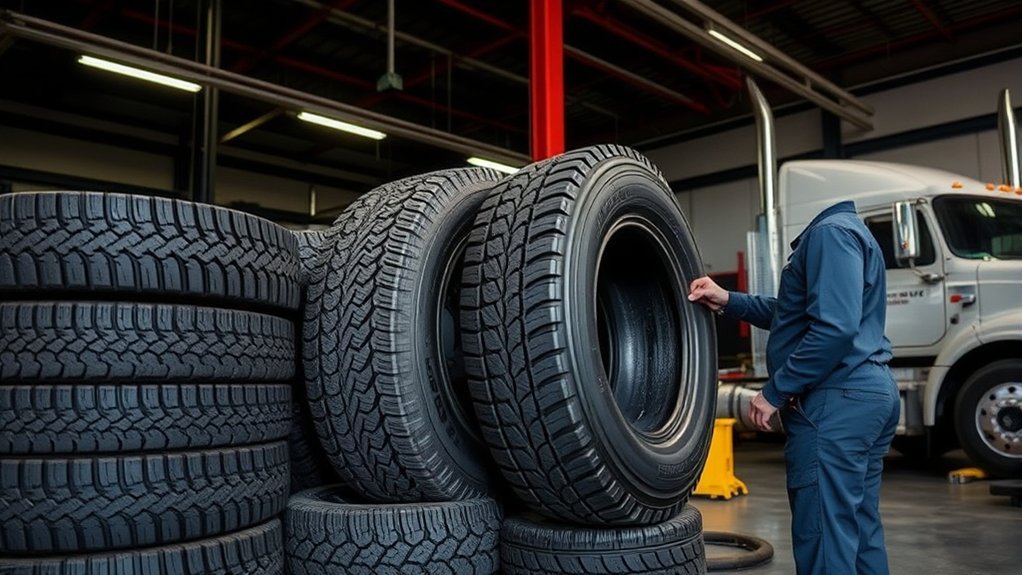
For fleets, the biggest benefit is usually cost control. A casing that qualifies for retreading can return to service instead of being replaced with a full new tire. That can reduce tire spend, especially when the fleet buys quality casings and protects them through proper inflation and inspections.
Retreading also reduces waste because it keeps a usable casing in service longer. You still need to compare the full cost, including casing value, retread price, downtime, roadside risk, warranty terms, and expected service life.
- Lower replacement cost than buying every tire new
- Better use of high-quality casings
- Less waste than discarding a serviceable casing after one tread life
- More control when fleets track inspection and maintenance records
Recap Tire Risks, Limits, and Lifespan
A recap tire can fail early if the casing has hidden damage, the retread process is poor, or the tire is used outside its limits. Heat is a major enemy. Underinflation, overload, high speed, poor alignment, road impacts, and mismatched dual tires can all raise heat and stress.
Do not rely on a single mileage number for recap tire lifespan. A retread used on a well-maintained trailer route may last much longer than one used in severe stop-and-go work, construction service, high heat, or overloaded conditions. Ask the retreader for expected mileage, warranty terms, repair limits, and recommended axle positions for that exact tread.
Note: Road debris does not prove a tire was a retread. New tires and retreaded tires can both fail when they are damaged, overloaded, underinflated, or poorly maintained.
How to Choose a Recap Tire
Start with the vehicle and job, not the price. A recap that fits a trailer route may be wrong for a steer axle, bus front axle, severe-service truck, or passenger vehicle.
- Check legal use: Confirm the tire is legal for your vehicle type and axle position.
- Verify markings: Look for DOT labeling where required, size, load rating, speed rating, and inflation information.
- Ask about the casing: Request age, brand, repair history, number of retreads, and inspection results.
- Match the tread: Choose a pattern built for your route, weather, axle position, and surface type.
- Review warranty terms: Ask what is covered, what is excluded, and how claims are handled.
- Use a qualified installer: Have the tire mounted, inflated, balanced, and inspected by a tire professional.
Pro Tip: For fleet use, track each casing by ID number. Record its original brand, first service date, repairs, retread cycles, axle positions, pressure checks, and removal reason before approving another retread.
[Products Worth Considering]

This 100-piece set of snap-in tubeless tire valve stems is designed for standard 0.453 in (11.5 mm) rim holes and helps maintain reliable, steady tire pressure. Made with ozone-resistant rubber and brass cores, the valves are built for durability and long-term use. Easy to install by hand, they support safe driving and are suitable for cars, light trucks, trailers, and more.

ETENWOLF T300 is a calibrated digital tire pressure gauge for accurate readings from 3 to 200 PSI across light and heavy-duty vehicles. It includes thermal compensation for reliable performance in extreme cold or heat, with an auto shut-off to extend battery life and an LED for easier reading. The sturdy design supports rugged everyday use, making it ideal for pickups, RVs, and industrial applications.
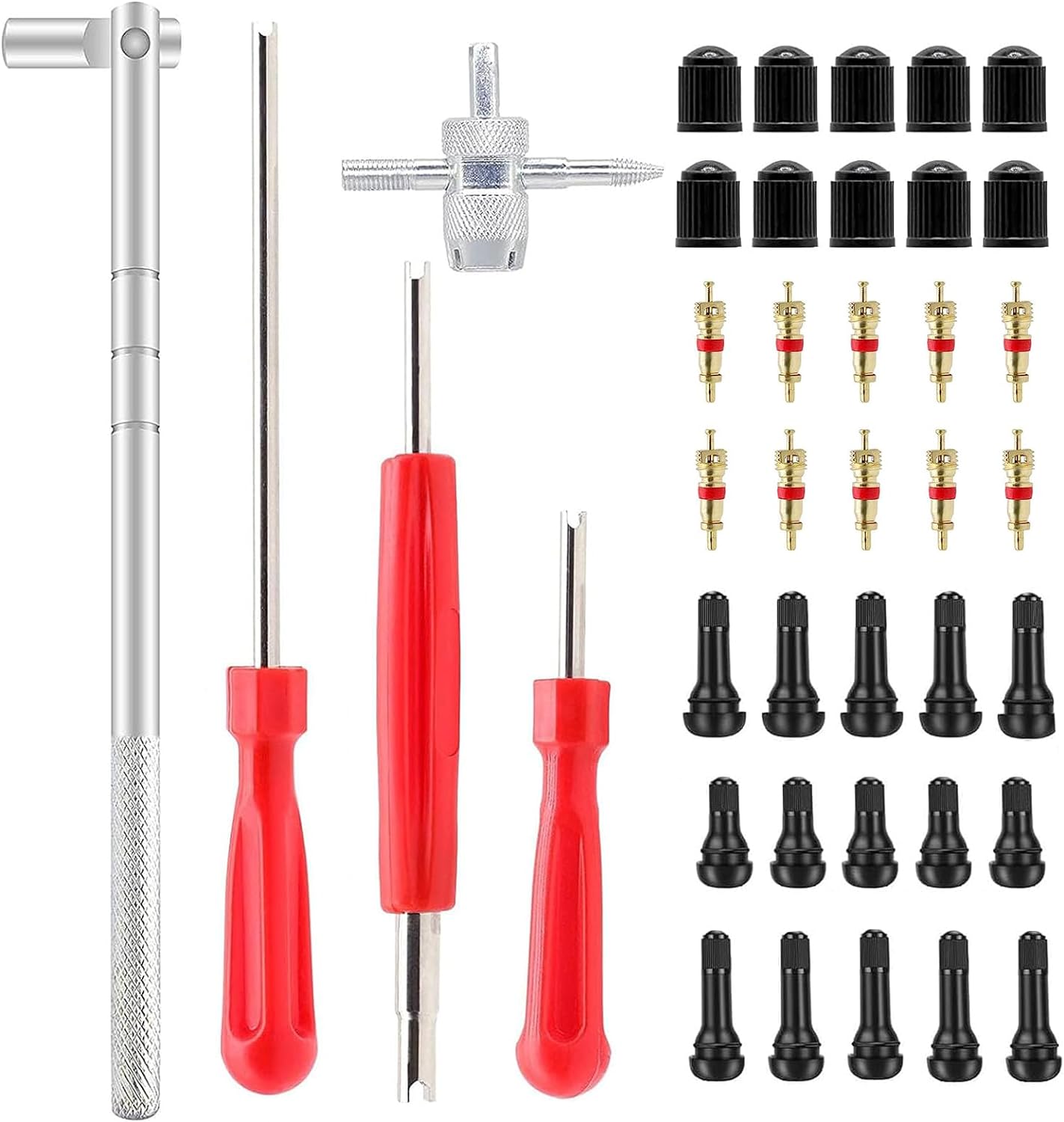
This ZHSMS valve stem puller and installer tool set makes it easy to remove and install tire valve stems without damaging wheels or valves. It uses a leverage design to save effort and includes valve stem tools plus removable valve core functionality for quick tire repairs. Compatible with tubeless tires for passenger cars, motorcycles, ATVs, off-road vehicles, and trucks.
Recap Tire Maintenance Tips
Maintenance decides whether a recap tire gives good value. Check inflation when tires are cold, inspect for cuts and sidewall damage, watch tread depth, and remove tires with exposed cords, separations, audible leaks, or unsafe repairs.
For commercial fleets, federal rules require systematic inspection, repair, and maintenance of covered vehicles, along with records for each controlled motor vehicle. Good records also help you decide which casings are worth retreading again.
- Check cold inflation pressure on a regular schedule.
- Inspect tread, sidewalls, beads, and valve stems.
- Keep dual tires matched by size, pressure, and wear.
- Fix alignment or suspension issues that create irregular wear.
- Remove damaged tires before they damage the casing beyond retread limits.
Frequently Asked Questions
How long do recap tires last?
A recap tire’s lifespan depends on casing quality, tread design, axle position, load, inflation, alignment, road surface, speed, heat, and maintenance. Do not rely on a universal mileage number. Ask the retreader for expected service life and warranty terms for your exact tire and application.
Are recap tires any good?
Yes, recap tires can be good when they come from a reputable retreader, use a qualified casing, match the vehicle’s load and route, and receive proper maintenance. They are most useful in commercial settings where tire history and inspections are carefully tracked.
Are recap tires cheaper than regular tires?
Recap tires often cost less than comparable new tires, especially for fleets that reuse quality casings. The real value depends on retread price, casing value, downtime risk, warranty, mileage, fuel use, and maintenance. The cheapest recap is not a good deal if it is wrong for the job.
Can you still buy recapped tires?
Yes, you can still buy recapped tires, especially through commercial tire dealers and retread programs. Before buying, confirm the tire’s legal use, DOT marking where required, casing history, load rating, speed rating, tread design, warranty, and recommended axle position.
Can recap tires be used on steer axles?
It depends on the vehicle, tire, laws, and fleet policy. Federal commercial vehicle rules specifically prohibit buses from using regrooved, recapped, or retreaded tires on the front wheels. For other vehicles, check the tire’s rating, manufacturer guidance, fleet policy, and applicable regulations before using any recap on a steer axle.
Conclusion
A recap tire can be a smart, cost-conscious tire choice when the casing is strong, the retreader is reputable, and the tire matches the job. It can also be the wrong choice if you ignore load, speed, axle position, legal limits, or maintenance.
Before you buy, check the DOT marking where required, ask for casing and inspection records, confirm the tire’s legal use, and match the tread to your route. If you manage those details carefully, a quality recap can help you reduce waste and control tire costs without guessing on safety.
Sources
- 49 CFR 571.117, Standard No. 117; Retreaded pneumatic tires — supports passenger retread definitions, performance, labeling, and certification requirements.
- 49 CFR 393.75, Tires — supports commercial vehicle tire condition, tread depth, loading, inflation, speed, and bus front-wheel restrictions.
- 49 CFR 396.3, Inspection, repair, and maintenance — supports fleet inspection, maintenance, and recordkeeping guidance.
- Michelin Commercial Retreads — supports commercial retread/recap availability and common application categories.
- Michelin Retread Technologies White Paper page — supports industry discussion of retread misconceptions and commercial retread use.

