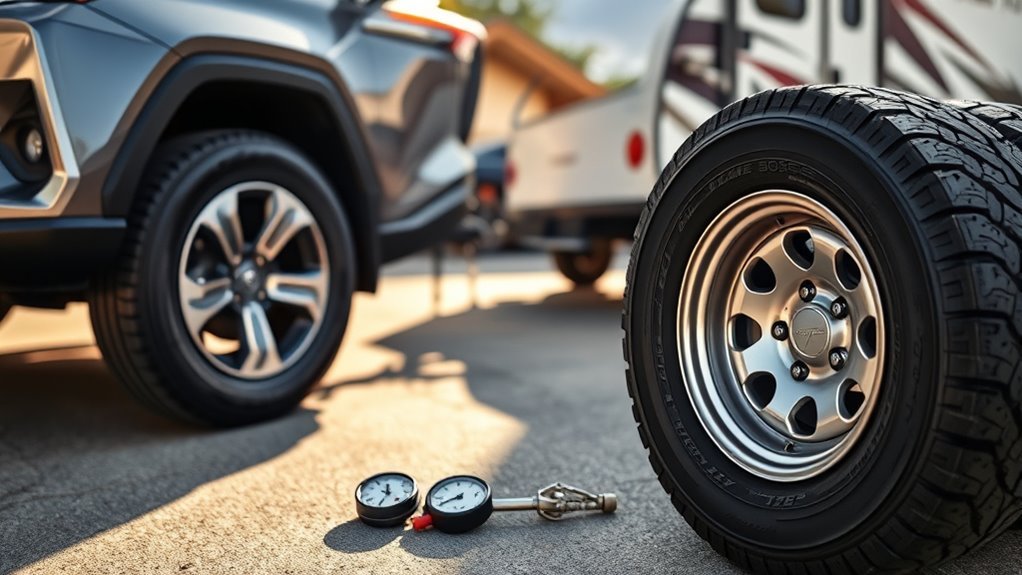
Towing with a Toyota RAV4 puts extra stress on every tire, especially the rear tires. Added tongue weight, heat, and sidewall flex can hurt stability if you use the wrong tire. This guide explains how to choose tires with the right load rating, tread type, pressure range, and maintenance habits for safer RAV4 towing.
What’s in This Article
- Quick Picks: Best Tires for RAV4 Towing
- How Towing Changes RAV4 Tires
- Tire Ratings That Matter for Towing
- Which Tire Types Should You Pick?
- Recommended Tire Sizes for RAV4 Towing
- Set Tire Pressure for Safe Towing
- Best Tire Models for RAV4 Towing by Use Case
- How Tire Weight and Rolling Resistance Affect MPG
- Winter and Wet-Weather Towing With a RAV4
- Towing Tire Maintenance Checklist for RAV4 Owners
- Frequently Asked Questions
Quick Answer
For RAV4 towing, choose tires that meet or exceed Toyota’s required load rating and fit the factory tire size unless a qualified tire shop confirms a safe alternative. Extra Load (XL) tires can help with sidewall support, but the correct load index, pressure, and tread type matter more than a rugged look. Use all-season tires for paved towing, highway all-terrain tires for mixed routes, and winter tires with the Three-Peak Mountain Snowflake (3PMSF) symbol for snow or ice.
Key Takeaways
- Match or exceed your RAV4’s required tire load index before you tow.
- Choose XL tires when you need more sidewall support in the same factory size.
- Keep the stock tire size unless you confirm clearance, speedometer accuracy, and load capacity.
- Set cold tire pressure from the door placard, owner’s manual, and tire sidewall limits.
- Inspect tread, sidewalls, and pressure before each towing trip.
Quick Picks: Best Tires for RAV4 Towing (3 Short Recommendations)
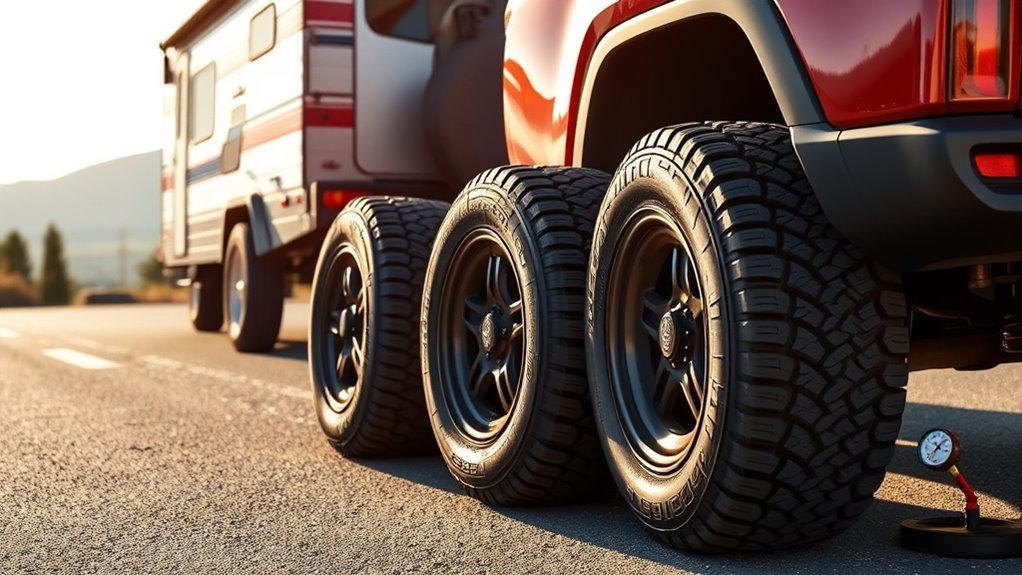
If you tow with your RAV4, pick tires that balance load capacity, sidewall support, wet grip, and road noise. Start by checking the exact size and load index on your current tires and the tire placard inside the driver door. Then compare tires that meet or exceed those ratings.
Falken WildPeak A/T Trail works well when you tow on pavement but still use gravel, camp roads, or light trails. Its crossover-focused all-terrain tread gives you more bite than a standard touring tire without the weight of many truck tires.
Firestone Destination A/T2 suits drivers who want a lighter all-terrain feel with decent comfort on the road. Michelin Defender LTX M/S, where available in the correct size and rating, favors long wear, highway manners, and steady all-season grip.
Toyo Open Country A/T III can make sense if you need stronger off-road traction, but expect more tread noise than a quiet touring tire. Match your final choice to your trailer weight, route, weather, and comfort needs.
[Products Worth Considering]

Measure tire tread depth quickly and accurately with this LUMITECO dial gauge that reads in 1/32" increments up to 14/32". The color-coded green/yellow/red zones make it easy to judge tire wear and know when replacement is needed. A rugged, compact design with a protective pouch helps keep the gauge ready for use on cars, trucks, motorcycles, and more.

Monitor tire tread wear with a smart, color-coded depth gauge that shows clear condition ranges at a glance. The bar is range marked for fast, easy readings, helping you maintain safer traction and performance. Each gauge is portable with a pocket clip, and the set includes 20 units for daily use and sharing.

Add style while helping protect your tire valve stems with handmade crystal rhinestone caps and a durable plastic insert. These caps resist corrosion and help keep out rain, snow, and muddy water, extending tire life. Textured non-slip design makes them easy to grip for quick install and removal when checking tire pressure.
How Towing Changes RAV4 Tires (Loads, Heat, Wear)
Towing adds tongue weight to the rear of your RAV4 and raises the load each tire must carry. That added load makes the tire sidewall flex more, which can build heat and speed up wear.
You need tire selection that favors enough load capacity, stable sidewalls, and tread compounds that can handle longer highway runs. A soft or underinflated tire can feel vague when the trailer pushes or pulls during lane changes.
Added vertical and lateral force can also change wear patterns. Watch for shoulder wear, center wear, cupping, or uneven tread depth across the tire.
Warning: Don’t tow on tires with sidewall bulges, exposed cords, deep cuts, or uneven wear that affects control.
Check pressures before the trip, inspect the tires after heavy towing, and rotate them on schedule. Treat tires as towing equipment, not just routine wear parts.
Tire Ratings That Matter for Towing (Load Index, XL/Ply, Speed)
When you tow with your RAV4, the tire rating matters as much as the tread pattern. Focus on load index, construction type, speed rating, and maximum cold inflation pressure.
Load Index Importance
The load index tells you the maximum weight each tire can carry at its rated pressure. Choose a tire that meets or exceeds the load index required for your RAV4.
Do not guess based on tire appearance. Two tires in the same size can have different load indexes, sidewall designs, and inflation limits.
Factor in passengers, cargo, hitch weight, and trailer tongue weight before you choose. A tire with too little load capacity can overheat or wear faster under tow.
Ply and XL Ratings
Extra Load (XL) tires can carry more weight than Standard Load tires in the same size when inflated correctly. They can also feel more stable because the casing supports towing loads better.
Passenger-car ply terms can confuse buyers, since modern tires don’t always use the same number of fabric layers that old ply ratings suggest. Use the actual load index and service description instead of relying only on “ply” language.
Light Truck (LT) tires can add strength, but they may also add weight, ride harshness, and rolling resistance. Many RAV4 owners get better results from a correctly rated passenger or crossover tire.
Speed Rating and Heat Control
The speed rating shows the tire’s tested speed capability under specific conditions. You still need to obey towing speed limits, trailer limits, and road conditions.
Heat builds faster when you tow at high speed, carry extra cargo, or run low pressure. A tire with the right speed and load rating helps reduce that risk.
Which Tire Types Should You Pick: All-Season, All-Terrain, or Highway-AT?
If you tow mostly on paved roads with moderate loads, all-season tires often give you the best mix of comfort, handling, and fuel economy. They usually weigh less than aggressive all-terrain tires and make less road noise.
Choose all-terrain tires if you often tow on dirt, gravel, mud, rutted roads, or steep unpaved grades. Their stronger tread blocks and sidewall designs can improve traction, but they can reduce fuel economy.
Pick highway all-terrain tires when you want a middle ground. They run quieter on pavement than many full all-terrain tires but still offer more grip on rough camp roads.
For snow or ice, choose winter tires marked with the Three-Peak Mountain Snowflake (3PMSF) symbol. All-wheel drive can help you move, but it doesn’t replace winter braking traction.
[Products Worth Considering]
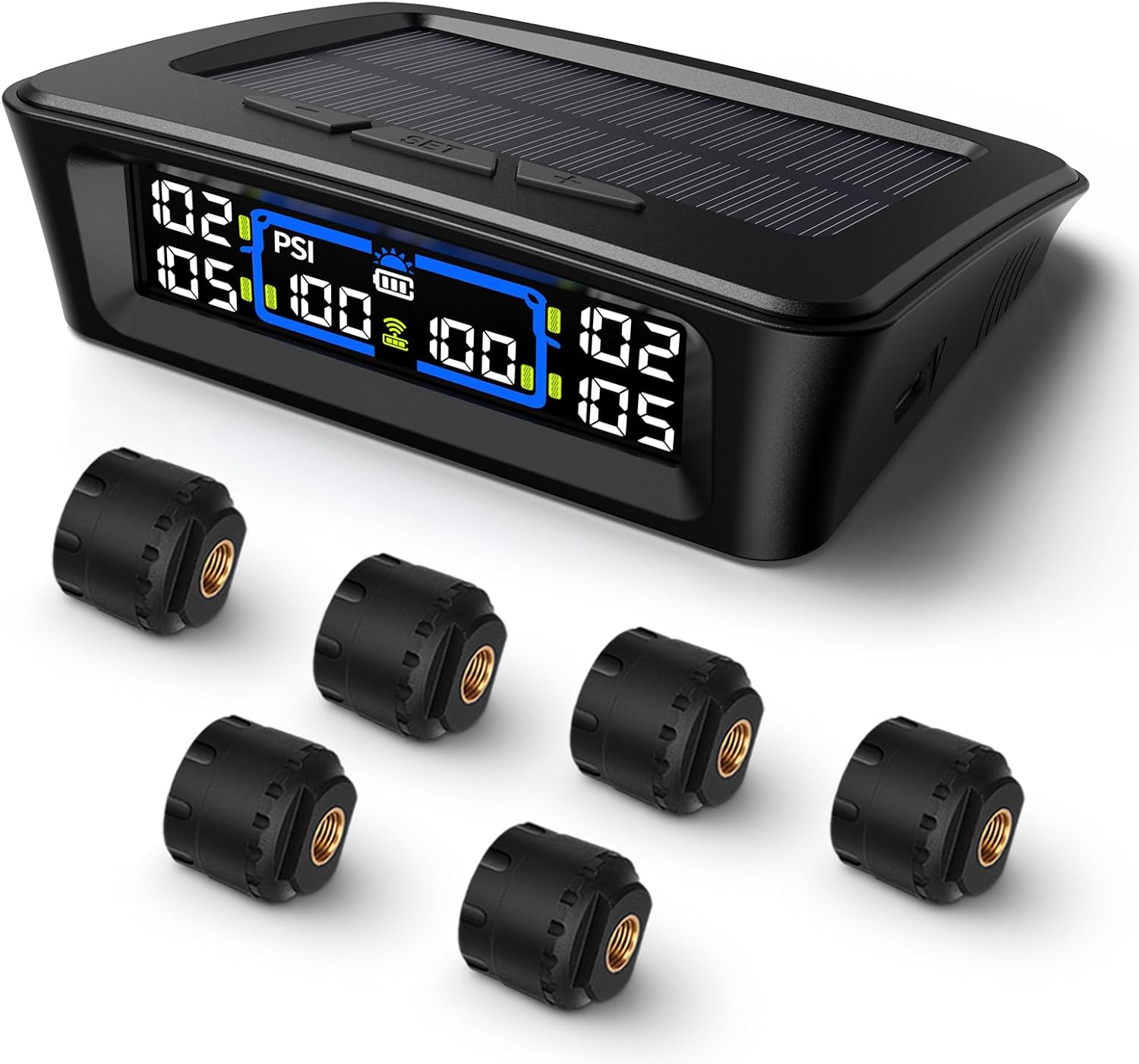
The Tymate TM12 RV TPMS delivers real-time tire pressure and temperature monitoring with a stable 433Hz display for safer long-distance driving. It supports simultaneous monitoring across vehicle and trailer zones, includes six alarm modes for pressure, temperature, leakage, battery, and signal loss, and features easy DIY installation with auto calibration. Power is supplied via USB-C charging or solar recharging, with a wide 0–144 PSI range and up to 50 ft signal coverage for RVs and towable trailers.

Keep your tires properly inflated with this analog VONDIOR tire pressure gauge, designed for fast, easy readings without batteries. The swiveling, two-axis hose and large glow dial help you measure at any tire angle with instant visibility. Built with a protective rubber shield, it supports durable, low-maintenance use for cars and trucks.

Secure your vehicle during transport with this 4-pack of heavy-duty tire tie down straps designed for trailers and hauling. The ratchet system with flat hooks and D-rings helps you tension the straps quickly, while the wheel-friendly design protects tires. With high break strength and corrosion-resistant hardware, these straps provide reliable, confidence-inspiring tie-down security for cars, trucks, and UTVs.
Recommended Tire Sizes for RAV4 Towing (When to Keep Stock)
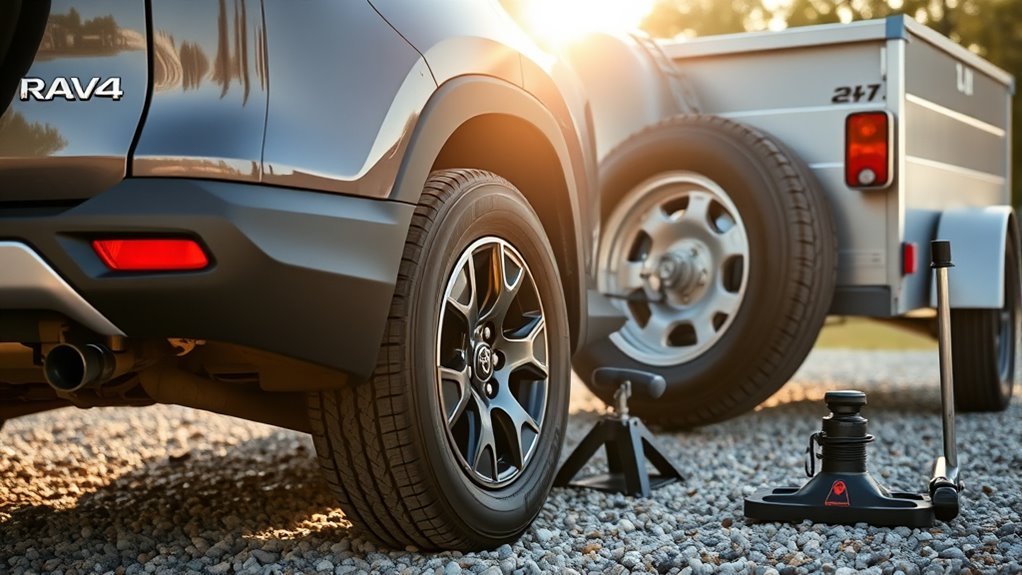
For most RAV4 towing, the safest choice is to keep the factory tire size shown on your tire placard. Many RAV4 trims use sizes such as 225/65R17, 225/60R18, or 235/55R19, depending on model year and trim.
Stock sizing helps preserve steering feel, clearance, anti-lock braking system (ABS) calibration, speedometer accuracy, and all-wheel-drive behavior. It also makes load-index matching easier when you shop.
If you need stronger support, look for a higher load index or XL construction in the same factory size. That approach adds capacity without changing diameter or section width.
If you want a different tire size, confirm safe fitment before buying. Check wheel width, suspension clearance, fender clearance, drivetrain needs, and trailer load.
Note: Towing capacity varies by RAV4 model, year, drivetrain, engine, and towing package.
Set Tire Pressure for Safe Towing (PSI Table and Examples)
Set tire pressure when the tires are cold, before you drive more than a short distance. Use your driver’s door placard and owner’s manual as the starting point.
Do not inflate beyond the maximum cold pressure listed on the tire sidewall. If your manual gives towing-specific pressure guidance, follow that guidance first.
| Towing Situation | Pressure Approach | What to Check |
|---|---|---|
| No trailer or light cargo | Use the door placard pressure. | Check pressure monthly and before trips. |
| Small trailer with light tongue weight | Start at placard pressure unless your manual says otherwise. | Watch rear tire wear and handling feel. |
| Near the vehicle’s tow limit | Use towing guidance from the manual and tire load tables if available. | Confirm tire load index, tongue weight, and cargo weight. |
| Long highway tow in hot weather | Check cold pressure before leaving and inspect during stops. | Look for heat, sidewall damage, and pressure loss. |
Recommended PSI Ranges
Many RAV4 tires fall near the low-to-mid 30 PSI range for normal driving, but the exact number depends on your model. The placard gives the correct cold pressure for the factory size.
Avoid underinflation because it increases sidewall flex, heat, and shoulder wear. Avoid overinflation because it can reduce grip and create harsh ride quality.
Temperature changes affect tire pressure. Check pressure again when weather shifts or when you tow across large changes in elevation or climate.
Example Load Calculations
Start by adding trailer weight, cargo weight, passengers, and tongue weight. Tongue weight often falls near 10 to 15 percent of trailer weight, but you should measure it when possible.
For a 1,500-pound trailer, 10 percent tongue weight adds about 150 pounds to the hitch area. That extra load usually affects the rear tires more than the front tires.
Keep total vehicle weight, axle weight, hitch rating, and trailer weight within the limits for your RAV4. Tire pressure cannot fix an overloaded vehicle.
Best Tire Models for RAV4 Towing by Use Case (Commute, Light Off-Road, Winter)
For commute-focused towing, choose a tire that gives you calm highway manners, wet grip, and long tread life. Michelin CrossClimate2 and Continental CrossContact LX25 can suit this role when they match your size and load needs.
For light off-road towing, Falken WildPeak A/T Trail gives you stronger tread edges and better dirt-road grip than a basic touring tire. Toyo Open Country A/T III can suit tougher mixed routes, but check weight and noise before buying.
For winter towing, Bridgestone Blizzak WS90 can help with ice and packed snow when it fits your wheel size and load needs. You should still slow down, brake early, and leave more space with a trailer attached.
For hybrid owners, tire weight and rolling resistance matter because they affect efficiency. Pick the lightest tire that still gives you the required load index, traction, and durability.
[Products Worth Considering]

Upgrade your ride with a 2-pack set of 26x1.95 folding mountain bike tires built for dependable traction on mud, rocks, and trail surfaces. A reinforced puncture-resistant layer helps protect against sharp debris, while included butyl inner tubes provide strong sealing and shock absorption. Ready for fast swaps with included tire levers and universal sizing for most bikes.

The Topeak SmartGauge D2 delivers precise digital tire pressure readings for bikes, motorcycles, and sports equipment up to 250 psi (17 bar). Its rotating SmartHead works with both Presta and Schrader valves, so you can check pressure quickly without adapters. The LCD display makes it easy to read results in psi, bar, or kg/cm² with an included CR2032 battery for immediate use.

Vigorder rubber cement glue delivers superior adhesion and cures quickly within about 30 seconds for seamless rubber bonding. Once cured, it helps provide a strong, durable, waterproof seal that holds up to vehicle weight, pressure, and heat. Suitable for cars, motorcycles, trucks, bicycles, and off-road tires, it’s designed for emergency patch and maintenance repairs.
How Tire Weight and Rolling Resistance Affect MPG While Towing
Heavy tires and aggressive tread can lower fuel economy while you tow. They add rotating mass and rolling resistance, which makes the engine work harder.
Tire Weight Impact
Tire weight affects acceleration, braking, and the effort needed to hold speed on grades. A heavier all-terrain tire can feel tougher, but it may reduce miles per gallon.
Compare tire weights before buying. A few pounds per tire may not matter much alone, but the total effect can grow with cargo, trailer weight, and hills.
Rolling Resistance Basics
Rolling resistance comes from tire flex, tread design, rubber compound, and contact patch shape. Softer compounds and open tread blocks often increase drag.
Proper pressure helps reduce excess sidewall flex. It also helps the tire keep its intended shape under towing load.
Drivetrain Load Effects
More rolling resistance sends more load through the engine, transmission, brakes, and cooling system. You may notice this most on long climbs or hot highway trips.
Choose the tread you need, not the most aggressive tread you can fit. That choice protects fuel economy and keeps the RAV4 easier to drive.
Winter and Wet-Weather Towing With a RAV4: Tire Choices and Driving Tips
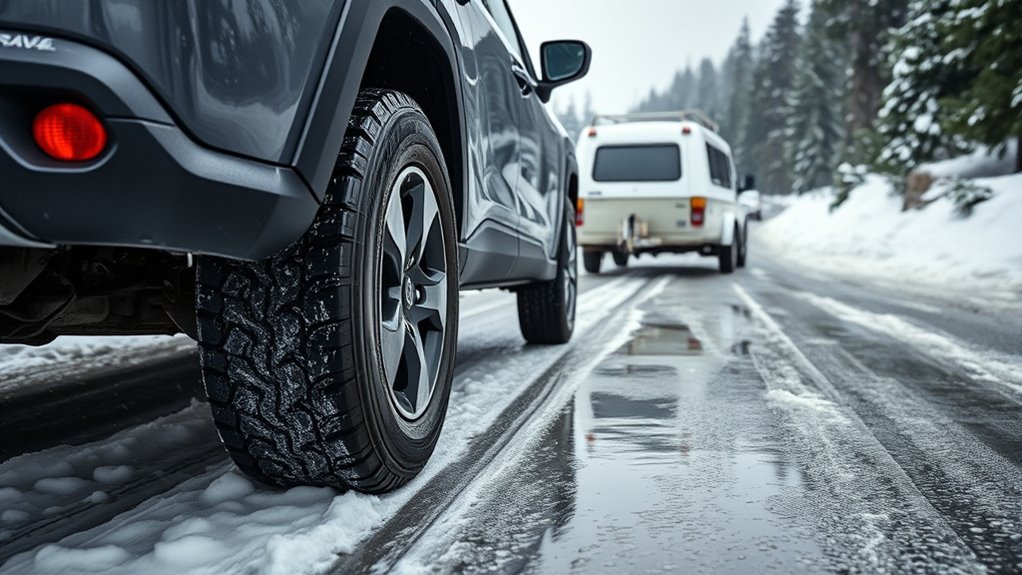
When you tow in winter or heavy rain, traction and control matter more than speed. Choose tires that match the weather and carry the load safely.
- Use 3PMSF-rated winter tires for regular snow, ice, or mountain travel.
- Choose tires with wide rain channels when you often tow in heavy rain.
- Check tread depth before trips because worn tread raises hydroplaning risk.
- Lower your speed and leave more space for braking with a trailer.
Falken WildPeak A/T Trail can help with wet gravel and slush, while Firestone Destination A/T2 can suit mixed roads. For ice and packed snow, a true winter tire gives you better braking control than an all-terrain tire.
Pro tip: Test braking at low speed in a safe area after you hook up the trailer.
Towing Tire Maintenance Checklist for RAV4 Owners (Inspect, Rotate, Break-In)
Before you hook up a trailer, inspect the RAV4’s tires for tread depth, sidewall damage, and correct cold pressure. Proper inflation and clean sidewalls help the tires carry trailer loads safely.
- Check cold tire pressure before each towing trip.
- Inspect tread depth and look for uneven wear.
- Look for sidewall cuts, cracks, bulges, or embedded objects.
- Rotate tires every 5,000 to 7,500 miles, or as your manual recommends.
- Balance and align the tires when you see vibration or uneven wear.
Break in new tires with calm driving for the first few hundred miles. New tires can feel slick at first because mold-release residue and full tread depth affect grip.
When Should You Replace RAV4 Tires Before Towing?
Replace tires before towing if tread depth sits near the legal limit, the sidewalls show damage, or the tire loses pressure repeatedly. A trailer adds stress that can expose weak tires quickly.
Also replace tires that show age cracking, uneven wear, or vibration that a shop can’t correct. If one tire fails under tow, the trailer can make the vehicle harder to control.
Frequently Asked Questions
Is a Toyota RAV4 Good for Towing?
Yes, a Toyota RAV4 can tow light trailers when you stay within the limit for your exact model. You also need proper hitch equipment, balanced loading, safe speeds, and tires with the correct load rating.
Which Tires Are Better for Towing?
The best RAV4 towing tires have the correct size, enough load index, strong sidewalls, and tread that matches your route. Use all-season tires for pavement, highway all-terrain tires for mixed roads, and winter tires for snow or ice.
Do XL Tires Help a RAV4 Tow Better?
XL tires can help when they come in the correct size and load rating for your RAV4. They support more load at higher rated pressure than standard-load tires, but they don’t increase the vehicle’s tow rating.
Should You Use Truck Tires on a RAV4 for Towing?
Light Truck tires may add strength, but they can also add weight, noise, and ride harshness. For many RAV4 owners, a properly rated crossover tire or XL tire works better than a heavy LT tire.
Can Tire Pressure Increase RAV4 Towing Capacity?
No, tire pressure cannot raise your RAV4’s towing capacity. Correct pressure helps the tires carry their rated load safely, but the vehicle, hitch, brakes, and drivetrain still set the towing limit.
Safety Disclaimer: This article is for informational purposes only and does not replace guidance from your Toyota owner’s manual, tire placard, tire manufacturer, or a qualified tire professional. Confirm tire size, load rating, pressure, and towing limits for your exact RAV4 before you tow.
Conclusion
The safest RAV4 towing tire is the one that fits your factory size, meets the required load rating, and matches your real driving conditions. Check the placard, confirm the load index, and choose tread based on pavement, gravel, rain, or snow. Keep pressures correct, inspect the tires often, and replace damaged tires before a trip. Do that, and your RAV4 can tow light loads with steadier handling and fewer tire problems.