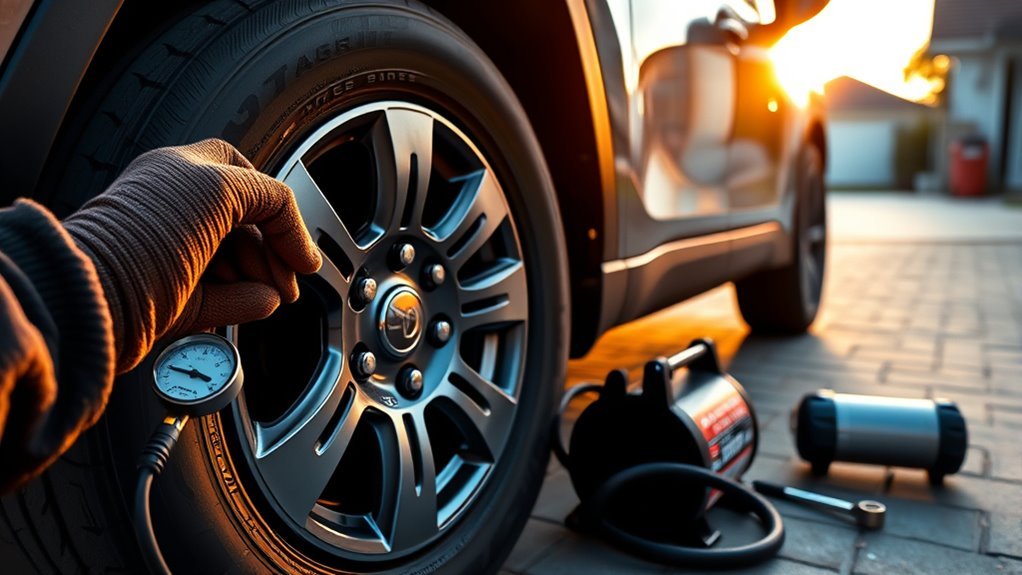
Keeping the right tire pressure in your Toyota RAV4 is one of the simplest ways to protect handling, braking, fuel economy, and tire life. The safest number is not guessed from the tire sidewall; it comes from the tire and loading information label on the driver’s door jamb or from your Toyota owner’s manual. Use a reliable gauge, check the tires when they are cold, and inspect the tread and sidewalls regularly so small problems do not become roadside emergencies.
Quick Answer
For a Toyota RAV4, check the cold tire pressure on the driver’s door jamb label, not the tire sidewall. Check pressure at least monthly, and Toyota owner materials recommend checking RAV4 tire inflation pressure once every two weeks. Adjust all tires with a gauge, then inspect tread, sidewalls, and wear patterns.
Key Takeaways
- Use the RAV4’s door-jamb tire label or owner’s manual for the correct cold PSI; the number on the tire sidewall is not the recommended driving pressure.
- Check tire pressure when the tires are cold, ideally before driving or after the vehicle has been parked for at least three hours.
- Rotate tires every 5,000 to 7,500 miles unless your owner’s manual, tire type, or driving conditions call for a different interval.
- Replace tires when tread reaches 2/32 inch, when wear bars are flush with the tread, or when you see bulges, exposed cords, deep cracks, or serious puncture damage.
- Do not rely on TPMS alone. A tire pressure warning light means you should stop safely and check the tires with a gauge as soon as practical.
At a Glance
| Time Required | 5–10 minutes for pressure checks; 10–15 minutes for a basic visual tire inspection |
| Difficulty | Easy for pressure checks and visual inspections; professional help recommended for alignments, repairs, and tire replacement |
| Tools Needed | Accurate tire pressure gauge, air compressor, tread depth gauge or penny, flashlight, and valve caps |
| Cost | Usually free if you already own a gauge; about $5–$20 for a basic gauge, more for professional rotation, balancing, alignment, or tire repair |
Why Tire Pressure Matters for Your Safety
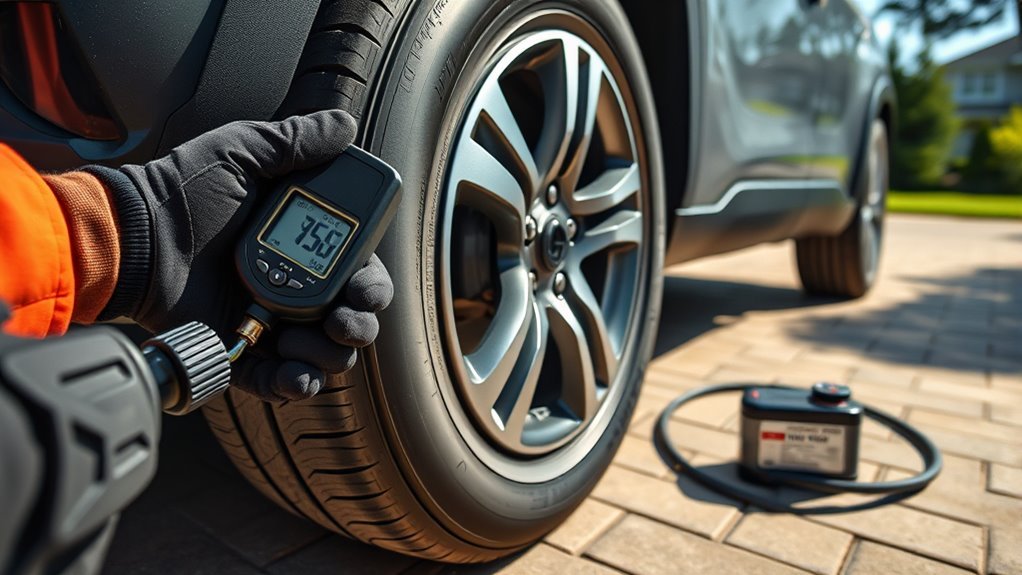
Proper tire pressure helps your Toyota RAV4 keep the correct contact patch with the road. That contact patch affects steering feel, braking distance, traction, fuel use, and how evenly the tread wears.
Underinflated tires flex more as they roll. That extra flex can build heat, reduce fuel efficiency, shorten tread life, and affect handling and stopping ability. Federal TPMS owner-manual language also warns that driving on a significantly underinflated tire can cause overheating and tire failure. You can read the safety wording in 49 CFR §571.138.
Overinflated tires can also create problems. If pressure is above the recommended cold PSI, the tire may ride harder, wear more in the center, and have less useful tread contact on rough or wet roads. The goal is not “as much air as possible.” The goal is the RAV4’s specified cold tire pressure.
The correct tire pressure for your RAV4 is the vehicle manufacturer’s listed cold PSI on the tire and loading label, not the maximum pressure molded into the tire sidewall.
How to Find the Correct Toyota RAV4 Tire Pressure
The correct Toyota RAV4 tire pressure can vary by model year, trim, tire size, load, and whether the vehicle has original or replacement tires. For that reason, always confirm the exact PSI before adding air.
- Open the driver’s door. Look for the tire and loading information label on the driver’s door edge or door jamb.
- Find the cold tire inflation pressure. The label lists the recommended PSI for the original tire size.
- Check the tire size. Make sure your current tires match the size on the label. If your RAV4 has non-original wheels or tires, ask a Toyota dealer or qualified tire professional for the correct pressure.
- Use the owner’s manual as a backup. Toyota owner materials state that the recommended cold tire inflation pressure and tire size are shown on the tire and loading information label. You can access Toyota owner information through Toyota Owners Manuals & Warranties.
Warning: Do not inflate your RAV4 tires to the maximum PSI printed on the tire sidewall unless that number also matches the vehicle placard for your exact setup. The sidewall number is a tire limit, not the vehicle’s recommended everyday pressure.
Cold Tire Pressure vs. Hot Tire Pressure
Tire pressure should be checked when the tires are cold. The National Highway Traffic Safety Administration explains that cold pressure means the vehicle has not been driven for at least three hours. Driving heats the tires and temporarily raises the pressure, which can make a hot reading look higher than the true cold pressure.
For best results, check your RAV4 in the morning before driving. If you must add air after driving, inflate to the recommended placard pressure rather than driving on a seriously underinflated tire. Then recheck the pressure cold the next morning and adjust if needed.
Note: Tire pressure changes with weather. The U.S. Tire Manufacturers Association says tire pressure can increase or decrease about 1–2 PSI for every 10°F temperature change. Check pressure more often during the first cold snaps of fall and winter.
How to Identify Underinflated and Overinflated Tires
The most accurate way to identify underinflated or overinflated tires is with a gauge. Visual checks help, but they can miss a tire that is several PSI low.
Signs of possible underinflation include a TPMS light, sluggish steering response, extra tire heat, shoulder-edge wear, or a tire that looks low compared with the others. Underinflation can also happen gradually as temperatures drop or as air naturally escapes over time.
Signs of possible overinflation include a harsh ride, center tread wear, reduced comfort over bumps, or a pressure reading above the door-jamb recommendation when the tire is cold. Overinflation can happen when air is added after the tires are hot, then not rechecked later when cold.
Tread wear indicators can also help you judge tire condition. Built-in wear bars run across the grooves of many tires. When the bars are flush with the surrounding tread, the tire is worn out and should be replaced.
How to Check and Adjust Your Tire Pressure?
Checking and adjusting Toyota RAV4 tire pressure is simple, but the order matters. Use the same gauge each time if possible, because cheap gauges can vary.
- Park safely and let the tires cool. Check pressure before driving or after the RAV4 has been parked for at least three hours.
- Find the recommended PSI. Use the tire and loading information label on the driver’s door jamb or the owner’s manual.
- Remove the valve cap. Put it in your pocket so it does not roll away.
- Press the gauge firmly onto the valve stem. A quick hiss is normal, but a long hiss means the gauge is not sealed straight.
- Read the PSI. Compare the reading with the cold PSI listed for your RAV4.
- Add air if the tire is low. Add small amounts, then recheck with the gauge.
- Release air if the tire is high. Press the valve stem lightly until the pressure reaches the correct cold PSI.
- Replace the valve cap. A missing cap can let dirt and moisture into the valve.
- Repeat for all tires. Check all four tires and the spare tire if your RAV4 is equipped with one.
Pro Tip: Keep a digital or dial gauge in the glove box and check your RAV4 before long trips, before carrying heavy loads, and whenever temperatures swing sharply.
[Products Worth Considering]

Measure tire tread depth quickly and accurately with this LUMITECO dial gauge that reads in 1/32" increments up to 14/32". The color-coded green/yellow/red zones make it easy to judge tire wear and know when replacement is needed. A rugged, compact design with a protective pouch helps keep the gauge ready for use on cars, trucks, motorcycles, and more.

Keep your tires properly inflated with this analog VONDIOR tire pressure gauge, designed for fast, easy readings without batteries. The swiveling, two-axis hose and large glow dial help you measure at any tire angle with instant visibility. Built with a protective rubber shield, it supports durable, low-maintenance use for cars and trucks.

The SAFELIFE dial tire tread depth gauge measures tread depth in 1/32 inch increments with clear, easy-to-read 2-inch dial face. Color zones using a traffic light system help you quickly judge whether tread is low, marginal, or ample for safer driving. Built with a durable zinc cast body and a metal detect probe for precise, comfortable use across cars, motorcycles, trucks, and buses.
What the RAV4 TPMS Light Means
Your Toyota RAV4’s tire pressure monitoring system can warn you when one or more tires are significantly underinflated. It is a helpful safety feature, but it is not a substitute for regular tire pressure checks with a gauge.
If the TPMS light comes on, slow down, avoid hard cornering, and stop somewhere safe. Check all tires with a gauge and inflate them to the recommended cold PSI. If the light flashes for a short time and then stays on, that can indicate a TPMS malfunction; have the system checked by a qualified technician.
After tire rotation, tire replacement, wheel replacement, or pressure adjustment, follow your RAV4 owner’s manual for any TPMS initialization or reset procedure that applies to your model year and equipment.
Why Tire Rotations and Alignments Are Essential
Regular tire rotations help equalize tread wear between the front and rear tires. Toyota’s scheduled maintenance guidance says tire rotation helps extend tire life and recommends rotating tires every 5,000 to 7,500 miles, although the best timing can vary by driving habits and road surfaces.
- Rotate on schedule: Follow the owner’s manual, tire manufacturer guidance, and your tire type. Directional tires and staggered tire sizes may need a different pattern.
- Check pressure after rotation: Set each tire to the RAV4’s specified cold PSI after the service.
- Watch for alignment symptoms: Pulling to one side, an off-center steering wheel, steering-wheel vibration, rapid edge wear, or feathered tread can point to alignment or suspension issues.
- Do not ignore road impacts: A pothole or curb strike can knock alignment out even if the tires still look fine.
Alignment is not the same as rotation. Rotation changes tire positions to balance wear. Alignment adjusts the wheel angles so the tires meet the road correctly. If your RAV4 pulls, vibrates, or wears tires unevenly, schedule a professional inspection.
[Products Worth Considering]

Monitor tire tread wear with a smart, color-coded depth gauge that shows clear condition ranges at a glance. The bar is range marked for fast, easy readings, helping you maintain safer traction and performance. Each gauge is portable with a pocket clip, and the set includes 20 units for daily use and sharing.

Accurately measure tire tread depth with a calibrated gauge marked from 0 to 1 inch in 1/32 inch increments. The color-coded bar helps you quickly identify tread condition ranges, supporting safe driving for trucks, motorcycles, automobiles, and passenger vehicles.

These aluminum alloy tire valve stem caps with an O-ring seal help protect valve stems from corrosion while adding a clean, stylish look to your vehicle. The universal fit works across cars, trucks, motorcycles, bicycles, and more, making them an easy upgrade for everyday driving and off-road use. Installation is quick, and the included four-pack keeps all your tires dressed and protected.
How to Inspect Your Tires for Wear and Damage
While driving your Toyota RAV4, you might not notice tire issues until they become serious. A monthly visual inspection can catch damage early.
- Check tread depth. Use a tread depth gauge for the most accurate reading. As a quick check, place a penny upside down into a tread groove. If you can see all of Lincoln’s head, the tread is at or near replacement depth.
- Look for wear bars. If the tread wear bars are flush with the tread, replace the tire.
- Inspect the sidewalls. Look for cracks, cuts, bubbles, blisters, or bulges. These can signal internal tire damage.
- Check for objects. Nails, screws, glass, and stones can cause leaks or hidden damage.
- Compare tread patterns. Heavy wear on one edge can suggest alignment trouble. Center wear can suggest overinflation. Both shoulders wearing faster can suggest underinflation.
- Listen and feel while driving. Humming, thumping, vibration, or a new pull in the steering should be checked soon.
Warning: Do not keep driving on a tire with a sidewall bulge, exposed cords, deep cracking, severe vibration, or rapid air loss. Install the spare if safe to do so or call roadside assistance.
What to Do If a Tire Blows Out or Goes Flat
A blowout can be frightening, but the safest response is smooth control. If a tire suddenly loses pressure while driving, hold the steering wheel firmly with both hands. Do not slam on the brakes. Ease off the accelerator, keep the RAV4 pointed straight, and move to a safe shoulder or parking area when the vehicle is stable.
If you get a flat while parked or at low speed, turn on the hazard lights and move away from traffic if possible. Use the spare tire and jack only on a stable, level surface and only if you can work safely. Never crawl under a vehicle supported only by a jack. If the location is unsafe, the tire is badly damaged, or you are unsure what to do, call roadside assistance.
[Products Worth Considering]
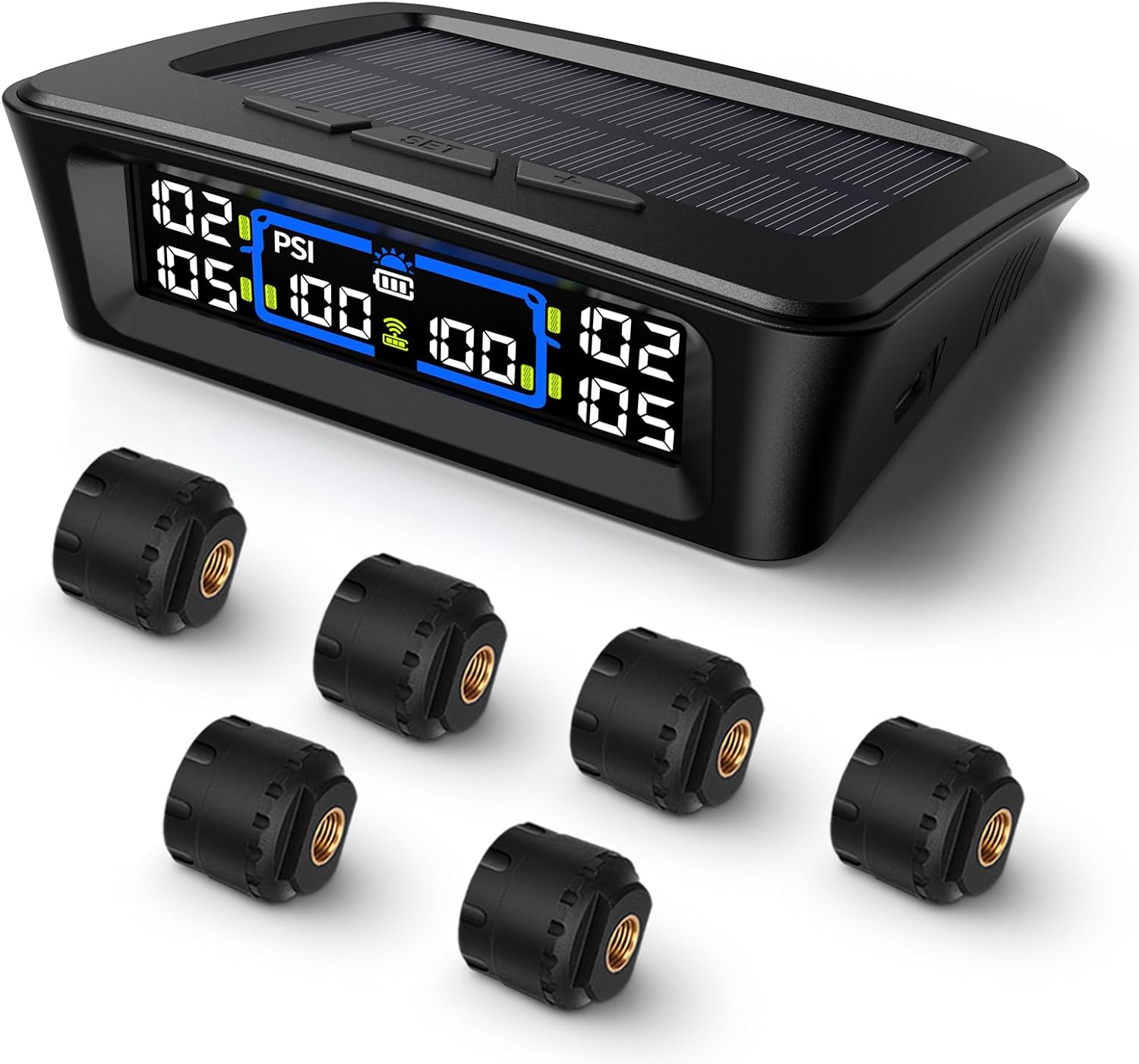
The Tymate TM12 RV TPMS delivers real-time tire pressure and temperature monitoring with a stable 433Hz display for safer long-distance driving. It supports simultaneous monitoring across vehicle and trailer zones, includes six alarm modes for pressure, temperature, leakage, battery, and signal loss, and features easy DIY installation with auto calibration. Power is supplied via USB-C charging or solar recharging, with a wide 0–144 PSI range and up to 50 ft signal coverage for RVs and towable trailers.

The TYAMATE TM8 solar-powered wireless TPMS delivers real-time tire pressure and temperature monitoring with six alarm modes for safer driving. A vibrant color LCD display shows readings clearly while windshield mounting keeps it hands-free and easy to read. With a wide 0–87 PSI range, strong 433.92 MHz signal transmission, and quick sensor pairing, it’s ideal for RV, sedan, SUV, MPV, and truck use.
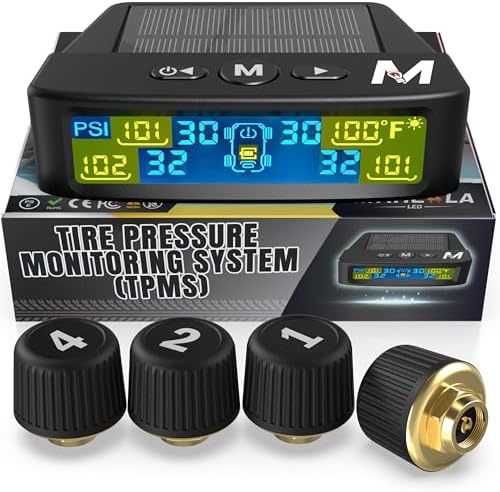
Marcala’s TPMS set of four sensors helps you monitor tire pressure and temperature in real time while driving, with updates every second. The bright color LCD uses auto-dimming for easy viewing, powered by dual solar and USB charging, and offers six alarm modes. Built for trailers, RVs, campers, trucks, and towing setups, the sensors support monitoring 1-4 wheels up to 98 PSI with IP67 waterproof protection.
Frequently Asked Questions
How often should I replace my RAV4 tires?
Do not replace tires based only on a 6,000–8,000 mile number. That range is closer to a rotation interval, not a replacement interval. Replace RAV4 tires when tread reaches 2/32 inch, when wear bars are flush with the tread, when the tire has unsafe damage, when it is too old, or when a tire professional recommends replacement.
What are the signs of a tire blowout?
A blowout may feel like a sudden drop, loud pop, thumping, heavy vibration, or strong pull in the steering. Hold the wheel firmly, avoid sudden braking, ease off the accelerator, keep the vehicle stable, and pull off the road when safe.
Can temperature changes affect Toyota RAV4 tire pressure?
Yes. Tire pressure can rise or fall as outside temperature changes. A useful rule is about 1–2 PSI for every 10°F temperature change, so check your RAV4 more often during seasonal changes, cold mornings, heat waves, and before long trips.
How do I choose the right tires for my RAV4?
Match the tire size, load rating, and speed rating recommended for your model year and trim. Then choose a tire type for your driving conditions, such as all-season, touring, all-weather, winter, or light off-road use. If your RAV4 has non-original wheels or a different tire size, confirm fitment and pressure with a qualified tire professional.
What should I do if I get a flat tire?
Move to a safe location, turn on your hazard lights, and inspect the tire only if it is safe. If the tire has a small tread puncture, it may be repairable by a tire shop. If the sidewall is damaged, the tire is shredded, or the location is unsafe, use the spare only if you can do so safely or call roadside assistance.
Why did my RAV4 tire pressure light come on after a cold night?
Cold air can lower tire pressure enough to trigger the TPMS light. Check all tires with a gauge when cold and inflate them to the door-jamb PSI. If the light flashes and then stays on, the TPMS may have a malfunction and should be inspected.
Should I check tire pressure before or after driving?
Check before driving whenever possible. The recommended PSI is cold tire pressure, which means the tires have been parked for at least three hours. Hot tires can read higher and may lead you to remove too much air.
Conclusion
Keeping your Toyota RAV4’s tires in top shape is one of the easiest ways to support safe, steady driving. Use the door-jamb label for the correct cold PSI, check pressure with a gauge, rotate tires on schedule, and inspect tread and sidewalls before problems grow. With a few minutes of tire care each month, your RAV4 will feel more stable, your tires will wear more evenly, and you will be better prepared for every drive.
Sources
- Toyota Owners Manuals & Warranties — supports using official Toyota owner materials and tire/loading label information for model-specific pressure guidance.
- NHTSA TireWise Tire Safety — supports cold tire pressure checks, placard PSI, tire pressure adjustment steps, TPMS information, and blowout response guidance.
- 49 CFR §571.138 Tire Pressure Monitoring Systems — supports TPMS owner-manual language, underinflation risks, and the warning that TPMS is not a substitute for proper tire maintenance.
- Toyota Scheduled Maintenance Guide — supports tire rotation guidance of 5,000 to 7,500 miles, depending on driving habits and road conditions.
- U.S. Tire Manufacturers Association Tire Care Essentials — supports monthly checks, 2/32-inch tread depth, penny test, TPMS limitations, temperature effects, tire rotation, and alignment warning signs.
- AAA: Understanding Tire Pressure and Temperature Change — supports the rule of thumb that tire pressure changes about 1–2 PSI for every 10°F temperature change.