
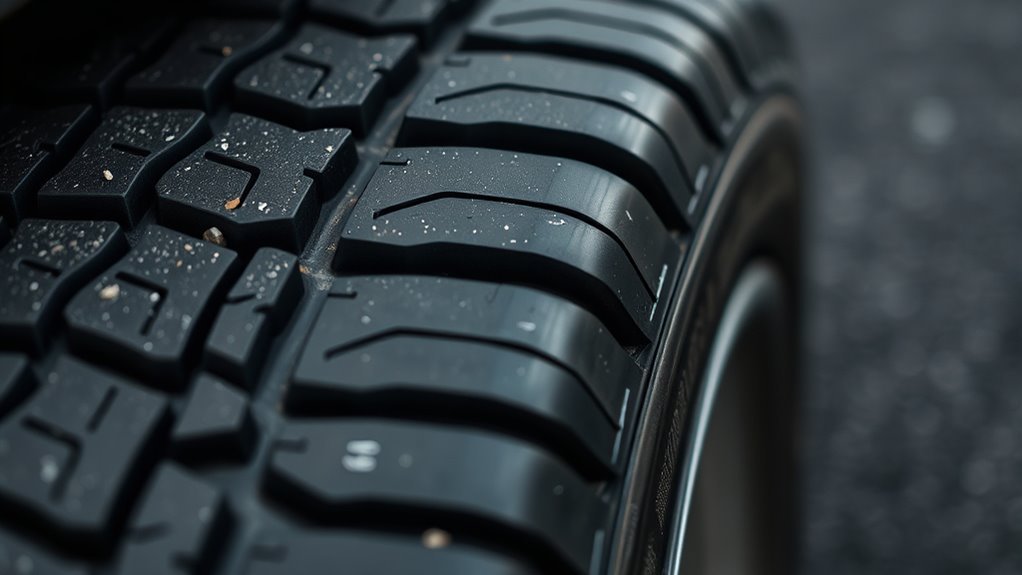
Tire tread is the part of a tire that actually touches the road. Its grooves, blocks, ribs, and sipes are what help your vehicle grip, steer, brake, and move water away from the contact patch. When tread gets too shallow, wet braking distance increases, hydroplaning risk rises, and the tire can no longer perform as designed.
Quick Answer
Tire tread provides grip, channels water, and helps control braking and handling. New passenger tires often start around 10/32 to 11/32 inch of tread. The common U.S. legal minimum is 2/32 inch, but many safety experts recommend replacing tires by 4/32 inch for wet-road performance.
Key Takeaways
- Tread depth is not just a legal number; it directly affects wet braking, hydroplaning resistance, and stability.
- Use a tread depth gauge for the most accurate reading, and check several grooves across each tire.
- Replace tires at 2/32 inch immediately; plan replacement earlier, around 4/32 inch, if you drive in rain or snow.
- Uneven tread wear often points to low pressure, overinflation, poor alignment, worn suspension, or skipped rotations.
- When replacing only two tires, install the deeper-tread pair on the rear axle for better wet-weather stability.
At a Glance
| Time Required | 5–10 minutes for a basic tread check |
| Difficulty | Easy |
| Tools Needed | Tread depth gauge, coin, flashlight, tire pressure gauge |
| Cost | $0 with a coin test; usually under $15 for a gauge |
What Tire Tread Is and Why It Matters
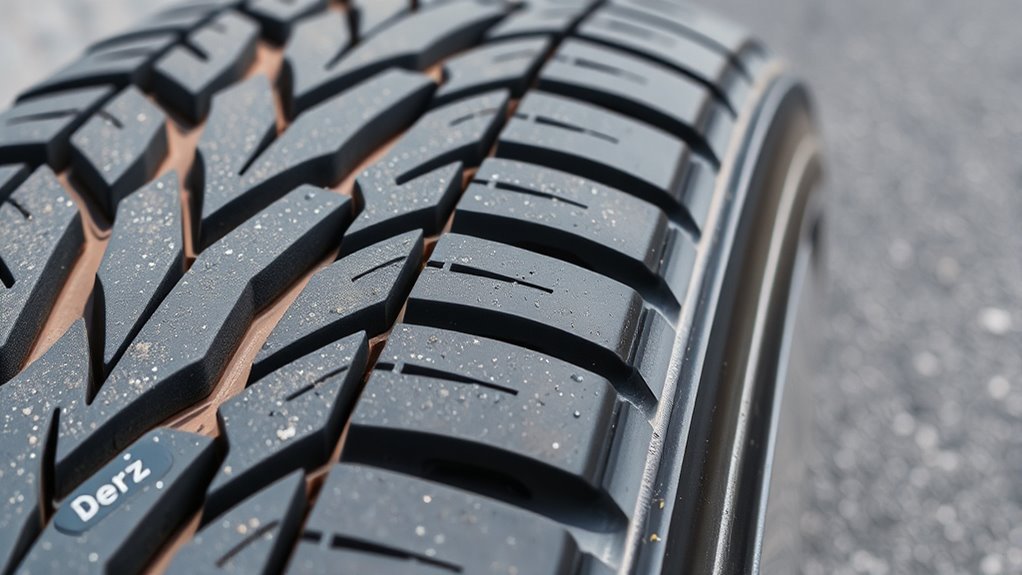
Tire tread is the molded rubber pattern around the outside of the tire. It creates the contact area that grips the pavement and includes channels that move water, slush, and light snow away from the tire. The right tread pattern improves traction, steering response, braking, ride comfort, and hydroplaning resistance.
Most new passenger tires begin with about 10/32 to 11/32 inch of tread, though winter, all-terrain, and light-truck tires may start deeper. As tread wears down, the grooves become shallower and move less water. That is why a tire can still be technically legal but perform poorly in heavy rain.
In the United States, many tire replacement guides use 2/32 inch as the minimum tread depth threshold. The Tire Industry Association explains that built-in tread wear indicators are positioned at 2/32 inch, meaning the tire should be replaced when those bars are flush with the tread. Laws and inspection rules vary by location, so always check your local requirements.
Warning: Do not treat the legal minimum as the ideal safety target. A tire at 2/32 inch has very little tread left for wet braking and water evacuation. Replace earlier if you drive in rain, snow, or highway conditions.
Tire Tread Anatomy: Ribs, Grooves, Blocks, and Sipes
Tread is a system of parts working together. Once you know what each part does, it is easier to understand why different tire patterns behave differently in rain, snow, cornering, and daily driving.
| Component | What It Does | Why It Matters |
|---|---|---|
| Ribs | Continuous raised bands around the tire | Support straight-line stability, steering feel, and even wear |
| Grooves | Open channels between tread ribs and blocks | Move water away from the contact patch to reduce hydroplaning risk |
| Blocks | Individual raised tread sections | Provide biting edges for acceleration, braking, and cornering |
| Sipes | Thin cuts in tread blocks | Add extra edges for wet, icy, and snowy traction |
| Shoulders | Outer edges of the tread | Help with cornering stability and show alignment or inflation problems |
A tire with many sipes and deep grooves usually favors wet or winter grip. A tire with larger outer tread blocks often favors dry cornering. A touring tire usually balances quiet ride, long wear, and predictable everyday handling.
How to Measure Tread Depth: Tools and Quick Checks
Measure tread depth from the top of the tread down to the bottom of the deepest main groove. Check more than one spot because tires rarely wear perfectly evenly.
[Products Worth Considering]

The SAFELIFE dial tire tread depth gauge measures tread depth in 1/32 inch increments with clear, easy-to-read 2-inch dial face. Color zones using a traffic light system help you quickly judge whether tread is low, marginal, or ample for safer driving. Built with a durable zinc cast body and a metal detect probe for precise, comfortable use across cars, motorcycles, trucks, and buses.

Accurately measure tire tread depth with a calibrated gauge marked from 0 to 1 inch in 1/32 inch increments. The color-coded bar helps you quickly identify tread condition ranges, supporting safe driving for trucks, motorcycles, automobiles, and passenger vehicles.

Measure tire tread depth quickly and accurately with this LUMITECO dial gauge that reads in 1/32" increments up to 14/32". The color-coded green/yellow/red zones make it easy to judge tire wear and know when replacement is needed. A rugged, compact design with a protective pouch helps keep the gauge ready for use on cars, trucks, motorcycles, and more.
1. Measure With a Tread Depth Gauge
- Park on a flat surface and make sure the vehicle is safely stopped.
- Place the probe of the gauge into a main tread groove, not on a wear bar.
- Press the gauge base flat against the tread.
- Record the depth in 32nds of an inch or millimeters.
- Repeat at the inner, center, and outer tread areas of each tire.
A gauge is the best choice because it gives a real number. That number helps you track wear over time and spot problems before they become expensive.
2. Use a Coin for a Quick Check
A coin test is useful when you do not have a gauge, but it is only a rough screen. In the U.S., the penny test is commonly used: place a penny into a main groove with Lincoln’s head upside down. If the top of Lincoln’s head is fully visible, the tire is at or near 2/32 inch and should be replaced.
For a more cautious wet-weather check, many drivers use a U.S. quarter. If the top of Washington’s head is visible, the tire is around 4/32 inch and you should start planning replacement, especially before rainy seasons or long highway trips.
In the U.K., the 20p coin test is commonly used for the 1.6 mm legal minimum across the central three-quarters of the tire. Because coin sizes and legal rules vary by country, use the coin test that matches your region.
3. Check the Tread Wear Indicators
Tread wear indicators are small raised bars molded across the grooves. When the surrounding tread wears down flush with those bars, the tire has reached the end of its serviceable tread life and needs replacement.
Pro Tip: Measure all four tires in three places: inner edge, center, and outer edge. If one area is much lower than the others, the issue may be alignment, inflation, suspension wear, or a rotation problem.
Tread Depth Chart: What Your Measurement Means
Use this chart as a practical guide. It does not replace your local law, your owner’s manual, or a professional tire inspection, but it helps you make a safer decision.
| Tread Depth | Condition | What to Do |
|---|---|---|
| 10/32–12/32 inch | Typical new-tire range for many passenger, winter, and light-truck tires | Maintain pressure, rotate on schedule, and monitor wear |
| 6/32 inch | Good tread for many normal conditions | Continue regular checks; be more cautious in snow as depth drops |
| 5/32 inch | Snow and slush performance may be noticeably reduced | Consider replacement before winter driving |
| 4/32 inch | Wet braking and hydroplaning resistance are reduced | Plan replacement, especially for rain, highway use, or long trips |
| 3/32 inch | Very limited wet-weather safety margin | Replace soon; avoid heavy rain when possible |
| 2/32 inch or less | At the common legal minimum and at the wear bars | Replace immediately |
When to Replace Tires: Tread Depth, Indicators, and Timing
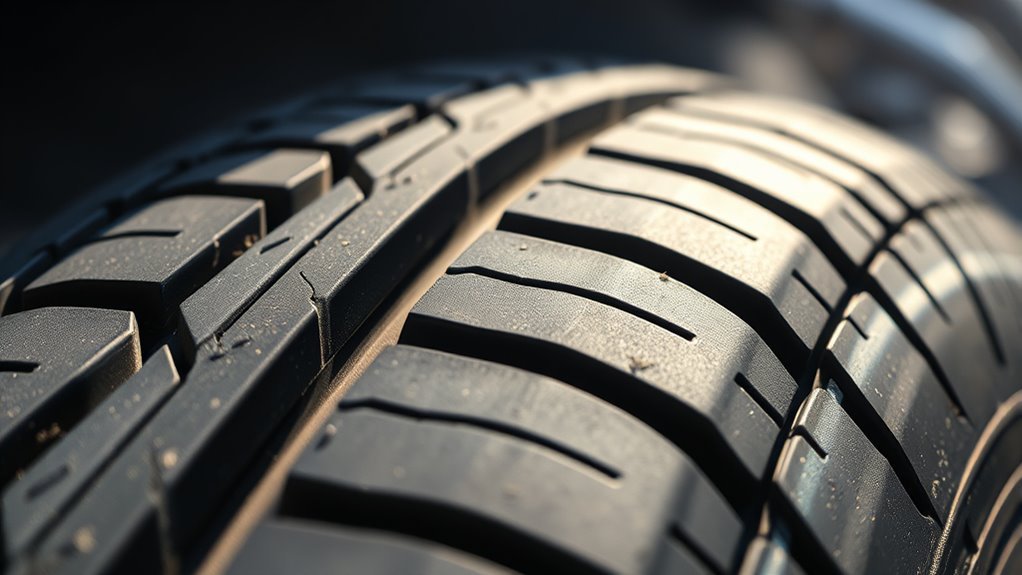
Replace tires immediately when tread reaches 2/32 inch, when wear bars are flush with the tread, or when you see damage such as exposed cords, bulges, deep cuts, cracking, or repeated air loss. Those are not “watch it later” problems; they are replacement or inspection problems.
For wet-weather safety, do not wait until the tire reaches 2/32 inch. AAA has warned that wet stopping performance can deteriorate significantly before tires reach the legal minimum, and it recommends replacing tires once tread depth reaches 4/32 inch for better safety margins in rain.
- Replace now: 2/32 inch or less, visible wear bars, exposed cords, bulges, or sidewall damage.
- Plan replacement: 4/32 inch if you drive in wet weather, at highway speed, or on long trips.
- Consider winter replacement: around 5/32 to 6/32 inch if the tire must handle snow, slush, or icy conditions.
- Inspect professionally: uneven wear, vibration, pulling, cupping, feathering, or rapid tread loss.
Note: Tire age also matters. Even if tread depth looks acceptable, rubber can crack, harden, or separate over time. Check the tire date code and follow the vehicle and tire manufacturer’s age guidance.
[Products Worth Considering]

Monitor tire tread wear with a smart, color-coded depth gauge that shows clear condition ranges at a glance. The bar is range marked for fast, easy readings, helping you maintain safer traction and performance. Each gauge is portable with a pocket clip, and the set includes 20 units for daily use and sharing.

Measure tyre tread depth precisely with a digital gauge that reads in both MM and inches, helping you monitor safe driving conditions. The large LCD screen is easy to operate, and the compact tool fits for cars, trucks, and motorcycles. It provides high accuracy with a 0-25.4mm range and includes a 1-year warranty for added peace of mind.

The Milton S-693 straight foot dual head air chuck is designed for accurate tire pressure checks and quick, secure valve-core engagement with lock-on threads on both ends. With a 1/4" FNPT connection and a maximum 150 PSI rating, it’s built for use on inner duals and common vehicle tires, including trucks and RVs.
How Tread Depth Affects Braking and Hydroplaning
Tread depth matters most when the road is wet. On dry pavement, a worn tire may still feel acceptable during easy driving. In rain, shallow grooves cannot move water as quickly, which reduces the tire’s ability to stay in contact with the road.
Braking Distance Increase
As tread wears, stopping distances can increase on wet roads. That does not mean every tire loses performance at the same rate; tread design, rubber compound, vehicle weight, speed, road surface, and water depth all matter. But the general pattern is consistent: less tread usually means less wet braking margin.
A tire can be legal at 2/32 inch and still be a poor choice for heavy rain. For wet-road confidence, 4/32 inch is a safer planning point than the legal minimum.
Hydroplaning Risk Rise
Hydroplaning happens when water builds between the tire and the road, causing the tire to skim on water instead of gripping the surface. Deep grooves help water escape. Shallow grooves fill faster, especially at higher speeds or in standing water.
To lower hydroplaning risk, keep adequate tread depth, slow down in heavy rain, avoid cruise control on wet roads, maintain proper tire pressure, and replace worn tires before the grooves become too shallow to manage water effectively.
Tire Tread Patterns and Performance: Symmetrical, Directional, and Asymmetric
Tread pattern affects how a tire handles water, noise, ride comfort, cornering, and wear. The three common pattern categories are symmetrical, directional, and asymmetric.
Symmetrical Tread Benefits
Symmetrical tread patterns use the same design across the tread face. They are common on everyday touring tires because they usually provide even wear, quiet operation, and predictable handling.
- Good for daily commuting and normal highway driving.
- Often easier to rotate in multiple patterns.
- Usually designed for long tread life and lower road noise.
- May not evacuate water or bite into snow as aggressively as specialized patterns.
Directional Tread Advantages
Directional tread patterns are designed to roll in one direction. They often use V-shaped grooves to move water and slush away from the center of the tire. This can improve wet traction, snow traction, and high-speed stability when the tire is mounted correctly.
Directional tires have arrows on the sidewall showing the correct rolling direction. If they are mounted backward, wet-weather performance and noise can suffer. They also have more limited rotation options than symmetrical tires.
Asymmetric Handling Balance
Asymmetric tires use different tread features on the inner and outer sides. The inner side often focuses on water evacuation, while the outer shoulder uses larger tread blocks for cornering stability and dry grip.
- Outer shoulder: larger blocks for cornering and dry stability.
- Inner tread: more grooves and sipes for wet traction.
- Center ribs: steering response and straight-line tracking.
- Sidewall markings: “outside” and “inside” labels must be followed during installation.
Choosing the Right Tread for Your Driving Needs and Seasons
The best tread depends on where you drive, what weather you face, and what you expect from the tire. A quiet commuter tire, a winter tire, an ultra-high-performance tire, and an all-terrain tire are built for different jobs.
| Tread Focus | Best Use | Key Benefit |
|---|---|---|
| Symmetrical | Daily driving, commuting, touring | Quiet ride, even wear, simple rotation |
| Directional | Rain, slush, snow, performance wet handling | Water evacuation and straight-line wet grip |
| Asymmetric | Performance cars and mixed dry/wet driving | Balanced cornering and wet traction |
| Winter | Cold climates, snow, ice, slush | Cold-weather rubber compound and dense siping |
| All-terrain | Trucks, SUVs, gravel, dirt, light off-road use | Durability and traction on mixed surfaces |
If winter driving is a regular part of your life, look for tires marked with the three-peak mountain snowflake symbol. If you mostly drive in a mild climate, a quality all-season or all-weather tire may be more practical.
[Products Worth Considering]
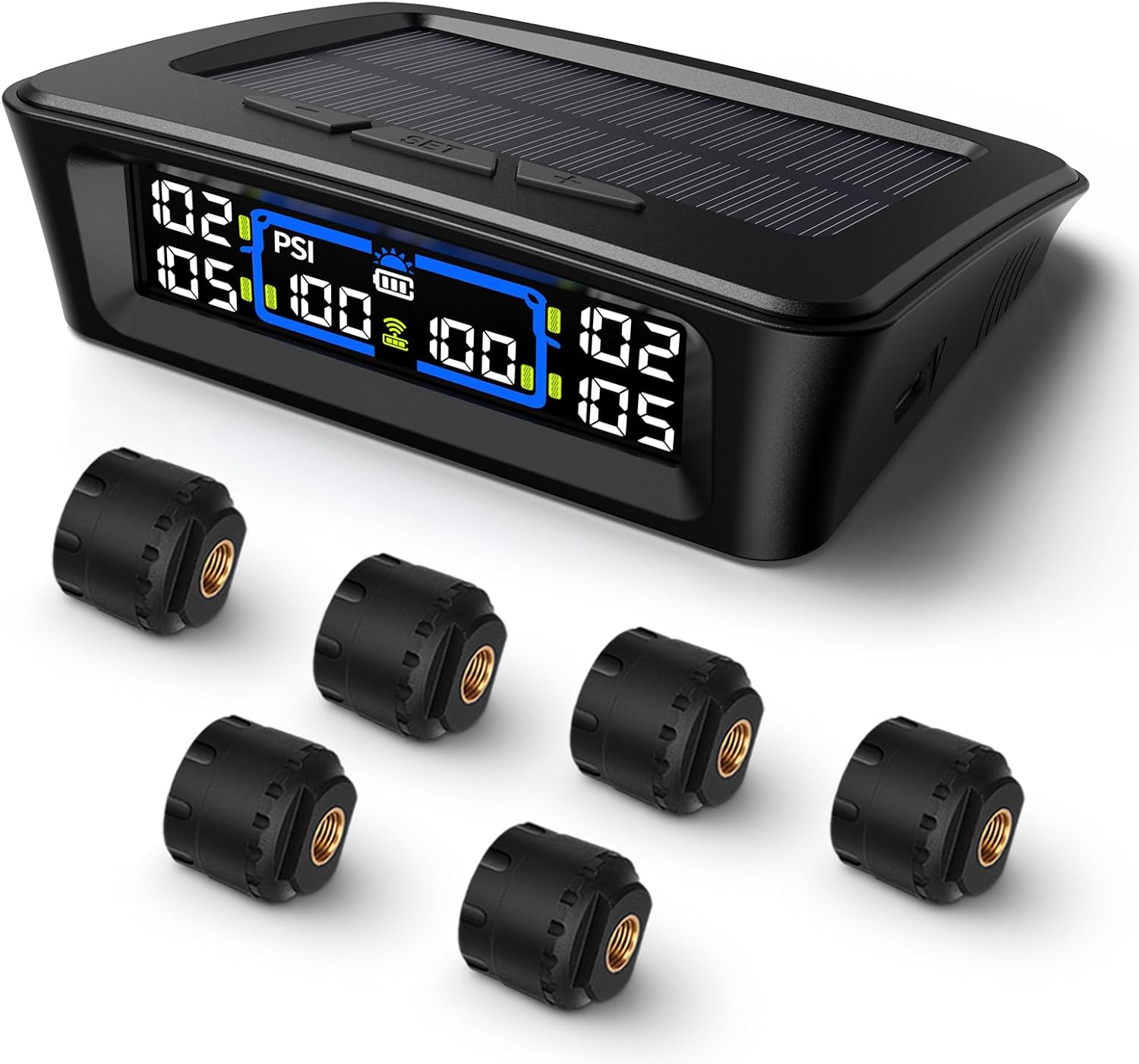
The Tymate TM12 RV TPMS delivers real-time tire pressure and temperature monitoring with a stable 433Hz display for safer long-distance driving. It supports simultaneous monitoring across vehicle and trailer zones, includes six alarm modes for pressure, temperature, leakage, battery, and signal loss, and features easy DIY installation with auto calibration. Power is supplied via USB-C charging or solar recharging, with a wide 0–144 PSI range and up to 50 ft signal coverage for RVs and towable trailers.

The TYAMATE TM8 solar-powered wireless TPMS delivers real-time tire pressure and temperature monitoring with six alarm modes for safer driving. A vibrant color LCD display shows readings clearly while windshield mounting keeps it hands-free and easy to read. With a wide 0–87 PSI range, strong 433.92 MHz signal transmission, and quick sensor pairing, it’s ideal for RV, sedan, SUV, MPV, and truck use.

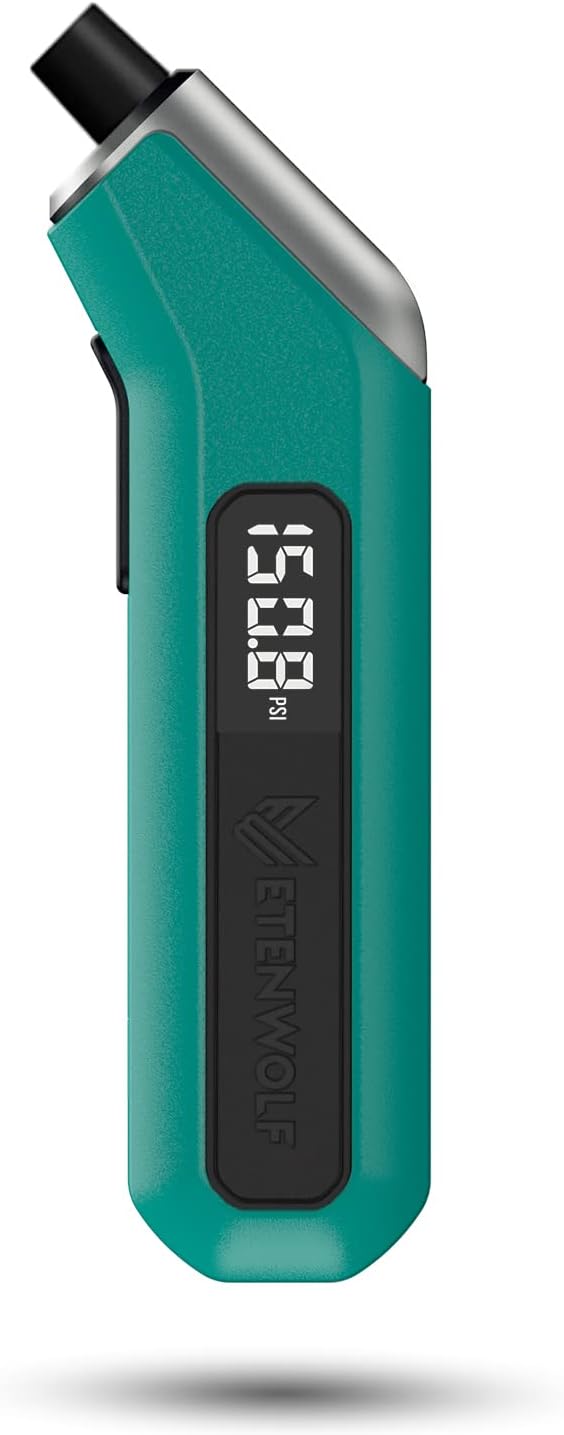
ETENWOLF’s tire pressure gauge helps you quickly and accurately check tire PSI across cars, trucks, motorcycles, bikes, and more. It’s manually calibrated to ANSI B40.1 Grade A for reliable readings, includes a large glow dial for easy nighttime viewing, and features a 360-degree swivel chuck for use at any valve angle. The gauge also works consistently in extreme hot or cold weather.
Can You Mix Tires on One Vehicle? Sizes, Patterns, and Brands
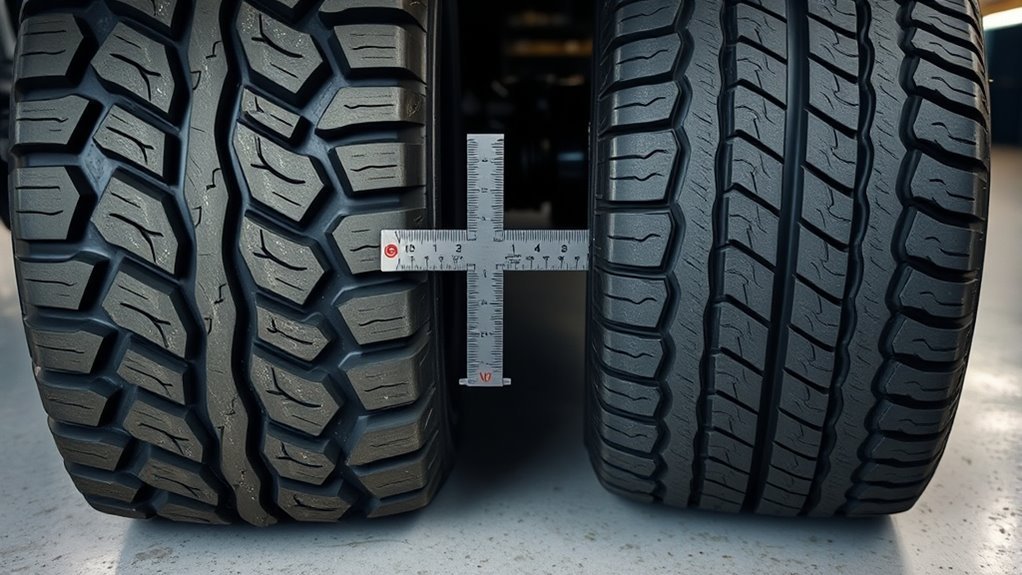
You can sometimes mix tires, but it is not ideal. For the most predictable handling, use the same tire size, load rating, speed rating, construction type, brand, model, and tread pattern on all four positions.
Mixing tires with different tread depths, patterns, or rubber compounds can change braking balance, cornering grip, and stability. On all-wheel-drive vehicles, mismatched tire circumference can also stress the drivetrain, so follow the vehicle manufacturer’s rules closely.
- Best choice: replace all four tires with matching tires.
- If replacing two: install the deeper-tread pair on the rear axle to help reduce oversteer and improve wet stability.
- Avoid: mixing directional and non-directional tires unless the manufacturer allows it and the tires are installed correctly.
- Check before buying: size, load index, speed rating, tread type, and vehicle manual requirements.
Michelin also advises that when only two tires are replaced, the tires with deeper tread should be installed on the rear axle to help maintain wet traction and stability.
Common Tread Wear Patterns and What They Mean
Your tread can tell you what is happening underneath the vehicle. Look for these patterns during every tread check.
| Wear Pattern | Likely Cause | What to Do |
|---|---|---|
| Both outer edges worn | Underinflation or overloading | Set pressure to the door placard, inspect for damage |
| Center worn faster | Overinflation or wrong pressure for load | Adjust cold pressure to manufacturer specs |
| One edge worn | Alignment issue, worn suspension, or bent component | Get an alignment and suspension inspection |
| Cupping or scalloping | Worn shocks/struts, imbalance, or suspension wear | Inspect suspension and balance the wheels |
| Feathered tread | Toe alignment problem | Schedule alignment service |
| Patchy rapid wear | Hard braking, mechanical issue, or tire damage | Have the tire and braking system inspected |
Maintain Tread: Pressure, Rotation, Alignment, and Monitoring
Good tread life comes from routine maintenance. The U.S. Tire Manufacturers Association emphasizes four basics: pressure, tread, rotation, and alignment.
| Task | Frequency | Target |
|---|---|---|
| Pressure check | Monthly and before long trips | Vehicle manufacturer’s cold PSI on the door placard |
| Tread depth check | Monthly or during pressure checks | Replace before tread reaches unsafe depth |
| Rotation | Owner’s manual interval, commonly around 5,000–7,000 miles | Even wear across all positions |
| Alignment | After impacts, uneven wear, pulling, or as recommended | Straight tracking and even tread wear |
| Visual inspection | Monthly | No cuts, bulges, cracks, punctures, or exposed cords |
Do not use the maximum pressure printed on the tire sidewall as your normal inflation target. Use the vehicle manufacturer’s pressure listed on the driver’s door placard or in the owner’s manual.
Note: A tire pressure monitoring system warns about significant underinflation, but it does not measure tread depth, alignment, age, sidewall cracks, or uneven wear. You still need visual and tread-depth inspections.
Frequently Asked Questions
What is considered safe tire tread depth?
For many everyday driving conditions, 4/32 inch or deeper is a safer target for wet-road performance. The common U.S. legal minimum is 2/32 inch, but that is the replacement limit, not the best safety target. For winter driving, consider replacing tires earlier, often around 5/32 to 6/32 inch depending on tire type and conditions.
At what tread depth should I replace my tires?
Replace tires immediately at 2/32 inch or when wear bars are flush. Plan replacement at 4/32 inch if you drive in rain or at highway speeds. For snow and slush, many drivers replace winter tires earlier because deeper grooves are needed to clear packed snow and water.
What is better, an H or V speed rating on tires?
A V-rated tire is built for a higher maximum speed than an H-rated tire, but “higher” is not automatically better for every vehicle. Use the rating specified by your vehicle manufacturer. Choosing a lower rating than recommended can affect safety and handling, while choosing a higher rating may change ride comfort, cost, and tread life.
What is the 7 7 rule for tires?
The 7 7 rule usually refers to switching to winter tires when temperatures stay around 7°C, or 45°F, for seven straight days. It is a temperature guideline, not a tread-depth rule. For tread depth, use actual measurements in 32nds of an inch or millimeters.
Can I drive if the tread wear bars are showing?
You should replace the tire as soon as possible. Wear bars are designed to show when tread has reached the minimum service point. Driving on tires at that level reduces wet traction and increases the risk of hydroplaning.
How often should I check tire tread?
Check tread depth at least once a month, before long trips, and before seasons with heavy rain or snow. It is smart to check tread at the same time you check tire pressure.
Conclusion
Tire tread controls grip, braking, steering response, and hydroplaning resistance. The safest habit is simple: check pressure and tread monthly, measure depth in multiple grooves, rotate tires on schedule, and replace tires before they reach the minimum limit. A few minutes of inspection can prevent poor wet braking, uneven wear, and loss of control when road conditions turn bad.
Sources
- NHTSA TireWise — tire safety, maintenance, pressure, tread, and consumer tire guidance
- Tire Industry Association: Tire Replacement — tread wear indicators, 2/32 inch replacement point, and tire inspection guidance
- AAA Newsroom: Worn Tires Put Drivers at Risk — wet-weather performance and 4/32 inch replacement recommendation
- U.S. Tire Manufacturers Association: Tire Care Essentials — pressure, tread, rotation, alignment, and tire maintenance basics
- Bridgestone: Tire Rotation — rotation intervals and rotation maintenance guidance
- Michelin: Mixing Tire Brands — guidance on mixing tires and installing deeper-tread tires on the rear axle

2 thoughts on “What Is Tire Tread? Patterns, Depth & Safety Guide”