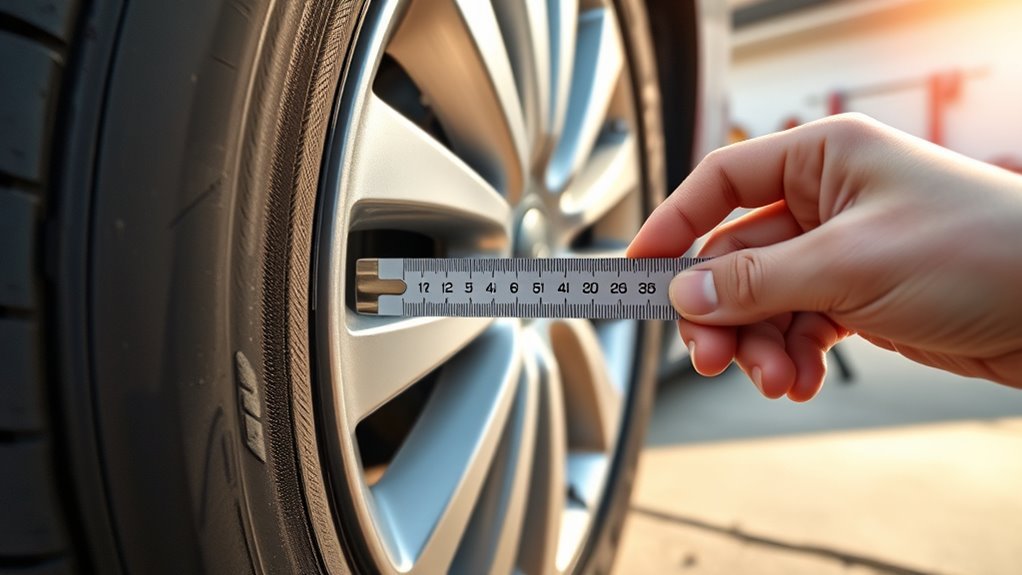
You can check your Hyundai Sonata’s tire tread depth at home in a few minutes with a penny, a quarter, or a tread-depth gauge. Park on level ground, set the parking brake, check all four tires in several grooves, and look for uneven wear, cracks, bulges, or exposed cords before your next drive.
Quick Answer
To check tire tread depth on a Hyundai Sonata, insert a penny into a main tread groove with Lincoln’s head upside down. If you can see the top of Lincoln’s head, the tire is at about 2/32 inch and should be replaced. For a more accurate result, use a tread-depth gauge on the inner, center, and outer grooves of each tire.
Key Takeaways
- The penny test checks the urgent replacement point: about 2/32 inch of tread.
- The quarter test is a better wet-weather warning: start shopping for tires around 4/32 inch.
- Measure at several points on each tire because one groove can look safe while another is nearly worn out.
- Uneven wear often points to low pressure, overinflation, alignment issues, tire balance problems, or worn suspension parts.
- Use the Hyundai door placard or owner’s manual for the correct cold tire pressure, not the maximum PSI printed on the tire sidewall.
At a Glance
| Time Required | 5–10 minutes for all four tires |
| Difficulty | Easy beginner DIY check |
| Tools Needed | Penny, quarter, tread-depth gauge, tire-pressure gauge, flashlight, and a phone or notepad for readings |
| Cost | Free with coins; usually low cost for a basic tread-depth gauge |
Warning: Do not drive on a tire with exposed cords, a visible bulge, deep sidewall cracking, a fast air leak, or tread at or below 2/32 inch. Have the tire inspected or replaced before normal driving.
How to Check Tire Tread Depth on a Hyundai Sonata
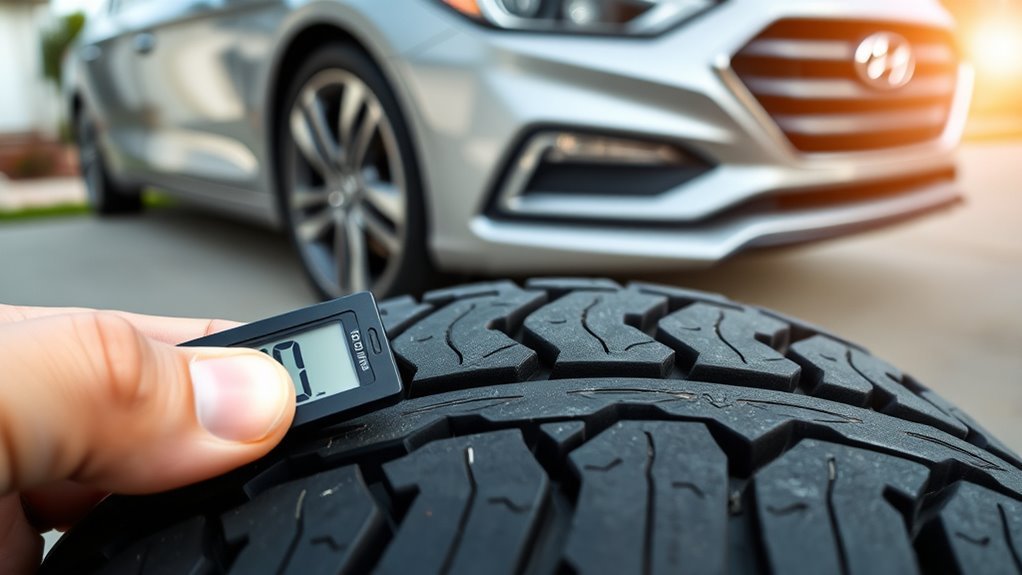
Start with the car parked on level ground and the parking brake set. Good lighting matters, so use a flashlight if the car is in a garage or shaded driveway. Tire tread can wear unevenly, so check more than one spot on every tire.
- Park safely. Stop on flat ground, set the parking brake, and let the tires cool if you also plan to check pressure.
- Turn the front wheels if needed. Turning the steering wheel can make the front tire grooves easier to see.
- Inspect the whole tire first. Look for nails, cuts, bulges, cracks, exposed cords, or anything stuck in the tread.
- Check the inner, center, and outer grooves. A tire can pass in the center but fail on one shoulder.
- Record the lowest reading. The lowest spot is the one that matters for replacement decisions.
How to Do the Penny and Quarter Tests
The coin tests are quick screening checks. They do not replace a tread-depth gauge, but they can tell you when the tire is near a safety threshold.
Penny Test for the 2/32-Inch Replacement Point
Place a penny into a main tread groove with Lincoln’s head pointing down. If the tread does not cover the top of Lincoln’s head, the tire is at about 2/32 inch and should be replaced. The National Highway Traffic Safety Administration uses this penny-test method as a simple tread-depth check.
Quarter Test for Wet-Road Safety
Place a quarter into the tread with Washington’s head pointing down. If the tread does not cover part of Washington’s head, the tire is near 4/32 inch. That is not always the legal minimum, but it is a smart point to start shopping if you drive in rain, because worn tires lose wet stopping and handling performance sooner than many drivers expect.
Pro Tip: Use the valve stem as your starting point, then work around the tire in a circle. Check the inner, center, and outer grooves before moving to the next tire.
Where to Insert the Coin
Use the main tread grooves, not tiny decorative sipes or shallow shoulder cuts. Hold the coin straight up and down, push it fully into the groove, and check several locations around the tire. If one part of the tire fails the test, treat the tire as unsafe even if another groove looks better.
Measure Tire Tread Depth With a Gauge
A tread-depth gauge gives the most precise at-home reading. Most gauges read in 32nds of an inch, millimeters, or both. Use the same groove positions on each tire so your readings are easy to compare.
- Clean the groove. Remove small stones or debris from the tread groove.
- Place the gauge flat. Set the gauge base across the tread blocks.
- Press the probe down. Let the probe touch the bottom of the groove.
- Read the number. Record the reading for the inner, center, and outer grooves.
- Repeat on all four tires. Compare the lowest number on each tire.
| Tread Reading | What It Means | Recommended Action |
|---|---|---|
| 6/32 inch or more | Usually usable tread for normal dry and wet driving | Keep checking monthly and before long trips |
| 4/32 inch | Wet-weather traction is becoming a concern | Start shopping, especially if you drive in rain or at highway speeds |
| 2/32 inch or less | Tire is worn to the urgent replacement point | Replace the tire before normal driving |
[Products Worth Considering]

The SAFELIFE dial tire tread depth gauge measures tread depth in 1/32 inch increments with clear, easy-to-read 2-inch dial face. Color zones using a traffic light system help you quickly judge whether tread is low, marginal, or ample for safer driving. Built with a durable zinc cast body and a metal detect probe for precise, comfortable use across cars, motorcycles, trucks, and buses.

Monitor tire tread wear with a smart, color-coded depth gauge that shows clear condition ranges at a glance. The bar is range marked for fast, easy readings, helping you maintain safer traction and performance. Each gauge is portable with a pocket clip, and the set includes 20 units for daily use and sharing.

Measure tire tread depth quickly and accurately with this LUMITECO dial gauge that reads in 1/32" increments up to 14/32". The color-coded green/yellow/red zones make it easy to judge tire wear and know when replacement is needed. A rugged, compact design with a protective pouch helps keep the gauge ready for use on cars, trucks, motorcycles, and more.
Read the Built-In Tire Wear Bars
Most passenger tires have built-in tread-wear indicator bars molded across the grooves. When the surrounding tread wears down until it is level with those bars, the tire is at the replacement point. These bars are helpful, but they are not a reason to wait. A tire can have poor wet traction before the bars are fully flush.
Look across the main grooves for small raised rubber bars running from side to side. If any wear bar is level with the tread surface, replace the tire. If the bars are close to level, use a gauge to confirm the reading.
[Products Worth Considering]

Accurately measure tire tread depth with a calibrated gauge marked from 0 to 1 inch in 1/32 inch increments. The color-coded bar helps you quickly identify tread condition ranges, supporting safe driving for trucks, motorcycles, automobiles, and passenger vehicles.

Measure tyre tread depth precisely with a digital gauge that reads in both MM and inches, helping you monitor safe driving conditions. The large LCD screen is easy to operate, and the compact tool fits for cars, trucks, and motorcycles. It provides high accuracy with a 0-25.4mm range and includes a 1-year warranty for added peace of mind.

The Topeak SmartGauge D2 delivers precise digital tire pressure readings for bikes, motorcycles, and sports equipment up to 250 psi (17 bar). Its rotating SmartHead works with both Presta and Schrader valves, so you can check pressure quickly without adapters. The LCD display makes it easy to read results in psi, bar, or kg/cm² with an included CR2032 battery for immediate use.
Tread Depth Safety Thresholds: 2/32 Inch vs. 4/32 Inch
The NHTSA tire safety guidance says tread should be at least 2/32 inch and recommends the penny test to know when a vehicle needs new tires. Treat 2/32 inch as the last stop, not the ideal time to start thinking about replacements.
For rain, a more cautious replacement point is around 4/32 inch. AAA testing found that tires worn to 4/32 inch already had longer wet stopping distances and reduced handling compared with new tires. If your Sonata often sees heavy rain, highway driving, or standing water, do not wait until the tread is completely worn to the bars.
Legal minimum and safe wet-road performance are not the same thing. A tire can be above 2/32 inch and still feel weak in heavy rain.
In Canada, Michelin Canada lists 1.6 mm as the minimum tread depth, which is about 2/32 inch. Local rules, winter-tire requirements, and insurance expectations can vary, so use 1.6 mm as the bare minimum and replace earlier when traction is poor.
Find and Diagnose Uneven Wear on Your Sonata
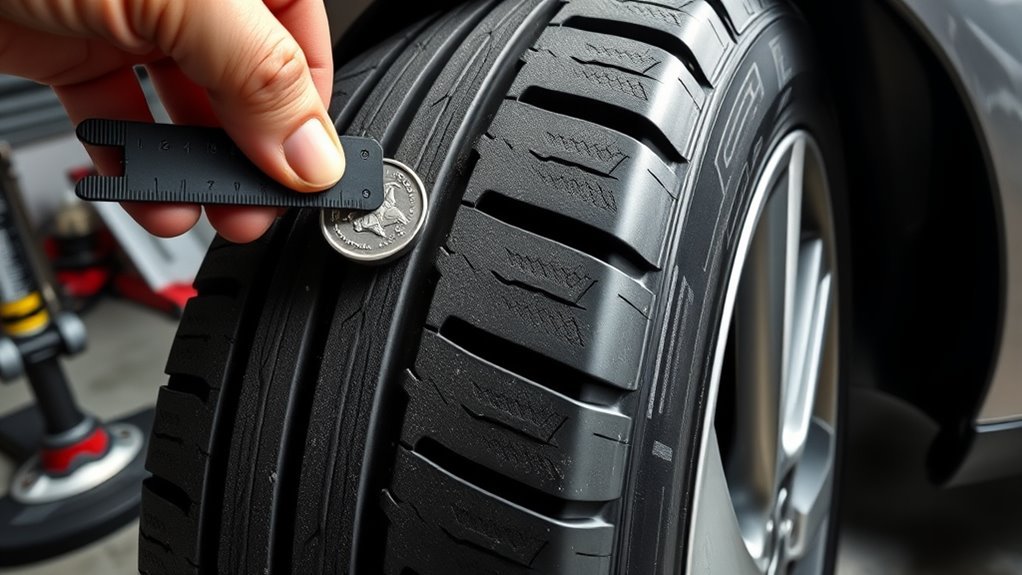
Uneven tire wear is just as important as low tread depth. A tire may have enough tread in one groove but be nearly bald on the inner shoulder. That can point to pressure problems, alignment trouble, worn suspension parts, or a tire that has not been rotated on schedule.
| Wear Pattern | Likely Cause | What to Do |
|---|---|---|
| Center tread worn faster | Overinflation or too much pressure for the load | Set cold pressure to the Hyundai door placard value |
| Both outer edges worn faster | Underinflation or heavy cornering | Check for leaks and correct cold PSI |
| One shoulder worn faster | Alignment issue, camber problem, or worn parts | Schedule an alignment and inspection |
| Cupping, scalloping, or choppy patches | Worn shocks/struts, balance issue, or suspension wear | Have the tire, wheel balance, and suspension checked |
| Feathered edges | Toe alignment problem | Get a four-wheel alignment |
Check Tire Pressure the Right Way
Use a reliable tire-pressure gauge when the tires are cold. According to NHTSA, cold means the vehicle has been parked for at least three hours. The correct pressure is listed in the owner’s manual and on the placard on the driver’s door pillar or door frame. Do not use the maximum PSI molded into the tire sidewall as your normal inflation target.
Hyundai also notes that underinflation and overinflation can reduce tire life and affect handling and stopping ability. If your Sonata has TPMS, use it as a warning tool, but do not rely on it as your only pressure check. A tire can be low enough to wear poorly before a warning light appears.
Look for Wheel Alignment Signs
Alignment issues often show up as one-sided wear, feathered tread edges, a steering wheel that is off-center, pulling to one side, or vibration at speed. If you see one shoulder wearing faster than the other, do not simply replace the tire and ignore the cause. A new tire can wear out quickly if the alignment problem remains.
Know When Suspension Needs Inspection
If tire pressure and alignment are correct but wear is still uneven, the suspension may need attention. Worn shocks, struts, bushings, tie rods, or ball joints can change how the tire contacts the road.
Warning: Never crawl under a Sonata supported only by a jack. Use properly rated jack stands on solid ground, or have a qualified technician inspect the suspension if you are not comfortable lifting the vehicle safely.
Simple Maintenance to Extend Tire Life
Good tire maintenance helps the tread wear evenly and makes tire problems easier to spot early. Hyundai owners should use the current Hyundai owner’s manual for the exact maintenance schedule for their year and trim.
| Maintenance Step | Why It Matters | How Often to Do It |
|---|---|---|
| Check cold tire pressure | Prevents center or edge wear and helps braking/handling | Monthly and before long trips |
| Measure tread depth | Shows when tires are near 4/32 or 2/32 inch | Monthly, before road trips, and before rainy seasons |
| Rotate tires | Helps even out front/rear wear | Follow the Hyundai maintenance schedule or rotate sooner if uneven wear appears |
| Check alignment | Prevents one-sided wear and steering pull | When wear is uneven, after suspension work, or after a hard pothole hit |
| Inspect for damage | Finds bulges, cuts, nails, cracks, and exposed cords early | Any time you wash the car, check pressure, or notice vibration |
Note: If your Sonata has different tire sizes front and rear, directional tires, or a special tire setup, the normal rotation pattern may not apply. Follow the tire sidewall arrows and the Hyundai owner’s manual.
When to Replace Hyundai Sonata Tires
Replace a tire immediately if the tread is at or below 2/32 inch, the wear bars are flush with the tread, cords are visible, or the sidewall has a bulge. Also replace tires that have severe cracking, repeated pressure loss, or damage that a tire professional says cannot be repaired.
If one tire is worn out but the others are much newer, ask the tire shop whether replacing one tire, two tires on the same axle, or all four is best for your setup. The safest choice depends on tread depth difference, tire type, drivetrain, and the condition of the remaining tires.
[Products Worth Considering]

Add style while helping protect your tire valve stems with handmade crystal rhinestone caps and a durable plastic insert. These caps resist corrosion and help keep out rain, snow, and muddy water, extending tire life. Textured non-slip design makes them easy to grip for quick install and removal when checking tire pressure.

Milton S-921 pencil tire pressure gauge helps you maintain optimal tire pressure for passenger cars with accurate readings in PSI and kPa. It features a built-in deflator valve for convenient pressure adjustments, plus a single chuck head and nylon indicator bar for easy use on the go. Built from durable plated brass and designed for reliable performance, it’s a practical road trip and cold-weather maintenance tool.

This universal wheel alignment tool helps you accurately restore tire tilt angles after tire or suspension repairs using an adjustable camber gauge. It features a powerful magnetic base that firmly attaches to brake rotors for stationary, slip-free readings, improving consistency during measurement. Built from durable PC plastic, it resists wear and corrosion and is compact enough for car, truck, RV, and motorcycle alignment tasks.
Frequently Asked Questions
What does 2/32-inch tread look like?
A tire at 2/32 inch usually looks nearly bald in the main grooves. The tread-wear bars may be level with the surrounding tread, and the penny test will show the top of Lincoln’s head. Replace the tire before normal driving.
How much is 4/32-inch tread depth?
4/32 inch is one-eighth of an inch, or about 3.2 mm. It is above the urgent 2/32-inch replacement point, but it is a good wet-weather warning level. If your Sonata is near 4/32 inch, start planning for replacement.
Is the penny test enough?
The penny test is useful for a quick 2/32-inch check, but a tread-depth gauge is better. A gauge gives an exact reading and helps you compare the inner, center, and outer grooves on each tire.
Where do I find the correct Hyundai Sonata tire pressure?
Find the recommended cold tire pressure on the placard on the driver’s door pillar or door frame. You can also check your Hyundai owner’s manual. Do not use the maximum PSI printed on the tire sidewall as the normal pressure setting.
How often should I check Sonata tire tread depth?
Check tread depth about once a month, before long trips, and before seasons with heavy rain or snow. Also check after hitting a pothole, noticing vibration, or seeing a tire-pressure warning.
Can I replace only one tire on a Hyundai Sonata?
Sometimes you can replace one tire, but it depends on how worn the other tires are and whether the replacement matches the same size, type, load rating, and speed rating. If the opposite tire on the same axle is much more worn, replacing tires in pairs may be safer.
Conclusion
Checking your Hyundai Sonata’s tire tread depth is simple, but it can prevent poor wet braking, uneven tire wear, and unsafe driving. Use the penny test for the urgent 2/32-inch threshold, the quarter test as a 4/32-inch wet-weather warning, and a tread-depth gauge when you want accurate readings. Check every tire in multiple grooves, correct pressure problems early, and replace damaged or worn tires before they put you at risk.
Sources
- NHTSA Summer Driving & Road Trip Tips — supports cold pressure checks, door-placard pressure guidance, penny test, 2/32-inch tread threshold, and uneven-wear guidance.
- NHTSA TireWise — supports general tire safety, tire labeling, and maintenance awareness.
- Hyundai Manuals & Warranties — supports using the correct Hyundai owner’s manual for model-year maintenance details.
- Hyundai Vehicle Tire Safety and Maintenance — supports Hyundai-specific tire-pressure, TPMS, and tread-check guidance.
- AAA: Tread Lightly, Worn Tires Put Drivers at Risk — supports the 4/32-inch wet-weather replacement recommendation and wet stopping-distance concerns.
- Michelin Canada Tire Tread Depth Guide — supports the 1.6 mm minimum tread-depth reference for Canada.