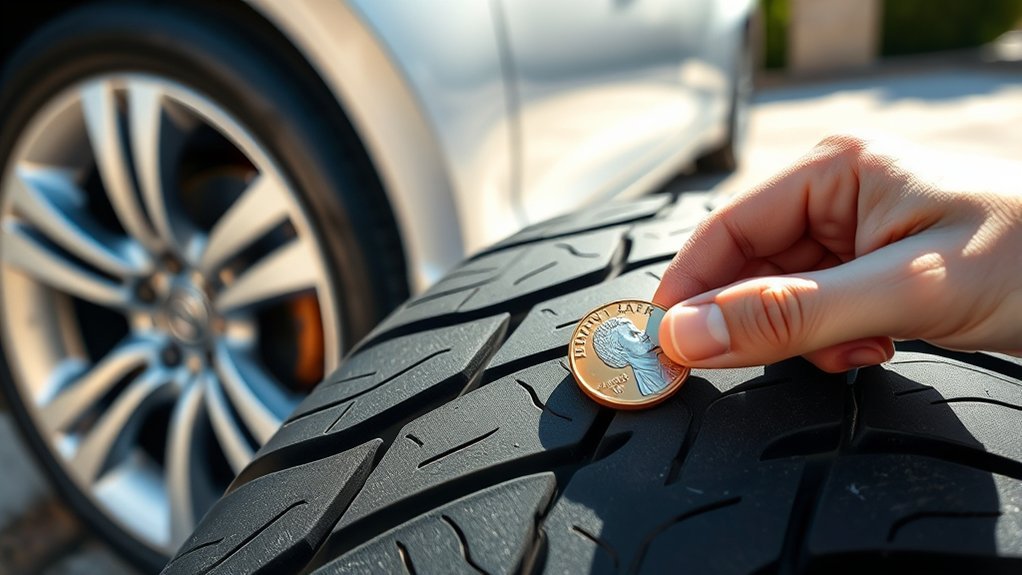
Checking tire tread depth on your Toyota Camry is a quick safety habit that can help you spot worn tires before they lose grip in rain, snow, or emergency braking. You can use a penny, a quarter, the tire’s built-in wear bars, or a tread depth gauge. For the most accurate result, check several grooves on every tire—not just one spot.
Quick Answer
To check Toyota Camry tire tread depth, insert a penny into the tread with Lincoln’s head upside down. If you can see the top of his head, replace the tire. Use a quarter for a rough 4/32-inch wet-weather check, or use a tread depth gauge for the most accurate reading.
Key Takeaways
- Replace a tire at 2/32 inch tread depth or when the tread is level with the wear bars.
- At about 4/32 inch, start planning replacement if you often drive in rain because wet braking and handling drop noticeably as tread wears.
- Measure the inner, center, and outer grooves on each tire because uneven wear can hide on one edge.
- A TPMS warning usually means low air pressure, not low tread depth, so check both pressure and tread separately.
At a Glance
| Time Required | 5 to 10 minutes for all four tires |
| Difficulty | Easy DIY inspection |
| Tools Needed | Penny, quarter, tread depth gauge, flashlight, tire pressure gauge |
| Cost | Free with coins; usually under $10 for a basic tread depth gauge |
The Importance of Tire Tread Depth for Safety
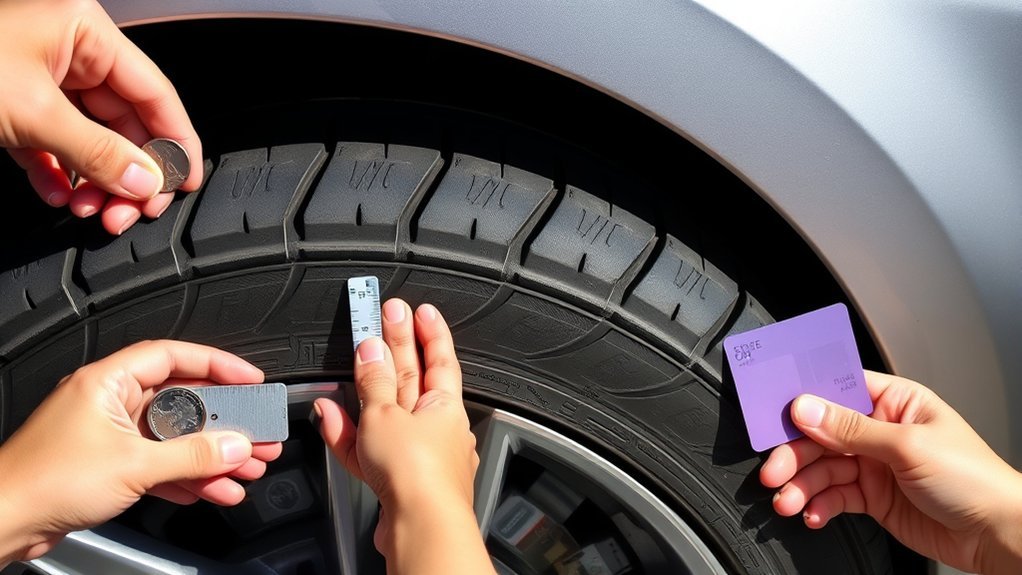
Tire tread is the grooved rubber that helps your Camry grip the road and move water away from the contact patch. When the tread gets too shallow, the tire has less room to channel water, which can increase stopping distance and make hydroplaning more likely in heavy rain.
The National Highway Traffic Safety Administration says tires should be replaced when tread is worn down to 2/32 of an inch. That number is the replace-now point, not a comfort zone. For wet roads, it is smarter to start watching closely around 4/32 inch and plan replacement before the tire reaches the legal minimum.
AAA testing found that tires worn to 4/32 inch took much longer to stop on wet pavement than new tires, including on a Toyota Camry test vehicle.
Warning: Replace or professionally inspect a tire right away if you see exposed cords, sidewall bulges, deep cracks, punctures, or tread separation. A tire can be unsafe even if the tread depth still looks acceptable.
4 Easy Methods to Check Tire Tread
You can check your Camry’s tire tread with four simple methods. The penny and quarter tests are quick visual checks, treadwear indicators are built into the tire, and a tread depth gauge gives the most precise reading.
- Penny Test: Checks whether the tire is near the 2/32-inch replacement threshold.
- Quarter Test: Helps estimate whether the tire has about 4/32 inch or more for better wet-weather margin.
- Treadwear Indicator Bars: Built-in raised bars show when the tread is worn to the replacement point.
- Tread Depth Gauge: Measures tread depth in 32nds of an inch or millimeters for the most accurate result.
How to Check Your Camry Tires Step by Step
Park your Toyota Camry on a flat surface, set the parking brake, and make sure the tires are cool enough to touch. Use a flashlight if the lighting is poor. For the front tires, turning the steering wheel left or right can make the inner and outer tread easier to see.
- Check all four tires. Do not inspect only the tire that looks worst.
- Measure three areas on each tire. Check the inner edge, center groove, and outer edge.
- Repeat around the tire. Take readings in at least two or three places because one section can wear faster than another.
- Record the lowest reading. The lowest safe tread point matters more than the average.
- Look for uneven wear. Edge wear, cupping, feathering, or bald patches can point to pressure, alignment, suspension, or rotation issues.
Pro Tip: Check tread depth at the same time you check tire pressure. NHTSA recommends checking tire tread and pressure at least once a month.
Use the Penny Test to Check Tread Wear
The penny test is the fastest way to tell whether a Toyota Camry tire is near the 2/32-inch replacement point.
- Place a penny into a main tread groove with Lincoln’s head facing down.
- Look at the top of Lincoln’s head.
- If the tread covers part of his head, the tire has more than about 2/32 inch of tread at that spot.
- If you can see the top of Lincoln’s head, the tire is at or below the replacement threshold and should be replaced.
Repeat the penny test on the inner, center, and outer grooves of each tire. If one groove fails and another passes, treat the tire as a problem tire because uneven wear can reduce grip and signal an alignment or inflation issue.
Use the Quarter Test for Wet-Weather Margin
The quarter test is a helpful second check when you want more wet-road safety margin than the penny test gives. Insert a quarter into the tread groove with Washington’s head facing down. If the tread covers part of Washington’s head, the tire is generally above about 4/32 inch at that spot.
If Washington’s head is fully visible, the tire may still be above the 2/32-inch replacement point, but wet-road performance is already a concern. This is a good time to measure with a tread depth gauge and start shopping for replacement tires if you drive often in rain.
Identify Tread Wear Indicators on Your Tires
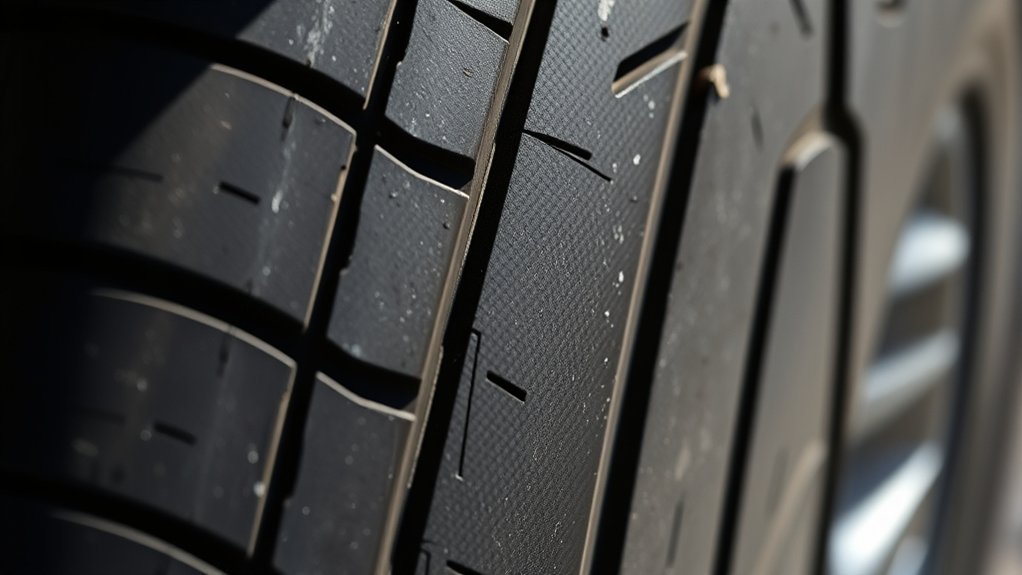
Your Toyota Camry’s tires have built-in treadwear indicator bars. These are small raised bars molded across the grooves. When the surrounding tread wears down until it is level with those bars, the tire has reached the replacement point.
Toyota’s Camry owner information notes that the location of treadwear indicators is shown by a “TWI” mark or similar mark molded into the tire sidewall. Look around the sidewall for the TWI marking, then follow that area inward to find the wear bar inside the tread groove. Replace the tire if the treadwear indicators are showing.
Recognizing Tread Wear Bars
To find the wear bars, scan the grooves across the tire. They look like small bridges running between tread blocks. They are easier to see when the tire is clean, dry, and lit with a flashlight.
- Below the tread surface: The tire still has usable tread at that location.
- Level with the tread surface: The tire is worn to the replacement point.
- Visible in only one area: The tire may have uneven wear and should be inspected.
How to Measure Tread Depth With a Gauge
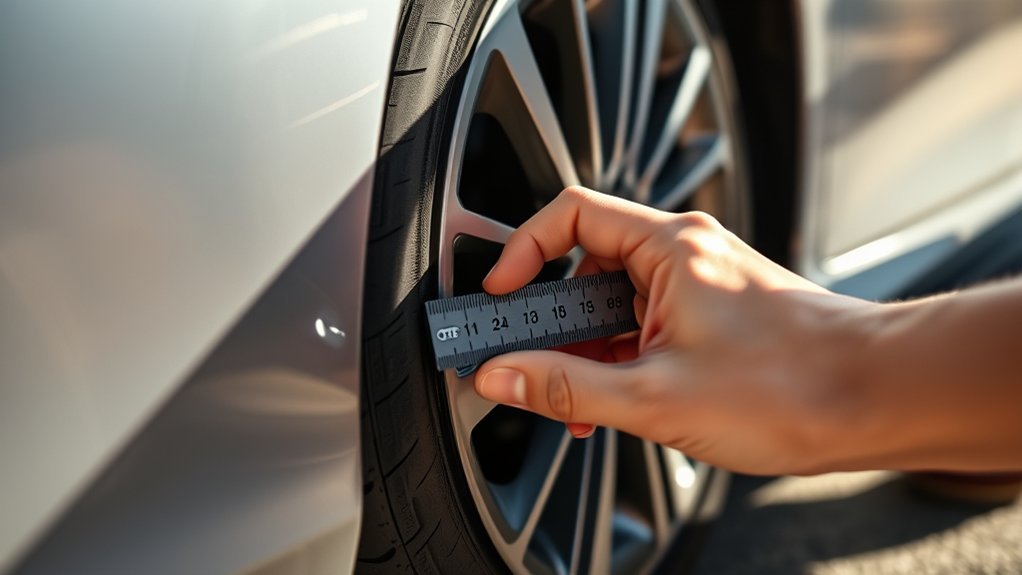
A tread depth gauge is the best tool because it gives a number instead of a visual estimate. Most gauges read in 32nds of an inch, which matches the way tire tread depth is commonly discussed in the United States.
[Products Worth Considering]

Accurately measure tire tread depth with a calibrated gauge marked from 0 to 1 inch in 1/32 inch increments. The color-coded bar helps you quickly identify tread condition ranges, supporting safe driving for trucks, motorcycles, automobiles, and passenger vehicles.

Monitor tire tread wear with a smart, color-coded depth gauge that shows clear condition ranges at a glance. The bar is range marked for fast, easy readings, helping you maintain safer traction and performance. Each gauge is portable with a pocket clip, and the set includes 20 units for daily use and sharing.

The SAFELIFE dial tire tread depth gauge measures tread depth in 1/32 inch increments with clear, easy-to-read 2-inch dial face. Color zones using a traffic light system help you quickly judge whether tread is low, marginal, or ample for safer driving. Built with a durable zinc cast body and a metal detect probe for precise, comfortable use across cars, motorcycles, trucks, and buses.
Selecting the Right Gauge
Any basic tread depth gauge is better than guessing. A simple mechanical gauge is inexpensive and reliable. A digital gauge is easier to read. If you only have coins, use the penny and quarter tests first, then confirm questionable tires with a gauge at a tire shop or service center.
Using the Gauge Properly
- Push the gauge probe into the deepest part of a main tread groove.
- Keep the probe straight and avoid resting it on a wear bar.
- Press the gauge base flat against the tread blocks.
- Read the number in 32nds of an inch or millimeters.
- Measure the inner, center, and outer grooves on every tire.
Interpreting the Results
| Tread Depth | What It Means | What To Do |
| 10/32 to 11/32 inch | Common depth for many new passenger tires | Maintain pressure and rotate on schedule |
| 6/32 inch | Usable, but monitor more often before winter or long trips | Recheck monthly and before road trips |
| 4/32 inch | Wet-weather caution zone | Start shopping if you drive often in rain |
| 3/32 inch | Very close to replacement | Plan replacement soon and avoid risky wet-road driving |
| 2/32 inch or less | Replace-now threshold | Replace the tire |
Note: The lowest reading on the tire matters. If the inner edge reads 2/32 inch but the center reads 5/32 inch, the tire still needs attention because one part of the tread is worn out.
What Uneven Tread Wear Means
Tread depth is not only about how much rubber is left. The wear pattern can tell you whether something else is wrong with your Camry.
- Center wear: Often linked to overinflation or heavy center loading.
- Both outer edges worn: Often linked to underinflation.
- One edge worn faster: Possible alignment issue or worn suspension component.
- Cupping or scalloped dips: Possible worn shocks, struts, balance issue, or suspension wear.
- Feathered tread blocks: Often linked to alignment or toe settings.
If you see uneven wear, replacing the tires without fixing the cause may make the new tires wear out early. Have the alignment, balance, pressure, and suspension checked by a qualified technician.
When to Replace Your Tires Based on Tread Depth?
Replace your Toyota Camry tires when tread depth reaches 2/32 inch, when the tread is level with the wear bars, or when a tire has unsafe damage such as cracks, bulges, exposed cords, or separation. Do not wait for every groove to fail. One dangerously worn section is enough reason to act.
If your tread is around 4/32 inch, the tire may not be at the legal minimum yet, but wet-road grip is reduced compared with new tires. AAA’s all-season tire testing found significant wet braking and handling losses on tires worn to 4/32 inch. If you commute in rain, drive highways often, or take long trips, use 4/32 inch as a practical planning point.
Also consider tire age. Tread depth does not tell the whole story because rubber ages over time. NHTSA notes that some vehicle and tire manufacturers recommend replacing tires after six to 10 years regardless of treadwear. To check age, look for the DOT Tire Identification Number on the sidewall; the last four digits show the week and year the tire was made.
[Products Worth Considering]

Measure tire tread depth quickly and accurately with this LUMITECO dial gauge that reads in 1/32" increments up to 14/32". The color-coded green/yellow/red zones make it easy to judge tire wear and know when replacement is needed. A rugged, compact design with a protective pouch helps keep the gauge ready for use on cars, trucks, motorcycles, and more.

Measure tyre tread depth precisely with a digital gauge that reads in both MM and inches, helping you monitor safe driving conditions. The large LCD screen is easy to operate, and the compact tool fits for cars, trucks, and motorcycles. It provides high accuracy with a 0-25.4mm range and includes a 1-year warranty for added peace of mind.

This tire inflator with pressure gauge delivers long-lasting performance with a durable rubber-protected gauge and sturdy build. The longer hose and 360 swivel air chuck help you seal the valve securely and keep your hands free while measuring, inflating, or deflating. It’s battery-free for reliable use and provides ±2 PSI accuracy in the mid-range for most typical tires, with universal compatibility for 1/4 NPT compressor outputs.
How to Tell Which Tire Is Low on a Toyota Camry
A “low tire” usually means low air pressure, not low tread depth. If your Camry’s tire pressure warning light comes on, use a tire pressure gauge to check all four tires when they are cold. The correct PSI is listed on the driver-side door placard or in your owner’s manual, not on the tire sidewall.
Low tread is different. A tire can have correct air pressure and still be unsafe because the tread is worn. Check pressure and tread separately: pressure with a tire pressure gauge, tread depth with a penny, quarter, wear bars, or tread depth gauge.
[Products Worth Considering]

ETENWOLF’s tire pressure gauge helps you quickly and accurately check tire PSI across cars, trucks, motorcycles, bikes, and more. It’s manually calibrated to ANSI B40.1 Grade A for reliable readings, includes a large glow dial for easy nighttime viewing, and features a 360-degree swivel chuck for use at any valve angle. The gauge also works consistently in extreme hot or cold weather.

The Milton S-693 straight foot dual head air chuck is designed for accurate tire pressure checks and quick, secure valve-core engagement with lock-on threads on both ends. With a 1/4" FNPT connection and a maximum 150 PSI rating, it’s built for use on inner duals and common vehicle tires, including trucks and RVs.

This TPMS relearn tool helps you quickly activate, match, and reset GM tire pressure sensors to keep the vehicle monitoring system working properly. It clears tire pressure alarms and dashboard warning lights after sensor replacement or tire rotation, and supports learning for common 315/433 MHz TPMS sensors. Designed for simple one-button operation, it can help you avoid unnecessary trips to repair shops.
Frequently Asked Questions
How do I tell which tire is low on a Toyota Camry?
If the TPMS light is on, check all four tires with a tire pressure gauge because the warning usually means low air pressure. If you mean low tread, measure each tire’s inner, center, and outer grooves with a tread depth gauge and compare the lowest readings.
What tread depth is too low for a Toyota Camry?
At 2/32 inch or less, the tire should be replaced. At about 4/32 inch, start planning replacement if you often drive in rain because wet-road stopping and handling performance are reduced as tread wears.
Is the penny test enough to check Camry tire tread?
The penny test is useful for spotting tires near 2/32 inch, but it is not the most accurate method. A tread depth gauge is better because it gives an exact reading and helps you compare the inner, center, and outer grooves.
How often should I check Toyota Camry tire tread depth?
Check tread depth at least once a month, before long trips, and any time you notice vibration, pulling, unusual road noise, or uneven wear. It is smart to check tread whenever you check tire pressure.
Can a tire be unsafe even if the tread depth looks okay?
Yes. Cracks, bulges, punctures, exposed cords, severe uneven wear, vibration, or old tire age can make a tire unsafe. Have the tire inspected by a professional if you see damage or feel a change in how the car drives.
Conclusion
Checking Toyota Camry tire tread depth takes only a few minutes, but it can make a major difference in wet-road grip, braking, and overall safety. Use the penny test for a quick 2/32-inch replacement check, the quarter test for a rough 4/32-inch wet-weather warning, and a tread depth gauge when you want the most accurate answer. If the tread is low, uneven, or damaged, replace the tire or have it inspected before your next long drive.
Sources
- NHTSA TireWise Tire Safety — tread depth, penny test, monthly checks, tire pressure, tire aging, and replacement guidance
- Toyota Camry Owner’s Manual: Tires — Camry treadwear indicators and tire inspection guidance
- AAA All-Season Tire Testing — wet braking and handling results for tires worn to 4/32 inch
- Bridgestone: How to Check Tire Tread Depth — penny test and common new tire tread-depth ranges