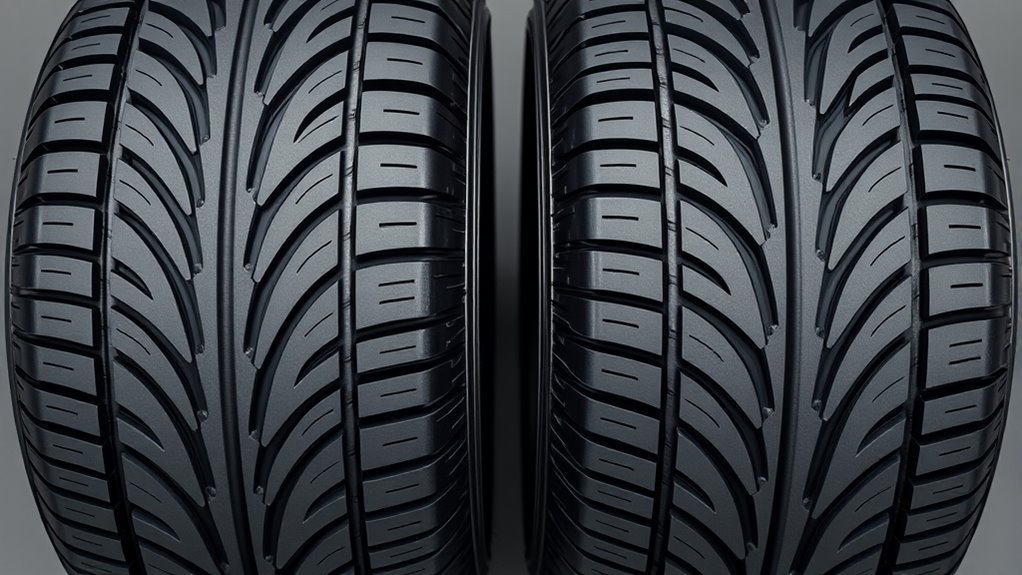
You should choose a tire tread pattern based on how and where you drive, not on marketing language alone. Symmetric tread patterns usually suit daily commuting, quiet cruising, easy rotation, and lower ownership cost. Asymmetric tread patterns make more sense when you want stronger wet-road grip, sharper cornering, and more performance-focused handling.
Quick Answer
Choose symmetric tread patterns for everyday driving, simple rotation, low noise, and predictable value. Choose asymmetric tread patterns if you often drive in rain, take corners at higher speeds, or want better dry and wet handling. Always follow your vehicle owner’s manual and the tire sidewall markings before rotating or replacing tires.
Key Takeaways
- Symmetric tread patterns are common on passenger tires and usually offer smooth driving, low rolling resistance, and flexible rotation options.
- Asymmetric tread patterns use different inner and outer zones to balance water displacement, wet grip, cornering stability, and dry-road handling.
- Do not mix tread patterns unless your vehicle or tire manufacturer allows it. Matched tires give the most predictable handling.
- Rotation rules depend on the tire design, sidewall markings, tire size, drivetrain, and the vehicle owner’s manual.
Symmetric or Asymmetric: Which Fits Your Driving?
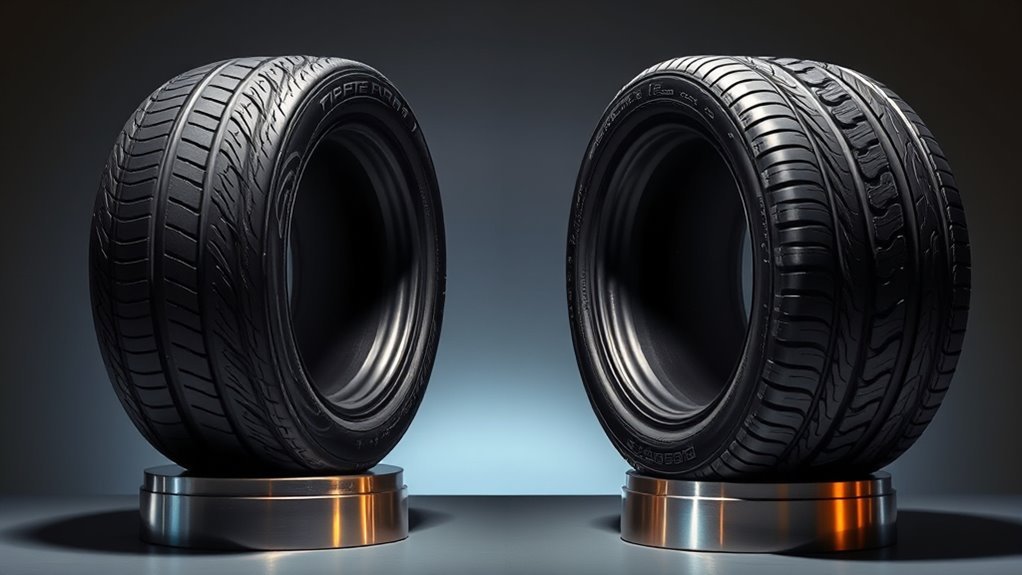
Your driving style should guide your tire choice. A quiet commute, predictable fuel use, and simple maintenance point toward a symmetric tread pattern. Wet highways, sharp cornering, and a sportier feel often point toward an asymmetric tread pattern.
A symmetric tread pattern has matching inner and outer tread halves. Bridgestone notes that these tires are often called multi-directional because they can usually be mounted and rotated in more than one pattern when the vehicle setup allows it.
An asymmetric tread pattern uses different designs on the inner and outer halves of the tire. Continental explains that the inner tread helps with water displacement, while the outer tread uses stiffer blocks for cornering and dry-road grip.
| Feature | Symmetric Tread | Asymmetric Tread |
|---|---|---|
| Best for | Commuting, comfort, value | Wet grip, cornering, performance |
| Tread layout | Same pattern across both halves | Different inner and outer zones |
| Rotation flexibility | Usually the most flexible | Must follow sidewall markings |
| Main trade-off | Less specialized for wet or sporty driving | Often costs more and needs more careful mounting |
How Symmetric Tread Patterns Handle Daily Driving
Symmetric tread patterns work well for routine driving because the tread design stays consistent across the tire face. This helps create steady road contact, predictable handling, and even wear when the tires are properly inflated, aligned, and rotated.
Continental describes symmetric tread patterns as smooth, stable, low rolling resistance, quiet, long-lasting, and fuel efficient. Those benefits are general tendencies, not guarantees. The tire model, rubber compound, tread depth, load rating, inflation pressure, alignment, and road conditions still matter.
Smooth Ride Quality
You will usually notice the biggest benefit of symmetric tires during daily commuting. Their continuous ribs or repeated tread blocks can reduce vibration and road noise compared with more aggressive tread designs.
Symmetric tires also tend to favor lower rolling resistance. That can help fuel economy, but it should not be overstated. NHTSA says a 10% reduction in tire rolling resistance may improve vehicle fuel economy by about 1% to 2%, depending on the vehicle and driving conditions.
Note: Tread pattern is only one part of tire performance. A premium asymmetric tire can be quieter than a cheap symmetric tire, and a touring symmetric tire can outperform a worn performance tire in normal traffic.
Easy Tire Rotation
Symmetric tread patterns give you the most rotation flexibility in many vehicle setups. Depending on your drivetrain and tire size, you may be able to use front-to-back, modified X, or full X rotation patterns.
NHTSA advises drivers to check the owner’s manual for the correct tire rotation pattern. If the vehicle manufacturer recommends rotation, NHTSA lists 5,000 to 8,000 miles as a common interval, or sooner if uneven wear appears.
This flexibility can help you spread wear more evenly across all four tires. It can also reduce the chance of mounting errors because symmetric tires do not have an inner and outer tread side that must face a specific way.
Why Asymmetric Treads Excel at Cornering and Wet Roads
Asymmetric tires divide the tread into performance zones. The inner tread usually has grooves and channels that help move water away from the contact patch. The outer shoulder usually has larger or stiffer tread blocks that support cornering and dry grip.
This design helps explain why asymmetric tread patterns are common on performance all-season tires, summer tires, and ultra-high-performance tires. You get a tire that can balance wet-road control with sharper dry-road handling.
You still need realistic expectations. Asymmetric tread does not make a tire safe in deep standing water, at excessive speeds, or when the tread is worn. Wet grip depends on tread depth, compound, tire age, inflation pressure, vehicle weight, and road surface.
[Products Worth Considering]

Measure tire tread depth quickly and accurately with this LUMITECO dial gauge that reads in 1/32" increments up to 14/32". The color-coded green/yellow/red zones make it easy to judge tire wear and know when replacement is needed. A rugged, compact design with a protective pouch helps keep the gauge ready for use on cars, trucks, motorcycles, and more.

Monitor tire tread wear with a smart, color-coded depth gauge that shows clear condition ranges at a glance. The bar is range marked for fast, easy readings, helping you maintain safer traction and performance. Each gauge is portable with a pocket clip, and the set includes 20 units for daily use and sharing.

Measure tyre tread depth precisely with a digital gauge that reads in both MM and inches, helping you monitor safe driving conditions. The large LCD screen is easy to operate, and the compact tool fits for cars, trucks, and motorcycles. It provides high accuracy with a 0-25.4mm range and includes a 1-year warranty for added peace of mind.
Which Tread Pattern Runs Quieter and Saves Gas?
Symmetric tread patterns usually have the advantage for quietness and everyday efficiency. Their simpler, repeated pattern can help control road noise, and many touring tires with symmetric designs are built for comfort and low rolling resistance.
Asymmetric tires may trade some quietness and efficiency for grip and handling. Their varied tread blocks and stronger outer shoulders can create more road feedback, especially on rough pavement. That said, a well-designed asymmetric touring tire can still be quiet.
For fuel economy, focus on the tire’s rolling resistance, size, inflation pressure, and maintenance history rather than tread pattern alone. Keep the tires inflated to the vehicle manufacturer’s cold tire pressure, not the maximum pressure printed on the tire sidewall.
Which Tread Pattern Actually Saves Money Over Time?
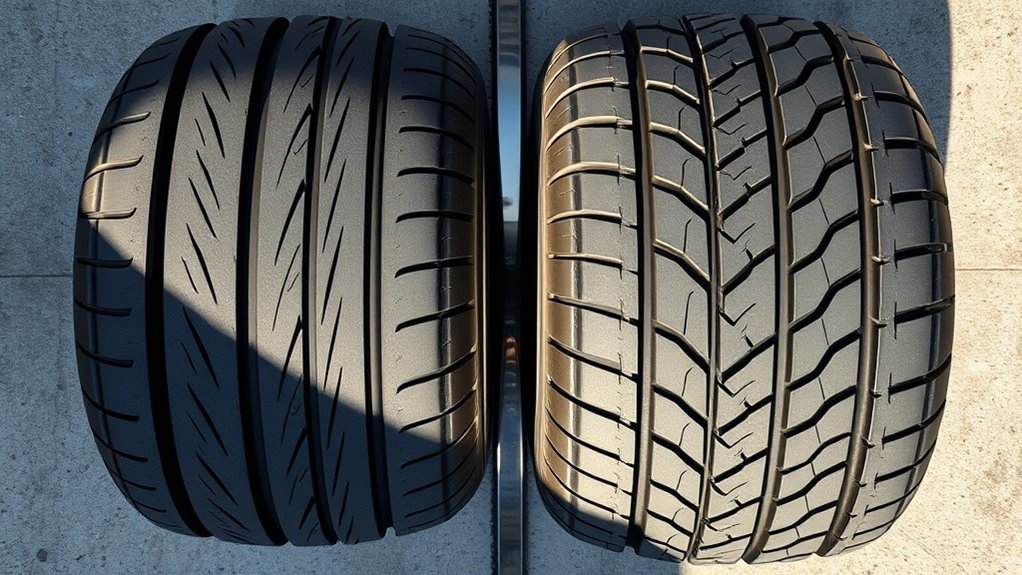
Symmetric tread patterns often save money for drivers who value simple maintenance and steady wear. They are common on passenger touring tires, and their rotation flexibility can help you use the full tread life when the tires are maintained correctly.
Asymmetric tires can cost more because they are often found on performance-focused models. The extra cost may be worth it if your driving includes frequent rain, higher-speed highway use, winding roads, or a vehicle that benefits from sharper steering response.
- Choose symmetric tires if you mostly commute, drive in mild conditions, and want low ownership cost.
- Choose asymmetric tires if wet grip, cornering response, and dry-road control matter more than the lowest purchase price.
- Check the full tire spec, including size, load index, speed rating, treadwear grade, warranty, and traction grade before deciding.
The cheapest tire is not always the least expensive tire over time. The better value is the tire that fits your vehicle, climate, driving style, and maintenance habits.
[Products Worth Considering]

Accurately measure tire tread depth with a calibrated gauge marked from 0 to 1 inch in 1/32 inch increments. The color-coded bar helps you quickly identify tread condition ranges, supporting safe driving for trucks, motorcycles, automobiles, and passenger vehicles.

The SAFELIFE dial tire tread depth gauge measures tread depth in 1/32 inch increments with clear, easy-to-read 2-inch dial face. Color zones using a traffic light system help you quickly judge whether tread is low, marginal, or ample for safer driving. Built with a durable zinc cast body and a metal detect probe for precise, comfortable use across cars, motorcycles, trucks, and buses.
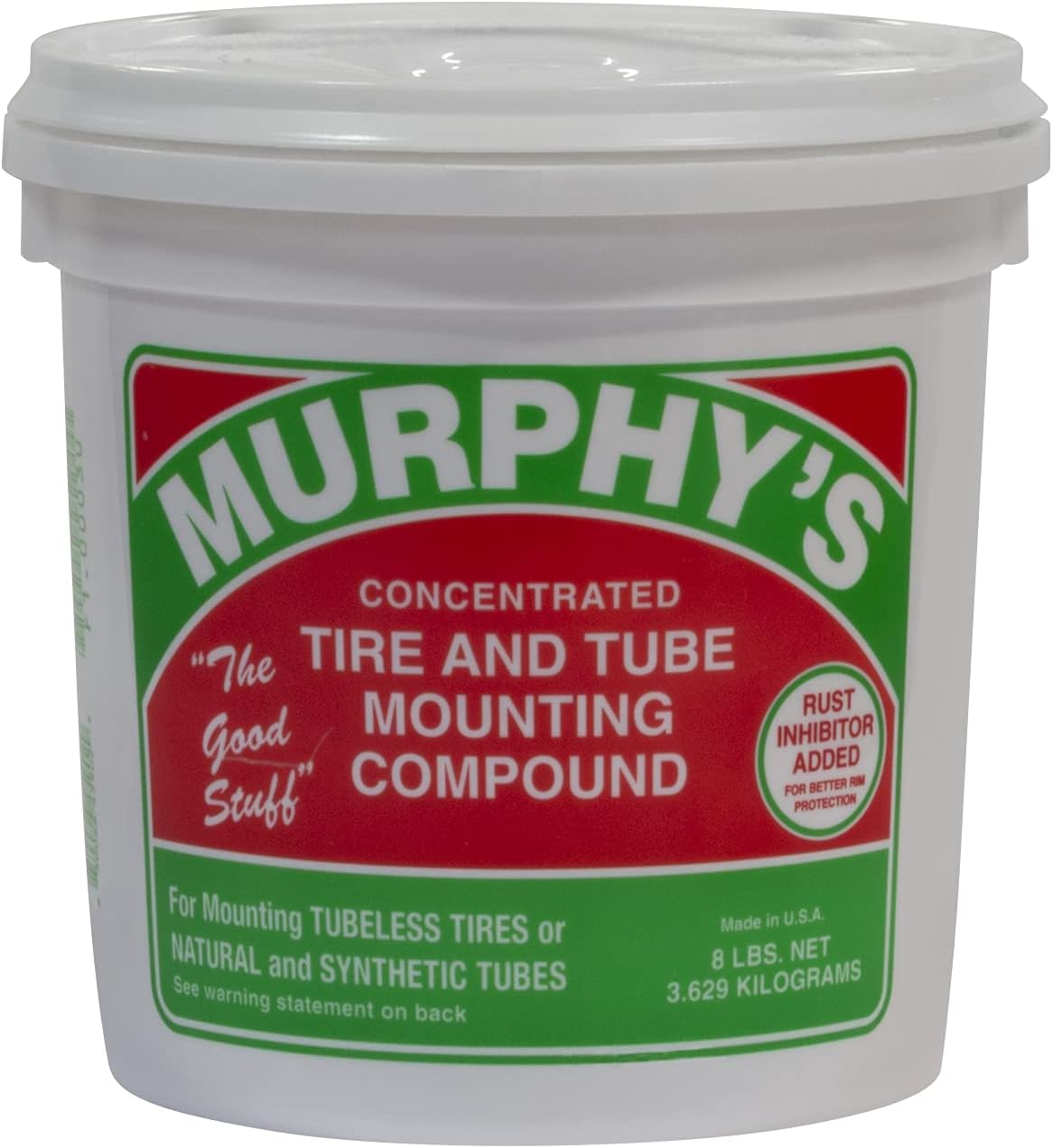
A concentrated tire and tube mounting compound designed to help simplify mounting rubber tires and tubes on passenger, semi truck, construction, and OTR applications. Its ultra-thick formula packs beads effectively and includes rust inhibitors to help protect against corrosion during use.
Who Actually Needs Symmetric Tires?
Symmetric tires make the most sense for drivers who want dependable everyday performance without extra complexity. They are especially practical for compact cars, sedans, minivans, crossovers, and vehicles used mostly for commuting.
Daily Commuting Needs
If your driving is mostly predictable, symmetric tread patterns are usually enough. They work well for stop-and-go traffic, school runs, errands, and highway commuting in dry to mildly wet conditions.
Your daily route may include:
- City streets where predictable braking and comfort matter.
- Highway miles where low noise and rolling resistance help.
- Parking lots and tight turns where even wear and durability matter.
Budget-Conscious Drivers
| Feature | Symmetric Benefit | Your Advantage |
|---|---|---|
| Initial cost | Common on value and touring tires | More budget-friendly options |
| Rotation | Usually more flexible | Easier maintenance planning |
| Wear pattern | Can wear evenly with proper care | More predictable replacement timing |
| Ride feel | Usually smooth and quiet | Comfortable daily driving |
When Asymmetric Treads Become Worth the Investment
Asymmetric tread patterns become worth the extra cost when your driving demands more than basic commuting comfort. They are especially useful if you regularly drive through rain, use a sport sedan or performance SUV, or value sharper steering response.
- Wet highways: The inner tread zones can help move water away from the contact patch.
- Curving roads: The stronger outer shoulder can support lateral grip during cornering.
- Performance vehicles: The tire can better match a chassis built for quick steering and higher grip.
The investment makes less sense if you drive gently, stay mostly on dry urban roads, or prioritize the lowest cost per mile. In that case, a good symmetric touring tire may be the smarter buy.
[Products Worth Considering]
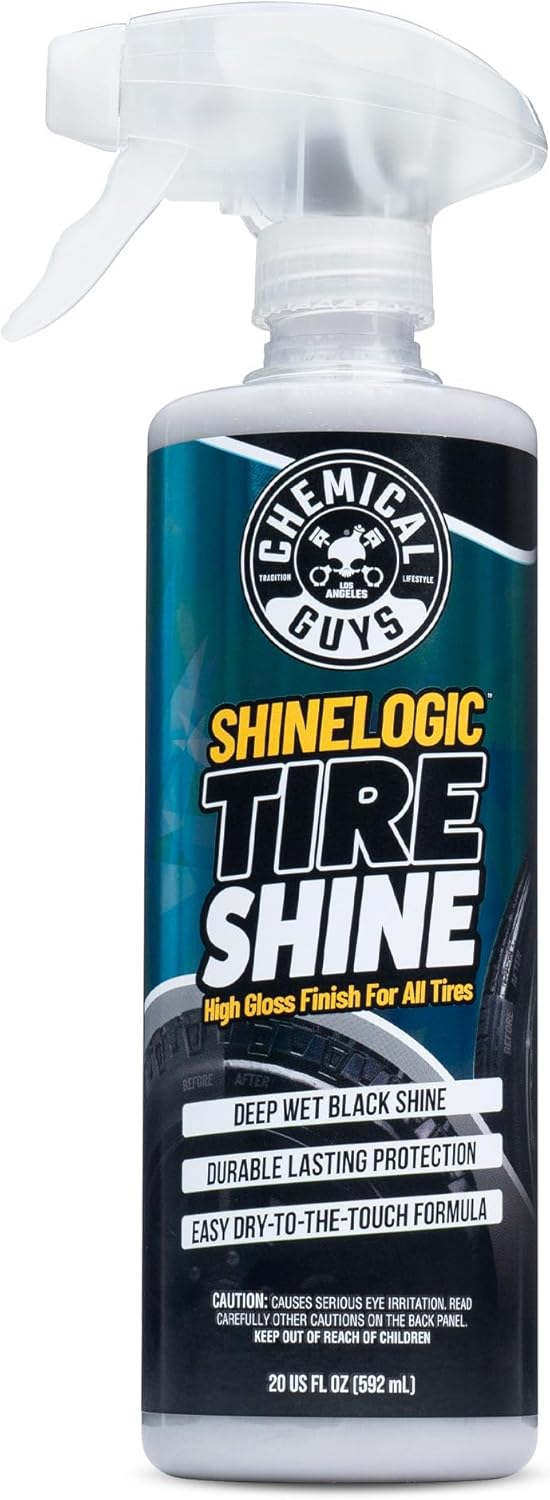
Chemical Guys ShineLogic Tire Shine delivers a deep wet black, high-shine finish for rubber tires with a sleek look. It’s designed for durable, one-step application with minimal drips, streaks, or runs, and it helps produce effortless, long-lasting shine. Choose aerosol or trigger spray for easy use on cars, trucks, motorcycles, RVs, and more.

Keep your tires properly inflated with this analog VONDIOR tire pressure gauge, designed for fast, easy readings without batteries. The swiveling, two-axis hose and large glow dial help you measure at any tire angle with instant visibility. Built with a protective rubber shield, it supports durable, low-maintenance use for cars and trucks.

TIRESHIELD PRO RV tire covers in a set of four deliver year-round protection against UV rays, cracking, fading, water, and snow. The StormLock-System helps keep the covers securely fastened through high wind, while heavy-duty, double-stitched construction supports long-lasting performance. Designed for universal fit, they’re intended for RV, camper, truck, car, and trailer tires within the 26–28.75 inch diameter range, with easy wipe-clean care and storage in the included bag.
The Risks of Mixing Different Tread Patterns
Every tire on your vehicle works as part of one handling system. When you mix tread patterns, brands, sizes, speed ratings, or tread depths, the vehicle can respond less predictably during braking, cornering, and wet-road driving.
Warning: Avoid mixing different tread patterns unless the tire manufacturer or vehicle manufacturer approves the setup. If mixing is unavoidable, at minimum keep matching tires on the same axle and ask a qualified tire professional to confirm the safest arrangement.
Continental recommends fitting the same tires to every wheel position for optimal safety and performance. Michelin also warns that vehicles with ABS, traction control, AWD, or 4WD may require closely matched tire diameters at all positions because small differences can affect vehicle systems and drivetrain components.
If you replace only two tires, the Tire Industry Association recommends installing the newer tires on the rear axle. This helps the rear axle maintain grip and can reduce the risk of losing stability on wet or slippery roads.
Rotation Limits: What Each Pattern Allows
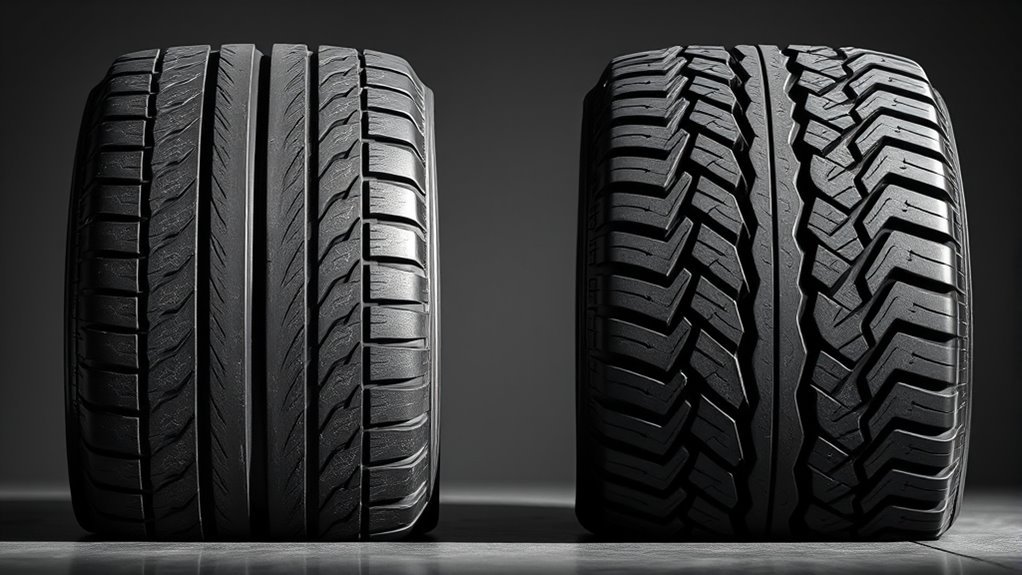
Your tire rotation options depend on the tread pattern, tire size, drivetrain, and sidewall markings. Always start with the vehicle owner’s manual because some vehicles use different front and rear tire sizes or special rotation rules.
Symmetric tires: These usually allow the most rotation options. If the tires are the same size on all four corners, common options include front-to-back, rearward cross, forward cross, modified X, or full X patterns.
Asymmetric tires: These must keep the correct side facing outward. Look for “Outside” or “Inside” markings on the sidewall. Many drivers rotate them front-to-back on the same side, but the correct pattern still depends on tire construction and vehicle guidance.
Directional tires: These are different from asymmetric tires. Directional tires have arrows showing the direction of travel. If you move them side-to-side without remounting them on the wheel, the tread can face the wrong way and lose its intended water-channeling benefit.
Pro Tip: Before buying replacement tires, take a photo of your tire sidewall. The size, load index, speed rating, DOT date code, and any “Outside” or rotation-arrow markings can help the tire shop match the correct design.
Maintenance Checks That Matter More Than Tread Pattern
The best tread pattern cannot overcome poor maintenance. NHTSA recommends checking tire pressure at least once a month when the tires are cold. Use the pressure listed on the vehicle placard or in the owner’s manual, not the maximum pressure on the tire sidewall.
You should also inspect tread depth, cuts, bulges, cracking, vibration, and uneven wear. NHTSA says tires are not safe and should be replaced when tread wears down to 2/32 of an inch.
Balance and alignment matter too. A misaligned vehicle can ruin symmetric and asymmetric tires quickly. If your vehicle pulls to one side, shakes, or wears one shoulder faster than the other, have it inspected before blaming the tread pattern.
Frequently Asked Questions
What is the difference between asymmetric and symmetric tread patterns?
A symmetric tread pattern uses the same design across the inner and outer halves of the tire. An asymmetric tread pattern uses different inner and outer zones, usually with the inner side shaped for water displacement and the outer side built for cornering support.
Does matching tread pattern matter?
Yes. Matching tread patterns help your tires respond more predictably during braking, cornering, and wet-road driving. Tire manufacturers generally recommend using the same brand, model, size, tread pattern, load index, and speed rating on all wheel positions when possible.
Are asymmetric tires always better in rain?
Not always. Asymmetric tread designs often help wet grip because the inner tread can move water away from the contact patch. However, wet performance also depends on tread depth, tire compound, tire age, inflation pressure, speed, and road conditions.
Can asymmetric tires be rotated?
Yes, but you must follow the tire sidewall markings and the vehicle owner’s manual. Asymmetric tires must keep the correct side facing outward. Many setups use front-to-back rotation, but the correct pattern depends on the vehicle and tire design.
Are symmetric tires cheaper?
They often are, especially on standard touring and commuter tires. Symmetric tread patterns are common, simple to maintain, and usually easier to rotate. Still, price depends on the tire brand, size, load rating, speed rating, compound, and warranty.
What is the safest tread pattern for most drivers?
The safest choice is the tire that matches your vehicle, climate, and driving needs. For most commuters, a quality symmetric or asymmetric all-season tire with proper size, load rating, pressure, tread depth, and maintenance is safer than choosing by tread pattern alone.
Conclusion
Symmetric tread patterns are usually the better choice for commuting, comfort, value, low rolling resistance, and easy rotation. Asymmetric tread patterns are usually the better choice for drivers who want stronger wet grip, sharper cornering, and a more performance-focused feel.
Do not choose by tread pattern alone. Compare the full tire model, size, load index, speed rating, treadwear grade, traction grade, warranty, and climate fit. Keep all four tires matched when possible, follow sidewall markings, rotate according to the owner’s manual, and replace tires before tread depth becomes unsafe.
Sources
- Bridgestone: Tire Tread Patterns — symmetric, asymmetric, and directional tread-pattern basics.
- Continental: Tire Tread — tread-pattern features, wet grip, cornering stability, and rotation limitations.
- NHTSA TireWise — tire rotation, tire pressure, tread depth, rolling resistance, and fuel-efficiency guidance.
- Continental: Mixing Tires — guidance on avoiding mixed tire brands, sizes, and tread patterns.
- Michelin: Mixing Tires — AWD/4WD, ABS, traction control, tread-depth, and tire-matching cautions.
- Tire Industry Association: Tire Replacement — replacing two tires and placing newer tires on the rear axle.