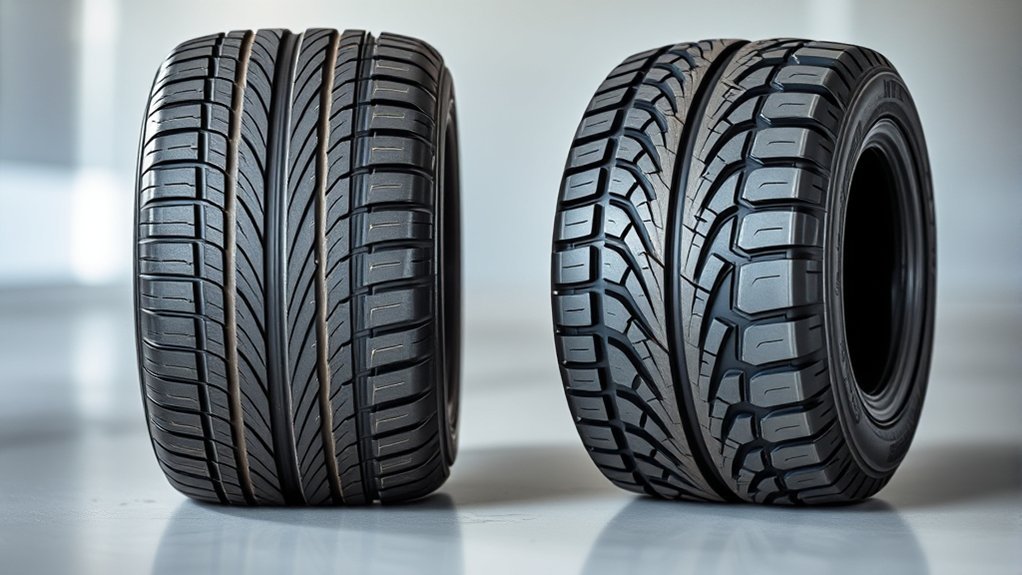
Choosing between symmetrical and asymmetrical tire tread patterns is not just a style choice. The tread pattern affects how a tire handles water, road noise, cornering, rotation, and everyday wear. The best option depends on where you drive, how fast you drive, your weather, your budget, and whether your vehicle needs comfort-focused or performance-focused tires.
Quick Answer
Choose symmetrical tire tread patterns for quiet, affordable, everyday driving in mostly mild conditions. Choose asymmetrical tread patterns if you want stronger wet-road control, sharper cornering, and better high-speed stability. For heavy rain, snow, or mud, also compare directional tread patterns because they are designed to move water or slush efficiently.
Key Takeaways
- Symmetrical tread is usually the best value for commuting, city driving, lower road noise, and simple rotation.
- Asymmetrical tread uses different inner and outer tread zones to balance water evacuation, dry grip, and cornering stability.
- Directional tread is different from asymmetrical tread and is often chosen for strong water, snow, or mud evacuation.
- Tread pattern matters, but tire compound, tread depth, tire pressure, vehicle alignment, and driving speed matter just as much for safety.
- Never choose tires by pattern alone. Match the tire size, load rating, speed rating, season, and vehicle manufacturer recommendations.
Understanding Tire Tread Patterns: Why They Matter
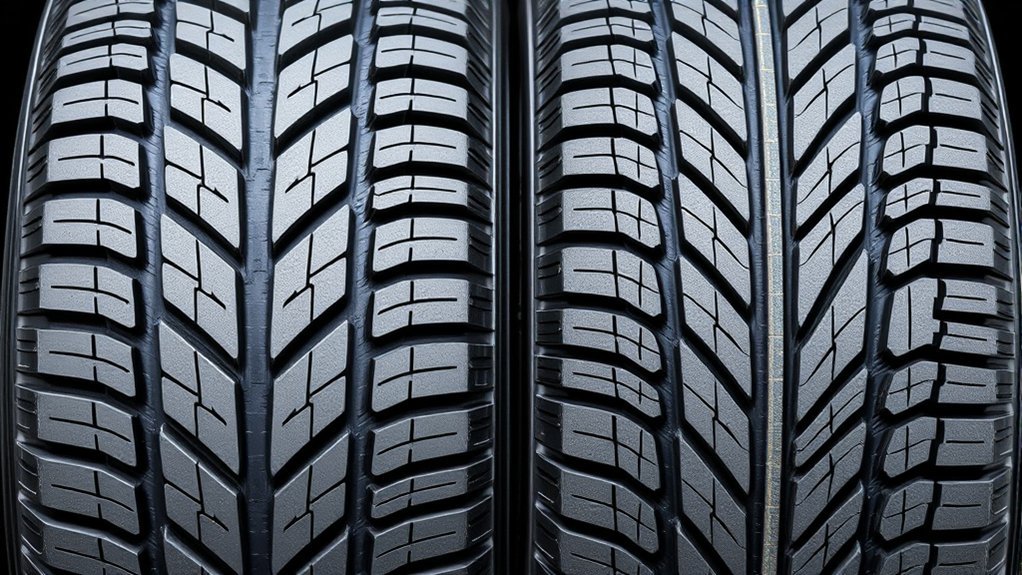
Tire tread is the part of the tire that touches the road. The pattern molded into that tread helps the tire manage grip, water, road noise, braking, and wear. According to Continental’s tire tread guidance, tread patterns use ribs, grooves, blocks, and sipes to influence traction, handling, noise, wear, wet braking, hydroplaning resistance, and snow or ice grip.
The three tread-pattern categories most drivers compare are:
- Symmetrical tread patterns: the same tread design appears across both halves of the tire.
- Asymmetrical tread patterns: the inner and outer halves of the tire have different tread designs for different jobs.
- Directional tread patterns: the tread is designed to roll in one direction, usually with V-shaped grooves that help channel water away.
The key point is simple: tread pattern helps shape tire behavior, but it does not work alone. A high-quality symmetrical tire may outperform a cheap asymmetrical tire in some conditions. Tread depth, rubber compound, tire age, inflation pressure, alignment, and vehicle weight all affect the final result.
What Are Symmetrical Tire Patterns?
A symmetrical tread pattern has the same design on both sides of the tire’s centerline. These tires often use continuous ribs or evenly repeated tread blocks across the full tread face. Because the pattern is the same across the tire, symmetrical tires are usually simple to mount, easy to rotate, and common on passenger cars.
Design Characteristics
Symmetrical tires are built for balance and consistency rather than maximum performance. Their even pattern can support steady straight-line tracking, predictable handling, and even wear when the tires are rotated correctly. Many standard touring, commuter, and economy tires use symmetrical tread because the design is practical and cost-effective.
They also tend to be more flexible for rotation than directional tires. In many standard setups, they can be moved front-to-back or cross-rotated, as long as the vehicle manufacturer and tire maker allow that rotation pattern.
Performance Benefits
The biggest strengths of symmetrical tread patterns are comfort, value, and low-maintenance ownership. For everyday driving, they can provide:
- Lower road noise than many aggressive performance or all-terrain patterns.
- Even tread wear when alignment, pressure, and rotation are maintained.
- Good fuel efficiency when the tire is designed with low rolling resistance.
- Lower purchase cost in many common tire categories.
- Predictable handling for commuting, errands, and moderate-speed driving.
For drivers who mostly travel on paved roads in mild weather, symmetrical tires can be the most sensible choice. They are especially useful for compact cars, sedans, older vehicles, and drivers who want dependable performance without paying for high-performance features they do not need.
The Drawbacks of Symmetrical Tire Patterns
Symmetrical tread patterns are practical, but they are not the top choice for every driving condition. Their main limitation is that the same tread design must handle every job: water evacuation, straight-line stability, braking, cornering, and noise control. That balanced design can be a strength for everyday use, but it can limit performance in demanding conditions.
Limited Wet Performance
Symmetrical tires are not automatically unsafe in rain, but they are usually less specialized for wet-road performance than many directional or asymmetrical designs. Continental notes that symmetrical patterns can deliver steady dry-road grip, but they may not be as effective in wet conditions as other tread types.
That matters most when you drive through heavy rain, standing water, worn pavement, or high-speed highway spray. In those situations, tread depth and water-evacuation channels become critical. If the tread is worn, even an advanced pattern will lose performance.
Warning: Do not treat any tread pattern as a substitute for safe tread depth. The National Highway Traffic Safety Administration says tires should be replaced when tread is worn down to 2/32 of an inch. In wet weather, shallow tread can increase braking distance and hydroplaning risk.
Predictable Handling Dynamics
Symmetrical tires usually feel stable and predictable, which is helpful for commuting. However, drivers who want sharp cornering, fast lane-change response, or high-speed grip may find them less responsive than performance tires with asymmetrical or directional designs.
This is not a flaw; it is a trade-off. Symmetrical tread is usually tuned for comfort, value, and even wear. If your vehicle is a sports sedan, performance SUV, or high-powered car, an asymmetrical performance tire may feel more planted during cornering and braking.
What’s Great About Asymmetrical Tire Patterns?
An asymmetrical tread pattern uses two different tread zones. The inner side usually focuses on water evacuation and wet-road grip. The outer side usually uses larger or stiffer tread blocks to support dry grip and cornering stability. The tire sidewall is normally marked with “outside” and “inside” so the tire is mounted correctly.
This split design lets the tire balance several goals at once. That is why asymmetrical tread patterns are common on many performance, ultra-high-performance, and premium touring tires.
- Better wet-road control: the inner tread area can help move water away from the contact patch.
- Improved cornering stability: the outer shoulder can support the tire during turns.
- Stronger dry handling: larger outer tread blocks can increase lateral grip.
- Balanced comfort: many modern asymmetrical tires are tuned to reduce road noise while keeping performance.
Asymmetrical tires are a strong choice for drivers who regularly travel on highways, drive in mixed wet and dry weather, or want more confident cornering without moving into a dedicated track-style tire.
The Downsides of Asymmetrical Tire Patterns
Asymmetrical tires can offer better performance, but they also come with extra considerations. They are not always the cheapest choice, and they must be mounted correctly to work as intended.
Installation Complexity
The most important installation rule is sidewall orientation. If a tire says “outside,” that side must face outward after installation. If a tire also has a rotation arrow, it is directional as well as asymmetrical, and the rotation direction must be followed too.
Incorrect mounting can reduce the tire’s water evacuation, cornering grip, and overall handling. That is why asymmetrical tires should be installed by a qualified tire shop that checks sidewall markings before balancing and fitting the wheel.
Note: Alignment is not required simply because a tire is asymmetrical. However, alignment should be checked if you see uneven wear, the vehicle pulls, the steering wheel is off-center, or new tires are wearing faster on one edge.
Higher Cost Factors
Asymmetrical tread patterns are often found on performance and premium tires, so they may cost more than basic symmetrical touring tires. The price difference usually comes from the overall tire design, not just the tread pattern. Rubber compound, speed rating, load rating, construction, brand, and warranty all affect price.
Some performance tires with asymmetrical tread may also wear faster because they prioritize grip and handling. That does not mean every asymmetrical tire has a short life. Always compare treadwear rating, mileage warranty, owner reviews, and the tire’s intended category before buying.
Asymmetrical vs. Directional Tire Patterns
Many drivers confuse asymmetrical and directional tread patterns. They are not the same.
Asymmetrical tires have different inner and outer tread zones. Their main installation rule is that the “outside” sidewall must face outward. Directional tires are designed to roll in one direction, usually shown by arrows on the sidewall. Their main installation rule is that the tire must rotate in the arrow direction when the vehicle moves forward.
Directional tires often use V-shaped grooves to push water, slush, or mud out from under the tire. That makes them common on some winter, all-season, and performance tires. The trade-off is rotation flexibility. Directional tires normally rotate front-to-back on the same side unless they are dismounted and remounted.
Pro Tip: Before buying tires, look for sidewall wording. “Outside/inside” means asymmetrical mounting matters. A rotation arrow means direction matters. If both markings appear, the tire has both requirements.
Comparative Analysis: Symmetrical vs. Asymmetrical Tires
| Feature | Symmetrical Tread | Asymmetrical Tread |
|---|---|---|
| Best use | Daily commuting, city driving, mild weather | Mixed weather, highway driving, sportier handling |
| Wet grip | Adequate on good tires with enough tread, but usually less specialized | Often better because inner tread can focus on water evacuation |
| Cornering | Predictable and stable | Usually stronger because the outer shoulder supports lateral grip |
| Noise and comfort | Often quiet and comfortable | Can be quiet, but depends heavily on tire model |
| Rotation | Usually most flexible | Follow tire sidewall markings, vehicle manual, and tire-shop guidance |
| Cost | Often more budget-friendly | Often higher, especially in performance categories |
[Products Worth Considering]

Accurately measure tire tread depth with a calibrated gauge marked from 0 to 1 inch in 1/32 inch increments. The color-coded bar helps you quickly identify tread condition ranges, supporting safe driving for trucks, motorcycles, automobiles, and passenger vehicles.

Measure tire tread depth quickly and accurately with this LUMITECO dial gauge that reads in 1/32" increments up to 14/32". The color-coded green/yellow/red zones make it easy to judge tire wear and know when replacement is needed. A rugged, compact design with a protective pouch helps keep the gauge ready for use on cars, trucks, motorcycles, and more.

Monitor tire tread wear with a smart, color-coded depth gauge that shows clear condition ranges at a glance. The bar is range marked for fast, easy readings, helping you maintain safer traction and performance. Each gauge is portable with a pocket clip, and the set includes 20 units for daily use and sharing.
Choosing Symmetrical Tires: Best Use Cases
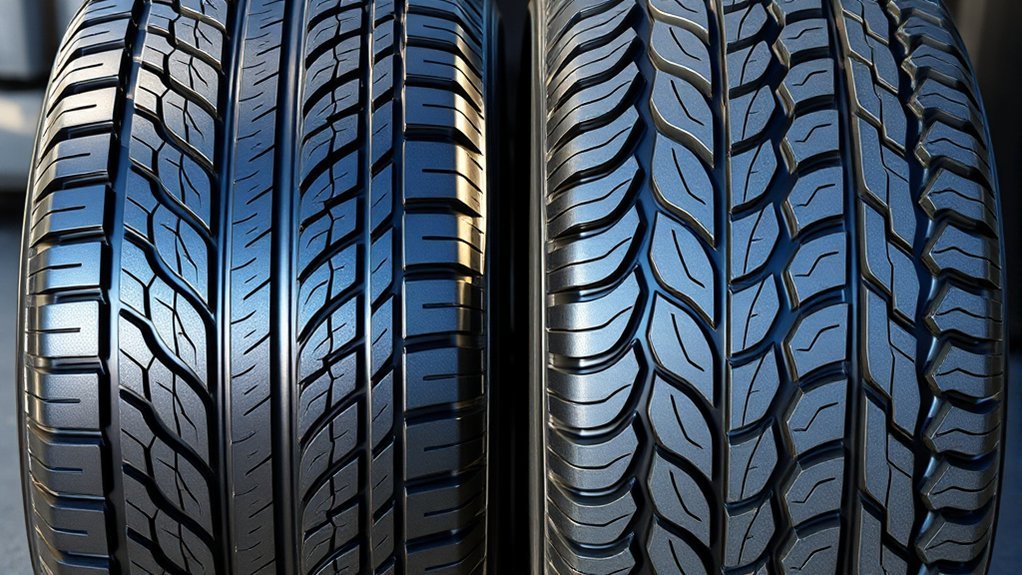
Choose symmetrical tires if your main priorities are value, comfort, quietness, and simple maintenance. They make the most sense when your driving is predictable and your weather is moderate.
Symmetrical tires are a good fit for:
- Daily commuting in a sedan, compact car, minivan, or small crossover.
- City driving with moderate speeds and regular stop-and-go traffic.
- Drivers who want lower road noise and a smooth ride.
- Budget-conscious tire buyers who do not need high-performance handling.
- Vehicles that benefit from simple tire rotation and even wear.
They are not the best match if you frequently drive fast on wet highways, push hard through corners, or need maximum water evacuation. In those cases, compare asymmetrical or directional options in the correct tire size and category.
[Products Worth Considering]

The SAFELIFE dial tire tread depth gauge measures tread depth in 1/32 inch increments with clear, easy-to-read 2-inch dial face. Color zones using a traffic light system help you quickly judge whether tread is low, marginal, or ample for safer driving. Built with a durable zinc cast body and a metal detect probe for precise, comfortable use across cars, motorcycles, trucks, and buses.

Measure tyre tread depth precisely with a digital gauge that reads in both MM and inches, helping you monitor safe driving conditions. The large LCD screen is easy to operate, and the compact tool fits for cars, trucks, and motorcycles. It provides high accuracy with a 0-25.4mm range and includes a 1-year warranty for added peace of mind.

A concentrated tire and tube mounting compound designed to help simplify mounting rubber tires and tubes on passenger, semi truck, construction, and OTR applications. Its ultra-thick formula packs beads effectively and includes rust inhibitors to help protect against corrosion during use.
When to Choose Asymmetrical Tires
Choose asymmetrical tires if you want a stronger balance of wet grip, dry cornering, and highway stability. They are especially useful when you drive in changing weather or want a tire that feels more confident during braking and turns.
Asymmetrical tires are a smart option for:
- Drivers who regularly see rain but still want good dry-road handling.
- Highway commuters who value stability at speed.
- Sport sedans, coupes, performance SUVs, and premium touring vehicles.
- Drivers who want better cornering feel without switching to a harsh track-focused tire.
- Vehicles that originally came with asymmetrical tires from the manufacturer.
The main rule is to buy the correct tire for your vehicle, not just the pattern you prefer. Check the size, load index, speed rating, season rating, UTQG information, and vehicle manufacturer recommendations.
[Products Worth Considering]

The Continental Grand Prix 5000 is an allround road bike tire engineered for faster rolling, improved ride comfort, and enhanced puncture protection. It features a Vectran Breaker cut-protection layer, Lazer Grip micro-profile tread for confident cornering control, and Active Comfort Technology to damp vibration for smoother rides. BlackChili compound optimizes grip and speed for everyday performance and long-lasting confidence.

Keep your tires properly inflated with this analog VONDIOR tire pressure gauge, designed for fast, easy readings without batteries. The swiveling, two-axis hose and large glow dial help you measure at any tire angle with instant visibility. Built with a protective rubber shield, it supports durable, low-maintenance use for cars and trucks.

Vigorder rubber cement glue delivers superior adhesion and cures quickly within about 30 seconds for seamless rubber bonding. Once cured, it helps provide a strong, durable, waterproof seal that holds up to vehicle weight, pressure, and heat. Suitable for cars, motorcycles, trucks, bicycles, and off-road tires, it’s designed for emergency patch and maintenance repairs.
Rotation, Installation, and Maintenance Rules
Tread pattern affects rotation options, but the owner’s manual and tire sidewall markings should always come first. NHTSA recommends checking the owner’s manual for the correct rotation pattern and says that if the vehicle manufacturer recommends rotation, many tires are rotated every 5,000 to 8,000 miles or sooner if uneven wear appears.
- Symmetrical, non-directional tires: often allow the most rotation flexibility.
- Asymmetrical tires: must keep the “outside” sidewall facing outward after mounting.
- Directional tires: must rotate in the arrow direction shown on the sidewall.
- Staggered setups: front and rear tires are different sizes, so rotation may be limited or not recommended.
- Uneven wear: may point to alignment, suspension, pressure, or balancing problems.
Proper maintenance matters more than the tread label. Check pressure monthly, inspect tread depth, rotate on schedule, and have a qualified technician inspect vibration, pulling, cupping, or one-sided wear.
Tread Patterns and Their Impact on Driving Safety
Tread pattern is one part of tire safety. The pattern helps the tire manage water, grip, noise, and cornering, but it cannot overcome worn tread, incorrect pressure, poor alignment, or unsafe speed for the conditions.
For safety, focus on these basics:
- Tread depth: NHTSA says tires should be replaced when tread is worn to 2/32 inch.
- Treadwear indicators: raised wear bars show when the tread is at the replacement point.
- Tire pressure: use the cold pressure listed on the vehicle’s Tire and Loading Information Label or owner’s manual, not the maximum PSI on the tire sidewall.
- UTQG traction grade: for many passenger tires in the U.S., the Uniform Tire Quality Grading system includes wet-pavement traction grades. The DOT/NHTSA Consumer Guide to Uniform Tire Quality Grading explains treadwear, traction, and temperature grade designations.
- Weather match: summer, all-season, all-weather, and winter tires are built for different temperature and road conditions.
Wet-road safety depends on more than tread type. A worn asymmetrical tire can perform worse than a well-maintained symmetrical tire with deeper tread. Slow down in heavy rain, avoid standing water, and replace tires before they become unsafe.
Warning: Avoid mixing different tire sizes, load ratings, speed ratings, brands, or tread patterns unless your vehicle manufacturer specifically allows it. At minimum, tires on the same axle should match closely. Mixing patterns can change handling, braking, and stability.
Final Thoughts: Choosing the Right Tread Pattern for Your Vehicle
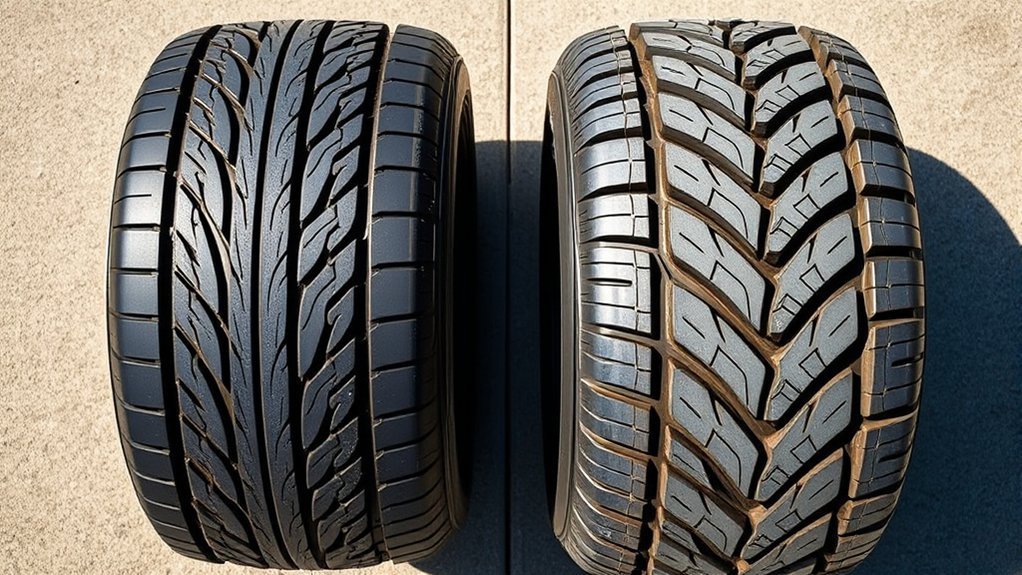
The right tread pattern is the one that matches your real driving conditions. Symmetrical tread patterns are practical, quiet, affordable, and easy to live with. Asymmetrical tread patterns are better for drivers who want stronger wet-road control, sharper cornering, and more confidence at highway speeds. Directional tread patterns are worth comparing if you often drive through heavy rain, slush, snow, or mud.
Before buying, ask five questions:
- Do I mostly drive in city, highway, wet, snow, or performance conditions?
- Does my vehicle require a specific tire size, load rating, or speed rating?
- Does the tire have “outside/inside” markings, rotation arrows, or both?
- What do the treadwear, traction, and temperature grades show?
- Can I rotate these tires on my vehicle, or does my setup limit rotation?
If you are unsure, use your owner’s manual, tire placard, and a qualified tire professional. A good tire choice is not just about tread pattern; it is about matching the entire tire to the vehicle and the conditions where you actually drive.
Frequently Asked Questions
Can I mix symmetrical and asymmetrical tires on my vehicle?
It is best to avoid mixing tread patterns, especially on the same axle. Different patterns can respond differently in rain, braking, and cornering. For the safest handling, use four matching tires whenever possible. If you must replace only two tires, ask a qualified tire shop where the new pair should be installed and follow your vehicle manufacturer’s guidance.
Are asymmetrical tires the same as directional tires?
No. Asymmetrical tires have different inner and outer tread zones, so the “outside” side must face outward. Directional tires are designed to roll in one direction, so the rotation arrow must point forward when the vehicle moves. Some tires can be both asymmetrical and directional, so always read the sidewall markings.
How do tread patterns affect fuel efficiency?
Tread pattern can affect rolling resistance, which influences fuel use. However, fuel efficiency also depends on tire construction, rubber compound, inflation pressure, vehicle load, alignment, and driving habits. A properly inflated touring tire with low rolling resistance will usually be more efficient than an aggressive performance or off-road tire.
What tire pressure should I use for different tread patterns?
Use the tire pressure listed on your vehicle’s Tire and Loading Information Label or in the owner’s manual. Do not choose PSI based on tread pattern. Check pressure when tires are cold, including the spare if your vehicle has one, and recheck monthly or before long trips.
How often should I rotate symmetrical vs. asymmetrical tires?
Follow your vehicle owner’s manual and tire manufacturer guidance. Many vehicles use a 5,000- to 8,000-mile rotation interval when rotation is recommended, but the correct pattern depends on whether the tires are symmetrical, asymmetrical, directional, staggered, or different sizes front and rear.
Do tread patterns influence noise levels while driving?
Yes. Tread block shape, spacing, grooves, sipes, and tire construction can all affect road noise. Symmetrical touring tires are often quiet, but some modern asymmetrical tires are also designed for low noise. Tire wear, inflation pressure, road surface, and alignment can make any tire louder over time.
Which tread pattern is best for snow?
For snow, the tire category matters more than the tread-pattern label. A true winter tire or severe-snow-rated all-weather tire will usually outperform a standard all-season tire. Many snow-focused tires use directional or heavily siped patterns, but always choose a tire rated for your climate and vehicle.
Conclusion
Symmetrical and asymmetrical tread patterns both have a place. Symmetrical tires are usually the better choice for quiet, affordable, everyday driving. Asymmetrical tires are often better for drivers who want stronger wet-road confidence, sharper cornering, and more highway stability. Directional tires should also be considered if your biggest concern is heavy rain, slush, snow, or mud.
For the safest choice, do not rely on tread pattern alone. Match the tire to your vehicle, driving conditions, season, load rating, speed rating, tread depth, and maintenance routine. When in doubt, choose the tire that fits your owner’s manual and ask a qualified tire professional before mixing patterns or changing tire categories.
Sources
- Continental Tires — Tire tread patterns and depth — supports symmetrical, directional, and asymmetrical tread pattern explanations, tread-depth safety, and mixing-pattern cautions.
- NHTSA TireWise — Tire safety, maintenance, tread, pressure, and rotation — supports pressure checks, tread replacement at 2/32 inch, rotation guidance, and tire safety basics.
- Continental Tires — Tire pressure — supports cold-pressure checks, vehicle-handbook pressure guidance, and pressure-related handling and wear concerns.
- DOT/NHTSA Consumer Guide to Uniform Tire Quality Grading — supports UTQG treadwear, traction, and temperature grade context for passenger tires.