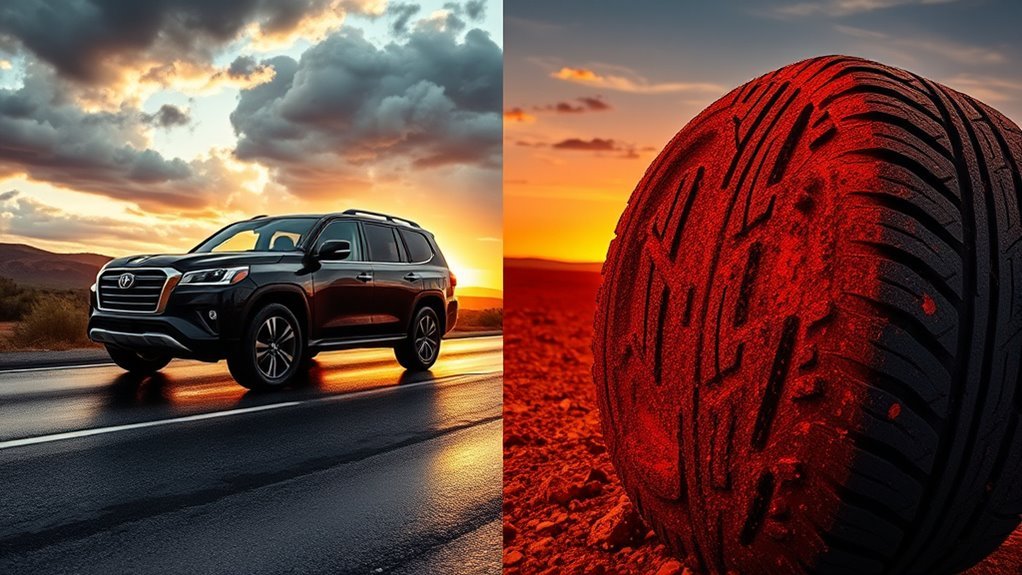
Choosing between highway tires and all-terrain tires comes down to how your SUV is actually used. If most of your miles are on pavement, highway-terrain tires usually give you a quieter ride, better efficiency, and longer treadwear. If you regularly drive gravel roads, trails, job sites, deep snow, or muddy surfaces, all-terrain tires can be worth the extra noise, weight, and fuel use.
Quick Answer
Choose highway tires if your SUV spends about 80% to 90% of its time on paved roads. Choose all-terrain tires if you regularly drive dirt, gravel, mud, job sites, ranch roads, forest roads, or snowy unpaved routes. All-terrain tires add capability, but highway tires usually win for quietness, MPG, and daily comfort.
Key Takeaways
- Highway tires are best for commuting, road trips, family SUVs, and mostly paved driving.
- All-terrain tires are best when you regularly need grip on gravel, dirt, mud, construction sites, or rough access roads.
- All-terrain tires can reduce fuel economy, but the exact MPG loss depends on the tire, vehicle, size, pressure, and driving speed.
- A 3PMSF symbol helps identify tires that meet a severe snow traction standard, but it does not guarantee ice braking or ice cornering performance.
- Always match the tire size, load index, speed rating, and inflation pressure to your SUV’s door placard or owner’s manual.
Highway vs. All-Terrain: What’s the Real Difference?
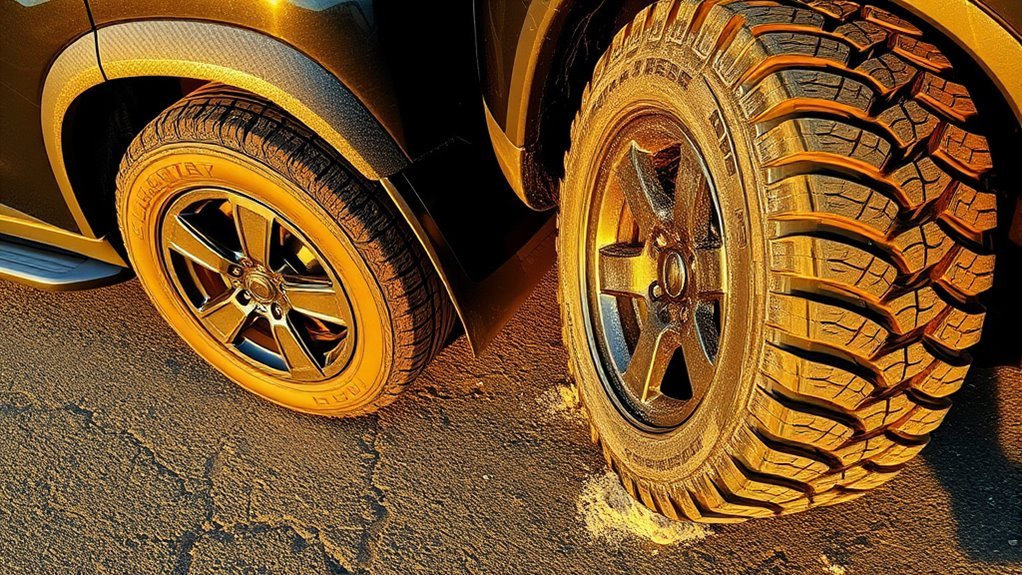
Highway tires, often called H/T tires, are built for paved-road comfort. They usually use tighter tread blocks, continuous center ribs, and smaller tread voids to reduce road noise, improve stability, and lower rolling resistance.
All-terrain tires, often called A/T tires, use larger tread blocks, wider grooves, stronger shoulders, and tougher sidewall designs. That pattern helps on loose surfaces, but it can add weight, noise, and rolling resistance on pavement.
The right choice is not about which tire looks tougher. It is about where your SUV spends its time, how much weight it carries, what weather you face, and whether you truly need off-pavement traction.
Note: Tire category is only one part of the decision. Your SUV also needs the correct tire size, load index, speed rating, and inflation pressure for safe handling and load carrying.
Which Tire Type Fits Your Driving Habits?
Start with your real driving mix. A driver who sees one gravel parking lot each month does not need the same tire as someone who tows across muddy job sites or drives forest roads every weekend.
| Your Driving Pattern | Better Tire Type | Why |
|---|---|---|
| Daily commuting, errands, school runs, and highways | Highway tire | Quieter ride, better efficiency, and stable paved-road handling. |
| Mostly pavement with occasional gravel roads | Highway tire or mild all-terrain | A mild A/T can add light-road confidence without the full noise penalty of an aggressive A/T. |
| Regular dirt, gravel, ranch roads, forest roads, or trails | All-terrain tire | Wider grooves and stronger shoulders help the tire bite into loose surfaces. |
| Heavy towing or hauling on rough access roads | Properly rated all-terrain or highway LT tire | Load range, load index, and inflation matter as much as tread design. |
If at least four out of five trips stay on pavement, start your search with highway tires. If your SUV regularly leaves pavement, especially under load, start with all-terrain tires and compare road noise, wet braking, snow rating, and treadwear warranty before you buy.
Highway Tires: Best for Daily Commuters and Road Trippers
Highway tires make the most sense when comfort, quietness, and efficiency matter more than trail traction. Their tighter tread pattern creates less tread slap on pavement, so the cabin usually feels calmer at city and highway speeds.
Many H/T tires also focus on stable steering and long treadwear. That helps if you drive long highway stretches, carry family passengers, or want a tire that feels predictable in rain and daily traffic.
Fuel economy is another reason to stay with H/T tires. In a Tire Rack highway all-season vs. all-terrain test, the highway tire returned 22.7 MPG while the all-terrain tire returned 22.0 MPG, a 3.2% difference in that specific test. Your result can be different, but the pattern is clear: aggressive tread often takes more energy to roll.
If your SUV rarely leaves pavement, a highway tire usually gives you the benefits you feel every day: lower noise, steadier handling, and better efficiency.
All-Terrain Tires: Essential for Off-Roaders and Towing
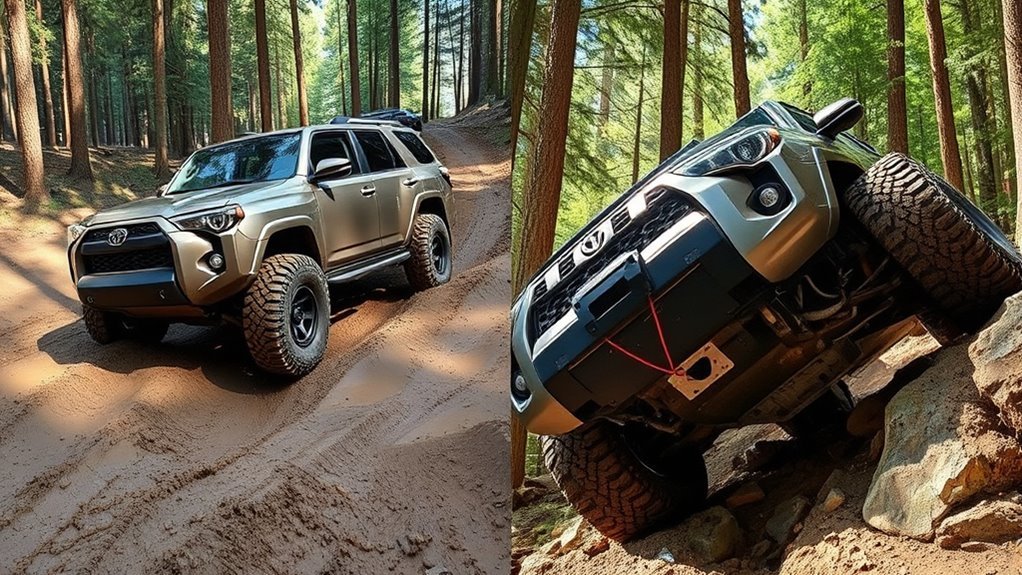
All-terrain tires are built for drivers who need more bite than a highway tire can provide. Their larger tread blocks and open grooves help on gravel, dirt, wet grass, mud, and uneven work sites. Stronger shoulders and sidewall designs can also help resist cuts and impacts when you leave smooth pavement.
For towing, the key is not just “A/T vs. H/T.” You need the correct load index, load range, tire size, and inflation pressure. A properly rated highway tire can be a better towing tire for paved highways than an aggressive A/T with the wrong rating.
Warning: Never choose a tire only by tread style. Follow your SUV’s owner’s manual and tire placard for size, pressure, load rating, and speed rating. Tire failure can happen if the tire is overloaded, underinflated, mismatched, or incorrectly mounted.
All-terrain tires make the most sense when the extra grip solves a real problem. That may include muddy campsites, boat ramps, unpaved job sites, ranch roads, mountain cabins, or mixed winter routes where your local laws and conditions allow this tire type.
[Products Worth Considering]

Monitor tire tread wear with a smart, color-coded depth gauge that shows clear condition ranges at a glance. The bar is range marked for fast, easy readings, helping you maintain safer traction and performance. Each gauge is portable with a pocket clip, and the set includes 20 units for daily use and sharing.

Measure tire tread depth quickly and accurately with this LUMITECO dial gauge that reads in 1/32" increments up to 14/32". The color-coded green/yellow/red zones make it easy to judge tire wear and know when replacement is needed. A rugged, compact design with a protective pouch helps keep the gauge ready for use on cars, trucks, motorcycles, and more.

The SAFELIFE dial tire tread depth gauge measures tread depth in 1/32 inch increments with clear, easy-to-read 2-inch dial face. Color zones using a traffic light system help you quickly judge whether tread is low, marginal, or ample for safer driving. Built with a durable zinc cast body and a metal detect probe for precise, comfortable use across cars, motorcycles, trucks, and buses.
Do You Need All-Terrain Tires for Snow and Rain?
You do not automatically need all-terrain tires for rain or snow. Tire design, compound, siping, tread depth, and temperature matter more than the category name.
For snow, look for the three-peak mountain snowflake symbol, often shortened to 3PMSF. According to Transport Canada, tires with this symbol meet specific snow traction performance requirements and are designed for severe snow conditions. That does not mean every 3PMSF all-terrain tire equals a dedicated winter tire on ice.
Snow Traction Ratings
The two common sidewall markings you will see are M+S and 3PMSF. M+S is based on tread geometry. 3PMSF is a performance-based snow traction symbol. Tire Rack explains that 3PMSF testing measures acceleration traction on medium-packed snow only. It does not test snow braking, snow cornering, or ice traction.
| Marking | What It Means | What It Does Not Prove | Best Use |
|---|---|---|---|
| M+S | Mud and snow tread geometry marking. | It does not guarantee a tested winter traction level. | Light mixed conditions where legal and appropriate. |
| 3PMSF | Meets a severe snow traction performance requirement. | It does not test ice traction, snow braking, or snow cornering. | Drivers who face regular snow but may not need a dedicated winter tire year-round. |
| Dedicated winter tire | Uses winter-focused compound and tread design. | It is not ideal for hot-weather year-round use. | Frequent ice, deep winter, mountain roads, and regions with winter tire laws. |
Wet Weather Performance
Wet-road performance depends on how well the tire moves water away from the contact patch. Some highway tires are excellent in rain because they use wide circumferential grooves and road-focused compounds. Some aggressive all-terrain tires can feel less sharp on wet pavement because their tread blocks move more under braking and cornering.
Do not assume an A/T tire is automatically better in rain. Compare independent wet-braking tests where available, check the tire’s tread depth and age, and replace worn tires before they reach unsafe levels.
How Much MPG Do All-Terrain Tires Cost You?
All-terrain tires can reduce fuel economy, but there is no single MPG loss that applies to every SUV. The penalty depends on tire weight, tread depth, rolling resistance, tire pressure, vehicle alignment, speed, and driving style.
In Tire Rack’s paved-road comparison, a General Grabber HTS60 returned 22.7 MPG and a General Grabber AT 2 returned 22.0 MPG on the same route. That was a 0.7 MPG difference, or about 3.2% in that specific test. Other tire and vehicle combinations can show a smaller or larger change.
The practical takeaway is simple: if you do not need off-road traction, do not buy extra tread aggression just for looks. If you do need the capability, treat the MPG loss as part of the cost of reaching places a highway tire may struggle to handle.
Pro Tip: You can reduce wasted fuel and uneven wear by checking tire pressure when tires are cold, keeping the alignment correct, and rotating tires on the schedule in your owner’s manual.
Are All-Terrain Tires Too Loud for Daily Driving?
All-terrain tires are not always too loud for daily driving, but they are usually louder than comparable highway tires. The larger tread blocks and wider grooves create more pattern noise as they hit the pavement.
The difference is most noticeable at highway speeds, on coarse pavement, or in SUVs with less cabin insulation. Mild all-terrain tires can be livable for daily use, while aggressive A/T tires may hum, vibrate, or feel heavier than you expect.
If you mostly drive pavement but want a tougher look, compare “trail-terrain” or mild A/T models before buying a heavy, aggressive all-terrain tire. You may get enough gravel-road grip without giving up as much comfort.
Which Tire Type Costs Less Over 60,000 Miles?
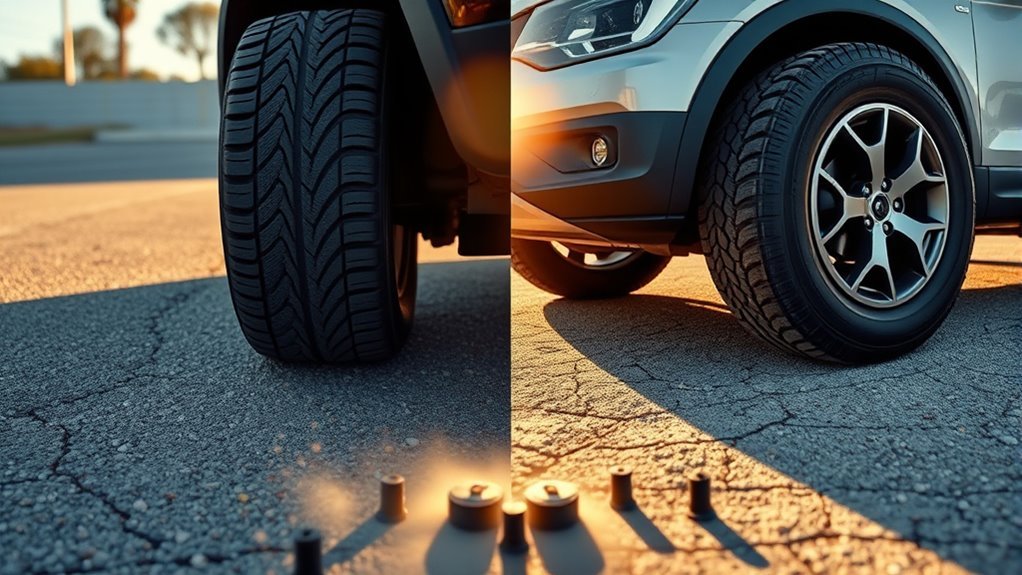
Over 60,000 miles, highway tires usually cost less for pavement-heavy drivers. They often start with a lower purchase price, use less fuel, and wear more evenly on smooth roads.
All-terrain tires can cost more in three ways:
- Purchase price: A/T tires often cost more, especially in LT sizes or higher load ranges.
- Fuel use: Heavier tread and higher rolling resistance can reduce MPG.
- Pavement wear: Aggressive tread may wear faster if most miles are highway miles.
That does not make all-terrain tires a bad value. They can be the better investment when they prevent you from getting stuck, improve grip on rough routes, or support real towing and hauling needs with the correct load rating.
Check Size, Load Rating, and Pressure Before You Buy
Before choosing either tire type, check the Tire and Loading Information Label on the driver’s doorjamb or your owner’s manual. NHTSA advises drivers to use the vehicle’s recommended cold tire pressure and to check pressure at least once a month.
Also confirm these details before buying:
- Tire size: Match the factory size or an approved alternate size.
- Load index: Make sure the tire can carry the SUV’s weight and cargo.
- Load range: Important for trucks, towing, and LT tires.
- Speed rating: Match or exceed the vehicle’s requirement unless your tire professional advises otherwise.
- Inflation pressure: Use the placard pressure for the correct size and load, not a random number from the sidewall.
NHTSA also says tires should be replaced when tread reaches 2/32 inch, and tire rotation can help reduce irregular wear when performed according to the vehicle manufacturer’s guidance.
[Products Worth Considering]

Keep your tires properly inflated with this analog VONDIOR tire pressure gauge, designed for fast, easy readings without batteries. The swiveling, two-axis hose and large glow dial help you measure at any tire angle with instant visibility. Built with a protective rubber shield, it supports durable, low-maintenance use for cars and trucks.
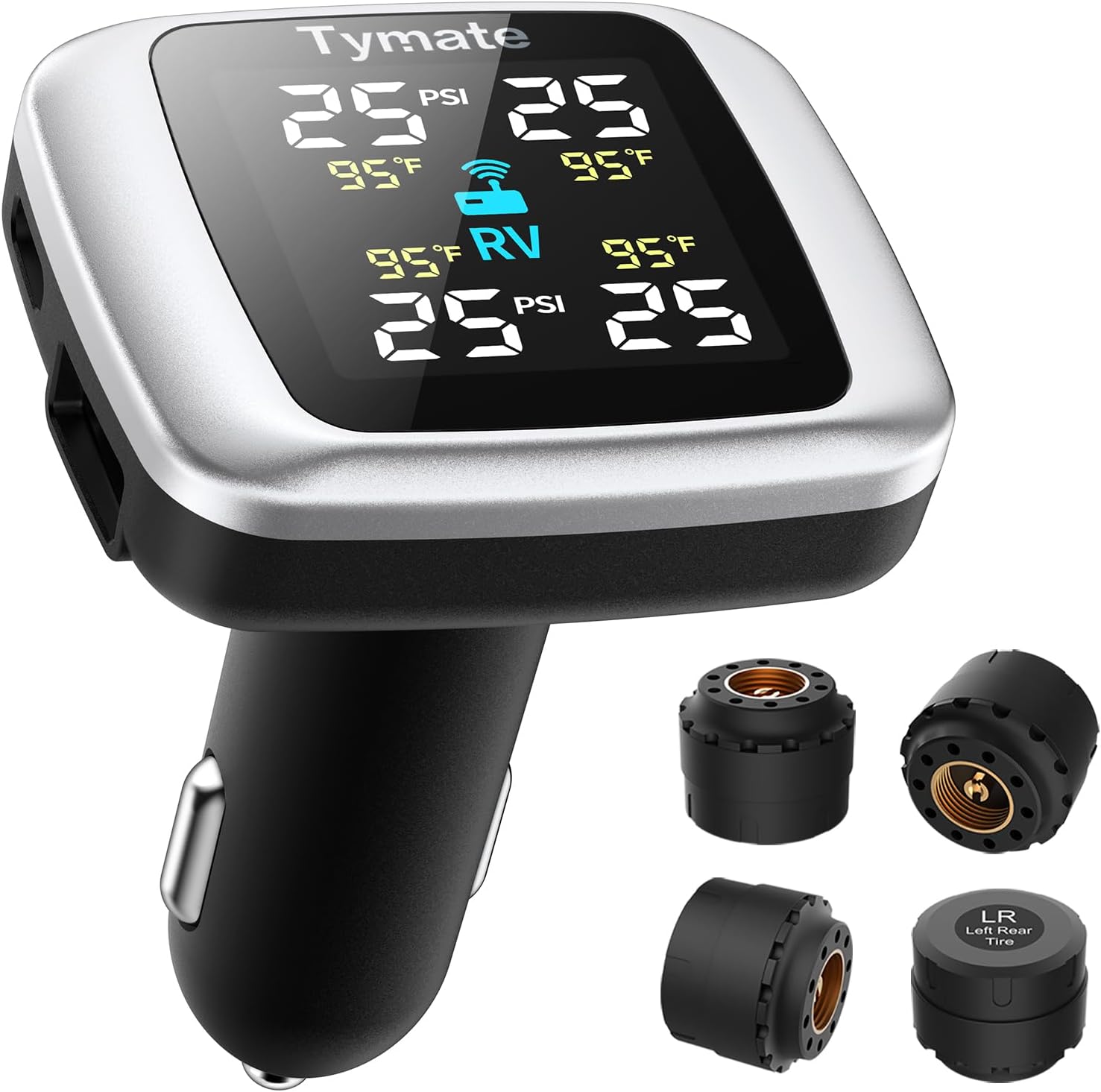
Tymate TM7 is a wireless tire pressure monitoring system that delivers real-time pressure and temperature readings for safer driving. It includes four external sensors, a bright color LCD display with adjustable backlight, and six alarm modes for high/low pressure, fast leakage, high temperature, and sensor signal or battery issues. The system covers a wide 0–144 PSI range and plugs into your vehicle’s cigarette lighter socket for quick DIY setup.

Measure tyre tread depth precisely with a digital gauge that reads in both MM and inches, helping you monitor safe driving conditions. The large LCD screen is easy to operate, and the compact tool fits for cars, trucks, and motorcycles. It provides high accuracy with a 0-25.4mm range and includes a 1-year warranty for added peace of mind.
Top All-Terrain and Highway Tire Picks for SUVs
The best tire model depends on your SUV, size, load needs, climate, and budget. These examples show what to look for in each category.
[Products Worth Considering]

Accurately measure tire tread depth with a calibrated gauge marked from 0 to 1 inch in 1/32 inch increments. The color-coded bar helps you quickly identify tread condition ranges, supporting safe driving for trucks, motorcycles, automobiles, and passenger vehicles.

Secure your vehicle during transport with this 4-pack of heavy-duty tire tie down straps designed for trailers and hauling. The ratchet system with flat hooks and D-rings helps you tension the straps quickly, while the wheel-friendly design protects tires. With high break strength and corrosion-resistant hardware, these straps provide reliable, confidence-inspiring tie-down security for cars, trucks, and UTVs.

This digital tire pressure gauge with built-in inflator helps you accurately check and adjust tire pressure for safer driving and better fuel efficiency. It supports multiple units (PSI, KPA, BAR, KG/CM²) and reads within 1% for reliable results. The 3-in-1 design inflates, deflates, and measures, with a quick-connect air chuck and compatible hose setup for cars, trucks, SUVs, RVs, and motorcycles.
Groundspeed Voyager H/T: Budget-Friendly Highway-Terrain Example
The Groundspeed Voyager H/T is a highway-terrain tire for light trucks and SUVs. Groundspeed lists features such as a noise-reducing shoulder, an optimal middle tread pattern, four wide circumferential grooves, and a continuous center rib for stability and braking support.
Pick this type of tire if your SUV mostly stays on pavement and you want comfort, stability, and lower road noise.
Groundspeed Voyager A/T: Budget-Friendly All-Terrain Example
The Groundspeed Voyager A/T is designed for light truck and SUV drivers who need off-road traction for dirt, mud, and snow. Groundspeed lists 10-ply construction, a durable sidewall, and a rugged tread pattern.
Pick this type of tire if you drive unpaved roads often enough to justify more tread aggression and a firmer, louder ride.
BFGoodrich All-Terrain T/A KO3: Premium All-Terrain Example
The BFGoodrich All-Terrain T/A KO3 is the newer generation in BFGoodrich’s all-terrain line. BFGoodrich lists it as 3PMSF rated, severe snow rated, designed for CUVs, SUVs, and pickups, and backed by a 50,000-mile mileage warranty in listed fitments.
Pick this type of tire if you want a more capable all-terrain tire and your size, load rating, and budget match the model. Some KO2 sizes may still be available, but KO3 is the fresher model to check first.
Frequently Asked Questions
Are all-terrain tires good for freeway driving?
Yes, all-terrain tires can handle freeway driving, and many modern A/T tires are comfortable enough for daily use. Highway tires are still usually quieter, lighter, and more efficient on long paved trips.
Are highway tires bad off-road?
Highway tires can handle dry gravel roads and maintained dirt roads at sensible speeds, but they are not built for mud, rocks, ruts, or repeated sharp impacts. Use all-terrain tires if off-pavement driving is a regular part of your routine.
Do all-terrain tires use more gas?
They often do, but the amount varies. Aggressive tread, extra tire weight, and higher rolling resistance can lower MPG. In one Tire Rack test, the all-terrain tire used about 3.2% more fuel than the highway tire on a paved-road route.
Are all-terrain tires better in snow?
Some all-terrain tires are better in snow, especially if they carry the 3PMSF symbol. However, 3PMSF does not test ice traction, snow braking, or snow cornering. For frequent ice or harsh winter driving, dedicated winter tires are usually the safer choice.
Are all-terrain tires better for towing?
They can be better for towing on rough roads, job sites, or unpaved access routes. For highway towing, the correct load index, load range, size, and inflation pressure matter more than the tread category alone.
Can I mix highway and all-terrain tires?
You should avoid mixing different tire types, tread patterns, sizes, or load ratings unless your owner’s manual allows it and a tire professional approves it. Mixed tires can affect traction, ABS, stability control, and all-wheel-drive systems.
Conclusion
Choose highway tires if your SUV is mainly a commuter, family vehicle, or road-trip machine. They usually deliver the best mix of comfort, fuel economy, quietness, and long tread life for paved roads.
Choose all-terrain tires if your SUV regularly works or plays beyond pavement. They add grip and toughness on loose or rough surfaces, but they can also add noise, weight, and fuel cost.
The smartest choice is the one that matches your real driving, not the toughest-looking tread. Check your actual routes, weather, towing needs, tire placard, and load rating before you buy.
Sources
- NHTSA TireWise — tire pressure, tread depth, tire size, rotation, and safety guidance.
- Tire Rack H/T vs. A/T road test — paved-road fuel economy and ride comparison between highway and all-terrain tires.
- Transport Canada winter tire guidance — 3PMSF symbol and winter tire safety notes.
- Tire Rack 3PMSF explainer — what the 3PMSF symbol measures and what it does not measure.
- Groundspeed Voyager A/T — manufacturer features for the Voyager A/T all-terrain tire.
- Groundspeed Voyager H/T — manufacturer features for the Voyager H/T highway-terrain tire.
- BFGoodrich All-Terrain T/A KO3 — current KO3 features, 3PMSF rating, and mileage warranty details.