
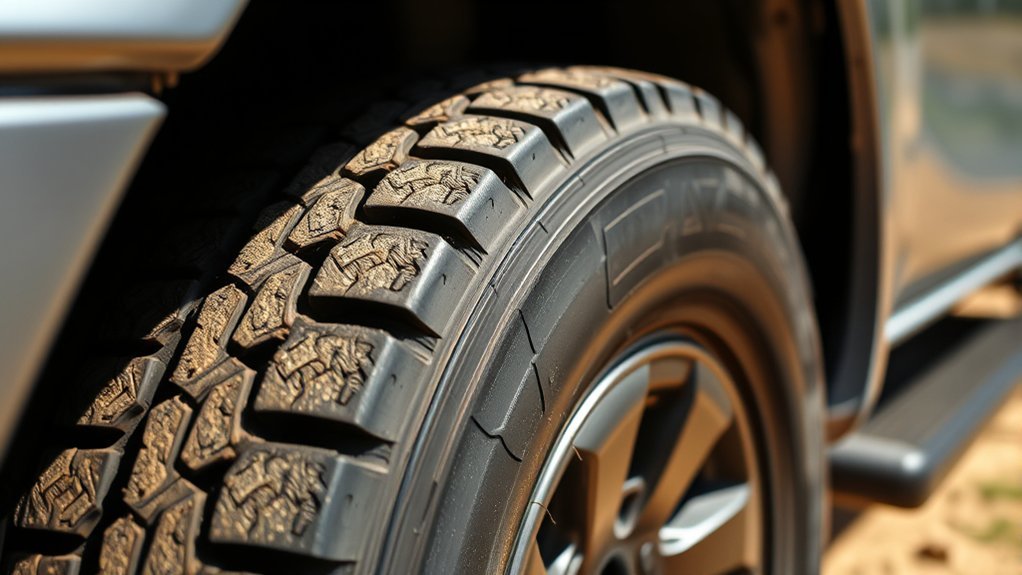
Tire bulges on your Toyota Hilux are a serious warning sign, not normal sidewall wear. A bulge usually means the tire’s internal cords, plies, or belts have been damaged by impact, overloading, underinflation, or a defect. Once that structure weakens, the tire can fail suddenly, especially during highway driving, towing, hauling, or off-road use.
Quick Answer
A tire bulge on a Toyota Hilux usually means internal sidewall, cord, or belt damage. It cannot be repaired safely. Stop driving as soon as it is safe, avoid highway speeds, and replace the tire or have the vehicle towed to a tire shop.
Key Takeaways
- Tire bulges indicate internal structural damage, not simple cosmetic wear.
- Common causes include pothole impacts, curb strikes, off-road hits, overloading, and low tire pressure.
- A bulged tire cannot be patched, plugged, sealed, or made safe again.
- Driving on a bulge increases blowout risk, especially at speed or under load.
- Check tire pressure, load rating, and sidewall condition regularly to reduce future damage.
At a Glance
| Time Required | 5-10 minutes for inspection; replacement time depends on the tire shop or roadside situation |
| Difficulty | Easy to spot, but unsafe to repair yourself |
| Tools Needed | Flashlight, tire pressure gauge, gloves, and a spare tire or roadside assistance if replacement is needed |
| Cost | Usually requires tire replacement; towing or wheel inspection may add extra cost |
What Causes Tire Bulges on Your Toyota Hilux?
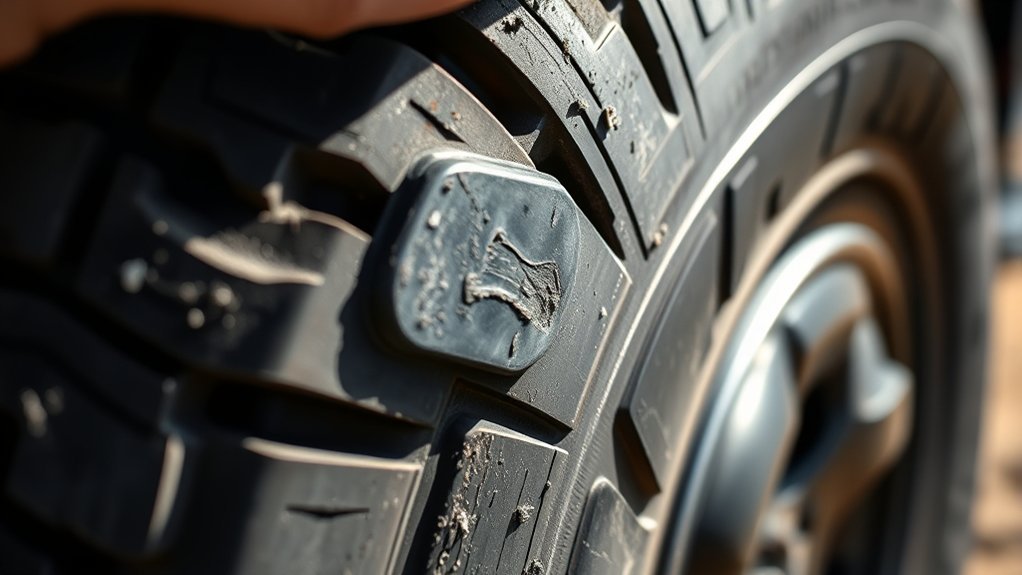
Tire bulges form when the tire’s internal reinforcement layers fail. These layers include cords, plies, and belts that help the tire hold its shape under air pressure and vehicle load. When those layers break or separate, air pressure pushes the weakened rubber outward and creates a visible bubble.
On a Toyota Hilux, this often happens after hitting potholes, rocks, curbs, sharp road edges, or rough off-road terrain. The damage may appear right away, or it may show up later after the weakened area flexes through more driving.
Overloading also increases the risk. A loaded Hilux, trailer tongue weight, tools, camping gear, or repeated heavy hauling can put extra stress on the tire sidewall. Underinflation makes the problem worse because the tire flexes more, heats up faster, and weakens internally.
In rare cases, a bulge can come from a manufacturing defect or internal separation that was not caused by impact. That is why a tire shop should inspect the tire, record the tire brand and DOT code, and check whether warranty or recall coverage may apply.
Warning: A tire bulge means the tire’s structure is compromised. Do not drive at highway speed, tow, haul, or continue off-road with a bulged tire.
How to Identify a Tire Bulge or Bubble
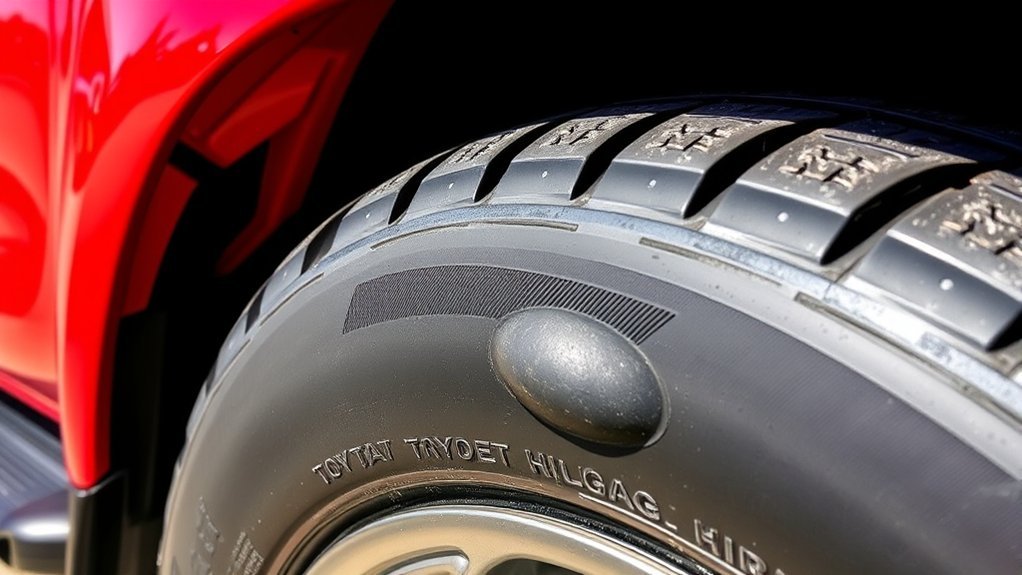
Inspect the sidewalls, not just the tread. A tire bulge usually looks like a rounded bump, bubble, knot, or egg-shaped swelling on the sidewall or shoulder area. It may be easier to see when light hits the tire from the side.
Follow this checklist during inspection:
- Park on level ground and set the parking brake.
- Use a flashlight to inspect the outer sidewall from several angles.
- Turn the steering wheel to expose more of the front tire sidewalls.
- Look for raised, rounded, or egg-shaped areas.
- Check the inner sidewall if you can see it safely.
- Inspect the tread shoulder where the tread meets the sidewall.
- Look for cuts, cracks, exposed cords, scraped rubber, or rim damage.
- Check for vibration, pulling, thumping, or steering shake after an impact.
A shallow inward indentation is not the same as an outward bulge. Some tires show small inward sidewall depressions where internal plies overlap. However, an outward bubble, raised knot, or spreading bulge is unsafe and needs immediate professional inspection.
Note: A Tire Pressure Monitoring System can warn you about low pressure, but it cannot reliably identify a sidewall bulge. You still need regular visual inspections with a gauge and flashlight.
Can You Drive on a Bulged Tire?
You should not keep driving on a bulged tire. If you spot the bulge while parked, do not take the Hilux onto the road unless you are moving it a very short distance to a safer location. If you find it while driving, slow down gently and pull over when it is safe.
Do not test the tire by driving “just a few more miles.” The damaged area can grow quickly as the tire heats up and flexes. A sudden blowout can make the truck harder to control, especially with cargo in the bed or a trailer attached.
In 2024, NHTSA reported 511 traffic fatalities in tire-related crashes, which shows why visible tire damage deserves immediate attention.
The National Highway Traffic Safety Administration TireWise guide lists physical tire damage, including cuts, cracks, and bulges, as a reason to stop using a tire. It also notes that poor tire maintenance can lead to flat tires, blowouts, and tread separation.
[Products Worth Considering]
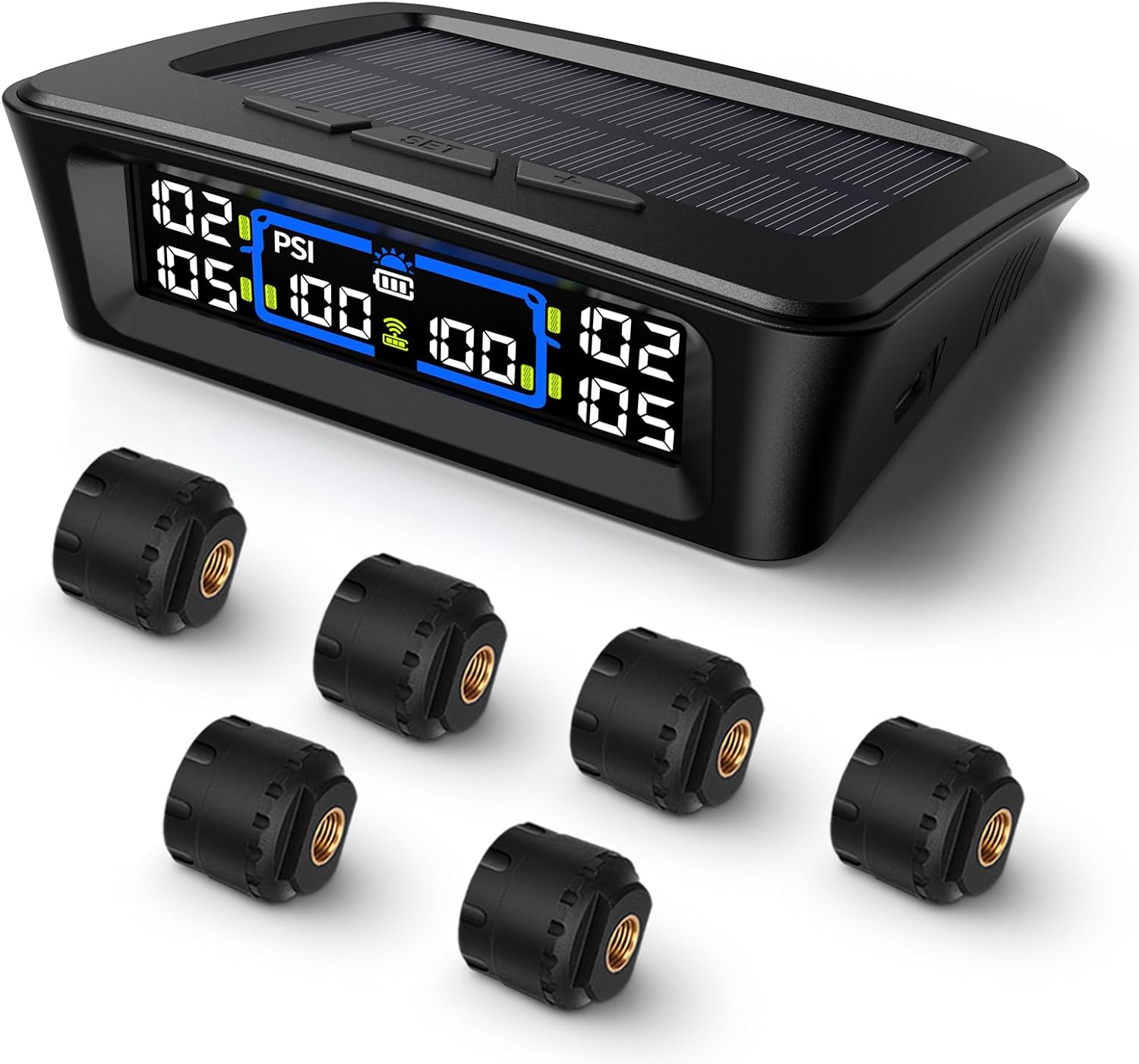
The Tymate TM12 RV TPMS delivers real-time tire pressure and temperature monitoring with a stable 433Hz display for safer long-distance driving. It supports simultaneous monitoring across vehicle and trailer zones, includes six alarm modes for pressure, temperature, leakage, battery, and signal loss, and features easy DIY installation with auto calibration. Power is supplied via USB-C charging or solar recharging, with a wide 0–144 PSI range and up to 50 ft signal coverage for RVs and towable trailers.

The Trivd Frol 1/2" air impact wrench delivers high performance torque up to 1500 ft-lbs with a twin hammer impact mechanism for strong, balanced blows. It features an ergonomic grip, compact lightweight design, and quick-stop control with 3 forward speeds up to 8000 RPM plus a reverse speed. Built for demanding automotive repair and tire shop work, the rear exhaust helps keep debris away from the surface.

TireJect Off-Road Tire Sealant Kit provides 5-in-1 sealing to help fix tread punctures up to 3/8", sidewall punctures up to 3/8", bead leaks, slow leaks, and minor dry rot on low-speed tires. It permanently seals with liquid rubber, recycled tire particles, and Aramid fibers, making it ideal for flats caused by thorns, nails, and screws. The included dispensing cap attaches to the valve stem for a no-mess installation, along with a metal valve core remover tool and valve stem cap. This kit is for off-road use only.
Why Replacement Is Essential for Tire Bulges
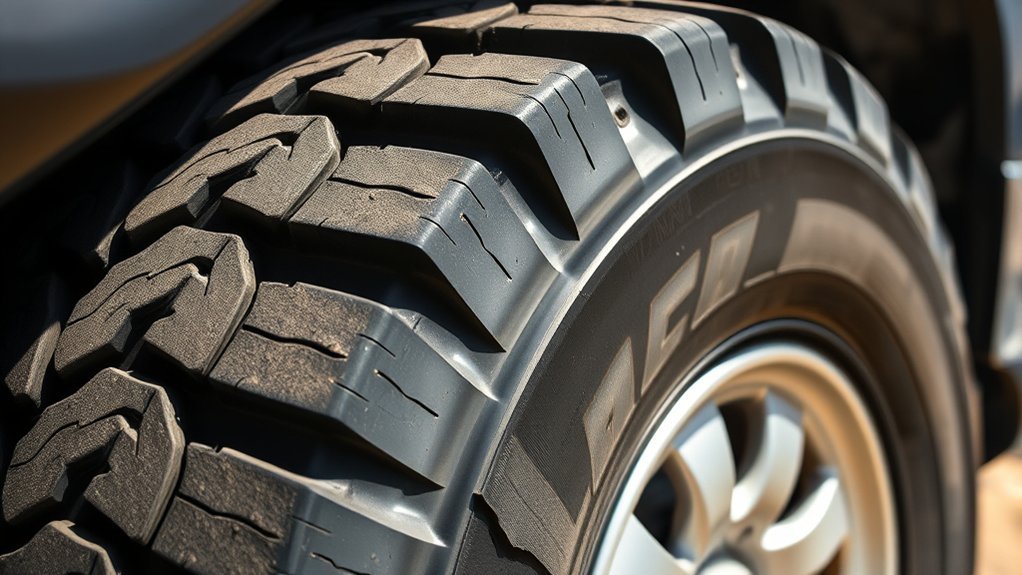
Once a bulge forms, the tire cannot be safely repaired. A plug or patch only addresses certain tread punctures. It does not rebuild broken cords, separated belts, or weakened sidewall layers.
Sealant is not a safe fix either. It may slow a small puncture leak in some situations, but it cannot restore the tire’s internal strength. Deflating and reinflating the tire also will not solve the damage because the weakened structure remains inside the casing.
[Products Worth Considering]

Monitor tire tread wear with a smart, color-coded depth gauge that shows clear condition ranges at a glance. The bar is range marked for fast, easy readings, helping you maintain safer traction and performance. Each gauge is portable with a pocket clip, and the set includes 20 units for daily use and sharing.

This tire inflator with pressure gauge delivers long-lasting performance with a durable rubber-protected gauge and sturdy build. The longer hose and 360 swivel air chuck help you seal the valve securely and keep your hands free while measuring, inflating, or deflating. It’s battery-free for reliable use and provides ±2 PSI accuracy in the mid-range for most typical tires, with universal compatibility for 1/4 NPT compressor outputs.

Milton S-921 pencil tire pressure gauge helps you maintain optimal tire pressure for passenger cars with accurate readings in PSI and kPa. It features a built-in deflator valve for convenient pressure adjustments, plus a single chuck head and nylon indicator bar for easy use on the go. Built from durable plated brass and designed for reliable performance, it’s a practical road trip and cold-weather maintenance tool.
Immediate Safety Risks
The biggest danger is sudden tire failure. At higher speeds, a blowout can create steering pull, vehicle instability, or loss of control. If the damaged tire is on the front axle, you may feel the force more through the steering wheel. If it is on the rear axle, you may feel it more through the body of the truck.
Structural Integrity Concerns
A bulge means part of the tire is no longer distributing air pressure evenly. Even if the tire still holds air, the weak area is carrying stress it was not designed to handle. That makes the tire unsafe for road use, towing, hauling, and off-road driving.
What to Do If You Find a Tire Bulge?
If you notice a bulge, stop driving as soon as it is safe. Move away from traffic, turn on your hazard lights, and avoid standing near the roadway side of the vehicle. Do not continue at highway speed to “make it home.”
Use this action plan:
- Park in a safe, flat area away from moving traffic.
- Check whether the tire is losing air, but do not lean over the bulged area.
- Install the spare only if the spare is inflated, undamaged, and suitable for your Hilux.
- Follow the speed and distance limits in your owner’s manual if your spare is temporary.
- Call roadside assistance or towing if you do not have a safe spare.
- Ask the tire shop to inspect the wheel, rim lip, valve stem, and nearby suspension parts after a hard impact.
- Replace the tire with the correct size, load rating, and speed rating for your Hilux.
Pro Tip: After a pothole, curb strike, or trail impact, inspect all four tires. One visible bulge may be only part of the damage, especially if the truck was loaded.
[Products Worth Considering]
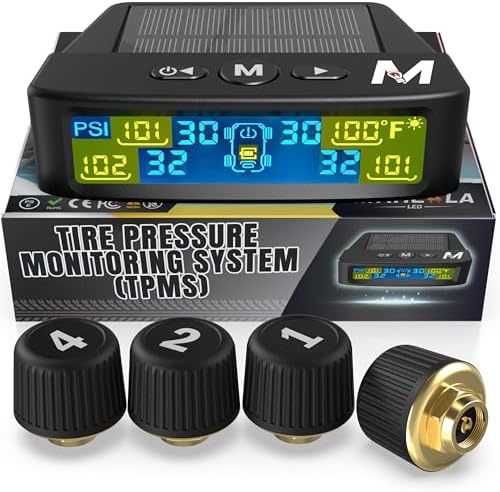
Marcala’s TPMS set of four sensors helps you monitor tire pressure and temperature in real time while driving, with updates every second. The bright color LCD uses auto-dimming for easy viewing, powered by dual solar and USB charging, and offers six alarm modes. Built for trailers, RVs, campers, trucks, and towing setups, the sensors support monitoring 1-4 wheels up to 98 PSI with IP67 waterproof protection.

Vigorder rubber cement glue delivers superior adhesion and cures quickly within about 30 seconds for seamless rubber bonding. Once cured, it helps provide a strong, durable, waterproof seal that holds up to vehicle weight, pressure, and heat. Suitable for cars, motorcycles, trucks, bicycles, and off-road tires, it’s designed for emergency patch and maintenance repairs.

The TYAMATE TM8 solar-powered wireless TPMS delivers real-time tire pressure and temperature monitoring with six alarm modes for safer driving. A vibrant color LCD display shows readings clearly while windshield mounting keeps it hands-free and easy to read. With a wide 0–87 PSI range, strong 433.92 MHz signal transmission, and quick sensor pairing, it’s ideal for RV, sedan, SUV, MPV, and truck use.
What Not to Do With a Bulged Tire
A bulged tire needs replacement, not a quick repair. Avoid these unsafe fixes:
- Do not patch or plug a bulged sidewall.
- Do not add tire sealant and keep driving.
- Do not lower the pressure to make the bulge look smaller.
- Do not overinflate the tire to “stiffen” the sidewall.
- Do not rotate the bulged tire to another position on the truck.
- Do not tow, haul, or drive off-road on the damaged tire.
If the tire is under warranty, take clear photos before replacement and ask the tire dealer to document the inspection. Safety comes first, so do not delay replacement just to preserve the tire for a claim.
What Your Tire Warranty Says About Bulges
Most standard tire warranties focus on defects in materials or workmanship. If a dealer finds that the bulge came from a manufacturing defect, the tire may qualify for adjustment under the written warranty.
Damage from potholes, curbs, rocks, underinflation, overloading, or off-road impacts is usually treated as road-hazard or owner-use damage. Standard tire warranties often exclude that type of damage unless you purchased separate road-hazard coverage.
Keep your receipt, installation record, tire rotation record, pressure-maintenance notes, and photos of the damage. A tire dealer may also check the DOT code and inspect the inside of the tire after removal.
You can also search for tire and equipment recalls through the NHTSA recalls tool. A recall is different from a normal warranty claim because it applies to a safety-related defect or minimum safety standard issue.
How Tire Pressure, Load, and Off-Road Use Affect Hilux Tire Bulges
Your Hilux may carry heavier loads than a typical passenger car, so pressure and load rating matter. Always use the cold tire pressure listed on the vehicle’s tire placard or in the owner’s manual. Do not use the maximum pressure molded on the tire sidewall as your normal driving pressure unless the vehicle information specifically requires it.
The NHTSA recommends checking all tires, including the spare, at least once a month when the tires are cold. “Cold” means the vehicle has not been driven for at least three hours. This gives you a more accurate reading.
If you air down for sand, mud, or rough trails, reinflate before returning to normal road speed. Driving fast on aired-down tires can create excess flex and heat. That stress can weaken the sidewall and increase the chance of separation or bulging.
Also respect your Hilux payload rating. Heavy bed loads, roof racks, trailers, and uneven cargo placement can overload tires even when the truck feels stable. If you regularly haul or tow, use tires with the correct load rating for your model and driving conditions.
What If the Tire Blows Out While Driving?
If a bulged tire fails before you can stop, focus on keeping the Hilux stable. Do not slam the brakes or make a sharp steering correction. Grip the steering wheel with both hands, ease off the accelerator gradually, and steer in the direction you want the truck to go.
Once the vehicle stabilizes, slow down and pull off the road where it is safe. Turn on your hazard lights and call for help if you cannot change the tire safely away from traffic.
Tips to Prevent Tire Bulges and Extend Tire Life
Preventing tire bulges starts with proper maintenance. Check tire pressure at least once a month, before long trips, and after major temperature changes. Use a quality tire gauge and compare the reading with the Hilux placard or owner’s manual.
Inspect the sidewalls after hitting potholes, curbs, rocks, or road debris. Even if the tire does not lose air, an impact can weaken internal layers. Watch for new vibration, pulling, thumping, or steering shake after a hard hit.
Avoid overloading your Toyota Hilux, especially during long trips, towing, or off-road use. Slow down on rough terrain, construction zones, gravel tracks, and roads with deep potholes. Rotate tires according to your owner’s manual and have alignment checked if wear looks uneven.
Replace tires that show bulges, cuts, exposed cords, deep cracks, or repeated pressure loss. Also replace tires with the correct size and load rating so the new tire can safely support the truck’s weight and use case.
Frequently Asked Questions
Can a tire bulge be repaired?
No. A tire bulge indicates internal structural damage. A patch, plug, or sealant cannot restore broken sidewall cords, damaged plies, or belt separation. Replace the tire.
Is it safe to drive short distances on a bulged tire?
It is not recommended. If you must move the Hilux, only move it slowly to a safer place. Do not drive at highway speed or continue a normal trip on a bulged tire.
What causes most tire bulges?
Most tire bulges come from impact damage, underinflation, or overloading. Potholes, curbs, rocks, and off-road hits can break internal tire reinforcement and let air pressure push outward.
Can a tire bulge appear after hitting a pothole?
Yes. A pothole can pinch the tire between the road edge and wheel rim, damaging internal cords. The bulge may appear immediately or after more driving.
Will TPMS warn me about a tire bulge?
Not always. TPMS is designed to warn about significant underinflation, not every type of sidewall damage. You still need visual inspections for bulges, cuts, cracks, and vibration changes.
Should I replace one tire or all four?
Replace the damaged tire immediately. Whether you need one, two, or four tires depends on tread depth, drivetrain, tire size, and manufacturer guidance. Ask the tire shop to compare tread depth across all tires.
Can a tire bulge be covered by warranty?
Sometimes. If inspection shows a manufacturing defect, the tire may qualify under the written warranty. Impact damage, overloading, and underinflation are usually excluded unless you purchased road-hazard coverage.
Sources
- National Highway Traffic Safety Administration TireWise — tire pressure, physical damage, blowout guidance, TPMS limits, and 2024 tire-related crash data
- National Highway Traffic Safety Administration Recalls — tire recall search and safety-defect reporting guidance
- Bridgestone Tire Damage Guide — tire damage types and maintenance context

![[2026NEW] 5000A Jump Starter with Air Compressor (150PSI)](https://m.media-amazon.com/images/I/71oG4PFNsmL._AC_SL1500_.jpg)