Disclosure: As an Amazon Associate, we earn from qualifying purchases. If you click a link on this page and make a purchase, we may receive a small commission at no extra cost to you.
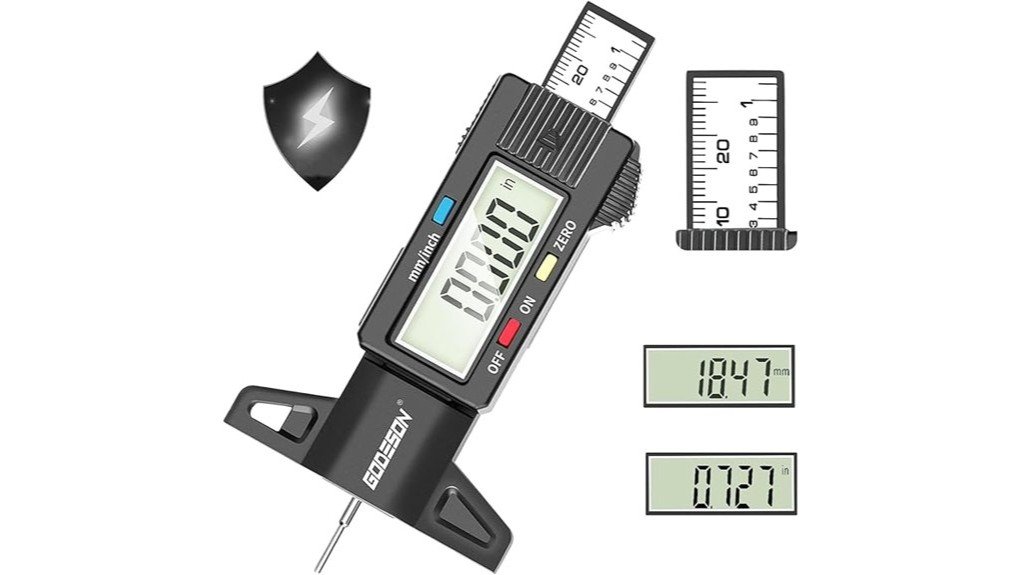
Small differences in tire tread can affect wet grip, braking confidence, and how soon you need replacement tires. The GODESON Digital Tyre Tread Depth Gauge gives you a numerical reading instead of making you rely only on a coin test or visual guess. Its main strengths are a 0 to 25.4 mm measuring range, a large LCD, and a compact ABS body. Its main limitation is that the listing’s 0.01 mm claim should be treated as the displayed measurement increment, not proof of laboratory-grade accuracy.
Quick Verdict
Rating: 8.2/10, recommended with caveats
Best For: Drivers, riders, and home mechanics who want fast tread checks in millimeters or decimal inches.
Bottom Line: This is a practical, low-cost tool for checking tread depth across cars, pickups, trucks, and motorcycles. You still need to measure carefully, compare several grooves, and follow the tire maker’s guidance and local law.
| Specification | Detail |
|---|---|
| Brand | GODESON |
| Model | DTG02GD-DE |
| Product type | Digital tire tread depth gauge |
| Measuring range | 0 to 25.4 mm, or 0 to 1 inch |
| Displayed precision | 0.01 mm |
| Units | Millimeters and decimal inches, not 32nds |
| Display | Large LCD |
| Material | ABS plastic |
| Dimensions | 4.33 x 1.18 x 0.59 inches |
| Listed weight | 0.05 kg |
| Compatibility | Car, pickup, truck, and motorcycle tires |
| Package quantity | One gauge |
| Warranty | One year, according to the product listing |
| Best use | Routine tread checks, wear comparison, and pre-trip inspections |
What Is the GODESON Digital Tyre Tread Depth Gauge?
The GODESON gauge is a pocket-size electronic measuring tool for checking the depth of a tire’s main tread grooves. You place its base flat across the tread, lower the probe into a groove, and read the result on the LCD.
It is made for routine checks on passenger cars, pickups, trucks, and motorcycles. The 25.4 mm maximum range is more than enough for normal road-tire tread, while the millimeter and decimal-inch modes let you use the unit you understand best.
Key Takeaways
- The gauge measures from 0 to 25.4 mm and displays readings in millimeters or decimal inches.
- Its large LCD and compact ABS body make it easy to keep in a glove box, motorcycle kit, or workshop drawer.
- You should take several readings across and around each tire because one measurement can miss uneven wear.
- The tool helps you track wear, but it cannot diagnose alignment, suspension, inflation, or internal tire damage.
- Tread limits differ by location and vehicle type, so compare your reading with local law and the tire manufacturer’s guidance.
Before You Buy: This model reads millimeters and decimal inches, not thirty-seconds of an inch. If you normally work in 2/32, 4/32, or 6/32 inch increments, you may prefer a gauge with a 32nds mode or keep a conversion chart nearby.
Who Should Buy It?
Best For
- Drivers who want repeatable tread readings instead of visual estimates.
- Motorcycle, car, pickup, and light-truck owners who maintain several tires.
- Home mechanics checking wear before trips, tire rotations, or replacement decisions.
Skip If
- You need readings shown directly in 32nds of an inch.
- You need a certified inspection instrument with documented calibration accuracy.
- You want a tool advertised for wet, dirty, or exposed outdoor storage.
[Products Worth Considering]

The Topeak SmartGauge D2 delivers precise digital tire pressure readings for bikes, motorcycles, and sports equipment up to 250 psi (17 bar). Its rotating SmartHead works with both Presta and Schrader valves, so you can check pressure quickly without adapters. The LCD display makes it easy to read results in psi, bar, or kg/cm² with an included CR2032 battery for immediate use.

Measure tyre tread depth precisely with a digital gauge that reads in both MM and inches, helping you monitor safe driving conditions. The large LCD screen is easy to operate, and the compact tool fits for cars, trucks, and motorcycles. It provides high accuracy with a 0-25.4mm range and includes a 1-year warranty for added peace of mind.

Measure tire tread depth quickly and accurately with this LUMITECO dial gauge that reads in 1/32" increments up to 14/32". The color-coded green/yellow/red zones make it easy to judge tire wear and know when replacement is needed. A rugged, compact design with a protective pouch helps keep the gauge ready for use on cars, trucks, motorcycles, and more.
Measuring Range and Reading Precision
The listed range is 0 to 25.4 mm, equal to 1 inch. That covers the tread depths found on typical passenger, motorcycle, pickup, and many truck tires. The display changes in 0.01 mm increments, which makes it easier to compare readings from one groove or tire to another.
Do not confuse a fine display increment with guaranteed real-world accuracy. Probe angle, dirt in the groove, pressure on the tool, and an uneven base can all change the result. For a useful reading, zero the gauge on a clean, flat surface and repeat each measurement at least once.
Display, Controls, and Ease of Use
The large LCD is the main usability advantage. It is easier to read than a tiny mechanical scale, especially when the wheel is low to the ground or the lighting is poor. You can switch between millimeters and decimal inches, but the verified listing says this version does not show 32nds.
The compact 4.33 x 1.18 x 0.59 inch body fits easily in a small tool kit. Its ABS construction keeps the weight low, although plastic does not give the same heavy-duty feel as a metal shop gauge.
How to Use the Gauge Correctly
- Clean the tread. Remove stones, mud, and packed debris from the groove you plan to measure.
- Zero the gauge. Place the base on a clean, flat surface and use the zero function before starting.
- Choose the unit. Select millimeters or decimal inches.
- Measure a main groove. Keep the base flat across the tread and lower the probe straight down. Do not measure on top of a tread-wear indicator.
- Check several positions. Measure the inner, center, and outer grooves, then repeat at several points around the tire.
- Record the lowest reliable reading. A low spot or large difference across the tread can justify a professional inspection.
Pro Tip: Write down the lowest reading for each tire during monthly pressure checks. A simple front-left, front-right, rear-left, and rear-right record makes uneven wear easier to spot over time.
How It Performs in Real Use
For Monthly Home Maintenance
The gauge is quick enough to use during a regular pressure check. Its digital display removes the need to interpret a small sliding scale, and the compact body is easy to store with your pressure gauge and inflator.
For Checking Uneven Wear
By comparing inner, center, and outer grooves, you can identify a wear pattern that deserves attention. A center section wearing faster can be associated with inflation or loading issues, while one-sided wear can point to alignment or suspension concerns. The gauge shows the pattern, but a qualified tire technician should diagnose the cause.
For Used-Vehicle or Pre-Trip Checks
A numerical tread reading gives you more useful information than a quick visual glance. Before a long trip or a used-vehicle purchase, you can compare all four tires and note large differences, low tread, or signs that one tire was replaced separately.
For Motorcycle and Truck Tires
The narrow probe can reach the main grooves on motorcycle and truck tires, but the same careful method still applies. Use the vehicle and tire manufacturer’s service information because legal limits and recommended replacement points can differ by tire type, axle, and jurisdiction.
Tire Safety and Legal Limits
A tread gauge supports maintenance, but one number does not tell you that a tire is safe. Check for cuts, exposed cords, bulges, cracking, punctures, irregular wear, vibration, and pressure loss. Replace or professionally inspect a tire when its tread-wear indicators are level with the tread or when damage is present.
In the United States, the National Highway Traffic Safety Administration advises replacing car and truck tires at 2/32 inch, about 1.6 mm. Legal requirements are not universal. For example, Ontario’s tire regulation uses 1.5 mm for most tires and a higher threshold for certain heavy-vehicle front tires. Check the rules that apply where you drive.
The product listing also suggests keeping more tread for high-speed, rainy, or snowy conditions. Treat those figures as manufacturer guidance rather than a universal legal standard. Wet and winter performance can decline before a tire reaches the legal minimum.
Pros and Cons
Pros
- 0 to 25.4 mm range covers common road-tire tread depths.
- Large LCD is easier to read than many pocket mechanical gauges.
- Millimeter and decimal-inch modes suit different preferences.
- Compact ABS body stores easily in a vehicle or toolbox.
- Works across car, pickup, truck, and motorcycle tires.
Cons
- No direct 32nds-of-an-inch display on this version.
- The listing does not provide a formal calibration certificate or laboratory accuracy tolerance.
- It is not advertised as waterproof, so you should keep it clean and dry.
Is It Worth the Price?
This GODESON gauge sits in the budget tool category and offers strong value for routine home use. You get a digital display, two measurement units, a broad range, compact storage, and a one-year warranty without paying for a professional inspection instrument.
It makes the most sense when you want fast comparisons and a clearer record of tire wear. It is not the best fit if you need certified accuracy, direct 32nds readings, or a sealed tool for harsh shop conditions.
[Products Worth Considering]

Monitor tire tread wear with a smart, color-coded depth gauge that shows clear condition ranges at a glance. The bar is range marked for fast, easy readings, helping you maintain safer traction and performance. Each gauge is portable with a pocket clip, and the set includes 20 units for daily use and sharing.

The SAFELIFE dial tire tread depth gauge measures tread depth in 1/32 inch increments with clear, easy-to-read 2-inch dial face. Color zones using a traffic light system help you quickly judge whether tread is low, marginal, or ample for safer driving. Built with a durable zinc cast body and a metal detect probe for precise, comfortable use across cars, motorcycles, trucks, and buses.

Accurately measure tire tread depth with a calibrated gauge marked from 0 to 1 inch in 1/32 inch increments. The color-coded bar helps you quickly identify tread condition ranges, supporting safe driving for trucks, motorcycles, automobiles, and passenger vehicles.
How It Compares to Alternatives
A simple color-coded pencil gauge is cheaper and needs no battery, but it usually provides a coarser reading and can be harder to read precisely. A dial gauge such as the JACO TreadPro gives you an analog display and avoids electronic controls, while a three-mode digital gauge may be better if you need millimeters, decimal inches, and 32nds on one screen.
The GODESON model makes the most sense when you value a large digital display and compact size more than a 32nds mode or a metal body.
[Products Worth Considering]

The ETENWOLF T500 digital tire pressure gauge with inflator delivers accurate readings across a wide 0–250 PSI range, calibrated to ANSI B40.7 Grade 2A. An all-in-one tool combines gauge, air chuck, hose, inflating and controlled bleed for checking, inflating, and deflating tires on many vehicle types. It’s built for reliable use in extreme temperatures and features an illuminated backlit display with replaceable AAA batteries for convenient operation.
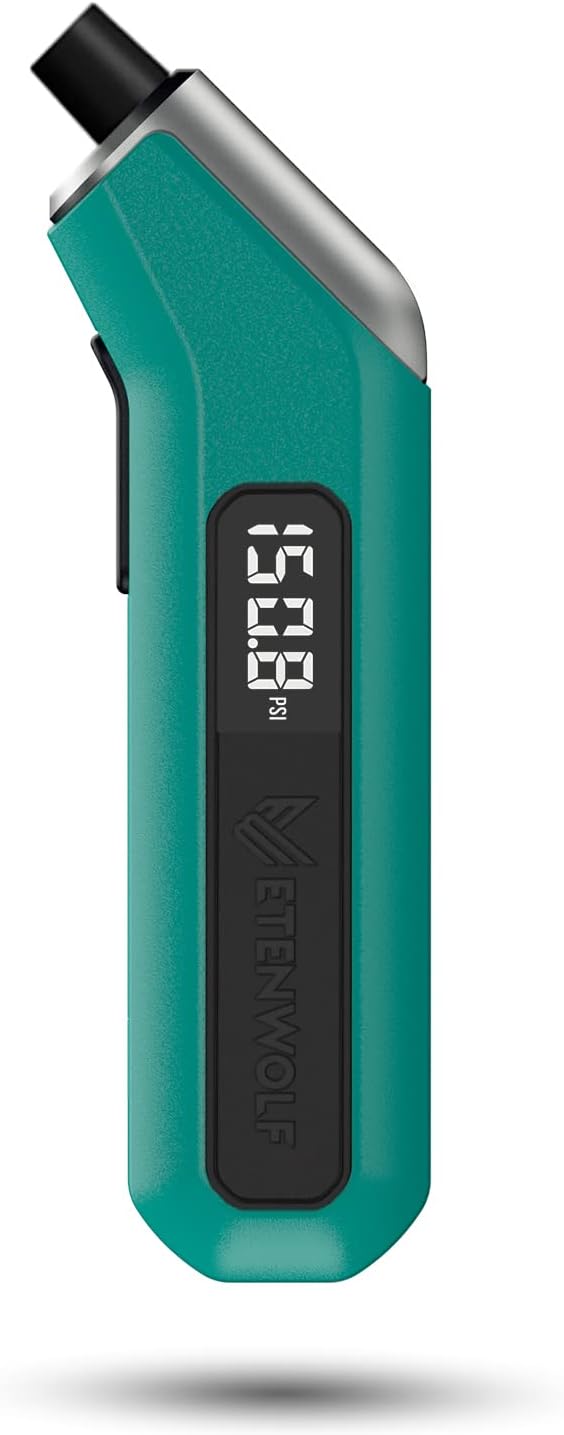
ETENWOLF T300 is a calibrated digital tire pressure gauge designed for reliable readings across low and high pressure ranges. It includes thermal compensation for stable performance in extreme cold or heat, an LED light for visibility, and an auto shut-off to help preserve battery life. Ideal for pickups, RVs, and heavy-duty vehicles, it delivers accurate PSI measurements with sturdy durability.

ETENWOLF T300 is a calibrated digital tire pressure gauge for accurate readings from 3 to 200 PSI across light and heavy-duty vehicles. It includes thermal compensation for reliable performance in extreme cold or heat, with an auto shut-off to extend battery life and an LED for easier reading. The sturdy design supports rugged everyday use, making it ideal for pickups, RVs, and industrial applications.
Frequently Asked Questions
Does it work on motorcycle tires?
Yes. The listing identifies motorcycles as a supported use. Measure the main grooves at several points and follow the motorcycle and tire manufacturer’s service limits.
Does it show tread depth in 32nds of an inch?
No. This version displays millimeters and decimal inches. You will need a conversion chart or a different gauge if you prefer readings such as 2/32 or 4/32 inch.
How do you zero the gauge?
Place the gauge base on a clean, flat surface, press the probe fully to the surface, and use the zero function. Confirm the display returns to zero before measuring a tire.
Where should you measure tire tread?
Measure the main grooves across the inner, center, and outer tread. Repeat at several points around the tire, and avoid placing the probe on a raised tread-wear indicator.
What tread depth means a tire needs replacement?
The answer depends on your location, vehicle, tire type, and driving conditions. NHTSA advises replacement at 2/32 inch for U.S. car and truck tires, while some jurisdictions use different legal thresholds. Replace sooner when the tire maker recommends it or when damage, wear bars, or poor performance indicate a problem.
What battery does the gauge use?
The verified Amazon details do not identify the battery type. Check the battery compartment or included instructions before ordering a replacement battery.
Is the GODESON gauge waterproof?
The product listing does not advertise a waterproof rating. Wipe the probe after use and store the gauge in a clean, dry place.
Does it include a warranty?
The Amazon listing states that GODESON provides a one-year warranty. Keep your order information and review the seller’s current warranty terms if you need support.
The Bottom Line
The GODESON Digital Tyre Tread Depth Gauge is a sensible buy for drivers and riders who want quick, readable measurements without paying for a professional-grade instrument. Its large LCD, compact body, and broad measuring range are useful, but buyers who need 32nds, certified accuracy, or waterproof construction should choose another gauge.