
Hot weather can raise tire temperature and pressure, but the safest response is not to guess or bleed air from a warm tire. Your Toyota 4Runner’s tires are most vulnerable when they start a trip underinflated, carry too much weight, have hidden damage, or lack enough tread. A cold-pressure check and a careful inspection before long summer drives reduce those risks.
Quick Answer
Hot pavement adds to the heat created as your 4Runner’s tires flex and roll. Tire pressure normally rises as the tires warm, so set pressure only when the tires are cold and use the driver-door placard. Check for low pressure, overloading, cracks, bulges, uneven wear, and shallow tread before summer highway trips.
Key Takeaways
- Use the cold PSI on your 4Runner’s Tire and Loading Information label, not the maximum pressure molded into the tire sidewall.
- Do not release air simply because a tire reads higher after driving. Warm-pressure increases are normal.
- Underinflation, overloading, impact damage, aging, and worn tread increase heat-related failure risk.
- Inspect pressure, tread, sidewalls, valve stems, and the spare monthly and before a long trip.
- Replace a tire immediately for a bulge, exposed cords, tread separation, repeated pressure loss, or other structural damage.
How Hot Pavement Impacts Your 4Runner’s Tires

Hot weather affects a tire in two ways. First, sunlight and hot road surfaces warm the rubber and the air inside the tire. Second, the sidewall flexes every time the tire rotates, creating additional heat. Sustained high temperature can speed tire deterioration and contribute to tread separation or failure, especially when a tire is underinflated, overloaded, damaged, or aged.
The road does not need to reach one specific temperature before a tire becomes unsafe. Risk depends on air temperature, pavement type, driving speed, trip length, load, inflation pressure, tire condition, and sun exposure. That is why a cold-pressure check and a visual inspection are more useful than relying on a pavement-temperature number.
Heat alone is rarely the full story. A tire that begins a highway trip low on air, overloaded, or structurally damaged generates more heat and has less safety margin.
Understanding Tire Pressure Changes in High Temperatures
Air pressure changes with temperature. A common rule of thumb is roughly 1 PSI for each 10°F change in ambient temperature, although the actual change can vary. Driving also heats the tire, so a warm reading will normally be higher than the cold reading.
Check pressure when the 4Runner has been parked for at least three hours or before it has been driven more than about one mile. Use the recommended cold pressure printed on the Tire and Loading Information label at the driver’s door area or listed in the owner’s manual. The number molded into the tire sidewall is a maximum rating, not the vehicle’s recommended operating pressure.
Warning: Do not bleed air from a warm tire just to bring it down to the cold placard value. The pressure will fall as the tire cools and may leave the tire underinflated. Recheck and adjust it when cold.
How to Check Cold Tire Pressure
- Find the recommended front and rear cold PSI on the driver-door label or in the correct 4Runner owner’s manual.
- Wait until the vehicle has been parked for at least three hours, when practical.
- Use an accurate gauge on all four tires and the spare, if equipped.
- Add or release air until each cold tire matches the vehicle specification.
- Replace the valve caps and investigate any tire that repeatedly loses pressure.
TPMS Is a Warning System, Not a Pressure Gauge
Your 4Runner’s tire-pressure monitoring system can alert you to significant underinflation, but it does not replace manual checks. Pressure may be wrong before the warning light appears. A flashing light may indicate a system fault rather than a simple low-pressure condition.
Signs Your 4Runner Tires Are Suffering From Heat Damage
Stop and inspect the tires if you notice a new vibration, thumping sound, steering pull, repeated pressure loss, burning-rubber odor, or unusual handling. Visible damage matters even when the TPMS light is off.
- Bulges or blisters: These can indicate broken internal cords and require immediate replacement.
- Cracks, cuts, or exposed cords: Sidewall or tread damage can weaken the tire and should be assessed by a qualified tire professional.
- Tread lifting or separation: A raised, distorted, or wavy tread area is unsafe.
- Uneven wear: Center wear, shoulder wear, cupping, or one-sided wear can point to pressure, alignment, balance, or suspension problems.
- Persistent pressure loss: A puncture, valve leak, bead leak, or wheel damage may be present.
How Hot Weather Changes Your Tire Rubber
Heat, sunlight, oxygen, use, and time gradually change rubber and other tire components. Warmer climates and direct sun exposure can accelerate aging. Older tires may look usable while internal materials have weakened, so tread depth alone cannot confirm that a tire is safe.
Inspect the tread and sidewalls, but also check the tire’s age. The last four digits of the DOT Tire Identification Number show the manufacturing week and year. For example, “2324” means the tire was made in the 23rd week of 2024. The complete code may appear on only one side of the tire.
Note: Tire age is not a universal six-year replacement rule. NHTSA says vehicle and tire manufacturers commonly give limits within a six-to-ten-year range. Follow the earliest limit specified by Toyota or the tire maker, and have aging tires inspected professionally.
How Overinflation Affects Handling and Safety
True overinflation means the cold tire pressure is above the vehicle specification, not simply that the pressure increased during a drive. Excess cold pressure can reduce ride compliance, alter the contact patch, and contribute to faster center wear. However, underinflation is often the more serious hot-weather hazard because excess sidewall flex creates heat.
Effects on Tire Wear
Pressure-related wear patterns provide clues, but they are not a complete diagnosis. Excessive center wear may be associated with overinflation, while wear on both shoulders may be associated with underinflation. One-sided wear more often points to alignment or suspension issues. Check pressure first, then have persistent irregular wear inspected.
Impact on Handling Stability
Incorrect pressure can affect steering response, braking, traction, and ride quality. The results also depend on tire construction, load, road surface, and how far the pressure is from the specification.
| Condition | Likely Effect | Best Response |
|---|---|---|
| Cold pressure above placard | Harsher ride and possible center wear | Adjust when cold |
| Cold pressure below placard | More flex, heat buildup, shoulder wear, and reduced load capacity | Inflate and check for leaks |
| Higher pressure after driving | Normal warm-pressure increase | Do not bleed; recheck cold |
| Uneven pressure side to side | Uneven response and possible pull | Correct pressure and inspect the low tire |
Increased Blowout Risk
Blowout risk rises when heat combines with low pressure, overloading, impact damage, aging, poor repairs, or structural defects. A correctly inflated tire can still fail if it has a bulge, separation, puncture damage, or exposed cords. Never continue at highway speed on a tire that is losing pressure or showing structural damage.
Tire Inspection Tips for Summer
Inspect your 4Runner’s tires at least monthly and before long trips, towing, or carrying a heavy load. Check the tires before driving, when the rubber is cool enough to touch and the pressure reading is meaningful.
Visual Wear Indicators
Look across the full width and circumference of each tire. Use a tread-depth gauge for the clearest measurement. Built-in wear bars become level with the tread at about 2/32 inch. The penny test can identify that minimum, but it does not show whether the tire still has a comfortable wet-weather margin.
Also look for nails, screws, cuts, cracks, bulges, missing tread blocks, exposed cords, and objects trapped near the bead. Do not pull out an embedded object at the roadside because it may be slowing the leak. Have the tire inspected instead.
Pressure Check Essentials
Use this schedule as a practical minimum, then shorten it for severe use, repeated pressure loss, frequent off-road driving, towing, or large temperature swings.
| Action | When | Purpose |
|---|---|---|
| Check cold pressure | At least monthly and before long trips | Catch underinflation or leaks |
| Inspect tread and sidewalls | Monthly and after a hard impact | Find damage and irregular wear |
| Measure tread depth | Monthly during wet season or when wear is visible | Track wet-traction margin |
| Check the spare | Monthly and before travel | Avoid finding an unusable spare during an emergency |
Regular Rotation Schedule
Rotation helps limit irregular wear when the tire sizes and vehicle configuration allow it. NHTSA advises following the owner’s manual and notes that many vehicles use a 5,000-to-8,000-mile interval. Use the pattern and interval specified for your 4Runner’s model year, drivetrain, wheel package, and tire type.
Have the alignment checked if the vehicle pulls on a level road, the steering wheel is off-center, or one edge of a tire wears faster. Balance should be checked when you feel speed-related vibration or after tire replacement.
Best Practices for Tire Maintenance in Hot Conditions
- Start with cold pressure: Set every tire to the vehicle placard, including different front and rear values when specified.
- Respect load limits: Do not exceed the occupant and cargo limit on the Tire and Loading Information label. Include passengers, luggage, accessories, trailer tongue weight, and roof cargo in your planning.
- Reinflate after airing down: If you lower pressure for an off-road surface, restore the correct cold-road pressure before sustained pavement or highway driving.
- Slow down when conditions worsen: Heavy loads, high speeds, rough roads, and extreme heat increase tire stress.
- Check after impacts: Inspect the tire and wheel after striking a pothole, curb, rock, or trail obstacle.
- Keep the spare ready: Check its pressure, age, tools, and access before a remote trip.
- Park out of direct sun when practical: Shade can reduce repeated ultraviolet and heat exposure, although it does not replace normal maintenance.
Pro Tip: Photograph the driver-door tire label and save it on your phone. You will have the correct cold PSI and load information even when the label is dirty or hard to read during a trip.
[Products Worth Considering]

This tire inflator with pressure gauge delivers long-lasting performance with a durable rubber-protected gauge and sturdy build. The longer hose and 360 swivel air chuck help you seal the valve securely and keep your hands free while measuring, inflating, or deflating. It’s battery-free for reliable use and provides ±2 PSI accuracy in the mid-range for most typical tires, with universal compatibility for 1/4 NPT compressor outputs.

Monitor tire tread wear with a smart, color-coded depth gauge that shows clear condition ranges at a glance. The bar is range marked for fast, easy readings, helping you maintain safer traction and performance. Each gauge is portable with a pocket clip, and the set includes 20 units for daily use and sharing.

Measure tire tread depth quickly and accurately with this LUMITECO dial gauge that reads in 1/32" increments up to 14/32". The color-coded green/yellow/red zones make it easy to judge tire wear and know when replacement is needed. A rugged, compact design with a protective pouch helps keep the gauge ready for use on cars, trucks, motorcycles, and more.
What to Do if a Tire Seems Overheated
- Reduce speed smoothly and avoid abrupt steering or braking.
- Move to a safe location away from traffic and stop on a firm, level surface.
- Inspect from a safe position for a low tire, bulge, smoke, tread distortion, or separation.
- Do not touch a smoking or visibly damaged tire, and do not continue driving on it.
- Install the spare only when conditions are safe and the spare is suitable, or call roadside assistance.
When to Replace Your Tires
Replace a tire based on condition, tread, age, performance, and the manufacturer’s instructions. Do not wait for every factor to become severe. One structural defect is enough to remove a tire from service.
[Products Worth Considering]
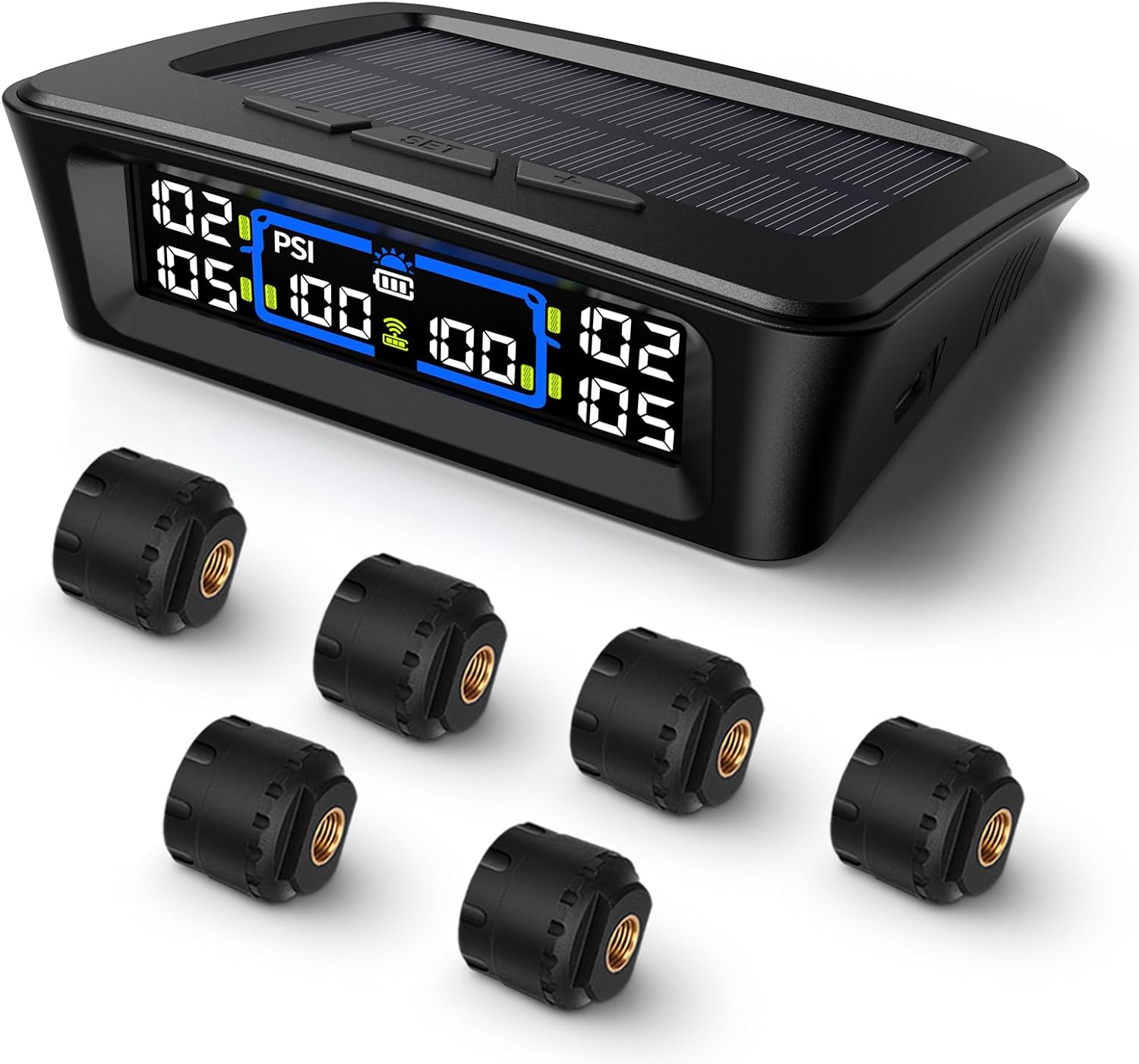
The Tymate TM12 RV TPMS delivers real-time tire pressure and temperature monitoring with a stable 433Hz display for safer long-distance driving. It supports simultaneous monitoring across vehicle and trailer zones, includes six alarm modes for pressure, temperature, leakage, battery, and signal loss, and features easy DIY installation with auto calibration. Power is supplied via USB-C charging or solar recharging, with a wide 0–144 PSI range and up to 50 ft signal coverage for RVs and towable trailers.

Vigorder rubber cement glue delivers superior adhesion and cures quickly within about 30 seconds for seamless rubber bonding. Once cured, it helps provide a strong, durable, waterproof seal that holds up to vehicle weight, pressure, and heat. Suitable for cars, motorcycles, trucks, bicycles, and off-road tires, it’s designed for emergency patch and maintenance repairs.

Steelman white tire marking crayons provide high-contrast, semi-permanent marks for repairing and inspecting tires and equipment. They write on wet or dry, smooth or coarse surfaces including rubber, metal, glass, and wood, making them ideal for puncture location and damage outlining. The lead- and zinc-free crayons resist weather and fading yet wipe away when you no longer need the marks.
Signs of Wear
Seek professional inspection or replacement for a bulge, exposed cord, tread separation, deep cut, impact damage, repeated air loss, or vibration linked to the tire. A puncture may be repairable only when its size and location meet accepted repair standards and the tire has no secondary damage from being driven low.
Recommended Tread Depth
NHTSA identifies 2/32 inch as the minimum replacement point and recommends the penny test as a quick check. Wet-road performance can decline earlier. AAA testing found that all-season tires worn to 4/32 inch took substantially longer to stop in wet conditions than new tires, so drivers who frequently face heavy rain should consider replacement before reaching the legal minimum.
- 2/32 inch: Replace immediately. The wear bars are level with the tread, and the penny test exposes the top of Lincoln’s head.
- 4/32 inch: Start planning replacement when wet-weather driving is common. A quarter test or tread-depth gauge can identify this level.
- Uneven readings: Use the lowest measurement and correct the pressure, alignment, balance, or suspension cause.
Age of Tires
Check the DOT date code on all four tires and the spare. NHTSA notes that manufacturer replacement recommendations commonly range from six to ten years, regardless of remaining tread. Michelin recommends replacing tires that have been in service for ten years as a precaution, while also directing drivers to follow the vehicle manufacturer when it gives an earlier limit. Heat, sunlight, storage, use, repairs, and maintenance can shorten service life.
Choosing the Best Tires for Hot Weather Driving
Choose tires that match the size, load index, speed rating, and type approved for your 4Runner. Start with the owner’s manual and the driver-door label. If you tow, carry heavy cargo, use aftermarket wheels, or drive off-road, ask a qualified tire professional to confirm compatibility and load capacity.
NHTSA’s Uniform Tire Quality Grading system includes a temperature grade of A, B, or C for many passenger tires. The grade indicates resistance to heat under the test conditions, with A being the highest. It is only one comparison point. It does not override the correct size, load capacity, inflation pressure, speed rating, or vehicle requirements.
For summer rain, prioritize enough tread depth and a pattern designed to evacuate water. For mixed climates, choose a tire that also matches your cold-weather and off-road needs. Do not select a tire solely because marketing describes it as “heat resistant.”
[Products Worth Considering]
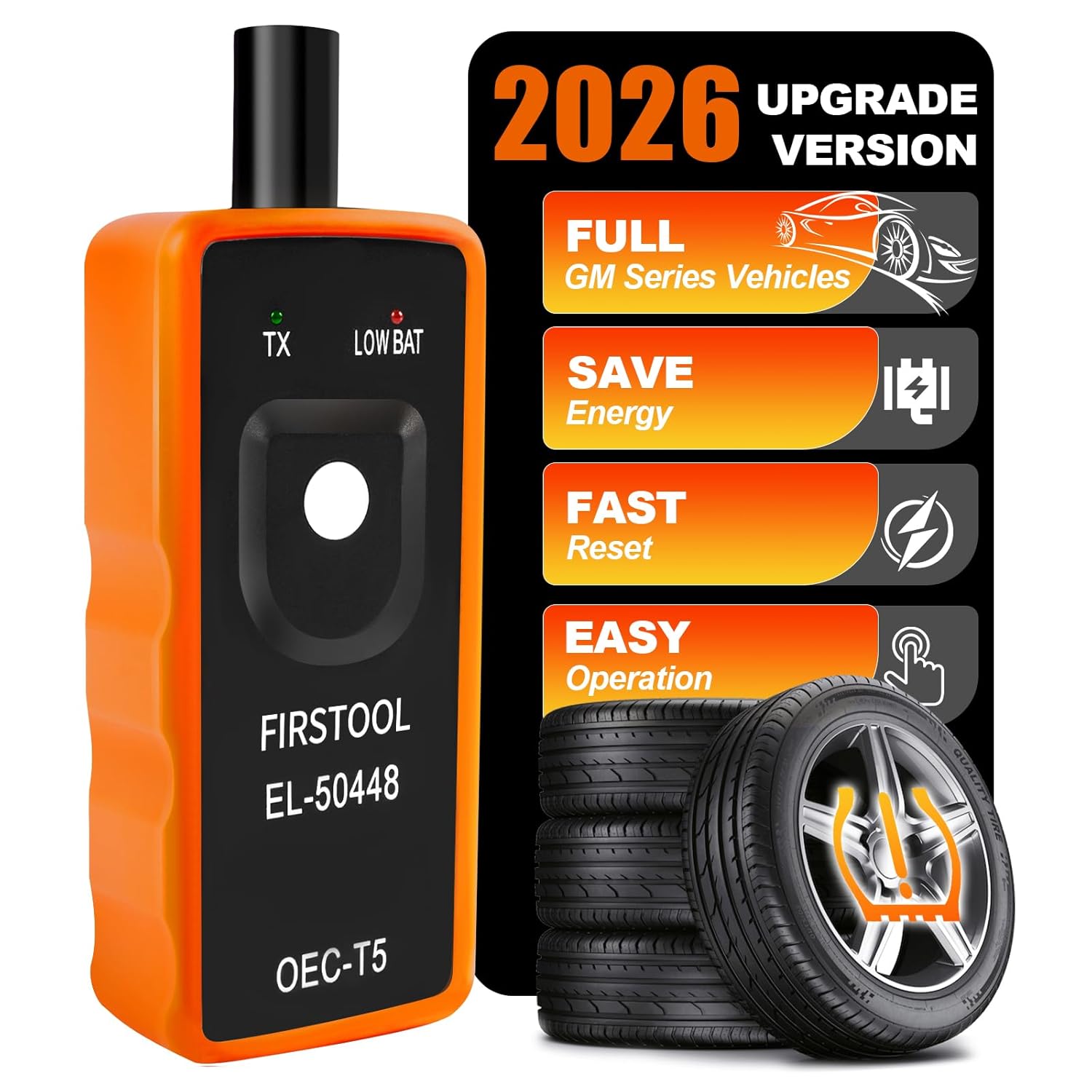
This TPMS relearn tool helps you quickly activate, match, and reset GM tire pressure sensors to keep the vehicle monitoring system working properly. It clears tire pressure alarms and dashboard warning lights after sensor replacement or tire rotation, and supports learning for common 315/433 MHz TPMS sensors. Designed for simple one-button operation, it can help you avoid unnecessary trips to repair shops.

Milton S-921 pencil tire pressure gauge helps you maintain optimal tire pressure for passenger cars with accurate readings in PSI and kPa. It features a built-in deflator valve for convenient pressure adjustments, plus a single chuck head and nylon indicator bar for easy use on the go. Built from durable plated brass and designed for reliable performance, it’s a practical road trip and cold-weather maintenance tool.

The SAFELIFE dial tire tread depth gauge measures tread depth in 1/32 inch increments with clear, easy-to-read 2-inch dial face. Color zones using a traffic light system help you quickly judge whether tread is low, marginal, or ample for safer driving. Built with a durable zinc cast body and a metal detect probe for precise, comfortable use across cars, motorcycles, trucks, and buses.
Final Thoughts on Keeping Your 4Runner’s Tires Safe
Use this final check before a hot-weather trip:
- Cold pressure matches the driver-door label.
- No tire has a bulge, cut, crack, exposed cord, or distorted tread.
- Tread is above the legal minimum and suitable for expected rain.
- The combined passenger, cargo, accessory, and trailer load stays within vehicle limits.
- The spare tire, jack, and tools are usable.
- The tires are within the service-life guidance from Toyota and the tire manufacturer.
Good summer tire care is simple: begin with correct cold pressure, inspect often, control load and speed, and act immediately when a tire changes how the 4Runner feels or sounds.
Frequently Asked Questions
Does hot pavement wear tires faster?
It can contribute to faster deterioration and wear, especially during long, high-speed trips. The effect becomes more serious when a tire is underinflated, overloaded, damaged, misaligned, or already aged.
Should I lower my 4Runner’s tire pressure in summer?
No. Set the tires to the cold pressure on the driver-door label. Do not reduce pressure simply because a warm tire reads higher after driving. Recheck it after the vehicle has been parked long enough for a cold reading.
How often should I check tire pressure in hot weather?
Check all tires, including the spare, at least once a month and before long trips. Check sooner after a major temperature change, a hard impact, off-road driving, or any sign of pressure loss.
Is the PSI on the tire sidewall correct for my 4Runner?
The sidewall number is a maximum tire rating, not the normal pressure recommendation for your vehicle. Use the cold PSI on the 4Runner’s Tire and Loading Information label or in the correct owner’s manual.
When should I replace my 4Runner’s tires?
Replace them for structural damage, repeated pressure loss, unsafe performance, or tread at 2/32 inch. Consider earlier replacement near 4/32 inch when heavy rain is common. Follow Toyota and the tire maker’s age limit, which may fall within a six-to-ten-year range.
Conclusion
Hot pavement does not require a special summer PSI. Your best protection is the correct cold pressure, a sound tire with enough tread, a load within the 4Runner’s limits, and regular inspection. Never bleed a warm tire to the cold placard number, and never ignore a bulge, separation, repeated pressure loss, or new vibration. Those habits give your tires the best chance to handle summer heat safely.
Sources
- NHTSA TireWise — cold pressure, tread depth, tire aging, rotation, TPMS, and temperature grades.
- NHTSA Summer Driving Tips — summer tire inspection, cold-pressure checks, damage, and tread guidance.
- Toyota 2026 4Runner Owner’s Manual — vehicle-specific owner information and maintenance guidance.
- Goodyear Tire Pressure and Temperature Guidance — the approximate pressure change associated with ambient temperature.
- AAA Wet-Tread Testing — wet stopping and handling results for tires worn to 4/32 inch.
- Michelin Tire Care FAQs — hot-tire pressure handling and age-based replacement guidance.