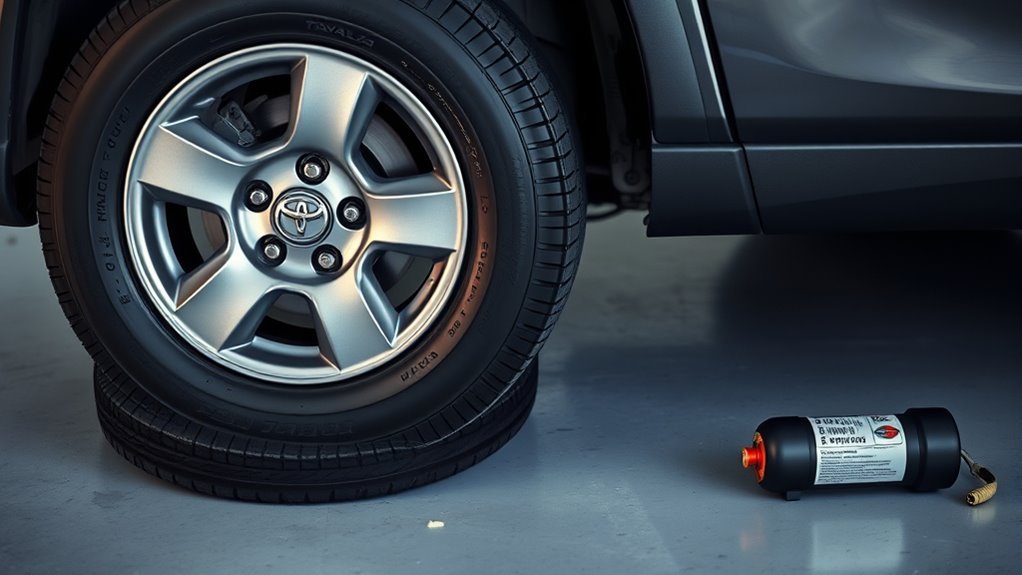
Run-flat tires can make a Toyota RAV4 easier to manage after a puncture, but they are not an automatic upgrade for every driver. The main benefit is temporary mobility: many run-flat designs let you keep driving a short distance after air loss instead of stopping immediately on the shoulder. The trade-off is cost, ride comfort, repair limits, and availability in RAV4-friendly sizes.
Quick Answer
Run-flat tires can work on a Toyota RAV4 if the tire size, load rating, speed rating, wheel fitment, and TPMS setup match your vehicle. They offer emergency driving range after a puncture, often up to 50 miles at up to 50 mph, but they usually cost more, ride firmer, and may be harder to repair.
Key Takeaways
- Run-flat tires are designed to support the vehicle for a limited distance after pressure loss, but the exact range depends on the tire maker’s instructions.
- A working tire pressure monitoring system is essential because a run-flat tire may not look or feel flat right away.
- Most RAV4 models are equipped with a spare tire from the factory, so run-flats are a convenience choice rather than a required replacement for a missing spare.
- Before buying, match the original tire size, load index, speed rating, and overall diameter listed on your RAV4’s tire placard and owner’s manual.
What Are Run-Flat Tires and How Do They Work?
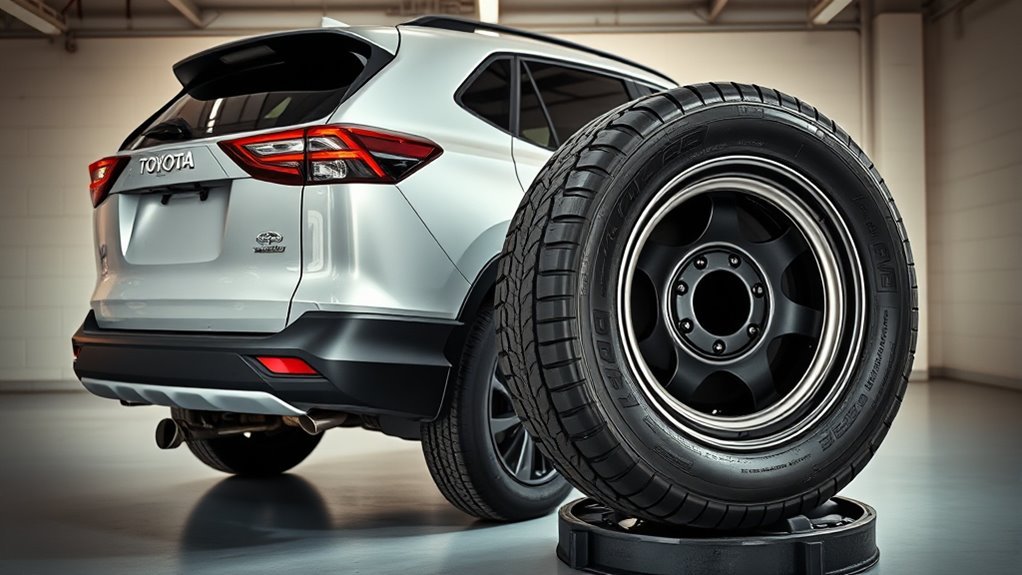
Run-flat tires are built to keep supporting the vehicle for a limited time after a puncture or sudden air-pressure loss. The most common type uses reinforced sidewalls that can carry the vehicle’s weight even when the tire has little or no air pressure.
Many replacement run-flat tires advertise temporary mobility of up to 50 miles at up to 50 mph, but that is not a universal guarantee. Always follow the specific tire manufacturer’s speed and distance limits printed in the tire documentation.
There are two main run-flat designs:
- Self-supporting run-flat tires: These use extra-stiff sidewalls to support the vehicle after air loss. This is the design most drivers mean when they talk about run-flats.
- Support-ring systems: These use a reinforced ring inside the tire and wheel assembly. They are less common on typical replacement tires and usually require a matching wheel system.
Warning: Do not treat a run-flat tire as a normal tire after a puncture. Drive slowly, avoid hard braking or sharp turns, and go to a tire shop as soon as possible. Continuing past the tire maker’s limit can damage the tire, wheel, and suspension.
Do Run-Flat Tires Fit a Toyota RAV4?
Some run-flat tires may fit a Toyota RAV4, but fitment depends on your model year, trim, wheel size, and tire specifications. RAV4 tire sizes vary by trim, and not every size has a good run-flat option. Before ordering, compare the replacement tire against the tire placard on the driver’s door jamb.
Check these items before switching:
- Tire size: Match the original size unless a tire professional confirms an approved alternative.
- Load index: The tire must support the weight rating required for your RAV4.
- Speed rating: Use a rating that meets or exceeds the vehicle’s requirement.
- Wheel compatibility: Not all run-flat tires are recommended for every wheel design.
- TPMS condition: Run-flat tires should be used only with a working tire pressure monitoring system.
Note: Toyota’s owner information for current RAV4 models says the vehicle is equipped with a spare tire and warns not to continue driving on a flat conventional tire. Run-flat tires change how you respond to a puncture, but they do not remove the need to follow Toyota’s tire, load, and safety requirements.
Advantages of Run-Flat Tires for Your RAV4
When you choose run-flat tires for your Toyota RAV4, the biggest advantage is not having to stop immediately in an unsafe place. If the tire is within its run-flat limit, you can usually drive to a safer location, a service station, or a tire shop instead of changing a tire on the shoulder.
Key benefits include:
- Better control after sudden air loss: Reinforced sidewalls help the tire keep its shape long enough for you to slow down safely.
- Less roadside exposure: You may avoid changing a tire in traffic, bad weather, or a poorly lit area.
- Convenience on road trips: A puncture is less likely to leave you stranded immediately.
- Possible cargo flexibility: Some vehicles designed without a spare use run-flats to free storage space, although many RAV4 models already include a spare tire.
The real value of a run-flat tire is time: enough time to leave a risky roadside situation and reach a safer place for service.
[Products Worth Considering]
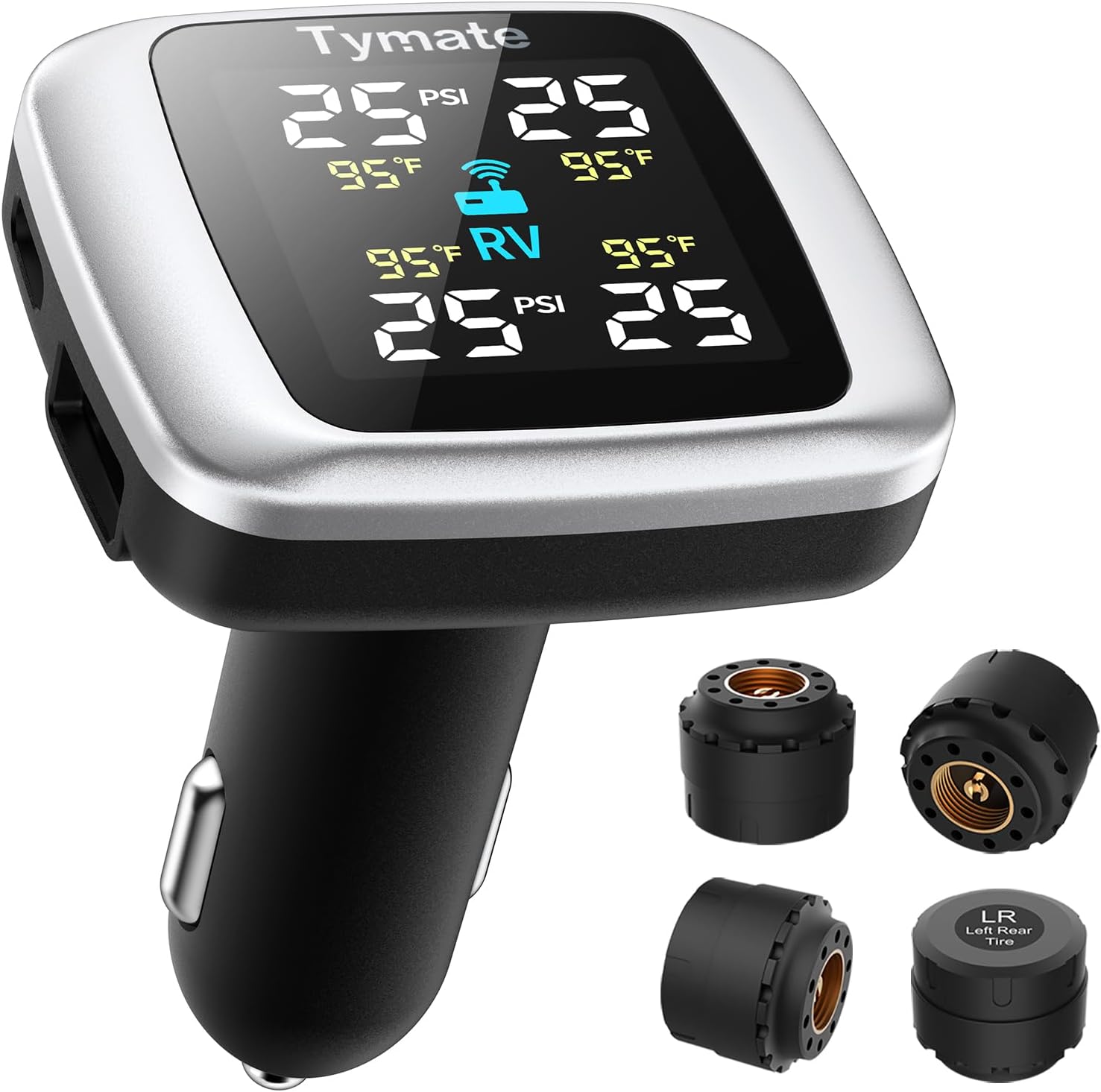
Tymate TM7 is a wireless tire pressure monitoring system that delivers real-time pressure and temperature readings for safer driving. It includes four external sensors, a bright color LCD display with adjustable backlight, and six alarm modes for high/low pressure, fast leakage, high temperature, and sensor signal or battery issues. The system covers a wide 0–144 PSI range and plugs into your vehicle’s cigarette lighter socket for quick DIY setup.

Upgrade your Toyota’s wheels with durable aluminum alloy valve stem caps that help protect valve cores from corrosion and direct exposure to road grime, clay, water, and snow. Rubber rings improve sealing to help prevent air leakage and maintain stable tire pressure for safer driving. These caps are easy to install or remove without tools and add a unique, stylish look to your car.

These aluminum alloy tire valve stem caps with an O-ring seal help protect valve stems from corrosion while adding a clean, stylish look to your vehicle. The universal fit works across cars, trucks, motorcycles, bicycles, and more, making them an easy upgrade for everyday driving and off-road use. Installation is quick, and the included four-pack keeps all your tires dressed and protected.
Drawbacks of Run-Flat Tires
While many drivers appreciate the safety benefits of run-flat tires, there are several drawbacks worth considering before fitting them to a RAV4.
- Higher price: Run-flat tires usually cost more than comparable standard tires because of their reinforced construction.
- Firmer ride: The stiff sidewalls can make bumps, potholes, and rough pavement feel sharper inside the cabin.
- More road noise: Some run-flats are noisier than standard touring tires, especially as they wear.
- Limited repair options: A run-flat that has been driven with low or zero pressure may have hidden internal damage. Tire Rack notes that repair decisions depend on the tire’s condition, how far it was driven, and the manufacturer’s policy.
- Fewer choices: Depending on your RAV4 tire size, you may find fewer run-flat models than standard all-season, all-weather, or touring tires.
- Replacement matching: If one run-flat is damaged beyond repair, you may need to replace tires in pairs or as a set to maintain balanced tread depth and handling.
Pro Tip: Before buying run-flats, call two or three local tire shops and ask whether they stock your RAV4’s size and whether they can service run-flat tires. Some shops need specific mounting equipment or may have limited same-day availability.
How Run-Flat Tires Compare to Standard Tires
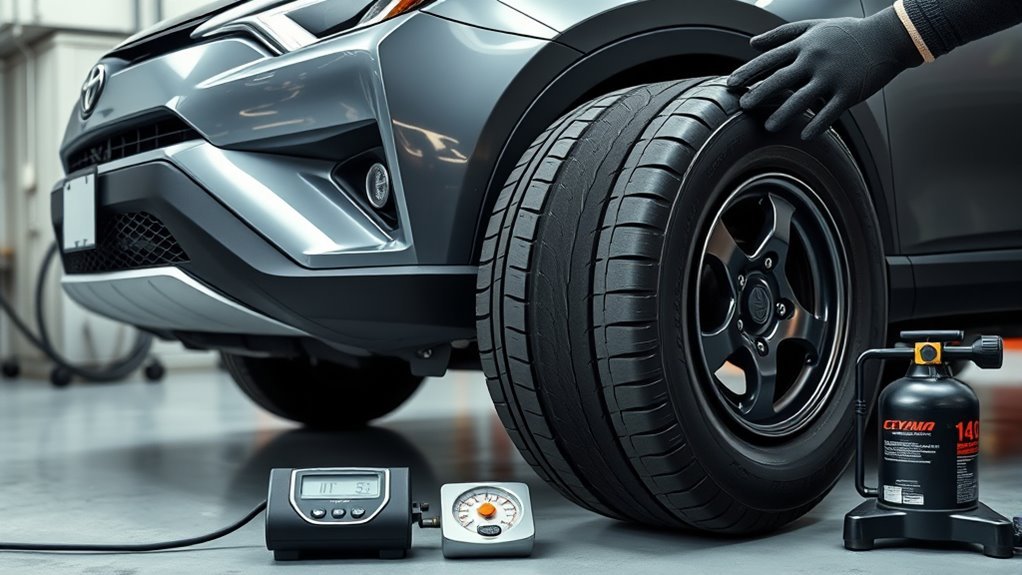
Comparing run-flat tires to standard tires helps you decide whether the added emergency mobility is worth the trade-offs. For many RAV4 owners, the best choice depends on where they drive, how often they take long trips, and how much they value ride comfort.
| Category | Run-Flat Tires | Standard Tires |
|---|---|---|
| After a puncture | Can usually be driven for a limited distance at reduced speed | Should be stopped and changed, sealed, or towed |
| Ride comfort | Often firmer because of reinforced sidewalls | Usually smoother and quieter in touring models |
| Cost | Typically higher purchase price | Usually more affordable with more choices |
| Repair | May not be repairable after low-pressure driving | Often repairable if the puncture is small and in the tread area |
| Availability | More limited in some RAV4 sizes | Wide selection of all-season, all-weather, highway, and touring options |
[Products Worth Considering]

Monitor tire tread wear with a smart, color-coded depth gauge that shows clear condition ranges at a glance. The bar is range marked for fast, easy readings, helping you maintain safer traction and performance. Each gauge is portable with a pocket clip, and the set includes 20 units for daily use and sharing.

Replace worn or malfunctioning GM TPMS sensors with this 433MHz pre-programmed sensor set designed for compatibility with many Chevrolet, Buick, GMC, and Cadillac models. It includes guidance for proper OBDII relearning/pairing after installation and supports reliable long-term operation with a high-performance CR2032 battery. Quality tested for durability and performance to help restore accurate tire pressure monitoring.

Accurately measure tire tread depth with a calibrated gauge marked from 0 to 1 inch in 1/32 inch increments. The color-coded bar helps you quickly identify tread condition ranges, supporting safe driving for trucks, motorcycles, automobiles, and passenger vehicles.
TPMS and Safety Requirements
A working TPMS is especially important with run-flat tires because the tire may still feel stable after losing pressure. In the United States, Federal Motor Vehicle Safety Standard No. 138 sets TPMS performance requirements for many light vehicles, including passenger cars and multipurpose passenger vehicles under the listed weight limit.
If your RAV4’s TPMS light comes on, do not ignore it. Safely reduce speed, avoid aggressive steering, and inspect the tires as soon as you can. If you have run-flats, reset your trip distance so you know how far you have driven after the warning.
Should You Replace All Four Tires?
In most cases, yes: it is best to install run-flat tires as a complete set of four. Mixing run-flat and standard tires can create uneven handling because the sidewalls respond differently during braking, cornering, and emergency maneuvers.
This matters even more on all-wheel-drive RAV4 models. Uneven tire diameter or tread depth can stress the drivetrain. If one tire is damaged, ask the tire shop to measure the tread depth on all four tires and confirm whether one tire, two tires, or the full set should be replaced.
Alternatives to Run-Flat Tires
If you’re exploring tire options for your Toyota RAV4, considering alternatives to run-flat tires can be beneficial. Standard tires often deliver a smoother ride, broader availability, and lower replacement cost.
[Products Worth Considering]

These universal tire valve stem caps help protect valve cores from dust, debris, and moisture while helping maintain stable tire pressure. The corrosion-resistant metal construction and sealed design provide reliable protection in road grime, mud, and winter conditions. Twist-on installation makes them quick to fit on cars, SUVs, trucks, and motorcycles.

The Airmoto portable tire inflator quickly and accurately fills car, truck, SUV, motorcycle, and bicycle tires up to 120 PSI with auto shut-off when your target pressure is reached. Its large LCD, multi-unit pressure display, and digital gauge make it easy to dial in settings and verify readings, while the built-in LED flashlight helps in low light. The included polyurethane hard carrying case and storage mesh pocket keep the inflator and accessories protected and organized.

Replace your worn or missing TPMS sensors with pre-programmed, direct-fit sensors for compatible Ford, Lincoln, and select Mazda models. Each sensor comes ready to activate with a scan tool, helping restore accurate tire pressure monitoring and trouble-free installation. Built with a long-life CR2032 battery and tested before factory release, this set provides dependable performance with a one-year warranty.
Standard All-Season Tires
Standard all-season tires are a practical choice for many RAV4 drivers. They are widely available, usually more comfortable than run-flats, and often easier to repair when the puncture is small and located in the tread area.
All-Weather Tires
All-weather tires are designed for year-round use and usually carry the three-peak mountain snowflake symbol for winter traction. They can be a smart choice if you want better cold-weather capability without swapping between summer and winter tires.
Winter Tires
If you drive in frequent snow, ice, or temperatures below freezing, dedicated winter tires usually provide better braking and grip than all-season tires. For many RAV4 owners in snowy regions, winter tires plus a spare may be a better safety upgrade than run-flats.
Tire Sealant and Inflator Kits
Tire sealant products can temporarily seal some small tread punctures, but they do not fix sidewall damage, large cuts, blowouts, or wheel damage. Sealant can also make tire repair messier, so use it only as directed.
Airless Tire Technology
Emerging airless tire technology, such as Michelin Uptis, aims to reduce puncture-related failures. However, passenger-vehicle airless tires are still not a normal replacement option for most RAV4 owners, so they are worth watching but not yet a practical everyday substitute.
Who Should Consider Run-Flat Tires on a RAV4?
Run-flat tires may make sense if you regularly drive in areas where stopping is risky, such as high-speed highways, isolated rural roads, or places with limited roadside assistance. They may also appeal to drivers who are not comfortable changing a spare tire.
They may not be the best choice if you prioritize a soft ride, low tire cost, long tread life, or maximum tire selection. In those cases, a high-quality standard tire, a properly inflated spare, and a roadside assistance plan may be the better setup.
Frequently Asked Questions
Do I have to tell my insurance company if I change from run-flat tires?
Insurance rules vary by country, insurer, and policy. If the tire change keeps the same size, load rating, speed rating, and manufacturer-approved specification, it may not be treated as a major modification. Still, it is safest to check your policy or contact your insurer before switching, especially if you are changing wheel size or moving away from factory equipment.
How long will a run-flat tire last?
Run-flat tire life depends on the tire model, alignment, rotation schedule, road conditions, driving style, and inflation pressure. Many last a similar general mileage range to other performance or touring tires, but some wear faster because of heavier construction and firmer sidewalls. Check the treadwear warranty for the exact tire you are considering.
Can a Toyota RAV4 use run-flat tires?
Yes, a RAV4 can use run-flat tires if you choose a compatible size, load index, speed rating, and wheel fitment. Because run-flat availability is more limited than standard tire availability, confirm fitment with a tire professional before ordering.
Can run-flat tires be repaired after a puncture?
Sometimes, but not always. A tire professional must inspect the tire inside and out. If the run-flat was driven with little or no pressure, it may have internal damage that is not visible from the outside, and replacement may be required.
Do run-flat tires mean I can remove the RAV4 spare tire?
Not necessarily. Many RAV4 models already include a spare tire, and keeping it gives you another backup if the run-flat is damaged beyond its temporary driving limit. Removing the spare may save weight, but it also removes a useful emergency option.
Conclusion
Choosing run-flat tires for your Toyota RAV4 is a trade-off between emergency mobility and everyday comfort. They can help you stay in control after a puncture and reach a safer place for service, but they often cost more, ride firmer, and may be harder to repair or replace quickly.
For many RAV4 owners, the smartest move is to compare real tire options in the correct size, confirm TPMS compatibility, and keep the factory spare in good condition. If you drive long distances or often travel where stopping is unsafe, run-flats can be worth considering. If comfort, price, and tire choice matter more, high-quality standard tires may be the better fit.
Sources
- Bridgestone: What Are Run-Flat Tires? — run-flat tire construction and typical temporary driving limits.
- Tire Rack: Can Run-Flat Tires Be Repaired? — repair limitations and inspection concerns after low-pressure driving.
- eCFR: 49 CFR § 571.138 Tire Pressure Monitoring Systems — federal TPMS performance requirements for covered vehicles.
- Toyota Owners: RAV4 Hybrid If You Have a Flat Tire — Toyota guidance on spare tire use and flat-tire safety.
- Michelin North America: MICHELIN Uptis — official information on Michelin’s airless tire prototype.