
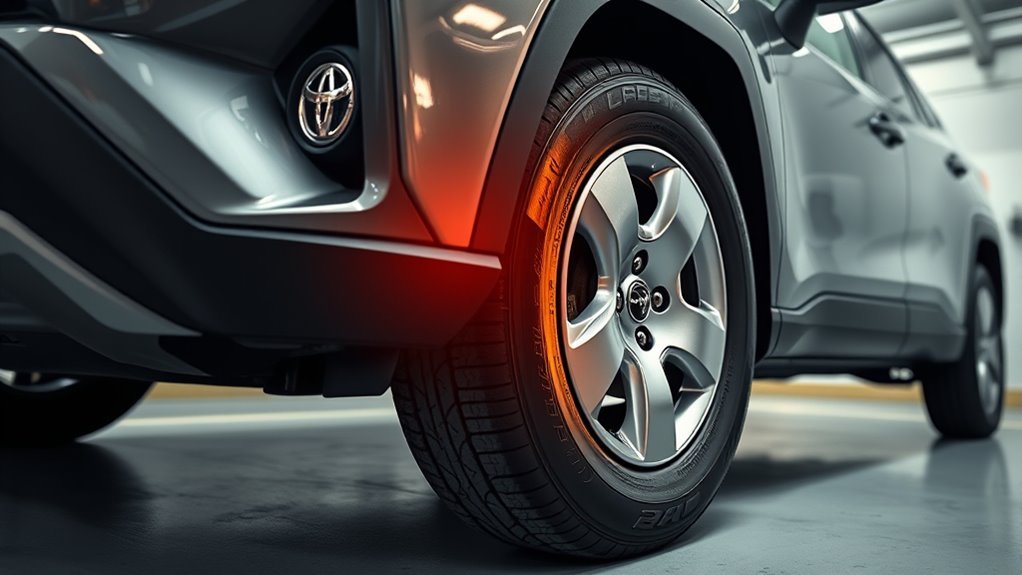
You can reduce Toyota RAV4 tire heat and blowout risk by using the cold PSI shown on the driver-side door-jamb tire placard, rotating the tires on Toyota’s recommended interval, watching tread depth, and never exceeding the load limit. Heat builds fastest when a tire is underinflated, overloaded, damaged, or driven hard at highway speeds in hot weather.
Quick Answer
For most recent RAV4 models, the correct tire pressure is usually in the low-to-mid 30 PSI range, but the exact number depends on tire size, trim, and load. Use the door-jamb placard as the authority, check tires cold, rotate every 5,000–7,500 miles, and replace damaged or worn tires before long hot-weather driving.
Key Takeaways
- Set pressure to the RAV4’s cold tire inflation value on the driver-side placard, not the number molded on the tire sidewall.
- Underinflation creates extra sidewall flex and heat, which raises the risk of rapid wear, tire failure, and loss of control.
- Toyota’s general maintenance guidance recommends tire rotation every 5,000–7,500 miles, depending on driving conditions.
- Replace tires at the legal wear limit of 2/32 inch at the latest; consider earlier replacement near 4/32 inch if you often drive in rain.
- After tire replacement, rotation, or TPMS service, confirm the tire pressure warning system is initialized and reading normally.
At a Glance
| Time Required | 10–20 minutes for a driveway inspection |
| Difficulty | Easy |
| Tools Needed | Accurate tire pressure gauge, tread depth gauge or penny, flashlight, and owner’s manual |
| Cost | Usually $0–$20 for checks; more if a tire, TPMS sensor, or alignment is needed |
Quick Actions to Reduce RAV4 Tire Heat and Blowout Risk

Start with the checks that directly control tire temperature: set the cold tire pressure to the value on your RAV4’s tire and loading information placard, keep the vehicle within its load limit, rotate tires on schedule, and inspect tread and sidewalls before long trips.
Do not treat 32–36 PSI as a universal rule. Many newer RAV4 configurations fall within that range, but the correct number can change by model year, trim, wheel size, tire size, and market. Toyota says replacement tires and inflation pressure should match the information listed on the vehicle’s tire placard and owner materials, so check the sticker on the driver-side door jamb first.
- Check pressure cold: Measure before driving, or after the vehicle has been parked long enough for the tires to cool.
- Rotate tires: Toyota’s maintenance guidance recommends rotating tires every 5,000–7,500 miles, though hard use may require shorter intervals.
- Measure tread: Replace tires at 2/32 inch at the latest, and consider replacement around 4/32 inch if wet-road grip matters.
- Inspect sidewalls: Look for cuts, cracks, exposed cords, bubbles, bulges, or embedded objects.
- Respect the load limit: Extra cargo, passengers, towing tongue weight, and roof loads all increase tire stress.
- Use the TPMS as a warning system: It helps, but it does not replace manual pressure checks.
Warning: A tire with a sidewall bulge, exposed steel or fabric, deep cracking, repeated pressure loss, or visible deformation is not a “watch it later” item. Do not drive highway speeds on it. Install the spare if safe to do so and have the tire inspected or replaced.
[Products Worth Considering]

The SAFELIFE dial tire tread depth gauge measures tread depth in 1/32 inch increments with clear, easy-to-read 2-inch dial face. Color zones using a traffic light system help you quickly judge whether tread is low, marginal, or ample for safer driving. Built with a durable zinc cast body and a metal detect probe for precise, comfortable use across cars, motorcycles, trucks, and buses.

Measure tire tread depth quickly and accurately with this LUMITECO dial gauge that reads in 1/32" increments up to 14/32". The color-coded green/yellow/red zones make it easy to judge tire wear and know when replacement is needed. A rugged, compact design with a protective pouch helps keep the gauge ready for use on cars, trucks, motorcycles, and more.

Monitor tire tread wear with a smart, color-coded depth gauge that shows clear condition ranges at a glance. The bar is range marked for fast, easy readings, helping you maintain safer traction and performance. Each gauge is portable with a pocket clip, and the set includes 20 units for daily use and sharing.
How RAV4 Tires Heat Up: Tread, Pressure, Load, and Driving Habits
RAV4 tires heat up because rubber flexes as the tire rolls. Some heat is normal. The problem starts when flexing becomes excessive from low pressure, heavy load, aggressive driving, road damage, or worn tire structure.
Underinflation is the biggest everyday heat trigger. When a tire is below the recommended cold pressure, the sidewall bends more with each rotation. The National Highway Traffic Safety Administration explains that pressure below the vehicle manufacturer’s recommendation can cause high heat generation, rapid tire wear, blowout, and loss of control.
Overinflation is not the fix. Adding extra air beyond the placard value may reduce some flex, but it can shrink the contact patch, increase center tread wear, reduce ride comfort, and make the tire more vulnerable to impact damage. Use the Toyota placard value, then adjust only as the owner’s manual or tire professional recommends for your specific setup.
| Heat Factor | What It Does | What to Do |
|---|---|---|
| Low PSI | Increases sidewall flex and internal heat | Inflate cold to the door-jamb placard value |
| Overloading | Adds stress and flex to the tire carcass | Stay within the payload and tire load limits |
| Worn tread | Reduces wet traction and can reveal uneven wear patterns | Measure tread at several points across each tire |
| High speed and hard braking | Adds friction and raises operating temperature | Slow down in heat, when loaded, or on long highway grades |
| Damage or age | Weakens the tire structure and can concentrate heat | Replace tires with bulges, exposed cords, severe cracking, or abnormal vibration |
Your tires are the only parts of the RAV4 touching the road, so pressure, load, tread depth, and damage checks matter more than almost any cabin comfort upgrade.
How RAV4 Insulation and Design Affect Tire Heat Transfer and Cabin Noise
Wheel-well liners, underbody panels, and sound-deadening materials can affect how much road noise and radiant heat you notice inside the cabin. They can make the RAV4 feel quieter on coarse pavement, especially when paired with touring or low-noise all-season tires.
However, insulation should not be presented as a primary tire-cooling solution. Tire heat is generated inside the tire from flexing, friction, speed, load, and pressure. Wheel-well insulation may reduce heat and noise transfer into the cabin, but it will not correct an underinflated, overloaded, old, or damaged tire.
- Factory liners: Help block water, debris, and some noise from entering the cabin area.
- Aftermarket sound-deadening: Can lower perceived road noise when installed correctly, but it must not trap water or interfere with suspension, brakes, steering, or tire clearance.
- Quiet tires: Often make a bigger cabin-noise difference than adding insulation alone.
- Heat management: Still depends first on correct PSI, proper load, safe speed, and tire condition.
Note: If you add wheel-well or underbody insulation, keep drain paths open and avoid covering brake, steering, suspension, TPMS, or wheel-speed sensor components. A poorly installed liner can create rubbing, moisture retention, or service access problems.
Practical Maintenance Checks: Pressure, Tread, Rotation, and Spare
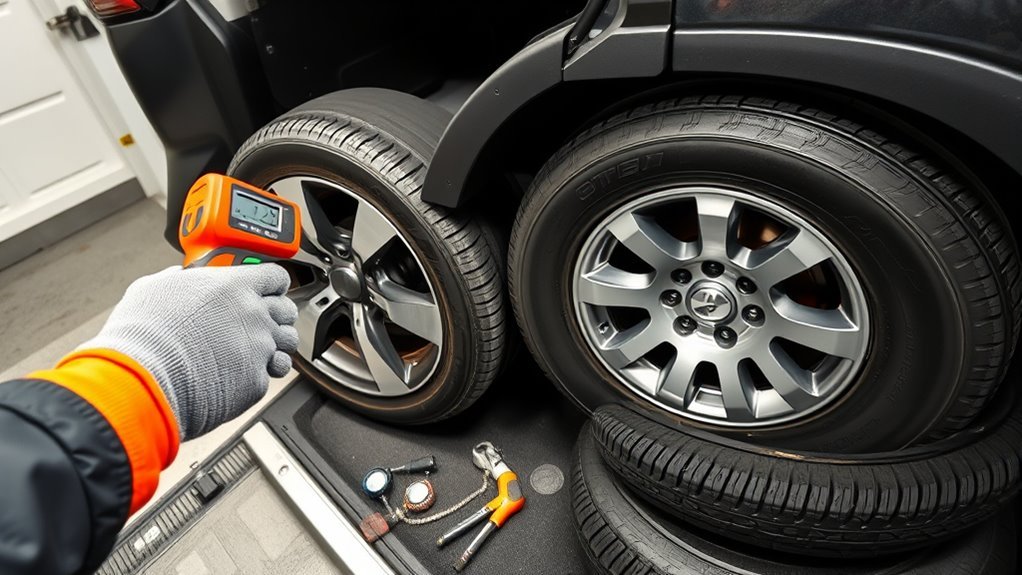
A simple monthly routine keeps your RAV4’s tires cooler, safer, and more predictable. Use the same order each time so you do not miss a tire.
[Products Worth Considering]

The VEHLIVE SU-50448 II TPMS relearn tool provides a fast activation reset to restore accurate tire pressure monitoring after sensor replacement or tire rotation. It supports 315 MHz and 433 MHz GM series sensors and helps clear dashboard pressure warnings. With simple two-button operation and horn-confirmed relearning order, you can reprogram sensors conveniently at home.

This TPMS sensor training and relearn reset tool is customized for Ford, Lincoln, and Mercury vehicles to help activate tire pressure programming after sensor replacement or tire rotation. It can activate individual tire pressure sensors with one-button operation, helping prevent TPMS warning light illumination. It is not a sensor programming tool and cannot program replacement sensors—use it to trigger/activate sensors only.
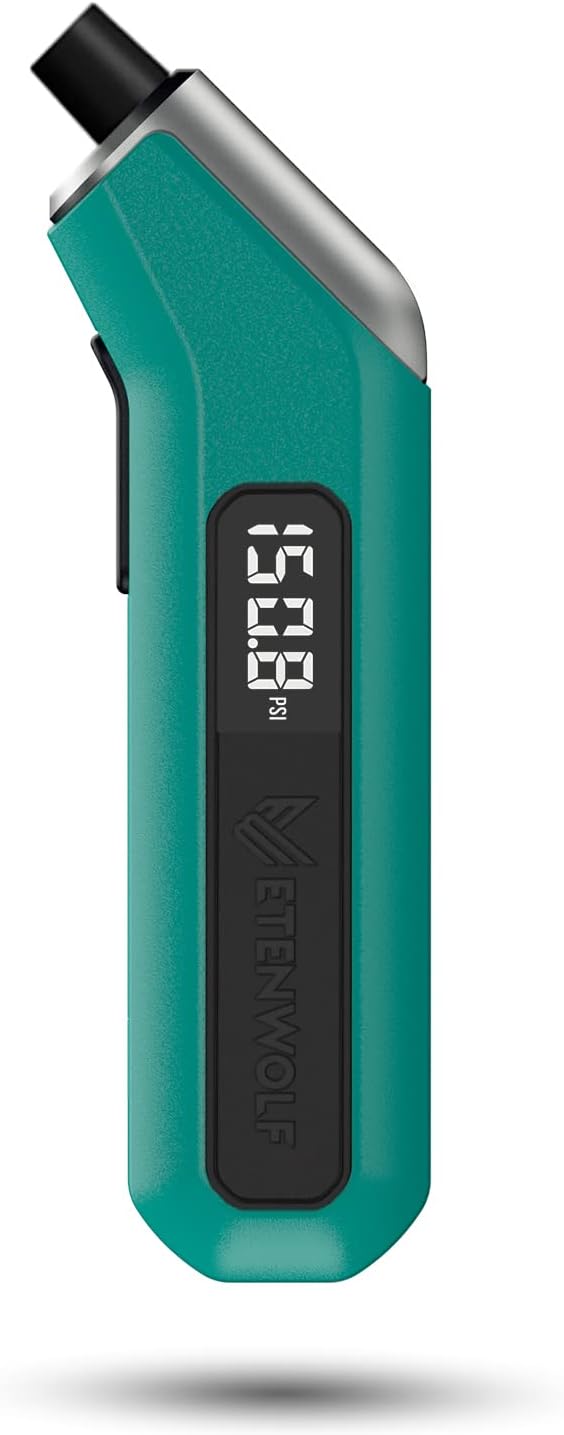
ETENWOLF T300 is a calibrated digital tire pressure gauge designed for reliable readings across low and high pressure ranges. It includes thermal compensation for stable performance in extreme cold or heat, an LED light for visibility, and an auto shut-off to help preserve battery life. Ideal for pickups, RVs, and heavy-duty vehicles, it delivers accurate PSI measurements with sturdy durability.
Step 1: Check Cold Tire Pressure
Park the RAV4 on level ground and check all four tires before driving. Use a quality gauge and compare each reading with the tire placard on the driver-side door jamb. Add or release air until each tire matches the specified cold pressure.
Pressure changes with temperature, so a tire that was correct last month may be low after a cold front or high after a hot drive. Do not bleed air from a hot tire just because the reading is above the cold placard value; let it cool and recheck.
Step 2: Measure Tread Depth
Measure tread at the inner, center, and outer grooves on each tire. The Tire Industry Association notes that wear indicators are set at 2/32 inch, which is the point at which the tire must be replaced. For rain-heavy driving, many owners choose to replace tires earlier because wet traction drops as tread becomes shallow.
- Even wear across the tread: Usually suggests pressure and alignment are close to correct.
- Center wear: Often points to overinflation or aggressive highway use.
- Both-edge wear: Often points to underinflation or hard cornering.
- One-edge wear: Often points to alignment or suspension issues.
- Cupping or scalloping: Can indicate worn shocks, balance problems, or tire damage.
Step 3: Inspect Sidewalls and Valve Stems
Use a flashlight to check both visible sidewalls, the tread shoulders, and the valve stems. Look for cracking, bubbles, cuts, nails, screws, missing valve caps, or a stem that leaks when moved. A slow leak can turn into underinflation, and underinflation can become heat buildup on the highway.
Step 4: Rotate on Schedule
Rotate tires every 5,000–7,500 miles unless your owner’s manual, tire manufacturer, or driving conditions call for a different interval. Shorten the interval if you often drive on gravel, carry heavy cargo, tow within Toyota’s limits, make short stop-and-go trips, or notice uneven wear.
Follow the rotation pattern recommended for your tire type. Directional tires, staggered sizes, and full-size spares may require different patterns. If you are unsure, ask the tire shop to follow Toyota and tire-manufacturer guidance.
Step 5: Check the Spare If Equipped
If your RAV4 has a spare tire, check its pressure, tread, and rubber condition. A neglected spare can be flat, cracked, or unsafe when you need it most. Compact temporary spares also have speed and distance limits, so read the label on the spare and your owner’s manual before driving on it.
Pro Tip: Keep a note in your phone with the date, mileage, cold PSI readings, tread depths, and rotation pattern. A simple log makes it easy to spot slow leaks, alignment wear, and tires that are aging out before the next road trip.
What to Do Before a Hot-Weather Road Trip
Hot pavement, highway speed, long climbs, heavy cargo, and low pressure are a bad mix. Before a summer trip, do a deeper tire check than your normal quick inspection.
- Check cold PSI the morning you leave. Match the tire placard, not the sidewall maximum.
- Inspect all four tires and the spare. Look for cracks, bulges, punctures, exposed cords, and uneven wear.
- Measure tread depth. Do not start a long wet-weather trip on tires near the wear bars.
- Review your load. Keep passengers, luggage, accessories, roof cargo, and trailer tongue weight within Toyota’s rated limits.
- Watch for vibration or pulling. New vibration at speed can mean balance, tire damage, alignment, or wheel issues.
- Plan stops. Let the tires cool if you smell rubber, feel unusual vibration, or see warning lights.
Warning: If the TPMS light comes on while driving, slow down smoothly, avoid hard steering or braking, and stop in a safe place. Check the tires before continuing. If a tire is visibly low, damaged, or overheating, do not keep driving on it.
Upgrades and When to See a Dealer: Insulation, Quieter Tires, and TPMS Setup
Once the basics are correct, you can choose upgrades that improve comfort without hiding safety problems. The best upgrades are the ones that match the RAV4’s tire size, load rating, speed rating, and driving use.
[Products Worth Considering]
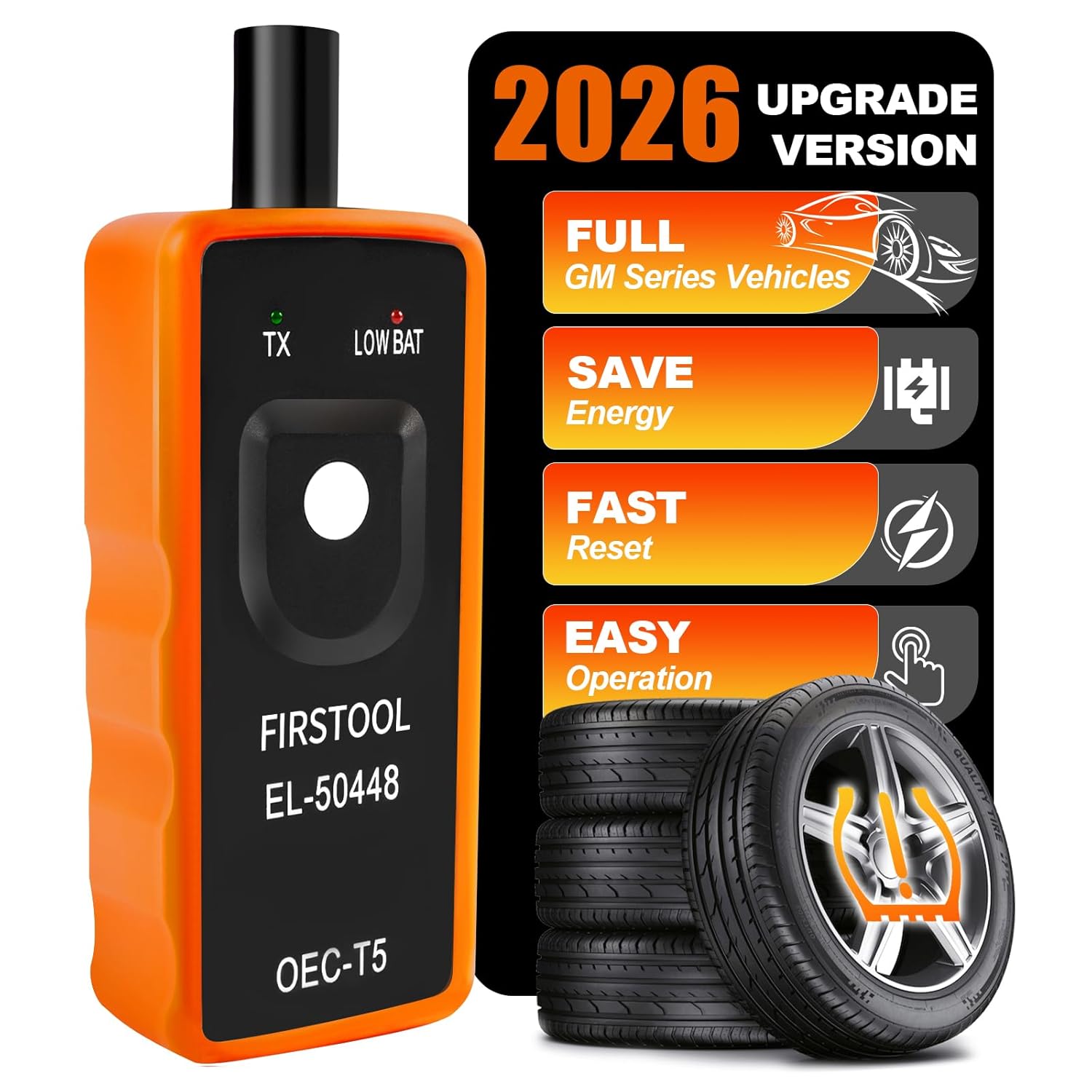
This TPMS relearn tool helps you quickly activate, match, and reset GM tire pressure sensors to keep the vehicle monitoring system working properly. It clears tire pressure alarms and dashboard warning lights after sensor replacement or tire rotation, and supports learning for common 315/433 MHz TPMS sensors. Designed for simple one-button operation, it can help you avoid unnecessary trips to repair shops.

Milton S-921 pencil tire pressure gauge helps you maintain optimal tire pressure for passenger cars with accurate readings in PSI and kPa. It features a built-in deflator valve for convenient pressure adjustments, plus a single chuck head and nylon indicator bar for easy use on the go. Built from durable plated brass and designed for reliable performance, it’s a practical road trip and cold-weather maintenance tool.

These aluminum alloy tire valve stem caps protect the valve core from corrosion and help prevent air leakage for more stable tire pressure. The rubber ring design helps support a secure, safe seal while adding a stylish look to your Honda wheels. Easy to install by hand, these caps are ideal for everyday driving and weather exposure.
Choose Replacement Tires That Match the Placard
When selecting replacement tires, follow the tire size, load index, speed rating, and inflation guidance on the RAV4’s placard and owner materials. The Tire Industry Association advises drivers not to install tires with a lower load index than the original equipment tire listed on the placard or owner’s manual.
For lower cabin noise, compare touring all-season tires, tread pattern design, and tire label information. For heat resistance, pay attention to the tire’s UTQG temperature grade. UTQG temperature grades run from A to C, with A indicating the highest heat resistance rating under the test standard.
Be Careful With Wheel and Tire Size Changes
Larger wheels, lower-profile tires, or non-stock tire sizes can change ride quality, speedometer accuracy, clearance, load capacity, and TPMS behavior. Ask a Toyota dealer or qualified tire professional before changing size. This is especially important for AWD RAV4 models, where mismatched tire diameter can stress drivetrain components.
Initialize or Register TPMS After Service
After rotating tires, changing tires, replacing wheels, or servicing tire pressure warning valves and transmitters, confirm the TPMS is initialized or registered as your model requires. Toyota’s owner information lists the tire pressure warning system among items that may need initialization after tire rotation, tire changes, or ID-code registration.
See a dealer or qualified tire shop if the TPMS light flashes, remains on after correct inflation, fails to recognize a new sensor, or returns after repeated resets. A sensor battery, valve stem, receiver, or registration issue may need service equipment.
- See a tire shop now: Repeated pressure loss, visible tire damage, vibration, sidewall bulge, or puncture near the shoulder or sidewall.
- See a dealer or qualified technician: Persistent TPMS faults, sensor registration problems, warning lights after tire service, or uncertainty about approved tire sizes.
- Get an alignment check: One-edge wear, steering pull, off-center steering wheel, or uneven tread after rotation.
- Replace instead of repair: Sidewall damage, exposed cords, large punctures, overlapping repairs, or tires worn to the wear indicators.
Frequently Asked Questions
Is 37 PSI too high for a RAV4?
It can be too high if your RAV4’s door-jamb placard calls for a lower cold pressure. Some RAV4 tires may read 37 PSI after driving because heat raises pressure, but you should set cold pressure to the placard value. Do not use the sidewall maximum as your normal target.
What PSI should RAV4 tires be?
Use the cold tire inflation pressure printed on the driver-side door-jamb tire placard. Many newer RAV4 trims are in the low-to-mid 30 PSI range, but the exact value depends on the model year, tire size, and trim. The placard is more reliable than a generic chart.
How often should I rotate RAV4 tires?
Toyota’s general maintenance guidance recommends rotating tires every 5,000–7,500 miles, with the exact timing depending on driving habits and road conditions. Rotate sooner if you see uneven tread wear, drive on rough roads, carry heavy loads, or tow within your RAV4’s rated limits.
At what tread depth should RAV4 tires be replaced?
Replace tires at 2/32 inch at the latest because that is where treadwear indicators show the tire is at the end of service life. If you drive often in rain, replacing closer to 4/32 inch gives more wet-weather margin because shallow tread evacuates water less effectively.
Can wheel-well insulation prevent tire overheating?
No. Wheel-well insulation can reduce cabin noise and some heat transfer into the cabin area, but it does not stop tire heat created by low pressure, overloading, damage, high speed, or aggressive driving. Treat insulation as a comfort upgrade, not a tire-safety fix.
Do I need to reset TPMS after rotating RAV4 tires?
Many RAV4 models require the tire pressure warning system to be initialized or checked after tire rotation, tire replacement, or sensor ID-code registration. Use the owner’s manual procedure for your model year and display type, or have a Toyota dealer or tire shop handle it.
Conclusion
You can cut RAV4 tire heat and blowout risk with practical, repeatable habits: use the cold PSI on the door-jamb placard, check pressure manually, rotate tires every 5,000–7,500 miles, measure tread depth, inspect sidewalls, and keep cargo within the vehicle’s limits. Quieter tires and wheel-well insulation can improve comfort, but they do not replace basic tire safety. Keep TPMS working, inspect the spare, and fix pressure loss or damage before it becomes a highway emergency.
Sources
- Toyota Owners — 2024 RAV4 Tire Inflation Pressure — supports using Toyota owner information for model-specific tire pressure guidance.
- Toyota Scheduled Maintenance Guide — supports the 5,000–7,500 mile tire rotation interval.
- NHTSA TireWise — supports tire safety, maintenance, labeling, and TPMS consumer guidance.
- NHTSA Tire Pressure Maintenance Statistical Investigation — supports the link between underinflation, heat generation, rapid wear, blowout, and loss of control.
- Tire Industry Association — Tire Replacement — supports treadwear indicators, 2/32 inch replacement guidance, load index guidance, UTQG temperature grades, and replacement-tire best practices.
- Toyota Owners — Items to Initialize — supports TPMS initialization after rotation, tire changes, and ID-code registration.
