
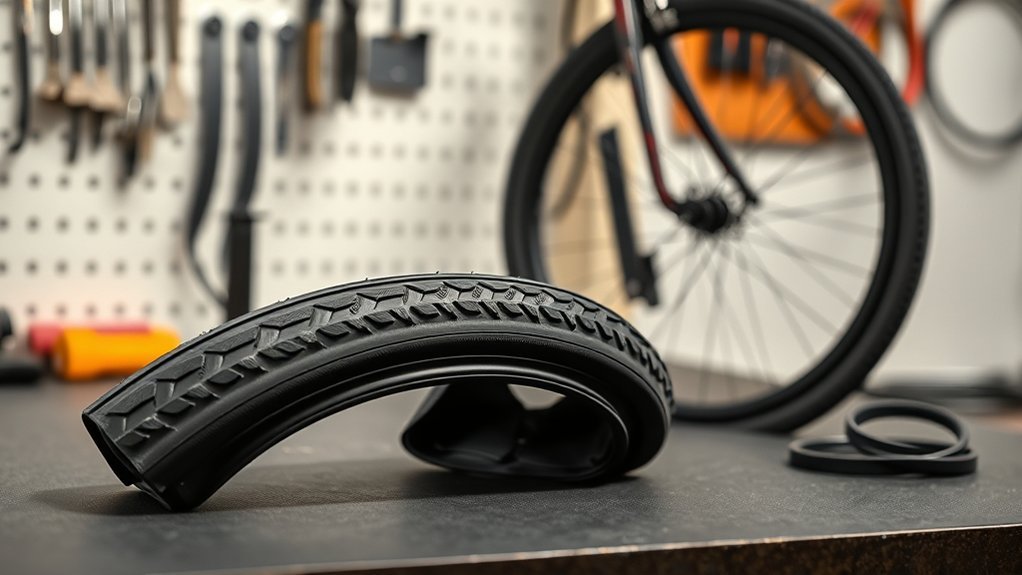
A folding bike tire is a clincher-style bicycle tire that uses a flexible Kevlar or aramid bead instead of a steel wire bead. That bead lets the tire fold for storage, travel, or carrying as a spare, while still seating securely on a compatible rim when inflated. Folding tires usually cost more than wire bead tires, but they can save weight, feel more responsive, and pack much more easily.
Quick Answer
A folding bike tire is a clincher tire with a flexible Kevlar or aramid bead instead of a rigid steel wire bead. It folds for easier carrying, often weighs about 50-90 g less depending on size, and fits like a normal clincher when the tire size, rim type, and pressure range match.
Key Takeaways
- Folding bike tires are usually clincher tires with a flexible Kevlar or aramid bead instead of a steel wire bead.
- They fold for easier transport, save space in a bag, and often weigh less than comparable wire bead tires.
- They are not automatically tubeless. Check the tire label, rim type, and manufacturer compatibility before setting one up without a tube.
- The safest fit starts with the exact ETRTO size, rim compatibility, frame clearance, and the pressure range printed on the tire and rim.
- Use folding tires for travel, racing, commuting spares, and performance setups where lower weight and easy packing matter.
What Is a Folding Bike Tire?
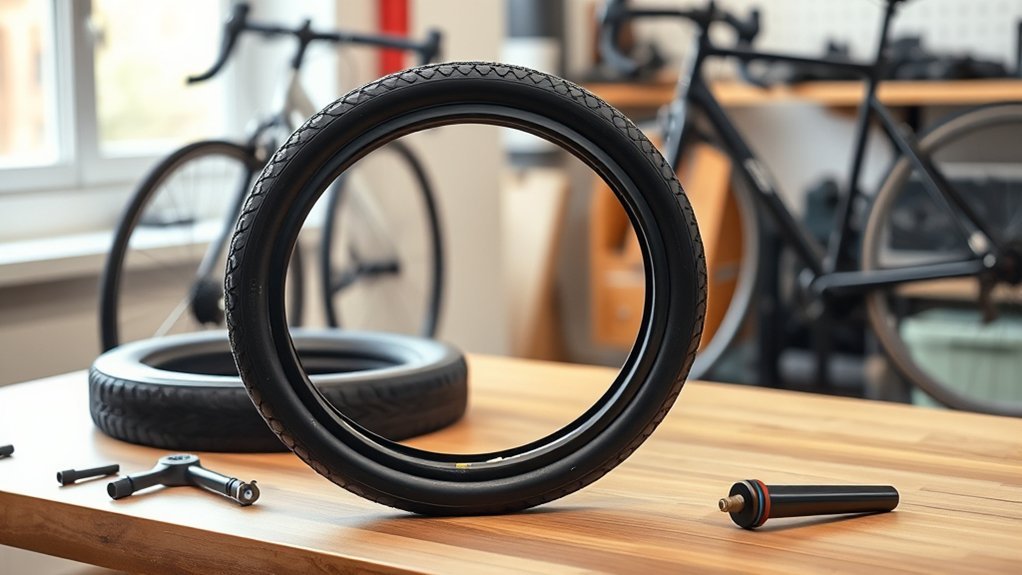
A folding bike tire is a special version of a clincher tire. Instead of using a stiff steel wire bead, it uses a flexible bead made from Kevlar, aramid, or a similar low-stretch material. Schwalbe explains that this bead design allows the tire to fold and can make it roughly 50-90 g lighter, depending on tire size. You can read the manufacturer explanation here: Schwalbe tire types.
The bead is the reinforced edge of the tire that sits inside the rim. On a folding tire, that edge is flexible enough to coil or fold, but it must still resist stretching under air pressure. That is why a folding tire can pack small without behaving like a loose or unsafe tire once mounted correctly.
Most folding bicycle tires still work like regular clincher tires. You mount the tire on a compatible clincher rim, add a tube unless the tire and rim are tubeless-compatible, and inflate it within the printed pressure range. When everything matches, the bead seats against the rim and the tire is ready for road, gravel, commuting, touring, or mountain bike use.
Note: “Folding” describes the bead construction, not the bike type. Folding tires can fit road bikes, mountain bikes, gravel bikes, commuter bikes, and folding bikes if the size and rim compatibility are correct.
How Folding Tire Beads Secure the Rim
A folding tire bead does not work by stretching bigger when you inflate it. Instead, the bead resists stretching while air pressure pushes the tire outward into the rim’s bead seat or hook. That firm contact keeps the tire centered and helps prevent the bead from lifting off the rim during normal riding.
This is why size and pressure matter so much. The tire’s inner diameter must match the rim’s bead-seat diameter, and the tire width must be suitable for the rim’s inner width. Schwalbe explains this tire-and-rim matching principle in its bicycle tire dimensions guide.
When the bead is seated evenly, the tire should show a consistent witness line around both sidewalls. If the line dips under the rim in one spot or rises above it in another, stop and deflate the tire. Re-seat the bead before riding.
Folding vs Wired Bike Tires
Folding and wire bead tires can both work well. The better choice depends on your budget, riding style, storage needs, and how often you carry a spare tire.
| Feature | Folding tire | Wire bead tire |
| Bead material | Kevlar, aramid, or similar flexible bead | Steel wire bead |
| Portability | Folds for travel, storage, and carrying as a spare | Keeps its round shape and takes more space |
| Weight | Usually lighter in comparable models | Usually heavier, but often cheaper |
| Ride feel | Often more supple in performance models | Often practical, durable, and budget-friendly |
| Best for | Racing, travel, touring spares, premium commuting setups | Budget replacements, casual riding, simple everyday use |
- Choose folding tires if you want lower weight, easier storage, and a tire that packs well for travel or long rides.
- Choose wire bead tires if you want a lower upfront price and do not need to fold or carry the tire.
- Choose by fit first, then by tread, casing, puncture protection, and price.
[Products Worth Considering]
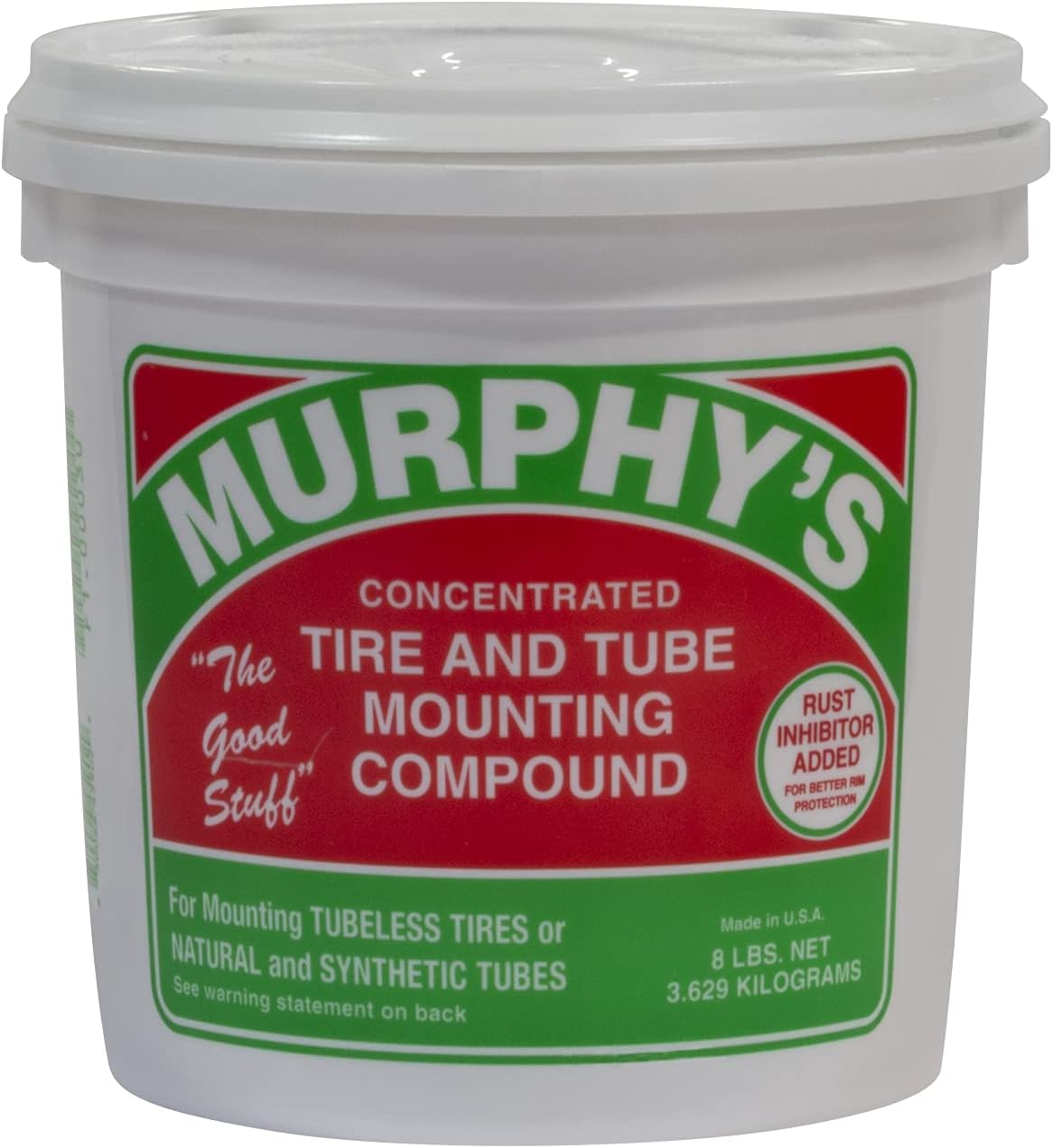
A concentrated tire and tube mounting compound designed to help simplify mounting rubber tires and tubes on passenger, semi truck, construction, and OTR applications. Its ultra-thick formula packs beads effectively and includes rust inhibitors to help protect against corrosion during use.
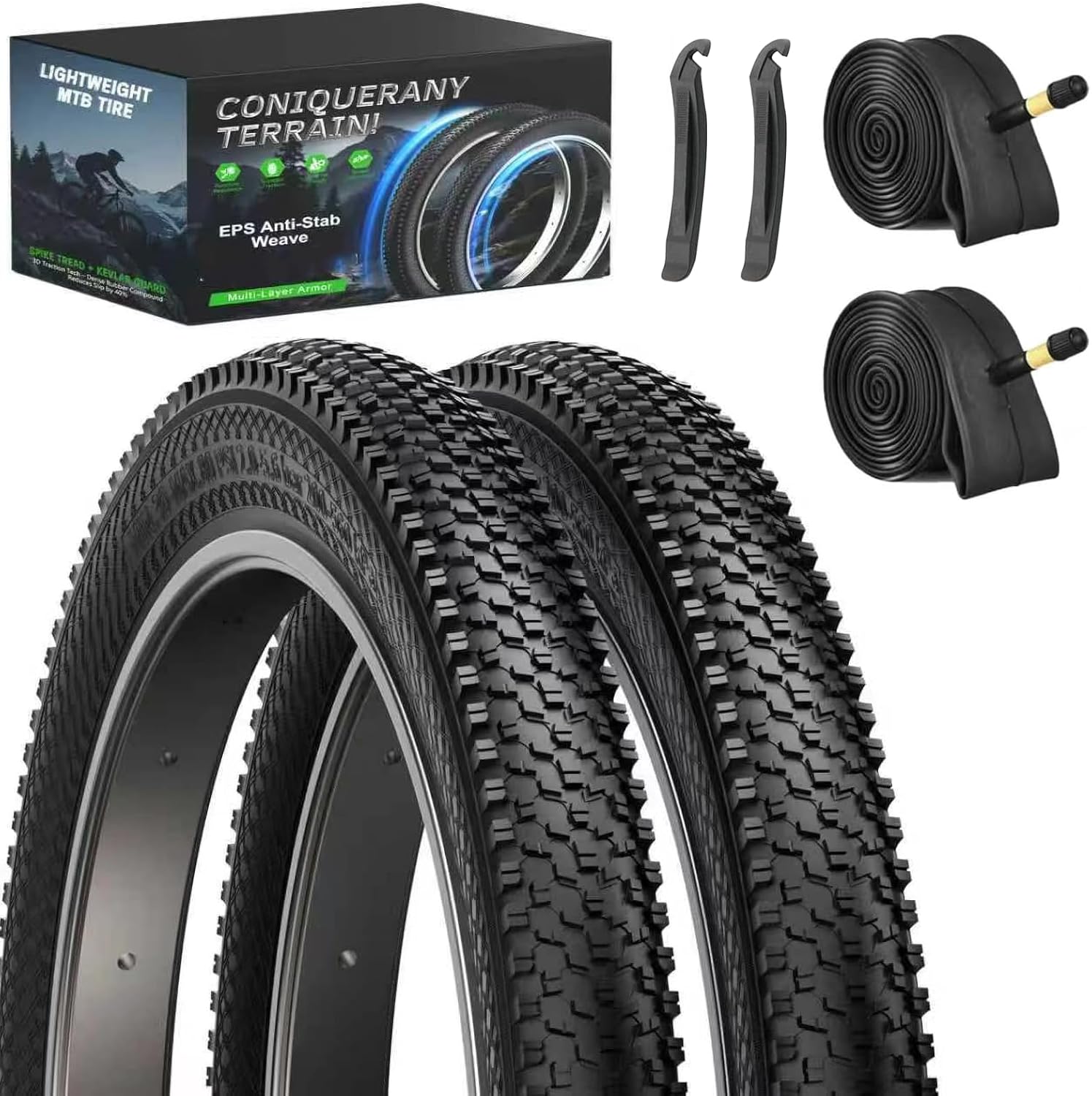
This 2-pack set includes two folding mountain bike tires, two inner tubes, and two tire levers for quick, budget-friendly replacements. The tires feature an anti-stab weave for added protection, plus strong grip and durable construction to help you stay stable across common trail and road conditions. Foldable design makes storage and travel convenient, while the included tubes provide a matched fit for smoother setup.

Upgrade your ride with a 2-pack set of 26x1.95 folding mountain bike tires built for dependable traction on mud, rocks, and trail surfaces. A reinforced puncture-resistant layer helps protect against sharp debris, while included butyl inner tubes provide strong sealing and shock absorption. Ready for fast swaps with included tire levers and universal sizing for most bikes.
Why Folding Bike Tires Are Worth It
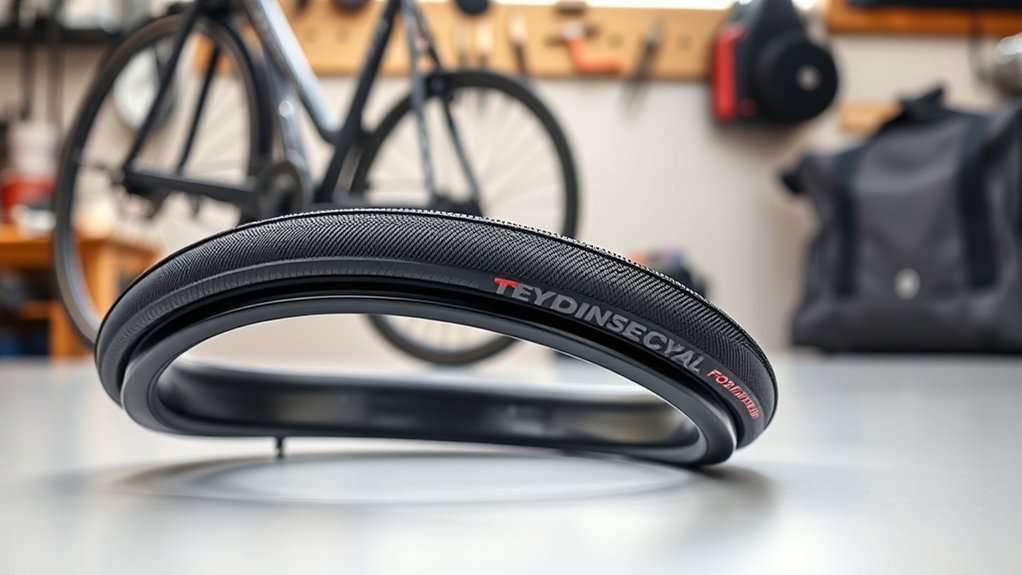
Folding bike tires are worth it when you value weight savings, packability, and ride feel more than the lowest possible price. They make the most sense for riders who travel with a bike, carry a spare tire on long tours, race, commute daily, or want a higher-quality casing.
Lighter Race Performance
Weight at the outer edge of the wheel affects how the bike feels when you accelerate, climb, and change direction. A lighter folding tire can make a bike feel quicker, especially when the tire also uses a supple casing and efficient tread. The difference is not magic, but riders who care about performance often notice it.
- Lower rotating mass can make starts and accelerations feel sharper.
- More supple casings can improve comfort and road feel on many premium models.
- Compact spare storage helps racers and touring riders carry a backup without bulky gear.
Easier Packing and Carrying
A folding tire is much easier to pack than a wire bead tire. You can coil it into a bag, pannier, suitcase, or workshop drawer without fighting the tire’s round shape. That helps when you commute, travel by train, fly with a bike, or keep a spare tire at work.
| Benefit | Result | Best use case |
| Flexible bead | Folds into a smaller shape | Bikepacking, touring, and travel |
| Lower bulk | Easier to store in a bag or drawer | Commuting and apartment storage |
| Lighter construction | Less weight to carry | Long rides and spare-tire kits |
Worth the Higher Cost
A folding tire is usually not the cheapest option. You pay more for the flexible bead, lighter build, and often better casing. That extra cost makes sense if you ride often, travel with your bike, want a compact spare, or care about a more responsive ride.
It may not be worth the extra money if you ride casually, replace tires only once in a while, or simply need a basic tire for short neighborhood trips. In that case, a good wire bead tire can still be a smart choice.
Top Folding Bike Tires by Riding Style
Your best folding tire depends on where you ride. Do not choose by brand name alone. Start with size and compatibility, then match the tread and casing to your surface.
| Riding style | What to look for | Why it helps |
| Road and racing | Low rolling resistance, light casing, smooth tread | Improves speed, acceleration, and road feel |
| Commuting | Puncture belt, reflective sidewall, durable tread | Reduces flats and improves daily reliability |
| Gravel and mixed paths | Wider casing, light tread blocks, tubeless-ready option | Adds grip, comfort, and control on loose surfaces |
| Mountain biking | Stronger casing, sidewall protection, terrain-specific tread | Improves traction and protects against trail damage |
| Touring | Long-wear rubber, high puncture protection, proven casing | Handles luggage, mileage, and remote repairs better |
For winter riding, choose a tire designed for cold, wet, or icy conditions. If you need studs, confirm frame clearance because studded tires can run wider than their printed size.
[Products Worth Considering]
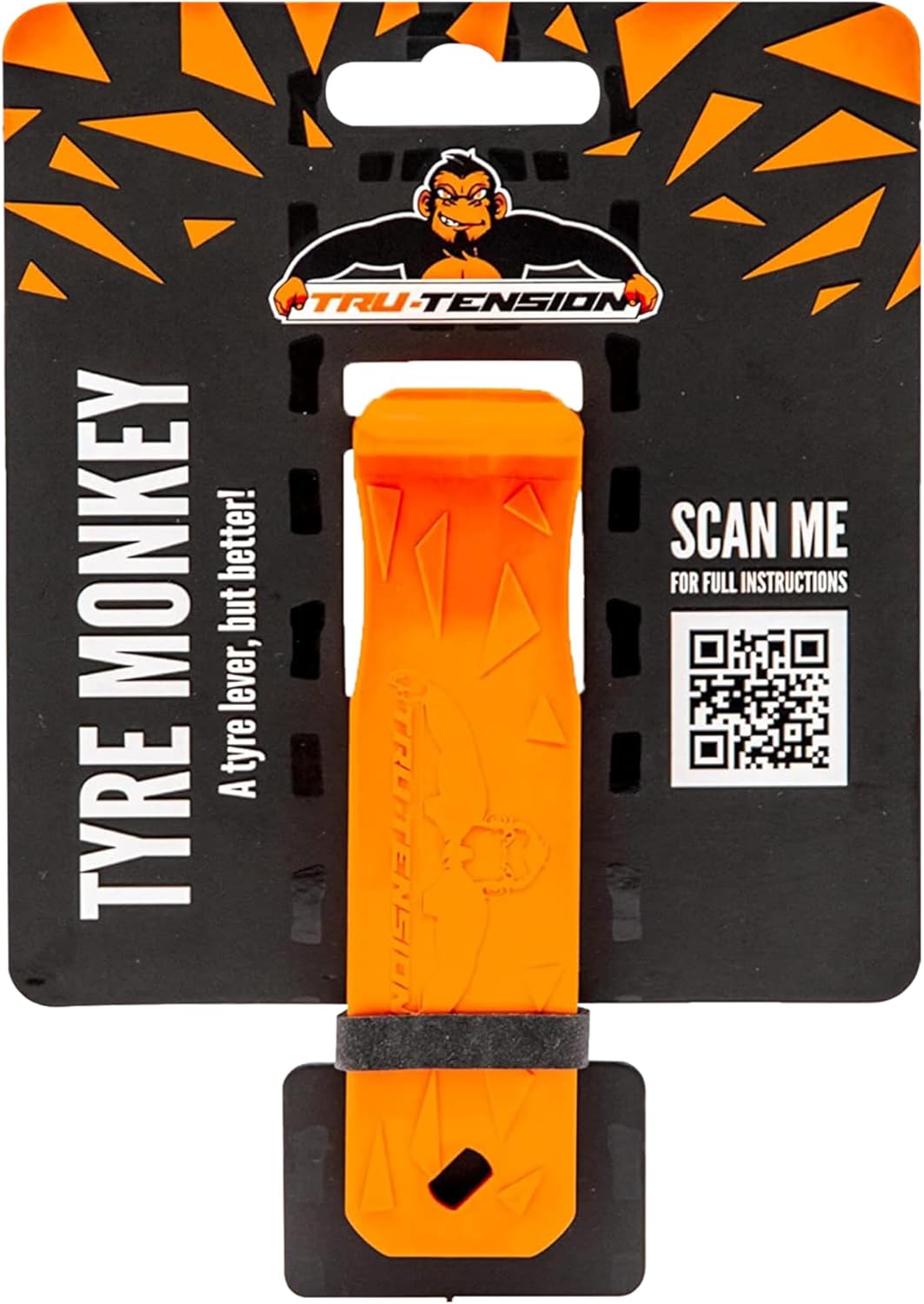
The Tru-Tension Tyre Monkey is a revolutionary bicycle tyre lever that makes removing and fitting tires fast and easy. Its innovative geometry helps keep your hand at a 90-degree angle to the wheel to reduce the risk of hitting spokes, and the design is optimized to use only one tool instead of multiple conventional levers. Compact and durable, it’s built for convenient carry and reliable tire changes on the go.

This Hycline 2-pack mountain bike tire set delivers durable, puncture-resistant performance with a high-grip, aggressive tread designed for traction on hard surfaces and confident handling through mud and soil. Includes matching inner tubes and tire levers for easier everyday maintenance and quicker installation after folding storage. Built for a range of riding conditions with reinforced rubber and nylon cord for wear-resistant reliability.

The TOOLITIN floor bike pump delivers high pressure performance with an easy-to-read gauge so you can dial in the right tire pressure for safer rides. It is compatible with both Presta and Schrader valves and features a stable, durable design for efficient pumping. Suitable for road, MTB, and hybrid tires as well as inflating sports balls and other inflatables, it also includes ball and bladder needles and convenient accessory storage.
Which Folding Tire Fits Your Bike?
To fit your bike safely, the folding tire must match your rim and leave enough room in the frame, fork, brakes, and fenders. Do not buy by appearance or by the “20-inch,” “26-inch,” “27.5-inch,” “29-inch,” or “700c” label alone. Older size labels can be confusing, while the ETRTO size is more precise.
[Products Worth Considering]

The Park Tool TL-1.2 tire lever set is narrow, strong, smooth, and versatile for easy tire removal and reliable work on bike tires. It includes a spoke hook design to help when multiple levers are needed. With Park Tool’s industry-standard reputation, this set is ideal for fast flat-fix repairs.

Switch to tubeless with this Muc-Off rim tape designed to create an airtight seal for smooth-running setups. The pressure-sensitive adhesive offers the right stretch for strength and durability, while the semi-transparent material helps you locate the valve hole quickly. It includes four seal patches for a secure finishing seal after wrapping.

This heavy-duty bicycle rim liner provides complete tube protection by shielding the inner tube from rim spoke holes and sharp metal burrs that can cause flats. Made from premium, wear-resistant PVC, it lays flat with optimized 18 mm width and 0.50 mm thickness for edge-to-edge coverage. Installation is quick with flexible stretch placement and a secure, non-slip fit.
Tire Size Compatibility
Look for the ETRTO marking on your current tire sidewall. It usually looks like 37-622, 40-406, or 28-451. The first number is the tire width in millimeters. The second number is the tire’s inner diameter, which must match the rim’s bead-seat diameter. Schwalbe explains this sizing system in its tire size guide.
- Match the second ETRTO number exactly. A 406 tire does not fit a 451 rim, even if both may be marketed as 20-inch sizes.
- Choose a safe width. The tire width must suit the rim’s inner width and leave frame, fork, brake, and fender clearance.
- Check pressure limits. Follow the tire sidewall and rim manufacturer limits. Use the lower maximum if the tire and rim show different limits.
- Confirm tube or tubeless setup. A folding tire can be tube-type, tubeless-ready, or tubeless-specific depending on the model.
Warning: Do not set up a folding tire tubeless unless both the tire and rim are approved for tubeless use. For hookless or straight-side rims, follow the rim maker’s tire list and pressure limits. Schwalbe says hookless or straight-side rims should only be combined with compatible TLE/TLR tires from its range.
Bike Type Match
After size, match the tire to how you ride. A fast road tire may feel great on smooth pavement but wear quickly on rough city streets. A tough commuter tire may last longer but feel heavier than a race tire.
| Bike type | Best folding tire traits | Avoid |
| Road bike | Low rolling resistance, correct pressure range, smooth tread | Tires wider than your frame, fork, or brake clearance allows |
| Gravel bike | Wider casing, mixed-surface tread, tubeless-ready option | Narrow slicks on loose or rocky routes |
| Mountain bike | Trail casing, sidewall protection, terrain-specific knobs | Light race casings on sharp rocks unless you accept the risk |
| Commuter or touring bike | Puncture belt, durable tread, reflective sidewall | Ultra-light tires with little flat protection for daily use |
How to Install a Folding Bike Tire
At a Glance
| Time Required | 10-20 minutes for most tube-type installs; longer for tight tubeless setups |
| Difficulty | Easy to moderate |
| Tools Needed | Clean hands, floor pump with gauge, matching tube if tube-type, optional plastic tire lever, and tubeless supplies only if the tire and rim are tubeless-compatible |
| Cost | No extra cost if you already have tools; tire, tube, sealant, or rim tape costs vary by setup |
Before you inflate a folding bike tire, unfold it and let it relax into a round shape. Check the rotation arrow on the sidewall if the tread is directional. Then inspect the rim tape, valve hole, and rim bed. A damaged rim strip can puncture a tube even when the tire is installed correctly.
- Seat the first bead by hand. Start opposite the valve and work evenly around the rim.
- Add the tube if needed. Inflate the tube just enough to hold its shape, then place it inside the tire without twists.
- Align the valve. Keep the valve straight through the rim hole before closing the second bead.
- Finish the second bead carefully. Work both sides toward the valve. Use a plastic tire lever only if needed, and avoid pinching the tube.
- Inflate in stages. Add a little air, check both sidewalls, then continue until you reach the correct pressure range.
- Inspect the bead line. Make sure the tire sits evenly all the way around both sides before riding.
Pro Tip: If the last section of bead feels too tight, push the already-mounted bead into the deepest center channel of the rim. That gives the final section more slack and reduces the chance of pinching the tube.
Common Folding Tire Problems and Fixes
Most folding tire problems come from size mismatch, poor bead seating, tube pinches, or pressure mistakes. Use these checks before you assume the tire is defective.
- The tire will not seat evenly: Deflate it, push both beads into the rim center channel, add a little soapy water to the bead if needed, then inflate slowly while watching the sidewall line.
- The tube keeps puncturing near installation: Check for pinches, sharp rim tape edges, exposed spoke holes, glass, wire, thorns, or a tire lever mark.
- The tire feels too loose: Stop. Recheck the ETRTO size. A wrong bead-seat diameter is unsafe.
- The tire rubs the frame or fender: Choose a narrower tire or adjust the fender only if the frame still has safe clearance.
- A tubeless setup leaks at the bead: Confirm the tire and rim are tubeless-compatible, refresh sealant if needed, and follow the rim and tire manufacturer instructions.
- The ride feels harsh or unstable: Recheck pressure with a gauge. Schwalbe recommends following the sidewall range and not exceeding the minimum or maximum pressure limits shown on the tire or rim.
Frequently Asked Questions
What does folding mean in bike tires?
Folding means the tire uses a flexible Kevlar, aramid, or similar bead instead of a rigid steel wire bead. That lets you fold or coil the tire for storage and transport. Once installed on the correct rim and inflated properly, it functions like a clincher tire.
Are folding bike tyres easier to fit?
They can be easier to fit because the bead is flexible, but it depends on the tire, rim, and tubeless design. Some tubeless-ready road tires fit tightly. Start by hand, push the bead into the rim’s center channel, and use a plastic tire lever carefully only when needed.
What is the difference between clincher and folding bike tires?
A folding tire is usually a type of clincher tire. The better comparison is folding bead versus wire bead. A wire bead clincher uses a steel bead and keeps its round shape. A folding clincher uses a flexible bead that can fold for storage and often weighs less.
Are foldable bike tires tubeless?
Some foldable bike tires are tubeless-ready, but not all of them are. Check the sidewall and product label for terms such as tubeless-ready, TLR, TLE, TR, or UST. You also need a compatible tubeless rim, valve, rim tape, sealant, and pressure limit.
Do folding bike tires puncture more easily?
Not automatically. Puncture resistance depends on the tread, casing, sidewall protection, pressure, and riding surface. A lightweight race folding tire may trade protection for speed, while a commuter folding tire may include a strong puncture belt.
Can you fold a folding tire after using it?
Yes, but clean and dry it first. Avoid sharp creases, long-term crushing, or storing it near heat, oil, solvents, or direct sunlight. Coil it loosely so the bead and casing keep their shape for the next installation.
Conclusion
A folding bike tire is a smart upgrade when you want a lighter tire, easier storage, and a spare that packs cleanly for travel or long rides. It uses a flexible bead instead of a steel wire bead, but it still needs the right rim size, tire width, pressure range, and setup type.
Choose a folding tire when portability, performance, or ride quality matters. Choose a wire bead tire when budget matters more and you do not need compact storage. Before you ride, check the ETRTO size, inspect the bead seat, confirm pressure limits, and make sure the tire sits evenly around the rim.
Sources
- Schwalbe Tire Types — folding tire, clincher tire, tubeless tire, and tubeless-ready explanations
- Schwalbe Tire Sizes — ETRTO sizing and why older inch labels can be unclear
- Schwalbe Tire Dimensions — tire-to-rim diameter, width, and compatibility guidance
- Schwalbe Tire Pressure — pressure checks, sidewall limits, and pressure effects
- Schwalbe Tubeless Racing Bike Requirement — hookless rim and TLE/TLR compatibility guidance
- Park Tool Tire and Tube Removal and Installation — practical tire mounting and tube installation guidance
