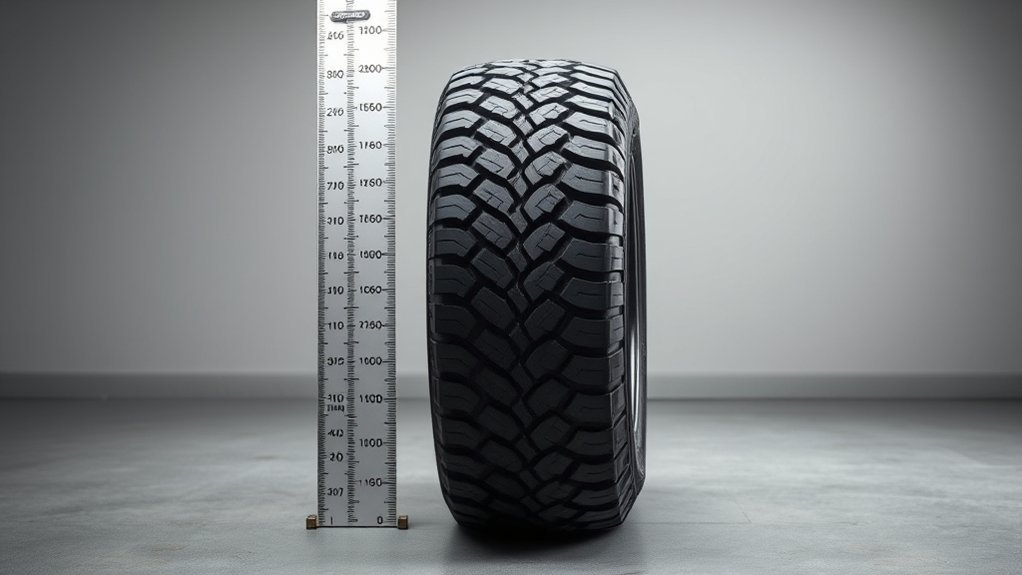
A 315/75R16 tire is about 34.6 inches tall, about 12.4 inches wide, and designed for a 16-inch wheel. The sidewall is roughly 9.3 inches tall because 75% of 315 mm equals 236.25 mm, or about 9.3 inches. Many people call this size a “35,” but it is really a 35-inch-class tire, not a guaranteed true 35-inch tire.
Quick Answer
A 315/75R16 tire is roughly 34.6 inches tall, 12.4 inches wide, and fits a 16-inch wheel. Its sidewall is about 9.3 inches. It is often grouped with 35-inch tires, but real specs and loaded height can vary by tire model, wheel width, pressure, and vehicle weight.
Key Takeaways
- A 315/75R16 tire calculates to about 34.6 inches tall and 12.4 inches wide.
- The sidewall is about 9.3 inches because the aspect ratio is 75% of 315 mm.
- This size is close to a 35×12.50R16, but it is not always a true 35-inch tire.
- Many LT315/75R16 tires use an 8- to 11-inch wheel range, but some models list a narrower approved range.
- Always confirm tire specs, load rating, wheel width, offset, and vehicle clearance before you buy.
What Is a 315/75R16 Tire?
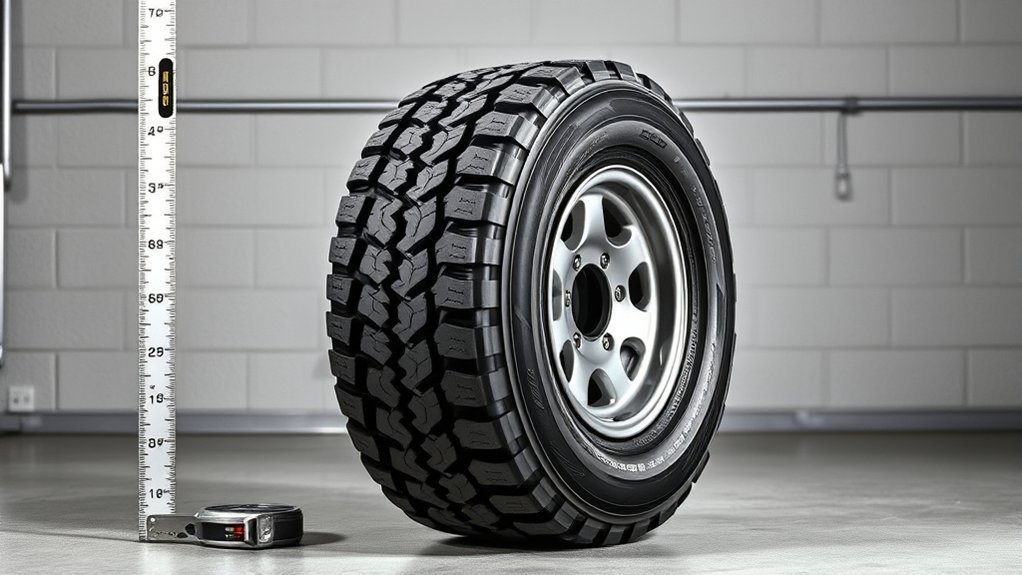
A 315/75R16 tire is a metric light-truck tire size. The “315” means the tire’s nominal section width is 315 millimeters. The “75” means the sidewall height is 75% of that width. The “R” means radial construction, and “16” means the tire fits a 16-inch wheel.
When you convert the size, the tire is about 12.4 inches wide and about 34.6 inches tall. That makes it popular on heavy-duty trucks, lifted trucks, and off-road builds that need more ground clearance and a wider footprint.
Note: Tire-size math gives you a close theoretical number. Published specs can still vary by tire model, tread design, measuring rim, and manufacturer tolerance.
How Big Is a 315/75R16 Tire?
A 315/75R16 tire calculates to about 34.6 inches tall, 12.4 inches wide, and 9.3 inches of sidewall. You can get those numbers with simple tire-size math.
| Section width | 315 mm ÷ 25.4 = about 12.4 inches |
| Sidewall height | 315 mm × 0.75 = 236.25 mm, or about 9.3 inches |
| Overall diameter | 16 inches + 9.3 inches + 9.3 inches = about 34.6 inches |
| Wheel diameter | 16 inches |
| Common wheel width range | Often 8 to 11 inches, but always check the exact tire model |
That size gives you a tall sidewall, more ground clearance than many stock truck tires, and a wider stance than narrower 33-inch options. It also adds weight and size, so you should plan for clearance, gearing, braking feel, and spare-tire storage.
Why 315/75R16 Tires Rarely Measure 35 Inches
A 315/75R16 is usually called a 35-inch-class tire because it sits close to that category. Still, the math puts it at about 34.6 inches, not a full 35.0 inches. That small difference matters when you are checking fender clearance, garage height, spare-tire fit, and gearing.
Published tire specs also do not always match the height you see on a mounted vehicle. Tire manufacturers measure dimensions under controlled conditions, often on a specified measuring rim. Once the tire supports vehicle weight, the loaded radius is lower than the unloaded overall diameter.
| Tread design | Aggressive tread blocks can change published diameter and tread width. |
| Measuring rim | A wider or narrower wheel can change the tire’s mounted shape. |
| Vehicle load | The tire compresses under the truck, so loaded height is lower than unloaded diameter. |
| Inflation pressure | Pressure affects shape and loaded radius. Use the vehicle placard or tire maker guidance. |
| Brand and model | Two tires with the same size code can list different section widths, tread widths, and rim-width ranges. |
A 315/75R16 is best treated as a 35-inch-class tire with a calculated diameter near 34.6 inches, not as a guaranteed true 35-inch tire.
How a 315/75R16 Compares to 33-Inch Tires
A 315/75R16 is taller and wider than a true 33-inch tire. If your current tire is close to 33 inches tall, moving to 315/75R16 can add roughly 1.5 inches of total tire diameter. Since half of that increase sits below the axle, the ground-clearance gain is usually around 0.75 inch before load and tread differences.
You also get a wider section width. That can improve stance and off-road footprint, but it may also increase steering effort, road noise, tire weight, and rubbing risk.
| 315/75R16 diameter | About 34.6 inches calculated |
| 315/75R16 width | About 12.4 inches calculated |
| Compared with 33s | Taller, wider, heavier, and more likely to need clearance checks |
| Best reason to upgrade | More ground clearance, stronger stance, and more off-road sidewall |
[Products Worth Considering]

This 62-inch extra-long car wash brush kit makes it easy to clean hard-to-reach areas on cars, trucks, SUVs, and RV roofs with lightweight, sturdy poles. It includes soft, non-scratch microfiber and bristles with protective bumpers to help prevent scratches while cleaning effectively. A rubber squeegee helps remove water stains quickly, plus a wheel/tire brush and absorbent towels for complete exterior detailing.

Malco tire mounting and demounting lubricant is a ready-to-use tire lube formulated to reduce friction during tire installation for passenger cars, light trucks, farm tires, and heavy-duty equipment. It provides rust-inhibiting protection to help reduce corrosion on rims and wheels, and helps support proper tire bead seating during inflation to reduce air leakage. The silicone-free, soap-free formula is whitewall safe to help prevent discoloration on whitewall tires and sensitive sidewall markings.

Upgrade your 2024-2026 Tesla Model 3 Highland with REEVAA all-weather mud flaps designed for seamless fit along the original body lines. The set of four delivers strong splash protection against mud, gravel, and road debris while using OEM-grade durable materials. Installation is non-destructive with original hole positions and snap-in clips, and the aerodynamic design helps minimize impact on efficiency.
How a 315/75R16 Compares to True 35s
A 315/75R16 is close to a 35×12.50R16, but the two labels do not always mean identical physical size. A 35×12.50R16 uses inch-based sizing and often targets the 35-inch class directly. A 315/75R16 uses metric sizing and calculates to about 34.6 inches tall.
In real shopping, you should compare the exact specs for the model you want. For example, current LT315/75R16 listings for popular all-terrain tires often show an overall diameter around 34.6 inches, while section width and approved rim width can vary by model.
Manufacturer Spec Examples for 315/75R16
Use the size code for a quick estimate, then check the exact tire model before you order. The examples below show why model-specific specs matter.
| Tire model example | Listed diameter | Section width | Rim width range |
|---|---|---|---|
| BFGoodrich All-Terrain T/A KO3 LT315/75R16 | 34.6 inches | 12.3 inches | 8 to 11 inches |
| Falken WildPeak A/T4W LT315/75R16 | 34.6 inches | 12.7 inches | 8 to 11 inches |
| Toyo Open Country A/T III LT315/75R16 | 34.6 inches | 12.3 inches | 8 to 10.5 inches |
Those examples show the main lesson: the size code gives you the category, but the exact tire model gives you the number you should use for fitment.
Will a 315/75R16 Fit a Stock Truck?
A 315/75R16 may fit some stock heavy-duty trucks, but you should never assume it fits every stock truck. The tire is tall and wide, so clearance depends on your truck’s model year, trim, suspension height, wheel width, offset, backspacing, fender liner shape, and how much the suspension compresses.
Warning: Before changing tire size, check your owner’s manual, tire placard, wheel rating, load rating, and clearance. If you are unsure, ask a qualified tire shop to test fit the tire before road use.
Use this checklist before buying:
- Check wheel width: Make sure your wheel falls inside the tire maker’s approved rim-width range.
- Check offset and backspacing: A wider tire can rub control arms, sway bars, fender liners, or bumper edges.
- Turn lock to lock: Check both directions at full steering lock.
- Check compression clearance: A tire that clears while parked may rub when the suspension compresses.
- Confirm load rating: Match or exceed the load capacity your truck requires.
- Plan for the spare: A 34.6-inch tire may not fit the factory spare location.
- Review speedometer and gearing: A larger tire changes effective gearing and rolling distance.
[Products Worth Considering]

This metal-free wheel and tire cleaning brush uses dense, fluffy synthetic wool to safely clean rims, spokes, fenders, and engine areas without worrying about damaging surfaces. Its flexible, comfortable design helps you reach detailed areas while maintaining durability, and the extra absorbent fibers work well with wheel spray cleaners for faster cleanup. Reusable and washable performance helps prevent grime and build-up for cleaner vehicles and easier maintenance at home.

This manual duck head tire changer kit makes tire installation and removal simpler by letting you embed the duck head into the tire with applied pressure. The integrated design and durable steel construction help reduce friction and improve efficiency and safety during use. Suitable for 16–21 inch wheels, it’s convenient for cars, trucks, SUVs, and ATV tires, with 24-hour after-sales support.

Replace worn or missing TPMS sensors with a pre-programmed 4-pack designed for compatible GM vehicles. These 315MHz sensors provide real-time tire pressure monitoring and alert you if pressure is too high, too low, or if a rapid air leak occurs. Most installations are ready with minimal relearn effort after mounting, helping improve safety and driving confidence.
Speedometer, Gearing, and Ride Changes
When you move to a taller tire, the tire travels farther with each rotation. That can make the speedometer and odometer read differently if your truck was calibrated for a smaller tire.
You may also notice slower acceleration, more braking effort, and more strain on factory gearing. Many trucks can handle the change, but the effect becomes more noticeable when the new tire is much taller or heavier than stock.
Pro Tip: Compare your current tire’s diameter with 34.6 inches before you buy. The percentage difference tells you how much your speedometer, gearing feel, and shift behavior may change.
What Wheel Width Works Best for 315/75R16 Tires?
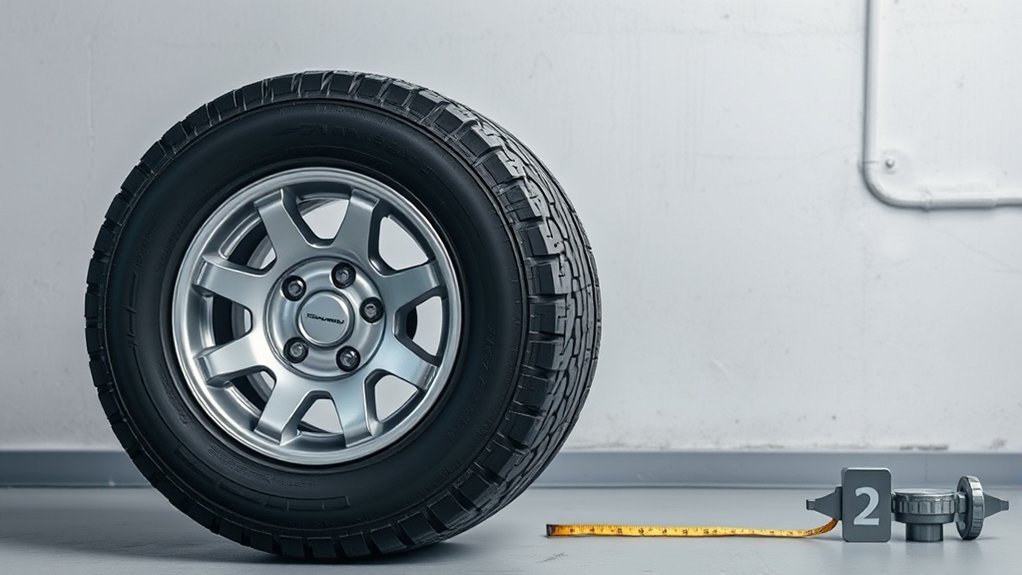
Many 315/75R16 tires work on wheels from about 8 to 11 inches wide, with 8.5 or 9 inches often used as the measuring or balanced fitment width. However, you should treat that as a starting point, not a universal rule. Some LT315/75R16 tires list a slightly different range, such as 8 to 10.5 inches.
[Products Worth Considering]

This professional wheel and rim cleaning brush set lifts brake dust, grime, and dirt with soft, scratch-free microfiber and synthetic wool fibers. The rim brush bends up to 360 degrees for easy access to hard-to-reach areas around spokes, lips, and faces. Ideal for thorough cleaning of car, truck, motorcycle, bicycle, RV, and more wheel and tire surfaces.

The Big Rig Defense Tire Thumper is a truck tire pressure checker that lets you quickly check multiple tires by giving them a firm whack. Listen for a reassuring thump and feel the stick bounce when a tire is fully inflated, helping you get back on the road safely. It features a comfortable, glove-friendly handle and a secure wrist strap for confident use on busy routes.
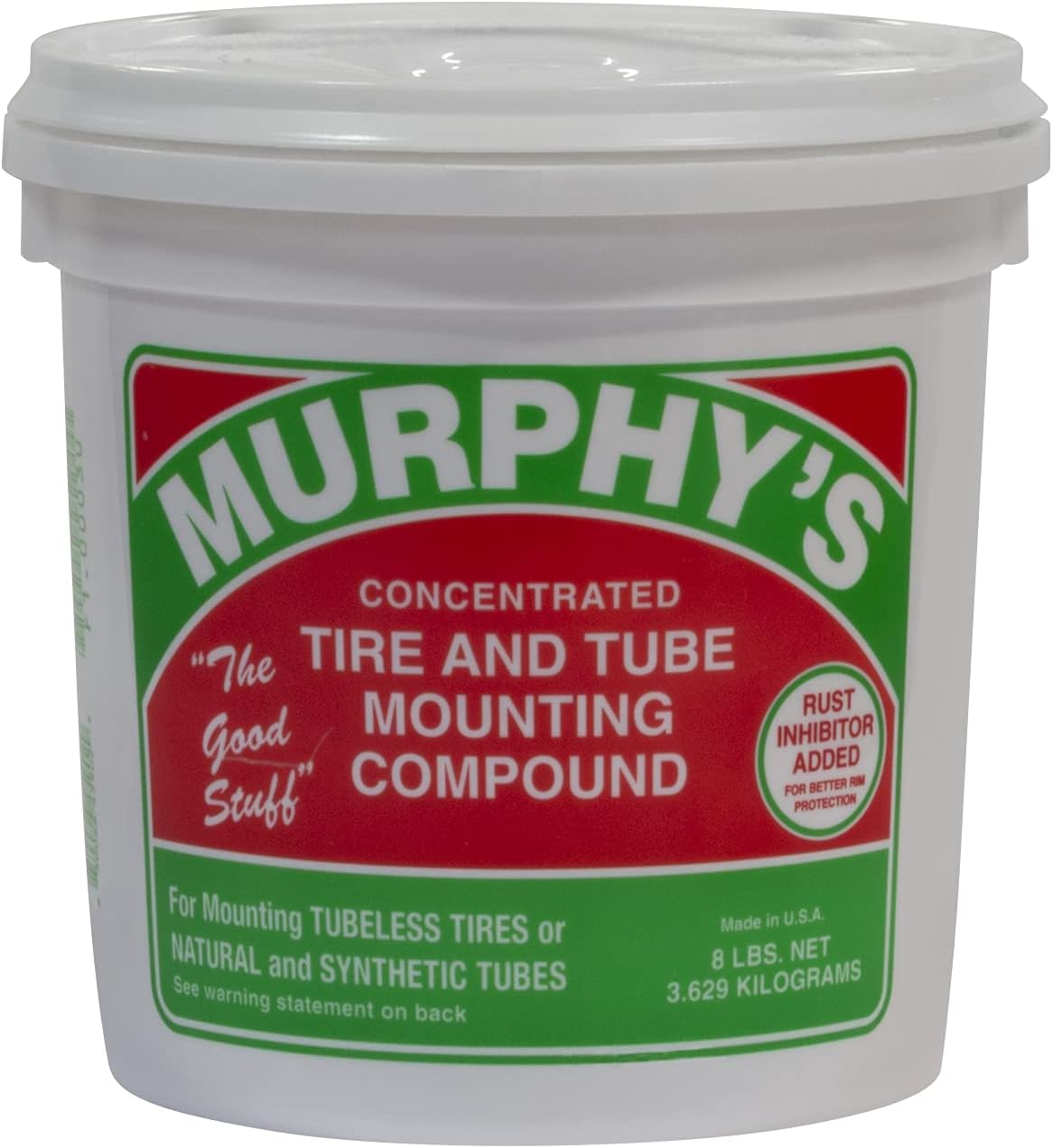
A concentrated tire and tube mounting compound designed to help simplify mounting rubber tires and tubes on passenger, semi truck, construction, and OTR applications. Its ultra-thick formula packs beads effectively and includes rust inhibitors to help protect against corrosion during use.
Recommended Wheel Width
For most 315/75R16 fitments, an 8.5- or 9-inch-wide wheel gives a strong balance of sidewall support, bead seating, steering response, and tread shape. A wheel that is too narrow can pinch the tire and crown the tread. A wheel that is too wide can flatten the tire profile and expose the sidewall more.
Always check the tire maker’s approved rim-width range before mounting. If your wheel is outside that range, a tire shop may refuse installation, and the setup may not perform safely.
Fitment and Handling
Wheel width affects more than appearance. It changes how the sidewall supports the tread and how the tire responds when you steer, brake, tow, or drive off-road. Wider wheels can sharpen steering but may increase rubbing risk. Narrower wheels can protect the bead better off-road but may reduce tread stability on pavement.
Offset and backspacing matter just as much as wheel width. A tire can clear on one 16×8 wheel and rub badly on another 16×8 wheel if the offset moves the tire too far inward or outward.
Tire Measurement Variance
Published tire dimensions are measured under controlled conditions. Once mounted on your truck, the tire’s visible height can change because of load, pressure, tread wear, and the wheel used. This is why you should use manufacturer specs for planning, then test fit and measure your actual setup before assuming full clearance.
To measure your tire after installation, park on level ground, set pressure to the proper cold value, and measure from the ground to the top of the tread. Then check clearance at the front bumper, rear of the fender liner, sway bar, control arms, and any mud flaps.
Frequently Asked Questions
Is 315/75R16 the same as a 35?
Not exactly. A 315/75R16 calculates to about 34.6 inches tall, so it is close to a 35-inch tire but not a true 35.0-inch tire. Many people call it a 35 because it belongs in the 35-inch tire class.
Is a 315 tire equal to a 35?
A 315 tire can be close to a 35, but the full size code matters. A 315/75R16 is about 34.6 inches tall. A 315/70R17, 315/70R18, or 315/75R17 will calculate differently because the aspect ratio and wheel diameter change the total height.
What is 315/75R16 equivalent to?
A 315/75R16 is commonly compared with a 35×12.50R16 because it is about 34.6 inches tall and about 12.4 inches wide. Still, equivalent does not mean identical. Always compare the actual tire model’s published diameter, section width, tread width, and approved wheel range.
Is 315 a 37-inch tire?
No. A 315/75R16 is much closer to a 35-inch tire than a 37-inch tire. It calculates to about 34.6 inches tall. If you want a true 37-inch setup, you need a tire size specifically listed near 37 inches in the manufacturer’s specs.
What wheel width do I need for 315/75R16?
Many 315/75R16 tires use an approved wheel-width range around 8 to 11 inches, but it depends on the tire model. Some models list 8 to 10.5 inches. Check the tire maker’s exact spec sheet before mounting.
Will 315/75R16 tires affect my speedometer?
Yes, they can if they are taller than your original tires. A taller tire travels farther per rotation, so your speedometer and odometer may read differently. Compare the new diameter with your factory tire diameter and recalibrate if needed.
Conclusion
A 315/75R16 tire is about 34.6 inches tall, about 12.4 inches wide, and built for a 16-inch wheel. It is close to a 35×12.50R16, but you should treat it as a 35-inch-class tire rather than a guaranteed true 35.
Before you buy, check the exact tire model’s published specs, approved rim-width range, load rating, and clearance on your truck. That extra homework helps you avoid rubbing, speedometer error, poor handling, and an expensive fitment mistake.