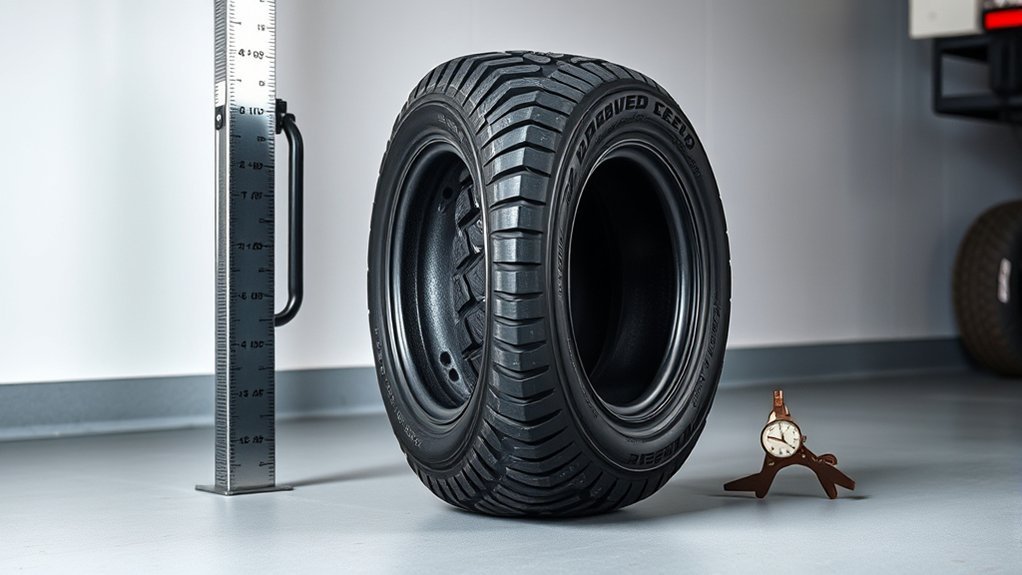
A 315/75R16 tire is a large light-truck tire that measures about 34.6 inches tall, 12.4 inches wide, and fits a 16-inch wheel. The exact mounted size can vary by tire model, rim width, tread depth, and inflation pressure, so use these numbers as a sizing baseline before you check real-world fitment.
Quick Answer
A 315/75R16 tire is about 34.6 inches tall, 12.4 inches wide, and has a sidewall height of about 9.3 inches. In metric terms, that is roughly 878 mm overall diameter, 315 mm section width, and 236 mm sidewall height.
Key Takeaways
- A 315/75R16 tire is commonly treated as a near-35-inch tire, but its nominal diameter is closer to 34.6 inches.
- The 315 means the section width is 315 mm, or about 12.4 inches.
- The 75 aspect ratio gives it a sidewall height of about 236 mm, or 9.3 inches.
- The R means radial construction, and the 16 means it fits a 16-inch wheel.
- Before installing this size, check wheel width, offset, fender clearance, steering lock, brake clearance, load index, and speed rating.
315/75R16 Tire Size Explained
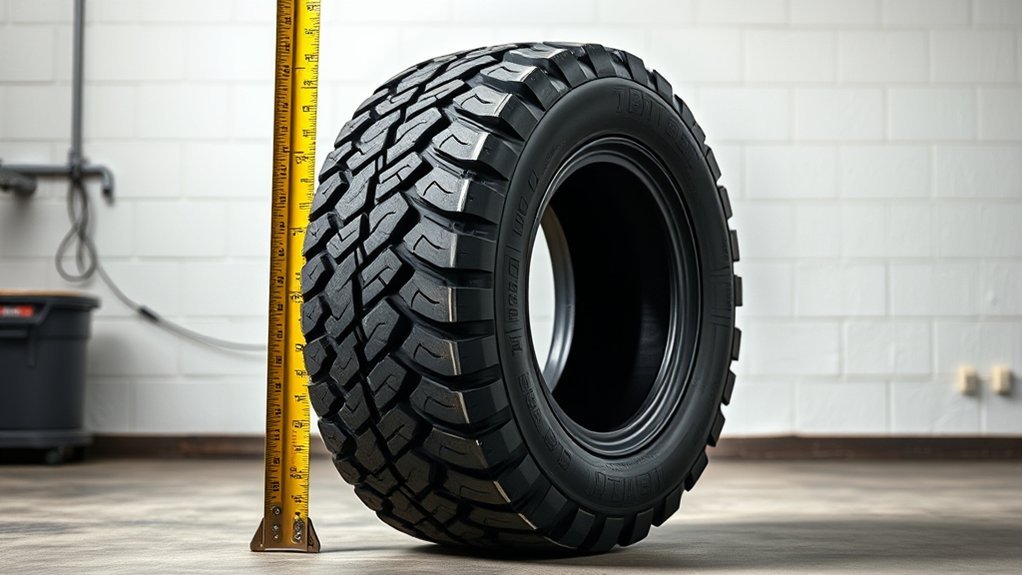
A 315/75R16 tire gives you four key details in one code. The 315 is the section width in millimeters. The 75 is the aspect ratio, which means the sidewall height equals 75% of the tire width. The R means radial construction, and the 16 means the tire fits a 16-inch wheel.
You can calculate the basic size with a simple formula. First, multiply 315 mm by 0.75 to get a sidewall height of 236.25 mm. Then double that sidewall height and add the 16-inch rim diameter. After conversion, the result is about 878 mm, or 34.6 inches, in total diameter.
Note: Tire-size math gives you a nominal measurement. Real mounted height can change slightly by manufacturer, tread pattern, tread depth, rim width, load range, and inflation pressure.
For a source-backed sizing reference, TireSize.com lists 315/75R16 tires at about 34.6 inches in diameter, 12.4 inches in section width, and 108.7 inches in circumference. Bridgestone’s tire-size guide also explains that aspect ratio is the sidewall height expressed as a percentage of tire width.
How Tall Is a 315/75R16 Tire?
A 315/75R16 tire is about 34.6 inches tall, or about 878 mm, when you calculate the nominal overall diameter. That puts it close to a 35-inch tire, although it is not exactly 35 inches.
The height comes from the sidewall and wheel diameter together. Each sidewall is about 9.3 inches tall, and the wheel is 16 inches across. Add two sidewalls plus the wheel diameter, and you get the total tire diameter.
| Measurement | Value |
|---|---|
| Overall diameter | About 34.6 in / 878 mm |
| Sidewall height | About 9.3 in / 236.25 mm |
| Wheel diameter | 16 in / 406.4 mm |
| Circumference | About 108.7 in |
| Revolutions per mile | About 583 revs/mile |
This height affects more than stance. A taller tire can change ride height, effective gearing, braking feel, acceleration, and speedometer accuracy. If you are moving up from a smaller stock tire, compare the new diameter against your original tire size before you install it.
How Wide Is a 315/75R16 Tire?
A 315/75R16 tire is about 315 mm wide, or roughly 12.4 inches. This number refers to section width, not always the exact tread width. Section width measures the tire from sidewall to sidewall when mounted on a specified measuring rim.
Width in Millimeters
The width is 315 millimeters. This helps you compare fender clearance, wheel offset, suspension clearance, and body mount clearance when you move to a larger tire.
| Spec | Value |
|---|---|
| Section width | 315 mm |
| Approx. width | 12.4 in |
| Aspect ratio | 75% |
| Wheel diameter | 16 in |
Width in Inches
In inches, 315 mm converts to about 12.4 inches. This is why many drivers compare 315/75R16 tires with 35×12.50R16 tires. They are close in diameter and width, but they are not always identical once mounted.
That extra width can help traction on dirt, sand, mud, and rock, but it can also create rubbing if your wheel offset, fender clearance, or suspension travel does not allow enough room. Always check the tire at full steering lock and through suspension compression, not just while the vehicle is parked straight.
315/75R16 Size in Inches and Millimeters
You can read a 315/75R16 tire in both metric and inch measurements. The metric code gives you the width, aspect ratio, construction, and wheel diameter. The inch conversion helps you compare it to common off-road tire sizes.
Tire Size Breakdown
Here is the simplest breakdown:
| Part of Size | Meaning | Result |
|---|---|---|
| 315 | Section width | 315 mm / about 12.4 in |
| 75 | Sidewall is 75% of width | 236.25 mm / about 9.3 in |
| R | Radial construction | Common modern tire construction |
| 16 | Wheel diameter | 16 in / 406.4 mm |
Inches to Millimeters
For quick conversion, 315 mm is about 12.4 inches. The 236.25 mm sidewall is about 9.3 inches. A 16-inch rim is 406.4 mm. Put those together, and the total diameter is about 878 mm, or 34.6 inches.
Overall Diameter and Width
The overall diameter controls ride height, gearing change, and speedometer change. The width controls side clearance, fender clearance, and steering clearance. You need both numbers before you decide whether this tire fits your vehicle.
A 315/75R16 is best understood as a near-35-inch tire, not a true 35-inch tire. Use 34.6 inches as your planning number unless the tire manufacturer lists a different mounted diameter.
What Fits a 315/75R16 Tire?
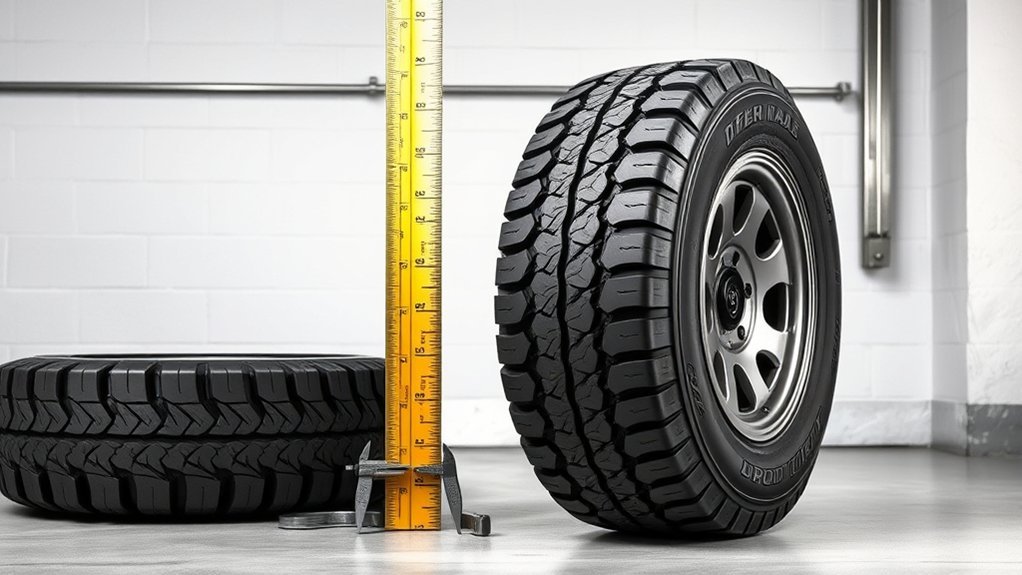
A 315/75R16 tire fits a 16-inch wheel. Many 315/75R16 listings use an approved rim-width range of about 8 to 11 inches, but you should always verify the exact tire model. For example, General Tire lists its Grabber A/TX LT315/75R16 with an approved rim width of 8.0 to 11.0 inches, Load Range E, and a 34.6-inch tire diameter.
Fitment also depends on your vehicle, not just the tire size. A tire can fit the wheel and still rub the fender liner, bumper, mud flap, control arm, body mount, or sway bar. Wheel offset and backspacing matter because they move the tire inward or outward.
Warning: Do not choose a replacement tire by diameter alone. Match or exceed the vehicle’s required load index and speed rating, confirm proper inflation, and check physical clearance before driving. Michelin explains that load and speed ratings must be respected when replacing tires.
[Products Worth Considering]

Measure tire tread depth quickly and accurately with this LUMITECO dial gauge that reads in 1/32" increments up to 14/32". The color-coded green/yellow/red zones make it easy to judge tire wear and know when replacement is needed. A rugged, compact design with a protective pouch helps keep the gauge ready for use on cars, trucks, motorcycles, and more.

The SAFELIFE dial tire tread depth gauge measures tread depth in 1/32 inch increments with clear, easy-to-read 2-inch dial face. Color zones using a traffic light system help you quickly judge whether tread is low, marginal, or ample for safer driving. Built with a durable zinc cast body and a metal detect probe for precise, comfortable use across cars, motorcycles, trucks, and buses.

Measure tyre tread depth precisely with a digital gauge that reads in both MM and inches, helping you monitor safe driving conditions. The large LCD screen is easy to operate, and the compact tool fits for cars, trucks, and motorcycles. It provides high accuracy with a 0-25.4mm range and includes a 1-year warranty for added peace of mind.
Fitment Checklist Before Installing 315/75R16 Tires
- Wheel diameter: The tire must mount on a 16-inch wheel.
- Wheel width: Check the tire maker’s approved rim-width range before mounting.
- Offset and backspacing: Confirm the tire clears suspension and body parts.
- Fender clearance: Check the tire with the steering turned both directions.
- Suspension compression: Make sure the tire clears when the suspension moves upward.
- Brake clearance: Verify the wheel and tire setup clears calipers and brake hardware.
- Spare tire storage: A 34.6-inch tire may not fit the factory spare location.
- Load index and speed rating: Use ratings that meet or exceed your vehicle requirements.
- Speedometer change: Compare the new tire diameter with your original tire size.
Pro Tip: If you are upgrading from stock tires, test fit one front tire first. Turn the steering wheel fully left and right, then check the front and rear of the wheel well for rubbing.
Is a 315/75R16 the Same as a 35×12.50R16?
A 315/75R16 is very close to a 35×12.50R16, but the two sizes are not always identical. A 315/75R16 is usually about 34.6 inches tall and 12.4 inches wide. A 35×12.50R16 is generally described as 35 inches tall and 12.5 inches wide.
In real-world shopping, many drivers group these sizes together because they are close. Still, you should compare the manufacturer’s measured diameter, section width, approved rim width, load range, and tread depth before treating them as interchangeable.
Common 315/75R16 Alternatives
The closest common flotation-size comparison is 35×12.50R16. If you are changing wheel diameter, sizes such as 275/80R17 or 285/75R18 can land near the same overall diameter, but they require different wheels and may not match the same width or load rating.
Avoid using a tire as an “equivalent” just because the diameter is close. Width, wheel diameter, load rating, speed rating, and clearance all matter. A wider metric size may match the height but still rub badly or require a different wheel setup.
[Products Worth Considering]

This professional wheel and rim brush kit makes it easy to lift brake dust, grime, and dirt from wheels and tires without scratching finishes. The brushes feature soft, metal-free wool heads and a flexible 360-degree rim brush design for reaching hard-to-clean areas. Includes multiple brush types plus accessories for thorough car, motorcycle, and general vehicle detailing.

Accurately measure tire tread depth with a calibrated gauge marked from 0 to 1 inch in 1/32 inch increments. The color-coded bar helps you quickly identify tread condition ranges, supporting safe driving for trucks, motorcycles, automobiles, and passenger vehicles.

Mount your spare tire off the floor and onto your wall using an e-track spare tire carrier that helps you stay organized in trailers, garages, and warehouses. The upgraded double-fittings design improves stability versus single-fittings and supports greater load bearing. Install by snapping into e-track anchor points and securing the tire with a lug-nut style bolt setup for quick, secure storage.
Best 315/75R16 Tires to Compare
When you compare 315/75R16 tires, start with how you drive. A mud-terrain tire gives more bite in mud and loose terrain, but it may ride louder on pavement. An all-terrain tire is usually the better choice if your truck or SUV spends most of its time on roads with occasional trails.
| Tire Type | Best For | What to Check |
|---|---|---|
| All-terrain | Daily driving, gravel roads, mild trails, mixed weather | Road noise, wet traction, snow rating, treadwear warranty |
| Hybrid terrain | Drivers who want stronger trail grip without going full mud-terrain | Void spacing, sidewall protection, road manners |
| Mud-terrain | Mud, rocks, ruts, off-road traction | Noise, wet braking, tread life, weight, balancing |
For real examples, the General Grabber A/TX is an all-terrain option with LT315/75R16 sizing and Load Range E in its official spec list. The Mickey Thompson Baja Legend EXP is a hybrid all-terrain option with a 50,000-mile treadwear warranty listed by the manufacturer. The Hankook Dynapro AT2 Xtreme is positioned as an all-terrain tire with added off-road shoulder and sidewall features.
Do not choose only by brand or tread pattern. Compare the exact 315/75R16 specification sheet for diameter, measured section width, load index, speed rating, tread depth, tire weight, approved rim width, and warranty terms.
[Products Worth Considering]

Mount your spare tire directly to the inside wall of an enclosed trailer or garage to save space and keep your tire secure. This wall-mount spare tire carrier is designed for universal trailer tire fit and includes a fixed plate and chute for convenient screw replacement. Nylon insert hex lock nuts help prevent the tire from falling off, and wing hardware enables faster load and unload during maintenance.

ETENWOLF T300 is a calibrated digital tire pressure gauge for accurate readings from 3 to 200 PSI across light and heavy-duty vehicles. It includes thermal compensation for reliable performance in extreme cold or heat, with an auto shut-off to extend battery life and an LED for easier reading. The sturdy design supports rugged everyday use, making it ideal for pickups, RVs, and industrial applications.

The Kurgo Seasonal Tire Tote helps protect your car interior, clothes, and garage from tire grime, brake dust, and residue during seasonal tire changes. Its universal design fits most passenger tires between 22" and 31" in diameter, making storage and transport simpler with less mess. Built for rugged, repeated use, it’s machine washable for easy care and comes with a lifetime warranty.
Frequently Asked Questions
Is 315/75R16 a 35-inch tire?
Yes, many people call a 315/75R16 a 35-inch tire, but it is usually closer to 34.6 inches tall. It is a near-35-inch size, not a true 35. Always check the manufacturer’s listed diameter for the exact tire model.
Is a 315 tire equal to a 35?
Not exactly. In 315/75R16, the 315 tells you the tire width in millimeters. The full size calculates to about 34.6 inches tall, so it is commonly rounded up and compared with 35-inch tires.
What is 315/75R16 equivalent to?
The closest common flotation-size comparison is 35×12.50R16. Still, it is not a perfect match for every tire model. Compare actual diameter, section width, approved rim width, load rating, and speed rating before using one size in place of another.
Is 315 a 37-inch tire?
No. A 315/75R16 tire is about 34.6 inches tall, not 37 inches. If you want a true 37-inch tire, you need a tire size that is specifically listed near 37 inches in measured diameter.
What rim width do you need for 315/75R16 tires?
Many 315/75R16 tires list an approved rim-width range around 8 to 11 inches, but the exact range depends on the tire model. Always confirm the approved rim width from the tire manufacturer before mounting.
Will 315/75R16 tires affect my speedometer?
They can. If 315/75R16 is taller than your factory tire, your vehicle may travel faster than the speedometer shows. Compare the new diameter with your original tire size and recalibrate if needed.
Conclusion
A 315/75R16 tire gives you a large footprint: about 34.6 inches tall, 12.4 inches wide, and 9.3 inches of sidewall. It is close enough to a 35-inch tire that many drivers compare the two, but you should still use the real manufacturer specs before buying.
For safe fitment, check more than diameter. Match the wheel size, approved rim width, load index, speed rating, offset, fender clearance, steering clearance, and suspension travel. That extra checking helps you avoid rubbing, poor handling, inaccurate speedometer readings, and unsafe load mismatch.
Sources
- TireSize.com 315/75R16 tire size data — backs overall diameter, section width, circumference, revolutions per mile, and general rim-width range.
- Bridgestone tire-size guide — backs the explanation of aspect ratio and tire-size code structure.
- NHTSA TireWise — backs tire safety guidance, tread-depth awareness, and regular tire checks.
- Michelin load rating and speed rating guide — backs load-index and speed-rating replacement guidance.
- General Tire Grabber A/TX specifications — backs an example LT315/75R16 spec listing with Load Range E and approved rim width.
- Mickey Thompson Baja Legend EXP — backs product-line positioning and treadwear warranty reference.