
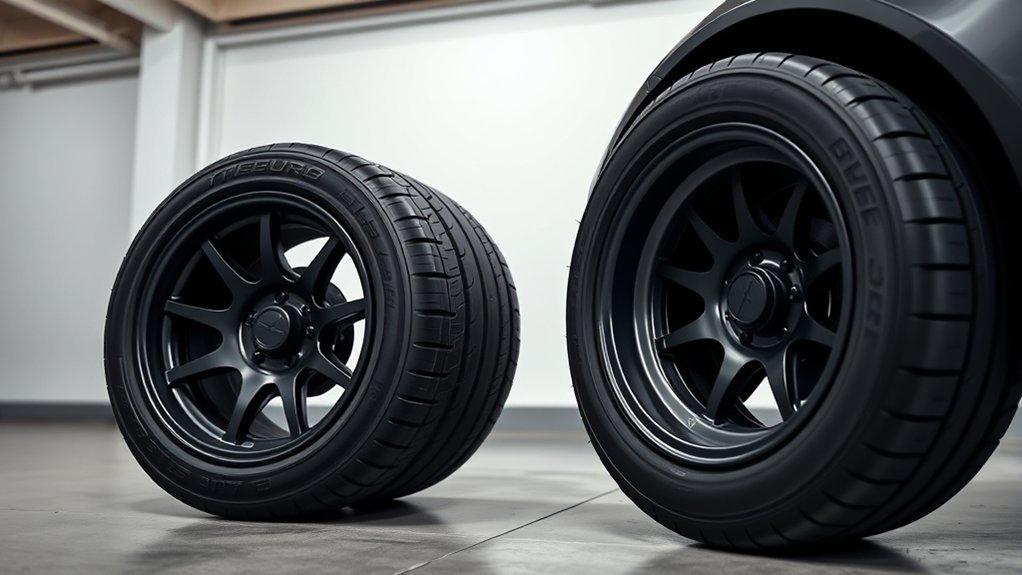
305 and 315 tires differ first in their nominal section width: a 315 is 10 mm wider than a 305. But width alone does not tell you which tire will fit better or perform better. The full tire size, wheel width, offset, overall diameter, load rating, suspension clearance, tire construction, and vehicle manufacturer’s recommendations all matter. A properly matched 315 can provide a wider footprint and strong dry-performance potential, while a 305 may offer easier packaging and more clearance on the same vehicle.
Quick Answer
A 315 tire is nominally 10 mm, or about 0.39 inch, wider than a 305 tire. That does not automatically mean more grip, better handling, or a larger usable load capacity. Compare the complete tire sizes, approved wheel widths, overall diameter, load index, clearance, and vehicle specifications before switching between them.
Key Takeaways
- The 305 and 315 numbers describe nominal section width, so the basic difference is 10 mm.
- A 315 may need more inner and outer clearance, but actual tire width depends on the specific tire and wheel combination.
- Neither size is automatically better for grip or steering because compound, construction, tread, wheel width, pressure, and vehicle setup also matter.
- Changing width can also change overall diameter when the aspect ratio stays the same.
- Before changing sizes, confirm approved rim width, load capacity, speed rating, diameter, clearance, and vehicle-manufacturer requirements.
What Makes 305 and 315 Tires Different?
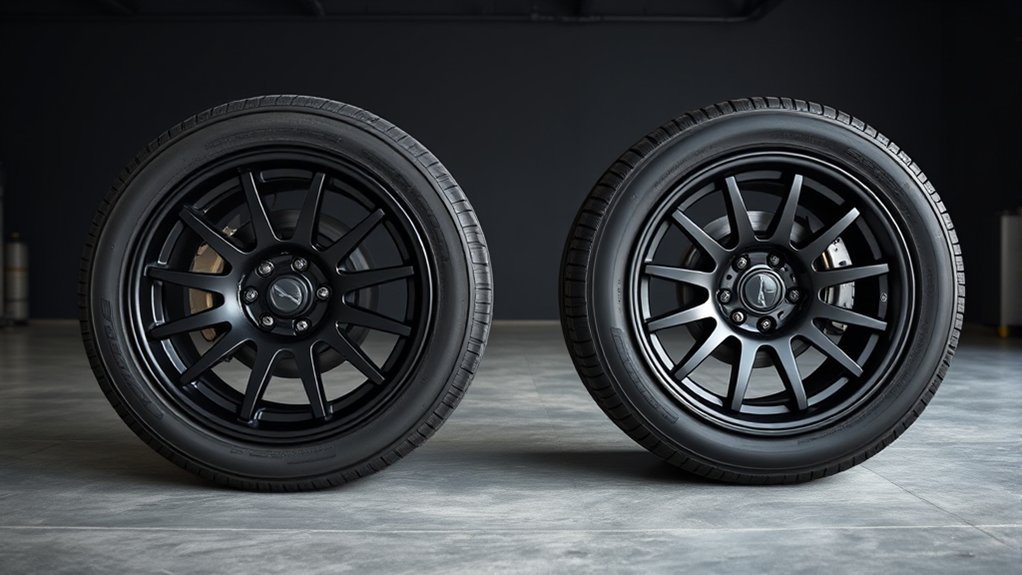
At a glance, 305 and 315 tires differ by 10 mm in nominal section width. In a metric tire size such as 305/35R20, the first number is the nominal width in millimeters, the second is the aspect ratio, and the final number identifies the wheel diameter. Michelin explains these basic sidewall markings in its tire-size guidance.
That means you cannot compare two tires safely from the 305 and 315 numbers alone. A 305/70R17 and a 305/30R20 share the same nominal section width, for example, but their sidewall heights, overall diameters, wheel requirements, and intended applications are very different.
A 315 tire can create a wider footprint than a comparable 305 when both are installed correctly, but width by itself does not guarantee a larger total contact area, more traction, a higher load capacity, or better handling. Contact-patch shape and pressure distribution also respond to inflation pressure, load, tire construction, rim width, and operating conditions.
The same caution applies to steering response and rolling resistance. A specific 305 may feel lighter or more responsive than a specific 315, but tire compound, carcass stiffness, tread design, wheel width, inflation, alignment, and unsprung weight can change the result.
Note: The number molded into the tire size is a nominal dimension, not a promise that every tire labeled 305 or 315 will measure exactly that width on every wheel. Always check the dimensional specifications for the exact tire model and size you plan to install.
305 Vs 315 Tires: Size And Width Compared
When the rest of the size designation is comparable, the obvious difference is width: 315 is 10 mm wider than 305. That equals about 0.39 inch.
However, section width is only one part of the tire’s dimensions. You also need the aspect ratio and rim diameter to estimate sidewall height and overall diameter.
Tire Width Difference
The “305” or “315” is the tire’s nominal section width in millimeters. It does not mean the tread itself is exactly 305 or 315 mm wide, and it does not tell you the tire’s overall diameter.
Actual mounted dimensions can vary by tire model and wheel width. This is one reason manufacturers publish approved rim-width ranges and measured dimensions for each specific tire size.
In visual terms, a comparable 315 will normally have a somewhat fuller stance than a 305. Whether that difference is useful depends on the vehicle and the rest of the tire specification.
Why the Full Tire Size Matters
Consider a size such as 305/35R20:
- 305 = nominal section width in millimeters
- 35 = sidewall height as a percentage of section width
- R = radial construction
- 20 = wheel diameter in inches
If you change only the first number from 305 to 315 while keeping a 35 aspect ratio, the sidewall also becomes taller because 35% of 315 is greater than 35% of 305. So the tire’s overall diameter changes too.
Overall Diameter Example
You can estimate the diameter of a metric tire with this formula:
Overall diameter ≈ wheel diameter + 2 × (section width × aspect ratio ÷ 100 ÷ 25.4).
Using that calculation:
| Size | Approx. Sidewall | Approx. Diameter |
|---|---|---|
| 305/35R20 | 106.8 mm | 28.41 in. |
| 315/35R20 | 110.3 mm | 28.68 in. |
In this example, the 315/35R20 is about 0.28 inch taller, or roughly 1% larger in diameter. That example cannot be applied to every 305-versus-315 comparison because changing the aspect ratio or wheel diameter changes the result.
Michelin notes in its plus-sizing guidance that tire and wheel diameter changes can affect vehicle gearing, braking, speedometer readings, traction control, and stability-control systems.
Fitment And Clearance
Fitment can become tighter with a 315 because its nominal section width is 10 mm greater. If everything else were equal and the tire widened symmetrically, that would represent roughly 5 mm of additional width on each side, but real mounted dimensions depend on the wheel and tire design.
| Check | What Changes With a 315? |
|---|---|
| Inner clearance | May decrease |
| Outer clearance | May decrease or increase tire poke |
| Wheel width | Must fall inside the exact tire manufacturer’s approved range |
| Overall diameter | May change depending on aspect ratio |
| Vehicle compatibility | Must be verified rather than assumed |
A 305 can provide more clearance in a tight wheel well, but you should still measure and verify the complete setup. Check wheel offset, backspacing, suspension components, brake clearance, inner liners, fender edges, steering lock, and suspension compression.
Also check the approved rim-width range for the exact tire. Michelin notes that rim width affects sidewall shape and tire response, so mounting a tire simply because it can physically be stretched onto a wheel is not a safe fitment standard. See Michelin’s rim-width guidance.
Will 315 Tires Fit Your Vehicle?
A 315 tire fits only when the complete tire size, wheel specification, load capacity, and available clearance are compatible with the vehicle. The fact that it is only 10 mm wider than a 305 does not establish compatibility.
Warning: Do not install a 315 solely because the wheel diameter matches your existing tire. NHTSA recommends using the original tire size or another size recommended by the vehicle manufacturer. A non-approved change can affect clearance, load capacity, handling, speedometer accuracy, and electronic vehicle systems.
NHTSA tire-safety guidance recommends purchasing replacement tires that are the same size as the original tires or another size recommended by the vehicle manufacturer. USTMA similarly advises checking the correct size, load index, speed rating, and load-carrying capacity.
Before moving from a 305 to a 315, verify:
- The complete tire size, not just section width
- The exact tire’s approved rim-width range
- Wheel diameter, width, offset, and backspacing
- Inner suspension and brake clearance
- Outer fender and liner clearance
- Clearance at full steering lock
- Clearance through suspension compression
- Load index and load-carrying capacity
- Speed rating required by the vehicle
- Overall tire diameter and circumference
- Manufacturer restrictions for AWD, 4WD, ABS, and stability-control systems
Fitment can vary by model year, trim, brake package, suspension height, wheel specification, and modifications. A 315 that fits one version of a vehicle may rub or be unsuitable on another.
[Products Worth Considering]

This universal wheel alignment tool helps you accurately restore tire tilt angles after tire or suspension repairs using an adjustable camber gauge. It features a powerful magnetic base that firmly attaches to brake rotors for stationary, slip-free readings, improving consistency during measurement. Built from durable PC plastic, it resists wear and corrosion and is compact enough for car, truck, RV, and motorcycle alignment tasks.

Keep your tires properly inflated with this analog VONDIOR tire pressure gauge, designed for fast, easy readings without batteries. The swiveling, two-axis hose and large glow dial help you measure at any tire angle with instant visibility. Built with a protective rubber shield, it supports durable, low-maintenance use for cars and trucks.

The SAFELIFE dial tire tread depth gauge measures tread depth in 1/32 inch increments with clear, easy-to-read 2-inch dial face. Color zones using a traffic light system help you quickly judge whether tread is low, marginal, or ample for safer driving. Built with a durable zinc cast body and a metal detect probe for precise, comfortable use across cars, motorcycles, trucks, and buses.
How 305 Vs 315 Tires Affect Handling
Changing from a 305 to a comparable 315 can change steering feel and footprint geometry, but the width increase does not determine handling by itself. Tire compound, tread pattern, sidewall construction, wheel width, inflation pressure, vehicle alignment, suspension geometry, and load all influence the result.
A wider performance tire on the correct wheel may provide strong lateral capability. A different 305 built with a stickier compound or stiffer construction, however, can outperform a less capable 315. Compare complete tire specifications rather than treating section width as a performance rating.
Steering Response
You cannot reliably predict steering response from 305 versus 315 width alone. A narrower setup may feel lighter in some applications, while a wider tire on an appropriately wide wheel can also produce crisp steering because of its sidewall shape and construction.
Michelin specifically notes that wheel width changes sidewall shape and steering behavior. That makes rim compatibility important when comparing two tire sizes.
- Tire construction can change initial turn-in.
- Wheel width changes sidewall support.
- Inflation pressure affects stiffness and response.
- Alignment affects steering feel and stability.
- Additional tire and wheel weight can affect transient response.
If sharp steering is your goal, compare the actual tire model, recommended wheel width, construction, and vehicle-specific testing instead of assuming the 305 must be quicker.
Cornering Grip
A properly selected 315 can provide a wider footprint and may support more dry cornering capability in a performance-oriented setup. But 10 mm of additional nominal width does not guarantee more grip.
Cornering force depends heavily on compound, tread, temperature, load, pressure, tire construction, wheel width, camber, and suspension geometry. SAE research on tire contact patches also shows that contact dimensions and tire-force behavior involve several interacting variables rather than width alone.
This is why a high-performance 305 can easily be a better cornering tire than a touring-oriented 315. Compare like-for-like models whenever possible.
Ride Stability
A 315 may feel broader or more planted on some vehicles, especially when the tire, wheel, alignment, and suspension are designed around that size. It is not automatically more stable at highway speed, however.
- 315: may produce a wider footprint when correctly fitted
- 305: may provide additional wheel-well clearance
- Either: can offer strong high-speed stability with the correct construction and alignment
- Either: must meet the required load capacity
- Either: needs correct cold inflation pressure
Sidewall stiffness, tread construction, wheel width, alignment, and load have a greater role than a simple 10 mm comparison suggests.
Grip And Road Feel Compared
On dry pavement, a wider tire can be part of a higher-grip setup, but the comparison is meaningful only when the tires are otherwise similar and correctly matched to the wheels and vehicle.
A 315 may give the steering a broader or heavier feel on some vehicles. On another setup, differences in casing stiffness or wheel width can make the 315 respond just as quickly—or more quickly—than a particular 305.
Wet performance is even less predictable from width alone. Tread design, tread depth, compound, water-evacuation channels, inflation pressure, vehicle speed, and water depth all matter. Do not choose a 305 or 315 solely on the assumption that one width will always be superior in rain.
Think of 305 and 315 as dimensions, not performance grades. Tire model and vehicle fitment determine what the extra 10 mm actually does.
305 Vs 315 Tires For Street Driving
For daily street use, either size can work well when it is approved for the vehicle. A 305 may be easier to package in a tight wheel well, while a properly fitted 315 can provide the wider stance some drivers want.
You should not assume that a 305 automatically gives better fuel economy or tread life. A wider tire can sometimes add mass, aerodynamic drag, or rolling losses, but actual rolling resistance depends strongly on tire construction, compound, tread, inflation, load, and operating conditions.
- 305: may provide more clearance in a tight fitment
- 305: may weigh less when comparing similar models, but check actual specifications
- 315: provides 10 mm more nominal section width
- 315: may require closer clearance and wheel-width checks
- Both: can work well when the full size and vehicle application are correct
For a road car or truck, prioritize the manufacturer-approved fitment, correct load capacity, wet and dry performance of the specific tire model, ride quality, noise, tread life, and available clearance.
305 Vs 315 Tires For Track And Off-Road Use
For track use, tire compound, temperature behavior, construction, wheel width, alignment, and vehicle balance usually matter more than a 10 mm nominal-width difference. A correctly supported 315 may provide additional width for a high-power application, while a 305 may be preferable when packaging, weight, aerodynamic drag, or class rules matter.
| 305 Tire | 315 Tire |
|---|---|
| 10 mm less nominal width | 10 mm more nominal width |
| May offer more clearance | May require more clearance |
| Can provide excellent track grip with the right compound | Can provide excellent track grip with the right compound |
| May suit tighter packaging | May suit applications needing a wider footprint |
Off-road, wider is not automatically better either. A wider tire can help flotation on some soft surfaces such as sand when the entire tire and pressure setup is appropriate. In other conditions, a narrower footprint can be useful because terrain, tread design, vehicle weight, carcass construction, and inflation pressure determine how the tire interacts with the surface.
For serious trail use, compare the exact tire’s construction, tread pattern, load range, sidewall protection, overall diameter, approved wheel width, and recommended pressure strategy rather than choosing between 305 and 315 based on width alone.
[Products Worth Considering]

The Continental Grand Prix 5000 is an allround road bike tire engineered for faster rolling, improved ride comfort, and enhanced puncture protection. It features a Vectran Breaker cut-protection layer, Lazer Grip micro-profile tread for confident cornering control, and Active Comfort Technology to damp vibration for smoother rides. BlackChili compound optimizes grip and speed for everyday performance and long-lasting confidence.

This 3-piece wheel brush set makes it easy to clean wheels and tires with soft, scratch-free brushes designed for lifting brake dust and grime. The flexible rim brush bends up to 360 degrees to reach hard-to-access areas for a thorough clean, while the comfortable grip helps control during detailing. A dedicated detailing brush supports gentle cleaning for sensitive surfaces, including interior use.

This professional wheel and rim cleaning brush set lifts brake dust, grime, and dirt with soft, scratch-free microfiber and synthetic wool fibers. The rim brush bends up to 360 degrees for easy access to hard-to-reach areas around spokes, lips, and faces. Ideal for thorough cleaning of car, truck, motorcycle, bicycle, RV, and more wheel and tire surfaces.
How To Choose The Right Tire Size
Choosing between 305 and 315 tires starts with your vehicle specifications, not with which number appears more performance-oriented. The safest approach is to establish the approved fitment first and compare performance second.
- Check the door placard and owner’s manual. Confirm the original tire size, load requirements, and recommended cold pressure.
- Check whether the vehicle manufacturer approves an alternate size. NHTSA recommends the original size or another size recommended by the vehicle manufacturer.
- Compare the complete size. Width, aspect ratio, construction, and rim diameter all affect the result.
- Calculate overall diameter. A change can alter speedometer readings, gearing, clearance, and electronic-system behavior.
- Verify the tire manufacturer’s approved rim-width range. Never assume every 305 or 315 fits the same wheel.
- Confirm load capacity and speed rating. Do not infer either from tire width.
- Check wheel offset and backspacing. These determine where the wider tire sits relative to suspension and bodywork.
- Measure clearance. Inspect the setup through steering lock and suspension movement.
- Consider AWD or 4WD requirements. Some drivetrains have strict limits on tire circumference differences.
- Compare the actual tire models. Compound, tread, construction, weight, wet grip, noise, and wear can matter more than the 10 mm difference.
Pro Tip: Look up the manufacturer’s specification sheet for the exact 305 and 315 tires you are considering. Compare measured section width, overall diameter, approved rim range, load index, tire weight, and revolutions per mile instead of relying only on the numbers molded into the size designation.
[Products Worth Considering]

The Ziopetru adjustable magnetic wheel alignment tool helps you check and restore camber and caster positioning after removing and reinstalling undercarriage components. With a clear leveling/bubble measurement system and an easy zeroing adjustment knob, it supports precise horizontal angle checking. The strong magnetic base mounts to metal surfaces for convenient use at home on cars, motorcycles, trucks, vans, and SUVs.

The Topeak SmartGauge D2 delivers precise digital tire pressure readings for bikes, motorcycles, and sports equipment up to 250 psi (17 bar). Its rotating SmartHead works with both Presta and Schrader valves, so you can check pressure quickly without adapters. The LCD display makes it easy to read results in psi, bar, or kg/cm² with an included CR2032 battery for immediate use.

Monitor tire tread wear with a smart, color-coded depth gauge that shows clear condition ranges at a glance. The bar is range marked for fast, easy readings, helping you maintain safer traction and performance. Each gauge is portable with a pocket clip, and the set includes 20 units for daily use and sharing.
Load Index, Speed Rating, And Tire Pressure
A wider tire is not automatically a higher-capacity tire. Compare the load index, load range where applicable, and the tire manufacturer’s published load information. USTMA advises that replacement tires should meet the vehicle or tire manufacturer’s size and load requirements.
The same applies to speed rating. Use a tire that satisfies the requirements specified for the vehicle and application rather than assuming a 315 has a higher rating than a 305.
Do not select inflation pressure based on width alone. NHTSA says the correct pressure for the original approved fitment is the vehicle manufacturer’s recommended cold tire pressure, shown on the tire-information label or in the owner’s manual—not the maximum pressure printed on the tire sidewall. When using an approved alternate size, follow the vehicle/tire manufacturer’s applicable load-and-inflation guidance.
Speedometer, ABS, Stability Control, And AWD
A change in overall diameter changes how far the vehicle travels with each wheel revolution. That can affect speedometer and odometer readings and may influence systems that monitor wheel speed.
Michelin warns that changes in tire or wheel diameter can affect gearing, braking, traction and stability-control systems, and speedometer readings. On AWD and some 4WD vehicles, differences in tire circumference between axles can also conflict with manufacturer requirements.
For that reason, do not rely on a generic “within 3%” internet rule as proof that a replacement size is safe. Check the limits specified by the vehicle manufacturer for your exact vehicle.
Frequently Asked Questions
Can I Rotate 305 and 315 Tires Together?
If your vehicle uses 305 tires on one axle and 315 tires on the other as an approved staggered setup, you generally cannot perform a normal front-to-rear rotation because the sizes are different. Whether side-to-side rotation is allowed depends on the vehicle, tire design, and rotation direction. Follow the owner’s manual and tire manufacturer’s rotation instructions. NHTSA notes that vehicles with different front and rear tire sizes may not permit normal rotation.
Do 315 Tires Cost More Than 305 Tires?
They can, but there is no universal rule. Price depends on brand, tire model, construction, load rating, speed rating, availability, and retailer. Compare the exact 305 and 315 versions of the tire you want rather than assuming the wider size will always cost more.
Which Size Gives Better Fuel Economy?
Neither size is guaranteed to deliver better fuel economy from width alone. A particular 305 may be lighter or have lower rolling resistance than a comparable 315, but compound, construction, tread, inflation pressure, load, wheel weight, aerodynamics, and driving conditions also affect energy use.
Are 305 and 315 Tires Available in the Same Brands?
Often, yes, but availability depends on the complete size and product line. A brand may offer both widths without offering the exact aspect ratio, wheel diameter, load index, or speed rating your vehicle requires. Check the manufacturer’s specifications for the complete size.
Do Tire Pressure Requirements Differ Between 305 and 315 Tires?
They can differ in an alternate-size application, but there is no universal PSI adjustment for changing from 305 to 315. For the original approved fitment, use the vehicle manufacturer’s recommended cold pressure. For an alternate approved tire size, use the applicable vehicle/tire-manufacturer load-and-inflation guidance. Never choose pressure solely from section width or use the tire’s sidewall maximum as the normal operating pressure.
Can I Replace 305 Tires With 315 Tires?
Only if the complete 315 size is approved or otherwise verified as compatible with your vehicle. Check overall diameter, wheel width, load index, speed rating, offset, suspension and fender clearance, and any AWD or electronic-system restrictions. Matching rim diameter by itself is not enough.
Will Switching From 305 to 315 Change My Speedometer Reading?
It can if the overall diameter changes. For example, a calculated 315/35R20 is about 1% larger in diameter than a 305/35R20. Other 305 and 315 combinations can have a smaller or much larger difference depending on aspect ratio and wheel diameter, so compare the complete sizes before installation.
Conclusion
The safest way to compare 305 and 315 tires is to treat the 10 mm width difference as only the starting point. A 305 may give you more clearance, while a properly matched 315 gives you additional nominal width, but neither size automatically wins for steering, grip, stability, fuel economy, load capacity, or off-road traction.
Choose the size that works with your vehicle’s approved specifications, wheel width and offset, overall diameter, load and speed requirements, suspension clearance, and intended use. Then compare the actual tire models for compound, tread, construction, weight, wet performance, ride quality, and wear. If you are departing from the factory size, verify the change with the vehicle or tire manufacturer or a qualified tire professional before installation.
Sources
- National Highway Traffic Safety Administration — TireWise — replacement tire size, tire pressure, and rotation guidance.
- U.S. Tire Manufacturers Association — Replacing Tires — replacement size, load capacity, load index, and speed-rating guidance.
- Michelin — Choosing the Right Tire Size — tire-size notation and effects of changing tire dimensions.
- Michelin — Performance Upgrade and Plus Sizing — wider tire fitments, overall diameter, and vehicle-system considerations.
- Michelin — Tire FAQs — approved rim-width ranges and tire-size guidance.
- SAE International — Experimental Study on Tire Contact Patch Characteristics — contact-patch dimensions, deformation, and vehicle-handling relationships.
