
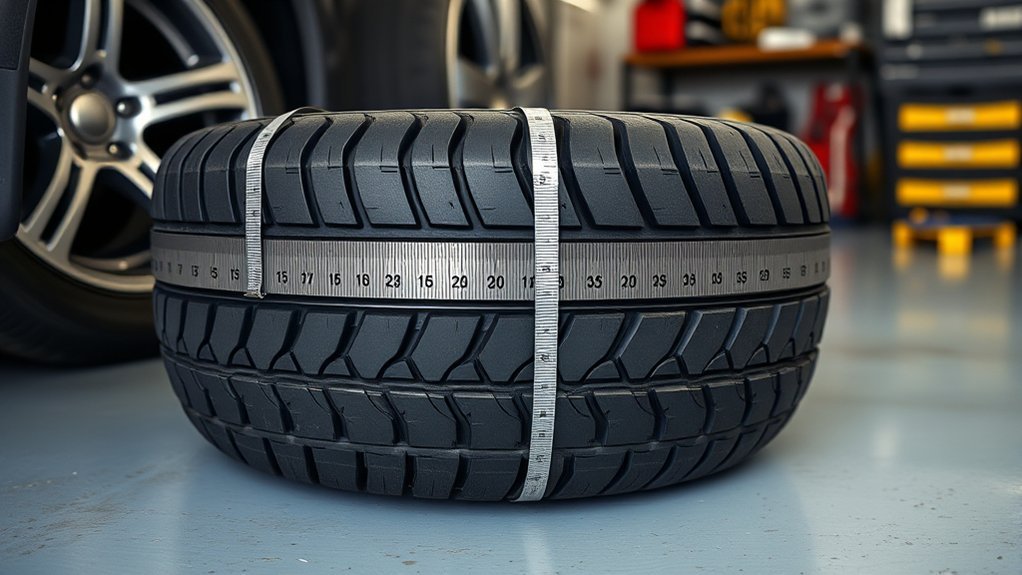
A 295/65R20 tire is about 11.6 inches wide and about 35.1 inches tall overall. That makes it a true 35-inch-class truck tire, but the full size matters. The “295” only tells you the section width in millimeters, while “65” sets the sidewall height and “20” means it fits a 20-inch wheel.
Quick Answer
A 295/65R20 tire measures about 11.6 inches wide, 35.1 inches tall, and 7.5 inches from rim to tread on each sidewall. Its circumference is about 110.2 inches, with roughly 575 revolutions per mile. Actual mounted size can vary slightly by tire model and rim width.
Key Takeaways
- A 295/65R20 is about 35.1 inches tall and 11.6 inches wide.
- The sidewall height is about 7.5 inches, because 65% of 295 mm is 191.75 mm.
- Compared with a 275/65R20, it is about 1 inch taller and about 0.8 inch wider.
- It is close to a 35-inch tire, but narrower than a typical 35×12.50R20.
- Before mounting this size, check clearance, wheel offset, rim-width range, load index, tire pressure, and your vehicle’s Tire and Loading Information Label.
What Does 295/65R20 Mean?
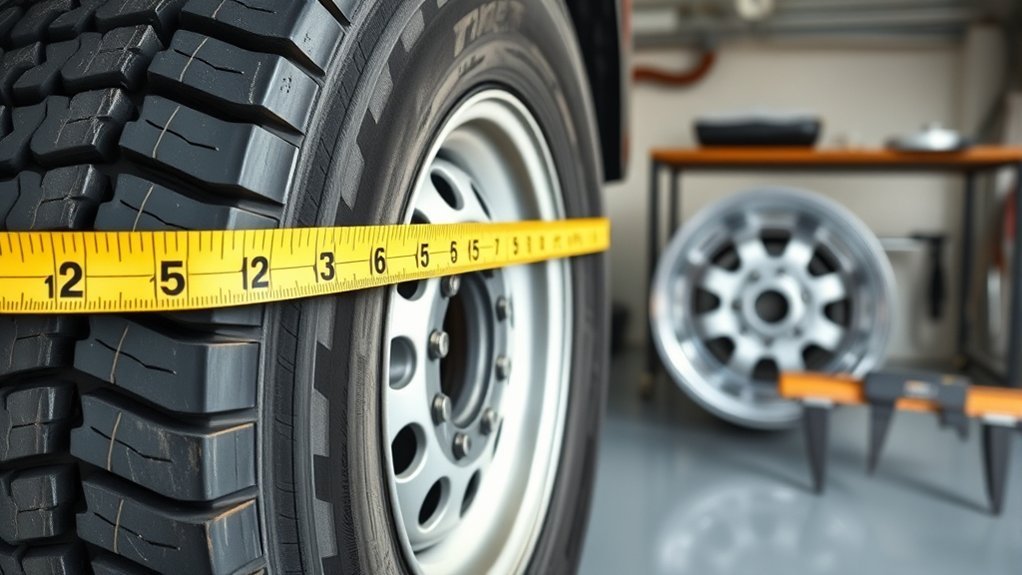
A tire code like 295/65R20 gives you the main size details in one line:
- 295 means the tire’s section width is 295 millimeters, or about 11.6 inches.
- 65 means the sidewall height is 65% of the tire’s section width.
- R means radial construction, the common construction type for modern truck and SUV tires.
- 20 means the tire fits a 20-inch wheel diameter.
The key point is that 295 by itself is not the tire height. It is only the width. To find the full tire diameter, you need the width, aspect ratio, and wheel diameter together.
Note: Actual mounted diameter can vary slightly by brand, tread depth, tire type, air pressure, and measuring rim width. Use the tire maker’s spec sheet when exact clearance matters.
295/65R20 Dimensions in Inches
| Dimension | Approximate Measurement | How It Is Found |
|---|---|---|
| Overall diameter | 35.1 inches | 20 + 2 sidewalls |
| Section width | 11.6 inches | 295 mm ÷ 25.4 |
| Sidewall height | 7.5 inches | 295 × 0.65 ÷ 25.4 |
| Circumference | 110.2 inches | Diameter × 3.1416 |
| Revolutions per mile | About 575 | 63,360 inches ÷ circumference |
These numbers give you a useful baseline for clearance checks, gear-ratio effects, speedometer error, and tire comparisons. They are close enough for planning, but the final decision should still come from the tire manufacturer’s specs and your vehicle fitment checks.
How to Convert 295/65R20 to Inches
To convert 295/65R20 to inches, start with the metric width, calculate the sidewall, then add both sidewalls to the 20-inch wheel.
- Convert width: 295 mm ÷ 25.4 = 11.6 inches.
- Find sidewall height: 295 mm × 0.65 = 191.75 mm. Then 191.75 ÷ 25.4 = 7.5 inches.
- Find overall diameter: 20 + 7.5 + 7.5 = about 35.1 inches.
Formula: overall diameter = wheel diameter + 2 × sidewall height.
For this size, the quick formula is:
(295 × 0.65 × 2 ÷ 25.4) + 20 = 35.1 inches
295/65R20 Vs 275 Tires and 35-Inch Tires
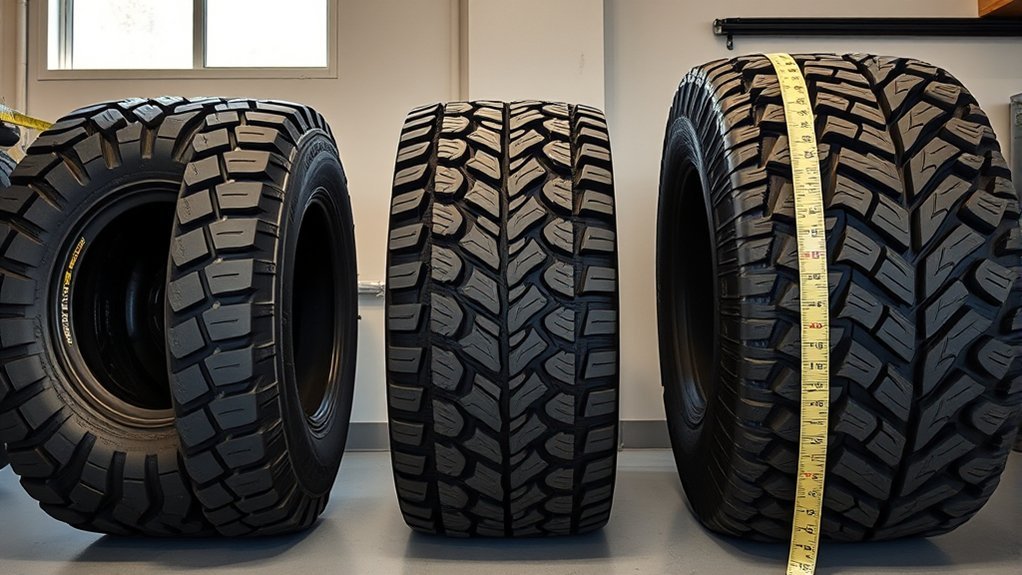
A 295/65R20 sits between a common 275/65R20 truck tire and a wider 35×12.50R20 flotation-style tire. It gives you almost the same height as a 35-inch tire, but with less section width than a 12.50-inch tire.
| Size | Approx. Diameter | Approx. Width | Best Use Case |
|---|---|---|---|
| 275/65R20 | 34.1 inches | 10.8 inches | Factory-style fitment, less rubbing risk, lighter steering feel |
| 295/65R20 | 35.1 inches | 11.6 inches | 35-inch-class height with a narrower footprint than 12.50-inch tires |
| 35×12.50R20 | 35.0 inches | 12.5 inches | Wider stance, off-road look, more clearance and trimming often needed |
Compared with a 275/65R20, a 295/65R20 is about 1 inch taller and about 0.8 inch wider. That can improve ground clearance by about half an inch at the axle, but it can also increase tire weight, rolling resistance, and rubbing risk.
Compared with a 35×12.50R20, the 295/65R20 is nearly the same height but about 0.9 inch narrower. That narrower shape can help some trucks fit a 35-inch-class tire with less steering rub than a 12.50-inch-wide option, though wheel offset still matters.
[Products Worth Considering]

The SAFELIFE dial tire tread depth gauge measures tread depth in 1/32 inch increments with clear, easy-to-read 2-inch dial face. Color zones using a traffic light system help you quickly judge whether tread is low, marginal, or ample for safer driving. Built with a durable zinc cast body and a metal detect probe for precise, comfortable use across cars, motorcycles, trucks, and buses.

Measure tire tread depth quickly and accurately with this LUMITECO dial gauge that reads in 1/32" increments up to 14/32". The color-coded green/yellow/red zones make it easy to judge tire wear and know when replacement is needed. A rugged, compact design with a protective pouch helps keep the gauge ready for use on cars, trucks, motorcycles, and more.

This manual duck head tire changer kit makes tire installation and removal simpler by letting you embed the duck head into the tire with applied pressure. The integrated design and durable steel construction help reduce friction and improve efficiency and safety during use. Suitable for 16–21 inch wheels, it’s convenient for cars, trucks, SUVs, and ATV tires, with 24-hour after-sales support.
Speedometer and Gearing Impact
A taller tire travels farther with each revolution. If you move from a 275/65R20 at about 34.1 inches tall to a 295/65R20 at about 35.1 inches tall, the new tire is about 3% larger in diameter.
That means your speedometer may read low. For example, when the speedometer says 60 mph, your real speed may be close to 62 mph, depending on the tire’s true mounted diameter.
Pro Tip: After changing tire size, use a GPS speed reading or a professional calibration tool to check speedometer accuracy. This matters for towing, highway driving, and avoiding accidental speeding.
Will 295/65R20 Tires Fit Your Truck?
A 295/65R20 can fit many full-size pickups and heavy-duty trucks, but it is not automatic. At about 35.1 inches tall and 11.6 inches wide, it needs more room than many factory 20-inch tire sizes.
Before mounting this size, check these fitment points:
- Fender and liner clearance: Turn the wheel fully left and right and check the front and rear of the wheel well.
- Suspension clearance: Check the upper control arm, sway bar, shocks, and inner fender area.
- Bumper and mud flap clearance: Taller tires often rub plastic trim, air dams, or mud flaps first.
- Wheel offset and backspacing: A more aggressive offset can push the tire outward, which may help inner clearance but create fender rub.
- Spare tire space: A 35-inch-class spare may not fit in the stock under-bed location on every truck.
- Load index and load range: Match or exceed the tire rating required for your truck, especially if you tow or haul.
- Cold inflation pressure: Use your vehicle’s Tire and Loading Information Label or a professional load/inflation check, not the sidewall maximum as a daily pressure target.
Warning: Do not use a tire that rubs brake lines, suspension parts, fenders, or bodywork. Also avoid any tire with the wrong load index, wrong wheel diameter, or rim-width range outside the tire maker’s specification.
The National Highway Traffic Safety Administration recommends checking the owner’s manual or the Tire and Loading Information Label on the driver’s door edge or post when choosing tire size and pressure. If you are moving away from the original tire size, a tire dealer or qualified installer can help confirm the correct load rating, inflation, and clearance.
[Products Worth Considering]

Measure tyre tread depth precisely with a digital gauge that reads in both MM and inches, helping you monitor safe driving conditions. The large LCD screen is easy to operate, and the compact tool fits for cars, trucks, and motorcycles. It provides high accuracy with a 0-25.4mm range and includes a 1-year warranty for added peace of mind.

ETENWOLF T300 is a calibrated digital tire pressure gauge for accurate readings from 3 to 200 PSI across light and heavy-duty vehicles. It includes thermal compensation for reliable performance in extreme cold or heat, with an auto shut-off to extend battery life and an LED for easier reading. The sturdy design supports rugged everyday use, making it ideal for pickups, RVs, and industrial applications.

Protect your spare wheel with a waterproof, dustproof tire cover made to resist sun and harsh weather. The elastic band design makes it easy to install and remove without tools, while reinforced stitching helps it keep its shape. Available in multiple sizes, it fits common RV, trailer, Jeep, SUV, and truck spare tires.
Rim Width, Load Rating, and Pressure Checks
A 295/65R20 tire is commonly used on wider truck wheels, and many tires in this size are listed for rim widths around 8.5 to 11 inches. Still, that range is not universal. Always check the exact tire’s published rim-width range before mounting it.
Load rating is just as important as size. Many 295/65R20 tires are light-truck tires, but the service description after the size, such as 126/123 or 129/126, tells you the rated load. The tire must match your truck’s needs, especially for towing, payload, and heavy-duty use.
Also check inflation after installation. A larger tire does not automatically mean you should use the maximum pressure molded on the sidewall. The correct daily pressure depends on vehicle weight, axle load, tire load rating, and the vehicle manufacturer’s recommendation.
[Products Worth Considering]

Accurately measure tire tread depth with a calibrated gauge marked from 0 to 1 inch in 1/32 inch increments. The color-coded bar helps you quickly identify tread condition ranges, supporting safe driving for trucks, motorcycles, automobiles, and passenger vehicles.

This 12-inch LUMITECO dual head tire pressure gauge features an integrated straight-on chuck and a 30° reverse chuck to reach hard-to-access dual wheel valves. Its 10–150 PSI / 1–10 BAR range with a clear, two-sided scale helps you quickly check tire pressure for safer, smoother driving. Heavy-duty construction and a simple no-battery design make it a reliable tool for trucks, cars, RVs, and motorcycles.

This digital tire pressure gauge with built-in inflator helps you accurately check and adjust tire pressure for safer driving and better fuel efficiency. It supports multiple units (PSI, KPA, BAR, KG/CM²) and reads within 1% for reliable results. The 3-in-1 design inflates, deflates, and measures, with a quick-connect air chuck and compatible hose setup for cars, trucks, SUVs, RVs, and motorcycles.
Frequently Asked Questions
Is 295 the same as a 35-inch tire?
No. 295 is the tire’s section width in millimeters, not the tire height. A 295/65R20 is about 35.1 inches tall, so that specific size is a 35-inch-class tire. Other 295 sizes can be shorter or taller depending on the aspect ratio and wheel diameter.
Is a 295 tire a 33?
Not necessarily. A 295 tire can be a 33-inch, 34-inch, or 35-inch-class tire depending on the full size code. A 295/65R20 is about 35.1 inches tall, so it is closer to a 35 than a 33. A different size, such as 295/55R20, would be shorter.
Is a 295 wider than a 285?
Yes. A 295 tire is about 10 mm wider than a 285 tire, which equals about 0.4 inch. That extra width can change clearance, steering feel, and tire weight. It may also need more room near the fender liner, suspension, or mud flaps.
Will a 295 fit on a 9-inch rim?
A 9-inch rim is often within the approved range for many 295/65R20 tires, but you should confirm the exact tire model’s spec sheet before mounting. Rim width affects sidewall shape, tread contact, handling, and measured tire width.
How much taller is a 295/65R20 than a 275/65R20?
A 295/65R20 is about 1 inch taller than a 275/65R20. The 295/65R20 is about 35.1 inches tall, while the 275/65R20 is about 34.1 inches tall. That is roughly a 3% increase in diameter.
Will 295/65R20 tires affect my speedometer?
Yes, if they are taller than your old tires. Moving from a 275/65R20 to a 295/65R20 can make the speedometer read about 3% low. When the speedometer shows 60 mph, your actual speed may be close to 62 mph.
Conclusion
A 295/65R20 tire is about 11.6 inches wide, 35.1 inches tall, and 7.5 inches from rim to tread on each sidewall. That makes it a strong option when you want a 35-inch-class tire without going as wide as a 35×12.50R20.
Use the numbers as a starting point, not the final decision. Check your wheel width, offset, load index, tire pressure needs, fender clearance, suspension clearance, and speedometer change before mounting. Tire sizing is a blueprint: every number affects fitment, comfort, steering, towing, and safety.
Sources
- NHTSA TireWise Tire Safety Ratings and Awareness — supports tire-size, placard, pressure, tread, maintenance, and safety guidance.
- NHTSA Tire Buyers’ FAQ — supports checking the owner’s manual or Tire and Loading Information Label when buying tires.
- NHTSA Congratulations on Your New Tire Purchase — supports tire registration, tire identification number tracking, pressure checks, and recall alert guidance.

