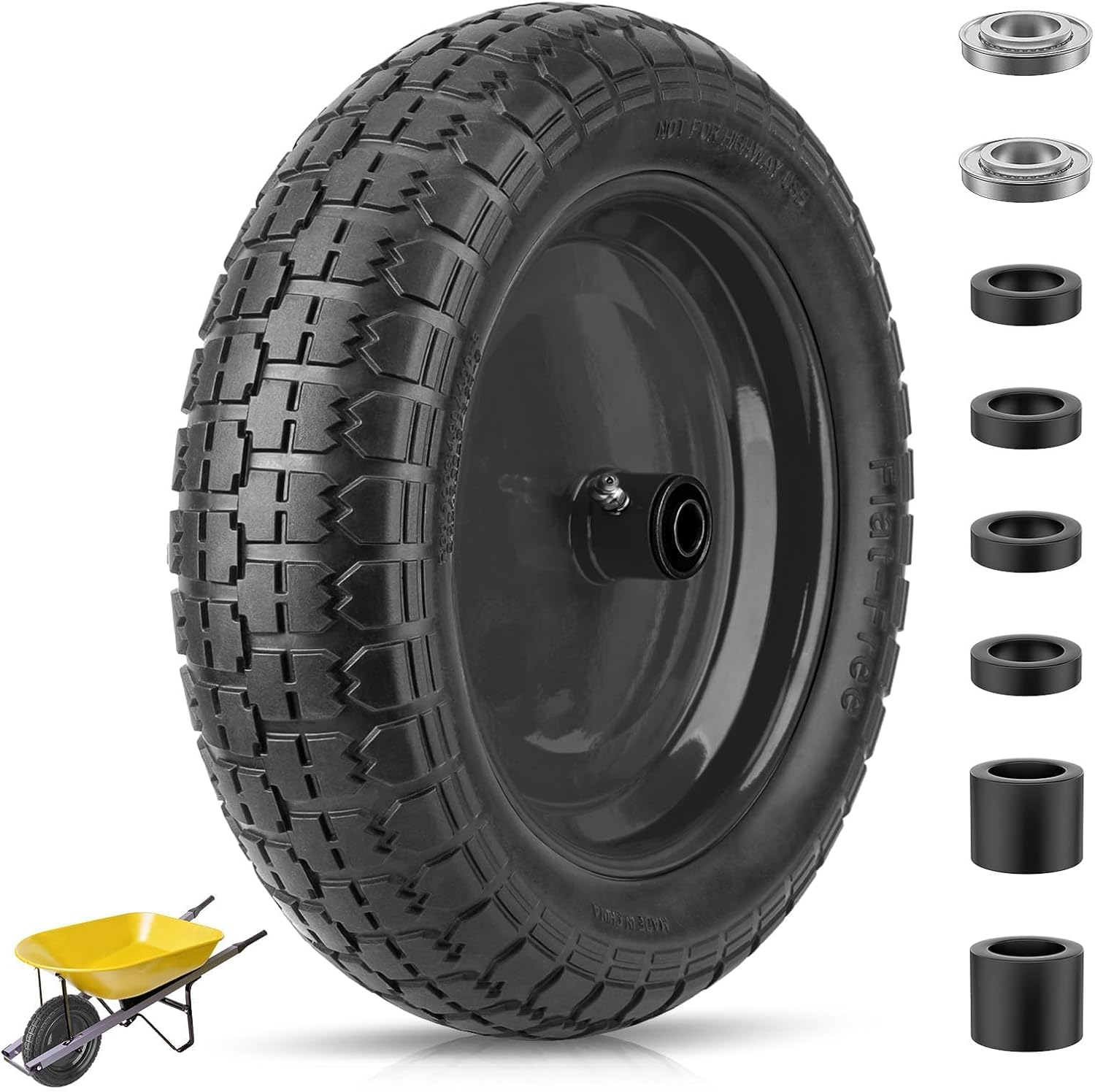
NHS on a tire means “Not for Highway Service”. Some manufacturers also describe NHS tires as “Non-Highway Service”. The marking identifies tires designed primarily for off-road or specialty equipment rather than normal highway operation. On a mower tire, NHS does not tell you the size, load capacity, or correct operating pressure by itself, so match the full size, rim diameter, tread pattern, load specification, and inflation guidance to your equipment.
Last updated: August 18, 2026
Quick Answer
NHS on a tire means “Not for Highway Service.” Some manufacturers use “Non-Highway Service” for the same NHS category. It is primarily an off-road service marking, not a size or load rating. On mower tires, read the complete sidewall size, then check rim fit, tread, ply or load designation, rated load, and the equipment maker’s inflation guidance before buying a replacement.
Key Takeaways
- NHS means “Not for Highway Service”; some manufacturers also use “Non-Highway Service.” In either case, it identifies a tire intended primarily for off-road or specialty-equipment service.
- A common mower size such as 18×8.50-8 NHS means about 18 inches tall, 8.50 inches wide, and made for an 8-inch rim.
- NHS does not tell you the load capacity by itself; check the sidewall or product specs for maximum load, PSI, ply rating, or load range.
- Ribbed tread usually works well on front steering wheels, while turf or lug tread may be better on drive wheels depending on terrain.
- Do not treat an NHS tire as a normal highway tire. Temporary or incidental public-road use depends on the exact tire, equipment manufacturer guidance, and applicable local rules.
At a Glance
| Time Required | 5–10 minutes to read the sidewall, check the manual, and compare replacement specs. |
| Difficulty | Easy, as long as the sidewall markings are still readable. |
| Tools Needed | Flashlight, tire pressure gauge, owner’s manual, and the old tire’s sidewall markings. |
| Main Checks | Full tire size, rim diameter and width, rated load, inflation guidance, tread pattern, and tube or tubeless setup. |
What Does NHS Mean on a Tire?
NHS means Not for Highway Service. Some manufacturers describe the same category as Non-Highway Service. The practical meaning is that the tire is designed primarily for off-road or specialty-equipment use rather than normal highway operation. You’ll often find NHS markings on lawn mower tires, garden tractor tires, turf tires, golf cart or utility-vehicle tires, and some agricultural or industrial equipment tires.
The NHS marking is a service designation. It does not replace the rest of the sidewall information. You still need to check the tire size, rated or maximum load, inflation limits, the equipment maker’s recommended operating pressure, tube or tubeless marking, ply or load designation, and tread pattern before choosing a replacement. For general tire safety and sidewall information, the National Highway Traffic Safety Administration tire safety guide is a useful reference.
Warning: Do not assume an NHS tire is suitable for normal road or highway service. NHS tires are designed primarily for off-road use. Some standards and manufacturers allow temporary or incidental public-road use for certain NHS tires, but that depends on the specific tire, the equipment, manufacturer instructions, and local law.
How to Read Lawn Mower Tire Size
A common lawn mower tire size has three numbers, such as 18×8.50-8 NHS. Read it from left to right:
| Marking | Meaning |
| 18 | Approximate overall tire diameter in inches when inflated. |
| 8.50 | Approximate tire width in inches. |
| 8 | Rim diameter in inches. |
| NHS | Not for Highway Service; some manufacturers use the term Non-Highway Service. |
The three numbers are nominal size designations, so actual mounted dimensions can vary by tire model and approved rim width. For example, one current Carlstar Turf Saver in size 18×8.50-8 is listed at 17.9 inches mounted diameter and 8.2 inches mounted width on a 7-inch rim, with a 520-pound rated load, 10 PSI, and a 10 mph rated speed. Those figures are model-specific and should not be applied to every 18×8.50-8 tire.
Some mower and small-equipment tires use a two-number format, such as 4.80-8. In that style, the first number is the tire width and the second number is the rim diameter. Always copy the full sidewall marking before ordering. If your tire is too worn to read, check the owner’s manual, the wheel size, or the equipment manufacturer’s parts listing.
Note: Do not choose a replacement tire by tread appearance alone. Two tires can look similar but have different rim diameters, widths, load ratings, or inflation limits.
NHS vs DOT Tires: What’s the Difference?
An NHS marking identifies a tire designed primarily for non-highway service. A DOT symbol on a motor-vehicle tire, by contrast, is the manufacturer’s certification that the tire complies with the applicable U.S. Federal Motor Vehicle Safety Standards for that tire. The two markings are not interchangeable, and an NHS mower tire should not be treated as a normal highway replacement tire just because its physical size looks similar to a road tire.
Passenger-car tire grading is covered separately under Uniform Tire Quality Grading standards. That rule applies to new pneumatic passenger-car tires, with listed exceptions, so UTQG grades are not the right shopping criteria for mower and turf NHS tires.
For mower tires, the practical checks are: match the equipment manual, match the rim diameter and approved rim width, meet the required load capacity, use the equipment maker’s recommended operating pressure without exceeding tire limits, and choose tread for the axle position and terrain.
Which Tread Works Best on Your Mower?
After you match the tire size and confirm the NHS marking, choose the tread pattern by axle position and terrain.
- Ribbed tread: Best for many front, non-drive steering wheels because it tracks straight and reduces turf scuffing.
- Turf tread: Good for drive wheels on lawns because it balances traction with grass protection.
- Knobby or lug tread: Better for loose soil, slopes, mud, or utility work, but it can mark soft lawns more easily.
- Smooth tread: Useful on delicate turf or hard surfaces where maximum ground protection matters more than traction.
Front and rear tires do different jobs. A front tire usually needs to steer cleanly without digging into the lawn. A rear tire on a riding mower or garden tractor often needs more traction because it carries drive power. If your mower has four-wheel drive, steering brakes, or unusual wheel sizes, follow the equipment manual before changing tread type.
Pro Tip: If you like how your mower handles now, replace each tire with the same size, similar tread, and equal or higher load rating. Changing only one tire size or tread style can affect cut quality, traction, and steering.
What Ply Rating Do You Need?
The right ply or load designation depends on how much weight the tire must carry and the service conditions. Many mower tires are sold with 2-ply, 4-ply, or 6-ply ratings. Ply rating is a strength/load classification, not a guaranteed count of the tire’s physical cord plies. A higher rating can allow a higher load or inflation limit within a given tire line, but the number alone is not enough. Verify the rated load and pressure in the specific tire’s data table or sidewall markings.
Use a turf-appropriate tire for normal mowing and a tire with enough load capacity for attachments, carts, rough ground, or commercial work. Do not under-spec the tire. Underinflation or overload can increase casing flex and heat and may lead to bead problems, leaks, or tire damage.
Maximum PSI is a limit, not automatically the pressure you should run. Use the mower or equipment manufacturer’s recommended operating pressure when available, and do not exceed the tire manufacturer’s limits. Industry standards for tire and rim fitment are maintained by organizations such as the Tire and Rim Association.
[Products Worth Considering]

Accurately measure tire tread depth with a calibrated gauge marked from 0 to 1 inch in 1/32 inch increments. The color-coded bar helps you quickly identify tread condition ranges, supporting safe driving for trucks, motorcycles, automobiles, and passenger vehicles.

These pre-assembled 15x6.00-6 front tire and wheel assemblies are designed for quick replacement on riding lawn mowers and lawn tractors. Built with natural rubber pneumatic tires and turf-friendly tread for solid traction and improved shock absorption. A thickened welded rim and 3/4" sintered iron bushing help provide stable, heavy-duty support for everyday mowing use.

Replace worn wheelbarrow, mower, or hand truck inner tubes with the TICONN 4.80/4.00-8 tube designed for 8-inch rims. Built from 100% natural rubber, it helps improve durability, impact absorption, and air retention while supporting self-sealing leak protection. The TR-13 straight valve stem makes it a straightforward fit for common yard equipment wheels.
Sidewall Checklist Before Buying an NHS Tire
Before you order a replacement, write down every important marking from the old tire. Check for:
- Full size: for example, 18×8.50-8, 15×6.00-6, or 20×10.00-8.
- NHS marking: identifies non-highway/off-road service rather than a load or size rating.
- Ply rating or load range: helps identify tire strength.
- Maximum load: the weight the tire can carry at the stated pressure.
- Maximum or rated PSI: a tire limit or rating; do not assume it is the mower’s recommended operating pressure.
- Tube type or tubeless: match this to your wheel and valve setup.
- Tread direction: some lug or directional tires must be installed a certain way.
- Rim diameter: the last number in a three-part mower size must match your wheel.
- Rated speed or service condition: if the manufacturer lists one, keep the tire within that stated service envelope.
[Products Worth Considering]

Replace worn tires quickly with this universal 4.80/4.00-8 tire and inner tube set designed for wheelbarrows and outdoor utility carts. The ribbed tread helps reduce turf damage while the natural rubber construction supports longer service life. Compatible with 15.5-inch outer diameter, 4-inch width, and 8-inch rim diameter wheels, it uses a straight TR-13 valve stem for easy installation. For best results, inflate with a manual pump and do not exceed 25 PSI.

Replace or upgrade your zero-turn lawn mower tires with a universal fit flat-free tire and wheel assembly in a convenient 2-pack. Smooth tread front-caster style helps turning with reduced turf damage, while flat-free design eliminates the maintenance and downtime of air-filled flats. The included adapter kit supports 5/8-inch axles and hub lengths from 3.4 to 5 inches for compatibility across most ZTR mowers.

The SAFELIFE dial tire tread depth gauge measures tread depth in 1/32 inch increments with clear, easy-to-read 2-inch dial face. Color zones using a traffic light system help you quickly judge whether tread is low, marginal, or ample for safer driving. Built with a durable zinc cast body and a metal detect probe for precise, comfortable use across cars, motorcycles, trucks, and buses.
How to Choose the Right Mower Tire
To choose the right mower tire, start with the full sidewall size, then compare it with your mower’s manual or parts diagram. Match the rim diameter exactly and use a rim width approved for that tire. A tire made for an 8-inch rim will not safely fit a 6-inch or 10-inch rim.
Next, choose the tread based on the job. Use ribbed tread for many front steering positions, turf tread for general lawn mowing, and deeper lugs for rougher terrain. Then check load capacity and ply rating. A light-duty residential mower may not need the same tire strength as a commercial zero-turn mower, garden tractor with attachments, or utility machine that carries heavy loads.
Finally, inspect the current tire problem. If the old tire failed from cracking, dry rot, exposed cords, sidewall bulges, repeated flats, or bead leaks, replacing it with the same size is only part of the fix. You may also need a new valve stem, tube, rim cleaning, or wheel repair. If you are replacing the tire yourself, follow a safe lifting and mounting process in this lawn mower tire replacement guide.
Note: Replace tires in pairs on the same axle when the tread depth, tire height, or casing shape is noticeably different. Mismatched tires can make a mower pull, scalp, or cut unevenly.
[Products Worth Considering]

Measure tire tread depth quickly and accurately with this LUMITECO dial gauge that reads in 1/32" increments up to 14/32". The color-coded green/yellow/red zones make it easy to judge tire wear and know when replacement is needed. A rugged, compact design with a protective pouch helps keep the gauge ready for use on cars, trucks, motorcycles, and more.

Monitor tire tread wear with a smart, color-coded depth gauge that shows clear condition ranges at a glance. The bar is range marked for fast, easy readings, helping you maintain safer traction and performance. Each gauge is portable with a pocket clip, and the set includes 20 units for daily use and sharing.

LiQuiTube Premium Heavy Duty Tire Sealant provides permanent flat tire protection to help maintain proper air pressure while sealing punctures and leaks. It seals bead, rim, and porosity weathering leaks and helps prevent flats in heavy ply industrial tires. Designed for versatile use on trailers and off-road equipment, it can be installed in tubeless tires and also inside tubes.
When to Replace an NHS Mower Tire
Replace an NHS mower tire when it can no longer hold air, carry load safely, or protect the rim. Common warning signs include:
- Cracks in the sidewall or between tread blocks.
- Bulges, bubbles, or soft spots.
- Exposed cords or fabric.
- Repeated punctures or plug failures.
- Dry rot that keeps spreading.
- Bead leaks that return after cleaning and reseating.
- Tread worn so low that the mower loses traction or slides on slopes.
If the tire is old, cracked, or damaged, do not rely on sealant as a permanent fix. Sealant may help with small tread-area leaks, but it will not repair structural damage, sidewall failure, or an overloaded tire.
Frequently Asked Questions
What does 8 NHS mean on a tire?
On a size such as 18×8.50-8 NHS, the final 8 means the tire fits an 8-inch rim, and NHS means Not for Highway Service. It does not mean the tire is automatically 8 inches wide. The width is the middle number in a three-part mower tire size.
What does NHS mean on Carlisle or Carlstar tires?
Carlstar currently describes its outdoor power equipment tires as Non-Highway Service (NHS), while U.S. tire-industry and ISO references also use Not for Highway Service. In practical terms, NHS identifies a tire intended primarily for off-road or specialty-equipment service. It does not tell you the tire’s load capacity, size, or correct operating pressure by itself.
What is an NHS tire rating?
NHS is not a load rating by itself. It is a service designation for non-highway/off-road use. To understand the tire’s capacity, read the specific size, rated load, inflation data, ply or load designation, and any rated-speed or service-condition information supplied by the manufacturer.
What does 12 NHS mean on a tire?
If the tire size ends in -12 NHS, the 12 usually means the tire fits a 12-inch rim, and NHS means Not for Highway Service. If you only see “12 NHS” without the full size, look for the complete sidewall marking before ordering a replacement.
Can I drive an NHS tire on the road?
Do not treat an NHS tire as a normal highway tire. NHS tires are designed primarily for off-road use. Some standards and manufacturers allow temporary or incidental public-road use for certain NHS tires, so check the exact tire specifications, equipment manual, and local road rules before any public-road operation. For lawn equipment, transporting the machine by trailer is usually the clearer option when road travel is required.
Does an NHS mower tire need a UTQG rating?
No for a typical mower or turf NHS tire. Federal UTQG rules apply to new pneumatic tires for use on passenger cars, with stated exceptions. For mower and turf NHS tires, focus on the equipment manual, tire size, rim fit, rated load, inflation guidance, ply or load designation, and tread pattern instead.
Is an NHS tire the same as a DOT tire?
No. NHS identifies a tire designed primarily for non-highway service. A DOT symbol on a motor-vehicle tire is the manufacturer’s certification that the tire meets the applicable U.S. Federal Motor Vehicle Safety Standards for that tire. Do not use NHS and DOT as interchangeable shopping labels.
Conclusion
NHS on a tire means Not for Highway Service; some manufacturers also use Non-Highway Service. The marking tells you the tire is intended primarily for off-road or specialty-equipment service, but it does not replace the rest of the sidewall specifications. Before buying a mower tire, copy the full size, match the rim diameter and approved rim width, choose the tread for the job, verify the rated load and ply or load designation, and use the equipment maker’s recommended operating pressure without exceeding tire limits. Do not treat an NHS tire as a normal highway tire.
Sources
- U.S. Tire Manufacturers Association — Misapplication of Not for Highway Service (NHS) Tires — supports the Not for Highway Service terminology and off-highway service distinction.
- Trelleborg Tires — FAQ — supports the definition of NHS tires as primarily for use off public roads, with temporary or occasional public-road use possible for certain applications.
- Carlstar — Turf Saver Technical Specifications — supports current mower-tire sizing, mounted dimensions, rated load, rated speed, and PSI.
- Carlstar — Turf Smart — supports the manufacturer’s current Non-Highway Service (NHS) terminology for outdoor power equipment tires.
- National Highway Traffic Safety Administration — Tires — supports general tire safety, inflation, inspection, and replacement guidance.
- NHTSA Interpretation 2664o — supports the meaning of the DOT symbol as a manufacturer certification of compliance with applicable Federal Motor Vehicle Safety Standards.
- 49 CFR § 575.104 — Uniform Tire Quality Grading Standards — supports the scope of UTQG as a passenger-car tire grading system.
- Bridgestone Americas — Tire Terminology — supports load-range and ply-rating terminology.
- The Tire and Rim Association — supports standardized tire and rim dimensions and load/inflation data.