Disclosure: As an Amazon Associate, we earn from qualifying purchases. If you click a link on this page and make a purchase, we may receive a small commission at no extra cost to you.
A mower tire that keeps losing air can waste more time than the yardwork itself. The TireJect 30 oz Lawn Mower Tire Sealant Kit is designed for tubeless, low-speed off-road tires, using liquid rubber, sealing particles, and aramid fibers to address common punctures, bead leaks, slow leaks, and minor dry-rot-related air loss. Its reusable injector makes the job more controlled than pouring sealant directly from a bottle, but correct dosage and tire condition still matter. This review explains where the kit works best, how to apply it, and when tire replacement is the safer choice.
Quick Verdict
Rating: 8.5/10, Recommended with caveats
Best For: Owners of riding mowers, zero-turn mowers, golf carts, wheelbarrows, and similar equipment with tubeless off-road tires
Bottom Line: TireJect gives you a well-equipped 30-ounce kit for treating four typical mower tires and can seal several common sources of slow air loss. It is not a substitute for replacing a tire with a split, bulge, exposed cord, damaged bead, or other structural failure.
Key Specifications
| Specification | Detail |
|---|---|
| Brand | TireJect |
| Model / Part Number | WONSUN01 |
| ASIN | B07D71XRCD |
| Product Type | Off-road tubeless tire sealant and injector kit |
| Sealant Quantity | 30 fluid ounces |
| Formula | Liquid rubber, recycled tire particles, and high-strength aramid fibers |
| Designed to Seal | Tread and sidewall punctures up to 3/8 inch as claimed for off-road use, bead leaks, slow leaks, and minor dry-rot-related leaks |
| Mower Dosage | 5 oz per front tire up to 16×7; 10 oz per rear tire up to 24×12 |
| Typical Coverage | Four standard mower tires when the two front tires use 5 oz each and the two rear tires use 10 oz each |
| Compatible Equipment | Tubeless tires on riding mowers, zero-turn mowers, golf carts, wheelbarrows, handcarts, utility trailers, ATVs, UTVs, and similar low-speed off-road equipment |
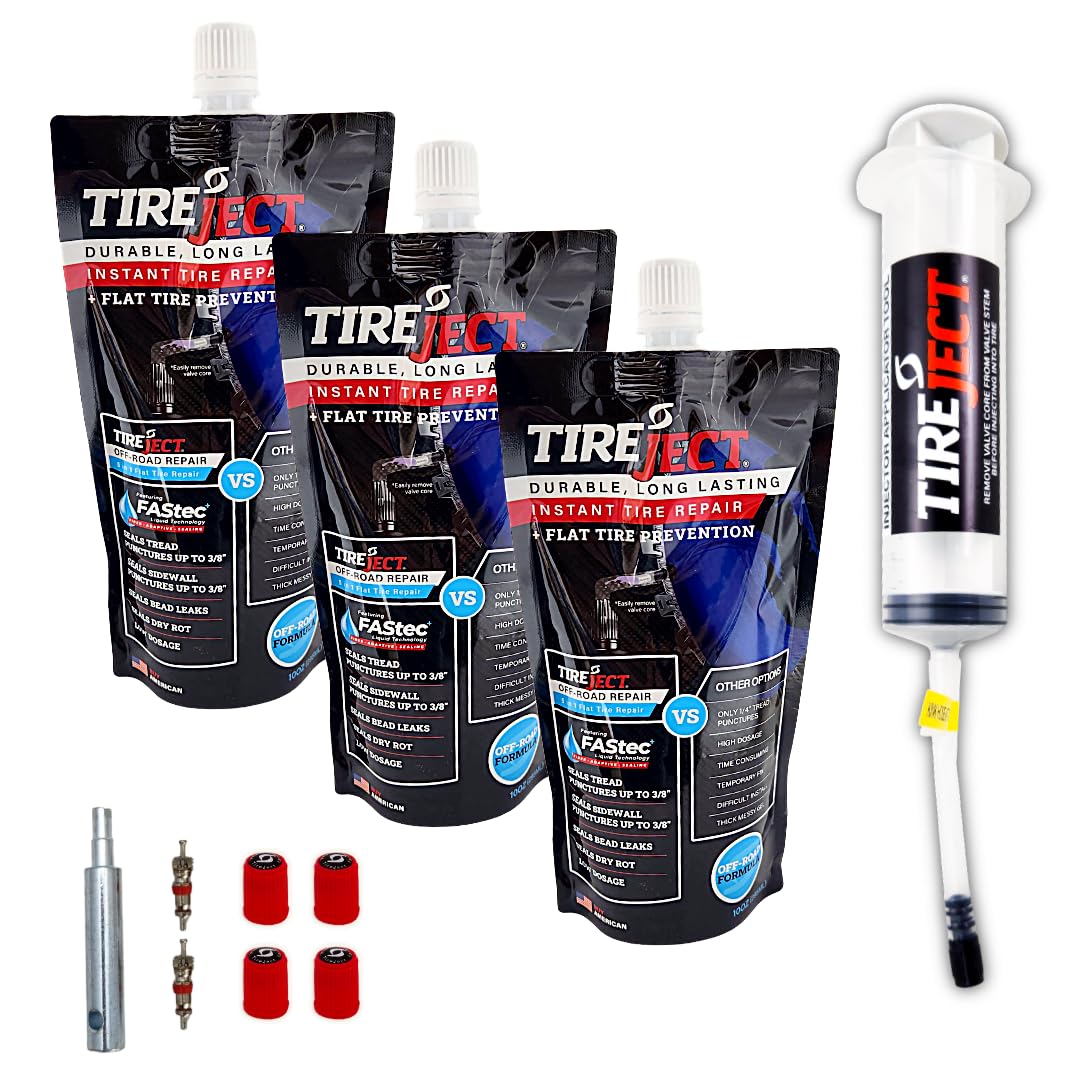
| Included Accessories | Reusable sealant injector, valve-core removal tool, red valve-stem caps, and TireJect identification sticker |
| Protection Period | Manufacturer states up to 24 months for slower off-road equipment, depending on heat, storage, dosage, speed, and frequency of use |
| Production Note | Mixed, filled, and assembled in the USA |
TL;DR
|
Feature |
Verdict |
|---|---|
|
Ease of Use |
Very good. The threaded injector and included valve-core tool simplify measuring and installation, though you still need to deflate and reinflate the tire. |
|
Leak Coverage |
Broad for low-speed equipment. It targets common tread punctures, bead leaks, slow leaks, minor dry-rot-related leaks, and manufacturer-rated off-road sidewall punctures. |
|
Value |
Best for repeat problems. The kit makes more sense when thorns, nails, or bead leaks cause recurring downtime than when you only need a one-time emergency fix. |
|
Longevity |
Potentially long-lasting. TireJect states up to 24 months of preventive protection in slower off-road equipment, but temperature and use affect lifespan. |
|
Overall |
Recommended with caveats. It is a practical preventive and repair option for sound tubeless mower tires, not a cure for structural tire damage. |
TireJect Lawn Mower Tire Sealant Kit
[Products Worth Considering]

Replace worn wheelbarrow, mower, or hand truck inner tubes with the TICONN 4.80/4.00-8 tube designed for 8-inch rims. Built from 100% natural rubber, it helps improve durability, impact absorption, and air retention while supporting self-sealing leak protection. The TR-13 straight valve stem makes it a straightforward fit for common yard equipment wheels.

LiQuiTube Premium Heavy Duty Tire Sealant provides permanent flat tire protection to help maintain proper air pressure while sealing punctures and leaks. It seals bead, rim, and porosity weathering leaks and helps prevent flats in heavy ply industrial tires. Designed for versatile use on trailers and off-road equipment, it can be installed in tubeless tires and also inside tubes.

TireJect Off-Road Tire Sealant Kit provides 5-in-1 sealing to help fix tread punctures up to 3/8", sidewall punctures up to 3/8", bead leaks, slow leaks, and minor dry rot on low-speed tires. It permanently seals with liquid rubber, recycled tire particles, and Aramid fibers, making it ideal for flats caused by thorns, nails, and screws. The included dispensing cap attaches to the valve stem for a no-mess installation, along with a metal valve core remover tool and valve stem cap. This kit is for off-road use only.
What Is the TireJect 30 oz Lawn Mower Tire Sealant Kit?
The TireJect kit combines 30 ounces of off-road tire sealant with the tools needed to inject a measured amount through a tubeless tire’s valve stem. Its formula uses liquid rubber, recycled tire particles, and aramid fibers that move with escaping air toward a puncture or leak, where the material is designed to plug and bond from inside the tire.
The 30-ounce size is set up around a common four-tire mower layout. TireJect’s guide calls for 5 ounces in a front tire up to 16×7 and 10 ounces in a rear tire up to 24×12, so two front and two rear tires use the full bottle. Larger tires require a different quantity, so the bottle should not be divided evenly without checking tire size.
This is an off-road product for low-speed tubeless tires. It is not the correct TireJect formula for passenger cars, trucks, or other highway-speed vehicles, and it does not make a damaged tire structurally sound.
[Products Worth Considering]

These pre-assembled 15x6.00-6 front tire and wheel assemblies are designed for quick replacement on riding lawn mowers and lawn tractors. Built with natural rubber pneumatic tires and turf-friendly tread for solid traction and improved shock absorption. A thickened welded rim and 3/4" sintered iron bushing help provide stable, heavy-duty support for everyday mowing use.

This 15-inch tire spoons kit makes tire removal and installation easier with added leverage, reducing time and effort for everyday repairs. It includes tire spoons, rim protectors, a valve tool, and valve cores/caps, helping protect rims and streamline deflation and re-sealing. Built with durable hardened steel and a non-slip ergonomic grip for confident use on motorcycles, dirt bikes, ATVs, and lawn equipment.

Replace or upgrade your zero-turn lawn mower tires with a universal fit flat-free tire and wheel assembly in a convenient 2-pack. Smooth tread front-caster style helps turning with reduced turf damage, while flat-free design eliminates the maintenance and downtime of air-filled flats. The included adapter kit supports 5/8-inch axles and hub lengths from 3.4 to 5 inches for compatibility across most ZTR mowers.
Who Should Buy It?
Best For
- Homeowners with tubeless mower tires that repeatedly pick up thorns, nails, screws, or similar debris
- Zero-turn and riding-mower owners who want preventive protection before the mowing season
- People maintaining several compatible low-speed tires and who value a reusable measuring injector
Skip If
- Your equipment uses inner tubes rather than tubeless tires
- The tire has a split, bulge, exposed cord, badly damaged bead, or severe dry rot
- You need a sealant for a highway-speed car, truck, motorcycle, or trailer tire
Before You Buy: Confirm that every tire you plan to treat is tubeless and measure its size. TireJect’s 30-ounce coverage assumes two front mower tires up to 16×7 and two rear tires up to 24×12. Larger tires may require more sealant, while structural damage requires tire replacement.
How the 5-in-1 Sealant Performs
Tread Punctures
The manufacturer rates the off-road formula for punctures up to 3/8 inch. This makes it suitable for common mower hazards such as thorns, nails, screws, and stiff plant debris, provided the tire remains structurally sound and the puncture is within the product’s stated limits.
Slow Bead Leaks
A bead leak occurs where the tire meets the rim. TireJect’s low-viscosity formula is designed to coat that area without removing the tire from the wheel, which can save time when corrosion, dirt, or an imperfect seal causes gradual pressure loss. A bent rim, damaged bead, or heavy corrosion still needs mechanical service.
Minor Dry-Rot-Related Leaks
The liquid rubber can form a thin internal coating that helps seal small air paths associated with minor dry rot. It does not reverse aging, strengthen cracked rubber, or make a badly weathered tire safe. Visible deep cracking, deformation, or exposed reinforcement is a reason to replace the tire.
Off-Road Sidewall Punctures
TireJect includes sidewall punctures in its 5-in-1 claim for low-speed off-road tires. Treat this as a narrow equipment-specific use, not as permission to repair sidewall damage on highway tires. Cuts, torn rubber, impact damage, bulges, or repeated leakage call for replacement.
Preventive Protection
You can install the sealant before a puncture occurs, allowing it to coat the inside of the tire as the wheel rotates. This approach is most useful in thorn-heavy yards, fields, rural properties, and work areas where the same equipment regularly encounters sharp debris.
Installation and Dosage
The included injector threads onto the valve stem and lets you measure sealant before pushing it into the tire. You still need a source of compressed air or another suitable inflator because the tire must be deflated for valve-core removal and reinflated after installation.
| Equipment / Tire Size | Recommended Amount |
|---|---|
| Riding mower or zero-turn front tire up to 16×7 | 5 oz per tire |
| Riding mower or zero-turn rear tire up to 24×12 | 10 oz per tire |
| Golf cart tire up to 18×8 | 5 oz per tire |
| Wheelbarrow, handcart, or other small tire | 2 to 4 oz per tire |
How to Use It Correctly
- Park the equipment on a stable, level surface, shut it off, and support it safely so the tire is not carrying weight during service.
- Fully deflate the tire, then remove the valve core with the included tool.
- Thread the injector onto the valve stem and measure the amount specified for your tire size.
- Inject the sealant, clear the injector, reinstall the valve core, and inflate the tire to the equipment manufacturer’s recommended pressure.
- Install the red valve cap, then rotate the wheel or operate the equipment slowly for several minutes so the sealant reaches the tread, sidewall, and bead areas.
- Recheck pressure and inspect for continuing leakage before returning the equipment to normal use.
Follow the instructions packaged with the product and use TireJect’s official dosage calculator for tire sizes outside the standard chart. Underfilling can reduce performance, while unnecessary overfilling adds weight and may create balance issues on faster off-road equipment.
Pro Tip: Write the installation date and ounces used on the included identification sticker or in your equipment log. That makes it easier to track pressure changes and decide when preventive protection may need to be renewed.
How It Performs in Real Use
Thorn-Heavy and Rural Yards
Preventive installation is the strongest use case when mesquite thorns, hawthorns, nails, wire, or sharp brush repeatedly reach mower tires. The sealant is already inside the tire when a small puncture occurs, reducing the chance that you discover a flat only after pulling the mower out of storage.
Recurring Slow Leaks
For a tire that loses a few pounds of pressure between mowing sessions, TireJect can address small tread holes, bead seepage, and other minor leaks without removing the tire. If pressure continues to fall after correct dosing and distribution, the wheel and tire need a closer inspection rather than repeated topping up.
Frequent-Use Mowers
Landscaping crews and homeowners with large properties benefit most from reduced downtime. The injector is reusable, so future TireJect refills can be measured with the same tool, but each tire still needs periodic pressure checks and visual inspection.
Seasonal Storage
Sealant can remain active during storage, but heat and climate affect how quickly it cures. Before the next season, check pressure, look for fresh cracking or bead damage, and confirm that the tire still holds air rather than assuming the sealant remains effective indefinitely.
Situational Benefits
|
Situation |
How It Helps |
|---|---|
|
Rural yards with thorns and debris |
Pre-installation places sealing material inside the tire before a small puncture occurs. |
|
Small commercial or frequent-use mowers |
At-home application can reduce shop visits and keep equipment available between jobs. |
|
Seasonal storage and long idle periods |
The formula may continue protecting slower off-road tires during storage, subject to temperature and product lifespan. |
|
Golf carts, wheelbarrows, and utility equipment |
The same bottle and injector can service several compatible tubeless tire sizes when you follow the dosage chart. |
Compatibility and Safety
This lawn mower kit is intended for tubeless off-road tires. TireJect lists riding mowers, zero-turn mowers, golf carts, wheelbarrows, handcarts, ATVs, UTVs, and similar low-speed equipment as compatible applications. Tube-type tires need a product specifically approved for tubes, while highway-speed tires need the correct automotive repair method and product.
Wear eye protection and gloves, fully deflate the tire before removing the valve core, and support the equipment securely. Inflate only to the pressure listed by the mower or tire manufacturer. Clean fresh spills promptly with water because the formula is water-soluble before it cures.
Stop using a tire that has a bulge, split, damaged bead, exposed cord, severe weather cracking, or a leak that returns after proper treatment. Sealant controls air loss but cannot restore the tire’s load-carrying structure.
Maintenance and Long-Term Protection
TireJect states that slower equipment such as lawn mowers, tractors, skid steers, handcarts, and golf carts may receive up to 24 months of preventive protection. That is an estimate, not a fixed service interval. High temperatures, frequent use, storage conditions, and the amount installed can shorten the effective period.
Check tire pressure before mowing, especially after installation and after long storage. A repaired location may stay sealed while a new puncture develops elsewhere, so pressure loss does not automatically mean the original repair failed. Inspect the entire tread, sidewall, valve stem, bead, and rim before adding more product.
What People Say
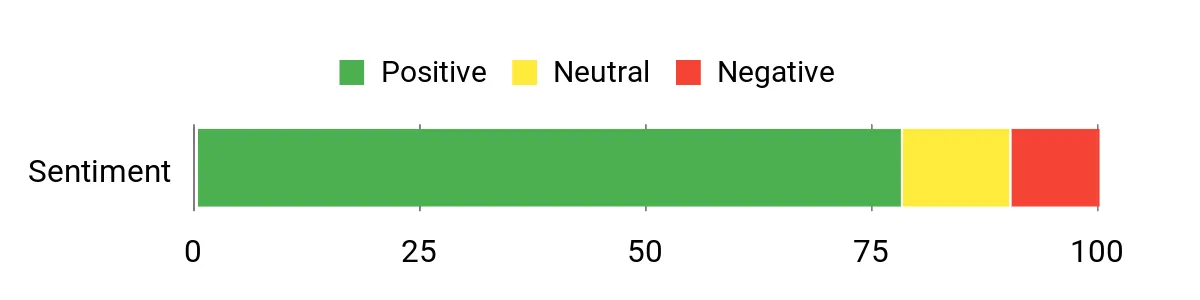
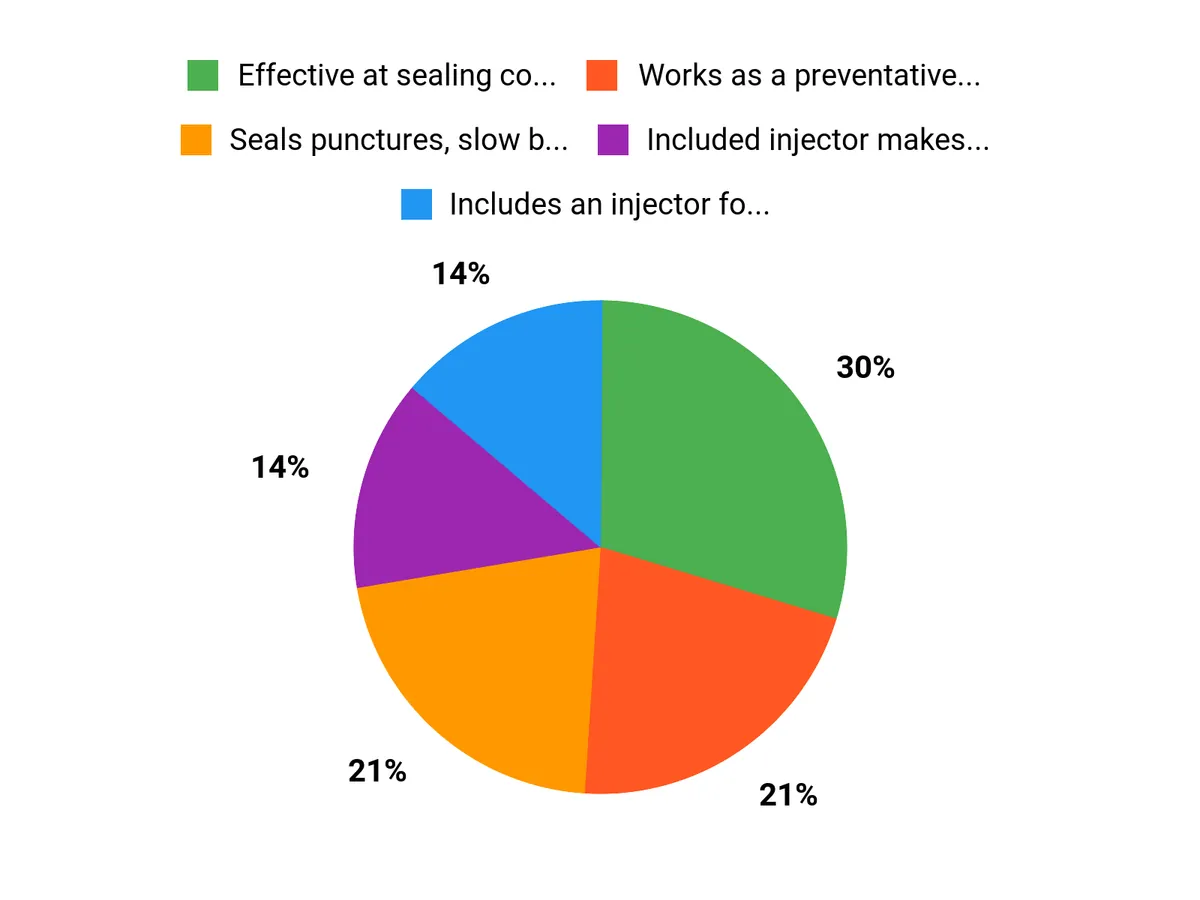
Buyer feedback is generally positive about the kit’s ability to stop common mower-tire leaks and about the convenience of the injector. Customers often describe successful results on thorn punctures and slow leaks that previously required repeated inflation.
The most useful criticisms involve application mess, the need for accurate dosage, and tires that are too damaged for sealant to solve. Those caveats match the product’s real role: it is a repair and preventive fluid for serviceable tubeless tires, not a replacement for inspection or tire replacement.
Overall Sentiment: Positive
Pros and Cons
Pros
- 30-ounce quantity matches a common four-tire mower dosage
- Reusable injector supports measured application through the valve stem
- Targets tread punctures, bead leaks, slow leaks, and minor dry-rot-related leaks
- Can be installed preventively before mowing in thorn-prone areas
- Includes the valve-core tool, red valve caps, and identification sticker
Cons
- Works only with compatible tubeless off-road tires
- Requires deflation, valve-core removal, reinflation, and cleanup
- Cannot make a split, bulging, deeply cracked, or otherwise unsafe tire serviceable
Is It Worth the Price?
TireJect sits above basic single-use sealant bottles because the kit includes a reusable injector, a valve-core tool, valve caps, and enough fluid for a typical four-tire mower setup. The best value comes when you have recurring thorn punctures, slow leaks, or several pieces of compatible equipment, since preventing one tire replacement or repeated shop visits can offset the higher upfront cost.
It is less compelling when one inexpensive tire is already badly weathered or when your machine uses tubes. In those cases, a replacement tire, replacement tube, or tube-compatible sealant may be the more direct purchase. Check the live price and your required ounces before comparing cost per tire.
How It Compares to Alternatives
Slime 2-in-1 Tire & Tube Sealant is worth comparing when you need one formula for both tube and tubeless off-highway tires. FlatOut QuickStrike Small Tire is another 32-ounce competitor that uses Kevlar fibers and targets small off-road tires. TireJect makes the most sense when you specifically want a measured injector system, a 30-ounce mower-focused dosage, and coverage for bead leaks and minor dry-rot-related air loss.
A manual plug kit can be cheaper for an accessible tread puncture, but it does not address bead leaks or coat the tire preventively. A new tire remains the correct alternative when the casing, bead, or sidewall has structural damage.
[Products Worth Considering]
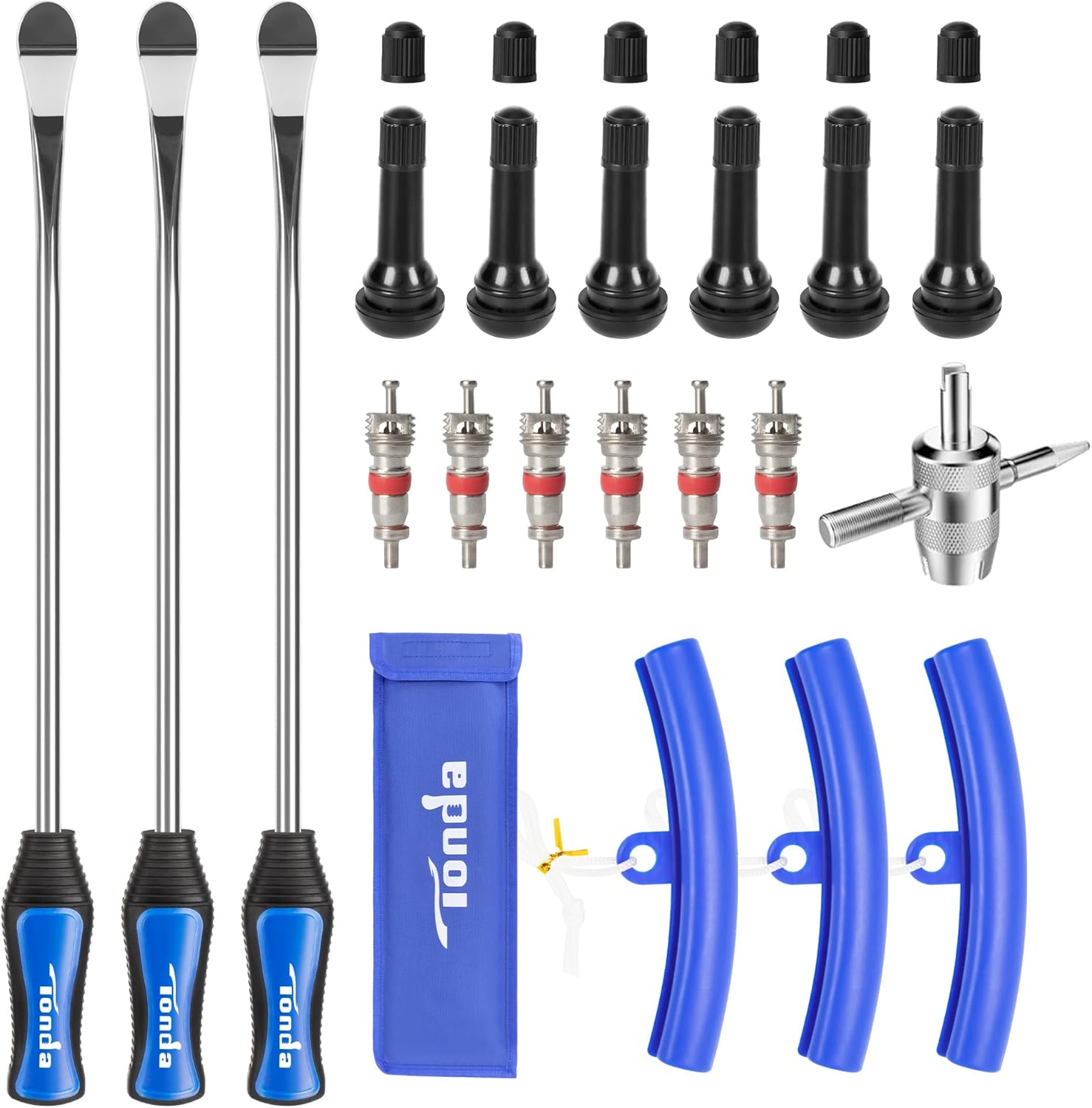
This TONDA tire changing kit makes motorcycle, dirt bike, ATV, lawn mower, and tractor tire swaps easier with heavy-duty tire spoon levers and added leverage. Rounded rim protectors help prevent scratches, while the included valve tools, cores, caps, and stems provide a more complete roadside or garage solution. The set comes with non-slip handles and a storage bag for convenient organization.

This 38-piece tire spoon set provides everything you need for safer tire changes with dual-size hardened steel levers for leverage and control. Rim protectors help prevent wheel scratches, while valve tools and included valve cores/caps support quick deflation and maintenance. Designed for motorcycles, dirt bikes, bicycles, ATVs, and lawn equipment, it comes in a storage bag for easy transport and organization.

This 61-piece tire repair screw kit helps you fix punctures quickly by aligning the screw plugs and twisting clockwise, finishing the repair in seconds. The self-sealing plugs create a reliable seal for many roadside situations without needing a jack, wrench, or glue. It includes two plug sizes and a screwdriver in a portable case, making it a convenient option for cars, motorcycles, trucks, bikes, ATVs, and tractors.
Frequently Asked Questions
Is TireJect compatible with tube-type mower tires?
No. This lawn mower protection kit is designed for tubeless off-road tires. If your mower tire contains an inner tube, choose a sealant specifically labeled for tubes or replace the damaged tube.
How much TireJect should I use in a lawn mower tire?
TireJect recommends 5 ounces for a front mower tire up to 16×7 and 10 ounces for a rear tire up to 24×12. Use the manufacturer’s dosage calculator for larger tires instead of estimating.
Will the 30-ounce bottle cover all four mower tires?
It covers a typical setup with two front tires using 5 ounces each and two rear tires using 10 ounces each. Oversize tires or extra applications may require additional sealant.
Can TireJect repair sidewall damage?
The manufacturer includes off-road sidewall punctures up to 3/8 inch in its sealing claims. Do not use that claim to justify continued use of a tire with a cut, bulge, exposed cord, torn bead, deep cracking, or other structural damage.
How do I install TireJect?
Deflate the supported tire, remove the valve core, thread on the injector, add the correct amount, reinstall the core, and inflate to the equipment manufacturer’s pressure. Rotate the tire or operate the machine slowly for several minutes to distribute the sealant.
How long does TireJect last in mower tires?
TireJect estimates up to 24 months of preventive protection in slower off-road equipment. Heat, storage conditions, dosage, speed, and frequency of use can shorten that period, so continue checking tire pressure.
Is the sealant difficult to clean up?
Application can drip when the valve core is removed or the injector is disconnected. The formula is water-soluble before curing, so protect the work area and rinse fresh spills promptly.
Can I use this kit in a car or highway trailer tire?
No. This is the off-road mower kit for low-speed tubeless equipment. Highway vehicles need the correct automotive product and a repair method approved for the tire, puncture location, and vehicle use.
Why Customers Choose
Customers choose this kit because it combines a mower-sized sealant quantity with a reusable injector and clear dosage guidance. It is consistently well-reviewed for common punctures and slow leaks, but the strongest results come from correct dosing and from starting with a tire that is still structurally serviceable.
The Bottom Line
The TireJect 30 oz Lawn Mower Tire Sealant Kit is a strong choice for owners of tubeless, low-speed equipment who deal with punctures, slow bead leaks, or thorn-heavy terrain. Buy it for the measured injector, four-tire mower coverage, and broad leak protection, but skip it when the tire has structural damage, uses a tube, or operates at highway speed.
Ready to Buy?
Check the latest price, seller details, and product instructions before you decide.