
Choosing between commuter and performance tires for your Honda Accord comes down to how you actually drive. If your Accord is mainly a daily commuter, a touring or grand-touring tire usually makes the most sense because it favors comfort, quietness, long tread life, and predictable wet-road grip. If you enjoy sharper steering, quicker cornering, and a more responsive feel, an ultra-high-performance all-season or summer performance tire can make the car feel more alert, but it usually costs more and may wear faster.
Quick Answer
For most Honda Accord drivers, commuter-focused touring tires are the better everyday choice because they deliver a quieter ride, longer tread life, better value, and steady wet-weather performance. Choose performance tires only if sharper steering, stronger cornering grip, and a sportier feel matter more than maximum comfort and mileage.
Key Takeaways
- Commuter tires are best for daily driving, long tread life, low noise, fuel economy, and lower ownership cost.
- Performance tires are best for sharper steering, stronger dry grip, and more confident cornering, but they often cost more and can wear faster.
- Use your Accord’s driver-door Tire and Loading Information Label or owner’s manual for tire size, load rating, speed rating, and cold tire pressure.
- If you drive in frequent snow or freezing conditions, consider an all-weather 3PMSF tire or a dedicated winter tire rather than relying only on sporty all-season tires.
Understanding the Differences Between Commuter and Performance Tires
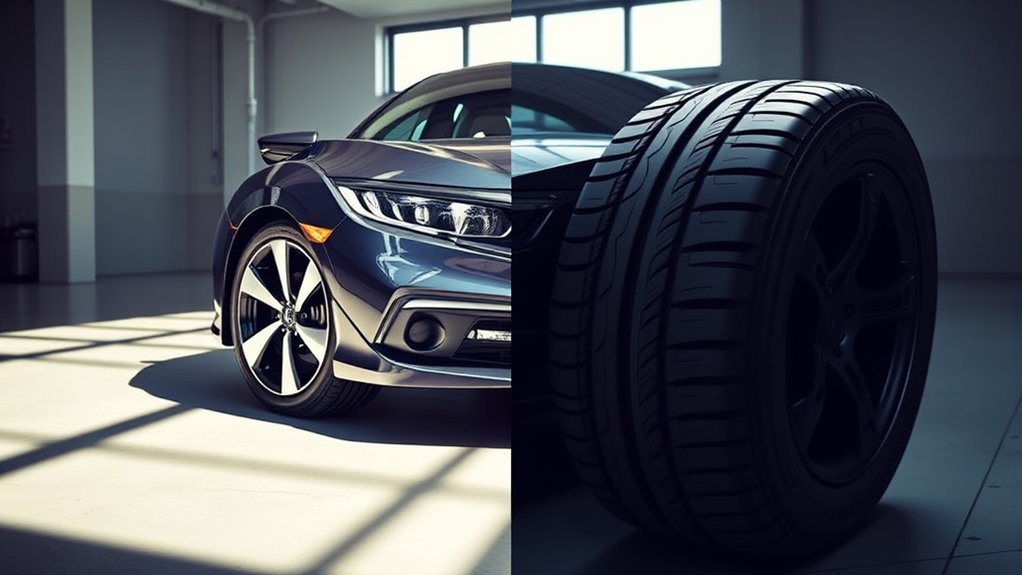
Commuter tires, often called touring or grand-touring tires, are built for the way many Accord owners drive every day: highway commuting, errands, school runs, and road trips. Their main strengths are comfort, low road noise, even tread wear, wet-road stability, and longer mileage warranties.
Performance tires use stickier compounds, stiffer construction, and more aggressive tread designs to improve steering response, braking feel, and cornering grip. They can make an Accord feel more precise, especially if you drive a Sport trim or enjoy curvy roads. The trade-off is that performance tires may ride firmer, create more noise, cost more, and wear faster depending on the model and your driving habits.
| Category | Commuter / Touring Tires | Performance Tires |
| Best for | Daily commuting, long trips, comfort, quietness, value | Sportier driving, sharper steering, stronger cornering grip |
| Ride feel | Softer, smoother, quieter | Firmer, more connected, sometimes louder |
| Tread life | Usually longer; some models offer 70,000–90,000 mile warranties | Usually shorter; many UHP all-season models fall around 30,000–50,000 mile warranties |
| Cost over time | Lower for most drivers because replacements are less frequent | Higher if you drive aggressively or choose premium performance models |
Essential Criteria for Selecting Tires for Your Honda Accord
Before comparing brands or prices, confirm the tire requirements for your specific Accord trim. A Honda Accord can use different tire sizes depending on model year, wheel size, trim, and whether the tires are original equipment or replacements.
- Tire size: Match the size shown on the driver-door Tire and Loading Information Label, owner’s manual, or a manufacturer-approved replacement size.
- Load index: The tire must be rated to carry the vehicle’s weight, passengers, and cargo safely.
- Speed rating: Choose a rating that meets or exceeds the vehicle’s original requirement unless a tire professional confirms otherwise.
- Climate: Mild climates can use touring all-season tires. Frequent snow or icy roads call for all-weather 3PMSF tires or dedicated winter tires.
- Driving style: Choose commuter tires if you value comfort and mileage. Choose performance tires if you value steering response and grip.
- Maintenance needs: Softer performance compounds can be less forgiving of poor alignment, aggressive driving, and skipped rotations.
Warning: Do not choose tire pressure based on whether a tire is “commuter” or “performance.” Use the cold PSI listed on your Accord’s driver-door tire label or owner’s manual. The PSI molded on the tire sidewall is not the vehicle’s recommended daily inflation pressure.
[Products Worth Considering]
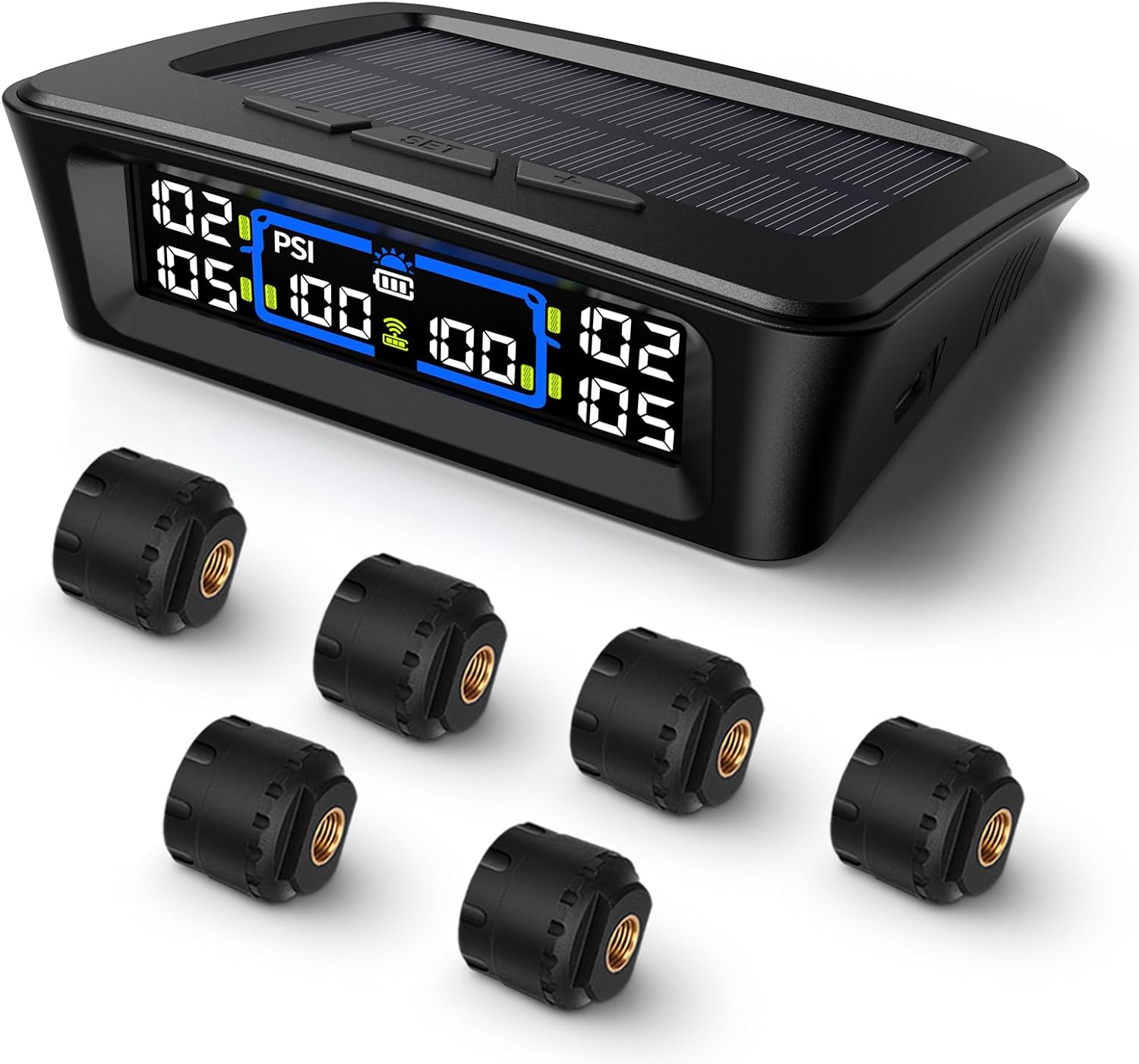
The Tymate TM12 RV TPMS delivers real-time tire pressure and temperature monitoring with a stable 433Hz display for safer long-distance driving. It supports simultaneous monitoring across vehicle and trailer zones, includes six alarm modes for pressure, temperature, leakage, battery, and signal loss, and features easy DIY installation with auto calibration. Power is supplied via USB-C charging or solar recharging, with a wide 0–144 PSI range and up to 50 ft signal coverage for RVs and towable trailers.

The Continental Grand Prix 5000 is an allround road bike tire engineered for faster rolling, improved ride comfort, and enhanced puncture protection. It features a Vectran Breaker cut-protection layer, Lazer Grip micro-profile tread for confident cornering control, and Active Comfort Technology to damp vibration for smoother rides. BlackChili compound optimizes grip and speed for everyday performance and long-lasting confidence.

Keep your tires properly inflated with this analog VONDIOR tire pressure gauge, designed for fast, easy readings without batteries. The swiveling, two-axis hose and large glow dial help you measure at any tire angle with instant visibility. Built with a protective rubber shield, it supports durable, low-maintenance use for cars and trucks.
Benefits of Commuter Tires for Daily Driving
Commuter tires are the practical choice for most Honda Accord owners because they fit the car’s strengths: smooth ride quality, fuel efficiency, easy highway manners, and low-stress daily driving. A good touring tire can make an Accord feel quieter over rough pavement and more relaxed on long trips.
Many commuter-focused tires also have longer mileage warranties. For example, the Michelin Defender2 is listed with an 80,000-mile warranty, while the Hankook Kinergy PT H737 is listed with a 90K mileage warranty for H- and T-rated sizes and 75K for V-rated sizes. Those warranty figures do not guarantee your exact real-world mileage, but they show why touring tires are often the smarter long-term value for commuters.
Commuter tires are also easier to live with in stop-and-go traffic. They usually emphasize low rolling resistance, predictable wet-road manners, and tread designs that reduce road hum. If you spend more time on freeways and city streets than on mountain roads, this is usually the better match.
Pro Tip: If your Accord is a family car, rideshare vehicle, or long-distance commuter, prioritize treadwear warranty, wet traction, ride comfort, and road noise before sporty handling claims.
Why Performance Tires Can Make an Accord More Fun
Performance tires can make a Honda Accord feel more responsive. You may notice quicker steering, stronger cornering grip, and a firmer connection to the road. This matters most if you drive an Accord Sport, take winding roads often, or simply prefer a sharper feel from the steering wheel.
Enhanced Handling and Control
Performance tires usually use stiffer sidewalls and higher-grip tread compounds. That can reduce the soft, delayed feeling you may notice with comfort-focused touring tires. The benefit is more confidence during lane changes, highway ramps, and quick steering inputs.
Good ultra-high-performance all-season tires can still work for year-round driving in mild climates. The Michelin Pilot Sport All Season 4, for example, is positioned as a performance all-season tire with a mileage warranty up to 45,000 miles depending on fitment. The Continental ExtremeContact DWS 06 Plus is listed with a 50K limited warranty and is built for dry, wet, and light-snow performance.
Superior Traction and Grip
The biggest reason to choose performance tires is grip. On dry pavement, they can improve steering response and braking feel. In wet conditions, a quality UHP all-season tire can also deliver strong hydroplaning resistance and rain traction. The trade-off is that performance-oriented rubber can wear more quickly when driven hard, especially if alignment is off or rotations are skipped.
Summer performance tires are a separate category. They may offer even better warm-weather grip, but they are not designed for snow or freezing temperatures. For an Accord that sees year-round use, most drivers should choose touring all-season, all-weather, or UHP all-season tires instead.
Weather and Road Conditions: Choosing the Right Tires
Weather should strongly influence your tire choice. A tire that feels great on dry pavement may not be the best choice for cold rain, slush, or snow. Think about the worst conditions you realistically drive in, not just the average day.
- Mild weather and daily commuting: Choose a touring all-season tire for comfort, tread life, and value.
- Frequent rain: Look for strong wet-braking and hydroplaning-resistance performance from a reputable tire test or manufacturer specification.
- Occasional snow: Consider an all-weather tire with the Three-Peak Mountain Snowflake marking, such as the Michelin CrossClimate2.
- Frequent snow, ice, or mountain driving: A dedicated winter tire is still the safer seasonal choice.
- Warm, sporty driving: A UHP all-season tire may be the best balance if you want grip without giving up year-round usability in mild climates.
Note: The Michelin CrossClimate2 is listed as 3PMSF certified with a 60,000-mile warranty, making it a strong all-weather option for Accord drivers who see occasional winter conditions.
Cost Comparison: Commuter Tires vs. Performance Tires
Commuter tires usually cost less over the full ownership period because they often last longer and are less sensitive to aggressive driving. Even if the purchase price is similar, the cost per mile can be lower when a tire has a longer warranty and wears evenly.
Performance tires can be worth the extra cost if you truly value handling. However, budget for more frequent replacement, closer tread monitoring, and more attention to alignment. Performance tires are also more likely to expose worn suspension parts, poor alignment, or incorrect tire pressure because they have less tolerance for uneven wear.
Instead of shopping only by the lowest price, compare:
- Installed cost: tire, mounting, balancing, valve stems or TPMS service, disposal fees, and taxes.
- Warranty mileage: longer warranties can reduce cost per mile, but only if you maintain the tires properly.
- Rotation eligibility: some tire sizes or directional/asymmetric patterns may limit rotation options.
- Road hazard coverage: helpful if your commute includes potholes or construction zones.
- Wet traction: worth paying for if you drive often in rain.
[Products Worth Considering]
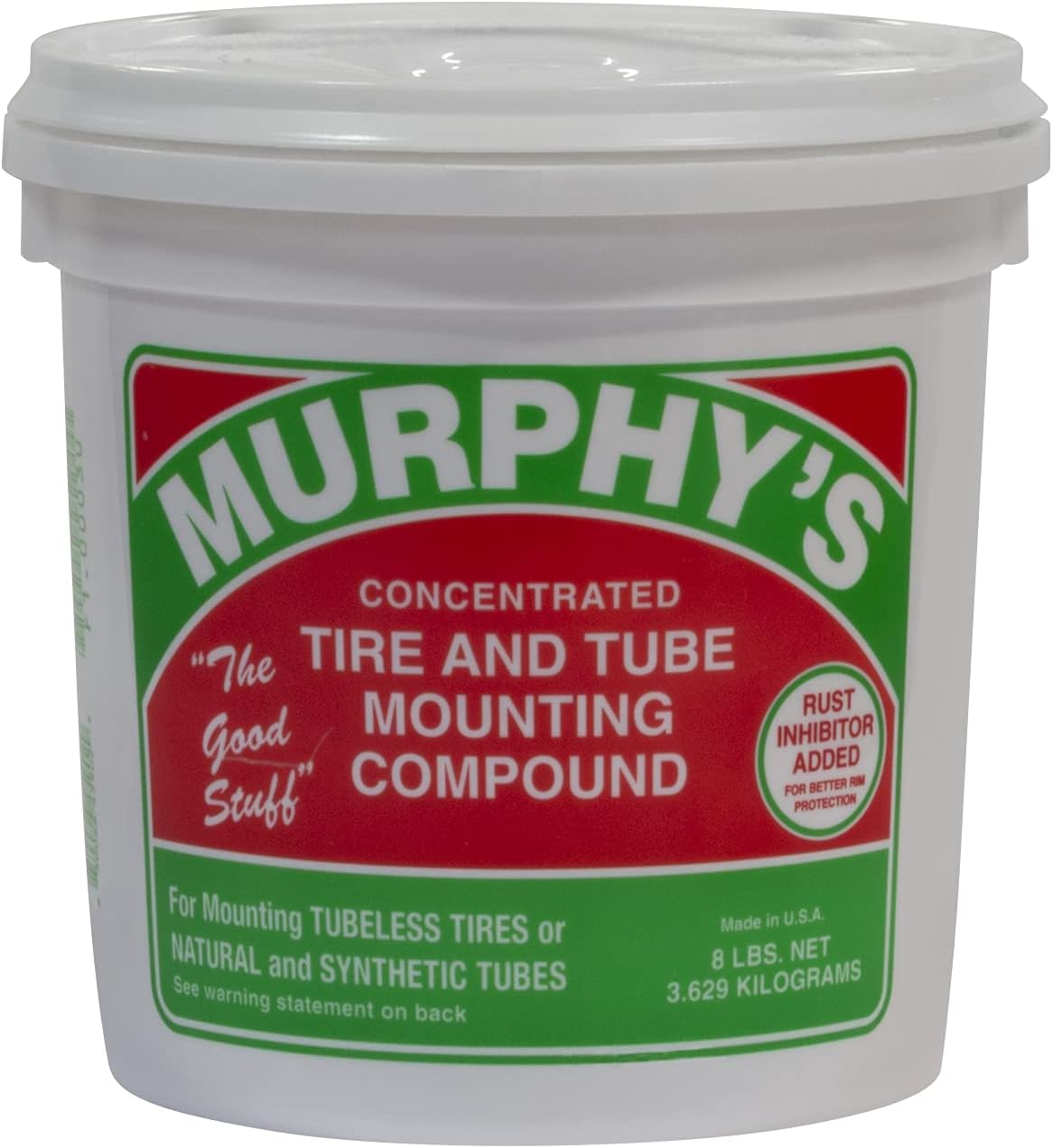
A concentrated tire and tube mounting compound designed to help simplify mounting rubber tires and tubes on passenger, semi truck, construction, and OTR applications. Its ultra-thick formula packs beads effectively and includes rust inhibitors to help protect against corrosion during use.

Monitor tire tread wear with a smart, color-coded depth gauge that shows clear condition ranges at a glance. The bar is range marked for fast, easy readings, helping you maintain safer traction and performance. Each gauge is portable with a pocket clip, and the set includes 20 units for daily use and sharing.

The SAFELIFE dial tire tread depth gauge measures tread depth in 1/32 inch increments with clear, easy-to-read 2-inch dial face. Color zones using a traffic light system help you quickly judge whether tread is low, marginal, or ample for safer driving. Built with a durable zinc cast body and a metal detect probe for precise, comfortable use across cars, motorcycles, trucks, and buses.
Tread Life and Maintenance Expectations
Tread life depends on tire design, rubber compound, alignment, inflation, rotation, road surface, climate, and driving style. A long warranty does not mean the tire can be ignored. Likewise, a performance tire with a shorter warranty can last well if the car is aligned, pressures are checked, and the driver avoids harsh acceleration and cornering.
Tread Life Comparison
Touring tires commonly offer higher mileage warranties than performance tires. For example, the Michelin Defender2 is listed at 80,000 miles, and the Hankook Kinergy PT H737 is listed up to 90K for some speed ratings. By comparison, the Michelin Pilot Sport All Season 4 is listed with warranty entries of 30,000 and 45,000 miles depending on fitment, while the Continental ExtremeContact DWS 06 Plus lists a 50K limited warranty.
For a Honda Accord driven mostly as a commuter, the best tire is usually the one that balances wet grip, comfort, tread life, and correct fitment—not the one with the sportiest marketing language.
Maintenance Requirements Overview
Good maintenance matters more than many drivers realize. Check tire pressure at least monthly when the tires are cold, and include the spare if your Accord has one. Rotate tires according to the owner’s manual; if no other guidance applies, many tires are rotated around every 5,000 to 8,000 miles. Replace tires when tread reaches 2/32 inch, and sooner if wet braking, snow traction, cracking, bulges, or uneven wear become concerns.
- Pressure: Use the cold PSI on the driver-door label or owner’s manual.
- Rotation: Follow Honda’s maintenance schedule and the tire maker’s warranty rules.
- Alignment: Check alignment if the car pulls, the steering wheel is off-center, or wear is uneven.
- Balancing: Balance new tires and rebalance if vibration appears.
- Tread depth: Replace at 2/32 inch minimum, but consider earlier replacement for heavy rain or snow driving.
Top Recommended Tires for Different Driving Conditions
The right tire depends on your Accord’s exact size and how you drive. Use these as category examples, then confirm availability in your tire size and load/speed rating.
- Best long-life commuter choice: Michelin Defender2 — a strong fit for drivers who want quiet daily comfort and an 80,000-mile warranty.
- Best value-minded long-mileage touring option: Hankook Kinergy PT H737 — a touring all-season tire with up to 90K mileage warranty on H- and T-rated sizes.
- Best all-weather option for occasional snow: Michelin CrossClimate2 — a 3PMSF-certified tire with a 60,000-mile warranty for drivers who want better winter confidence than a basic all-season tire.
- Best sporty all-season feel: Michelin Pilot Sport All Season 4 — a performance all-season choice for drivers who want sharper handling and are comfortable with shorter warranty coverage than many touring tires.
- Best sporty wet/dry balance: Continental ExtremeContact DWS 06 Plus — a UHP all-season tire with a 50K limited warranty and strong appeal for drivers who want grip without moving to a summer-only tire.
- Best comfort-focused premium option: Michelin Primacy MXM4 — a premium all-season tire focused on comfort, wet braking, and refined road manners, with mileage warranty coverage up to 55,000 miles depending on size.
[Products Worth Considering]

Measure tire tread depth quickly and accurately with this LUMITECO dial gauge that reads in 1/32" increments up to 14/32". The color-coded green/yellow/red zones make it easy to judge tire wear and know when replacement is needed. A rugged, compact design with a protective pouch helps keep the gauge ready for use on cars, trucks, motorcycles, and more.

The Airmoto portable tire inflator quickly and accurately fills car, truck, SUV, motorcycle, and bicycle tires up to 120 PSI with auto shut-off when your target pressure is reached. Its large LCD, multi-unit pressure display, and digital gauge make it easy to dial in settings and verify readings, while the built-in LED flashlight helps in low light. The included polyurethane hard carrying case and storage mesh pocket keep the inflator and accessories protected and organized.

Add style while helping protect your tire valve stems with handmade crystal rhinestone caps and a durable plastic insert. These caps resist corrosion and help keep out rain, snow, and muddy water, extending tire life. Textured non-slip design makes them easy to grip for quick install and removal when checking tire pressure.
Frequently Asked Questions
Can I mix commuter and performance tires on my Honda Accord?
It is not recommended. Mixing tire categories, tread patterns, tread depths, or grip levels can make the car handle unpredictably, especially in rain or emergency braking. For best stability, use four matching tires of the correct size, load index, speed rating, and similar tread depth unless Honda or a qualified tire professional advises otherwise.
How do tire warranties differ between commuter and performance tires?
Commuter and touring tires usually have longer mileage warranties because they are designed for even wear and daily comfort. Performance tires often have shorter warranties because their compounds and construction prioritize grip and response. Always read the warranty rules for rotation, alignment, pressure checks, and staggered-size limitations.
What is the ideal tire pressure for commuter vs. performance tires?
Use the cold tire pressure listed on your Accord’s driver-door Tire and Loading Information Label or owner’s manual. Do not use a different PSI just because the tire is marketed as commuter or performance. Check pressure when the tires are cold, ideally before driving or after the car has been parked for several hours.
How often should I rotate commuter and performance tires?
Follow your Honda owner’s manual and the tire manufacturer’s warranty requirements. If no special guidance applies, many passenger tires are rotated about every 5,000 to 8,000 miles. Rotate sooner if you see uneven wear. Some directional, asymmetric, or staggered setups may require a specific pattern or may not be fully rotatable.
Do performance tires impact fuel efficiency significantly?
They can. Some performance tires have more rolling resistance than comfort-focused touring tires, especially if they use softer compounds or wider sizes. The difference depends on the exact tire, size, pressure, road surface, and driving style. If fuel economy is a top priority, compare low-rolling-resistance touring tires first.
Conclusion
For most Honda Accord drivers, commuter or touring tires are the better everyday choice because they match the Accord’s comfortable, efficient, practical personality. They are quieter, often last longer, and usually cost less over time. Performance tires make sense if you want sharper steering and stronger grip, but they require a bigger budget and more attention to maintenance. Before buying, confirm your Accord’s exact tire size, load index, speed rating, and cold PSI on the door label or owner’s manual. That fitment check matters more than any brand name or tire category.
Sources
- NHTSA TireWise Tire Safety — tire size, pressure, tread depth, rotation, and safety guidance.
- Michelin Defender2 — 80,000-mile warranty and touring tire reference.
- Michelin CrossClimate2 — 3PMSF certification and 60,000-mile warranty reference.
- Michelin Pilot Sport All Season 4 — performance all-season warranty and positioning reference.
- Continental ExtremeContact DWS 06 Plus — 50K limited warranty and UHP all-season reference.
- Hankook Kinergy PT H737 — touring all-season mileage warranty reference.