
What are wheel locks? Wheel locks are special lug nuts (or lug bolts) with a unique pattern on the head that only a matching key can turn. You replace one standard lug nut on each wheel with a lock, so a thief with an ordinary socket cannot remove the wheels. A set of four usually costs $20 to $80 and takes about 15 minutes to install.
Many new cars come with locks already fitted, and many owners do not realize it until a tire shop asks for the key. Others wonder whether locks are worth buying at all.
This guide explains how wheel locks work, the main types, who really needs them, how to install them correctly and what to do if you lose the key.
Key Takeaways
- Wheel locks are locking lug nuts that need a matching key to remove.
- You install one per wheel, replacing a single standard lug nut.
- Main types: pattern-key locks, spline-drive locks and free-spinning (rotating collar) locks.
- They are most worth it for expensive wheels, street parking and high-theft areas.
- Write down the key code and store the key in the same place every time.
In this guide:
- What Are Wheel Locks?
- How Wheel Locks Work
- Types of Wheel Locks
- Do You Need Wheel Locks?
- How to Install Wheel Locks
- Lost Your Wheel Lock Key?
- FAQ
What Are Wheel Locks?
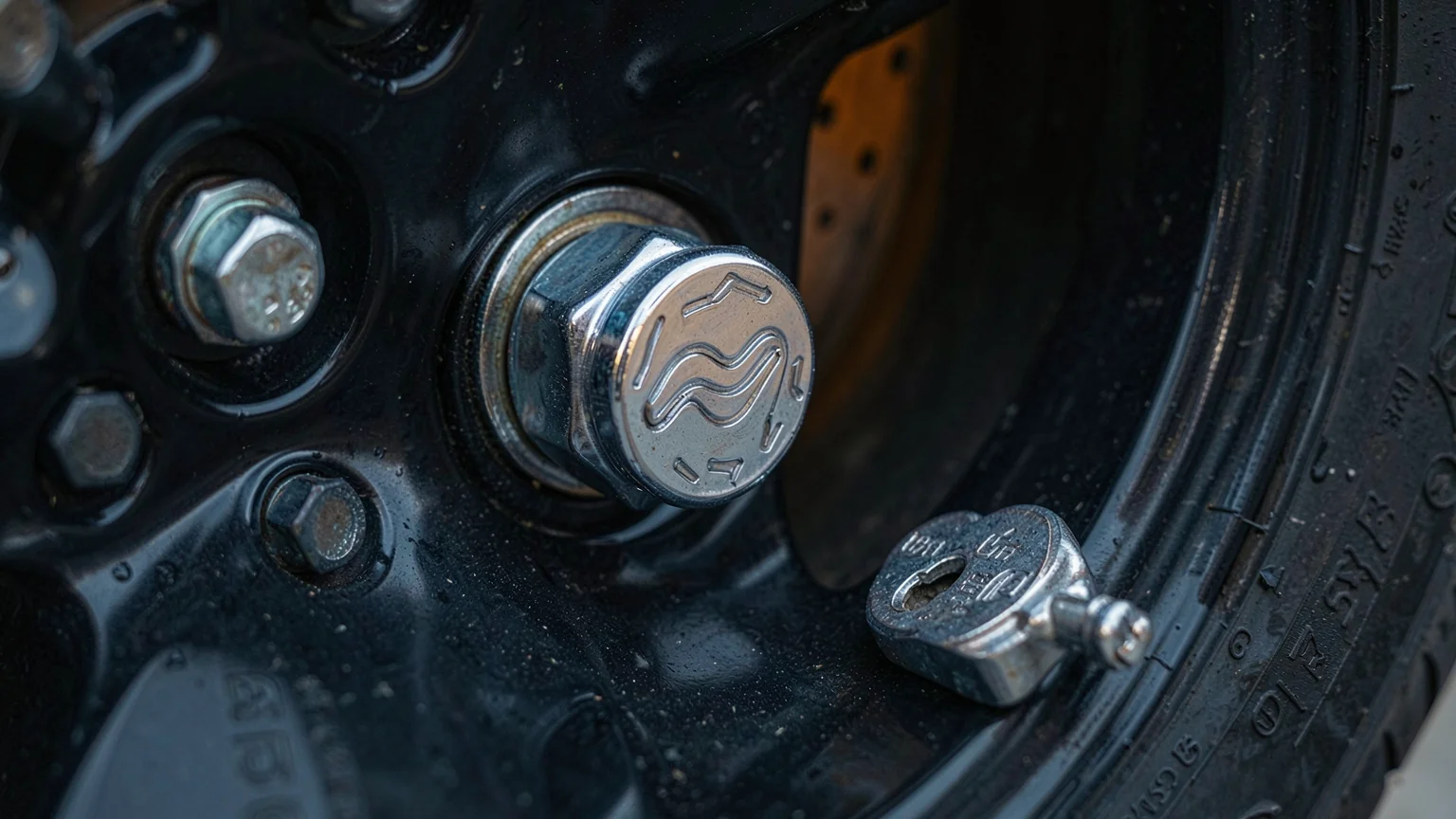
A wheel lock is an anti-theft lug nut. It looks similar to a normal lug nut, but instead of six flat sides, its head has a smooth, rounded shell with a unique groove pattern or spline cut into it. Only the matching key, a small socket adapter, can grip that pattern and turn it.
Wheel locks are also called locking lug nuts, security lug nuts or locking wheel nuts. On cars that use lug bolts instead of nuts, such as many European models, they are called locking wheel bolts.
Products Worth Considering

This car D-wheel lock nut key provides an anti-theft solution for D-shaped wheel lock bolts, helping keep your wheels secure. It features a flower-shaped internal pattern that resists micro-adjustment theft while allowing removal and mounting of compatible locking nuts. Made for reliable performance under high torque, it’s easy to use with standard socket wrench turning for quick tire maintenance and emergency repairs.

Upgrade your wheels with MIKKUPPA M12x1.5 mag seat lug nuts built for secure, corrosion-resistant performance. These closed-end chrome lug nuts are a direct replacement for select Toyota models, including Camry, Corolla, RAV4, Sienna, Avalon, Highlander, Matrix, Venza, and Prius. Triple-chromium plating and cold-forged, heat-treated steel help deliver strength for daily driving and replacement needs.

These M14x1.5 closed-end chrome lug nuts are a one-piece replacement designed for secure fitment on compatible GM, Ford, and select Chrysler/Dodge models. Featuring a 60-degree conical seat and anti-rust chrome plating, they help resist corrosion and maintain a bright look for everyday driving. Built for long-term durability, they include OEM-style part references and are backed by 12 months of support.
How Wheel Locks Work
Each wheel is held on by four to eight lug nuts. With wheel locks, you swap one of those nuts on every wheel for a lock. The other lug nuts stay standard.
To remove a wheel, you first fit the key over the lock, then use a lug wrench or socket on the key. Without the key, a regular socket just spins around the smooth shell. That one stubborn nut per wheel makes stealing all four wheels slower and noisier, which is often enough to send thieves elsewhere.
Each key pattern comes in many variations, so your key should not fit a neighbor’s locks. Quality brands also register key codes so you can order a replacement.
Types of Wheel Locks
| Type | How It Works | Best For | Security Level |
|---|---|---|---|
| Pattern-key locks | Curved or irregular groove pattern on the face; key matches the pattern | Most cars, trucks and SUVs | Good |
| Spline-drive locks | Splines around the outside; key slides over them | Aftermarket wheels with small lug holes | Moderate |
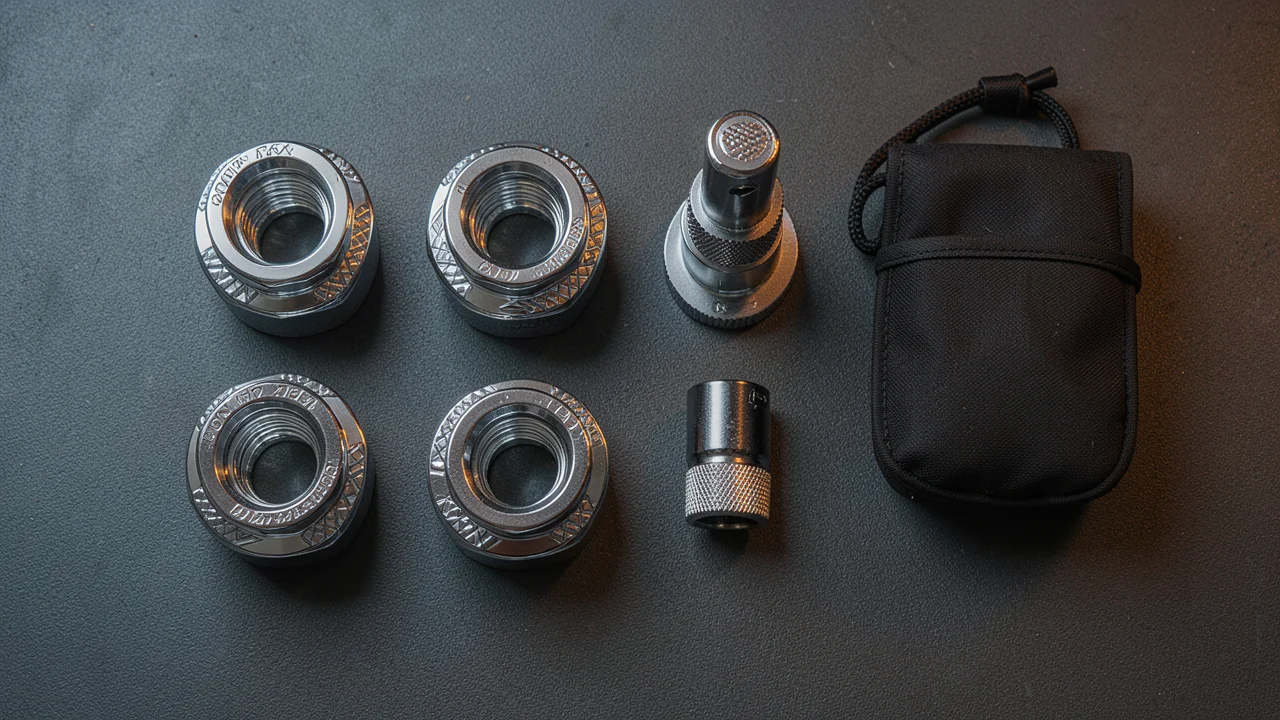
| Free-spinning (rotating collar) locks | Outer shell spins freely, so removal tools cannot grip it | High-theft areas and expensive wheels | Higher |
| Locking wheel bolts | Same idea, but a bolt instead of a nut | Cars with lug bolts (many European models) | Good |
Spline lug nuts are sometimes sold as “locks” for tuner wheels, but common spline keys are widely available, so they offer less protection. Read more in our guide to spline lug nuts.
Note: Match the lock’s thread size (for example M12x1.5 or M14x1.5) and seat type (conical, ball or flat) to your vehicle and wheels, just like regular lug nuts.
Do You Need Wheel Locks?
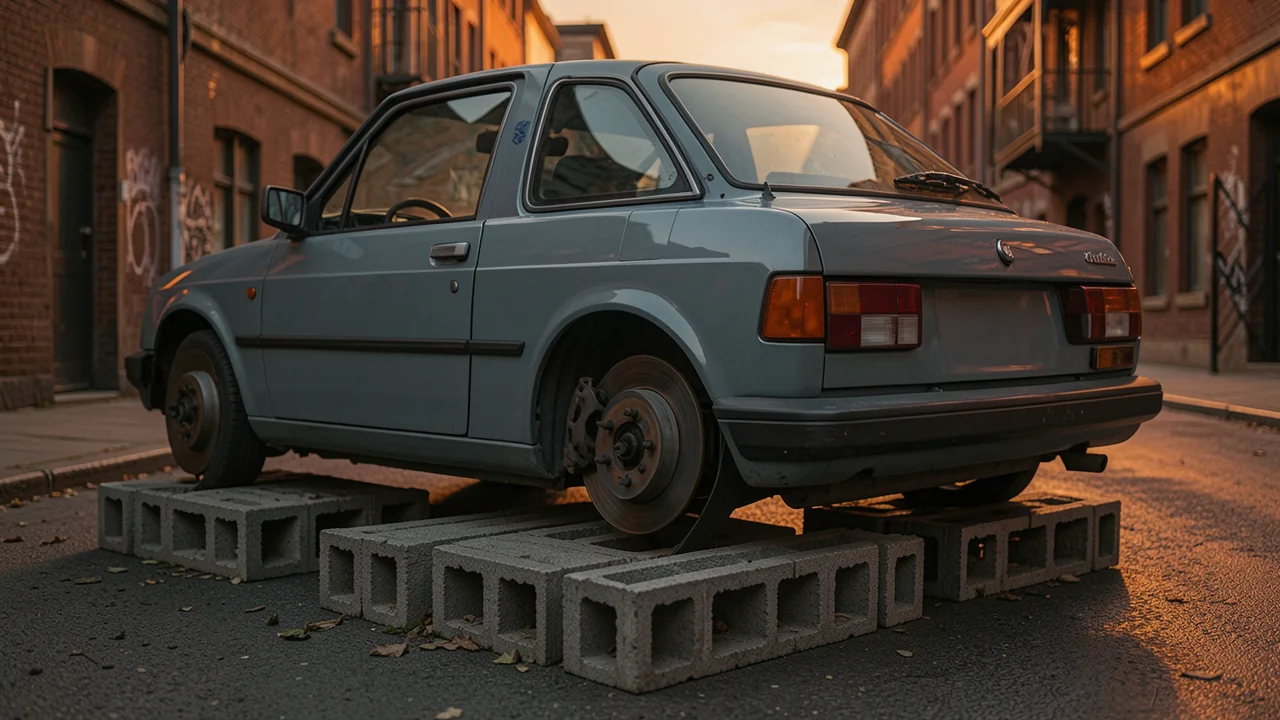
Wheel and tire theft is a real cost. According to WardsAuto, insurers reported a 6% year-over-year rise in wheel and tire theft claims in late 2023, with an average claim of about $2,800 to replace four wheels and tires. Even so, not every driver needs locks.
| Your Situation | Wheel Locks Recommended? |
|---|---|
| Expensive factory or aftermarket wheels (19 inches and up) | Yes |
| Park on the street or in open lots overnight | Yes |
| Live in a city or area with reported wheel thefts | Yes |
| Truck or SUV with popular off-road wheels and tires | Yes |
| Older car with basic steel wheels, garaged at night | Optional |
| You often lose small items or rely on roadside service | Consider the hassle first |
Pros and cons of wheel locks
- Pro: cheap theft deterrent compared with a $2,000+ loss.
- Pro: may slow thieves enough that they skip your car.
- Con: losing the key turns a simple flat tire into a bigger problem.
- Con: impact guns can damage the lock or key over time.
- Con: determined thieves with removal tools can still defeat basic locks.
How to Install Wheel Locks
Installing locks is quick, but doing it right protects your key and your wheels. Follow these steps for each wheel:
- Park on level ground and set the parking brake.
- Remove one standard lug nut from the wheel. Leave the others tight.
- Thread the lock on by hand to avoid cross-threading.
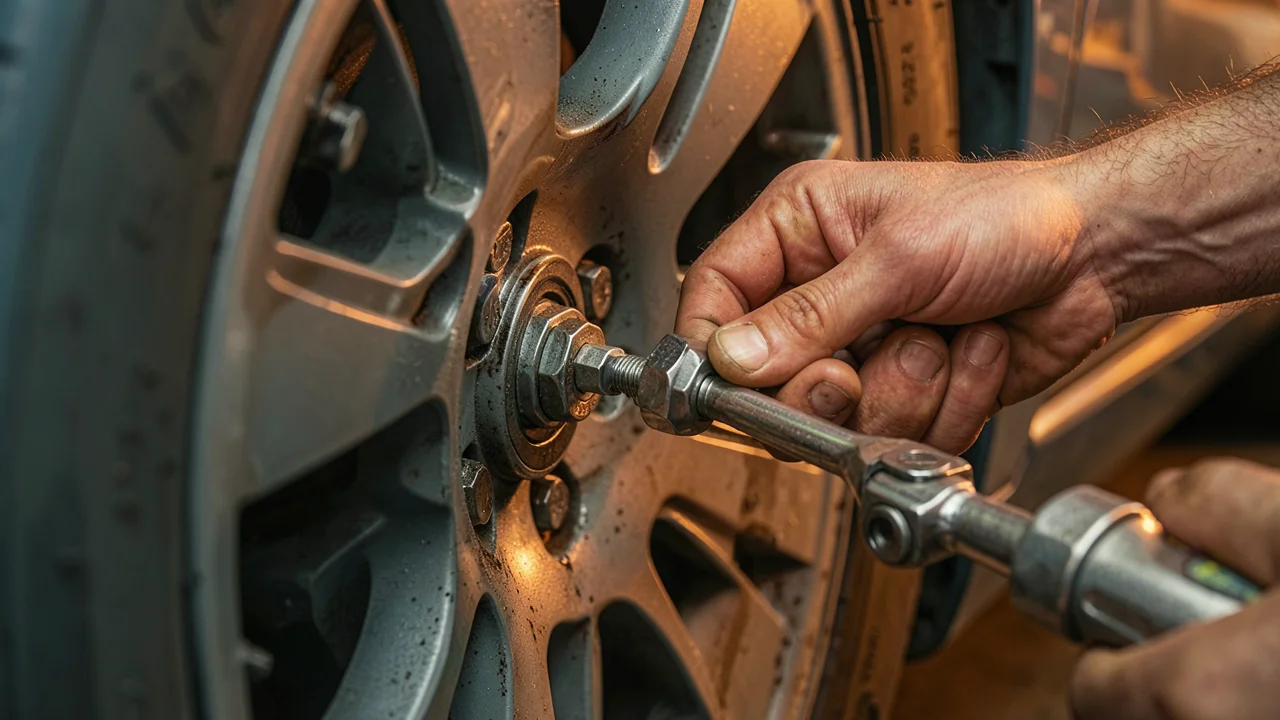
- Fit the key and tighten with a hand torque wrench to your vehicle’s lug nut spec.
- Repeat on all four wheels, then recheck torque after 50 to 100 miles.
- Record the key code from the packaging and store it somewhere safe outside the car.
Never use an impact gun on wheel locks. It can round off the pattern or crack the key. If a tire shop handles your wheels, ask them to hand-tighten the locks.
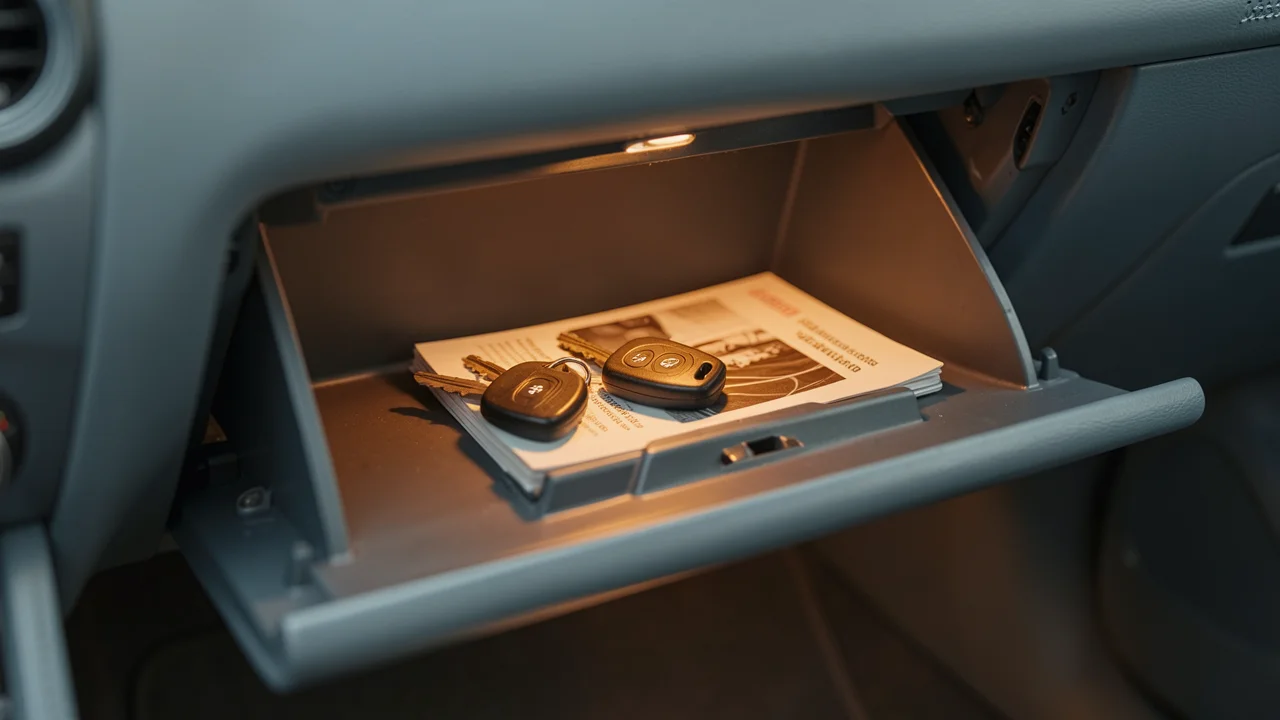
Pro Tip: Keep the key in the same spot every time, such as the glovebox or with the jack. Put a note on the tire shop paperwork reminding technicians where the key goes back.
Not sure about torque? See our guides for the Toyota RAV4 lug nut torque and Honda CR-V lug nut torque as examples.
Products Worth Considering

Upgrade your wheels with MIKKUPPA closed-end lug nuts designed for reliable fit and corrosion resistance. The one-piece, cold-forged and heat-treated steel construction helps resist rust and stripping, while the integrated finish delivers a durable black appearance. Built to OEM standards with a conical 60-degree seat, these nuts provide a secure solution for compatible Ford, Honda, Jeep, and Chevrolet models.

The Trivd Frol 1/2" air impact wrench delivers high performance torque up to 1500 ft-lbs with a twin hammer impact mechanism for strong, balanced blows. It features an ergonomic grip, compact lightweight design, and quick-stop control with 3 forward speeds up to 8000 RPM plus a reverse speed. Built for demanding automotive repair and tire shop work, the rear exhaust helps keep debris away from the surface.

This 1/2-inch drive breaker bar delivers powerful leverage for loosening and tightening stubborn lug nuts and automotive fasteners. The 180-degree flex head helps you reach tight spaces at the angle you need, making tire and brake jobs easier. A spring-loaded ball detent design holds 1/2-inch sockets securely while the chrome-moly head provides durable strength for everyday use.
Lost Your Wheel Lock Key?
Do not panic. You have several options:
- Check the usual spots: glovebox, center console, trunk under the floor, and with the jack and spare tire.
- Order a replacement key using the key code from your lock packaging or owner’s paperwork.
- Ask your dealer. If the locks came from the factory, the dealer may be able to supply a key based on the code or a pattern match.
- Visit a tire shop. Many have master kits or removal tools and can remove locks for a fee.
- Use a lock removal socket designed to bite into the lock. This usually destroys the lock, so replace it afterward.
For a step-by-step example, see our guide on how to remove wheel locks without the key, and our review of a wheel lock removal socket set.
Wheel Locks FAQ
Are wheel locks worth it?
For most drivers with valuable wheels or street parking, yes. A $20 to $80 set can deter thieves from taking wheels and tires that cost thousands to replace. If your car has inexpensive steel wheels and sits in a garage, locks are optional.
Do new cars come with wheel locks?
Many do, especially models with large alloy wheels, and dealers often add them as accessories. Look for one differently shaped lug nut on each wheel, and check the glovebox or spare tire area for the key.
Can thieves remove wheel locks?
Determined thieves with special tools can remove some locks, especially basic spline types. Free-spinning locks and quality pattern-key locks are harder to defeat. Locks work best combined with good parking habits and other deterrents.
Can a tire shop remove wheel locks without the key?
Yes. Most tire shops have removal tools or master key sets. Expect to pay a fee per lock. The lock is often damaged in the process, so buy a new set afterward.
Do wheel locks affect wheel balance?
No, not in any meaningful way. A wheel lock weighs about the same as a standard lug nut, so it does not cause vibration. Make sure the lock’s seat matches the wheel so it clamps evenly.
How much do wheel locks cost?
Most wheel lock sets cost about $20 to $80 for four locks and one key. Premium free-spinning designs cost more. Replacement keys usually cost $15 to $40 when ordered with your key code.
Bottom Line
So, what are wheel locks? They are low-cost locking lug nuts that make your wheels much harder to steal. One lock per wheel, paired with a unique key, can turn a quick theft into a job most thieves will skip.
If you have valuable wheels or park outdoors, install a quality pattern-key or free-spinning set, tighten by hand with a torque wrench and record the key code. Then keep the key in the same place every time, so a flat tire never becomes a bigger headache.
Sources
Products Worth Considering

The Dr.Roc spare tire tool kit helps you release, lower, or raise your spare tire with reliable extension tools and a lug nut wrench. It is made from rustproof automotive-grade steel and includes an organized carry case for convenient storage. Designed for compatibility with select GM models from the late 1990s through 2019, it uses upgraded extension components to install and remove spare tires with less hassle.

This professional wheel and rim brush kit makes it easy to lift brake dust, grime, and dirt from wheels and tires without scratching finishes. The brushes feature soft, metal-free wool heads and a flexible 360-degree rim brush design for reaching hard-to-clean areas. Includes multiple brush types plus accessories for thorough car, motorcycle, and general vehicle detailing.

This spare tire tool kit is designed for the 2004 to 2018 Ford F-150 to help you loosen and tighten wheel lug nuts and manage the spare tire and provided jack functions from underneath the vehicle. It includes the lug nut wrench and extension pieces plus a convenient storage carrying case for organized transport. The jack itself is not included.