
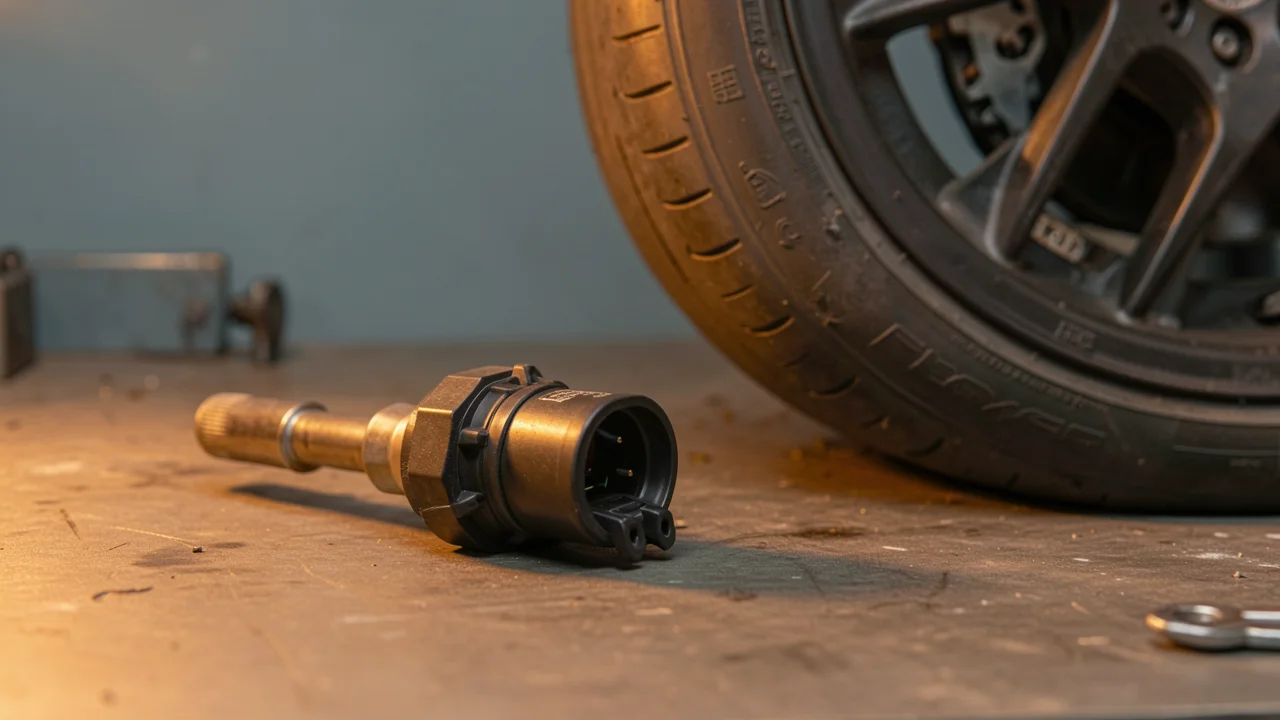
A BMW tire pressure sensor is a battery-powered unit inside each wheel that sends pressure and temperature data to the car, part of BMW’s RDC (Tire Pressure Control) system. To reset it after inflating, go to Vehicle Status > Tire Pressure Monitor > Perform reset in iDrive, then drive so the system can learn the new pressures. If a sensor fails, it usually needs replacing, which typically costs about $150-$400 per wheel.
Older BMWs with the indirect RPA or Flat Tire Monitor system have no sensors at all and only need a reset. This guide explains both systems, how to reset them, what common fault messages mean and what replacement costs.
Key Takeaways
- BMW uses direct RDC sensors on most modern models and indirect RPA/FTM on many older ones.
- Reset in iDrive: Vehicle Status, Tire Pressure Monitor, Perform reset, then drive.
- Sensor batteries are sealed and last roughly 5-10 years.
- Replacement: about $150-$250 at an independent shop, $250-$400+ at a dealer.
- Winter or aftermarket wheels need compatible sensors to avoid a fault message.
In this guide:
- How BMW Tire Pressure Monitoring Works
- How to Reset BMW Tire Pressure Sensors
- Common Faults and Fixes
- BMW Tire Pressure Sensor Replacement
- FAQ

How BMW Tire Pressure Monitoring Works
| System | How It Works | Shows PSI? | Typical Models |
|---|---|---|---|
| RDC (direct) | Sensor in each wheel transmits pressure and temperature | Yes, per tire | Most 2014+ F and all G-chassis BMWs |
| RPA / FTM (indirect) | Compares wheel speeds through ABS sensors | No, warning only | Many 2000s and early F-chassis cars |
If your iDrive shows a pressure reading for each tire, you have RDC sensors. If it only shows a car outline with no numbers, you likely have the indirect run-flat indicator. Learn more about direct vs indirect TPMS.
Products Worth Considering
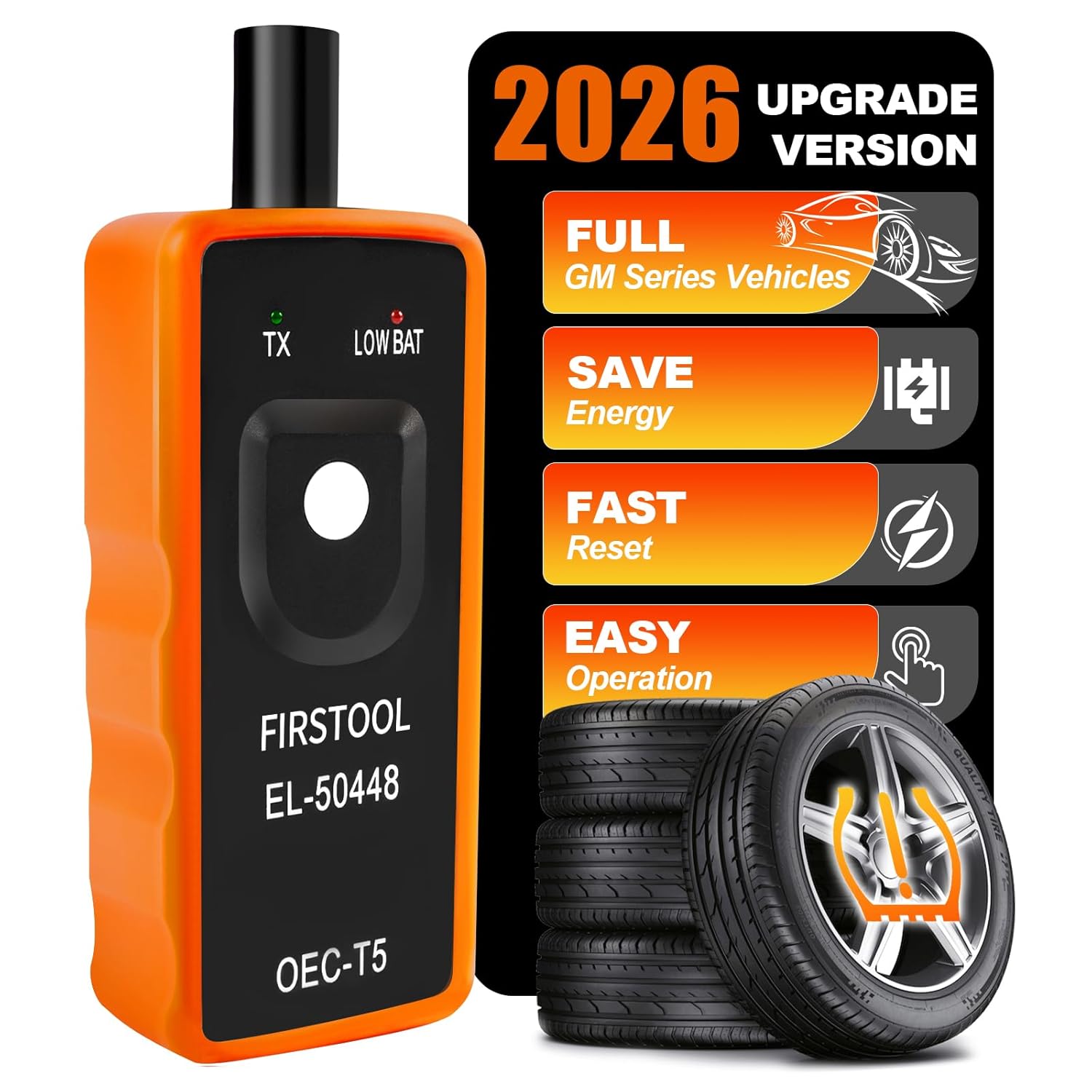
This TPMS relearn tool helps you quickly activate, match, and reset GM tire pressure sensors to keep the vehicle monitoring system working properly. It clears tire pressure alarms and dashboard warning lights after sensor replacement or tire rotation, and supports learning for common 315/433 MHz TPMS sensors. Designed for simple one-button operation, it can help you avoid unnecessary trips to repair shops.

Masoll Gen 2 external TPMS sensors are a DIY replacement set of 4 for select GM vehicles made after 2006, helping you shut off the TPMS warning light quickly. Simply screw the sensors onto the tire valves and sync to your car ECU using the included EL-50448 relearn tool. Dual-frequency 315/433 MHz design provides OEM-level performance with accurate readings and replaceable batteries for about two years.

This GM TPMS relearn and reset tool (EL-50448) helps you activate and reset OE/OEM compatible tire pressure sensors for many Chevrolet, GMC, Buick, and Cadillac vehicles. It includes a pre-installed 9V alkaline battery for ready-to-use performance and features a one-button design for quick DIY TPMS relearn. Use it to clear the TPMS warning light, set the correct dashboard tire pressure, and test sensor operation.
How to Reset BMW Tire Pressure Sensors
Always set all tires to the pressure on the door jamb label while cold before you reset.
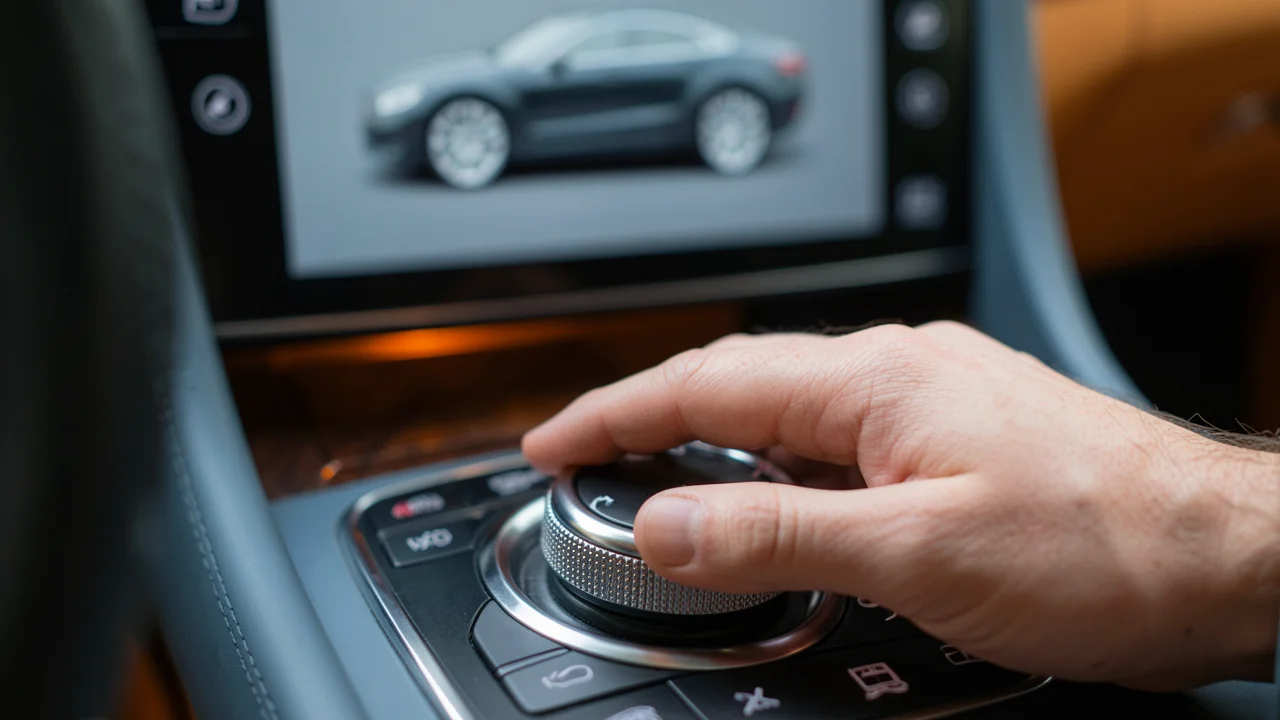
Newer BMWs with iDrive
- Inflate all four tires to the placard pressure.
- Start the engine but don’t drive yet.
- Open the car or My Vehicle menu, then Vehicle Status.
- Select Tire Pressure Monitor, then Perform reset (on some G-chassis cars, choose your tire type under Tire settings).
- Drive normally. The reset completes after several minutes of driving.
Older BMWs without iDrive
Many E-chassis cars reset through the turn signal stalk button or an RPA/FTM button on the dash or console: press and hold until the warning light flashes, then drive.
Note: Never reset with a low tire. The system stores your current pressures as “correct,” so a reset at low pressure stops it from warning you properly.
Common BMW Tire Pressure Sensor Faults and Fixes
| Message / Symptom | Likely Cause | Fix |
|---|---|---|
| Yellow tire symbol, one wheel highlighted | Low pressure or slow leak | Inflate, inspect for punctures, reset |
| “TPM malfunction” or failure message | Dead sensor battery or failed sensor | Scan sensors, replace the faulty one |
| Gray or blank wheel readings | Reset in progress or sensor not detected | Drive 10-15 minutes; if it persists, scan |
| Warning after new wheels | Wheels without compatible sensors | Install BMW-compatible sensors |
| Warning on cold mornings | Pressure drop from cold air | Top up to cold spec |
If one tire won’t report at all, read our guide to a TPMS not reading one tire. And if a run-flat lost pressure, check whether it can be patched before driving far.
BMW Tire Pressure Sensor Replacement
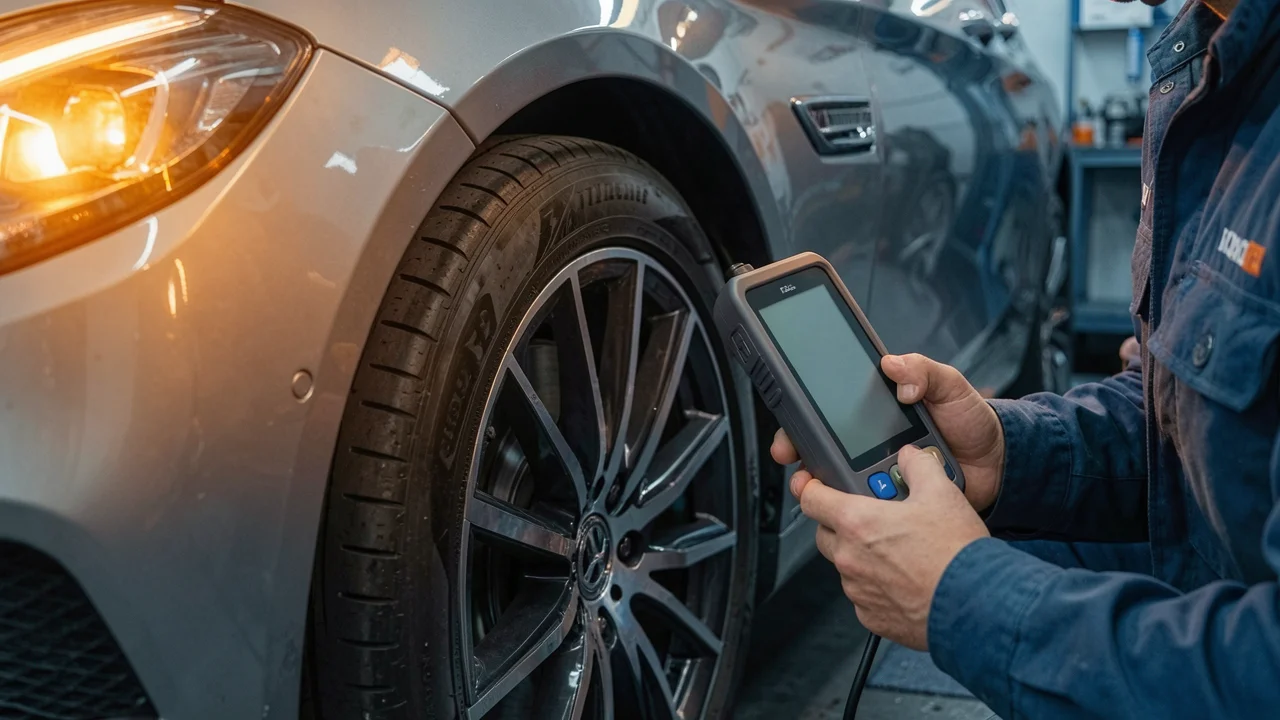
BMW sensors use sealed batteries, so a dead battery means a new sensor. Most last 5-10 years, and failures often show up in groups because sensors were installed at the same time.
| Option | Typical Cost per Sensor |
|---|---|
| DIY (sensor plus tool) | $75-$125, plus tire mounting |
| Independent BMW specialist | $150-$250 |
| BMW dealer | $250-$400+ |
YourMechanic estimates an average of about $199 for a 530i xDrive sensor replacement. Because the tire must come off the wheel, replacing sensors during a tire change saves labor. See our guides to TPMS sensor replacement cost and TPMS battery life.

Planning a winter wheel set? Buy sensors for those wheels too, and confirm the bolt pattern in our BMW bolt pattern guide.
Products Worth Considering

This TPMS sensor training and relearn reset tool is customized for Ford, Lincoln, and Mercury vehicles to help activate tire pressure programming after sensor replacement or tire rotation. It can activate individual tire pressure sensors with one-button operation, helping prevent TPMS warning light illumination. It is not a sensor programming tool and cannot program replacement sensors—use it to trigger/activate sensors only.

The UYYE TPMS relearn tool helps activate and relearn tire pressure monitor sensors quickly, typically in minutes. It supports TPMS learn mode resetting using a simple three-step process: enter learn mode, position the tool near the valve stem, and press the learn button. Designed for specific GM models, it streamlines sensor programming and reduces trips to dealers or tire shops.

The AICEL TPMS relearn tool helps you quickly reset or relearn tire pressure sensors after replacement, tire rotation, or resolving tire pressure alarms. It provides an activation reset function so your vehicle’s TPMS can operate optimally, saving time and money on frequent visits to an auto shop. Designed for easy use on most vehicles, it works by placing the tool near the valve stem and using the learn button.
BMW Tire Pressure Sensor FAQ
How do I reset the tire pressure sensor on my BMW?
Inflate all tires to the door placard pressure, start the engine, then go to Vehicle Status, Tire Pressure Monitor and Perform reset in iDrive. Drive for several minutes to complete the reset.
How long do BMW tire pressure sensors last?
Most BMW TPMS sensors last about 5-10 years. The battery is sealed inside, so when it dies, the whole sensor must be replaced.
Can I drive with a BMW TPM malfunction?
Yes, but the system can’t warn you of low pressure. Check your tires manually with a gauge and get the faulty sensor diagnosed soon, especially on run-flat tires where a flat is hard to spot.
Do aftermarket TPMS sensors work on BMWs?
Many quality aftermarket or programmable sensors work if they are set to the correct BMW protocol and frequency. A shop with a TPMS tool can program them. Our guide to installing TPMS sensors on aftermarket wheels covers the steps.
Why does my BMW say to reset tire pressure after a rotation?
Rotating tires changes which sensor sits at which corner, and indirect systems need to relearn wheel speeds. Running a reset after rotation keeps warnings accurate.
Bottom Line
Your BMW tire pressure sensor system is either direct RDC with a sensor in each wheel or indirect RPA that uses wheel speeds. Either way, set pressures cold, run the reset in iDrive and drive to finish the process.
If you see a malfunction message, a dying sensor battery is the usual culprit. Replace sensors in sets when possible, ideally during a tire change, and your warnings will stay reliable for years.
Sources
Products Worth Considering

Replace your worn or missing TPMS sensors with pre-programmed, direct-fit sensors for compatible Ford, Lincoln, and select Mazda models. Each sensor comes ready to activate with a scan tool, helping restore accurate tire pressure monitoring and trouble-free installation. Built with a long-life CR2032 battery and tested before factory release, this set provides dependable performance with a one-year warranty.
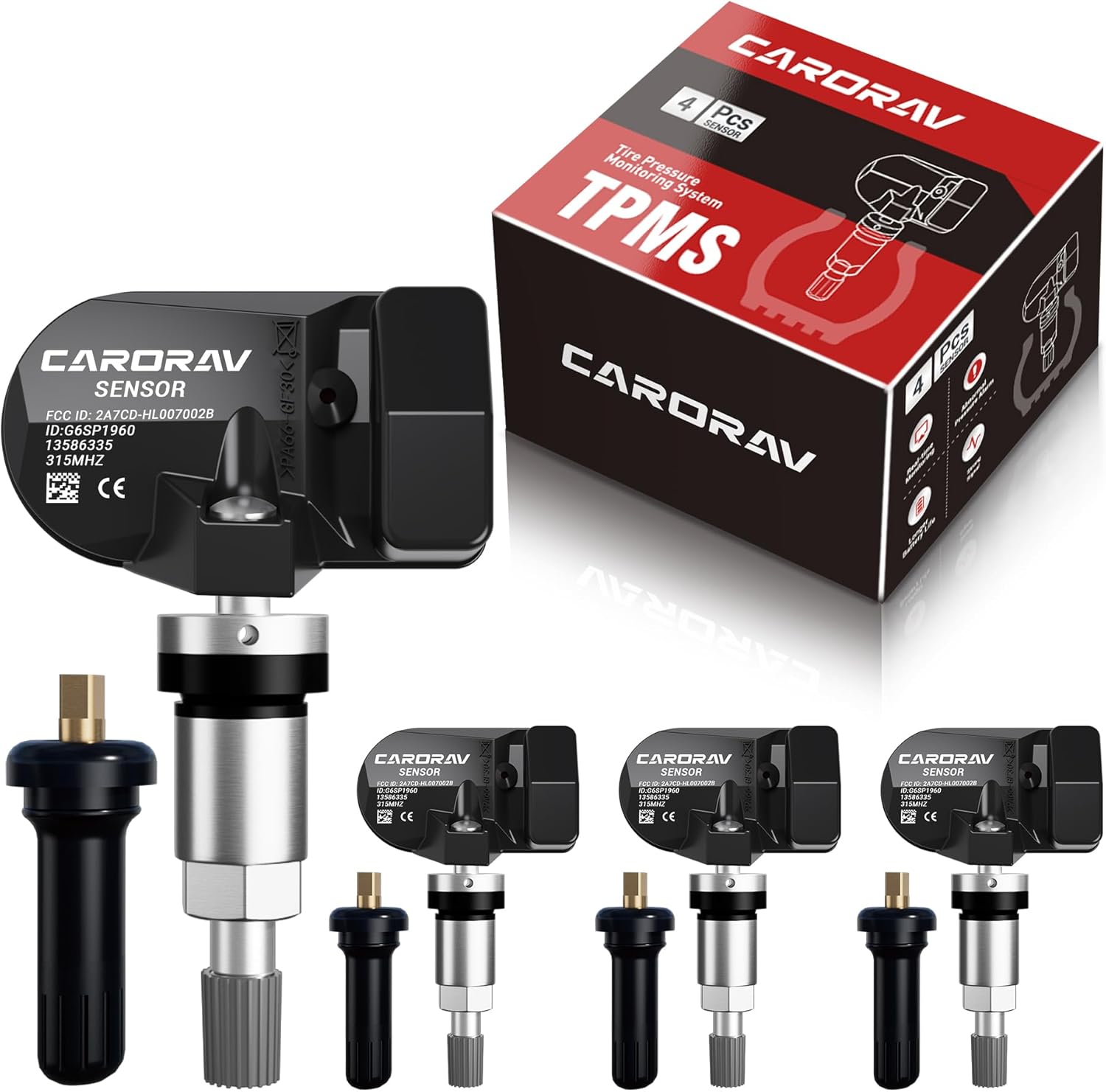
Replace worn or missing TPMS sensors with CARORAV pre-programmed GM-compatible sensors for a smoother installation experience. These 315MHz replacement sensors help monitor tire pressure in real time with long battery life, and they are designed to withstand harsh temperatures. Manual or OBDII relearn may be required to reset the system for proper recognition.

Replace worn or malfunctioning GM TPMS sensors with this 433MHz pre-programmed sensor set designed for compatibility with many Chevrolet, Buick, GMC, and Cadillac models. It includes guidance for proper OBDII relearning/pairing after installation and supports reliable long-term operation with a high-performance CR2032 battery. Quality tested for durability and performance to help restore accurate tire pressure monitoring.