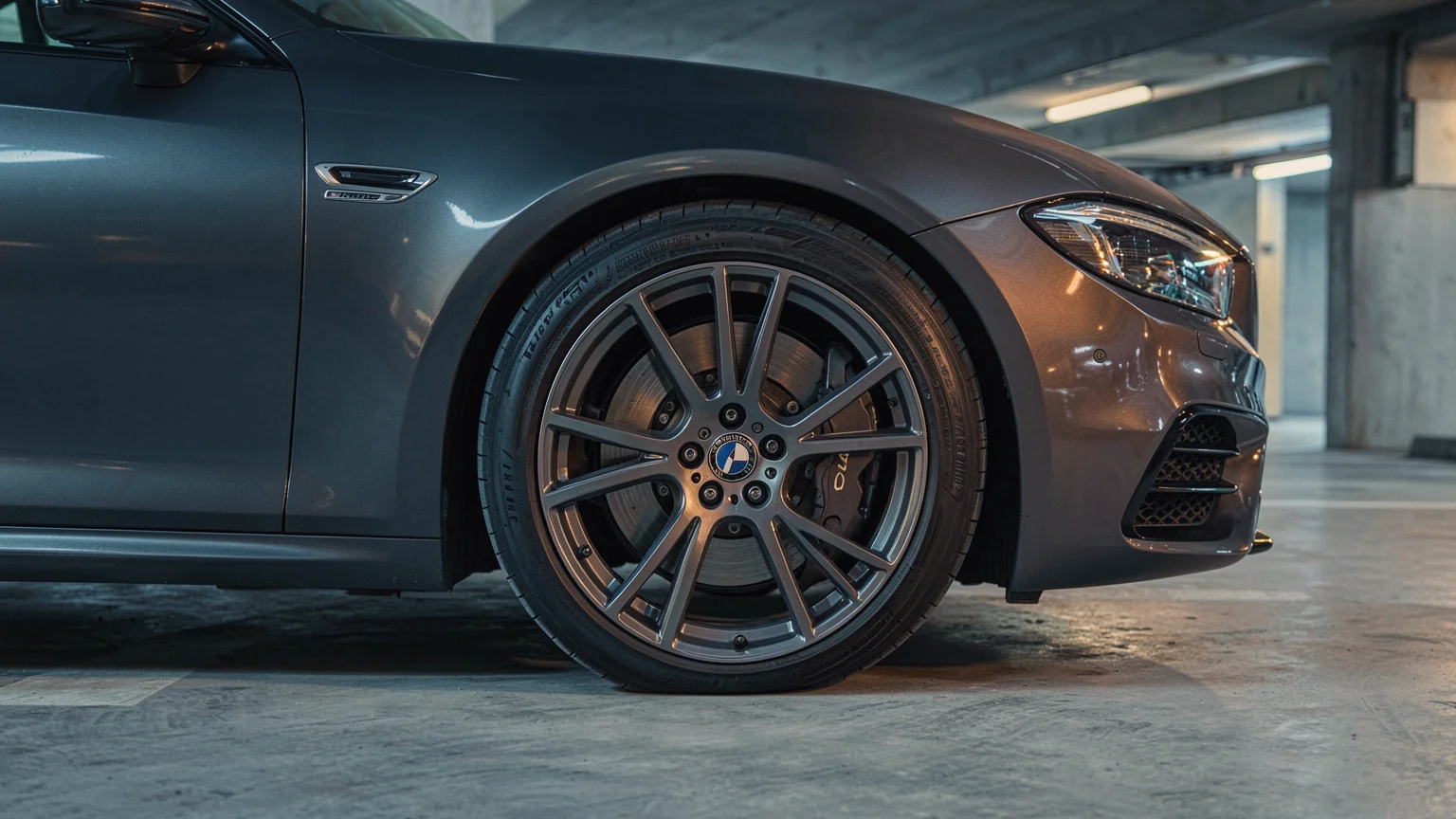
The BMW bolt pattern for most E and F-chassis models (roughly 1980s through 2018) is 5×120 with a 72.6 mm center bore and M12x1.5 lug bolts. Newer G-chassis BMWs, starting with the 2017 5 Series and 2019 3 Series, use 5×112 with a 66.6 mm center bore and M14x1.25 lug bolts.
That switch means older BMW wheels don’t bolt onto newer BMWs without adapters. Front-drive models like the 2016+ X1 and many classic four-lug cars add even more variety.
This guide lists the BMW bolt pattern by model and chassis, explains the 5×120 to 5×112 change, and shows how to tell which wheels fit your car.
Key Takeaways
- E and F-chassis BMWs: 5×120, 72.6 mm bore, M12x1.5 bolts.
- G-chassis BMWs (about 2017-present): 5×112, 66.6 mm bore, M14x1.25 bolts.
- F48 X1, F39 X2 and F44 2 Series Gran Coupe also use 5×112.
- Most E30 3 Series and older small BMWs use 4×100.
- 5×120 wheels fit 5×112 cars only with hub-centric adapters.
In this guide:
- BMW Bolt Pattern by Model
- Why BMW Switched to 5×112
- Lug Bolts, Center Bore and Torque
- Fitting Older Wheels on a New BMW
- FAQ
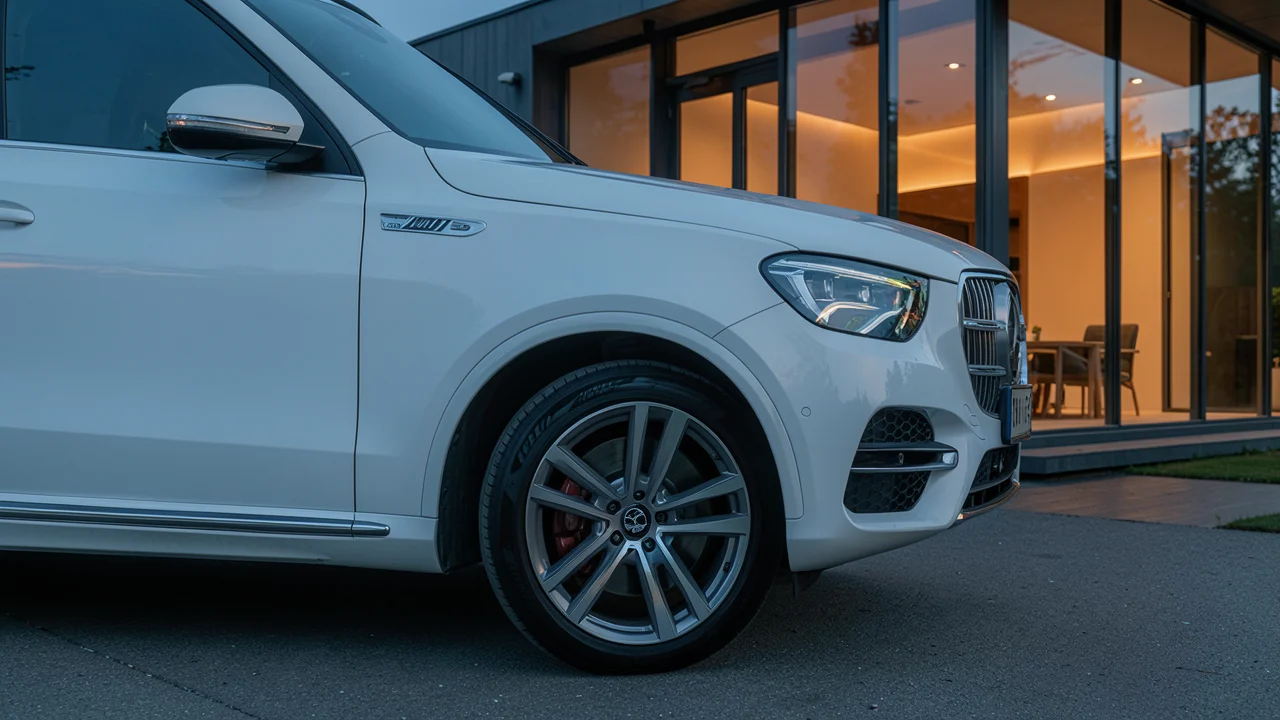
BMW Bolt Pattern by Model and Chassis
| Model | 5×120 Chassis (Years) | 5×112 Chassis (Years) |
|---|---|---|
| 2 Series / M2 | F22, F87 (2014-2021) | G42, G87 (2022+); F44 GC (2020+) |
| 3 Series / M3 | E36, E46, E90, F30, F80 (1992-2018) | G20, G80 (2019+) |
| 4 Series / M4 | F32, F82 (2014-2020) | G22, G82 (2021+) |
| 5 Series / M5 | E39, E60, F10 (1997-2016) | G30, F90, G60 (2017+) |
| 7 Series | E38, E65, F01 (1995-2015) | G11, G70 (2016+) |
| X1 | E84 (2012-2015) | F48, U11 (2016+) |
| X3 | E83, F25 (2004-2017) | G01, G45 (2018+) |
| X5 | E53, E70, F15 (2000-2018) | G05 (2019+) |
| Z4 | E85, E89 (2003-2016) | G29 (2019+) |
Classic BMWs differ again. Most E30 3 Series (1982-1994) and earlier 2002-era cars use 4×100 with a 57.1 mm bore, while the E30 M3 used 5×120. Electric models like the i4 and iX use 5×112.

Products Worth Considering

Upgrade your wheels with MIKKUPPA M12x1.5 mag seat lug nuts built for secure, corrosion-resistant performance. These closed-end chrome lug nuts are a direct replacement for select Toyota models, including Camry, Corolla, RAV4, Sienna, Avalon, Highlander, Matrix, Venza, and Prius. Triple-chromium plating and cold-forged, heat-treated steel help deliver strength for daily driving and replacement needs.

This car D-wheel lock nut key provides an anti-theft solution for D-shaped wheel lock bolts, helping keep your wheels secure. It features a flower-shaped internal pattern that resists micro-adjustment theft while allowing removal and mounting of compatible locking nuts. Made for reliable performance under high torque, it’s easy to use with standard socket wrench turning for quick tire maintenance and emergency repairs.

Upgrade your wheels with MIKKUPPA closed-end lug nuts designed for reliable fit and corrosion resistance. The one-piece, cold-forged and heat-treated steel construction helps resist rust and stripping, while the integrated finish delivers a durable black appearance. Built to OEM standards with a conical 60-degree seat, these nuts provide a secure solution for compatible Ford, Honda, Jeep, and Chevrolet models.
Why BMW Switched From 5×120 to 5×112
BMW moved to 5×112 with its CLAR platform, which underpins most G-chassis cars. The 5×112 pattern is shared with many other German brands and allowed larger, stronger M14 wheel bolts.
The change also brought a smaller 66.6 mm center bore. So an older BMW wheel is wrong on two counts: bolt circle and bore.
BMW Lug Bolts, Center Bore and Torque
| Spec | 5×120 BMWs | 5×112 BMWs |
|---|---|---|
| Center bore | 72.6 mm (72.56) | 66.6 mm (66.56) |
| Bolt thread | M12 x 1.5 | M14 x 1.25 |
| Seat type | 60 degree conical | 60 degree conical |
| Typical torque | About 88 lb-ft (120 Nm) | About 103 lb-ft (140 Nm) |
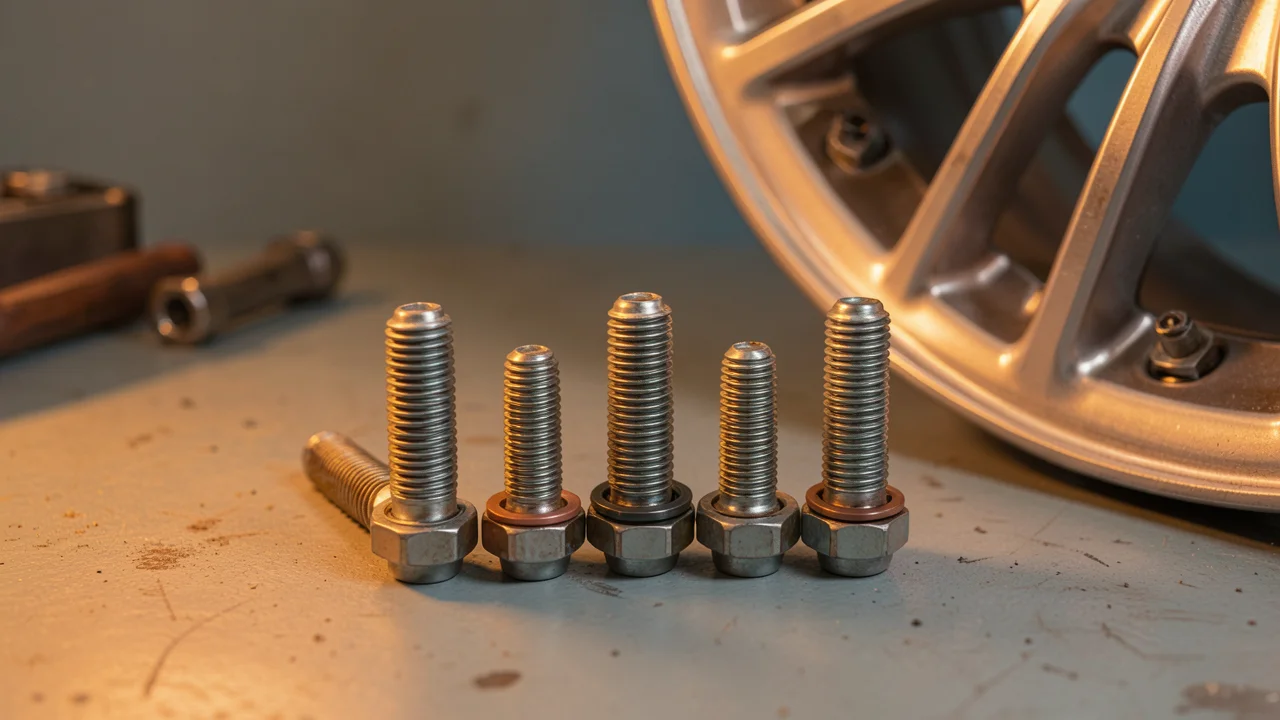
BMW uses lug bolts instead of lug nuts. Bolt length matters: if you add spacers, you need longer bolts with enough thread engagement. M14x1.25 bolts need about 9 full turns of engagement.
Fitting Older 5×120 Wheels on a New BMW
You can run 5×120 wheels on a 5×112 BMW with hub-centric wheel adapters. These bolt to the 5×112 hub with a 66.6 mm inner bore and present 5×120 studs or bolt holes with a 72.56 mm outer hub.
- Adapters add width, usually 15-20 mm, which changes effective offset.
- Check brake clearance, since newer M and M Sport brakes are larger.
- Use quality, hub-centric units and torque to spec.
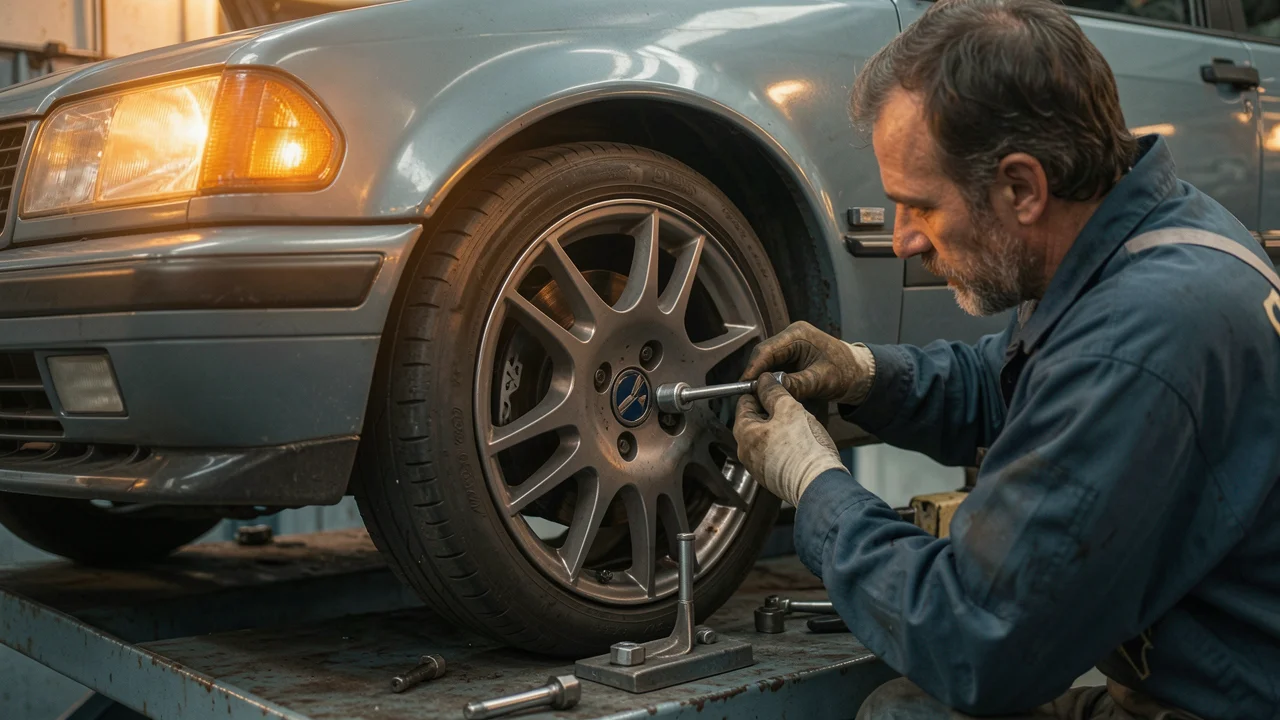
Pro Tip: BMW’s bolt-on design makes mounting a wheel tricky alone. A wheel hanger pin threaded into one bolt hole holds the wheel in place while you start the other bolts.
For the 5×120 side in detail, see our 5×120 bolt pattern guide. If your wheel bore is larger than the hub, use hub-centric rings, and protect your new wheels with wheel locks.
Products Worth Considering

These M14x1.5 closed-end chrome lug nuts are a one-piece replacement designed for secure fitment on compatible GM, Ford, and select Chrysler/Dodge models. Featuring a 60-degree conical seat and anti-rust chrome plating, they help resist corrosion and maintain a bright look for everyday driving. Built for long-term durability, they include OEM-style part references and are backed by 12 months of support.

This 1/2-inch drive breaker bar delivers powerful leverage for loosening and tightening stubborn lug nuts and automotive fasteners. The 180-degree flex head helps you reach tight spaces at the angle you need, making tire and brake jobs easier. A spring-loaded ball detent design holds 1/2-inch sockets securely while the chrome-moly head provides durable strength for everyday use.
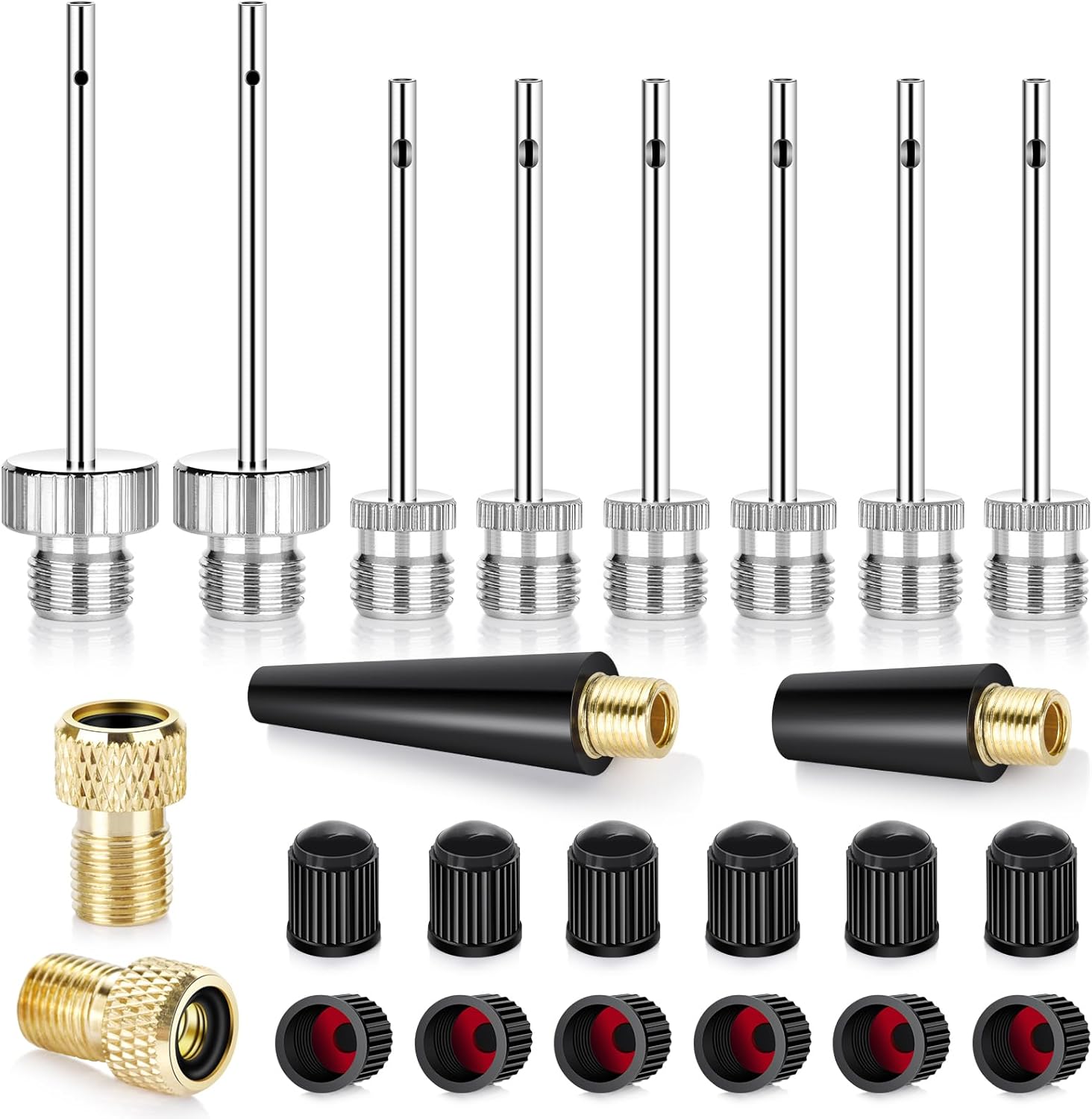
This ball pump needles kit includes brass ball needles for inflating footballs, soccer balls, basketballs, and volleyballs, plus conical nozzles for air mattresses, exercise balls, balloons, and swim rings. It also offers Presta to Schrader valve adapters for easy use with compatible bikes and rideables. The set includes sealed valve caps and a storage case, helping keep your equipment organized and ready to inflate quickly.
BMW Bolt Pattern FAQ
What is the BMW bolt pattern?
Most older BMWs (E and F chassis) use 5×120 with a 72.6 mm bore. Newer G-chassis BMWs from about 2017 on use 5×112 with a 66.6 mm bore. Many classic small BMWs, like the E30, use 4×100.
Are all BMWs 5×120?
No. BMW used 5×120 widely until the late 2010s, but G-chassis cars like the G20 3 Series, G30 5 Series and G05 X5 use 5×112. Front-drive models such as the F48 X1 also use 5×112.
What bolt pattern is a BMW F30?
The 2012-2018 F30 3 Series uses 5×120 with a 72.6 mm center bore and M12x1.5 lug bolts. Its replacement, the G20, switched to 5×112.
Will F30 wheels fit a G20?
Not directly. The F30 uses 5×120 and the G20 uses 5×112, with different center bores. You need 5×112 to 5×120 hub-centric adapters, and you should check offset and brake clearance.
Do Mercedes or Audi wheels fit a new BMW?
Many Mercedes and Audi wheels share 5×112, but center bores and offsets differ. Mercedes often uses a 66.6 mm bore like BMW, while Audi uses 57.1 mm or 66.5 mm. Check every spec before buying.
Bottom Line
The BMW bolt pattern comes down to the chassis. E and F-chassis cars use 5×120 with a 72.6 mm bore, while G-chassis models from about 2017 on use 5×112 with a 66.6 mm bore and M14 bolts. Many classic small BMWs use 4×100.
Check your chassis code before you shop, match bore and bolt size, and use quality hub-centric adapters if you want to run older wheels on a newer car.
Sources
Products Worth Considering

The 22800 wheel stud installer makes replacing wheel studs quick and secure, saving time and effort during tire service. It uses a ratchet or impact wrench to pull new studs firmly into place, helping when existing studs are too long. Compatible with most automotive wheels and light-duty truck wheel studs, it’s designed for easy, tool-assisted installation.

The SEESII cordless impact wrench delivers high tightening and loosening power for fast wheel bolt and industrial bolt work. Its brushless motor and variable-speed 3 forward/2 reverse modes help you control precision installs and stubborn nut removal. A dual-battery system with rapid charging and an included storage case make it ready for home, car, and jobsite use.

The Trivd Frol 1/2" air impact wrench delivers high performance torque up to 1500 ft-lbs with a twin hammer impact mechanism for strong, balanced blows. It features an ergonomic grip, compact lightweight design, and quick-stop control with 3 forward speeds up to 8000 RPM plus a reverse speed. Built for demanding automotive repair and tire shop work, the rear exhaust helps keep debris away from the surface.