Subaru Forester tire pressure depends on the year and wheel size. For 2019-2024 Foresters, it is 33 psi front and 32 psi rear on 17-inch tires, and 35 psi front and 33 psi rear on 18-inch tires. Older 2014-2018 models with 17-inch tires use a lower 30 psi front and 29 psi rear.
Because the numbers change across generations and trims, the tire placard on your driver door jamb is the final word. This guide lists Forester PSI by year and tire size, plus checking tips, load and winter advice, and TPMS help.
Key Takeaways
- 2019-2024 (17-inch, 225/60R17): 33 psi front, 32 psi rear.
- 2019-2024 (18-inch, 225/55R18): 35 psi front, 33 psi rear.
- 2014-2018 (17-inch): 30 psi front, 29 psi rear; 18-inch: 33/32.
- 2025-2026 (6th gen): about 33-35 psi front, 32-33 psi rear.
- Temporary spare: 60 psi.
In this guide:
- Forester Tire Pressure by Year and Size
- Why 17 and 18-Inch Tires Differ
- How to Check and Adjust
- Forester TPMS
- FAQ

Subaru Forester Tire Pressure by Year and Tire Size
| Model Years | Tire Size (Trims) | Front PSI | Rear PSI |
|---|---|---|---|
| 2025-2026 | All trims | 33-35 | 32-33 |
| 2022-2024 | Wilderness (225/60R17 all-terrain) | Check placard | Check placard |
| 2019-2024 | 225/60R17 (Base, Premium) | 33 | 32 |
| 2019-2024 | 225/55R18 (Sport, Limited, Touring) | 35 | 33 |
| 2014-2018 | 225/60R17 (2.5i, Limited) | 30 | 29 |
| 2014-2018 | 225/55R18 (2.0XT, Touring) | 33 | 32 |
| 2009-2013 | 215/65R16 and similar | 29-30 | 28-29 |
The Forester tire pressure for your exact car is printed on the placard, along with the original tire size. If you swapped wheel sizes, match the pressure to the size you now run.
Products Worth Considering
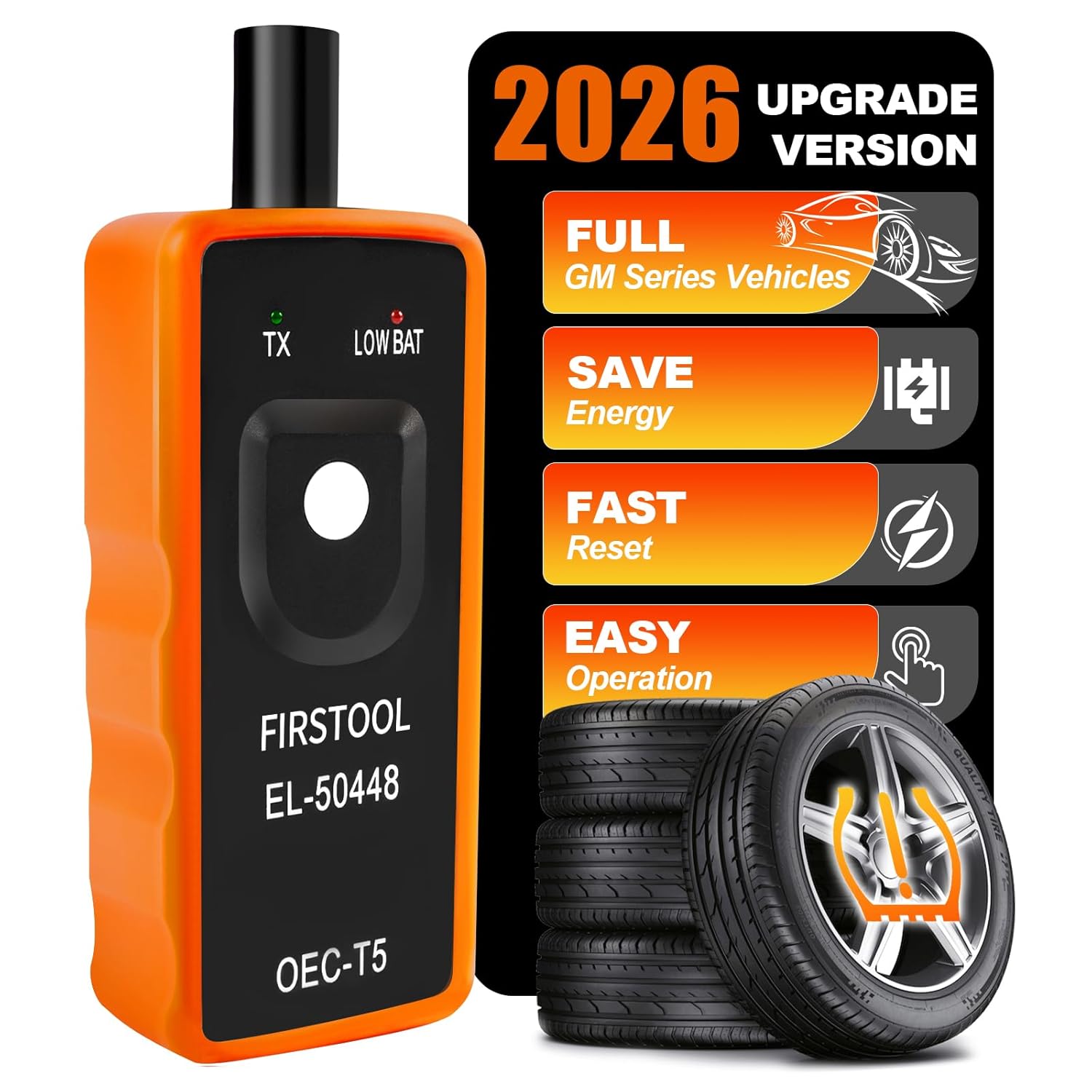
This TPMS relearn tool helps you quickly activate, match, and reset GM tire pressure sensors to keep the vehicle monitoring system working properly. It clears tire pressure alarms and dashboard warning lights after sensor replacement or tire rotation, and supports learning for common 315/433 MHz TPMS sensors. Designed for simple one-button operation, it can help you avoid unnecessary trips to repair shops.

The TYAMATE TM8 solar-powered wireless TPMS delivers real-time tire pressure and temperature monitoring with six alarm modes for safer driving. A vibrant color LCD display shows readings clearly while windshield mounting keeps it hands-free and easy to read. With a wide 0–87 PSI range, strong 433.92 MHz signal transmission, and quick sensor pairing, it’s ideal for RV, sedan, SUV, MPV, and truck use.

The Tymate TM2 RV tire pressure monitoring system keeps you informed with a color LCD display, automatic backlight, and solar charging for dependable operation. It supports up to 10 tire positions with four pre-paired sensors, while offering multiple alarm modes for fast leak detection, pressure extremes, temperature alerts, and low-signal warnings. Built-in monitoring uses accurate readings and reliable 433.92MHz communication to help protect your RV, trailer, truck, or SUV.
Why 18-Inch Forester Tires Need More Air
A 225/55R18 tire has a shorter sidewall and holds less air than a 225/60R17. To carry the same weight, it needs higher pressure. That is why Subaru lists 35/33 for 18-inch tires and 33/32 for 17s on the same car.
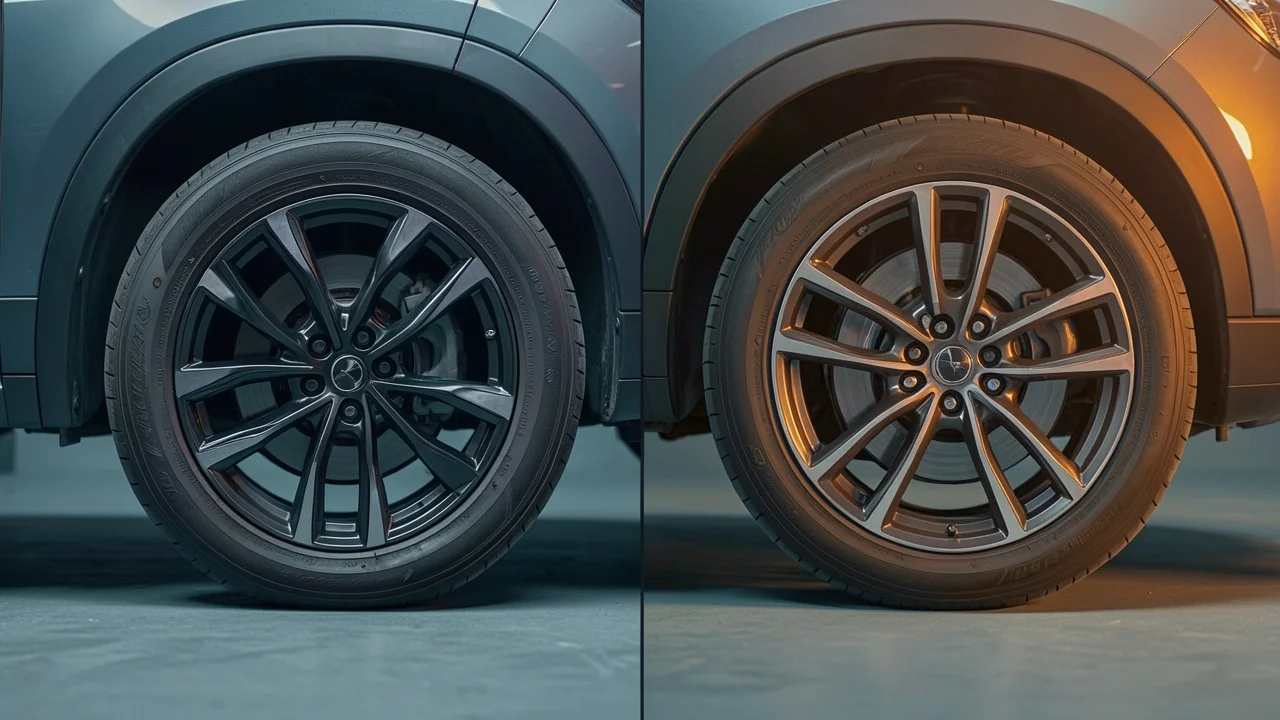
The front number is higher on every Forester because the boxer engine and transmission put more weight over the front wheels.
How to Check and Adjust Subaru Forester Tire Pressure
- Start cold. Check before driving or after the car sits for 3 hours.
- Read the placard on the driver door jamb for your size.
- Use a reliable gauge on each valve stem.
- Inflate or bleed to the target, then recheck.
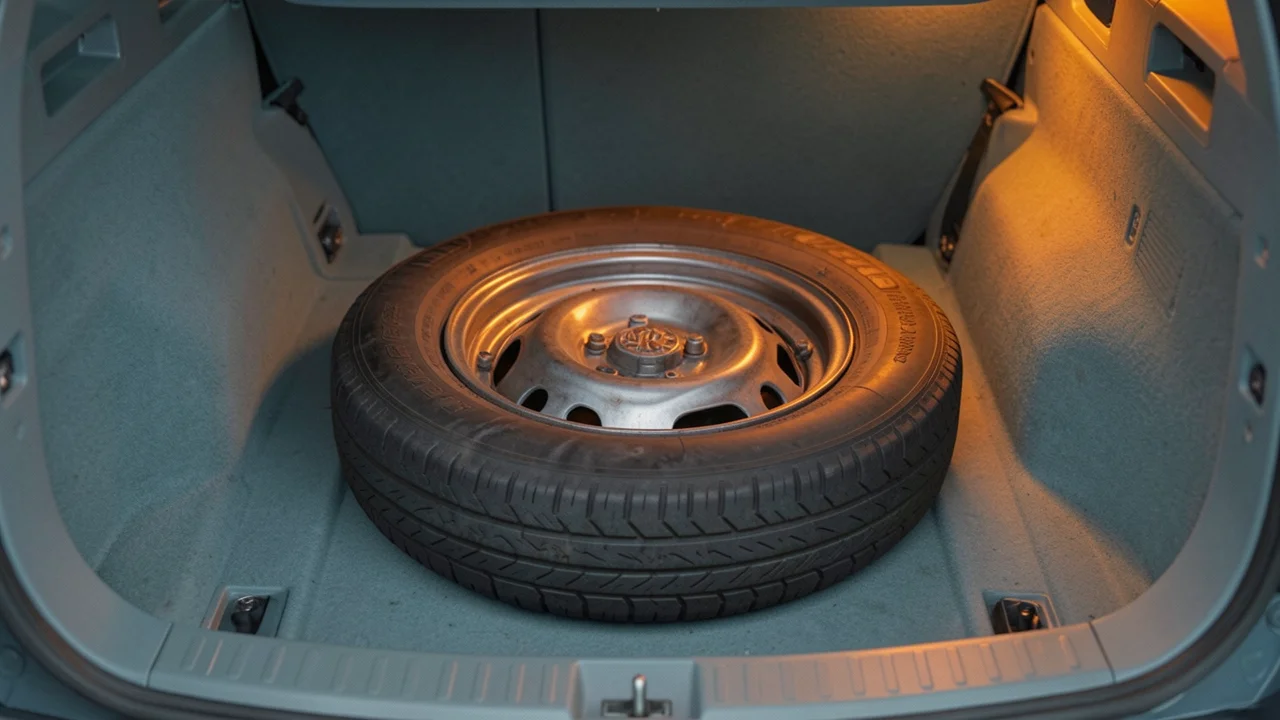
- Check the spare every few months; it needs 60 psi.
Loads, towing and road trips
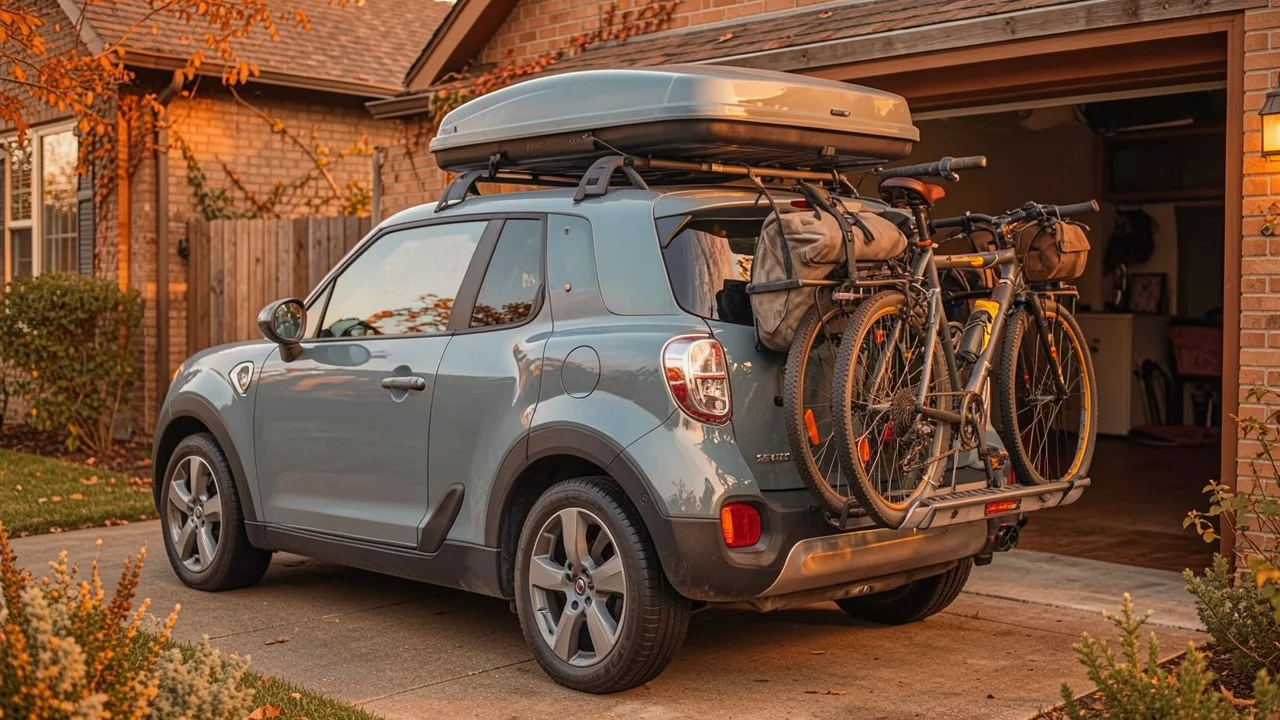
The placard pressure already covers the Forester’s rated load. Still, check pressure before a long, loaded trip, because a low tire under load builds heat fast.
Winter
Expect about 1 psi of loss for every 10 degrees F drop. Top up after the first cold snap of the season. Our winter tire pressure guide covers this in detail, and if you run all-terrain tires, see our best all-terrain tires for the Forester.
Subaru Forester TPMS: Warning Light and Reset
Every Forester since 2008 has direct TPMS with a sensor in each wheel. The warning light means one or more tires are about 25% below spec.
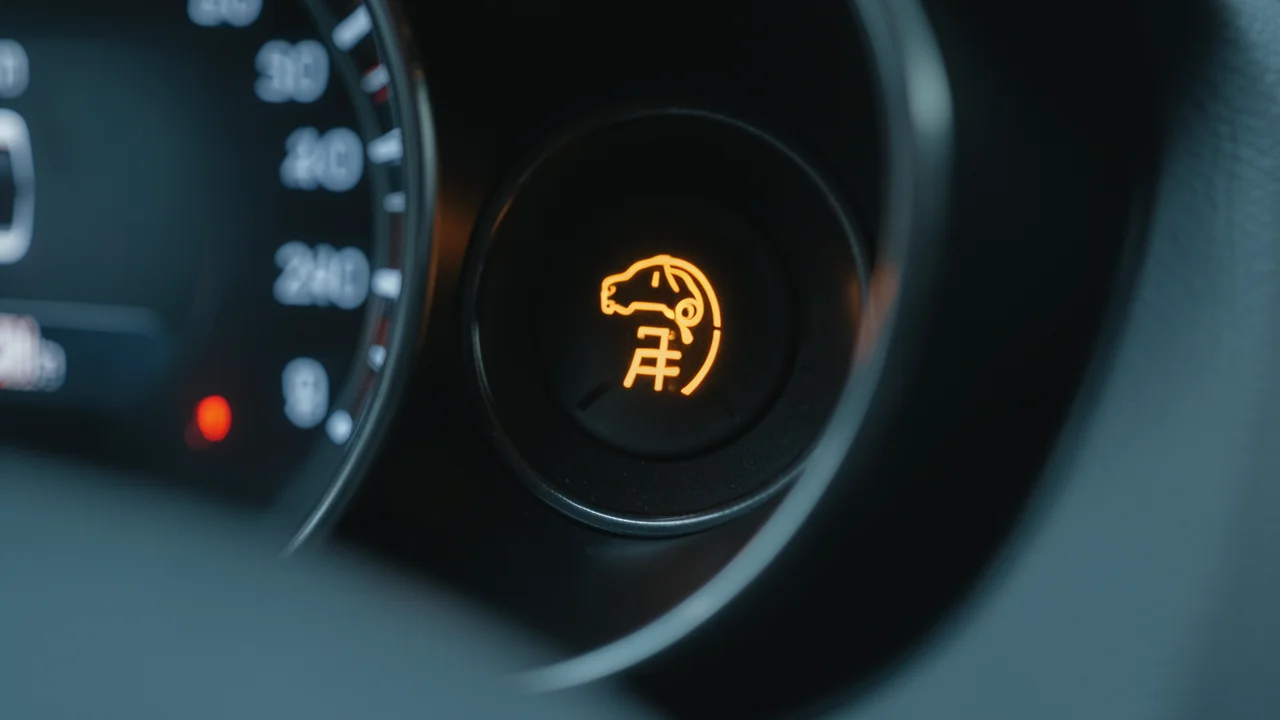
- Solid light: low pressure. Inflate to the placard value and drive for a few minutes.
- Flashes, then stays on: a sensor or system fault.
Most Foresters clear the light automatically after inflation. For sensor battery failures, new wheels or replacement sensors, see our Subaru tire pressure sensor guide.
Warning: Never inflate to the sidewall’s maximum pressure. That number is a limit, not a target (see should you fill tires to max PSI?), and it can make the Forester ride harshly and grip less in the wet.
Products Worth Considering

Masoll Gen 2 external TPMS sensors are a DIY replacement set of 4 for select GM vehicles made after 2006, helping you shut off the TPMS warning light quickly. Simply screw the sensors onto the tire valves and sync to your car ECU using the included EL-50448 relearn tool. Dual-frequency 315/433 MHz design provides OEM-level performance with accurate readings and replaceable batteries for about two years.
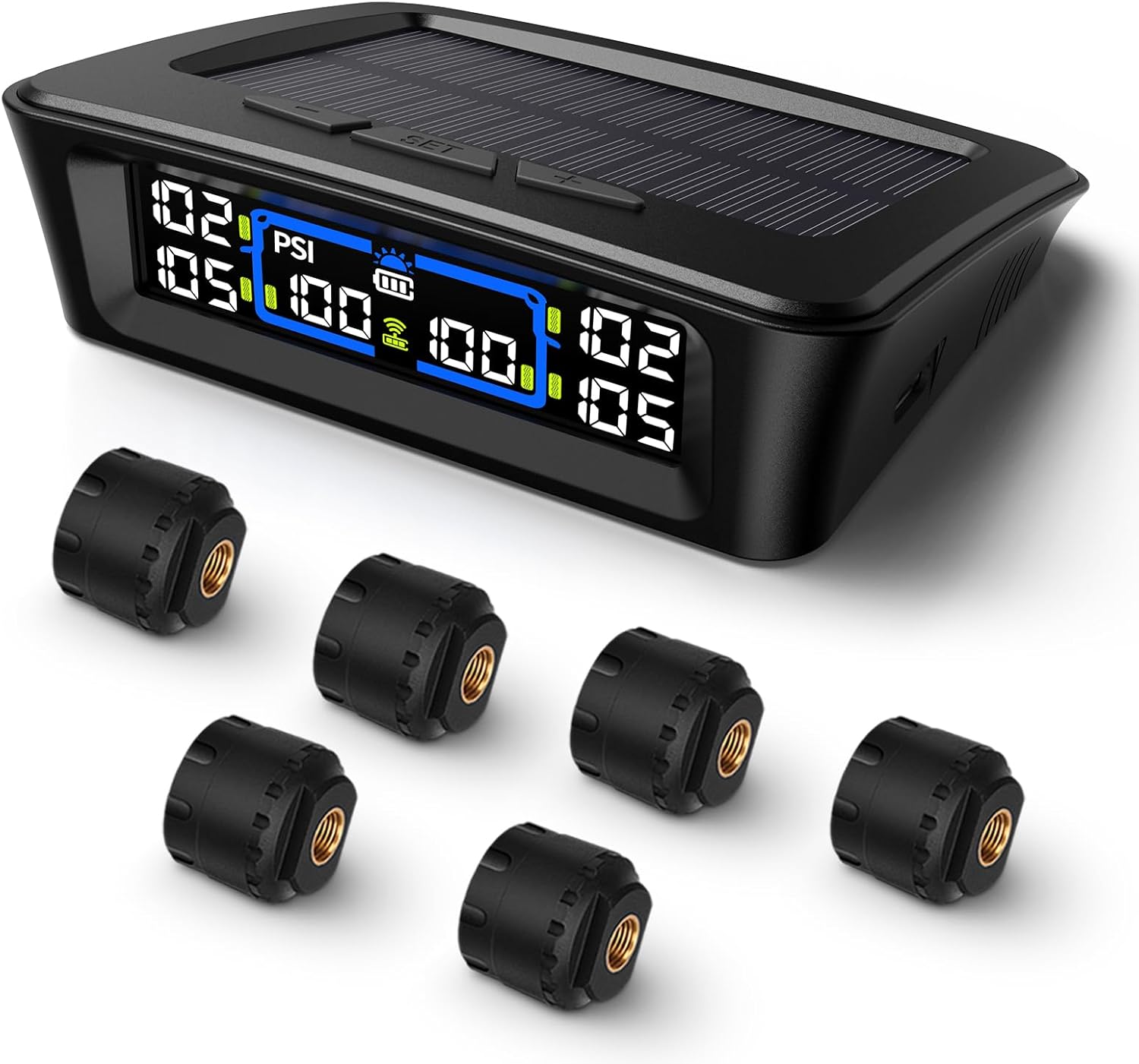
The Tymate TM12 RV TPMS delivers real-time tire pressure and temperature monitoring with a stable 433Hz display for safer long-distance driving. It supports simultaneous monitoring across vehicle and trailer zones, includes six alarm modes for pressure, temperature, leakage, battery, and signal loss, and features easy DIY installation with auto calibration. Power is supplied via USB-C charging or solar recharging, with a wide 0–144 PSI range and up to 50 ft signal coverage for RVs and towable trailers.

Masoll M13 TPMS monitors tire pressure across RV and trailer applications and helps protect safety on the road. Set your reference pressure for auto alarm triggers, while the system automatically calibrates as you inflate or deflate. Solar charging with intelligent sleep/wake keeps operation efficient, and the color LCD provides clear readings in day or night driving.
Subaru Forester Tire Pressure FAQ
What is the correct tire pressure for a Subaru Forester?
For 2019-2024 Foresters, it is 33 psi front and 32 psi rear on 17-inch tires, or 35 psi front and 33 psi rear on 18-inch tires. Older models use lower pressures. Check your door jamb placard.
What should 2020 Subaru Forester tire pressure be?
The 2020 Forester calls for 33/32 psi on 225/60R17 tires (Base and Premium) and 35/33 psi on 225/55R18 tires (Sport, Limited and Touring).
Is 36 psi OK for a Subaru Forester?
36 psi is slightly above spec for most trims. It is not dangerous, but the ride will feel firmer and the tread center may wear faster. Follow the placard unless Subaru lists 36 for your trim.
Why does my Forester tire light come on in the morning?
Cold overnight air lowers tire pressure. If a tire was close to the warning point, the light comes on at startup and may go off as tires warm. Top up all four tires to the cold spec.
Should the Forester spare be at 60 psi?
Yes. The temporary spare is a high-pressure compact tire that needs 60 psi. It is meant for short distances at limited speed, usually 50 mph or less.
Bottom Line
Subaru Forester tire pressure ranges from about 30 to 35 psi depending on the year and wheel size, with the front always a bit higher than the rear. The smaller Crosstrek follows a similar pattern; see our Subaru Crosstrek tire pressure guide. Most 2019-2024 owners will run 33/32 on 17s or 35/33 on 18s.
Check pressure once a month while the tires are cold, adjust for winter, and keep the spare at 60 psi. That simple habit protects your tires and keeps the Forester’s all-wheel drive feeling sharp.
Sources
Products Worth Considering

The Airmoto portable tire inflator quickly and accurately fills car, truck, SUV, motorcycle, and bicycle tires up to 120 PSI with auto shut-off when your target pressure is reached. Its large LCD, multi-unit pressure display, and digital gauge make it easy to dial in settings and verify readings, while the built-in LED flashlight helps in low light. The included polyurethane hard carrying case and storage mesh pocket keep the inflator and accessories protected and organized.

Keep your tires properly inflated with this analog VONDIOR tire pressure gauge, designed for fast, easy readings without batteries. The swiveling, two-axis hose and large glow dial help you measure at any tire angle with instant visibility. Built with a protective rubber shield, it supports durable, low-maintenance use for cars and trucks.

This GM TPMS relearn and reset tool (EL-50448) helps you activate and reset OE/OEM compatible tire pressure sensors for many Chevrolet, GMC, Buick, and Cadillac vehicles. It includes a pre-installed 9V alkaline battery for ready-to-use performance and features a one-button design for quick DIY TPMS relearn. Use it to clear the TPMS warning light, set the correct dashboard tire pressure, and test sensor operation.