
Can you patch a run flat tire? Sometimes. Many manufacturers, including Michelin, Bridgestone and Goodyear, allow one professional patch-plug repair in the tread area, but only if the tire was not driven far at low or zero pressure and passes an inside inspection. Pirelli and Yokohama say their run-flats should never be repaired, and BMW’s owner’s manuals advise against repairing factory run-flats.
So the real answer depends on your tire brand, where the damage is and how far you drove after the TPMS warning. This guide explains each brand’s rules, the repair limits and when replacement is the only safe choice.
Key Takeaways
- Run-flats may be repaired only in the tread area, never the sidewall or shoulder.
- Any repair must be a patch-plug installed from the inside, not a roadside plug.
- If the tire was driven at zero or very low pressure, most brands require replacement.
- Pirelli and Yokohama prohibit run-flat repairs; Michelin allows one repair.
- Check your vehicle maker’s policy too; BMW discourages repairs on OE run-flats.
In this guide:
- Can Run Flat Tires Be Repaired?
- Run-Flat Repair Policies by Brand
- Can You Plug a Run Flat Tire?
- Repair Rules and Limits
- When You Must Replace It
- FAQ
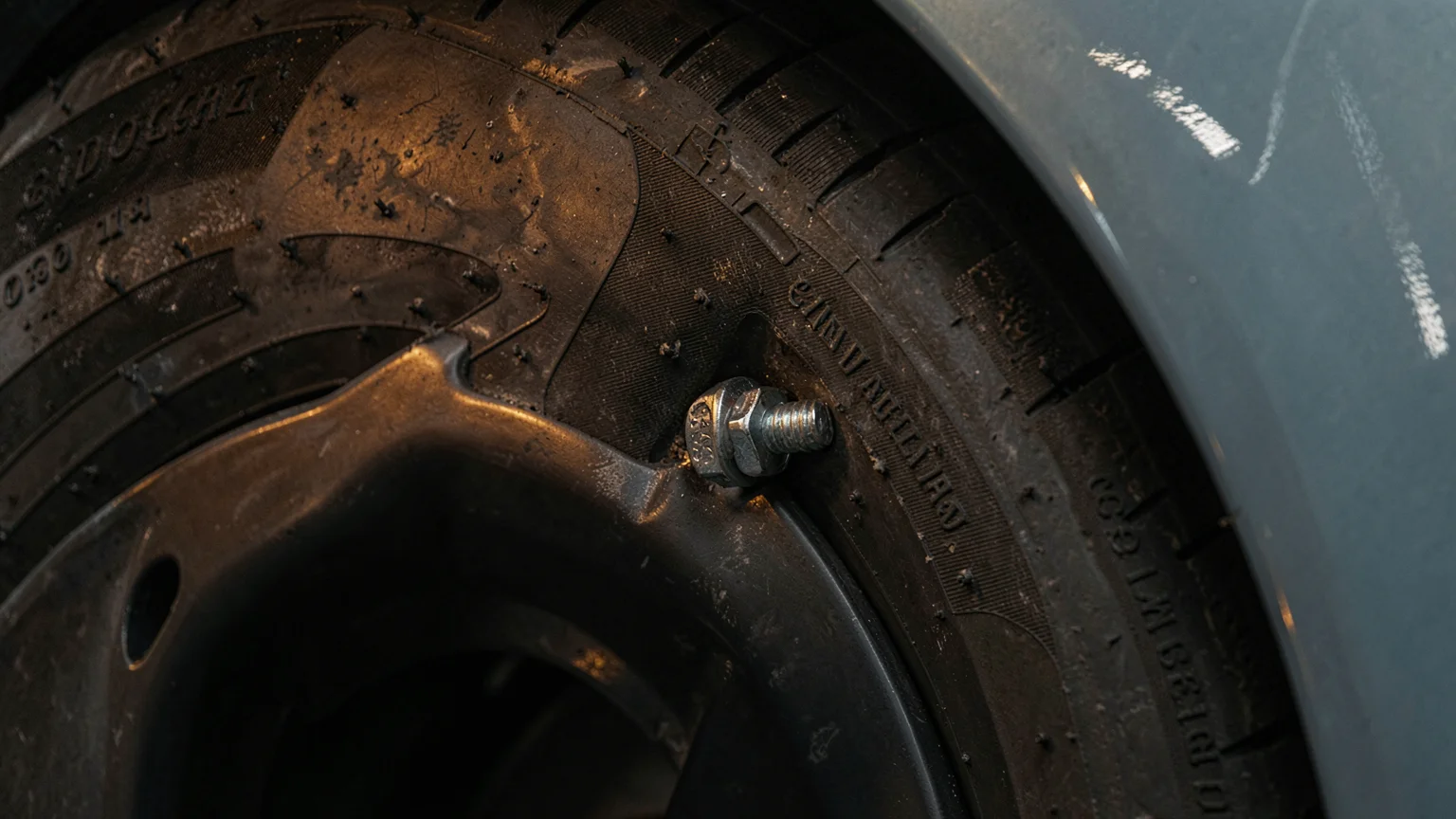
Can Run Flat Tires Be Repaired?
Run flat tires can be repaired in some cases, but the bar is higher than for a regular tire. The problem is hidden damage. When a run-flat loses air, its stiff sidewalls carry the car, and that flexing creates heat that can weaken the inside of the tire without visible signs outside.
Tire Rack, for example, says it will not repair any run-flat driven severely underinflated or at zero pressure, because the internal structure cannot be confirmed. If you are new to how these tires work, see our explainer on what a run flat tire is.

Products Worth Considering

This screw-in tire plug kit seals punctures fast using the included screwdriver, letting you repair tread damage without removing the tire or using messy glue. It includes two plug sizes for different puncture types and uses high-density rubber for an airtight, heat-resistant temporary seal that helps you reach a tire shop safely. Compact and universal, it works on tubeless tires across cars, trucks, motorcycles, tractors, and more.

Wykodra tire plugs provide quick vulcanizing repairs for tubeless tires, helping you seal punctures and get back on the road. The industrial-strength rubber creates a long-lasting, leak-resistant bond and is designed for emergency fixes without removing the tire. Choose between two standard plug sizes with color-matched options for small to larger damage across many vehicles and off-road uses.

TireJect Off-Road Tire Sealant Kit provides 5-in-1 sealing to help fix tread punctures up to 3/8", sidewall punctures up to 3/8", bead leaks, slow leaks, and minor dry rot on low-speed tires. It permanently seals with liquid rubber, recycled tire particles, and Aramid fibers, making it ideal for flats caused by thorns, nails, and screws. The included dispensing cap attaches to the valve stem for a no-mess installation, along with a metal valve core remover tool and valve stem cap. This kit is for off-road use only.
Run-Flat Repair Policies by Brand
| Brand | Repair Allowed? | Conditions |
|---|---|---|
| Michelin (ZP) | Yes, once | Same inspection and procedure as a regular tire; TPMS required |
| Bridgestone (RFT, DriveGuard) | Yes | Only if at least 15 psi was maintained; inner liner check |
| Goodyear / Dunlop (ROF, EMT) | Yes | After inspection; 1 repair max on H-rated and above |
| BFGoodrich | Yes | 1 repair maximum |
| Hankook | Limited | Not if driven under 15 psi or damaged outside the tread |
| Continental (SSR) | Not recommended | Replace instead |
| Pirelli (RFT) | No | Replace after damage or pressure loss |
| Yokohama (ZPS) | No | Replace |
The vehicle maker can override the tire maker. BMW, which fits run-flats to many models, tells owners not to repair its original-equipment run-flats.
Can You Plug a Run Flat Tire?
You should not plug a run flat tire with a roadside string plug as a permanent fix. A plug alone seals from the outside, which skips the inside inspection that run-flats need most.
The U.S. Tire Manufacturers Association (USTMA) says a proper repair needs the tire removed from the wheel, inspected inside, and repaired with a patch plus a stem that fills the injury. Learn more about what a tire plug is and its limits.
Run-Flat Repair Rules and Limits
If your brand allows it, a run-flat repair is only acceptable when all of these are true:
- Location: the puncture is in the central tread, not the shoulder or sidewall. See which part of a tire can be patched.
- Size: the injury is 1/4 inch (6 mm) or smaller.
- Driving history: the tire was not driven at zero or very low pressure (Bridgestone draws the line at 15 psi).
- Inside condition: no wrinkling, cracking, discoloration or rubber dust on the inner liner.
- Method: a patch-plug unit installed from the inside after dismounting.
- Repair count: no previous repair, if the brand limits it to one.
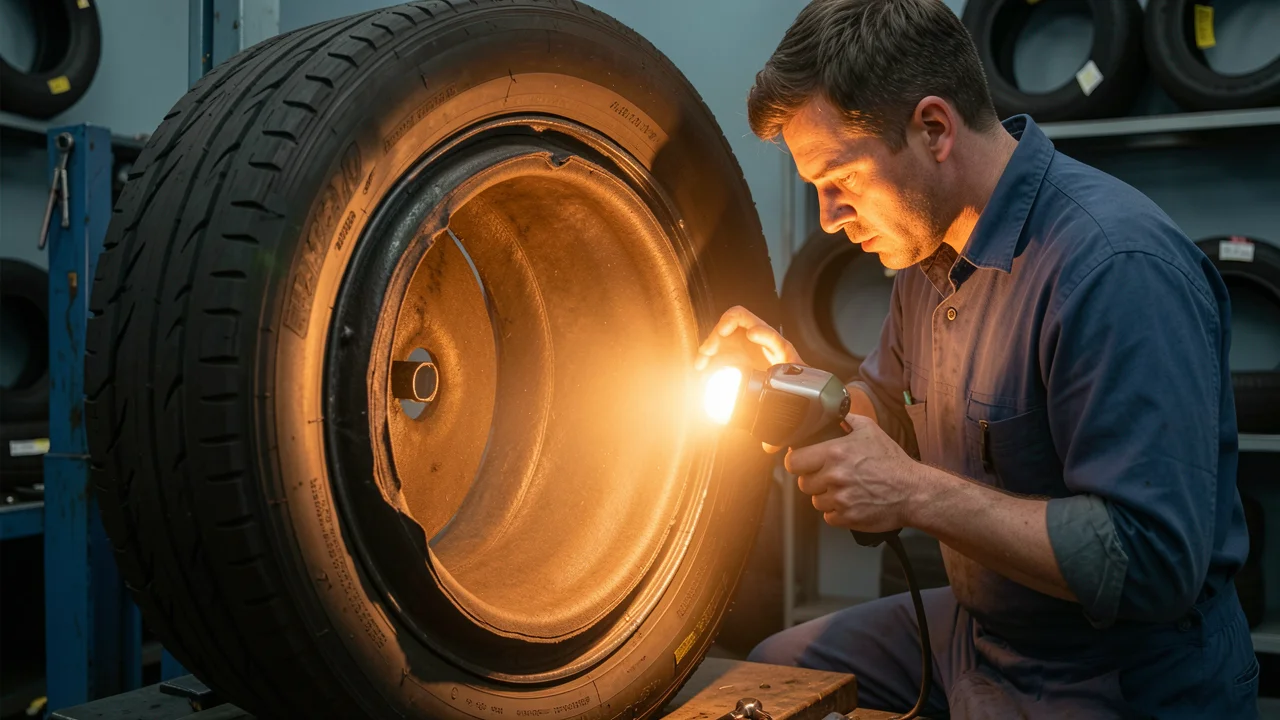
Warning: Tire sealant can coat the inside and hide damage, and some shops refuse to repair a run-flat after sealant use. It can also gum up TPMS sensors.
When You Must Replace a Run-Flat Tire
Replace the tire, not repair it, if any of these apply:
- You drove on it after the TPMS warning, especially near the 50-mile, 50 mph run-flat limit.
- The puncture is in the shoulder or sidewall, or larger than 1/4 inch.
- The inner liner shows heat damage, creases or bubbles.
- Your tire brand or vehicle maker prohibits repair.

Many shops recommend replacing run-flats in pairs on the same axle to keep handling balanced, especially on all-wheel drive cars.
Products Worth Considering

ZEHXI’s 60 pack screw-in tire plug kit uses high-grade rubber plugs with sealing threads to help repair minor punctures quickly without removing the tire. The set includes two plug sizes, so you can match different puncture openings and keep repairs organized in a transparent case. A handy screwdriver is included for fast installation, helping drivers get more mileage from existing tires while being ready for flat-tire emergencies.

Use this tire repair rubber screw kit for fast, self-service flat fixes on the road. Choose the matching short or long nail size and twist it into the puncture without removing the tire from the rim. Compact storage keeps the emergency set organized for cars, motorcycles, electric bikes, and bicycles, helping you seal tubeless leaks quickly and reliably.

This self-service tire repair nail kit includes 60 pieces (30 small + 30 large) to help seal punctures quickly without needing an auto shop visit. The nails are designed to fit different hole sizes and provide a tight connection with sealing glue to help prevent air and water intrusion. Suitable for cars, motorcycles, trucks, and other vehicles, it’s an easy, efficient way to patch roadside tire damage.
Run-Flat Repair FAQ
Can you patch a run flat tire with a nail in it?
Possibly. If the nail is in the tread, the hole is 1/4 inch or less, the tire was not driven flat and your brand allows repairs, a shop can install a patch-plug from the inside. Otherwise, replace it.
Can you plug a run flat tire yourself?
A DIY plug can get you to a shop, but it is not a proper permanent repair for a run-flat. The tire needs an inside inspection and a patch-plug, and many shops will not accept a previously plugged run-flat.
Does Discount Tire repair run flat tires?
Policies vary by retailer and brand. Many shops repair run-flats only when the manufacturer allows it and the tire passes inspection. Check our guide on Discount Tire’s repair policy.
How far can you drive on a run flat tire?
Most run-flats are rated for about 50 miles at up to 50 mph after losing pressure, though load and temperature affect this. Driving that far usually rules out a repair.
How much does it cost to repair a run flat tire?
A proper patch-plug repair usually costs $25 to $50 at most shops, while a new run-flat often costs $200 to $400 or more. See how much it costs to patch a tire.
Bottom Line
So, can you patch a run flat tire? Yes, but only when the brand allows it, the damage is a small tread puncture and the tire was not driven flat. A proper patch-plug from the inside is the only acceptable method.
If you drove on it after the warning, if Pirelli or Yokohama made it, or if your carmaker says no, replace it. When in doubt, let a tire professional inspect it off the wheel before you trust it again.
Sources
- Tire Rack: can run-flat tires be repaired?
- Automotive Fleet: repairing or replacing run-flat tires
- Michelin: run-flat tyres explained
Products Worth Considering

Rhino USA’s 86-piece tire repair kit provides everything you need for quick, emergency flat repairs, including a reamer and plug insertion tool plus 60 reusable tire plugs. The heavy-duty, metal-handled design helps you fix punctures from nails and screws on tubeless tires for cars, trucks, motorcycles, ATVs, UTVs, and more. A high-visibility compact case stores easily for on-the-go use, with illustrated instructions to help you complete repairs with confidence.

This flat tire repair kit lets you handle punctures quickly with two plug sizes for different damage, helping restore drivability on the spot. It includes T-handle insertion and spiral probe tools plus lubricant and a utility knife, all packed in a compact bag for easy carry. Universal compatibility makes it suitable for tubeless tires across cars, motorcycles, ATVs, trucks, jeeps, and more.
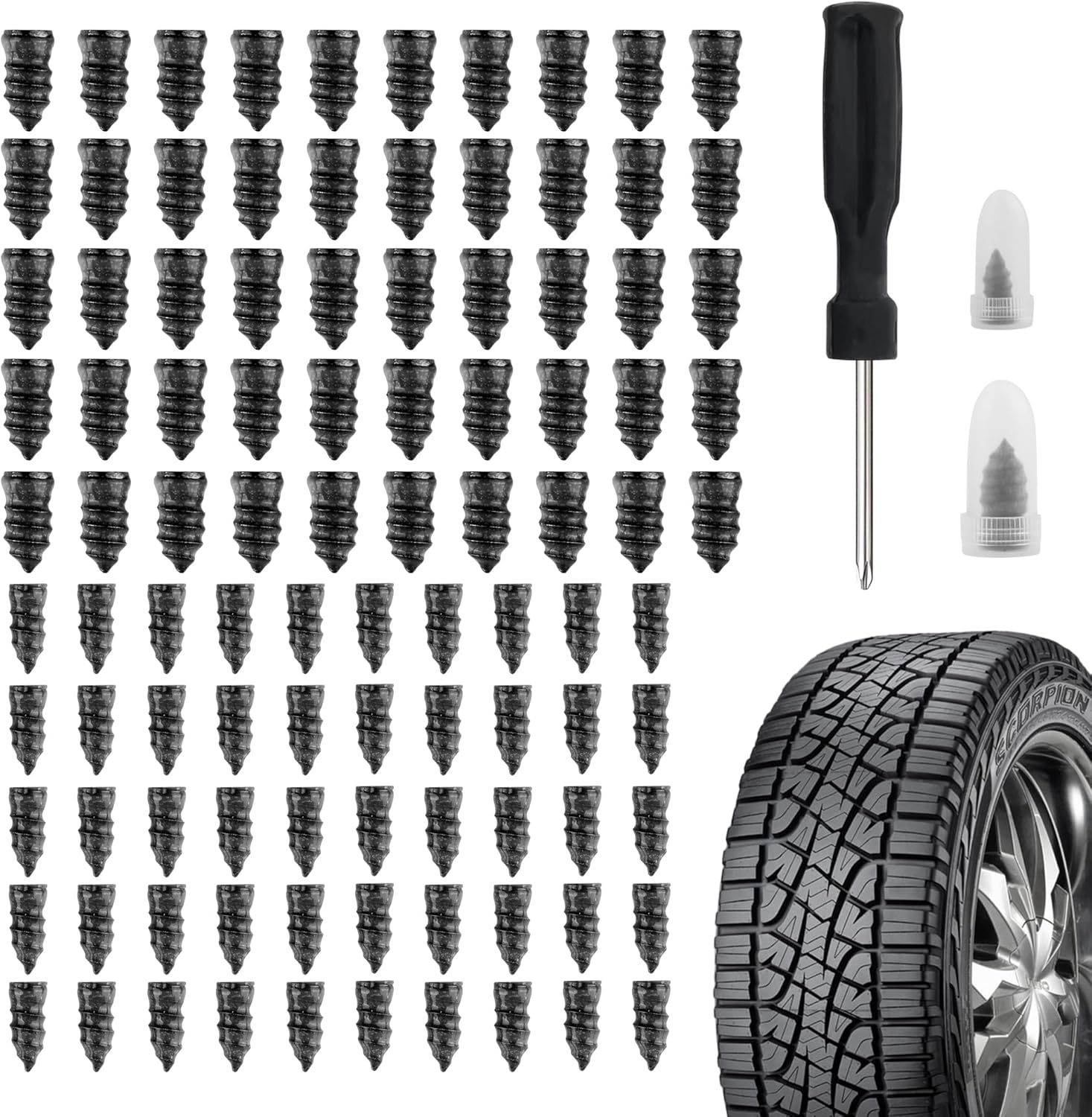
Salior’s tire plug kit provides a fast, reliable self-service fix for punctured or leaking tires without the need for flaring tools. Choose the correct plug size, then screw the nail into the puncture using the included screwdriver for an enhanced seal. The set is durable and convenient for on-the-go maintenance across multiple vehicle types.