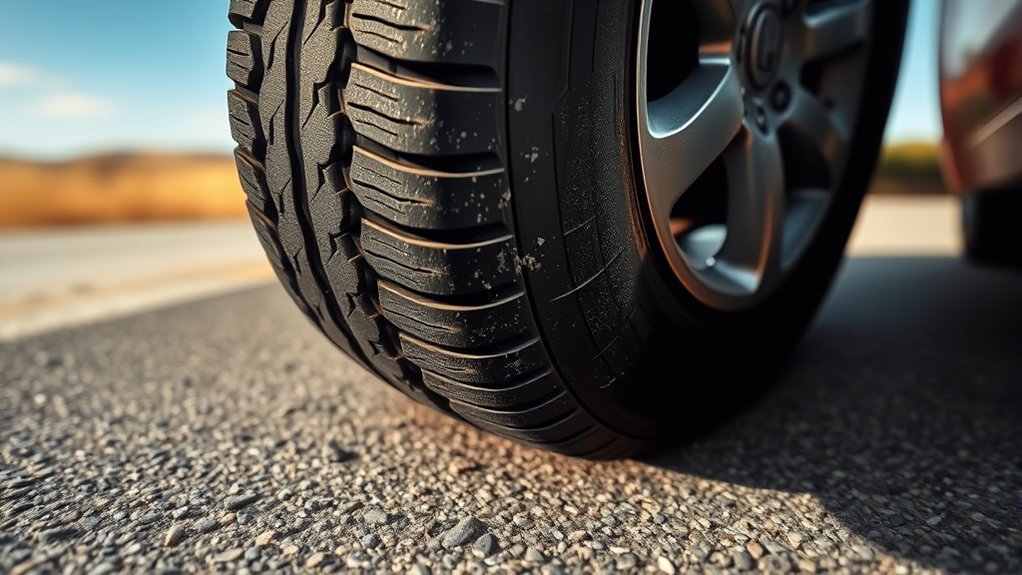
Dry traction in a Honda Accord comes from the full tire system: the right tire type, the correct cold pressure, healthy tread, proper alignment, and a balanced load. You do not need racing tires to feel a big improvement on dry pavement, but you do need tires that match your Accord’s size, load rating, speed rating, and everyday driving conditions.
Quick Answer
To maximize dry traction on a Honda Accord, use tires in the correct size and category, keep them inflated to the cold pressure shown on the driver’s doorjamb label, replace worn or damaged tires, rotate them on schedule, and fix alignment or suspension issues that cause uneven contact with the road.
Key Takeaways
- Use the tire pressure on your Accord’s driver-doorjamb label, not the maximum psi printed on the tire sidewall.
- For dry grip, tire compound, tread-block stiffness, tire category, and even contact matter more than aggressive-looking grooves.
- Wider tires are not automatically better; replacements must fit properly and match Honda-approved size, load, and speed requirements.
- Uneven wear, poor alignment, worn suspension parts, or overloaded cargo can reduce grip even when the tires look new.
- Replace tires that are worn to the treadwear indicators, down to 2/32 inch, damaged, cracked, bulging, or unable to hold pressure.
At a Glance
| Time Required | 10–20 minutes for a basic pressure, tread, and visual inspection |
| Difficulty | Easy for inspection; professional help recommended for alignment, balancing, tire mounting, or damage diagnosis |
| Tools Needed | Tire pressure gauge, tread depth gauge or penny, flashlight, and your Accord owner’s manual or doorjamb tire label |
| Cost | Basic checks are free if you own a gauge; tire replacement, alignment, and balancing vary by tire size, shop, and location |
Key Factors Influencing Dry Traction for Honda Accord Tires
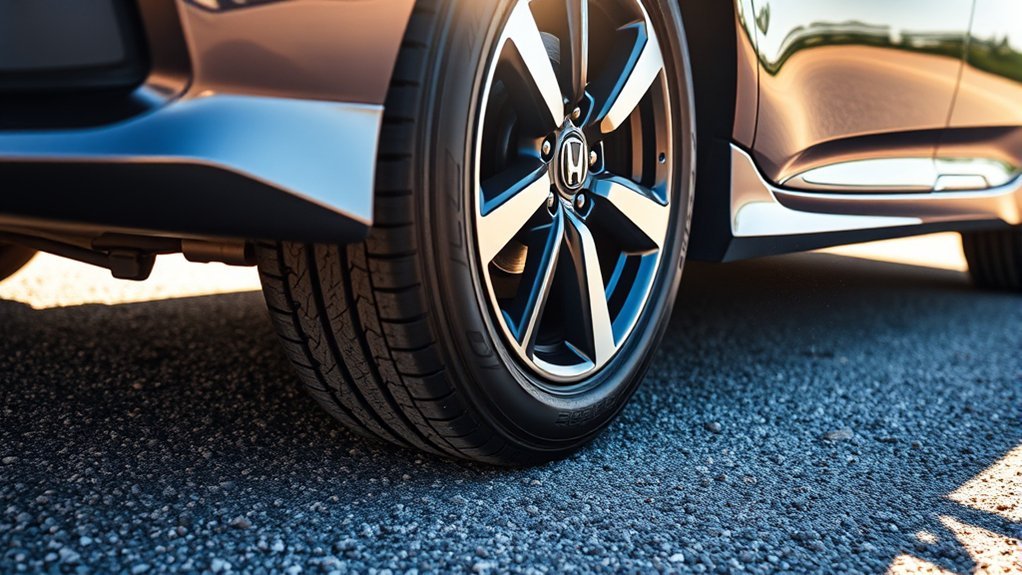
Dry traction is the tire’s ability to grip clean, dry pavement during acceleration, braking, cornering, and emergency maneuvers. On a Honda Accord, the biggest factors are tire type, rubber compound, tread design, tire pressure, tread condition, wheel alignment, vehicle load, and driving style.
Start with fitment. Replacement tires should match the size, load index, and speed rating listed on the tire placard, owner’s manual, or an approved tire fitment guide. The Honda Tire and Loading Information Label gives the original tire size and the proper cold tire pressure for the vehicle. If you change wheel size or tire category, confirm the new tire is compatible before buying.
Warning: Do not inflate your Accord’s tires to the maximum pressure printed on the tire sidewall unless that exact pressure is specified by the vehicle manufacturer for a special condition. The sidewall number is a tire limit, not the normal operating pressure for your Accord.
Maintenance matters just as much as the tire model. Honda advises checking tire pressure with a gauge at least once a month or before long trips, and checking pressure when the tires are cold. Honda defines cold as parked for at least three hours or driven less than 1 mile. If your Accord’s tires are hot, the pressure reading can be several psi higher than the cold value, so a hot reading can mislead you.
How Tire Rubber Composition Influences Grip and Performance
The rubber compound is one of the main reasons two tires with the same size can feel completely different. A performance-oriented compound can feel sharper and stickier on dry pavement, while a touring compound usually focuses more on comfort, quietness, tread life, and fuel economy.
[Products Worth Considering]

Measure tire tread depth quickly and accurately with this LUMITECO dial gauge that reads in 1/32" increments up to 14/32". The color-coded green/yellow/red zones make it easy to judge tire wear and know when replacement is needed. A rugged, compact design with a protective pouch helps keep the gauge ready for use on cars, trucks, motorcycles, and more.

Monitor tire tread wear with a smart, color-coded depth gauge that shows clear condition ranges at a glance. The bar is range marked for fast, easy readings, helping you maintain safer traction and performance. Each gauge is portable with a pocket clip, and the set includes 20 units for daily use and sharing.

The SAFELIFE dial tire tread depth gauge measures tread depth in 1/32 inch increments with clear, easy-to-read 2-inch dial face. Color zones using a traffic light system help you quickly judge whether tread is low, marginal, or ample for safer driving. Built with a durable zinc cast body and a metal detect probe for precise, comfortable use across cars, motorcycles, trucks, and buses.
Tire Compound Types
For a Honda Accord, the main everyday choices are touring all-season, grand-touring all-season, ultra-high-performance all-season, and summer performance tires. Touring tires are usually best for commuting comfort and tread life. Ultra-high-performance all-season tires can add sharper steering and stronger dry grip while still handling light seasonal changes. Summer performance tires can provide excellent warm-weather dry grip, but they are not the right choice for cold temperatures, snow, or ice.
Do not judge grip by brand name alone. Look at the tire’s category, independent test results, warranty, size availability, and whether the load and speed ratings match your Accord. A tire such as the Michelin Pilot Sport A/S 4 is an example of an ultra-high-performance all-season tire, but the best choice still depends on your model year, wheel size, climate, and driving priorities.
Temperature Sensitivity Factors
Rubber changes behavior with temperature. Warmer weather generally helps many performance compounds become more pliable, while cold weather can make some compounds harder and less responsive. This is why a tire that feels strong on a warm dry afternoon may feel less secure on a cold morning.
Temperature also affects tire pressure. The Accord’s tire pressure monitoring system may warn you when cold weather lowers pressure, but you should not rely on the warning light alone. Use a gauge and set pressure to the doorjamb specification when the tires are cold.
Note: UTQG traction grades are useful, but they are not a direct dry-grip score. NHTSA’s UTQG guide explains that the traction grade reflects a tire’s ability to stop on wet pavement, not its total dry-road cornering performance.
How Tread Design Affects Dry Traction for Honda Accord Tires
Tread design affects how the tire manages contact, heat, water, noise, and wear. For dry pavement, you generally want a stable tread block and enough rubber on the road to resist squirm during braking and cornering. That does not always mean deeper or more aggressive grooves.
[Products Worth Considering]

Accurately measure tire tread depth with a calibrated gauge marked from 0 to 1 inch in 1/32 inch increments. The color-coded bar helps you quickly identify tread condition ranges, supporting safe driving for trucks, motorcycles, automobiles, and passenger vehicles.

Keep your tires properly inflated with this analog VONDIOR tire pressure gauge, designed for fast, easy readings without batteries. The swiveling, two-axis hose and large glow dial help you measure at any tire angle with instant visibility. Built with a protective rubber shield, it supports durable, low-maintenance use for cars and trucks.

Milton S-921 pencil tire pressure gauge helps you maintain optimal tire pressure for passenger cars with accurate readings in PSI and kPa. It features a built-in deflator valve for convenient pressure adjustments, plus a single chuck head and nylon indicator bar for easy use on the go. Built from durable plated brass and designed for reliable performance, it’s a practical road trip and cold-weather maintenance tool.
Tread Pattern Types
- Symmetrical tread patterns: Common on touring tires. They are predictable, quiet, and easy to rotate using several rotation patterns.
- Asymmetrical tread patterns: Often used to balance dry cornering stability with wet-road evacuation. The outboard shoulder may use larger tread blocks to support dry grip.
- Directional tread patterns: Designed to roll one way, often with V-shaped grooves that help pump water away. They can limit rotation options.
- Asymmetric-directional patterns: More specialized. These must be installed and rotated correctly because both inside/outside and rolling direction matter.
Tire Rack’s tread-pattern guide explains that ribs, blocks, grooves, and sipes are arranged to fine-tune handling, traction, wear, and road noise. For an Accord used mostly on dry highways and city roads, a high-quality touring or performance all-season tire with a stable shoulder can be a better choice than an aggressive tread that looks sporty but wears unevenly or rides harshly.
Rubber Compound Quality
Tread pattern and compound work together. A tire with strong shoulder blocks but a hard, economy-focused compound may not grip as well as a tire with a more advanced compound and balanced design. Look for tires that are tested for dry braking, dry handling, steering response, and comfort in your tire size or a very similar size.
Also check the tire’s age before installation. New tires should not look cracked, weathered, or dry-rotted. If you are buying closeout or used tires, read the DOT date code on the sidewall and inspect for damage before mounting.
Groove Depth Importance
Tread depth is a safety item, not just a wet-weather detail. On dry pavement, a worn tire can still feel acceptable until you need hard braking or an emergency lane change. Once tread is worn down to the built-in wear indicators or 2/32 inch, the tire should be replaced. NHTSA also recommends checking tread at least monthly when you check pressure.
Uneven tread wear is just as important as low tread depth. Feathered edges, cupping, inside-edge wear, or one tire wearing much faster than the others can point to alignment, balancing, suspension, or inflation problems. Fix the cause before installing a new set, or the new tires can lose performance quickly.
NHTSA reports that tire tread provides the gripping action that helps keep a vehicle from slipping or sliding, and tires are not safe once worn down to 2/32 inch.
Why Proper Tire Inflation Matters for Optimal Contact
Proper inflation helps the tire keep the contact shape, sidewall support, steering feel, tread life, and heat control intended by Honda and the tire manufacturer. Underinflated tires flex too much, build heat, wear unevenly, reduce fuel economy, and can fail from overheating. Overinflated tires can ride harshly, wear unevenly, and become more vulnerable to road hazards.
For the best dry traction and predictable handling, follow this pressure routine:
- Find the cold tire pressure on your Accord’s driver-doorjamb tire label or owner’s manual.
- Check pressure when the car has been parked for at least three hours or driven less than 1 mile.
- Measure all four tires with a reliable gauge; include the spare if your Accord has one.
- Add or release air until each tire matches the specified cold pressure.
- Recheck monthly, before long trips, and after major temperature swings.
- Calibrate TPMS if your Accord’s owner’s manual requires it after pressure adjustment or tire service.
Pro Tip: Keep a tire pressure gauge in the glove box. Visual checks are not enough because a radial tire can look normal even when it is underinflated.
How Weight Distribution Impacts Tire Traction and Handling
Weight distribution affects how much work each tire has to do. In normal driving, the Accord’s front tires handle steering and much of the braking load, so they often wear faster than the rear tires. During hard braking, weight shifts forward, increasing the demand on the front tires. During cornering, load shifts to the outside tires.
Too much cargo in the trunk, heavy items placed high in the cabin, or uneven passenger/cargo placement can change the way the tires load and respond. The fix is simple: do not exceed the vehicle load limit, keep heavy items low and secure, and avoid carrying unnecessary weight.
Alignment and suspension condition also affect weight distribution at the tire contact patch. If the steering wheel is off-center, the car pulls to one side, the tires show uneven wear, or the vehicle shakes at speed, have a qualified technician inspect alignment, balance, wheels, and suspension before blaming the tire model.
Choosing the Best Tires for Dry Conditions on Honda Accord
The best dry-traction tire for a Honda Accord is not one specific model for every driver. It is the tire that fits your Accord correctly and matches your climate, road conditions, budget, and driving style.
[Products Worth Considering]
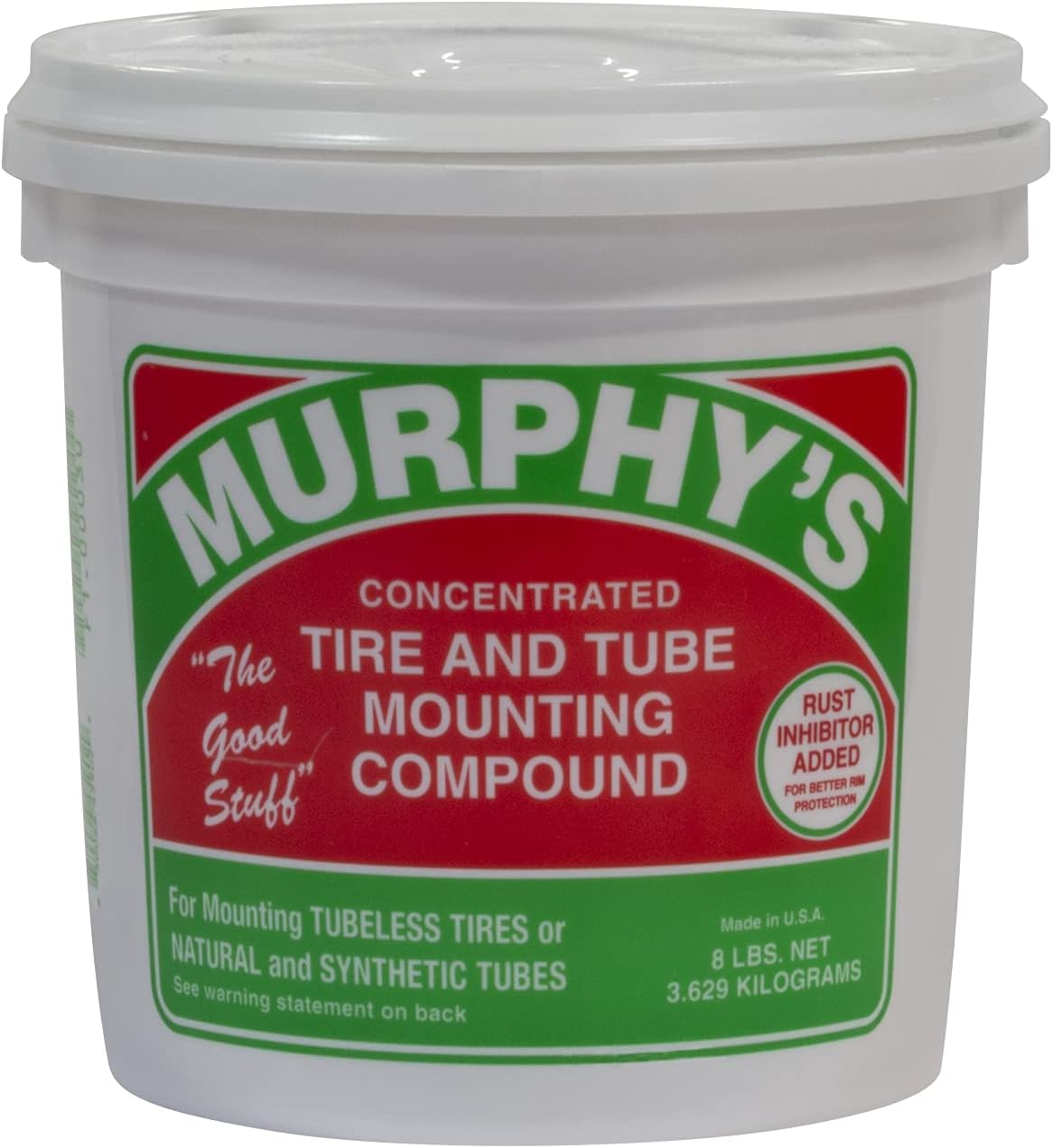
A concentrated tire and tube mounting compound designed to help simplify mounting rubber tires and tubes on passenger, semi truck, construction, and OTR applications. Its ultra-thick formula packs beads effectively and includes rust inhibitors to help protect against corrosion during use.

Get precise tire readings with the ETENWOLF T300 Plus digital gauge, calibrated to ANSI B40.7 Grade 2A for reliable accuracy. It measures across a wide 3–200 PSI range and includes thermal compensation for dependable performance from extreme cold to heat. The bright LED display, LED illumination, and replaceable AAA batteries make it easy to check pressures quickly, even in low light.

This tire inflator with pressure gauge delivers long-lasting performance with a durable rubber-protected gauge and sturdy build. The longer hose and 360 swivel air chuck help you seal the valve securely and keep your hands free while measuring, inflating, or deflating. It’s battery-free for reliable use and provides ±2 PSI accuracy in the mid-range for most typical tires, with universal compatibility for 1/4 NPT compressor outputs.
Compare Tire Categories Before Buying
| Tire Category | Best For | Dry-Traction Notes |
| Touring all-season | Comfort, quiet ride, long tread life | Good for daily driving, but not the sharpest steering response. |
| Grand-touring all-season | Balanced commuting and highway use | Often the best balance for Accord owners who want comfort plus confident grip. |
| Ultra-high-performance all-season | Sharper dry handling with all-season flexibility | A strong choice for drivers who want more steering response without switching to summer-only tires. |
| Summer performance | Warm-weather dry and wet performance | Can offer excellent dry grip, but not suitable for cold, snow, or ice conditions. |
Check Size, Load, and Speed Rating
Before buying, enter your Accord’s year, trim, and tire size into a tire selector such as the Michelin Honda Accord tire finder, then confirm the result against the driver-doorjamb label. If a tire dealer suggests a different size, ask how it affects load rating, speed rating, wheel clearance, ride height, speedometer reading, and tire pressure.
Do not choose a tire only because it is wider. A wider tire can change steering feel and appearance, but it can also add weight, reduce ride comfort, increase road noise, rub the fender or suspension, or reduce wet-weather confidence if it is not matched correctly. For most Accord owners, a high-quality tire in the correct factory size is the safer and better-performing choice.
Use This Step-by-Step Traction Checklist
- Confirm tire size: Match the tire placard, owner’s manual, or an approved replacement size.
- Set cold pressure: Use the driver-doorjamb label and a gauge, not the sidewall maximum.
- Inspect tread depth: Replace tires at the wear bars or 2/32 inch; consider replacing earlier if wet performance has declined.
- Check for damage: Look for bulges, cracks, cuts, exposed cords, punctures, and valve-stem damage.
- Look for uneven wear: Inside-edge wear, cupping, or feathering often means alignment, balance, or suspension problems.
- Rotate tires correctly: Follow the Accord owner’s manual and tire type. Directional or staggered tires may limit rotation patterns.
- Balance and align: Balance new tires and request an alignment check if the car pulls, vibrates, or wears tires unevenly.
- Drive smoothly: Abrupt throttle, hard braking, and sharp steering can overwhelm even high-quality tires.
Common Dry-Traction Mistakes to Avoid
- Using the tire sidewall maximum as the target pressure: Use the vehicle label instead.
- Buying by tread pattern alone: Compound, category, test results, and fitment matter more than appearance.
- Ignoring rear tires: Rear grip helps stability, especially during sudden maneuvers.
- Replacing only one tire when the others are worn: Mismatched tread depth can affect handling and braking balance.
- Skipping alignment after uneven wear: New tires can wear quickly if the underlying problem remains.
- Assuming dry roads are always safe: Dust, oil, sand, heat, and worn pavement can reduce grip on a dry-looking road.
Frequently Asked Questions
What causes tires to lose traction?
Tires lose traction when the rubber cannot maintain enough grip with the road. Common causes include low or high tire pressure, worn tread, old or hardened rubber, wrong tire type, uneven wear, poor alignment, overloading, contaminated pavement, and aggressive braking or steering.
What tire pressure gives a Honda Accord the best dry traction?
Use the cold tire pressure printed on your Accord’s driver-doorjamb tire label. Some Accord trims may use different front and rear pressures, and tire pressure can change with temperature. Check pressure when the tires are cold for the most accurate reading.
Do wider tires always improve dry traction on an Accord?
No. Wider tires can change the contact-patch shape and steering feel, but they are not automatically better. The tire must fit the wheel and vehicle correctly, match the correct load and speed ratings, clear the body and suspension, and work with the recommended pressure.
How much tread depth is too low?
Tires should be replaced when the tread reaches the wear indicators or 2/32 inch. Replace sooner if the tire is cracked, bulging, unevenly worn, damaged, vibrating, or losing pressure. If wet braking feels worse than it used to, do not wait for the legal minimum.
Are performance tires worth it for a Honda Accord?
They can be worth it if you value sharper steering and stronger dry grip, but they may cost more, ride firmer, wear faster, or perform poorly in winter depending on the model. For many Accord owners, a premium grand-touring or ultra-high-performance all-season tire is the best balance.
Can alignment affect dry traction?
Yes. Bad alignment can reduce the tire’s usable contact with the road and cause uneven wear. If your Accord pulls, the steering wheel is off-center, or the tires show edge wear or cupping, have the alignment, balance, and suspension inspected.
Conclusion
Maximizing Honda Accord dry traction is not about one magic tire pressure or the widest tire that fits. The best results come from matching the correct tire to your Accord, setting cold pressure from the driver-doorjamb label, keeping tread healthy, fixing uneven wear, and maintaining alignment and balance. When all four tires are properly selected and maintained, your Accord will feel more stable, more predictable, and more confident on dry roads.
Sources
- Honda — Tire and Loading Information Label — backs up vehicle-specific tire size, load, and cold pressure guidance.
- Honda — Checking Tires — backs up cold pressure checks, monthly inspections, tire pressure loss, and inflation warnings.
- NHTSA TireWise — backs up tire pressure, tread depth, treadwear indicators, rotation, alignment, tire size, and safety guidance.
- NHTSA — 2024 Consumer Guide to Uniform Tire Quality Grading — backs up UTQG treadwear, traction, and temperature rating context.
- Tire Rack — Tire Tread Patterns — backs up symmetrical, asymmetrical, and directional tread-pattern explanations.
- Michelin — Honda Accord Tire Finder — backs up selecting tires by Accord year, trim, and original tire size.