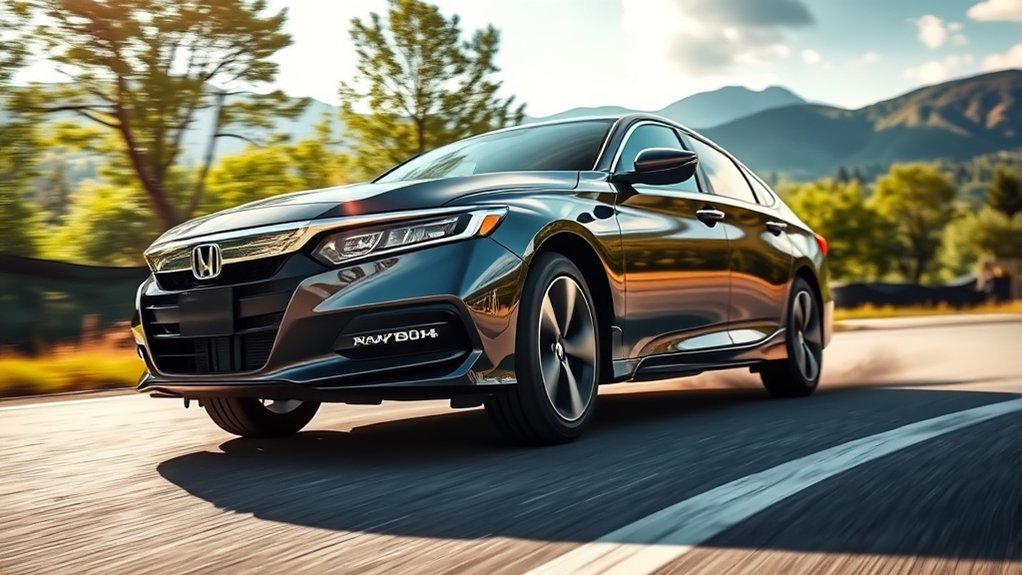
Tire cornering performance in a Honda Accord comes down to how well each tire can keep a stable contact patch while the car turns, brakes, accelerates, and carries weight. Tire type, cold inflation pressure, tread depth, alignment, tire age, suspension condition, road temperature, and driving inputs all change how much grip you feel through the steering wheel.
Quick Answer
Honda Accord tire cornering performance is affected most by tire type, correct cold tire pressure, tread depth, alignment, load, tire condition, and smooth driving inputs. For the safest handling, use the pressure on the driver’s doorjamb label, replace worn or damaged tires promptly, and choose tires that match your climate and driving style.
Key Takeaways
- Use the Accord’s recommended cold tire pressure from the doorjamb placard or owner’s manual, not the maximum pressure printed on the tire sidewall.
- Tread depth matters before the tire reaches the 2/32-inch minimum, especially in rain where shallow grooves cannot move water as well.
- Alignment, tire age, load, and suspension condition can reduce cornering grip even when the tires still look usable.
- Performance tires can improve dry grip, but summer tires are not designed for freezing temperatures, snow, or ice.
- Smooth steering, braking, and throttle inputs help the tires stay within their grip limit during turns.
How Tire Types Impact Cornering Performance
The tire type on your Honda Accord affects cornering because each tire category uses a different tread pattern, rubber compound, sidewall design, and operating temperature range. These details control how quickly the tire responds when you turn the wheel and how much grip it can hold before it begins to slide.
All-season touring tires are common on Accord models because they balance comfort, tread life, wet grip, and light winter capability. They are usually predictable and quiet, but they may not feel as sharp during aggressive cornering as a true performance tire.
Performance all-season tires usually provide quicker steering response and stronger dry and wet grip than basic touring tires. They can be a good choice if you want better handling without switching to a dedicated summer tire.
Summer performance tires can deliver the best dry-road cornering grip in warm weather, but they are not designed for freezing temperatures, snow, or ice. If your Accord sees cold winters, use a tire category that matches those conditions.
Winter tires use rubber compounds and tread designs made for cold weather. They can improve control in snow, slush, and cold rain, but they usually feel softer and less precise during warm-weather cornering.
Note: The best cornering tire is not always the stickiest tire. Match the tire to your Accord’s wheel size, load rating, speed rating, climate, road surface, and everyday driving needs.
[Products Worth Considering]

This tire inflator with pressure gauge delivers long-lasting performance with a durable rubber-protected gauge and sturdy build. The longer hose and 360 swivel air chuck help you seal the valve securely and keep your hands free while measuring, inflating, or deflating. It’s battery-free for reliable use and provides ±2 PSI accuracy in the mid-range for most typical tires, with universal compatibility for 1/4 NPT compressor outputs.

Measure tire tread depth quickly and accurately with this LUMITECO dial gauge that reads in 1/32" increments up to 14/32". The color-coded green/yellow/red zones make it easy to judge tire wear and know when replacement is needed. A rugged, compact design with a protective pouch helps keep the gauge ready for use on cars, trucks, motorcycles, and more.

The SAFELIFE dial tire tread depth gauge measures tread depth in 1/32 inch increments with clear, easy-to-read 2-inch dial face. Color zones using a traffic light system help you quickly judge whether tread is low, marginal, or ample for safer driving. Built with a durable zinc cast body and a metal detect probe for precise, comfortable use across cars, motorcycles, trucks, and buses.
How Tire Pressure Influences Grip and Stability
Correct tire pressure helps the tire keep its intended shape under cornering load. Honda advises checking tire pressure when the tires are cold and using the pressure listed on the driver’s doorjamb label or the specifications page for your exact Accord. Properly inflated tires provide the best balance of handling, tread life, and ride comfort.
Use the Recommended Cold Pressure
Do not use a single universal PSI number for every Accord. Tire pressure can vary by model year, trim, tire size, load, and driving condition. Many Accord setups fall near the low-to-mid 30 PSI range, but the correct number is the cold inflation pressure printed on your vehicle’s tire information label.
- Check pressure cold: measure before driving or after the car has been parked long enough for the tires to cool.
- Check monthly: even healthy tires can lose pressure over time.
- Check before long trips: highway driving, heavy loads, and hot weather increase tire stress.
- Use a real gauge: the TPMS light is a warning system, not a replacement for regular pressure checks.
Effects of Underinflation
Underinflation does not simply “add grip.” It lets the sidewall flex too much, changes the contact patch shape, increases heat, and makes the steering feel slower. During a turn, an underinflated tire can roll onto its shoulders, wear unevenly, and feel vague or unstable.
- Slower steering response: the tire deforms more before the car reacts.
- More heat buildup: excess flex can raise tire temperature and increase failure risk.
- Uneven shoulder wear: the outer edges can wear faster, especially with frequent cornering.
- Lower stability: the car may feel less planted during quick lane changes or curved ramps.
Effects of Overinflation
Overinflation can also hurt cornering. A tire with too much pressure may ride harshly, lose compliance over bumps, and wear more quickly near the center of the tread. On rough pavement, that harshness can reduce real-world grip because the tire has a harder time staying settled against the road.
Warning: Do not inflate tires to the maximum PSI printed on the tire sidewall unless the vehicle manufacturer specifically calls for it. The sidewall number is a tire limit, not the normal Accord operating pressure.
How Suspension Condition and Upgrades Affect Tire Performance
Your tires can only grip well if the suspension keeps them planted. Worn shocks, weak struts, loose bushings, tired control-arm components, and poor alignment can make even good tires feel unstable. Suspension upgrades can help, but only when they are matched to the vehicle and installed correctly.
[Products Worth Considering]

Monitor tire tread wear with a smart, color-coded depth gauge that shows clear condition ranges at a glance. The bar is range marked for fast, easy readings, helping you maintain safer traction and performance. Each gauge is portable with a pocket clip, and the set includes 20 units for daily use and sharing.

The Ziopetru adjustable magnetic wheel alignment tool helps you check and restore camber and caster positioning after removing and reinstalling undercarriage components. With a clear leveling/bubble measurement system and an easy zeroing adjustment knob, it supports precise horizontal angle checking. The strong magnetic base mounts to metal surfaces for convenient use at home on cars, motorcycles, trucks, vans, and SUVs.

The Continental Grand Prix 5000 is an allround road bike tire engineered for faster rolling, improved ride comfort, and enhanced puncture protection. It features a Vectran Breaker cut-protection layer, Lazer Grip micro-profile tread for confident cornering control, and Active Comfort Technology to damp vibration for smoother rides. BlackChili compound optimizes grip and speed for everyday performance and long-lasting confidence.
Improved Weight Transfer Control
Suspension upgrades do not magically change the Accord’s static weight distribution. What they can do is control how quickly weight transfers when you brake, turn, or accelerate. Better damping and appropriate spring rates can reduce excess body motion, helping the tires maintain more consistent contact with the pavement.
- Good shocks and struts reduce bouncing and keep the tread more stable over bumps.
- Quality springs can reduce excessive roll, but overly stiff springs can hurt ride and grip on rough roads.
- Sway bars can sharpen response, but too much rear or front bar can change the balance toward oversteer or understeer.
- Fresh bushings and ball joints help the alignment stay consistent under load.
Enhanced Steering Response
A healthy suspension improves steering response because the tires stay better aligned with the direction you ask the car to go. When shocks are worn or alignment is off, the tire can scrub instead of turning cleanly, which reduces cornering confidence.
| Component | What It Affects | Cornering Impact |
|---|---|---|
| Shocks / struts | Body motion and tire control | Keeps the tire more settled through bumps and curves |
| Springs | Ride height and roll control | Can reduce roll when properly matched |
| Sway bars | Left-to-right body roll | Can sharpen turn-in but must be balanced |
| Bushings / joints | Alignment stability | Helps prevent vague steering and uneven tire loading |
Increased Stability During Turns
Stable cornering comes from the tire, suspension, and alignment working together. If the car leans excessively, bounces after dips, pulls to one side, or feels loose over uneven pavement, inspect the suspension before blaming the tires alone.
Pro Tip: After any suspension repair, lowering spring installation, wheel change, or hard pothole hit, get a professional alignment. Tire grip suffers when the wheel angles are no longer within specification.
How Alignment Affects Cornering Grip
Wheel alignment controls how each tire sits against the road. The three most important angles are camber, toe, and caster. When these are out of specification, the tread does not load evenly during a turn, and the Accord may pull, wander, or wear tires unevenly.
- Camber is the inward or outward tilt of the tire. Too much negative or positive camber can reduce the usable tread area during normal driving.
- Toe is the direction the tires point relative to each other. Incorrect toe can make the car feel nervous and can scrub tread quickly.
- Caster affects steering feel and straight-line stability. It is less often adjusted on many vehicles but still matters for handling feel.
Signs your Accord may need an alignment include uneven tread wear, a crooked steering wheel, pulling to one side, vibration after a road impact, or a sudden change in steering response.
How Driving Style Affects Tire Grip
Driving style has a direct effect on tire grip. Tires have a limited amount of traction to share between braking, turning, and acceleration. If you brake hard while turning sharply, or accelerate aggressively before the car is settled, you use up more of that grip and increase the chance of understeer, oversteer, or stability-control intervention.
| Driving Input | Effect on Grip | Better Habit |
|---|---|---|
| Abrupt steering | Loads the front tires suddenly | Steer smoothly and progressively |
| Hard braking in a turn | Uses braking and cornering grip at once | Brake before the curve when possible |
| Early heavy throttle | Can reduce front grip in a front-wheel-drive Accord | Accelerate gradually after the car points straight |
| Excess speed | Overwhelms available tire grip | Slow down for road, traffic, and weather conditions |
Smooth driving does more than feel better. It also reduces heat, tread scrub, shoulder wear, and emergency braking distance because the tires are not being shocked into slip as often.
How Tread Wear Affects Handling
As tire tread wears down, the grooves become shallower and cannot move water away from the contact patch as effectively. That matters most in rain, where worn tires are more likely to hydroplane, take longer to stop, and feel less stable during curves.
The federal minimum tread depth for passenger-car tires is 2/32 inch, and most tires have built-in wear bars that appear when the tread reaches that level. However, waiting until 2/32 inch is risky if you regularly drive in heavy rain. Tire Rack testing found that wet braking distance increased sharply as tread depth dropped, with 4/32-inch tires stopping much longer than new tires and 2/32-inch tires performing far worse.
In Tire Rack’s wet-braking test from 60 mph, a sedan stopped in 205 feet on new tires, 270 feet at 4/32-inch tread, and 400 feet at 2/32-inch tread.
- Use a tread-depth gauge for the most accurate reading.
- Check several grooves across each tire because wear is not always even.
- Replace at 2/32 inch immediately because the tire is at the minimum limit.
- Consider replacement around 4/32 inch if wet-weather grip is important.
- Inspect uneven wear because cupping, feathering, or one-sided wear may point to alignment or suspension problems.
How Load and Weight Distribution Affect Cornering
Passengers, cargo, roof loads, and trunk weight change how your Accord responds in a turn. Extra load increases the work each tire must do. If the car is overloaded or the cargo is unevenly placed, the tires can run hotter and the vehicle may feel slower to respond.
For safer handling, keep heavy items low and centered, avoid exceeding the vehicle’s load limit, and raise tire pressure only when the owner’s manual or tire placard instructs you to do so for a specific load condition. Never exceed the tire or vehicle load rating.
How Tire Age and Damage Affect Cornering
Tread depth is not the only sign of tire health. A tire can have visible tread left and still be unsafe if the rubber is aged, cracked, bulged, punctured, or internally damaged. Old or damaged tires may lose flexibility and consistency, which can make cornering feel unpredictable.
Michelin recommends that tires in use for five years or more be inspected by a trained tire professional at least once a year. Tires should be replaced ten years from the manufacture date as a precaution, even if they appear usable and have not reached the treadwear indicators.
- Replace tires with bulges, exposed cord, deep cuts, or sidewall cracking.
- Investigate vibration after a tire impact or pothole hit.
- Check the DOT date code if you do not know the tire’s age.
- Inspect the spare tire if your Accord is equipped with one, because spare tires age too.
Best Tires for Optimal Cornering Performance
The best tire for Honda Accord cornering performance is the one that fits the vehicle correctly and matches your climate. Start with the factory tire size, load index, and speed rating listed on the doorjamb placard or owner’s manual. Then compare tire category, tread design, UTQG ratings, wet traction, noise, comfort, and treadwear warranty.
NHTSA’s Uniform Tire Quality Grading system can help compare treadwear, traction, and temperature ratings. The traction grade reflects a tire’s ability to stop on wet pavement in controlled testing, not its total cornering ability, but it is still useful when comparing options.
- Daily comfort: choose a quality touring or grand-touring all-season tire.
- Sharper handling: choose a performance all-season tire with the correct load and speed rating.
- Maximum warm-weather grip: choose a summer performance tire, but avoid using it in freezing temperatures, snow, or ice.
- Cold-weather control: choose winter tires if you regularly drive in snow, ice, or sustained cold temperatures.
- Consistent handling: replace tires in matched sets when possible and avoid mixing tire types on the same axle.
Note: A wider tire or larger wheel is not automatically better. Changing wheel size, tire width, or offset can affect ride quality, speedometer accuracy, steering weight, fender clearance, and suspension geometry.
[Products Worth Considering]

Accurately measure tire tread depth with a calibrated gauge marked from 0 to 1 inch in 1/32 inch increments. The color-coded bar helps you quickly identify tread condition ranges, supporting safe driving for trucks, motorcycles, automobiles, and passenger vehicles.

This universal wheel alignment tool helps you accurately restore tire tilt angles after tire or suspension repairs using an adjustable camber gauge. It features a powerful magnetic base that firmly attaches to brake rotors for stationary, slip-free readings, improving consistency during measurement. Built from durable PC plastic, it resists wear and corrosion and is compact enough for car, truck, RV, and motorcycle alignment tasks.

Milton S-921 pencil tire pressure gauge helps you maintain optimal tire pressure for passenger cars with accurate readings in PSI and kPa. It features a built-in deflator valve for convenient pressure adjustments, plus a single chuck head and nylon indicator bar for easy use on the go. Built from durable plated brass and designed for reliable performance, it’s a practical road trip and cold-weather maintenance tool.
Maintenance Checklist for Better Cornering
Small maintenance habits can make a big difference in how confidently your Accord turns. Use this checklist before blaming the suspension or buying performance tires.
- Check cold tire pressure monthly and before long highway trips.
- Measure tread depth across the inner, center, and outer grooves.
- Rotate tires on schedule to even out wear when the tire pattern allows it.
- Balance tires if you feel vibration at speed.
- Get an alignment after suspension work, uneven wear, or a hard road impact.
- Inspect for cracks, bulges, punctures, and exposed cords.
- Replace tires by condition, tread depth, and age, not appearance alone.
Frequently Asked Questions
How do weather conditions affect tire cornering performance?
Rain, snow, ice, heat, and cold all change tire grip. Wet roads reduce traction and make tread depth more important. Cold temperatures can harden some rubber compounds, while high heat can increase tire pressure and stress. Use tires designed for your climate.
What role does alignment play in tire handling?
Alignment controls how the tires meet the road. Incorrect camber, toe, or caster can cause pulling, uneven tire wear, vague steering, and reduced cornering confidence. If your Accord drifts, the steering wheel is off-center, or the tires wear unevenly, schedule an alignment check.
Can tire age impact cornering capabilities?
Yes. Aging rubber, cracks, internal damage, or long-term heat exposure can make a tire less consistent even if tread remains. Have tires inspected annually after five years of use and replace tires at ten years from the manufacture date as a precaution.
How do load and weight distribution affect cornering?
Extra passengers, cargo, or uneven trunk weight increase tire workload and can make the car respond more slowly. Keep heavy items low and centered, stay within the Accord’s load limit, and follow Honda’s pressure guidance for your exact vehicle.
Are there tire compounds specifically for performance driving?
Yes. Performance all-season and summer performance tires use compounds and construction aimed at sharper steering and stronger grip. However, summer tires are not suitable for freezing temperatures, snow, or ice, so choose based on your weather and driving needs.
Is 2/32 inch of tread enough for safe cornering?
Two thirty-seconds of an inch is the minimum tread depth in federal passenger-car inspection criteria, but wet-weather performance can decline before that. If you drive often in rain, consider replacing tires earlier, especially around 4/32 inch.
Will suspension upgrades make stock tires grip better?
They can help the tires work more consistently by controlling body motion and keeping the tread planted, but they do not create grip by themselves. Worn or low-quality tires will still limit cornering, even with upgraded suspension parts.
Conclusion
Your Honda Accord’s tire cornering performance depends on more than tire brand. Correct cold pressure, healthy tread, proper alignment, safe load, good suspension condition, tire age, and smooth driving all work together. Start with the basics: check the doorjamb pressure label, inspect tread and sidewalls, fix uneven wear, and choose tires built for your climate. Those steps will do more for confident cornering than any single upgrade alone.
Sources
- Honda 2025 Accord Owner’s Manual — Checking Tires — backs cold tire pressure, monthly checks, handling, tread life, comfort, and inspection guidance.
- NHTSA TireWise — backs tire categories, UTQG ratings, traction ratings, temperature ratings, and tire-size guidance.
- NHTSA Tire Safety Brochure — backs tire pressure, load limits, inspection, steering, stopping, traction, and tire failure prevention.
- 49 CFR § 570.9 — Tires — backs the 2/32-inch passenger-car tread-depth minimum and wear-indicator guidance.
- Tire Rack — How Much Does Tire Tread Depth Affect Wet Braking? — backs wet-braking performance differences at new, 4/32-inch, and 2/32-inch tread depths.
- Michelin — When to Replace Tires — backs tire-age inspection after five years and replacement at ten years from manufacture.