
Quick Answer
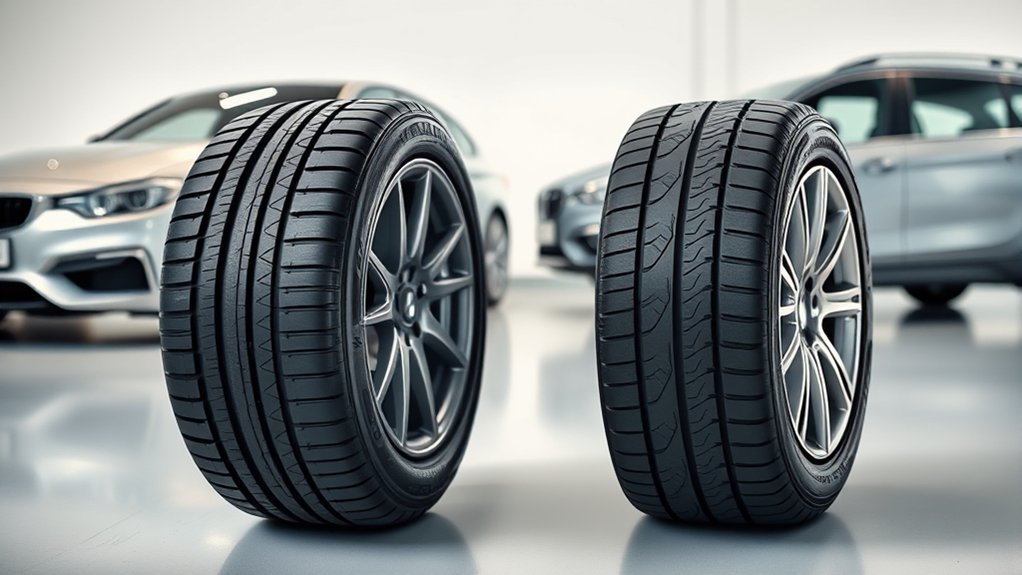
H-rated tires are rated to 130 mph (210 km/h), while V-rated tires are rated to 149 mph (240 km/h) under controlled test conditions. Use the rating your vehicle manufacturer specifies. If both are approved for your car, H often suits comfort-focused touring, while V may suit a firmer, more responsive setup.
Key Takeaways
- Speed ratings describe tested tire capability, not a recommended or legal driving speed.
- Load capacity is controlled by the tire’s load index, not by whether the tire is H- or V-rated.
- A higher speed rating can affect ride comfort, cornering feel, and tread life, but the exact result depends on the tire model and construction.
- Mixing H- and V-rated tires is generally discouraged because different ratings can change handling balance.
- Winter tires are a special case: a lower speed rating may be acceptable when the vehicle maker permits it, but the vehicle must be driven within the lower tire’s limit.
What Do V and H Speed Ratings Mean?
H and V are standardized speed symbols that describe the maximum sustained speed a tire is designed to handle under specified test conditions. H corresponds to 130 mph (210 km/h), while V corresponds to 149 mph (240 km/h).
Bridgestone’s tire speed-rating guidance explains that these ratings come from laboratory testing with simulated speeds and loads. Real-world capability can be lower if a tire is underinflated, overloaded, damaged, worn, repaired, or used in poor road or weather conditions.
The rating appears at the end of the tire’s service description. For example, in 225/60R16 98V, 98 is the load index and V is the speed rating. Those two specifications work together, but they measure different things.
H means up to 130 mph under specified conditions; V means up to 149 mph. Neither rating is permission to drive at that speed.
What’s the Difference Between V and H Tires?
The main difference is the tested speed capability: V is rated 19 mph higher than H. In compatible tire lines, the higher-rated version may also be tuned for more responsive handling, while the lower-rated version may favor comfort and tread life.
| Feature | H-Rated Tire | V-Rated Tire |
|---|---|---|
| Maximum rated speed | 130 mph / 210 km/h | 149 mph / 240 km/h |
| Typical tuning | Often touring or comfort oriented | Often more handling oriented |
| Load capacity | Set by load index | Set by load index |
| Best fit | Vehicles approved for H | Vehicles requiring or approving V |
Michelin’s replacement-tire guidance notes that a higher speed rating can affect cornering, ride comfort, and tread life. That does not mean every V-rated tire will be stiffer, noisier, or shorter-lived than every H-rated tire; tread pattern, compound, sidewall design, size, inflation, and tire category still matter.
How V and H Tires Change Ride Quality
H- and V-rated tires can feel different, but the speed letter alone does not determine ride quality. A V-rated version is often built with more performance-focused tuning, while an H-rated touring tire may use a more compliant setup.
Ride Comfort Differences
H-rated touring tires often favor a smoother, quieter ride, while higher-speed versions can feel firmer. However, the difference is model-specific, so compare two tires in the same size and category rather than assuming the letter predicts comfort by itself.
Wheel size, sidewall height, tread pattern, inflation pressure, vehicle suspension, and road surface can all create a bigger comfort difference than the H or V symbol alone.
Handling And Stability
V-rated tires are often chosen where more direct steering and cornering response are priorities. Their higher speed capability is also associated with construction designed to manage greater stress at sustained speed.
That still does not make a V tire automatically better in wet weather, snow, emergency braking, or normal commuting. Those traits depend on the tire’s compound, tread design, category, condition, and how well it matches the vehicle.
For stable handling, use the correct cold inflation pressure, keep alignment in specification, rotate tires when the vehicle manufacturer recommends it, and replace damaged or worn tires.
Which Vehicles Use V and H Tires?
Both ratings appear on passenger cars, crossovers, coupes, and road-focused SUVs. The correct fit is determined by the vehicle’s original specification, not just by vehicle type.
| Vehicle type | Typical use | Common fit |
|---|---|---|
| Sedan | Commuting or touring | H or V, depending on OE specification |
| Crossover | Mixed road driving | H or V, depending on trim and tire size |
| Sport sedan | Performance road use | Often H or V, depending on manufacturer specification |
| Light SUV | Road-biased service | H or V when specified |
Before buying, check the vehicle tire placard and owner’s manual for the required size, load index, and speed rating. Do not assume a higher rating improves safety on a particular chassis.
When Should You Choose V-Rated Tires?
Choose V-rated tires when your vehicle specifies V or when the manufacturer approves a V-rated replacement in the correct size and load index. V can also make sense when you want the handling characteristics of a compatible V-rated version rather than a comfort-focused alternative.
[Products Worth Considering]

The 22800 wheel stud installer makes replacing wheel studs quick and secure, saving time and effort during tire service. It uses a ratchet or impact wrench to pull new studs firmly into place, helping when existing studs are too long. Compatible with most automotive wheels and light-duty truck wheel studs, it’s designed for easy, tool-assisted installation.

A concentrated tire and tube mounting compound designed to help simplify mounting rubber tires and tubes on passenger, semi truck, construction, and OTR applications. Its ultra-thick formula packs beads effectively and includes rust inhibitors to help protect against corrosion during use.

Keep your tires properly inflated with this analog VONDIOR tire pressure gauge, designed for fast, easy readings without batteries. The swiveling, two-axis hose and large glow dial help you measure at any tire angle with instant visibility. Built with a protective rubber shield, it supports durable, low-maintenance use for cars and trucks.
Daily Driving Needs
For normal commuting, the safest starting point is the factory specification. The U.S. Tire Manufacturers Association replacement guidance says replacement tires should match the size, load index, and speed-rating designation recommended by the vehicle or tire manufacturer.
If your vehicle came with V-rated tires, staying with the specified V rating preserves the intended speed capability and handling envelope. If the manufacturer specifies H, there is usually no need to choose V just because the number is higher.
Performance And Handling
V-rated tires can be a good fit when a compatible tire line is tuned for sharper steering and stronger cornering response. That can suit a sport sedan, coupe, or performance-oriented trim whose suspension and steering were designed around that type of tire.
Compare the actual tire model, not only the rating letter. A well-designed H-rated performance tire can feel more responsive than a comfort-oriented V-rated tire from another line.
Heat And Load Limits
V-rated tires are designed for a higher sustained-speed range than H-rated tires, but speed rating is not load rating. Heavy passengers, cargo, towing, and vehicle axle limits must be checked against the tire’s load index and the vehicle manufacturer’s limits.
| Condition | H-Rated | V-Rated |
|---|---|---|
| Maximum rated speed | 130 mph | 149 mph |
| Load capacity | Determined by load index | Determined by load index |
| High-speed capability | Lower than V | Higher than H |
| Towing suitability | Depends on load index and vehicle limits | Depends on load index and vehicle limits |
| Replacement rule | Use only when manufacturer specification allows | Use when required or approved |
Warning: Do not use a V rating as proof that a tire can carry more weight. An overloaded tire can overheat and fail even when its speed rating is high.
When Does H-Rated Tire Make More Sense?
An H-rated tire makes sense when the vehicle manufacturer specifies or permits H and your priorities lean toward everyday touring rather than a more performance-focused tire setup. It should never be used as a downgrade from V unless the vehicle manufacturer or tire guidance explicitly allows it.
If both H and V versions are approved, compare ride comfort, wet grip, treadwear warranty, noise, price, and the tire category. Those details tell you more about daily use than the speed symbol alone.
H-rated tires can work well for commuting, highway travel, and mixed road driving when they meet the vehicle’s full specification. Proper inflation and alignment remain essential for tread life and stable handling.
[Products Worth Considering]

Measure tire tread depth quickly and accurately with this LUMITECO dial gauge that reads in 1/32" increments up to 14/32". The color-coded green/yellow/red zones make it easy to judge tire wear and know when replacement is needed. A rugged, compact design with a protective pouch helps keep the gauge ready for use on cars, trucks, motorcycles, and more.

The SAFELIFE dial tire tread depth gauge measures tread depth in 1/32 inch increments with clear, easy-to-read 2-inch dial face. Color zones using a traffic light system help you quickly judge whether tread is low, marginal, or ample for safer driving. Built with a durable zinc cast body and a metal detect probe for precise, comfortable use across cars, motorcycles, trucks, and buses.

This universal wheel alignment tool helps you accurately restore tire tilt angles after tire or suspension repairs using an adjustable camber gauge. It features a powerful magnetic base that firmly attaches to brake rotors for stationary, slip-free readings, improving consistency during measurement. Built from durable PC plastic, it resists wear and corrosion and is compact enough for car, truck, RV, and motorcycle alignment tasks.
How Much Do V and H Tires Cost?
There is no fixed H-versus-V price premium. Cost depends on tire size, brand, product line, season category, performance level, warranty, and retailer pricing.
A V-rated version may cost more when it uses performance-focused construction or compounds, but that is not a universal rule. Compare the exact H and V products that fit your vehicle instead of assuming the higher speed rating always means a higher price.
Compare complete tire specifications and the actual product price; the speed-rating letter alone does not determine value.
Also compare expected tread life and rolling resistance. NHTSA’s TireWise guidance explains that tire materials, construction, tread design, inflation, and rolling resistance influence durability and fuel economy.
[Products Worth Considering]

Monitor tire tread wear with a smart, color-coded depth gauge that shows clear condition ranges at a glance. The bar is range marked for fast, easy readings, helping you maintain safer traction and performance. Each gauge is portable with a pocket clip, and the set includes 20 units for daily use and sharing.

MORNYRAY universal tire covers help protect RV, truck, SUV, trailer, and camper tires from sun, rain, and snow with waterproof, anti-UV fabric and a soft inner lining. Elasticized bands and windproof buckle design help keep covers securely in place for easy on and off use. The set includes a storage bag for convenient handling when not in use.

The Tymate TM12 RV TPMS delivers real-time tire pressure and temperature monitoring with a stable 433Hz display for safer long-distance driving. It supports simultaneous monitoring across vehicle and trailer zones, includes six alarm modes for pressure, temperature, leakage, battery, and signal loss, and features easy DIY installation with auto calibration. Power is supplied via USB-C charging or solar recharging, with a wide 0–144 PSI range and up to 50 ft signal coverage for RVs and towable trailers.
Can You Mix V and H Tires Safely?
Mixing H- and V-rated tires is generally not recommended. A matched set helps preserve predictable steering, braking, traction, and stability, especially during emergency maneuvers or poor weather.
Michelin’s tire-mixing guidance recommends matching size, type, speed rating, load capacity, and construction across the vehicle unless the vehicle manufacturer specifies otherwise. If different speed ratings are temporarily mixed, the vehicle’s speed capability is limited by the lowest-rated tire and handling may change.
| Check | V/H Mix OK? | Risk |
|---|---|---|
| Same size and load index | Not enough by itself | Handling can still differ |
| Different speed ratings | Generally not recommended | Vehicle is limited by the lower rating |
| Manufacturer-approved staggered setup | Follow the exact OE specification | Low when correctly matched |
If you replace only two tires, follow the vehicle and tire manufacturer’s guidance. USTMA recommends placing the new pair on the rear axle to improve wet-road stability.
Note: If your placard, owner’s manual, and current tires do not agree, have a qualified tire professional verify the correct replacement size, load index, and speed rating before installation.
Frequently Asked Questions
How Are Tire Speed Ratings Tested?
Tire speed ratings are established through controlled laboratory testing with simulated speeds and loads. The test shows that a tire can sustain a specified speed under defined conditions, but real-world capability can be reduced by underinflation, damage, overloading, wear, repairs, heat, or poor road conditions.
Does Speed Rating Affect Fuel Economy?
Speed rating alone does not reliably predict fuel economy. Rolling resistance, tread compound, tire construction, size, pressure, and vehicle setup matter more, so an H-rated tire is not automatically more efficient than a V-rated tire or vice versa.
Can Lower Speed Ratings Improve Tire Life?
A lower speed rating can sometimes come with longer tread life when the tire is designed for touring rather than performance, but it is not guaranteed. Compare the exact tire model, treadwear warranty, compound, alignment needs, and inflation requirements instead of choosing by the letter alone.
Do Winter Tires Use V or H Ratings?
Winter tires can use H or V ratings, but many winter tires use lower ratings too. USTMA’s winter-tire bulletin says a lower-rated winter tire may be acceptable when the OE rating cannot be matched, but vehicle speed must then be restricted to the replacement tire’s rating and the owner’s manual should be followed.
Where Is the Speed Rating Printed on the Tire?
The speed rating is printed on the tire sidewall as the final letter in the service description, after the load index. Your vehicle’s required rating may also be listed on the tire placard or in the owner’s manual, depending on the vehicle.
Conclusion
Choose between H and V by matching the vehicle manufacturer’s specification first, then comparing the actual tire model’s comfort, handling, tread life, wet grip, and price. V gives a higher tested speed capability, but H can be the right choice when your vehicle approves it and you prefer a touring-focused tire.
Sources
- Bridgestone Tire Speed Rating Guide: H and V speed limits, test conditions, and rating limitations.
- Michelin Choosing the Right Tire Size and Specification: speed-rating changes, ride, cornering, tread life, and load-index guidance.
- U.S. Tire Manufacturers Association — Replacing Tires: replacement size, load index, speed rating, and two-tire replacement guidance.
- NHTSA TireWise: tire safety, tire placards, maintenance, rolling resistance, and fuel economy.
- Michelin Tire Mixing Guidance: matching tire specifications and risks of mixed speed ratings.
- USTMA Winter/Snow Tire Bulletin: winter-tire fitment and lower speed-rating guidance.
”’
print(“words”, len(re.findall(r”\b[\w’’-]+\b”, re.sub(‘<[^>]+>
