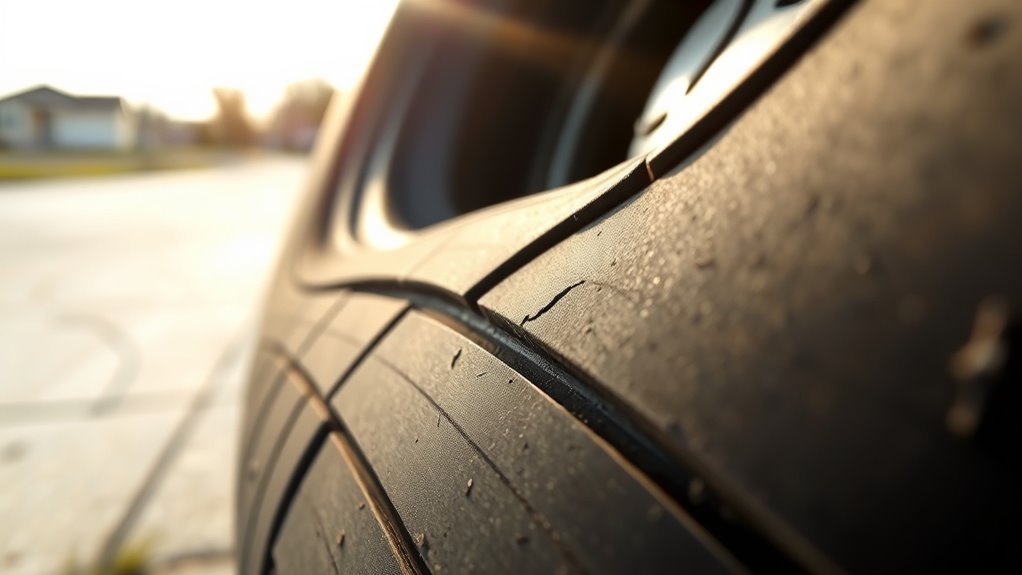
Is UV Tire Damage Serious?
What’s in This Article
- Quick Answer: Is UV Tire Damage Serious?
- How UV and Ozone Break Down Tire Rubber
- Which Tire Parts Does Sunlight Damage First?
- Common Signs of UV Tire Damage: Cracking, Fading, and Stiffness
- How Age, Climate, and Parking Speed Up UV Damage
- How to Protect Tires From Sun Damage
- Inspection Checklist: How to Spot Early UV Damage
- Can UV-Resistant Materials Help Tires Last Longer?
- When Should You Repair or Replace a Sun-Damaged Tire?
- Frequently Asked Questions
- Conclusion
- References
Sun damage can make a tire look fine at a glance while the rubber slowly loses strength. Ultraviolet (UV) light, heat, and ozone can dry out rubber, weaken its structure, and raise the risk of cracking or tire failure. This guide explains how UV damage happens, what signs to check, and when you should protect or replace your tires.
Key Takeaways
- Check tires often for cracks, fading, dry rubber, and stiff sidewalls.
- Park in shade or use tire covers when your vehicle sits outside for long periods.
- Use mild soap and water when cleaning tires, not harsh petroleum-based products.
- Replace tires with deep cracks, exposed cords, bulges, or clear sidewall damage.
- Track tire age with the Department of Transportation (DOT) date code.
Quick Answer: Is UV Tire Damage Serious?
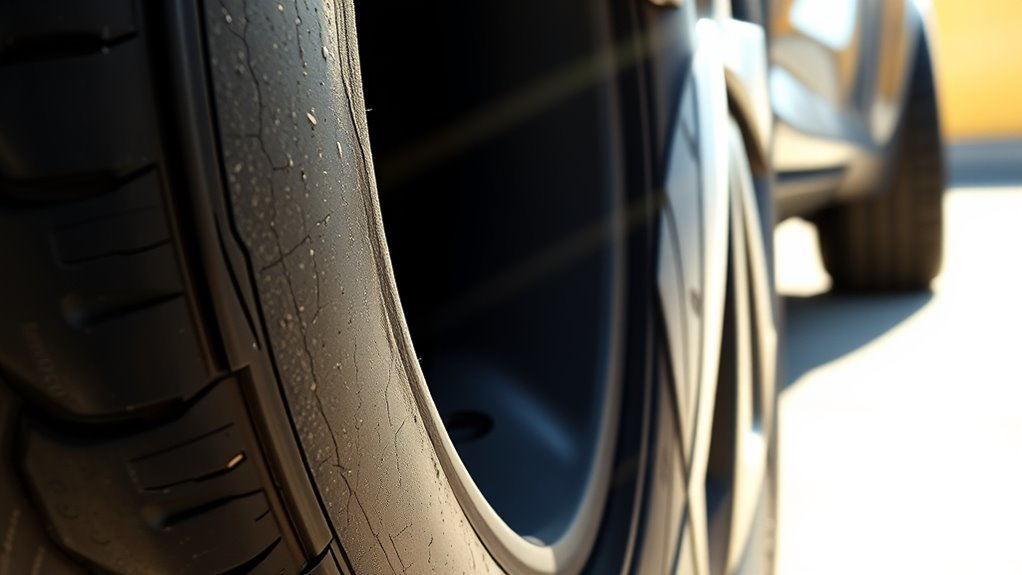
Yes, you should treat UV tire damage as a real safety concern. UV light and ozone can harden rubber, reduce grip, and cause cracks in the tread or sidewall.
Small surface checks may call for closer monitoring, cleaning, and better storage. Deep cracks, bulges, exposed cords, or stiff and brittle sidewalls call for prompt replacement.
Warning: Don’t drive on tires with deep sidewall cracks, exposed cords, bulges, or sudden air loss.
How UV and Ozone Break Down Tire Rubber
UV light carries enough energy to damage rubber compounds at the surface. It can break polymer chains, reduce flexibility, and make the tire feel harder over time.
Ozone also attacks rubber, especially under stress. When a tire flexes while ozone has weakened the surface, small cracks can form and spread.
UV-Induced Polymer Chain Scission
UV photons can split chemical bonds in rubber polymers. This process, called chain scission, shortens the polymer chains and reduces the tire’s elasticity.
As elasticity drops, the tire loses some of its ability to flex and rebound. You may notice harder rubber, fine cracks, and weaker wet or dry traction before the damage looks severe.
Ozone-Induced Surface Cracking
Ozone reacts with unsaturated rubber compounds at the tire surface. This reaction can create small cracks where the rubber stretches, such as the sidewall and shoulder.
UV exposure can speed this process by adding heat and more surface stress. Covers, shade, and routine inspections help limit the damage.
Which Tire Parts Does Sunlight Damage First?
Sunlight often leaves early signs on the tread and shoulder because those areas face direct exposure. You may see fine cracks, color fading, or dry patches along the outer tread blocks.
Sidewalls need special attention because they flex with every drive. When sidewall rubber turns brittle, cracks can deepen and raise the risk of air loss or failure.
| Part | What to Watch For |
|---|---|
| Tread | Fine cracks, fading, reduced grip |
| Sidewall | Brittle rubber, deeper cracks, bulges |
| Shoulder | Edge cracking and uneven wear |
| Overall rubber | Dry feel, gray color, slower rebound |
Inspect all visible surfaces, not just the tread depth. A tire can have legal tread depth and still show unsafe age or UV damage.
Common Signs of UV Tire Damage: Cracking, Fading, and Stiffness
Look for three common signs of UV tire damage: cracking, fading, and stiffness. These signs show that the rubber has lost some of its protective oils, waxes, and flexibility.
- Check for fine cracks on the sidewalls, tread grooves, and shoulder.
- Watch for black rubber that turns gray, dull, or chalky.
- Press the tread and sidewall gently to check for a hard, dry feel.
- Track changes with photos so you can spot cracks that spread over time.
Don’t judge tire safety by appearance alone. Ask a tire professional to inspect any tire that shows deep cracks, bulges, vibration, or air-pressure loss.
How Age, Climate, and Parking Speed Up UV Damage
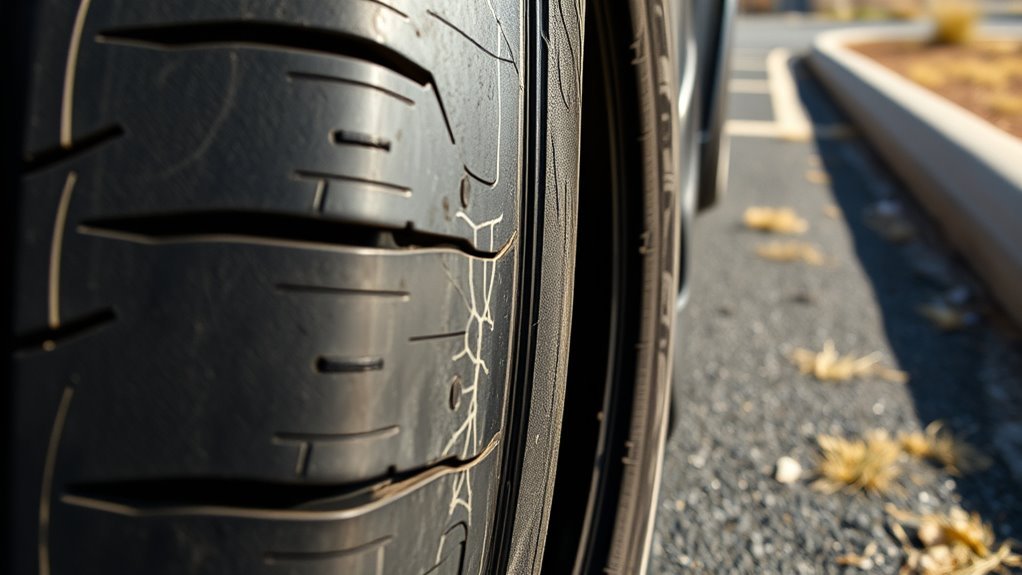
Tire age, climate, and parking habits work together. Older rubber has fewer active protective additives, so sun and ozone can damage it faster.
Hot climates, high UV exposure, and frequent temperature swings add more stress. A vehicle parked outside every day may show cracking sooner than one stored in shade or indoors.
Tire Age Effects
Tires age even when you don’t drive much. Oxygen, heat, and sunlight can harden the rubber while tread depth still looks acceptable.
Check the DOT date code on the sidewall to find the tire’s manufacture week and year. Many tire and vehicle makers advise regular inspections as tires age, with replacement based on age, condition, and service use.
Note: Tire age limits vary by manufacturer, so check your vehicle owner’s manual and tire maker guidance.
Climate Intensity Impact
Heat raises the rate of many rubber-aging reactions. Strong sunlight adds UV stress, and high-altitude locations can expose tires to more intense UV rays.
- Hot climates can speed cracking and hardness.
- High altitude can increase UV exposure.
- Long outdoor storage can age unused tires.
- Direct sun can fade and dry tire surfaces.
- Regular checks can catch early damage before it spreads.
Parking Exposure Choices
Your parking choice can slow or speed tire aging. Direct sun adds UV exposure, while covered parking reduces heat and light on the rubber.
| Condition | Likely Effect |
|---|---|
| Direct sun | Faster surface cracking and fading |
| Older tires | Higher risk of brittle rubber |
| High UV region | Faster weathering |
| Temperature swings | More expansion and contraction stress |
| Covered parking | Slower UV and heat exposure |
If you can’t park indoors, use shade when you can. Tire covers also help when a trailer, RV, or parked car sits outside for weeks.
How to Protect Tires From Sun Damage
You can slow UV damage with simple habits. Focus on reducing direct sunlight, keeping the rubber clean, and avoiding products that dry tires out.
- Use fitted tire covers when a vehicle or trailer sits outside for long periods.
- Park in shade or under a structure when practical.
- Wash tires with mild soap and water to remove grime, salt, and chemicals.
- Use tire products that the tire maker approves for rubber surfaces.
- Maintain proper inflation to reduce sidewall stress and heat buildup.
Pro tip: Clean tires before applying any protectant so dirt doesn’t trap moisture or chemicals against the rubber.
Avoid harsh cleaners, solvents, and petroleum-based dressings unless your tire maker says they’re safe. These products can strip protective compounds and make cracking worse.
[Products Worth Considering]

Keep your tires properly inflated with this analog VONDIOR tire pressure gauge, designed for fast, easy readings without batteries. The swiveling, two-axis hose and large glow dial help you measure at any tire angle with instant visibility. Built with a protective rubber shield, it supports durable, low-maintenance use for cars and trucks.

Monitor tire tread wear with a smart, color-coded depth gauge that shows clear condition ranges at a glance. The bar is range marked for fast, easy readings, helping you maintain safer traction and performance. Each gauge is portable with a pocket clip, and the set includes 20 units for daily use and sharing.

Measure tire tread depth quickly and accurately with this LUMITECO dial gauge that reads in 1/32" increments up to 14/32". The color-coded green/yellow/red zones make it easy to judge tire wear and know when replacement is needed. A rugged, compact design with a protective pouch helps keep the gauge ready for use on cars, trucks, motorcycles, and more.
Inspection Checklist: How to Spot Early UV Damage
Inspect your tires at least once a month and before long trips. Add extra checks after heat waves, long outdoor storage, or long periods without driving.
- Scan sidewalls and tread grooves for fine cracks.
- Look for gray, dull, or chalky rubber.
- Check for bulges, cuts, exposed cords, or uneven wear.
- Measure tread depth and compare wear across the tire.
- Check air pressure with a gauge when tires are cold.
- Read the DOT date code and record the tire age.
Take clear photos if you spot cracks. Compare them during later checks so you can see whether the damage grows.
Can UV-Resistant Materials Help Tires Last Longer?
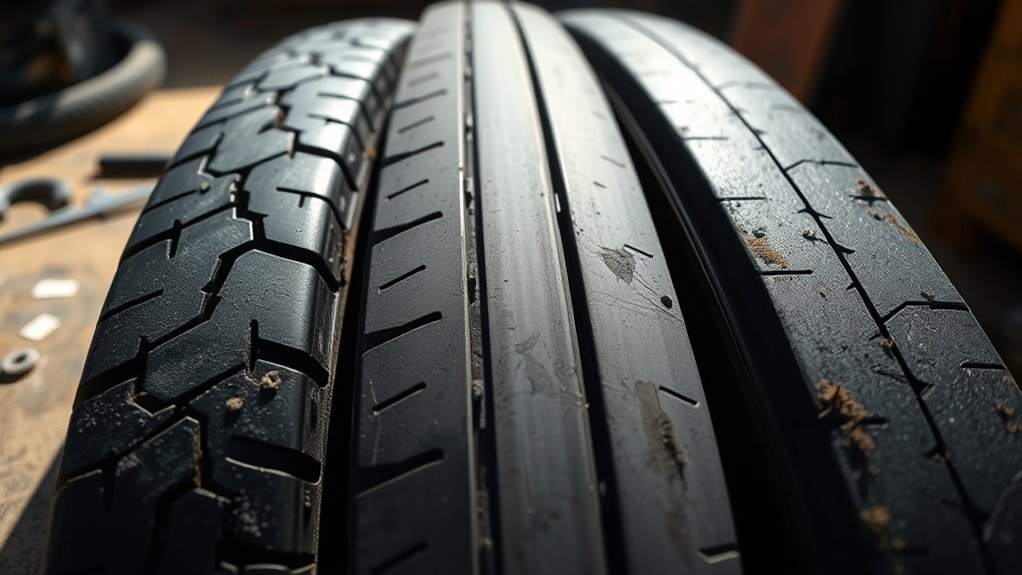
Tire makers use blends of natural and synthetic rubber, carbon black, waxes, antioxidants, and other additives to fight aging. These compounds can slow UV and ozone damage, but they can’t stop aging completely.
Materials such as ethylene propylene diene monomer (EPDM), silicone, and fluoroelastomer (FKM) resist UV and ozone well in many rubber products. Standard passenger tires don’t usually use these as the main tire compound, but related rubber parts and specialty products may use them.
- EPDM: Resists weather, UV, and ozone in many outdoor rubber parts.
- Silicone: Stays flexible across wide temperature ranges and resists weathering.
- FKM: Handles heat, chemicals, ozone, and harsh service conditions well.
- Carbon black and waxes: Help shield tire rubber from light, oxygen, and ozone.
For tires, choose reputable models that match your climate, load, and driving use. Then protect them with good storage and routine checks.
[Products Worth Considering]

Accurately measure tire tread depth with a calibrated gauge marked from 0 to 1 inch in 1/32 inch increments. The color-coded bar helps you quickly identify tread condition ranges, supporting safe driving for trucks, motorcycles, automobiles, and passenger vehicles.

The SAFELIFE dial tire tread depth gauge measures tread depth in 1/32 inch increments with clear, easy-to-read 2-inch dial face. Color zones using a traffic light system help you quickly judge whether tread is low, marginal, or ample for safer driving. Built with a durable zinc cast body and a metal detect probe for precise, comfortable use across cars, motorcycles, trucks, and buses.

Measure tyre tread depth precisely with a digital gauge that reads in both MM and inches, helping you monitor safe driving conditions. The large LCD screen is easy to operate, and the compact tool fits for cars, trucks, and motorcycles. It provides high accuracy with a 0-25.4mm range and includes a 1-year warranty for added peace of mind.
When Should You Repair or Replace a Sun-Damaged Tire?
You can monitor minor, shallow surface checking if the tire holds air and a professional finds no structural damage. Clean the tire, reduce sun exposure, and check it more often.
Replace the tire if cracks look deep, reach the sidewall structure, expose cords, or appear with bulges. You should also replace tires that lose air, vibrate, or show damage after a hard impact.
Repairs usually address punctures in the tread area, not UV-damaged rubber. A patch can’t restore rubber that has turned brittle or cracked from age and sun exposure.
[Products Worth Considering]

Cristal Products Untouchable Tire Shine Spray delivers a deep, wet-look gloss that enhances your vehicle’s tires. It’s quick-drying and spreads smoothly for consistent, streak-free coverage, while forming a protective coating against UV rays, road grime, and weather. Suitable for all tire types, it helps restore dull, faded tires to a showroom-quality finish.

Black Magic Tire Wet delivers a deep wet-look shine that makes tires appear dark, rich, and freshly detailed. Its long-lasting formula helps resist rain, dust, and road grime for weeks of glossy protection, not days. Apply by spraying onto clean, dry tires—no buffing or wiping required—with a low-sling design to reduce splatter on paint and wheels.

TIRESHIELD PRO RV tire covers in a set of four deliver year-round protection against UV rays, cracking, fading, water, and snow. The StormLock-System helps keep the covers securely fastened through high wind, while heavy-duty, double-stitched construction supports long-lasting performance. Designed for universal fit, they’re intended for RV, camper, truck, car, and trailer tires within the 26–28.75 inch diameter range, with easy wipe-clean care and storage in the included bag.
Frequently Asked Questions
Does UV Light Degrade Rubber?
Yes. UV light can break down rubber compounds, reduce flexibility, and lead to cracks over time.
Does Rubber Degrade in the Sun?
Yes. Sun exposure can dry, fade, and harden rubber, especially when heat and ozone add more stress.
Can Tire Covers Prevent UV Damage?
Tire covers can reduce UV exposure, but they don’t stop all aging. They work best when you also keep tires clean, inflated, and out of high heat when possible.
Are Small Sidewall Cracks Dangerous?
Small surface cracks may not mean instant failure, but they deserve attention. Have a tire professional inspect them if they spread, deepen, or appear with bulges or air loss.
How Do You Read a Tire DOT Date Code?
Look for the last four digits of the DOT code on the sidewall. The first two digits show the week, and the last two show the year of manufacture.
Conclusion
UV damage matters because it can weaken tire rubber before the tire looks badly worn. Check your tires for cracks, fading, stiffness, bulges, and age during routine maintenance.
Use shade, covers, mild cleaning, and proper inflation to slow damage. Replace tires that show deep cracking or structural warning signs so every drive starts with safer rubber under you.
References
- Tires — National Highway Traffic Safety Administration
- Tire Safety — National Highway Traffic Safety Administration
- Tire Care and Safety — U.S. Tire Manufacturers Association