
The right tire ply rating for a Toyota Tacoma is not one fixed number. It depends on your Tacoma’s model year, trim, tire size, factory load index, how much weight you carry, and whether you tow or drive off-road. For most owners, the safest starting point is simple: match or exceed the load rating shown on the driver-side tire placard and in the owner’s manual, then choose a tire that fits how you actually use the truck.
Quick Answer
Most Toyota Tacoma owners should use tires that match the factory size, load index, and speed rating listed on the door-jamb tire placard. For heavier towing, hauling, or rough off-road use, many owners choose LT tires in Load Range C, D, or E, but the exact choice should be based on the tire’s load index and sidewall “Max Load,” not ply rating alone.
Key Takeaways
- Ply rating is an old strength rating; modern tires use load range, load index, and max load markings.
- Load Range C, D, and E usually equal 6-ply, 8-ply, and 10-ply ratings on LT tires, but they are not literal ply counts.
- Do not choose Tacoma tires by trailer weight alone. Consider payload, axle weight, passengers, cargo, accessories, and trailer tongue weight.
- A higher load range can add durability, but it may also make the ride firmer and increase tire weight.
- Never install tires with a lower load rating than Toyota specifies for your specific Tacoma.
At a Glance
| Time Required | 10–20 minutes to check your placard, sidewalls, and owner’s manual before buying tires. |
| Difficulty | Easy for basic checks; moderate if changing tire size, wheel size, or load range. |
| Tools Needed | Tire pressure gauge, owner’s manual, door-jamb tire placard, and the tire sidewall markings. |
| Cost | Free to verify; replacement tire cost varies by size, brand, tread type, and load range. |
What Is the Tire Ply Rating for a Toyota Tacoma?
A Toyota Tacoma does not have one universal ply rating. The correct tire depends on the exact tire size and load rating Toyota specified for your truck. Some Tacoma tires are passenger-metric tires, often shown with Standard Load or Extra Load markings. Others may be LT tires, which often use Load Range C, D, or E markings.
For LT tires, the common ply-rating equivalents are:
| Load Range | Common Ply-Rating Equivalent | Typical Use |
|---|---|---|
| C | 6-ply rated | Light towing, mild off-road use, and owners who want more sidewall strength than many passenger tires. |
| D | 8-ply rated | Moderate hauling, heavier gear, and mixed highway/off-road driving. |
| E | 10-ply rated | Heavier loads, frequent towing, rocky trails, and drivers who prioritize durability over ride softness. |
The important detail is that a 10-ply-rated tire does not usually have 10 physical layers. Modern ply ratings are strength equivalents. The actual carrying capacity comes from the tire’s load index and maximum load marking. Tire Rack explains that load range and ply rating show how much load a tire is designed to carry at a specific pressure, and that modern ply rating is not the actual number of plies in the tire. Tire Rack’s load range guide is a useful reference for this distinction.
Note: If your Tacoma still has its original tire size and wheels, the door-jamb tire placard is more important than any generic online ply-rating chart.
How Tire Ply Ratings Affect Load Capacity and Performance
Higher ply ratings usually mean a stronger tire casing, higher maximum inflation pressure, and better resistance to heat and impact under load. That can help when towing, carrying camping gear, driving on gravel roads, or running trails with sharp rocks.
But higher is not always better. A Load Range E LT tire can be heavier and stiffer than a P-metric or Load Range C tire. On a Tacoma used mostly for commuting, that may mean a firmer ride, more road noise, slower acceleration, and lower fuel economy. For a Tacoma used with a bed rack, rooftop tent, tools, trailer tongue weight, and rocky trails, the extra strength may be worth it.
The right Tacoma tire is the one that meets or exceeds the factory load rating and fits your real load, terrain, and comfort needs.
Do not rely on the ply rating alone. Two tires can both be Load Range E, but have different load indexes and different maximum load ratings because they are different sizes or designs.
[Products Worth Considering]

Keep your tires properly inflated with this analog VONDIOR tire pressure gauge, designed for fast, easy readings without batteries. The swiveling, two-axis hose and large glow dial help you measure at any tire angle with instant visibility. Built with a protective rubber shield, it supports durable, low-maintenance use for cars and trucks.

These aluminum alloy tire valve stem caps with an O-ring seal help protect valve stems from corrosion while adding a clean, stylish look to your vehicle. The universal fit works across cars, trucks, motorcycles, bicycles, and more, making them an easy upgrade for everyday driving and off-road use. Installation is quick, and the included four-pack keeps all your tires dressed and protected.
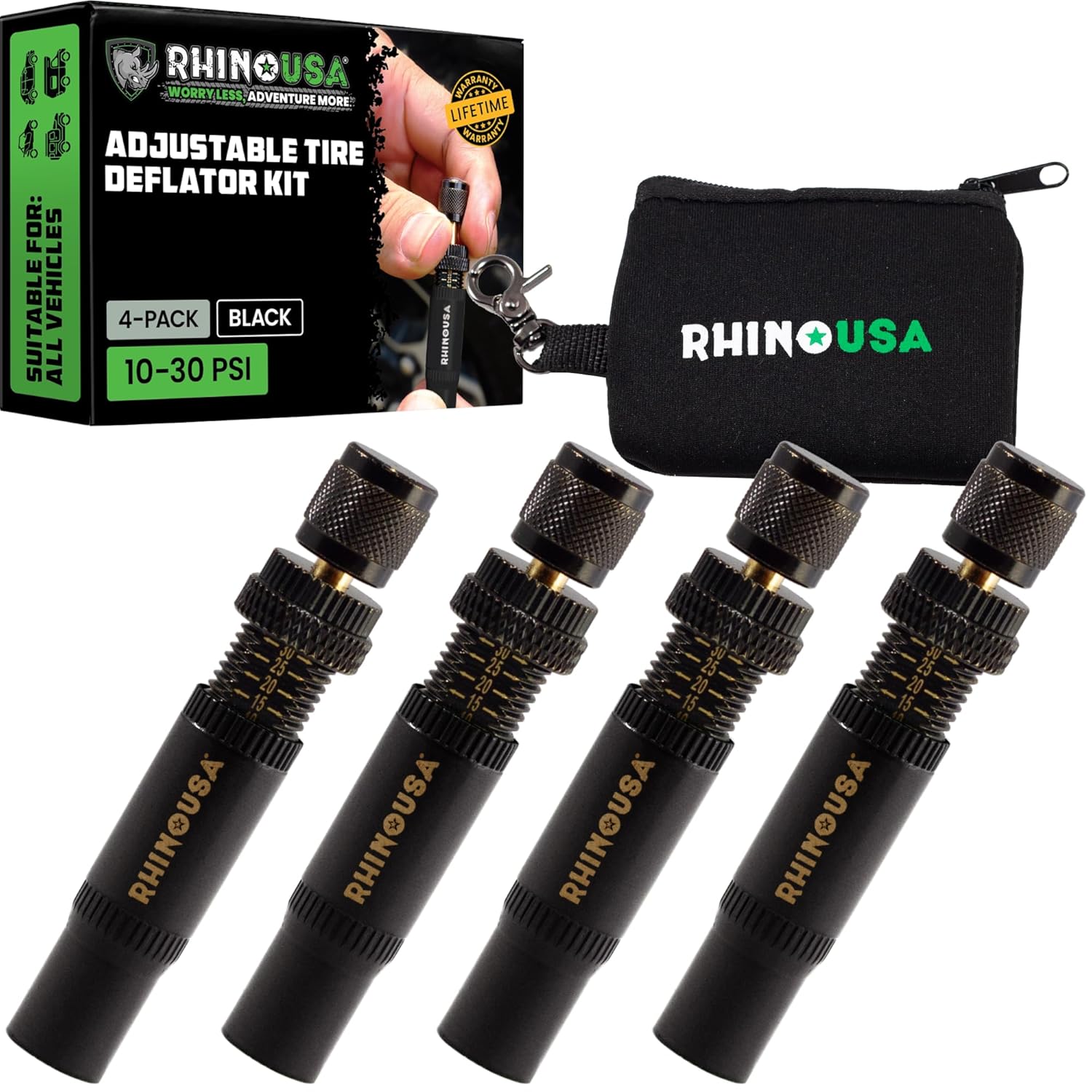
Use the Rhino USA adjustable tire deflators to air down all four tires at once by screwing one deflator onto each valve stem, letting you step away while the tires reach your preset pressure. Each deflator independently adjusts across a 10–30 PSI range with laser-etched indicators for quick setup and verification, making it ideal for beach, sand, and rocky off-road trails.
Understanding the Connection Between Ply Ratings and Load Range
Ply rating, load range, and load index are related, but they are not the same thing.
- Ply rating is the old strength-equivalent rating, such as 6-ply, 8-ply, or 10-ply.
- Load range is the letter marking, such as C, D, or E, commonly found on LT tires.
- Load index is the number on the sidewall that tells you the tire’s rated carrying capacity at the proper pressure.
- Max Load is the sidewall statement that lists the maximum weight the tire can carry when inflated to the stated pressure.
For example, a tire may read something like LT265/70R17 Load Range E 121/118S. In that example, “E” is the load range, while “121/118” is the load index. The load index is what you use to confirm the tire can safely support the truck’s load.
Warning: Never install tires with a lower load index, lower load rating, or incompatible speed rating than Toyota specifies for your Tacoma. Toyota’s owner guidance says not to use tires with a different load rating and/or speed symbol than specified on the tire pressure label or in the owner’s manual.
Where to Find Your Tacoma’s Tire Ply Rating and Load Range
You can find the tire information you need in three places: the driver-side door-jamb placard, the owner’s manual, and the tire sidewall. Check all three before buying replacement tires.
Tire Sidewall Markings
The tire sidewall shows the tire size, construction type, load index, speed symbol, maximum load, maximum pressure, DOT tire identification number, and ply composition. NHTSA explains that standardized sidewall information identifies the tire’s key characteristics and includes load index and ply information. NHTSA’s tire safety brochure is a helpful reference for reading these markings.
Look for markings such as:
- P245/70R17 or 265/70R17 style sizing, depending on your model year and trim.
- LT before the size if it is a light-truck tire.
- Load Range C, D, or E on many LT tires.
- Load index, such as 110, 114, 115, 118, or 121, depending on the tire.
- Max Load and Max Pressure on the sidewall.
Manufacturer Recommendations
The driver-side door-jamb tire placard tells you the original tire size, recommended cold tire pressure, and required load/speed rating for your Tacoma. The owner’s manual gives additional tire and loading guidance. Toyota’s official Tacoma information also shows that capacities and tire specifications vary by model and configuration, so do not copy another Tacoma owner’s tire setup without checking your own truck.
For current Tacoma context, Toyota’s 2026 Tacoma newsroom information lists a maximum towing capacity of 6,500 pounds and payload of up to 1,705 pounds when properly equipped, but those are maximum figures, not the rating for every Tacoma. Toyota’s 2026 Tacoma newsroom release also notes trim-specific off-road and tire equipment, which is why the placard matters.
Top Tire Options for the Toyota Tacoma Based on Ply Ratings
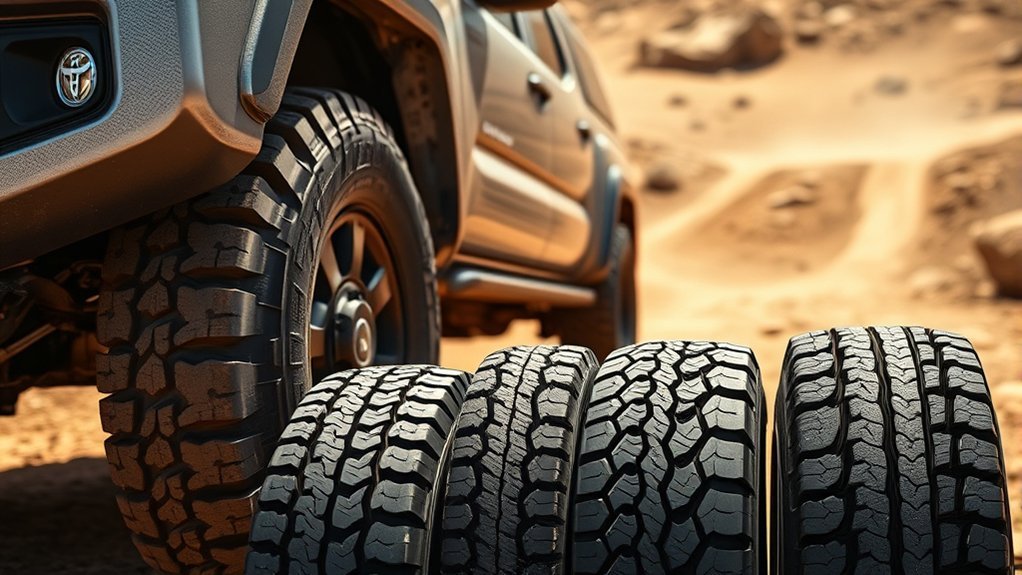
The best tire option for your Tacoma depends on how you use the truck. Instead of choosing by ply rating first, choose by the factory size, required load index, terrain, and comfort level you want.
[Products Worth Considering]

Milton S-921 pencil tire pressure gauge helps you maintain optimal tire pressure for passenger cars with accurate readings in PSI and kPa. It features a built-in deflator valve for convenient pressure adjustments, plus a single chuck head and nylon indicator bar for easy use on the go. Built from durable plated brass and designed for reliable performance, it’s a practical road trip and cold-weather maintenance tool.

Steelman white tire marking crayons provide high-contrast, semi-permanent marks for repairing and inspecting tires and equipment. They write on wet or dry, smooth or coarse surfaces including rubber, metal, glass, and wood, making them ideal for puncture location and damage outlining. The lead- and zinc-free crayons resist weather and fading yet wipe away when you no longer need the marks.

The Tymate TM2 RV tire pressure monitoring system keeps you informed with a color LCD display, automatic backlight, and solar charging for dependable operation. It supports up to 10 tire positions with four pre-paired sensors, while offering multiple alarm modes for fast leak detection, pressure extremes, temperature alerts, and low-signal warnings. Built-in monitoring uses accurate readings and reliable 433.92MHz communication to help protect your RV, trailer, truck, or SUV.
Recommended Tire Brands
For daily driving and light trail use, many Tacoma owners look at all-terrain tires from brands such as Michelin, Goodyear, BFGoodrich, Falken, Toyo, Nitto, and Cooper. The right model depends on whether you want quiet highway manners, wet traction, winter performance, mud traction, sidewall strength, or maximum tread life.
For light-duty use, a P-metric or Extra Load all-terrain tire may ride better than an LT Load Range E tire. For frequent towing, heavier bed loads, rocky trails, or overlanding gear, an LT tire in Load Range C, D, or E may be a better match. Always compare the load index and maximum load, not just the brand name.
Load Range Considerations
Use these practical guidelines as a starting point:
- Mostly daily driving: Match the factory tire type and load index unless you have a specific reason to change.
- Light towing or weekend camping: A stronger all-terrain tire or Load Range C LT tire may offer a good balance of comfort and durability, if it meets the required load rating.
- Frequent towing or loaded bed use: Consider LT tires with a higher load range and confirm the load index is suitable for your axle loads.
- Rocky off-road driving: Prioritize sidewall strength, puncture resistance, and tread design, but do not ignore pressure and load limits.
- Snow and winter driving: Look for tires with the Three-Peak Mountain Snowflake symbol if winter traction is a priority.
Pro Tip: If you tow, add up passengers, cargo, tools, bed accessories, tongue weight, and aftermarket parts before deciding whether you need a heavier tire. The trailer’s total weight matters, but the weight pressing on the Tacoma’s tires matters more.
How to Choose the Right Tire Ply Rating for Your Tacoma’s Towing Needs
To choose the right tire ply rating for towing, start with your Tacoma’s actual loaded weight, not a generic towing number. Trailer tongue weight usually adds weight to the truck, and that weight counts against payload. Bed cargo, passengers, a cap, recovery gear, a rooftop tent, and aftermarket bumpers also add tire load.
Use this checklist:
- Check the door-jamb placard. Write down the factory tire size, cold pressure, load index, and speed rating.
- Check the owner’s manual. Review Toyota’s tire and loading guidance for your model year.
- Check the tire sidewall. Confirm the replacement tire’s load index and maximum load meet or exceed the original requirement.
- Estimate loaded axle weight. Include passengers, cargo, accessories, and trailer tongue weight.
- Do not exceed GVWR or GAWR. A stronger tire does not increase the legal or mechanical rating of the truck.
- Use the correct pressure. Follow Toyota’s placard for stock tires, and ask a qualified tire professional for inflation guidance if changing to LT tires or a different size.
A Load Range E tire can be a smart choice for a Tacoma that tows often or carries heavy gear, but it is not automatically required for every trailer. A properly rated Load Range C or D tire may be enough for many owners, while a mostly stock commuter Tacoma may ride better on a tire closer to the factory type.
[Products Worth Considering]

Measure tire tread depth quickly and accurately with this LUMITECO dial gauge that reads in 1/32" increments up to 14/32". The color-coded green/yellow/red zones make it easy to judge tire wear and know when replacement is needed. A rugged, compact design with a protective pouch helps keep the gauge ready for use on cars, trucks, motorcycles, and more.

This ALL-TOP auto-stop tire deflator valve kit lets you air down off-road tires quickly without watching pressure, automatically stopping when your preset PSI is reached. Each valve is individually calibrated for reliable performance with an acceptable +/- 2 PSI tolerance. The adjustable deflator range covers 10 to 30 PSI and includes four valves plus valve caps and a zipper pouch for easy setup on trucks, SUVs, RVs, UTVs, and powersports.

ETENWOLF T300 is a calibrated digital tire pressure gauge for accurate readings from 3 to 200 PSI across light and heavy-duty vehicles. It includes thermal compensation for reliable performance in extreme cold or heat, with an auto shut-off to extend battery life and an LED for easier reading. The sturdy design supports rugged everyday use, making it ideal for pickups, RVs, and industrial applications.
How Ply Ratings Affect Your Off-Roading and Towing Experience
For off-roading, a higher ply rating or stronger LT construction can help protect against sidewall cuts, punctures, and heat buildup under load. That is useful on rocky trails, washboard roads, job sites, and remote camping routes. Stronger tires can also feel more stable when the Tacoma is loaded with gear.
The tradeoff is comfort. A heavier LT tire can ride firmer over potholes and small bumps. It may also require different inflation pressure than the original tire. If you air down off-road, reinflate before highway driving and stay within the tire and wheel limits.
For towing, stronger tires can reduce sidewall flex and improve stability, but they cannot fix an overloaded truck, poor trailer balance, incorrect tongue weight, or underinflation. NHTSA recommends checking tire pressure regularly, including before long trips, and warns drivers not to overload the vehicle. NHTSA’s TireWise resource covers tire safety, maintenance, labeling, and recalls.
Safety Considerations: Why Proper Ply Ratings Matter for Your Tacoma
Proper tire load rating matters because your tires carry the truck, passengers, cargo, and trailer tongue weight. If the tires are overloaded, underinflated, mismatched, or below the required load index, the risk of heat buildup, uneven wear, reduced control, and tire failure increases.
Keep these safety rules in mind:
- Never go below the factory load rating. Replacement tires should meet or exceed Toyota’s specified load rating and speed symbol.
- Do not exceed vehicle ratings. Higher-rated tires do not raise the Tacoma’s GVWR, GAWR, payload, or towing capacity.
- Check pressure cold. NHTSA recommends using the placard or manual and checking pressure when tires are cold.
- Use matching tires. Avoid mixing tire sizes, constructions, load ratings, or speed ratings unless Toyota or a qualified tire professional confirms compatibility.
- Inspect tread and sidewalls. Replace tires with damage, cracking, bulges, exposed cords, or tread worn to unsafe depth.
Warning: A tire with a higher ply rating can still fail if it is overloaded, damaged, underinflated, or used at the wrong pressure. Tire strength is only one part of safe towing and hauling.
Frequently Asked Questions
Can I mix different ply-rated tires on my Tacoma?
It is best not to mix different tire sizes, constructions, load ratings, or speed ratings on a Tacoma. Mismatched tires can affect handling, braking, traction control, four-wheel-drive operation, and tire wear. Use a matching set that meets Toyota’s specifications.
How often should I check my tire ply rating?
You do not need to check ply rating weekly, but you should verify load rating, load index, size, and pressure whenever buying tires, towing, hauling heavy cargo, changing wheels, or preparing for a long trip. Tire pressure should be checked at least monthly and before long drives.
Do ply ratings affect tire inflation pressure?
Yes. Higher load-range LT tires often allow higher maximum pressure than passenger tires, but that does not mean you should automatically inflate them to the sidewall maximum. Use Toyota’s placard for factory-size tires, and get load-based inflation guidance from a qualified tire professional when changing tire type or size.
What happens if I exceed the tire’s load capacity?
Exceeding tire load capacity can cause excess heat, sidewall stress, poor handling, longer stopping distances, uneven wear, and tire failure. It can also overload the Tacoma’s axle or suspension. Reduce cargo, tongue weight, or trailer load if the truck is over its rated limits.
Are there seasonal considerations for tire ply ratings?
Yes, but tread design and rubber compound usually matter more than ply rating for winter traction. For snow and ice, look for a winter-rated tire or an all-terrain tire with the Three-Peak Mountain Snowflake symbol. Keep tires the same size and compatible construction unless Toyota or a tire professional approves the setup.
Is a 10-ply tire too much for a Toyota Tacoma?
Not always. A 10-ply-rated Load Range E tire can make sense for heavy towing, overlanding, rocky trails, or frequent hauling. For a daily-driven Tacoma with light loads, it may feel unnecessarily stiff and heavy. Match the tire to the load and terrain, not just the highest ply number.
Does a higher ply rating increase my Tacoma’s payload or towing capacity?
No. A stronger tire may help support load safely within its rating, but it does not increase Toyota’s GVWR, GAWR, payload rating, or towing capacity. Those limits are set by the vehicle manufacturer and depend on the full truck configuration.
Conclusion
Choosing the right tire ply rating for your Toyota Tacoma starts with the factory tire placard, not a guess. Match or exceed the original load index and speed rating, then decide whether your driving calls for a stronger LT tire in Load Range C, D, or E. For daily driving, the factory-style tire may be the best balance. For towing, hauling, and rocky off-road routes, a higher load range can add useful strength, as long as the tire size, pressure, load index, and vehicle ratings all line up.
Sources
- Toyota Owners — 2026 Tacoma Tires — Toyota tire replacement cautions, load rating, speed symbol, and owner-manual guidance.
- Toyota USA Newsroom — 2026 Toyota Tacoma — Tacoma towing, payload, trim, and tire-equipment context.
- NHTSA TireWise — tire safety, labeling, maintenance, and consumer tire resources.
- NHTSA Tire Safety Brochure — tire pressure, sidewall markings, load index, tread, and overload safety guidance.
- Tire Rack — Load Ranges / Ply Ratings — load range, ply-rating equivalents, and modern tire construction explanation.

