
Improving Toyota Hilux dry traction starts with the parts that actually touch the road: the tires. After that, look at cold tire pressure, load balance, wheel alignment, suspension condition, and the way the traction-control system is being used. The goal is not simply to add wider tires or stiffer suspension; it is to keep the correct tire in firm, even contact with the road while staying within Toyota’s load and safety limits.
Quick Answer
To maximize Toyota Hilux dry traction, fit quality tires in an approved size and load rating, set cold tire pressure from the door placard or owner’s manual, keep cargo secured and within rated limits, check alignment, and replace worn shocks, bushes, or tires before modifying the suspension.
Key Takeaways
- Dry grip depends on tire compound, tread design, road texture, load, temperature, and inflation pressure—not tire width alone.
- Use the Hilux tire placard and owner’s manual before changing tire size, tire pressure, suspension parts, or payload setup.
- An unladen pickup can spin the rear tires more easily because the rear axle has less weight over it than when loaded.
- Alignment faults, worn shocks, tired bushings, and uneven tire wear can feel like a tire problem even when the tires are new.
- Never use loose ballast, unapproved suspension changes, or overloaded cargo as a traction fix.
At a Glance
| Time Required | 20 minutes for basic tire and load checks; 1–2 hours for a professional alignment and suspension inspection |
| Difficulty | Easy for inspection; moderate to professional for alignment, suspension, and tire changes |
| Tools Needed | Accurate tire-pressure gauge, tread-depth gauge, flashlight, torque wrench, owner’s manual, and professional alignment equipment if adjustment is needed |
| Cost | Low for pressure and inspection; moderate for alignment; higher for quality tires, shocks, or engineered suspension upgrades |
The U.S. National Highway Traffic Safety Administration recorded 511 traffic fatalities in tire-related crashes in 2024, which is why tire condition, pressure, load, and maintenance should come before cosmetic upgrades.
Why Toyota Hilux Dry Traction Can Feel Limited
The Hilux is a tough pickup, but pickup geometry works differently from a passenger car. When the bed is empty, there is less weight over the rear axle. On rear-wheel-drive or part-time 4×4 models being driven in 2H, that can make the rear tires easier to spin during hard acceleration, hill starts, tight turns, or dusty dry-road conditions.
Dry traction also changes with tire age, rubber compound, tread pattern, tire temperature, surface texture, and inflation pressure. A good tire on clean dry asphalt can feel planted, while the same Hilux on polished concrete, dry gravel, road dust, or worn tires can feel nervous.
Warning: Do not add loose weights to the tray, exceed payload limits, remove suspension leaves, or fit non-approved tires to chase traction. Any load must be secured, legal, and within the vehicle’s tire, axle, GVM, GCM, and towing limits.
Understanding How Tire Selection Influences Traction
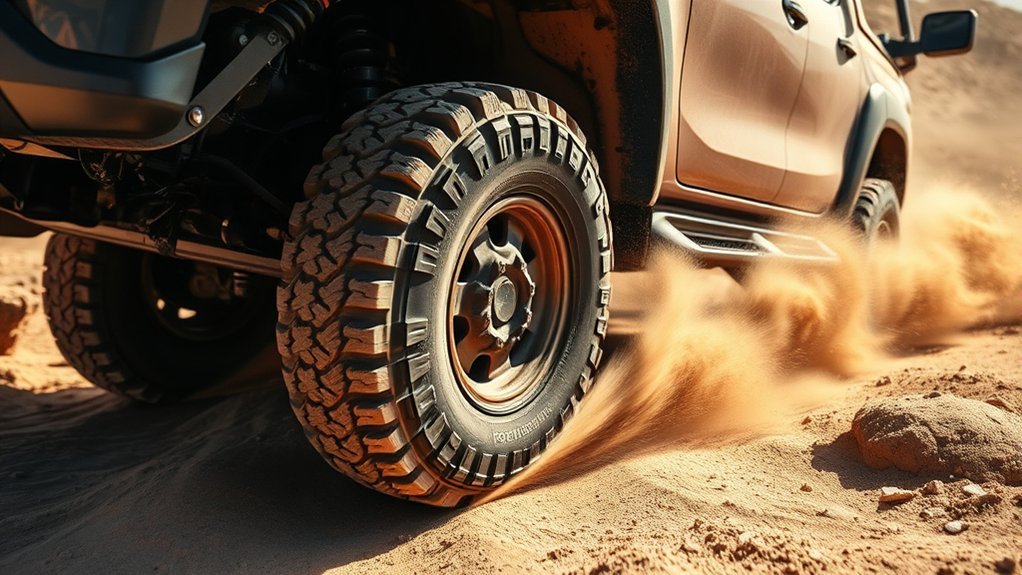
Tire selection is the biggest single upgrade for Toyota Hilux dry traction. The right tire keeps more useful rubber in contact with the road and gives predictable grip when accelerating, braking, and cornering. The wrong tire can spin, tramline, wear unevenly, or feel vague even when the rest of the truck is healthy.
Start with these checks before buying tires:
- Use a tire size, load index, and speed rating that are approved for your Hilux model and market.
- Choose a tread pattern for your real driving: paved-road commuting, towing, mixed gravel, or off-road use.
- Avoid choosing the widest tire that fits just for appearance. A wider tire can add contact area, but it can also affect steering feel, clearance, fuel use, wet-road behavior, and legal compliance.
- Replace tires that are old, cracked, unevenly worn, heat-damaged, or below safe tread depth.
Dry-road tire grip comes from a mix of adhesion and rubber deformation. That is why compound and tread design matter, not just size. A quality highway-terrain or all-season light-truck tire may grip better on dry pavement than an aggressive mud-terrain tire with large tread blocks and wide voids.
Pro Tip: Check tire pressure when the tires are cold, before the Hilux has been driven far. Heat raises pressure, which can hide an underinflation problem or lead to incorrect adjustments.
[Products Worth Considering]

The SAFELIFE dial tire tread depth gauge measures tread depth in 1/32 inch increments with clear, easy-to-read 2-inch dial face. Color zones using a traffic light system help you quickly judge whether tread is low, marginal, or ample for safer driving. Built with a durable zinc cast body and a metal detect probe for precise, comfortable use across cars, motorcycles, trucks, and buses.

The Topeak SmartGauge D2 delivers precise digital tire pressure readings for bikes, motorcycles, and sports equipment up to 250 psi (17 bar). Its rotating SmartHead works with both Presta and Schrader valves, so you can check pressure quickly without adapters. The LCD display makes it easy to read results in psi, bar, or kg/cm² with an included CR2032 battery for immediate use.

Monitor tire tread wear with a smart, color-coded depth gauge that shows clear condition ranges at a glance. The bar is range marked for fast, easy readings, helping you maintain safer traction and performance. Each gauge is portable with a pocket clip, and the set includes 20 units for daily use and sharing.
Best Tire Types for Varying Dry Conditions
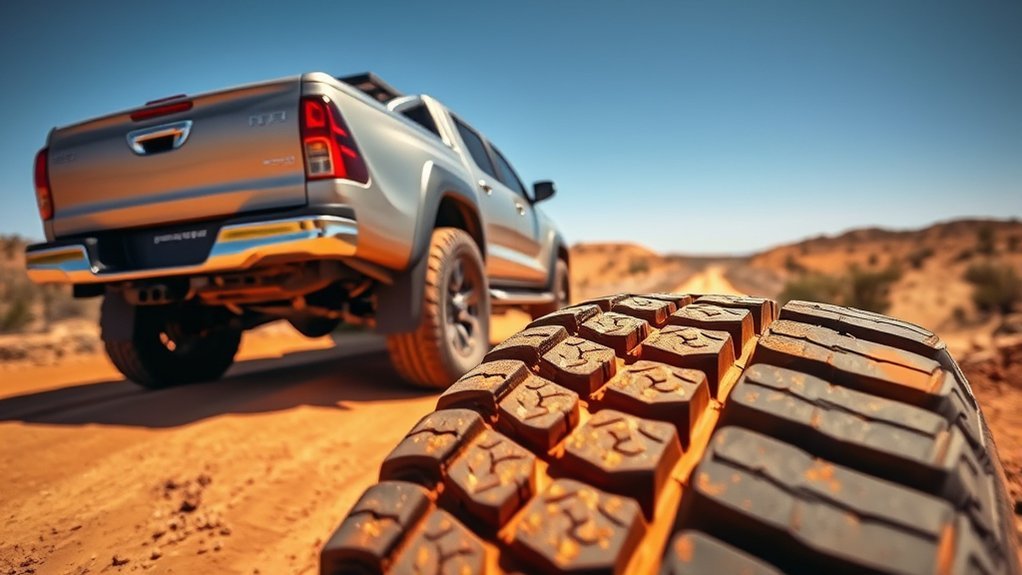
The best tire for dry traction depends on where the Hilux spends most of its time. Use this simple guide before choosing a new set.
| Driving Condition | Best Tire Direction | Why It Helps |
|---|---|---|
| Mostly dry pavement | Highway-terrain or quality all-season light-truck tire | More stable tread blocks, quieter ride, better braking feel, and predictable steering response |
| Pavement plus gravel roads | Mild all-terrain tire | Adds stone resistance and loose-surface bite without giving up too much road control |
| Rocky tracks and dry off-road work | Stronger all-terrain or off-road light-truck tire | Tougher casing and more open tread can improve grip on uneven, loose, or sharp surfaces |
| Mud-focused off-road use | Mud-terrain tire only if you truly need it | Large voids help mud clearing but can reduce dry-pavement refinement and braking feel |
[Products Worth Considering]

Measure tire tread depth quickly and accurately with this LUMITECO dial gauge that reads in 1/32" increments up to 14/32". The color-coded green/yellow/red zones make it easy to judge tire wear and know when replacement is needed. A rugged, compact design with a protective pouch helps keep the gauge ready for use on cars, trucks, motorcycles, and more.

Tymate TM7 is a wireless tire pressure monitoring system that delivers real-time pressure and temperature readings for safer driving. It includes four external sensors, a bright color LCD display with adjustable backlight, and six alarm modes for high/low pressure, fast leakage, high temperature, and sensor signal or battery issues. The system covers a wide 0–144 PSI range and plugs into your vehicle’s cigarette lighter socket for quick DIY setup.

Measure tyre tread depth precisely with a digital gauge that reads in both MM and inches, helping you monitor safe driving conditions. The large LCD screen is easy to operate, and the compact tool fits for cars, trucks, and motorcycles. It provides high accuracy with a 0-25.4mm range and includes a 1-year warranty for added peace of mind.
Set Tire Pressure and Load Limits Correctly
Before changing tires or suspension, make sure the Hilux is running the correct cold tire pressure. The recommended pressure is usually listed on the vehicle tire placard and in the owner’s manual. It may vary by tire size, load, market, and whether the vehicle is towing or carrying cargo.
Underinflation can make the tire flex too much, overheat, wear unevenly, and feel sluggish. Overinflation can reduce ride comfort and stop the tread from working evenly across the road. Either direction can reduce predictable traction.
- Find the tire placard and confirm the exact tire size and recommended cold pressure.
- Check all four tires and the spare with a reliable gauge.
- Inspect for cracks, bulges, punctures, uneven wear, missing tread blocks, or age damage.
- Adjust pressure before a long trip, before towing, and before carrying extra load.
- Recheck pressure monthly and whenever the temperature changes significantly.
For tire safety guidance, the NHTSA TireWise resource explains why tire pressure, maintenance, load limits, and tire condition are central to safe vehicle control.
How Weight Distribution Affects Toyota Hilux Dry Traction
Weight distribution changes how much work each tire can do. An empty Hilux tray can leave the rear tires lightly loaded, which makes wheelspin more likely during strong throttle input. A loaded tray can improve rear-tire bite, but only when the load is legal, secured, and placed correctly.
Safe load-distribution rules:
- Keep cargo within the payload, axle, GVM, and GCM limits for your exact Hilux.
- Secure cargo so it cannot slide during braking, cornering, or impact.
- Avoid placing heavy items behind the rear axle unless the owner’s manual or a qualified fitter confirms it is safe.
- Include passengers, accessories, canopy weight, tools, and tow-ball download when calculating payload.
- Do not use loose sandbags, bricks, scrap metal, or water drums as an unsecured traction fix.
Toyota Australia’s current HiLux specification information states that actual payload is affected by added load, occupants, luggage, accessories, and tow-ball download. That is the correct framework for thinking about traction-related load changes: more rear weight may help grip, but overload is never a safe solution.
The Role of Alignment and Suspension in Performance
Alignment and suspension control how consistently the tires meet the road. If the Hilux pulls to one side, wears tires unevenly, feels nervous over bumps, or spins one rear tire too easily, the issue may not be tire choice alone.
Alignment Precision Matters
Wheel alignment adjusts the angles of the tires relative to the road and the vehicle. The three key angles are toe, camber, and caster. Toe has a major effect on tire wear and straight-line feel; camber affects shoulder wear and cornering contact; caster affects steering return and stability.
Get a professional alignment check when:
- The Hilux pulls left or right on a level road.
- The steering wheel is off-center when driving straight.
- New tires show feathering, shoulder wear, or saw-tooth wear.
- You have fitted new tires, changed suspension height, hit a pothole, or replaced steering/suspension parts.
Suspension Condition Matters More Than Stiffness
A stiff suspension is not automatically better for dry traction. Tires need controlled movement to stay planted. Worn shocks can let the tires skip over bumps, tired bushings can change alignment under load, and sagging springs can alter ride height and steering geometry.
Inspect these components before spending money on traction upgrades:
- Shock absorbers for leaks, fading, or poor rebound control
- Leaf springs, shackles, and bushings for wear or cracking
- Ball joints, tie-rod ends, and wheel bearings for looseness
- U-bolts and suspension mounts for correct condition and torque
- Rear axle location and ride height after accessory or canopy installation
Note: If you want a suspension lift, comfort upgrade, towing setup, or tray-load setup, use engineered components that preserve legal load capacity and alignment range. Avoid cutting, removing, or heating springs as a quick fix.
Weight Distribution Impact
Alignment and suspension also change under load. A Hilux with a canopy, drawer system, tools, water tank, tow bar, bull bar, or winch may sit differently from stock. That can change steering feel and tire wear. After adding major accessories, book an alignment and confirm tire pressure for the new real-world load.
Top Modifications for Enhancing Traction in Your Hilux
The best traction modifications are usually the least dramatic. Start with maintenance, then tire quality, then professional setup.
[Products Worth Considering]

Upgrade your Toyota’s wheels with durable aluminum alloy valve stem caps that help protect valve cores from corrosion and direct exposure to road grime, clay, water, and snow. Rubber rings improve sealing to help prevent air leakage and maintain stable tire pressure for safer driving. These caps are easy to install or remove without tools and add a unique, stylish look to your car.

Accurately measure tire tread depth with a calibrated gauge marked from 0 to 1 inch in 1/32 inch increments. The color-coded bar helps you quickly identify tread condition ranges, supporting safe driving for trucks, motorcycles, automobiles, and passenger vehicles.

Milton S-921 pencil tire pressure gauge helps you maintain optimal tire pressure for passenger cars with accurate readings in PSI and kPa. It features a built-in deflator valve for convenient pressure adjustments, plus a single chuck head and nylon indicator bar for easy use on the go. Built from durable plated brass and designed for reliable performance, it’s a practical road trip and cold-weather maintenance tool.
Tire Selection Strategies
- Choose a tire made for your main surface, not the most aggressive tread available.
- Use a correct light-truck load rating if your Hilux carries loads, tows, or travels rough roads.
- Replace tires as a set when possible so tread depth and grip remain balanced.
- Rotate tires according to the owner’s manual and tire maker’s guidance.
- Balance wheels and inspect rims if you feel vibration at speed.
Suspension Adjustment Benefits
Safe suspension tuning can improve traction when it restores tire contact, keeps alignment stable, and matches the way the Hilux is used. For example, a work Hilux that often carries tools may need a different rear spring and shock setup from a family Hilux that runs empty most of the week.
| Upgrade or Check | When It Helps | Important Caution |
|---|---|---|
| Quality tires | Worn, old, hard, or wrong-pattern tires are causing poor grip | Use approved size and load rating |
| Professional alignment | Truck pulls, wanders, or wears tires unevenly | Set to manufacturer specs or a qualified specialist’s road-use specs |
| New shocks | Rear end hops, floats, or loses contact over bumps | Match shocks to load and spring rate |
| Load-rated spring setup | Vehicle always carries tools, canopy, drawers, or towing gear | Do not reduce rated capacity without engineering approval |
| Rear differential lock or traction aid where fitted | Loose, uneven, off-road surfaces where one wheel lifts or spins | Use only as the owner’s manual allows; not a cure for poor tires |
Traction Control, 4×4 Modes, and Differential Lock
Modern Hilux variants can include traction control, stability control, part-time 4×4, Multi-Terrain Select, and a rear differential lock depending on the model and market. These systems can help, but they do not replace tire grip.
If the Hilux spins on dry pavement or the traction-control light comes on often, check the simple items first:
- All four tires are the same size and similar tread depth.
- Tire pressure is correct and even from side to side.
- No tire is badly worn, heat-damaged, or mismatched.
- Wheel-speed sensor wiring and ABS/traction-control warning lights are checked by a technician.
- Driving mode is appropriate for the surface and the owner’s manual guidance.
Toyota states that selected HiLux 4×4 variants include a rear differential lock, while some variants do not. Confirm your exact grade before writing off the system as faulty or assuming a feature is fitted.
Common Alignment Problems and Their Solutions
Alignment faults often show up as tire wear before they feel dramatic from the driver’s seat. Use the symptoms below to decide what to inspect next.
| Symptom | Likely Cause | Best Fix |
|---|---|---|
| Pulls to one side | Uneven tire pressure, alignment issue, brake drag, or tire conicity | Check pressure first, then book alignment and brake inspection |
| Rear tires spin from a stop | Hard/worn tires, empty tray, too much throttle, or poor surface grip | Fit better tires, smooth throttle input, check pressures, and manage load safely |
| Feathered tread edges | Toe misalignment or worn steering parts | Inspect steering components and set alignment |
| One shoulder wears faster | Camber issue, worn bushings, or overloaded/incorrect setup | Inspect suspension and align to specification |
| Wheel hop over dry bumps | Weak shocks, stiff mismatched suspension, or incorrect tire pressure | Test shocks, inspect springs, and correct pressure |
| Traction-control light stays on | ABS, wheel-speed sensor, tire mismatch, or system fault | Scan fault codes and inspect tires/sensors professionally |
Step-by-Step Dry Traction Checklist
- Inspect the tires: Check age, tread depth, cracks, punctures, sidewall damage, and uneven wear.
- Set cold pressure: Use the Hilux placard or owner’s manual, not the maximum pressure printed on the tire sidewall.
- Check load: Remove unnecessary loose weight, secure cargo, and confirm payload and axle limits.
- Test drive smoothly: Use gradual throttle and braking on a safe dry road to see if the problem remains.
- Check alignment: Book a professional alignment if the truck pulls, wanders, or wears tires unevenly.
- Inspect suspension: Look for leaking shocks, worn bushes, loose steering parts, and sagging springs.
- Check electronics: If warning lights are present, scan the ABS/traction-control system before replacing parts blindly.
- Upgrade only after diagnosis: Choose tires, shocks, or load-rated suspension based on the actual cause.
Frequently Asked Questions
What is the most common cause of poor Toyota Hilux dry traction?
There is no single confirmed “most common” Hilux dry-traction fault. In real use, poor dry traction is usually linked to worn or mismatched tires, incorrect pressure, an empty rear tray, aggressive throttle input, poor alignment, worn suspension parts, or a traction-control/ABS fault.
Will wider tires improve Hilux dry traction?
Sometimes, but not always. A wider tire can increase contact area, but compound, tread design, inflation pressure, tire load rating, alignment, and road surface matter just as much. Stay with an approved size and avoid tires that rub, overload the driveline, or reduce legal compliance.
Are all-terrain tires better than highway tires for dry roads?
For dry pavement, a quality highway-terrain or all-season light-truck tire often feels more stable and predictable. All-terrain tires are better when the Hilux regularly sees gravel, work sites, farm tracks, or dry off-road trails. Mud-terrain tires should be chosen only when their off-road benefits outweigh their road compromises.
Can adding weight to the Hilux tray improve traction?
A properly secured load can improve rear-tire bite because it puts more weight over the rear axle. However, cargo must stay within the Hilux payload, axle, GVM, GCM, and towing limits. Loose or excessive ballast is unsafe and should not be used as a shortcut.
Why does the traction-control light come on during dry driving?
The light may flash briefly when the system detects wheelspin. If it comes on often or stays illuminated, check tire pressure, tire matching, tread depth, and warning lights. A technician may need to scan for ABS, wheel-speed sensor, or traction-control faults.
Conclusion
Improving Toyota Hilux dry traction is mostly about smart setup, not guesswork. Start with quality tires in the correct size and load rating, set cold tire pressure properly, keep cargo secured and within rated limits, and fix alignment or suspension wear before chasing bigger modifications. When the tires, load, alignment, suspension, and traction systems all work together, the Hilux feels more stable, grips better, and stays safer on dry roads.
Sources
- Toyota Australia HiLux — current HiLux grades, 4×4 equipment, towing notes, and grade-dependent traction features
- Toyota Australia HiLux Specifications — payload, GVM/GCM, axle-load, and loading-limit context
- Toyota Australia HiLux Owner’s Manual — owner’s manual reference for tire pressure, loading, towing, and system use
- NHTSA TireWise — tire safety, tire maintenance, and tire-related crash data
- Bridgestone Tire Alignment Guide — alignment basics, tire contact, wear patterns, and handling symptoms
- Tire–Road Interaction Review — research background on tire-road friction factors including compound, tread, load, inflation pressure, and surface texture