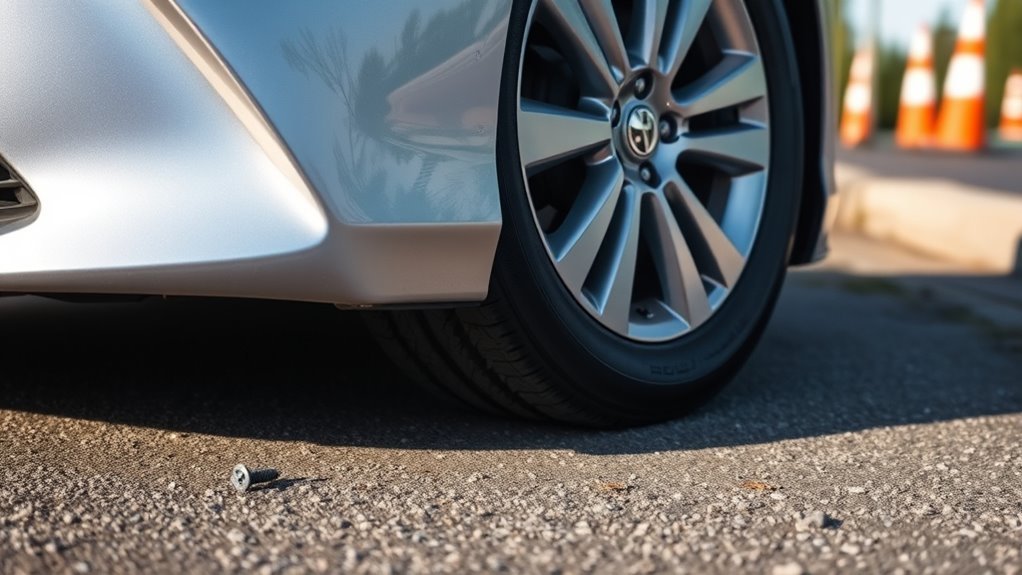
A Toyota Camry flat tire usually comes from one of a few problems: a puncture, low pressure, a leaking valve stem, a poor bead seal, worn rubber, or damage from a pothole or curb. The safest move is to slow down, turn on the hazard lights, stop in a safe place, and inspect the tire before driving farther.
Quick Answer
A Toyota Camry gets flat tires from road debris, pressure loss, damaged valve stems, bead leaks, worn tread, old rubber, or impact damage. Stop safely, check the tire and pressure, avoid driving on a flat, and have a tire professional repair or replace it if damage is severe.
Key Takeaways
- A thumping sound, steering pull, vibration, visible sagging, or tire-pressure warning can point to a flat or low tire.
- Do not keep driving on a flat tire. Even a short distance can damage the tire and wheel.
- Nails, screws, glass, valve leaks, bead leaks, underinflation, worn tread, aging rubber, potholes, and curb strikes are the most common causes.
- A tire is usually repairable only when the puncture is in the tread area, no larger than 1/4 inch, and the tire has not been driven flat.
- Check cold tire pressure monthly, inspect tread and sidewalls often, and rotate tires on the schedule in your Camry maintenance guide.
At a Glance
| Time Required | 5 minutes for a safe visual check; 20–30 minutes to install a spare if conditions are safe; professional repair time varies. |
| Difficulty | Easy for inspection; moderate for changing a tire; call roadside assistance if traffic, weather, ground surface, tools, or confidence are a problem. |
| Tools Needed | Tire-pressure gauge, flashlight, soapy-water spray bottle, portable inflator, owner’s manual, and spare tire/jack/lug wrench if equipped. |
| Cost | Basic inspection is usually free if you do it yourself; professional repair or replacement depends on tire size, damage, labor, and local pricing. |
How to Tell If Your Toyota Camry Has a Flat Tire
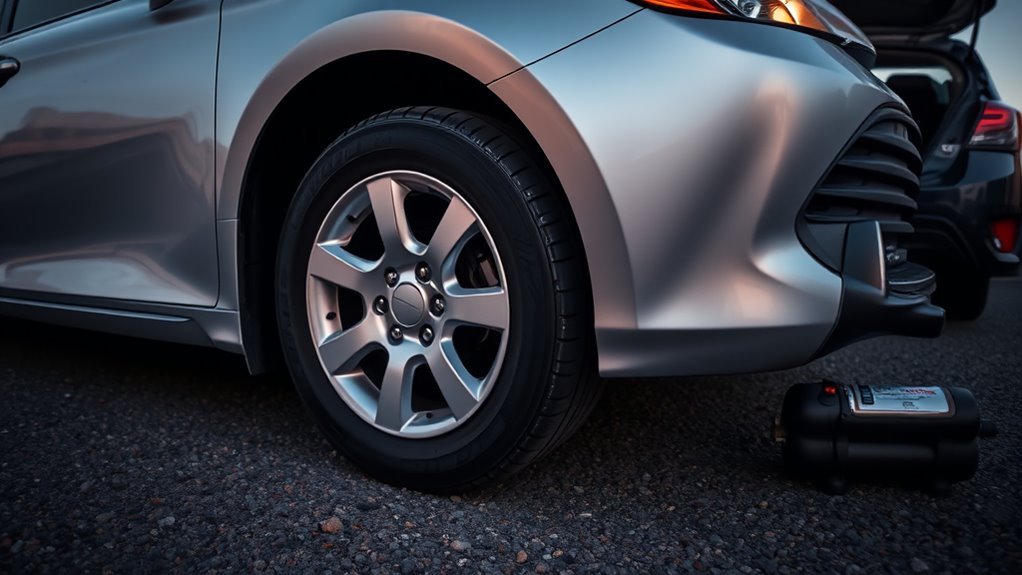
If your Toyota Camry has a flat tire, you may notice a thumping sound from one wheel, heavier steering, vibration through the steering wheel or seat, or a pull to one side. A low tire-pressure warning light can also appear when one or more tires are underinflated.
Do not rely on the warning light alone. A tire can lose air quickly after a puncture, and some damage is visible before the tire goes fully flat. Walk around the Camry from a safe location and look for a low sidewall, cuts, cracks, bulges, exposed cords, embedded debris, or uneven tread wear.
| Sign | What It Can Mean | What To Do |
|---|---|---|
| Thumping | Tire is deflated or losing shape | Slow down and stop safely |
| Heavy steering | One tire may not be supporting the vehicle | Avoid sharp turns or hard braking |
| Vibration | Possible flat, belt damage, or wheel damage | Inspect before driving farther |
| Low tire-pressure warning | One or more tires are underinflated | Check all tires with a gauge |
| Visible bulge or sidewall cut | Possible structural damage | Do not repair; have it replaced |
According to NHTSA tire-safety data, tire-related crashes remain a serious safety issue, which is why pressure, tread, and damage checks should be treated as routine safety checks—not optional chores.
What to Do Right After a Flat Tire
If you hear thumping, feel the Camry pulling, or see the tire-pressure warning light, stay calm and make safety your first priority. Gradually reduce speed, turn on the hazard lights, and look for a level, firm area away from traffic.
Warning: Do not continue driving on a flat tire. Toyota’s flat-tire guidance warns that driving even a short distance on a flat can damage the tire and wheel beyond repair and may increase accident risk. Stop in a safe place before inspecting or changing the tire.
Pull Over Safely
Ease off the accelerator instead of slamming the brakes. Keep the steering wheel steady, signal if needed, and move to a shoulder, parking lot, or side street with a firm, flat surface. Once stopped, shift to Park, set the parking brake, turn off the vehicle, and keep the emergency flashers on.
Never change a tire on a narrow shoulder, soft ground, steep slope, or in fast-moving traffic. If the location is unsafe, stay in the vehicle with your seat belt on when appropriate and call roadside assistance.
Inspect Before You Drive Again
From a safe position, inspect the tire and wheel. Look for a nail or screw in the tread, a sidewall cut, a bulge, a cracked valve stem, a bent rim, or a tire that has separated from the wheel bead. If the tire is shredded, the sidewall is damaged, or the wheel is bent, do not try to inflate and drive on it.
If your Camry has a compact spare, use it only as a temporary way to reach a repair facility and follow the speed and distance limits in your owner’s manual. The tire-pressure warning light may remain on after a compact spare is installed because many compact spares do not have the same TPMS sensor setup as the regular wheel.
Road Debris and Sharp Objects
Road debris is one of the most common reasons a Camry tire goes flat. Nails, screws, broken glass, metal scraps, construction debris, and sharp stones can puncture the tread and cause either a fast leak or a slow leak that shows up hours later.
Common Road Hazards
You face the highest risk near construction zones, road shoulders, parking lots, alleys, and areas with broken glass or metal fragments. A small screw can stay lodged in the tread and leak slowly, while a larger object can cause rapid pressure loss.
| Hazard | Likely Damage | Common Sign |
|---|---|---|
| Nail | Small tread puncture | Slow pressure drop |
| Screw | Puncture that may stay embedded | Repeated need to add air |
| Glass | Cut or slice | Air loss or visible tread damage |
| Construction debris | Tread or sidewall injury | Vibration, leak, or visible scar |
| Pothole rubble | Impact damage | Bulge, bent rim, or sudden flat |
Preventing Sharp Punctures
You cannot avoid every nail, but you can lower the risk. Avoid driving through road debris when you can do so safely, keep distance from trucks carrying loose material, and avoid parking close to construction piles or broken glass. Inspect your tires after driving through debris-heavy areas.
If you see a nail or screw in the tread and the tire is still holding air, do not pull it out on the roadside. Removing it can turn a slow leak into a fast leak. Mark the spot if you can and have a tire shop inspect it.
Valve Stem Damage and Tire Bead Leaks
If your Camry tire keeps losing air but you do not see a nail, check the valve stem and the tire bead. These are common slow-leak points.
The valve stem can leak when the rubber cracks, the valve core loosens, or the cap is missing and dirt enters the valve. The bead can leak when the tire does not seal tightly against the wheel because of corrosion, dirt, old sealant, impact damage, or a bent rim.
Pro Tip: Spray soapy water around the valve stem, tread puncture area, and bead where the tire meets the rim. Steady bubbles usually show where air is escaping. Do this only when the vehicle is safely parked and the tire is not dangerously damaged.
Overinflated and Underinflated Tires
Wrong tire pressure can make a flat more likely. Underinflation lets the tire flex too much, which builds heat and can damage the sidewall. Overinflation can reduce the tire’s ability to absorb impacts and can make the center of the tread wear faster.
Use the recommended cold tire pressure on your Camry’s tire information placard or in the owner’s manual. Do not use the pressure printed on the tire sidewall as your normal target; that number is the tire’s maximum pressure, not the vehicle’s recommended pressure. NHTSA recommends checking tires when they are cold, meaning the vehicle has been parked for several hours or driven only a short distance.
| Condition | What Happens | Best Action |
|---|---|---|
| Underinflated | Heat builds, sidewall flex increases, tread wears unevenly | Inflate to the placard PSI when cold |
| Overinflated | Center wear and harsher impact response increase | Release air to the correct cold PSI |
| Correct PSI | Better steering, braking, tread wear, and fuel economy | Check monthly and before long trips |
Note: Temperature changes can move tire pressure up or down. If one tire repeatedly drops more than the others, treat it as a leak, not as normal seasonal pressure change.
Worn or Aging Tires
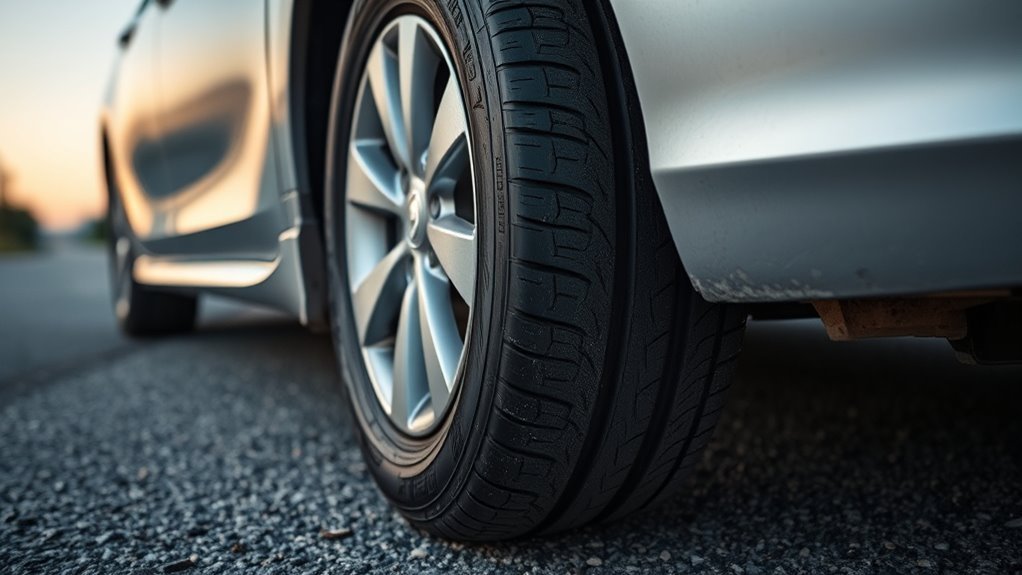
Worn tires are easier to puncture and provide less grip, especially on wet roads. Use a tread-depth gauge or the penny test to check tread depth. Tires at or below 2/32 inch of tread should be replaced, and tires with exposed cords, bulges, deep cuts, or cracking should be inspected immediately.
Age matters too. Tire rubber can degrade from heat, sunlight, ozone, storage conditions, and use. Some vehicle manufacturers recommend replacement around six years regardless of tread, while some tire manufacturers recommend professional inspection after five years and replacement by ten years from the DOT manufacture date. Check your Camry owner’s manual and your tire maker’s guidance.
Rotate tires according to your Toyota maintenance guide. Toyota maintenance guidance commonly lists tire rotation every 5,000 to 7,500 miles, but the right interval can vary with driving habits, road surfaces, tire type, and alignment condition.
Pothole and Curb Impact Damage
A pothole or curb strike can damage a Camry tire even when the tire does not go flat right away. Look for a sidewall bubble, tread separation, rim bend, vibration, steering pull, or a slow leak after any hard impact.
Do not ignore a tire bulge. A bulge can mean internal cord damage, and that tire should not be patched or driven at highway speed. Have the tire and wheel inspected before taking a long trip or returning to high-speed driving.
How to Find a Slow Leak With No Visible Damage
If your Camry tire keeps going flat but looks normal, use a simple step-by-step check:
- Check all four tires with a reliable gauge when the tires are cold.
- Write down each tire’s PSI and compare it with the door-jamb placard.
- Inspect the tread for nails, screws, glass, and uneven wear.
- Inspect the sidewall for cracks, cuts, bubbles, or scuffs from curbs.
- Spray soapy water on the valve stem, tread area, and bead seal.
- Watch for steady bubbles that show escaping air.
- Recheck the same tire the next morning. A repeated drop points to a leak.
If you find bubbles at the bead or valve stem, a tire shop may need to replace the valve stem, clean the wheel surface, reseat the tire, or inspect the rim for corrosion or bends.
Can a Toyota Camry Flat Tire Be Repaired?
A Camry tire may be repairable when the puncture is small, straight, and located in the main tread area. A proper repair normally requires removing the tire from the wheel, inspecting the inside, filling the injury channel, and sealing the inner liner.
Do not rely on a plug-only repair as a permanent fix. The U.S. Tire Manufacturers Association says a plug by itself or a patch by itself is not an acceptable repair. Repairs are limited to the tread area, and punctures larger than 1/4 inch should not be repaired.
Replace the tire instead of repairing it when:
- The puncture is in the sidewall or shoulder.
- The hole is larger than 1/4 inch.
- The tire was driven while flat.
- There is a bulge, exposed cord, deep crack, or tread separation.
- The tire is worn to the treadwear indicators or has 2/32 inch tread depth or less.
- There are overlapping punctures or damage directly across from another injury.
[Products Worth Considering]

Keep your tires properly inflated with this analog VONDIOR tire pressure gauge, designed for fast, easy readings without batteries. The swiveling, two-axis hose and large glow dial help you measure at any tire angle with instant visibility. Built with a protective rubber shield, it supports durable, low-maintenance use for cars and trucks.

TireJect Off-Road Tire Sealant Kit provides 5-in-1 sealing to help fix tread punctures up to 3/8", sidewall punctures up to 3/8", bead leaks, slow leaks, and minor dry rot on low-speed tires. It permanently seals with liquid rubber, recycled tire particles, and Aramid fibers, making it ideal for flats caused by thorns, nails, and screws. The included dispensing cap attaches to the valve stem for a no-mess installation, along with a metal valve core remover tool and valve stem cap. This kit is for off-road use only.

Get back on the road fast with this compact tire plug repair kit for tubeless tires. It includes self-vulcanizing rubber plugs, T-handle rasp and insert tools, and a storage box that fits in your glove compartment for easy access. Also included are a 4-way valve steam tool set with valve cores and caps for added roadside convenience.
How to Prevent Flat Tires in Your Camry
Good tire habits will not prevent every puncture, but they will reduce repeat flats and help you catch damage before it leaves you stranded.
- Check cold tire pressure monthly and before long trips. Use the PSI on the Camry tire placard or owner’s manual.
- Inspect tread and sidewalls for cuts, cracks, foreign objects, bubbles, and uneven wear.
- Rotate tires on schedule to help even out wear between the front and rear tires.
- Replace worn or old tires based on tread depth, visible damage, age, and manufacturer guidance.
- Avoid debris and potholes when it is safe to do so.
- Fix alignment or suspension problems if the tires show uneven wear, cupping, or repeated edge wear.
- Keep valve caps installed to help protect valve cores from dirt and moisture.
- Check the spare or repair kit before road trips so you are not surprised during an emergency.
[Products Worth Considering]
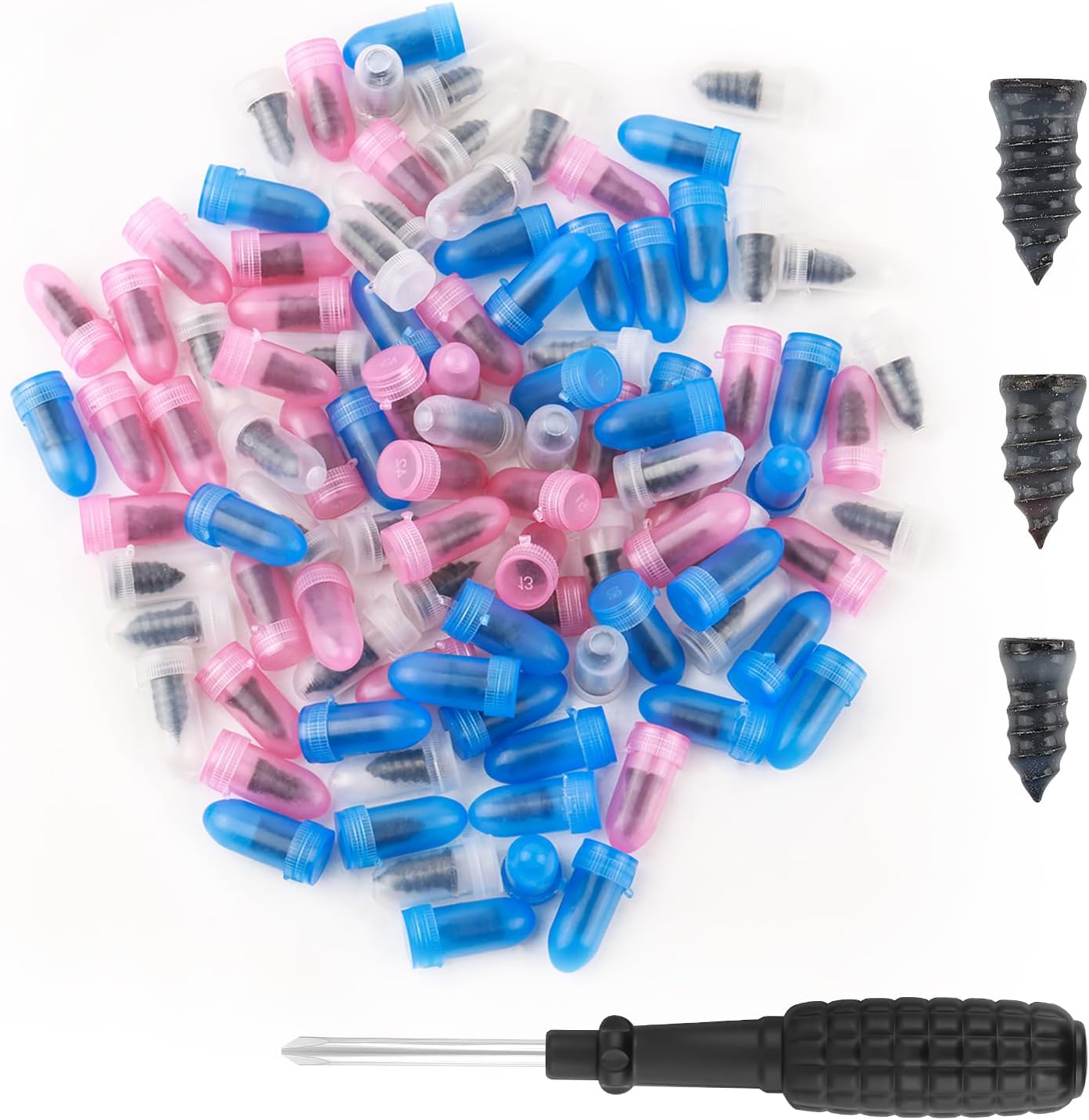
This 100-piece tire repair screw plug kit provides a fast, self-service solution for punctures on the road. Choose the correct plug size, insert it into the break, and screw it in to help seal the puncture and temporarily restore tire pressure. Thickened threads and rubber-wrapped plugs improve bite and sealing while remaining compact and easy to carry.

This tire repair kit provides fast emergency puncture repair without removing the tire from the rim, helping you get back on the road quickly. Its screw plug system is designed for punctures in both tread and sidewall and includes a complete patch plug tool set with essential accessories. A portable storage bag makes it easy to carry for cars, trucks, SUVs, motorcycles, and heavy-duty applications.

Monitor tire tread wear with a smart, color-coded depth gauge that shows clear condition ranges at a glance. The bar is range marked for fast, easy readings, helping you maintain safer traction and performance. Each gauge is portable with a pocket clip, and the set includes 20 units for daily use and sharing.
When to Get Professional Tire Help

Get professional tire help if the Camry pulls hard, the steering feels heavy, the tire-pressure warning returns after inflation, the tire has a bulge or sidewall cut, or you cannot find the leak. A tire shop can remove the tire from the wheel, inspect the inner liner, check the valve stem, clean the bead seat, and confirm whether the tire is repairable.
Call roadside assistance if the car is in a dangerous location, the ground is not firm and level, the spare or tools are missing, or you are unsure how to lift the vehicle safely. New Toyota vehicles may include ToyotaCare roadside assistance for a limited period, but coverage depends on vehicle age and program terms, so check your Toyota account or owner materials.
[Products Worth Considering]

The Gurduenon scissor car jack tire changing kit is designed for quick flat-tire replacement with a lifting capacity of 2.5 tons and a scissor-lift range sized for many vehicles. The complete emergency set includes a ratchet wrench, lug wrench, gloves, a pencil tire pressure gauge, and a storage bag for convenient trunk or garage use. Universal compatibility makes it suitable for cars, SUVs, and other vehicles roadside assistance needs.

This compact capsule-style tire repair kit helps you quickly fix punctures and plug flats with minimal effort. The rugged stainless steel shell protects the contents for reliable roadside use, while the simple plug assembly makes repairs fast and tool-free. Suitable for motorcycles, cars, ATVs, UTVs, and even mountain bikes.

Measure tyre tread depth precisely with a digital gauge that reads in both MM and inches, helping you monitor safe driving conditions. The large LCD screen is easy to operate, and the compact tool fits for cars, trucks, and motorcycles. It provides high accuracy with a 0-25.4mm range and includes a 1-year warranty for added peace of mind.
Frequently Asked Questions
Why does my tire keep going flat but there is no visible damage?
A Camry tire can lose air from a valve stem leak, bead leak, small tread puncture, rim corrosion, bent wheel, or temperature-related pressure change. If the same tire keeps dropping more than the others, spray soapy water around the valve, tread, and bead, then have a tire shop inspect it.
How do you fix a Toyota Camry flat tire?
Stop in a safe, flat place, turn on the hazards, set the parking brake, and inspect the tire. If your Camry has a spare and conditions are safe, follow the owner’s manual to install it. If the tire has sidewall damage, a large puncture, a bulge, or was driven flat, call roadside assistance or a tire professional.
Can I drive with the tire-pressure warning light on?
Do not ignore the warning light. Slow down, avoid hard braking or sharp turns, and check all tires with a gauge as soon as it is safe. If one tire is very low, visibly flat, damaged, or leaking quickly, do not keep driving on it.
Is a Camry tire with a nail repairable?
It may be repairable if the nail is in the main tread area, the puncture is no larger than 1/4 inch, and the tire has not been driven flat. It is usually not repairable if the nail is in the sidewall or shoulder, the tire is worn out, or internal damage is found.
How often should I check Toyota Camry tire pressure?
Check tire pressure at least once a month and before long trips. For the most accurate reading, check when the tires are cold and inflate to the pressure on the tire information placard or in the owner’s manual, not the maximum pressure printed on the tire sidewall.
Conclusion
A Toyota Camry flat tire is usually preventable when you catch low pressure, tread wear, valve leaks, bead leaks, and impact damage early. Check pressure monthly, inspect the tread and sidewalls, rotate tires on schedule, and do not keep driving on a flat. When the tire has sidewall damage, a bulge, severe wear, or an unsafe puncture, replace it or have a tire professional handle it.
Sources
- Toyota Owners Manuals and Warranties — owner’s manual, maintenance, and ToyotaCare reference.
- Toyota Owners: If You Have a Flat Tire — Toyota Camry flat-tire safety procedure and warnings.
- NHTSA Summer Driving and Tire Safety Tips — cold pressure checks, tread depth, tire damage, and sidewall-pressure warning.
- Tire Industry Association: Tire Replacement — treadwear indicators, 2/32-inch tread depth, placard guidance, and replacement considerations.
- U.S. Tire Manufacturers Association: Tire Repair Basics — proper puncture repair, tread-only repair area, and plug/patch requirements.
- Michelin: When to Replace Tires — tire age, DOT date, inspection after five years, and ten-year maximum service-life guidance.