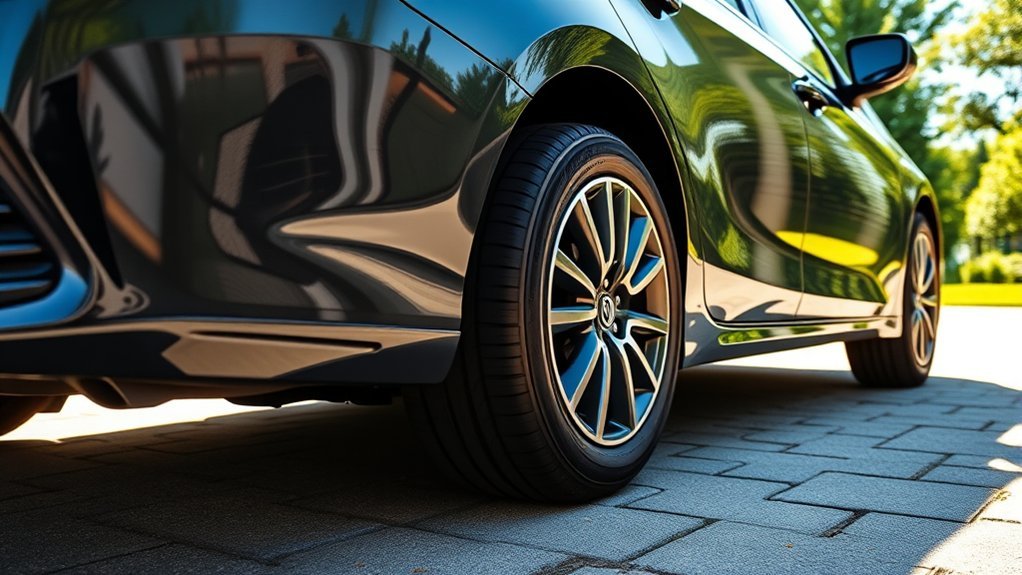
If you need the 2017 Toyota Camry tire size, start with the tire placard on the driver-side door jamb. Most U.S.-market 2017 Camry models use one of three common factory sizes: 205/65R16, 215/55R17, or 225/45R18. Your exact size depends on trim, wheel package, market, and whether a previous owner changed the wheels.
Quick Answer
The common factory tire sizes for a 2017 Toyota Camry are 205/65R16, 215/55R17, and 225/45R18. Many 16-inch wheel models use 205/65R16, many 17-inch wheel models use 215/55R17, and sportier 18-inch wheel packages may use 225/45R18. Always confirm with your door placard before buying.
Key Takeaways
- Your driver-side door placard is the safest source for your exact tire size and cold tire pressure.
- Common 2017 Camry sizes include 205/65R16, 215/55R17, and 225/45R18, depending on trim and wheel package.
- Do not buy tires by trim name alone, especially if the car has aftermarket wheels.
- Match tire size, load index, speed rating, and wheel diameter before replacing or upsizing tires.
- Check pressure monthly, rotate tires on schedule, and replace tires at the wear bars or sooner if traction drops.
At a Glance
| Time Required | 5 to 10 minutes |
| Difficulty | Easy |
| Tools Needed | Driver-side door placard, current tire sidewall, owner’s manual, and a tire pressure gauge |
| Cost | Free to check; tire cost depends on size, brand, and installation |
Why Tire Size Matters for Your Camry
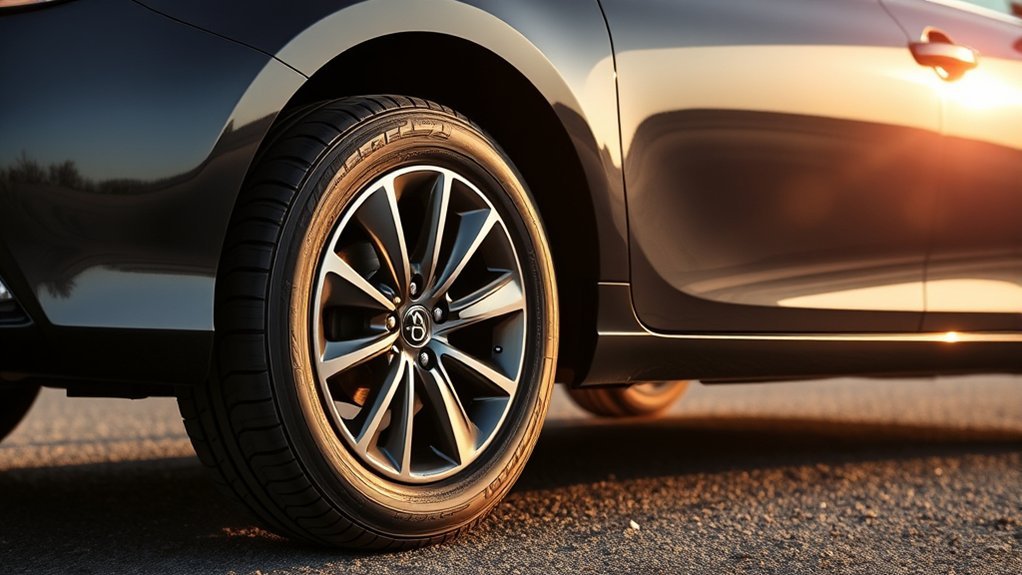
Your Camry’s tire size affects ride comfort, steering feel, braking, speedometer accuracy, and fuel economy. A tire that is too tall, too wide, or rated too low for the car can create fitment, handling, or safety problems.
The safest choice is the size listed on your vehicle’s Toyota owner resources and the tire-and-loading placard on the driver-side door jamb. The placard also lists the recommended cold tire pressure, which you should use instead of guessing a one-size-fits-all PSI.
Wider tires can improve grip when the wheel, offset, and suspension clearance are correct. They can also add road noise, reduce ride comfort, or increase rolling resistance. That is why tire size, load rating, speed rating, and wheel fitment should all match your Camry before you buy.
Warning: Never order tires by trim name alone. Check the driver-side door placard and your current tire sidewall first, especially if you bought the car used or it has aftermarket wheels.
Comparing Tire Sizes Across 2017 Camry Trims
The 2017 Toyota Camry can appear with several tire sizes because trim, wheel package, and market matter. Use this table as a practical starting point, then verify your exact size on the vehicle.
| Trim / Wheel Package | Common Tire Size | What It Usually Means |
|---|---|---|
| LE / some 16-inch wheel models | 205/65R16 | Comfort-focused ride, taller sidewall, common daily-driver setup |
| SE / XLE / some 17-inch wheel models | 215/55R17 | Balanced comfort and handling with a slightly wider tire profile |
| XSE / Special Edition / some 18-inch wheel packages | 225/45R18 | Sportier handling and appearance with a shorter sidewall |
| Temporary spare | Check spare tire sidewall | Use only within the speed and distance limits printed on the spare |
[Products Worth Considering]

Keep your tires properly inflated with this analog VONDIOR tire pressure gauge, designed for fast, easy readings without batteries. The swiveling, two-axis hose and large glow dial help you measure at any tire angle with instant visibility. Built with a protective rubber shield, it supports durable, low-maintenance use for cars and trucks.

Milton S-921 pencil tire pressure gauge helps you maintain optimal tire pressure for passenger cars with accurate readings in PSI and kPa. It features a built-in deflator valve for convenient pressure adjustments, plus a single chuck head and nylon indicator bar for easy use on the go. Built from durable plated brass and designed for reliable performance, it’s a practical road trip and cold-weather maintenance tool.

Accurately measure tire tread depth with a calibrated gauge marked from 0 to 1 inch in 1/32 inch increments. The color-coded bar helps you quickly identify tread condition ranges, supporting safe driving for trucks, motorcycles, automobiles, and passenger vehicles.
Standard Tire Sizes
The most comfort-focused factory setups usually use a 16-inch wheel with a taller sidewall. A size like 205/65R16 can absorb bumps well and often costs less than larger tire sizes.
If your Camry has 17-inch wheels, 215/55R17 is a common size that keeps a good balance between ride comfort and handling. It is a useful middle ground for drivers who want a stable feel without the firmer ride of an 18-inch tire.
Sport Trim Differences
Sport-oriented Camry models or wheel packages may use 225/45R18. This size has a shorter sidewall and a wider tread than the smaller factory sizes, so steering can feel more responsive.
The tradeoff is a firmer ride and a higher chance of wheel or tire damage on rough roads. Before switching to an 18-inch setup, confirm wheel width, offset, load rating, speed rating, and clearance with a qualified tire shop.
How to Locate Your 2017 Camry’s Tire Size
You can find your 2017 Camry’s tire size in three places. The best source is the driver-side door placard, because it shows the tire size and cold tire pressure Toyota specified for that vehicle.
Next, check the sidewall of your current tires. You will see a code such as 215/55R17. This tells you the tire width, sidewall height, tire construction, and wheel diameter.
You can also check the owner’s manual or Toyota owner resources. If the door placard and current tires do not match, treat that as a warning sign. The car may have replacement wheels, a prior upsizing change, or a mismatched tire.
| Where to Look | What You’ll Find | Why It Matters |
|---|---|---|
| Driver-side door jamb | Factory tire size and cold PSI | Best source for the vehicle’s original tire setup |
| Current tire sidewall | Installed size, load index, and speed rating | Shows what is on the car now |
| Owner’s manual | Tire care, rotation, spare tire, and warning-light guidance | Helps you maintain the tires correctly |
Pro Tip: Take a photo of the door placard before shopping online. It helps you avoid choosing a tire that fits another Camry trim but not your exact car.
Common Tire Sizes for 2017 Toyota Camry
The three common tire sizes for the 2017 Toyota Camry are 205/65R16, 215/55R17, and 225/45R18. These sizes are not random. Each one pairs with a wheel diameter and sidewall height that affects ride quality and handling.
Common Tire Sizes Overview
- 205/65R16: A common 16-inch setup that favors ride comfort and everyday value.
- 215/55R17: A common 17-inch setup that balances comfort, steering response, and grip.
- 225/45R18: A common 18-inch sport setup with a wider tread and shorter sidewall.
- Temporary spare: Read the spare tire sidewall and follow its speed and distance limits.
Trim-Specific Tire Sizes
Trim names help, but they do not replace the placard. A 2017 Camry LE with original 16-inch wheels may not use the same tires as an XSE with 18-inch wheels. A used Camry may also have aftermarket wheels installed by a prior owner.
Before you buy, match the size, load index, speed rating, and wheel diameter. If one of those details is different, ask a tire professional to confirm safe fitment.
Performance vs. Comfort Tires
Comfort-focused tires usually have a taller sidewall and softer ride. They can be a smart choice if you drive on rough roads or want quiet highway comfort.
Performance-focused tires usually have a shorter sidewall and a wider tread. They can improve steering response, but they may ride firmer and cost more to replace. Your best choice depends on your roads, climate, budget, and driving style.
How to Read a Camry Tire Size Code
A tire code looks confusing at first, but each part tells you something important. Use 215/55R17 as an example:
- 215 is the tire width in millimeters.
- 55 is the aspect ratio, meaning the sidewall height is 55% of the tire width.
- R means radial construction.
- 17 means the tire fits a 17-inch wheel.
You may also see a number and letter after the size, such as a load index and speed rating. Match or exceed the original rating unless Toyota or a tire professional gives you a safe alternative.
Tire Specs: Sport vs. Standard Trims
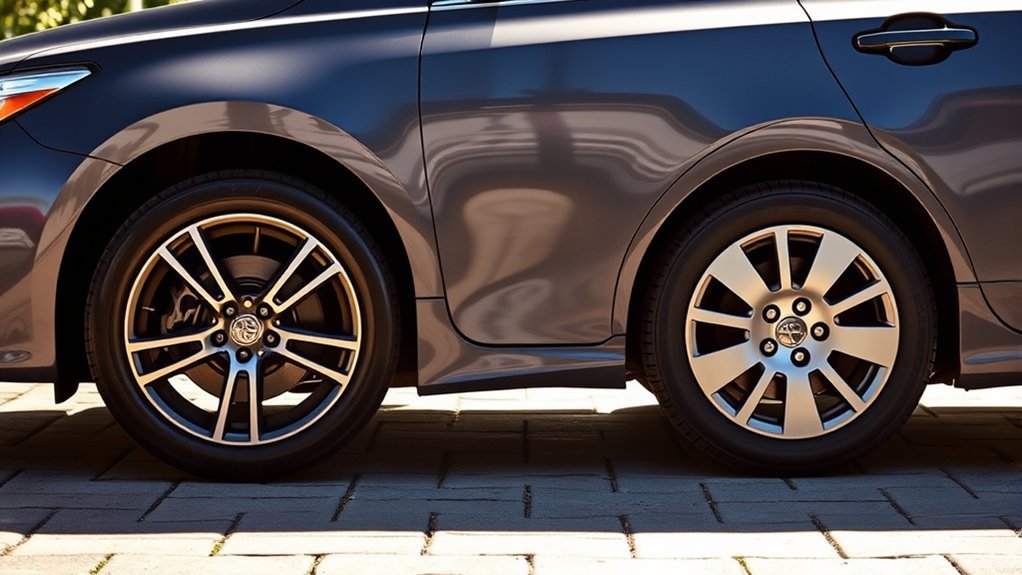
Standard Camry tire setups usually focus on comfort, quietness, and predictable wear. Sport-style setups focus more on steering response and grip. The difference often comes from wheel diameter, tire width, and sidewall height.
A 16-inch setup such as 205/65R16 gives you more sidewall to absorb bumps. A 17-inch setup such as 215/55R17 adds a more planted feel while staying comfortable for daily driving. An 18-inch setup such as 225/45R18 gives a sportier feel but can ride firmer.
None of these sizes is automatically “best” for every driver. The right tire is the one that matches your Camry’s placard, wheel package, load requirement, climate, and driving needs.
Changing Tire Sizes on Your 2017 Camry?
You can change tire sizes on a 2017 Camry, but you should do it carefully. A different size can affect speedometer accuracy, traction-control behavior, fender clearance, braking feel, and ride comfort.
- Keep outside diameter close to stock: Many tire shops use a small percentage difference as a screening tool, but final fitment still depends on the vehicle.
- Use the right wheel width and offset: A tire may fit the rim but still rub the fender or suspension.
- Match load and speed ratings: Do not downgrade safety ratings to save money.
- Check TPMS compatibility: Tire pressure monitoring sensors may need service when changing wheels or tires.
- Confirm with a professional: Ask a tire shop to verify fitment if you are moving from 16-inch to 17-inch or 18-inch wheels.
Upsizing can improve appearance and steering feel, but it can also increase tire cost and reduce ride comfort. For most daily drivers, the factory size listed on the door placard is the safest and easiest choice.
Note: If your Camry has different tire sizes on the front and rear, mismatched tire brands, or uneven tread depths, have the setup inspected before a long trip.
[Products Worth Considering]

The SAFELIFE dial tire tread depth gauge measures tread depth in 1/32 inch increments with clear, easy-to-read 2-inch dial face. Color zones using a traffic light system help you quickly judge whether tread is low, marginal, or ample for safer driving. Built with a durable zinc cast body and a metal detect probe for precise, comfortable use across cars, motorcycles, trucks, and buses.

Monitor tire tread wear with a smart, color-coded depth gauge that shows clear condition ranges at a glance. The bar is range marked for fast, easy readings, helping you maintain safer traction and performance. Each gauge is portable with a pocket clip, and the set includes 20 units for daily use and sharing.

Measure tire tread depth quickly and accurately with this LUMITECO dial gauge that reads in 1/32" increments up to 14/32". The color-coded green/yellow/red zones make it easy to judge tire wear and know when replacement is needed. A rugged, compact design with a protective pouch helps keep the gauge ready for use on cars, trucks, motorcycles, and more.
How to Maintain Your 2017 Toyota Camry Tires
Good tire maintenance helps your Camry stop, steer, and ride correctly. Start with tire pressure. Check it when the tires are cold, ideally before driving or after the car has been parked for several hours. Use the PSI listed on the door placard, not the maximum pressure printed on the tire sidewall.
The NHTSA tire safety guide recommends regular tire checks because pressure, tread, and visible damage all affect safety. A low tire can overheat, wear unevenly, and reduce fuel economy.
| Maintenance Task | Recommended Frequency | What to Check |
|---|---|---|
| Tire pressure | Monthly and before long trips | Use the cold PSI on the door placard |
| Tire rotation | About every 5,000 to 7,500 miles, or per your maintenance schedule | Follow the correct rotation pattern for your tires |
| Tread depth | Monthly | Replace at wear bars or 2/32 inch minimum; consider replacing earlier for wet-weather grip |
| Damage inspection | Monthly and after pothole hits | Look for cuts, cracks, bulges, exposed cords, nails, or sidewall bubbles |
| Alignment and balance | When wear is uneven, steering pulls, or vibration appears | Check for cupping, feathering, vibration, or one-side wear |
Tire pressure, tread depth, alignment, and tire size work together. Even the correct size can perform poorly if pressure is low or tread wear is uneven.
Before You Buy: Quick Tire Checks for a 2017 Camry

Before ordering tires, compare the tire size on your current sidewall with the size on the door placard. If they match, shopping is simple. If they do not match, confirm whether the car has upgraded wheels or an incorrect replacement tire.
- Buying all-season tires? Match the placard size, load index, and speed rating.
- Buying winter tires? Use four matching winter tires, not only two, for balanced grip.
- Seeing a TPMS light? Check pressure first, then inspect for leaks or sensor issues.
- Changing wheel size? Confirm diameter, width, offset, clearance, and TPMS compatibility.
[Products Worth Considering]

Marsflex brand TPMS replacement sensors help restore tire pressure monitoring for compatible Toyota, Lexus, Scion, and Pontiac models. Each sensor is pre-programmed for the vehicle application and includes a long-life battery for up to 8 years of normal use. Designed to replace common OE numbers and requires relearning using a TPMS scan tool after installation.

Replace worn or malfunctioning GM TPMS sensors with this 433MHz pre-programmed sensor set designed for compatibility with many Chevrolet, Buick, GMC, and Cadillac models. It includes guidance for proper OBDII relearning/pairing after installation and supports reliable long-term operation with a high-performance CR2032 battery. Quality tested for durability and performance to help restore accurate tire pressure monitoring.

Get precise tire readings with the ETENWOLF T300 Plus digital gauge, calibrated to ANSI B40.7 Grade 2A for reliable accuracy. It measures across a wide 3–200 PSI range and includes thermal compensation for dependable performance from extreme cold to heat. The bright LED display, LED illumination, and replaceable AAA batteries make it easy to check pressures quickly, even in low light.
Frequently Asked Questions
What tire sizes are available for the 2017 Toyota Camry?
Common factory sizes include 205/65R16, 215/55R17, and 225/45R18. Your exact size depends on trim, wheel package, market, and prior wheel changes. Check the driver-side door placard before buying.
Can I use winter tires on my 2017 Camry?
Yes. Use four matching winter tires in the correct size, load rating, and speed rating for your Camry. A full set keeps braking, steering, and stability more balanced in cold weather.
What is the recommended tire pressure for the 2017 Camry?
Use the cold tire pressure printed on the driver-side door placard. Many Camry setups are around the low-30 PSI range, but the placard is the correct source for your exact vehicle.
How often should I rotate my 2017 Camry tires?
A common rotation interval is every 5,000 to 7,500 miles, but you should follow your Toyota maintenance schedule and tire manufacturer guidance. Rotate sooner if you see uneven wear.
Can I put 225/45R18 tires on a Camry that came with 16-inch wheels?
Only if you also use compatible 18-inch wheels and confirm safe fitment. Check wheel width, offset, load rating, speed rating, outside diameter, fender clearance, suspension clearance, and TPMS compatibility before making the change.
Are Michelin, Bridgestone, and Goodyear good tire brands for a 2017 Camry?
They can be good choices, but brand alone is not enough. Choose a tire that matches your Camry’s size, load index, speed rating, climate, budget, and driving style. Compare treadwear warranty, wet braking, road noise, and winter or all-season performance.
What should I do if my tire pressure warning light is on?
Check all four tires with a gauge when they are cold, then inflate to the door-placard PSI. If the light returns, inspect for leaks or tire damage. If the light flashes or stays on after correct inflation, have the TPMS sensors and system checked.
How can I check tire or vehicle recalls?
Use the NHTSA recall lookup with your VIN for vehicle recalls. For tire recalls, check the tire brand, model, size, and DOT date code on the tire sidewall.
Conclusion
The right tire size for your 2017 Toyota Camry is the one that matches your vehicle’s door placard, current wheel setup, and safety requirements. Common sizes include 205/65R16, 215/55R17, and 225/45R18, but trim names alone are not enough to make a safe buying decision.
Check the placard, read the tire sidewall, match the load and speed ratings, and maintain proper cold tire pressure. When in doubt, ask a trusted tire shop to confirm fitment before you buy.
Sources
- Toyota Owner’s Manuals and Warranty Resources — supports owner-manual and vehicle-specific placard verification.
- NHTSA Tire Safety — supports tire pressure, tread, damage, and general tire safety checks.
- NHTSA Recall Lookup — supports VIN and tire recall checks.
- 49 CFR § 571.138 Tire Pressure Monitoring Systems — supports TPMS warning-system context.