
What Causes Inner Tire Wear on the Toyota Hilux
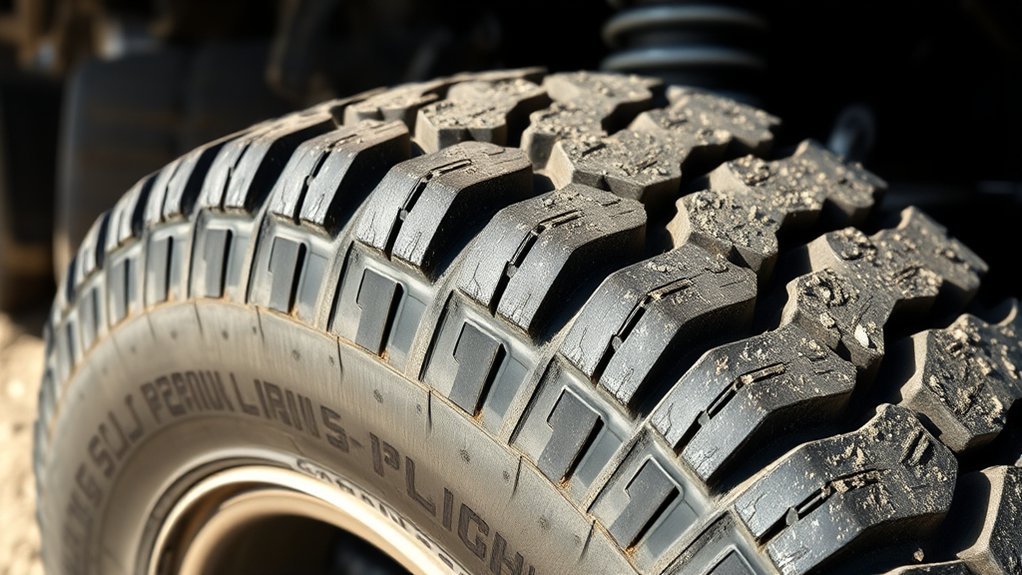
Inner tire wear on your Toyota Hilux usually points to an alignment, suspension, tire-pressure, or load problem. The inside edge wears faster when the tire does not sit flat on the road or gets scrubbed sideways as you drive. Catch it early, because new tires can wear the same way if you replace them before fixing the cause.
Quick Answer
Toyota Hilux inner tire wear is most often caused by excessive negative camber, out-of-spec toe, worn ball joints or bushings, incorrect tire pressure, heavy loads, or suspension changes. Check the tread pattern, set cold tire pressure from the door placard, inspect suspension parts, then get a professional alignment before fitting new tires.
Key Takeaways
- Inner-edge wear usually means the tire is tilted inward, scrubbed by incorrect toe, or affected by worn steering or suspension parts.
- Do not use a universal PSI number. Use the Toyota Hilux tire placard or owner’s manual and check pressure when the tires are cold.
- Rotation can slow uneven wear, but it will not fix bad alignment, worn bushings, bent parts, or a lifted suspension that needs correction.
- Replace unsafe tires if cords show, the tread reaches 2/32 inch, the wear bars are flush, or the tire has bulges, cracks, or fast air loss.
At a Glance
| Time Required | 10 to 20 minutes for a basic tire check; longer if a shop inspects alignment and suspension. |
| Difficulty | Easy for inspection; moderate to professional for alignment and suspension repair. |
| Tools Needed | Tire-pressure gauge, tread-depth gauge or penny, flashlight, gloves, and a safe flat parking area. |
| Cost | Basic checks are free after you own a gauge; alignment, balancing, parts, and tire replacement depend on local shop rates and the parts needed. |
Identifying Inner Tire Wear: Early Signs and Solutions
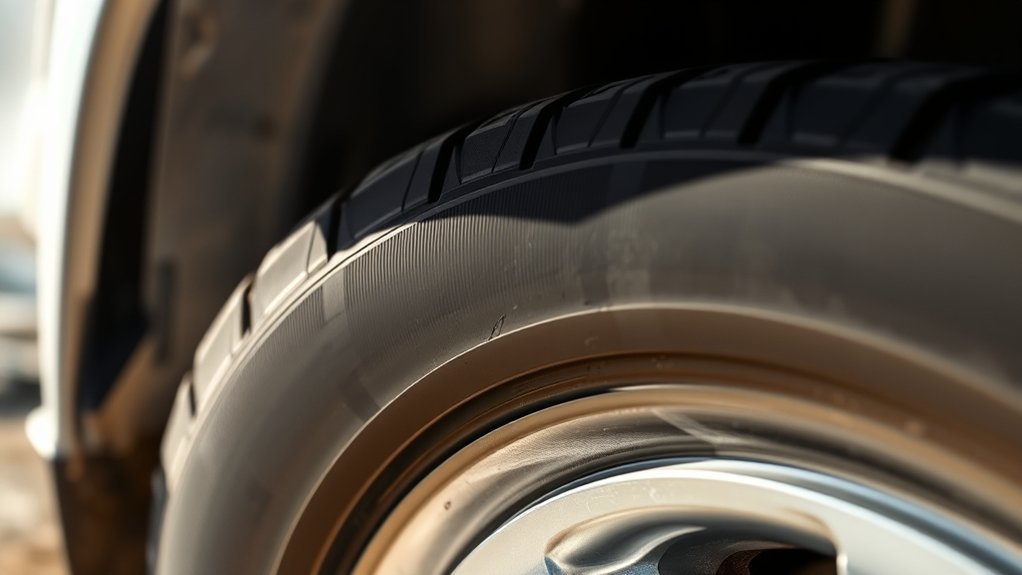
Start by looking across the full tread width of each tire. Inner tire wear means the tread near the vehicle side of the tire is lower than the center or outside shoulder. You may also notice feathered tread blocks, a pull to one side, steering vibration, or a louder road hum.
Use a tread-depth gauge if you have one. Measure the inner edge, center, and outer edge of the same tire, then compare those readings with the tire on the opposite side. A small difference can be normal, but a clear inner-edge drop means you should check alignment, pressure, and suspension before the tire becomes unsafe.
Warning: Do not keep driving on a tire with exposed cords, a bulge, a sidewall cut, rapid air loss, severe vibration, or tread worn to the built-in wear bars. Fit the spare if it is safe to do so, then have the tire inspected.
[Products Worth Considering]

EVOULTES heavy duty tire inflator with an integrated gauge delivers accurate pressure readings from 10–120 PSI, helping you inflate, deflate, and check tires in one tool. The 16.5-inch extended dual-head air chuck with swivel base reaches hard-to-access dual wheel valves on trucks and RVs. A brass trigger core and side-mounted air release valve make operation smooth, with standard 1/4" NPT threading and quick-connect compatibility for easy setup.

The JACO FlowPro Tire Inflator measures, inflates, and airs down tires up to 100 PSI with battery-free operation and ±2% accuracy after calibration. It features a glowing pressure dial for night visibility, a heavy-duty steel build with a hybrid hose, and a precision push-to-inflate thumb trigger. The patented Lightning Air Chuck locks on for a secure seal, and the kit includes quick-connect hardware for easy inline use with your air compressor.
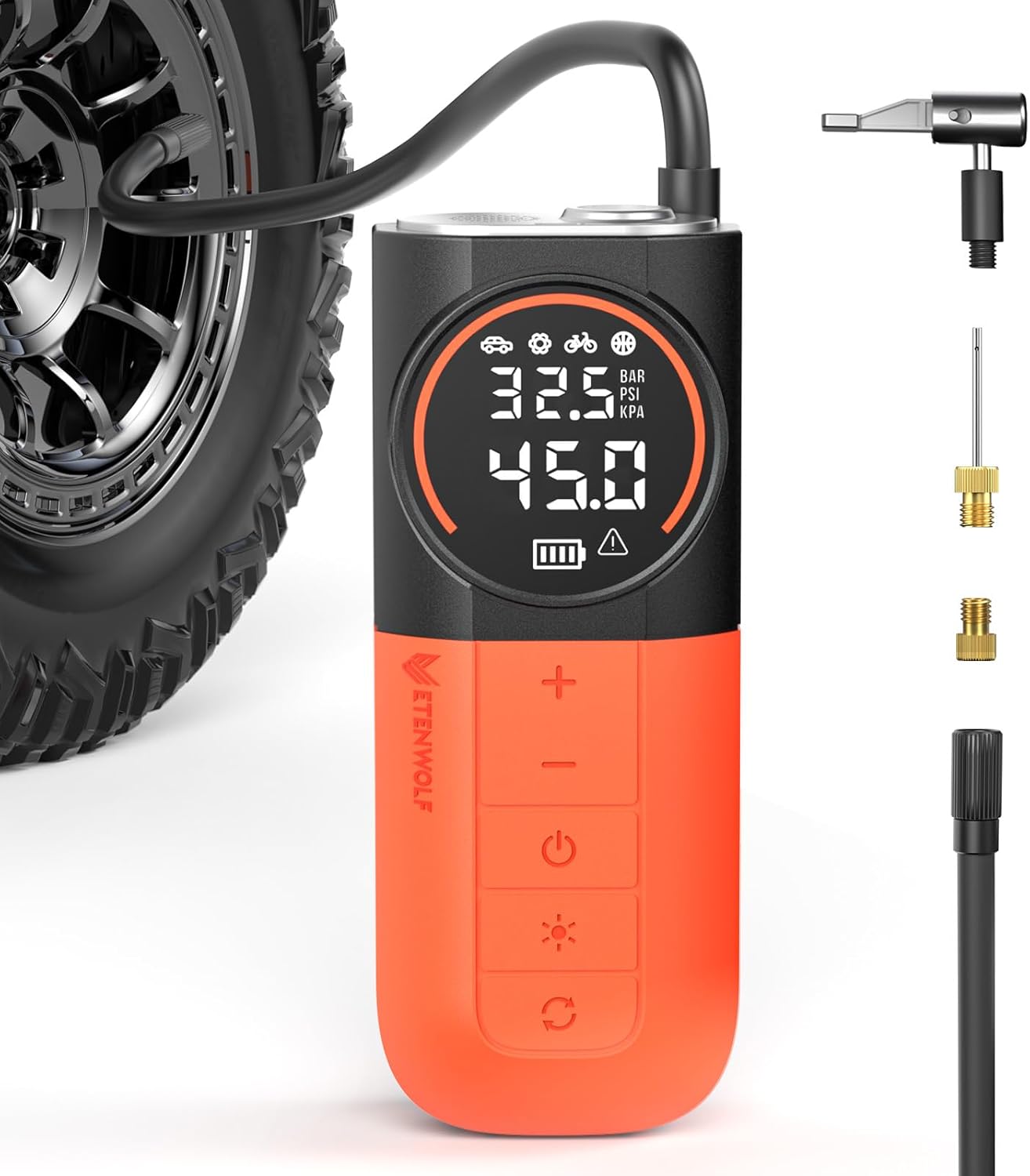
The ETENWOLF S1 cordless tire inflator delivers ultra-fast inflation with up to 160 PSI and a 20 L/min airflow for quicker tire top-offs. Its 5200mAh battery and cooling system support inflating many tires and sports balls on a single charge, while the digital pressure gauge and multi-unit display help you reach the right pressure accurately. With preset modes, pressure memory, an auto-stop feature, and an LED flashlight, it’s built for easy roadside and everyday use.
How to Read the Wear Pattern Before You Book Repairs
The wear pattern tells you where to start. You do not need to diagnose every suspension angle yourself, but you can give a technician better information by checking whether the wear is on one edge, both edges, the center, or in patchy dips.
| Wear Pattern | Likely Cause | What to Check First |
|---|---|---|
| Inner shoulder worn faster than the rest | Negative camber, out-of-spec toe, worn suspension, or ride-height change | Alignment report, ball joints, control-arm bushings, tie rods, and lift kit setup |
| Both shoulders worn | Low pressure, overloading, or hard cornering | Cold tire pressure, load rating, and driving conditions |
| Center tread worn faster | Pressure too high for the load or tire setup | Door placard pressure and tire size compatibility |
| Feathered or saw-tooth tread | Toe problem or worn steering parts | Toe setting, tie rods, steering rack ends, and alignment history |
| Cupped or scalloped patches | Weak shocks, imbalance, bent wheel, or worn suspension | Shock absorbers, wheel balance, wheel runout, and bushings |
How Misalignment Affects Tire Wear on Your Hilux
Misalignment is one of the most common reasons a Toyota Hilux wears the inner edge of a tire. Alignment is not a tire adjustment. It is the adjustment and measurement of steering and suspension angles so the tires meet the road at the correct angle.
Common Misalignment Issues
Camber and toe matter most for inner tire wear. Negative camber means the top of the tire leans inward. A small amount may be normal, but too much negative camber loads the inner shoulder. Toe describes whether the tires point slightly inward or outward when viewed from above. When toe is out of specification, the tire can scrub across the road instead of rolling cleanly.
| Misalignment Type | Effects on Tires | Recommended Action |
|---|---|---|
| Excessive Negative Camber | Inner shoulder wears faster | Correct camber to Toyota specifications where adjustable |
| Out-of-Spec Toe | Rapid scrubbing, feathering, and uneven edge wear | Adjust toe and inspect steering parts |
| Incorrect Thrust Angle | Vehicle may dog-track or pull | Check rear axle position and frame condition |
| Ride-Height Change | Camber, caster, and toe can shift after a lift or sagging springs | Align after suspension work or heavy ride-height changes |
| Bent or Worn Components | Alignment may not hold | Repair parts before final alignment |
If your Hilux has a suspension lift, leveling kit, heavy front bumper, winch, canopy, drawer system, or regular towing load, tell the alignment shop. A Hilux that sits above or below its normal ride height may need extra adjustment, correction parts, or a load-aware alignment.
Effects on Tire Longevity
Bad alignment can shorten tire life quickly because the tire keeps sliding or loading one shoulder every mile. Tire rotation may hide the pattern for a while, but it will not solve the root problem. If the inside edge is already much lower than the rest of the tread, book an inspection before installing new tires.
Pro Tip: Ask the shop for a printed before-and-after alignment report. Keep it with your service records so you can compare camber, toe, caster, and thrust angle if the wear returns.
Why Proper Tire Inflation Keeps Your Hilux Tires Even
Maintaining proper tire inflation helps the tread sit evenly on the road. Do not rely on the maximum PSI molded into the tire sidewall, and do not use one universal pressure for every Hilux. The correct cold tire pressure is listed on the Tire and Loading Information Label on the vehicle or in the owner’s manual, as explained by the National Highway Traffic Safety Administration tire-safety guide.
- Check pressure cold: Measure before driving, or after the Hilux has been parked long enough for the tires to cool.
- Check every tire: Include the spare, especially before trips, towing, or off-road travel.
- Adjust for the placard: Use the Toyota placard or manual for your exact tire size and load setup.
- Recheck after impact: A pothole, curb hit, or off-road strike can cause pressure loss or alignment change.
Incorrect pressure can make tread wear faster or more unevenly. Low pressure often increases shoulder wear and heat. Too much pressure can reduce the contact patch and increase center wear. Pressure will not fix bad camber or toe, but it is one of the easiest checks to do before the problem gets worse.
Importance of Tire Rotation for Longevity
Tire rotation helps spread wear across all four tires, especially on a Hilux that carries changing loads or spends time on rough roads. The NHTSA advises checking the owner’s manual for the correct rotation pattern and notes that, when recommended by the manufacturer, tires may be rotated every 5,000 to 8,000 miles or sooner if uneven wear appears.
Rotation is not a repair for inner-edge wear. If the front tires are wearing inside edges because the toe is wrong, rotating them to another position only moves the damaged tires. Fix the cause first, then rotate or replace tires as needed. Directional tires, staggered sizes, and some spare-tire setups may need a specific pattern, so follow the manual or tire-shop guidance.
How Your Driving Habits Influence Tire Wear on the Hilux
Your driving habits can make inner tire wear show up sooner, especially if the alignment is already near the edge of specification. Hard cornering loads the outside tires. Fast acceleration, heavy braking, rough roads, and repeated curb strikes can also stress the tread and steering parts.
- Corner smoothly: Avoid rushing roundabouts, ramps, and sharp turns when carrying cargo.
- Brake earlier: Hard braking adds heat and load to the front tires.
- Slow down on rough roads: Potholes, corrugations, rocks, and washouts can knock alignment out of spec.
- Watch heavy loads: Added weight from tools, towing, canopies, and trays changes how the suspension sits.
Off-road driving does not automatically ruin tires, but it raises the need for inspection. After a hard trail day, check tread cuts, sidewalls, wheel weights, pressure, and steering feel. If the Hilux starts pulling or the steering wheel sits off-center, schedule an alignment check.
[Products Worth Considering]

This portable cordless tire inflator delivers up to 160 PSI with fast 17 L/min airflow to help you quickly top up tires and get back on the road. It features dual power mode, running on a 21V rechargeable battery or a 12V DC adapter for convenient roadside use. An automatic shut-off with digital pressure gauge helps prevent overinflation, and a built-in LED light improves visibility in low-light conditions.

Powools cordless tire inflator delivers up to 150 PSI for fast, reliable inflation in a compact, travel-ready design. The LED digital display shows real-time and preset pressure, while auto shutoff helps prevent over-inflation. Multiple attachments and pressure units make it useful for car tires, bikes, motorcycles, and inflatables, with a bright multi-mode LED light for low-visibility jobs.
How Suspension Issues Contribute to Tire Wear
Worn suspension and steering parts can make a good alignment impossible to hold. Ball joints, control-arm bushings, tie rods, wheel bearings, shocks, springs, and mounting points all affect how the tires meet the road. If these parts move too much, the tire angle changes as you brake, turn, or hit bumps.
| Suspension Issue | Effect on Tire Wear | Recommended Action |
|---|---|---|
| Worn Bushings | Lets the wheel shift under braking or cornering | Inspect and replace worn bushings before alignment |
| Loose Ball Joints | Changes camber and steering control | Replace unsafe joints and recheck alignment |
| Worn Tie Rods | Allows toe to wander | Repair steering parts before setting toe |
| Weak Shocks | Can cause bouncing, cupping, and poor tire contact | Inspect shocks and mounts |
| Bent Wheel or Hub Issue | Creates vibration and uneven contact | Check wheel balance, runout, and bearing play |
The Hilux uses a truck-style suspension built for work, but work use also means heavy loads, corrugated roads, towing, and off-road impacts. If a shop aligns the truck without checking worn parts first, the tire wear may come back quickly.
Essential Maintenance Tips for Your Toyota Hilux Tires
To keep your Hilux tires wearing evenly, follow a simple routine instead of waiting until one edge is bald. These checks help you catch pressure loss, alignment changes, and suspension wear before they cost you a full set of tires.
- Check tire pressure monthly: Use a quality gauge and check tires cold. Also check before towing or carrying heavy cargo.
- Measure tread across the tire: Compare the inner shoulder, center, and outer shoulder. Replace tires that reach 2/32 inch or become flush with the wear bars.
- Rotate on schedule: Follow your owner’s manual and rotate sooner if uneven wear starts.
- Balance when needed: Balance tires when installing new tires, after vibration appears, or after a wheel weight comes off.
- Inspect after impacts: Check alignment after pothole hits, curb strikes, off-road impacts, or suspension work.
- Fix parts before tires: Replace worn bushings, tie rods, shocks, ball joints, or bent wheels before buying new tires.
Note: New tires do not fix inner-edge wear by themselves. If camber, toe, pressure, or suspension problems remain, the new set can develop the same pattern.
When to See a Mechanic or Alignment Shop
Book a professional inspection if the inner edge is visibly lower, the Hilux pulls, the steering wheel sits off-center, the tires feather, or the tread wear returns after rotation. You should also schedule service after replacing suspension parts, fitting a lift kit, changing tire size, hitting a major pothole, or installing heavy accessories.
Ask for three things: a suspension check, a tire condition report, and an alignment report. A technician should not perform a final alignment if a ball joint, bushing, tie rod, wheel bearing, or wheel is too worn to hold the setting.
Frequently Asked Questions
Why are my Toyota Hilux tires wearing on the inside?
The most likely causes are excessive negative camber, out-of-spec toe, worn suspension parts, incorrect tire pressure, or ride-height changes from a lift, sagging springs, or heavy accessories. Check the tread pattern first, then inspect pressure, steering, suspension, and alignment.
Can I keep driving with inner tire wear?
You can drive cautiously to a repair shop if the tire still has safe tread, holds air, and has no exposed cords, bulges, cuts, or severe vibration. Do not keep using a tire that is bald on the inside edge, because the damage can be hidden when viewed from outside the vehicle.
Will an alignment fix inner tire wear?
An alignment can fix the cause if the problem is camber, toe, caster, or thrust angle. It will not repair tread that is already worn away, and it may not hold if bushings, ball joints, tie rods, shocks, wheel bearings, or wheels are worn or bent.
What is the most common problem with Toyota Hilux inner tire wear?
The most common starting points are front-end alignment and worn steering or suspension parts. A Hilux used for towing, off-road driving, heavy loads, or suspension modifications may need more frequent checks because those conditions can change ride height and tire angles.
What is the weakness of the Toyota Hilux related to tire wear?
The Hilux is built for work, towing, and rough roads, but those same uses can stress tires, shocks, bushings, and steering parts. The weakness is not one single part for every truck. It is usually missed maintenance after heavy use, impacts, loading changes, or suspension modifications.
Which Toyota Hilux should I avoid if I am worried about tire wear?
Do not reject a Hilux by year alone based only on tire wear. Instead, avoid a truck with accident damage, uneven ride height, poor alignment history, worn suspension, mismatched tires, neglected servicing, or inner-edge tire wear that the seller cannot explain.
Should I replace tires before or after alignment?
Fix worn suspension or steering parts first. Then align the Hilux. If the tires are unsafe, replace them before driving normally, but still get the alignment done right away so the new tires do not wear on the inside edge again.
Conclusion
To prevent premature inner tire wear on your Toyota Hilux, start with the tread pattern, then check cold tire pressure, rotation history, alignment, and suspension condition. Smooth driving helps, but it cannot overcome worn bushings, bad toe, excessive camber, or a truck that has changed ride height from loads or modifications. Fix the cause before replacing tires, and your Hilux will handle better, ride safer, and get more life from each set.
Sources
- NHTSA TireWise Tire Safety Ratings and Awareness — backs tire pressure, tread depth, rotation, alignment, and tire-safety guidance.
- Bridgestone Tire Tread Wear & Causes — backs tread-wear patterns, improper inflation, alignment wear, wear bars, and the 2/32-inch replacement threshold.
- Tire Rack: What Are The Different Alignment Settings? — backs camber, toe, thrust angle, suspension wear, and alignment effects on tire life.

Related Articles

best high-performance tires for toyota hilux
You rely on your Hilux for work, adventure, and everyday driving, so choosing high-performance tires matters more than you might think. The right tires…
Read More
best premium off-road tires for toyota hilux
You rely on your Hilux to handle rough trails, heavy loads and unpredictable weather, so choosing the right premium off-road tires matters. The right…
Read More
best premium winter tires for toyota hilux
Choosing the right premium winter tires for your Toyota Hilux matters because you rely on strong traction and load capacity when roads turn icy…
Read More