
Steel Wheels vs Aluminum Wheels for Off-Road Driving
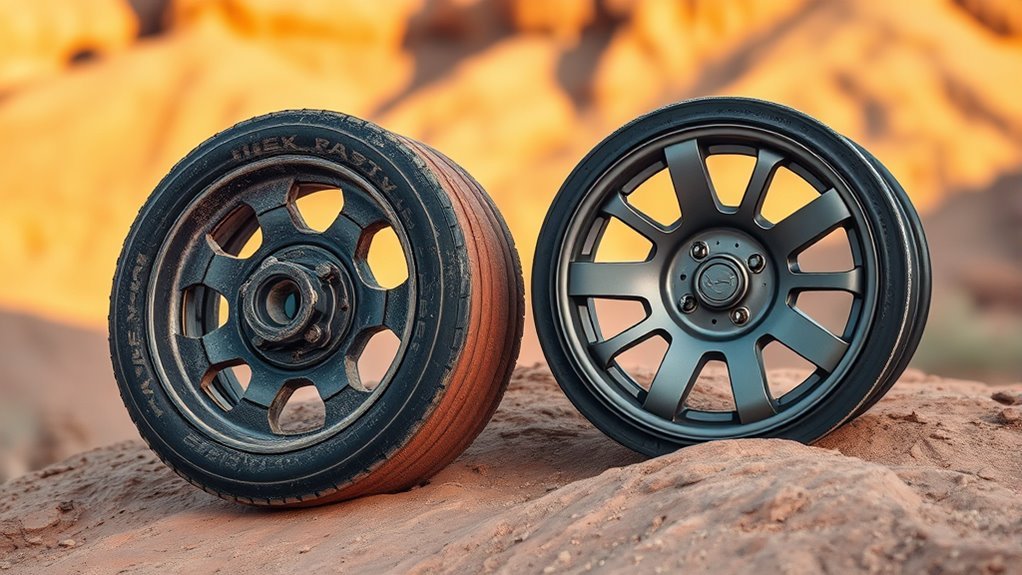
Choosing between steel and aluminum wheels for off-road driving comes down to how you want your wheels to fail when the trail gets rough. Steel wheels are usually heavier, cheaper, and easier to bend back enough to limp off a trail. Aluminum wheels are usually lighter, run cooler around the brakes, and look better, but severe impacts can crack some designs instead of simply bending them.
Quick Answer
Steel wheels are often better for hard rock crawling, remote overlanding, and budget builds because they bend before they fail completely and are easier to repair temporarily. Aluminum wheels are often better for daily driving, dunes, mixed trails, and performance-focused rigs because they reduce weight and shed brake heat better.
Key Takeaways
- Pick steel wheels if trail repairability, low cost, and impact forgiveness matter more than weight.
- Pick aluminum wheels if lower unsprung weight, brake cooling, corrosion resistance, and appearance matter more.
- Do not judge by material alone. Load rating, wheel construction, offset, tire pressure, and tire sidewall strength matter just as much.
- Cast aluminum and forged aluminum are not equal. Forged wheels can be stronger and lighter, but they cost more.
- Never drive fast on a cracked wheel, and inspect any bent wheel before returning to highway speed.
Which Wheel Material Handles Trail Impacts Better?
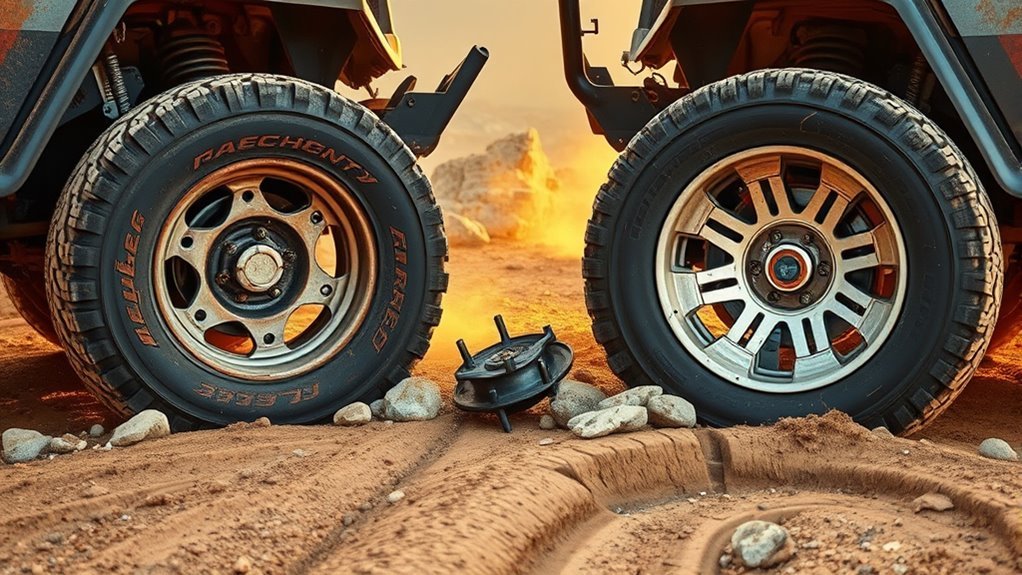
Steel usually handles sharp trail impacts better when your main goal is getting home. The material is ductile, so it can bend at the lip or flange instead of cracking right away. That bend may still cause air loss, vibration, or bead damage, but you may be able to reshape the lip enough for a slow trail exit.
Aluminum wheels behave differently. A quality aluminum wheel can be very strong, especially if it is forged, but many aluminum wheels are less forgiving once an impact exceeds the wheel’s design limit. A hard hit on a rock edge can create a crack, and a cracked wheel should be treated as unsafe until a qualified wheel or tire professional inspects it.
The most honest answer is simple: steel is usually more forgiving under abusive rock impacts, while aluminum can be stronger for its weight when the wheel is well engineered.
[Products Worth Considering]

This ALL-TOP auto-stop tire deflator valve kit lets you air down off-road tires quickly without watching pressure, automatically stopping when your preset PSI is reached. Each valve is individually calibrated for reliable performance with an acceptable +/- 2 PSI tolerance. The adjustable deflator range covers 10 to 30 PSI and includes four valves plus valve caps and a zipper pouch for easy setup on trucks, SUVs, RVs, UTVs, and powersports.
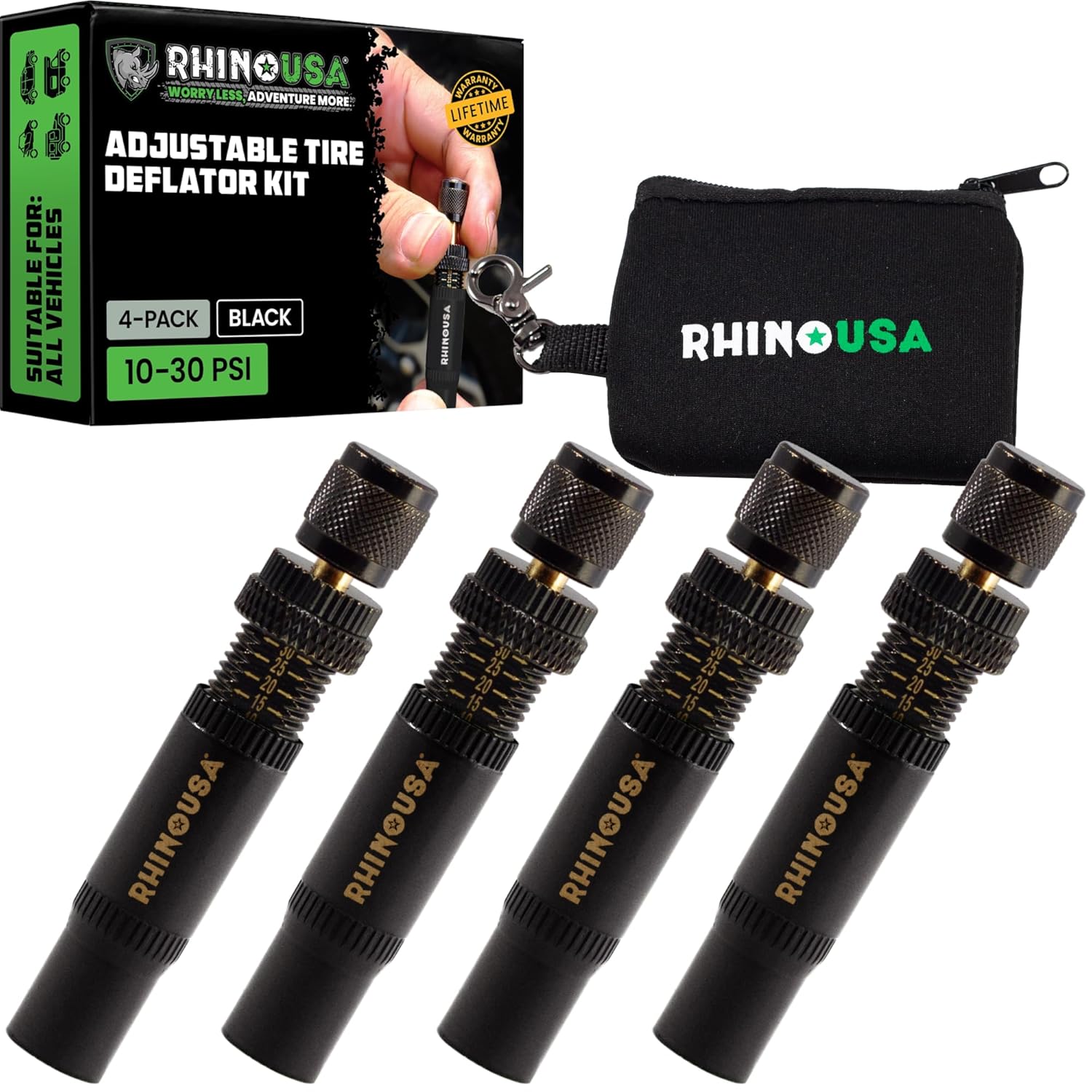
Use the Rhino USA adjustable tire deflators to air down all four tires at once by screwing one deflator onto each valve stem, letting you step away while the tires reach your preset pressure. Each deflator independently adjusts across a 10–30 PSI range with laser-etched indicators for quick setup and verification, making it ideal for beach, sand, and rocky off-road trails.

The JACO FlowPro Tire Inflator measures, inflates, and airs down tires up to 100 PSI with battery-free operation and ±2% accuracy after calibration. It features a glowing pressure dial for night visibility, a heavy-duty steel build with a hybrid hose, and a precision push-to-inflate thumb trigger. The patented Lightning Air Chuck locks on for a secure seal, and the kit includes quick-connect hardware for easy inline use with your air compressor.
How Do You Choose: Steel or Aluminum for Your Off-Road Needs?
Start with the way you actually drive, not the way you imagine your build on social media. Rock crawling, remote overlanding, sand driving, towing, and daily commuting all punish wheels differently.
| Your Priority | Better Match | Why It Fits |
|---|---|---|
| Remote trail repair | Steel | A bent lip can sometimes be reshaped enough to reseat the tire or slow the leak. |
| Lower weight and sharper response | Aluminum | Less unsprung and rotating mass can improve steering feel and suspension response. |
| Hard rock crawling on a budget | Steel | Steel is usually cheaper to buy and replace after repeated trail damage. |
| Sand, dunes, and fast desert trails | Aluminum | Lower rotating weight helps acceleration and quick speed changes. |
| Long downhill grades | Aluminum | Aluminum generally conducts heat better and many designs allow more airflow around the brakes. |
Impact Durability Comparison
Impact durability depends on more than material. Wheel diameter, spoke design, rim thickness, load rating, tire sidewall height, air pressure, and vehicle weight all matter. Still, the common field difference is real: steel often bends, while damaged aluminum is more likely to crack when pushed past its limit.
- Steel wheels: Best when you expect repeated rim strikes and need a repairable failure mode.
- Cast aluminum wheels: Good for many light and moderate trails, but severe rock hits can create cracks.
- Forged aluminum wheels: Often stronger and lighter than cast aluminum, but usually much more expensive.
Weight and Performance
Aluminum wheels are often lighter than steel wheels of the same size, but not always. Some oversized aluminum wheels weigh more than a smaller steel setup, especially if the aluminum wheel is built for heavy load capacity.
Lower wheel weight can help your suspension react faster over uneven terrain. It can also improve throttle response because the engine has less rotating mass to spin. Porsche’s early Fuchs wheel history shows why automakers care about this: the original aluminum wheel target for the 911 S was about 3 kilograms less per wheel than the steel version, with the goal of reducing unsprung mass.
| Factor | Steel | Aluminum |
|---|---|---|
| Typical weight | Usually heavier | Usually lighter |
| Impact behavior | Bends more often | Can crack under severe hits |
| Trail repair | Often possible as a temporary fix | Usually not safe to repair trailside if cracked |
| Brake heat | Retains more heat | Dissipates heat better |
| Cost | Usually lower | Usually higher |
Cost, Load Rating, and Fitment
Do not buy wheels by looks and material alone. Match the wheel to your vehicle’s axle rating, tire size, bolt pattern, hub bore, offset, brake clearance, and intended tire pressure. Federal tire and rim rules define rim size by bead-seat diameter and width, and vehicle tire-load limits must stay within the tire’s rated capacity.
For off-road use, also check whether the wheel manufacturer rates that wheel for your vehicle weight and tire size. A light aluminum wheel built for a small crossover is not the same as a properly rated wheel for a loaded 4×4 with camping gear, armor, and a roof tent.
Why Do Steel Wheels Bend but Rarely Break Off-Road?
Steel wheels bend because steel can absorb impact through plastic deformation. In simple terms, the lip can fold or dent when it hits a rock, rut, or ledge. That damage is not good, but it is often more manageable than a full crack.
This is why many remote overlanders and rock crawlers still like steel wheels. A bent lip may leak slowly, and a careful trail repair with basic tools may help you reseat the bead long enough to reach pavement. That does not make the wheel permanently safe. It only gives you a better chance of moving the vehicle out of danger.
- Trail repairability: You may be able to reshape a bent lip enough for low-speed recovery.
- Predictable damage: Steel often shows visible dents before total failure.
- Lower replacement cost: Replacing a damaged steel wheel is usually easier on the budget.
Warning: A bent steel wheel is not automatically safe. Use a trail repair only to get out carefully. Before highway driving, check for cracks, bead damage, air loss, vibration, and lug-seat damage.
When Do Aluminum Wheels Crack and Leave You Stranded?
Aluminum wheels are more likely to crack when the impact force is sharp, concentrated, and beyond the wheel’s design limit. A common example is a low-pressure tire pinching the wheel against a rock edge. The tire may survive, but the rim lip or spoke area can crack.
Cast aluminum wheels deserve extra attention because casting quality and design affect strength. Forged aluminum can be much stronger for its weight because the manufacturing process compresses and forms the metal structure. Fuchsfelge, for example, describes a multi-step forged wheel process using heavy forming presses, flow-forming, machining, and finishing.
Even so, a cracked aluminum wheel should not be hammered back into shape or trusted for highway speed. A crack can spread, cause rapid air loss, or damage the tire bead area.
Can You Hammer Steel Wheels Back Into Shape on the Trail?
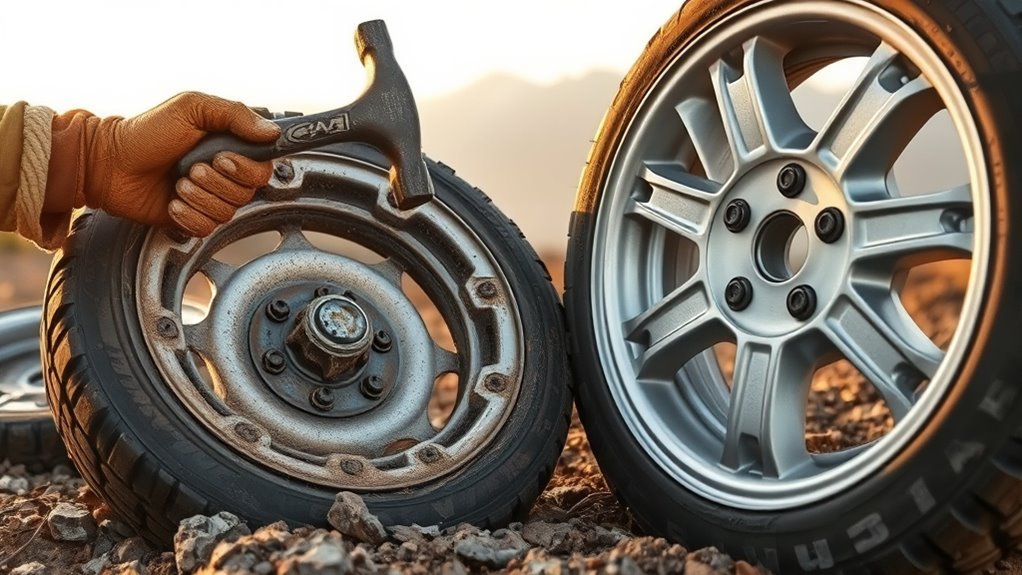
Yes, sometimes you can hammer a steel wheel back into usable shape on the trail. This only works when the damage is mainly at the outer lip and the tire bead can still seal. It is not a permanent repair, and it does not fix hidden cracks, bent centers, damaged lug seats, or severe wobble.
Use slow, controlled force, protect the tire bead, and check air pressure often. If the tire keeps losing air, install the spare instead of trying to force the wheel back into service.
- Carry a full-size spare that matches your off-road tire diameter.
- Carry a tire pressure gauge, air compressor, valve cores, plugs, and basic hand tools.
- Use temporary trail repairs only at low speed until you reach proper service.
Pro Tip: For remote trips, the spare matters more than the wheel material. A strong wheel choice still cannot replace a properly sized, aired-up, full-size spare.
Does Wheel Weight Hurt Your 4×4’s Acceleration and Fuel Economy?
Yes, wheel weight can affect acceleration, braking feel, suspension response, and fuel use. The effect is strongest when you add both heavier wheels and heavier tires. Big mud-terrain tires usually change performance more than the wheel material by itself.
Extra wheel weight becomes rotating weight. Your engine has to spin it, your brakes have to slow it, and your suspension has to control it over bumps. That is why a lighter aluminum wheel can feel sharper on mixed trails and daily driving.
Still, do not chase weight savings at the expense of load rating. A wheel that is too light for your vehicle, tire size, or cargo load is the wrong wheel, no matter how good it looks.
Rotating Mass Impact
Rotating mass affects how quickly your 4×4 changes speed. Heavy wheel-and-tire packages can make starts feel slower and can make the vehicle work harder when climbing or recovering momentum after an obstacle.
Lighter wheels can improve response, but the total package matters. A lightweight wheel with an oversized, heavy tire may still be heavier than your original setup.
Fuel Economy Effects
Wheel material alone rarely decides fuel economy. Tire tread, tire weight, rolling resistance, air pressure, alignment, gearing, speed, roof racks, and cargo load all matter. NHTSA notes that proper tire inflation affects safety, durability, and fuel consumption, so pressure maintenance should come before any wheel-material debate.
For long highway drives to trailheads, aluminum wheels can help if they reduce total rotating mass. For slow rock crawling, that weight saving may matter less than impact resistance and repairability.
Acceleration Performance Trade-offs
Aluminum wheels can help throttle response because they often reduce rotating mass. That can feel useful in sand, snow, dunes, and fast two-track driving where momentum changes quickly.
Steel wheels feel less lively, but they give you a more repairable failure mode in rocky terrain. Choose the trade-off that matches your most common trail conditions.
Which Wheels Keep Your Brakes Cooler on Long Descents?
Aluminum wheels usually help brake cooling more than steel wheels. Aluminum conducts heat better, and many aluminum wheel designs use open spokes that allow more airflow around the brake rotor and caliper.
This matters on long mountain descents, especially when your 4×4 is loaded with passengers, armor, recovery gear, camping equipment, or a trailer. Cooler brakes help preserve a firmer pedal feel and reduce the chance of fade.
| Property | Aluminum Wheels | Steel Wheels |
|---|---|---|
| Heat dissipation | Generally better | Generally lower |
| Airflow | Often more open | Often more closed |
| Best use case | Loaded descents and mixed driving | Slow technical trails and budget builds |
[Products Worth Considering]

This 3-piece wheel and tire brush set makes it easy to clean light, medium, and heavy dirt from wheels, rims, tires, and exterior surfaces. It includes both soft and stiff bristle options for gentle scrubbing and tough grime removal, helping lift brake dust and road buildup. The long-handle design supports comfortable cleaning across cars, trucks, SUVs, RVs, motorcycles, and more, with simple care instructions to restore brush shape.

This 1/2-inch drive breaker bar delivers powerful leverage for loosening and tightening stubborn lug nuts and automotive fasteners. The 180-degree flex head helps you reach tight spaces at the angle you need, making tire and brake jobs easier. A spring-loaded ball detent design holds 1/2-inch sockets securely while the chrome-moly head provides durable strength for everyday use.
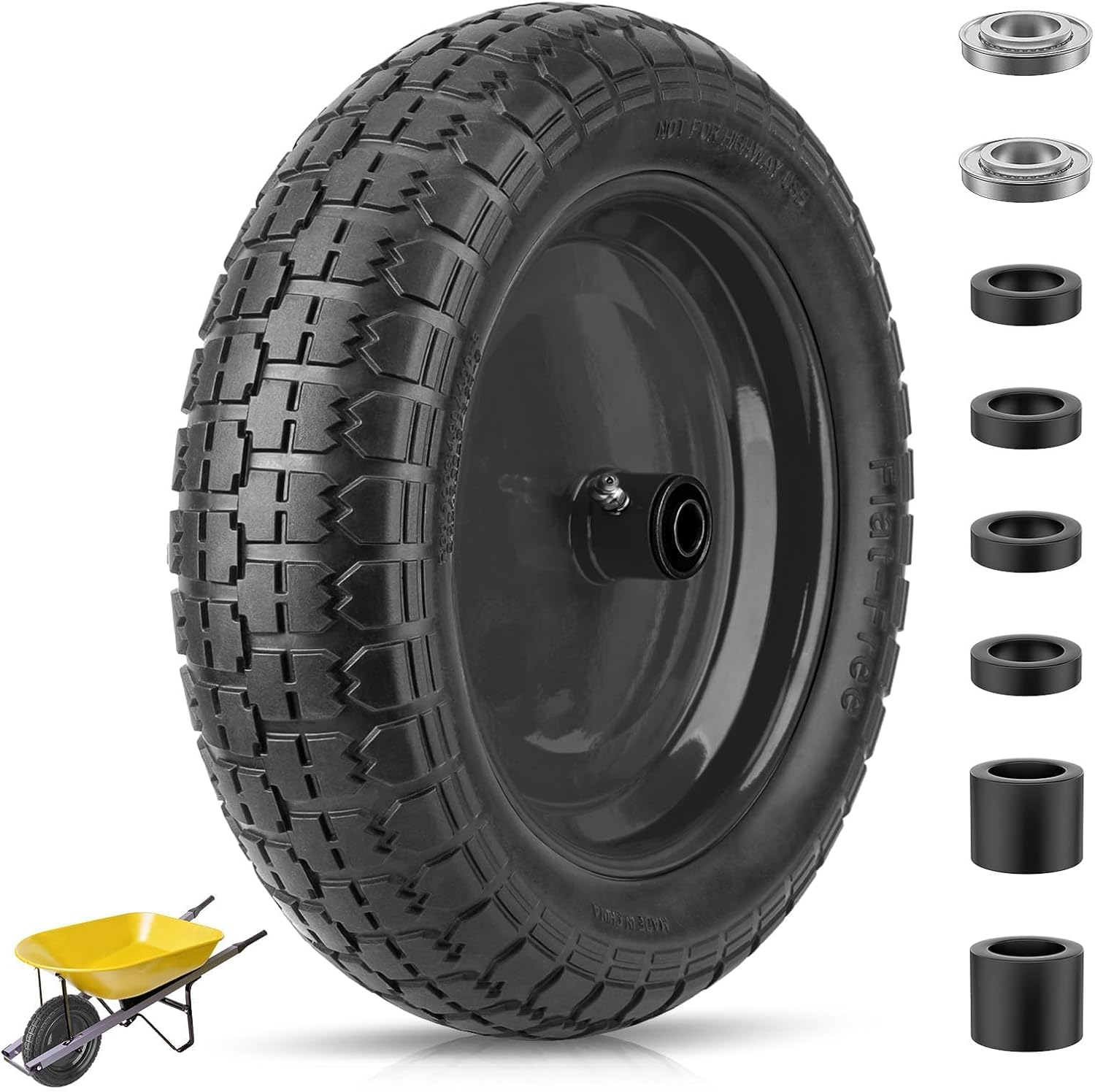
This flat-free TICONN wheelbarrow tire features durable polyurethane foam construction that never needs inflation, helping prevent punctures and reducing maintenance on rough outdoor terrain. With a 300 lb max load capacity and stable steel rim design, it supports safer transport for yard work and hauling tasks. An adapter kit with ball bearings and nylon spacers is included for easier fit and customization across common wheelbarrow and cart axle setups.
Why Do Steel Wheels Dominate in Remote Backcountry Regions?
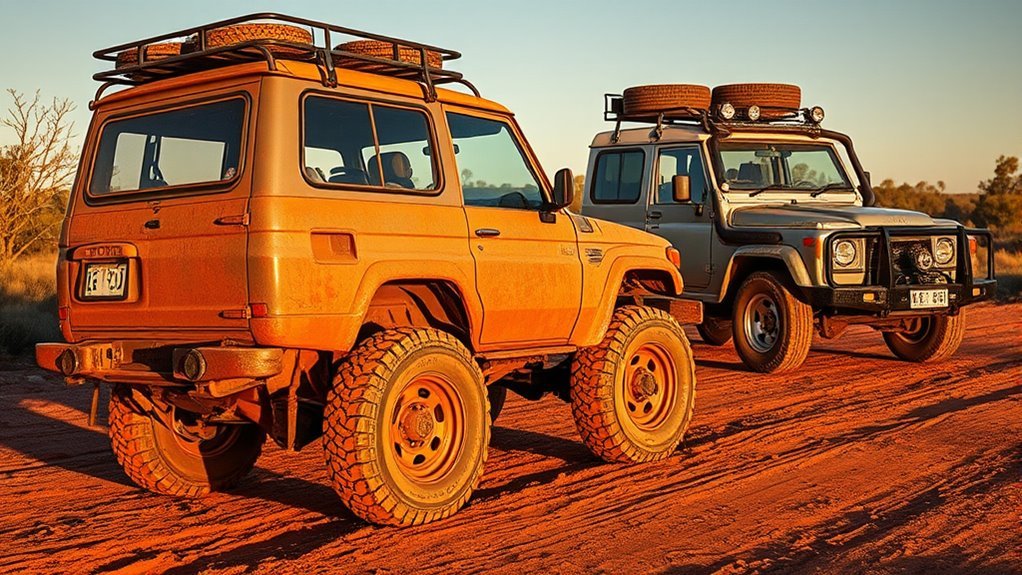
Steel wheels remain popular in remote backcountry regions because they are practical. They are usually cheaper, easier to replace, and more tolerant of trail abuse. If you damage one far from a shop, a temporary repair is more realistic than it is with a cracked aluminum wheel.
Availability also matters. In many rural or expedition settings, common steel wheel sizes are easier to source than specialty aluminum wheels. That matters when your trip depends on basic parts, not perfect parts.
Repairability On Trails
Trail repairability is the main reason many drivers choose steel. A bent rim lip can sometimes be straightened enough to restore bead seal. A cracked aluminum wheel usually needs replacement.
This does not mean steel is indestructible. Rust, overloading, repeated impacts, and poor repairs can weaken any wheel. Treat steel’s repairability as a recovery advantage, not a license to ignore damage.
Remote Availability
Steel wheels often win on logistics. You can usually find basic steel replacements more easily than a matching specialty aluminum wheel, especially for older trucks or common utility vehicles.
If you run aluminum wheels in remote areas, plan ahead. Carry a compatible spare, verify lug-nut seat style, and know whether your spare clears the brake calipers.
Impact Resistance
Steel’s biggest strength is not that it is impossible to damage. Its strength is that damage is often more gradual and visible. Dents, bends, and wobble give you clues before complete failure.
Aluminum wheels can also be very strong, but the wrong aluminum wheel on the wrong trail can fail in a less forgiving way. That is why wheel construction and load rating matter as much as the material name.
How Do Steel and Aluminum Rims Affect Tire Size and Air Pressure?
Wheel material does not decide tire size or air pressure by itself. Tire size depends on rim diameter, rim width, offset, suspension clearance, brake clearance, fender clearance, and the tire manufacturer’s approved rim-width range.
Air pressure should start with the vehicle manufacturer’s cold inflation pressure on the Tire and Loading Information Label or in the owner’s manual. NHTSA warns that the correct pressure is the vehicle manufacturer’s listed pressure, not simply the maximum pressure molded on the tire sidewall.
Off-road drivers often air down for traction and ride comfort, but airing down increases sidewall flex and raises the chance of bead loss or rim impact. If you air down, use a pressure that matches your tire, wheel, load, speed, and terrain. Air back up before highway driving.
Note: Beadlocks, simulated beadlocks, and standard wheels are not the same. Use beadlock wheels only where legal for your road use, and follow the manufacturer’s torque and inspection schedule.
What Should You Check Before Buying Off-Road Wheels?
Before you buy steel or aluminum wheels, verify the fitment details. A strong material will not help if the wheel rubs the caliper, overloads the axle, or pushes the tire into the fender.
- Load rating: Match the wheel to your vehicle weight, cargo, and axle rating.
- Bolt pattern and hub bore: Confirm the wheel mounts correctly and centers properly.
- Offset and backspacing: Make sure the tire clears suspension, fenders, and steering components.
- Brake clearance: Test fit if you have larger brakes or aftermarket calipers.
- Tire size and rim width: Use a rim width approved for the tire you plan to run.
- Lug-nut seat type: Match conical, ball, or shank-style seats as required.
- TPMS compatibility: Confirm valve stem and tire-pressure sensor fitment on newer vehicles.
The best off-road wheel is not the strongest one on paper. It is the one with the right load rating, fitment, tire support, and failure mode for your trails.
Which Wheel Type Matches Your Off-Road Driving Style?
Your driving style should decide the wheel material. If you crawl through rocks, travel alone, or explore remote tracks, steel wheels make sense because they are cheaper and easier to recover from after impact damage.
If you drive fast desert roads, sand, snow, or long highway miles before the trail, aluminum wheels may suit you better. They usually reduce weight, improve brake cooling, resist corrosion better, and offer more design choices.
For many 4×4 owners, the best setup is not extreme. A properly rated aluminum wheel works well for mixed daily driving and weekend trails. A properly rated steel wheel works well for hard rock use, fleet rigs, and budget overland builds.
Frequently Asked Questions
Are steel rims better for off-roading?
Steel rims are often better for hard rock crawling and remote trails because they are usually cheaper and easier to repair temporarily. They are not always better for every driver. Aluminum can be better for weight, brake cooling, corrosion resistance, and daily driving.
Are aluminum wheels too weak for off-road use?
No. Many aluminum wheels are strong enough for off-road use when they are properly rated for the vehicle and tire. The key is choosing the right construction, load rating, and size. Cast aluminum is usually less forgiving than steel under severe rock impacts, while forged aluminum can offer excellent strength for its weight.
Do steel wheels affect fuel economy?
They can, especially if they are part of a heavier wheel-and-tire package. Extra rotating mass can make the engine work harder. Tire tread, pressure, diameter, and vehicle load often affect fuel economy more than wheel material alone.
Can you repair a cracked aluminum wheel on the trail?
You should not treat a cracked aluminum wheel as trail-repairable. Install the spare and have the damaged wheel inspected by a qualified shop. A crack can spread and cause rapid air loss.
Should I choose steel or aluminum wheels for overlanding?
Choose steel if you travel remote rocky routes and value repairability. Choose aluminum if your overlanding includes long highway miles, mountain descents, mixed dirt roads, and daily driving. In both cases, prioritize load rating, tire size, cold inflation pressure, and a full-size spare.
Conclusion
Steel and aluminum wheels both work off-road, but they solve different problems. Steel gives you a cheaper, more repairable wheel for harsh rock impacts and remote travel. Aluminum gives you lower weight, better brake cooling, cleaner styling, and strong performance when the wheel is properly built and rated.
For hard rock crawling and expedition backup, steel is the safer practical choice. For mixed trails, daily driving, dunes, and long-distance comfort, aluminum often makes more sense. Either way, the right wheel is the one that matches your tire size, vehicle load, terrain, and recovery plan.
Sources
- NHTSA TireWise: Tires — backs tire size, tire pressure, tire maintenance, safety, and fuel-consumption guidance.
- 49 CFR § 571.110 Tire selection and rims — backs rim size, load rating, placard, and tire-load requirements.
- Porsche Newsroom: The legendary Fuchs rims — backs unsprung-mass and forged aluminum wheel context.
- Fuchsfelge: The Forging Process — backs forged wheel manufacturing and forming process details.
- Fuchsfelge: Wheel Material — backs aluminum alloy composition and strength-related material details.
[Products Worth Considering]

Keep your tires properly inflated with this analog VONDIOR tire pressure gauge, designed for fast, easy readings without batteries. The swiveling, two-axis hose and large glow dial help you measure at any tire angle with instant visibility. Built with a protective rubber shield, it supports durable, low-maintenance use for cars and trucks.

Upgrade your Toyota’s wheels with durable aluminum alloy valve stem caps that help protect valve cores from corrosion and direct exposure to road grime, clay, water, and snow. Rubber rings improve sealing to help prevent air leakage and maintain stable tire pressure for safer driving. These caps are easy to install or remove without tools and add a unique, stylish look to your car.

This universal wheel alignment tool helps you accurately restore tire tilt angles after tire or suspension repairs using an adjustable camber gauge. It features a powerful magnetic base that firmly attaches to brake rotors for stationary, slip-free readings, improving consistency during measurement. Built from durable PC plastic, it resists wear and corrosion and is compact enough for car, truck, RV, and motorcycle alignment tasks.

Related Articles
When to Switch From All-Season to Winter Tires on a 4Runner
Ineffective all-season tires in cold weather can jeopardize your safety—discover when to make the crucial switch for better traction and handling.
Read More
4Runner Tire Mileage: How Many Miles Should They Last
Curious about how long your 4Runner tires should last? Discover essential tips and factors that influence tire longevity.
Read More
How Long Do Toyota 4Runner Tires Typically Last
How long do Toyota 4Runner tires typically last? Discover the factors that influence tire longevity and essential tips for maintenance.
Read More