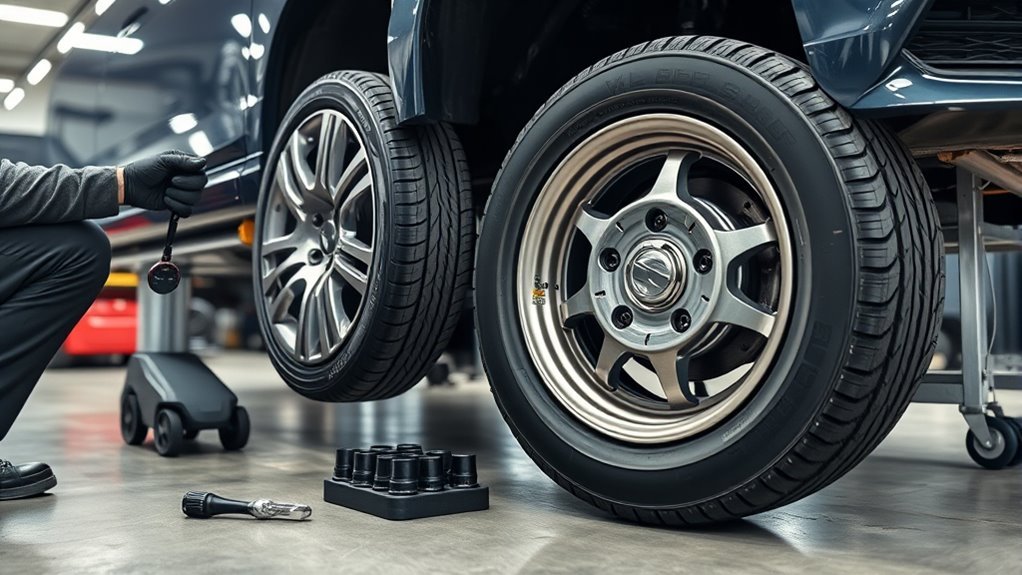
Rotating your tires on time is one of the easiest ways to prevent uneven tread wear, keep handling predictable, and avoid replacing tires earlier than necessary. Most drivers should plan a tire rotation every 5,000 to 7,500 miles, but your best interval is always the one listed in your vehicle owner’s manual or tire warranty booklet.
Quick Answer
Rotate your tires every 5,000 to 7,500 miles for most vehicles, or sooner if you notice uneven wear, vibration, pulling, or noisy tires. Follow the tire rotation schedule and pattern in your owner’s manual first, because drivetrain, tire type, load, and driving habits can change the right interval.
Key Takeaways
- A 5,000- to 7,500-mile tire rotation interval works for many passenger vehicles, but the owner’s manual is the final authority.
- Front-wheel drive, rear-wheel drive, all-wheel drive, directional tires, staggered tire sizes, and EVs can require different rotation patterns or limits.
- Rotate sooner if you see uneven tread wear, cupping, vibration, road noise, or the vehicle pulling to one side.
- A proper rotation should include tire pressure, tread depth, sidewall, alignment, balance, and lug-nut torque checks.
At a Glance
| Typical Interval | Every 5,000 to 7,500 miles, unless your vehicle or tire maker recommends something different |
| Time Required | About 30 to 60 minutes at a shop |
| Difficulty | Easy for a professional; moderate for DIY if you have the right tools and safe lifting points |
| Tools Needed | Jack, jack stands, lug wrench, torque wrench, tread-depth gauge, tire-pressure gauge |
| Typical Cost | Often free with tire purchase or maintenance packages; otherwise commonly a modest shop fee |
How Often to Rotate Tires: Miles and Months
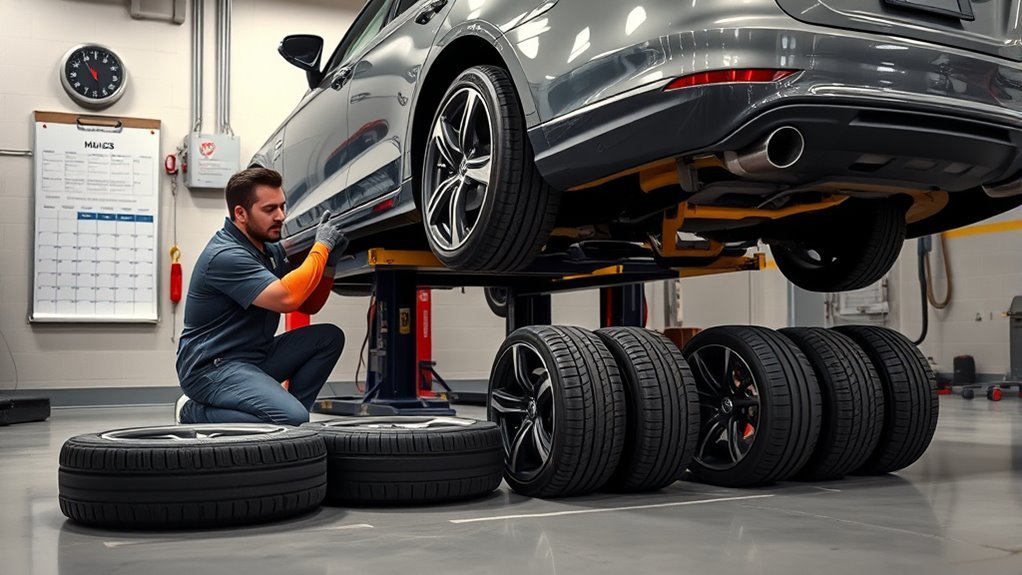
For most everyday cars, SUVs, and light trucks, a good tire rotation schedule is every 5,000 to 7,500 miles. That often lines up with an oil change, which makes it easier to remember. Some tire and vehicle manufacturers recommend rotating closer to 5,000 miles, while others allow a longer interval, so check your owner’s manual and tire warranty booklet before stretching the schedule.
The goal is simple: move each tire to a different position so wear is spread more evenly across the set. This helps preserve traction, braking, steering response, and ride comfort. It can also help you replace all four tires as a set, which is especially useful on vehicles that need similar tread depth across all wheels.
The National Highway Traffic Safety Administration recommends regular tire care, including checking inflation pressure, tread wear, damage, and tire rotation. Tire pressure should be checked at least monthly and before long trips, because underinflation and overloading can raise the risk of tire failure.
Pro Tip: Put the tire rotation mileage in your phone, maintenance app, or glove-box service log. Recording tread depth at each rotation makes it easier to spot alignment, suspension, or inflation problems early.
Adjust Your Rotation Interval by Vehicle Type and Driving Habits
Your exact tire rotation interval depends on drivetrain, vehicle weight, tire type, road conditions, and driving style. A commuter car used mostly on highways may wear tires more evenly than a delivery vehicle, rideshare vehicle, truck that tows, or SUV driven mostly in stop-and-go traffic.
| Vehicle or Driving Type | Typical Interval | Why It Matters |
|---|---|---|
| Front-wheel drive | About 5,000 to 7,500 miles | Front tires handle steering, braking, and drive power, so they often wear faster |
| Rear-wheel drive | About 5,000 to 7,500 miles | Rear tires handle drive power; front tires still carry steering and braking loads |
| All-wheel drive or four-wheel drive | Follow the manual closely; often near 5,000 miles | Similar tread depth can be important for driveline health and traction systems |
| EVs and hybrids | Follow the manual; inspect often | Instant torque and higher vehicle weight can speed up wear on some tires |
| Trucks, SUVs, towing, or heavy loads | Rotate on the shorter end of the recommended range | Extra weight and load changes can create uneven shoulder and axle wear |
| Aggressive city driving | Rotate sooner if wear appears | Hard braking, quick starts, potholes, and tight turns can accelerate uneven wear |
If you drive on rough roads, tow often, carry heavy loads, or make frequent short city trips, inspect your tires more often and rotate closer to the early end of the range. If irregular wear develops before your scheduled mileage, do not wait for the next interval.
Which Rotation Pattern Works for My Drivetrain?
The right tire rotation pattern depends on your drivetrain and tire design. Do not guess if your vehicle has directional tires, staggered tire sizes, different wheel offsets, or special all-wheel-drive requirements. The safest answer is always the pattern in your owner’s manual, tire warranty guide, or tire placard guidance.
| Setup | Common Rotation Pattern | Important Note |
|---|---|---|
| Front-wheel drive, same-size non-directional tires | Forward cross: front tires move straight back; rear tires cross to the front | Helps even out faster front tire wear |
| Rear-wheel drive, same-size non-directional tires | Rearward cross: rear tires move straight forward; front tires cross to the rear | Balances drive-axle and steering-axle wear |
| All-wheel drive or four-wheel drive | Often X-pattern or double-X, depending on the vehicle | Follow the manual because tread-depth differences can matter more |
| Directional tires | Front-to-back on the same side | Do not cross sides unless the tire is demounted and remounted correctly |
| Staggered tire sizes | May only rotate side-to-side, or may not be rotatable | Front and rear tires of different sizes cannot simply trade axles |
The Tire Industry Association explains common rotation patterns for front-wheel-drive, rear-wheel-drive, all-wheel-drive, four-wheel-drive, and directional tire setups. Goodyear also notes that directional tires must follow the arrows on the tire sidewall and that some different-size or offset wheel setups need special handling.
Warning: Never place a directional tire so it rolls opposite the arrow on the sidewall. Also avoid rotating staggered tires front-to-back unless the front and rear tires are the same size and the wheel setup allows it.
Signs Your Tires Need a Rotation Now

Sometimes your tires need attention before the normal mileage interval. Rotate them soon, and have the vehicle inspected, if you notice any of these warning signs:
- Uneven tread wear: Front tires look more worn than rear tires, or one edge wears faster than the rest of the tire.
- Vibration: The steering wheel, seat, or floor shakes at certain speeds.
- New road noise: Tires hum, thump, or grow louder than usual.
- Pulling to one side: The vehicle drifts even when the steering wheel is straight.
- Cupping or scalloping: The tread has high and low spots that feel wavy when you run your hand over it.
- Low or uneven tire pressure: Underinflation and overinflation can both make wear worse.
Rotation can even out normal wear, but it will not fix the cause of severe or unusual wear. Cupping, feathering, shoulder wear, and one-sided wear often point to alignment, balance, suspension, or inflation problems. If the wear pattern is aggressive, ask the shop to inspect the alignment and suspension before you keep driving long distances.
Use a tread-depth gauge during inspections. In the United States, many state safety rules and federal inspection standards treat 2/32 inch as a common minimum tread-depth threshold, but wet-weather grip can decline before tires reach that point. Replace tires when they hit the legal minimum, show damage, or no longer provide safe traction for your driving conditions.
What a Pro Does During a Tire Rotation
A proper tire rotation is more than moving wheels from one corner to another. A good technician checks the condition of every tire, selects the correct pattern, tightens the wheels properly, and looks for problems that could shorten tire life.
[Products Worth Considering]

Accurately measure tire tread depth with a calibrated gauge marked from 0 to 1 inch in 1/32 inch increments. The color-coded bar helps you quickly identify tread condition ranges, supporting safe driving for trucks, motorcycles, automobiles, and passenger vehicles.

Monitor tire tread wear with a smart, color-coded depth gauge that shows clear condition ranges at a glance. The bar is range marked for fast, easy readings, helping you maintain safer traction and performance. Each gauge is portable with a pocket clip, and the set includes 20 units for daily use and sharing.

Measure tire tread depth quickly and accurately with this LUMITECO dial gauge that reads in 1/32" increments up to 14/32". The color-coded green/yellow/red zones make it easy to judge tire wear and know when replacement is needed. A rugged, compact design with a protective pouch helps keep the gauge ready for use on cars, trucks, motorcycles, and more.
Inspection and Measurement
The technician should inspect each tire for cuts, cracks, bulges, punctures, exposed cords, uneven wear, and sidewall damage. They should measure tread depth across more than one groove and compare wear from tire to tire. They should also check tire pressure and set it to the vehicle manufacturer’s recommended cold pressure, not the maximum number printed on the tire sidewall.
NHTSA’s tire safety guidance emphasizes regular pressure checks, tire damage inspections, and tread inspections. These simple checks help catch problems before they become blowouts, poor braking, or loss of control.
Rotation Pattern Selection
The technician chooses the rotation pattern based on drivetrain, tire size, tread direction, and manufacturer instructions. For example, a front-wheel-drive vehicle with same-size, non-directional tires commonly uses a forward-cross pattern. A vehicle with directional tires usually keeps tires on the same side and moves them front to rear.
This step matters because the wrong pattern can reduce traction, create noise, or make the tire wear problem worse. When the vehicle has staggered sizes, performance tires, or all-wheel drive, the shop should check the owner’s manual instead of applying a generic pattern.
Torque and Final Checks
After the tires are moved, the wheels should be tightened with a torque wrench to the vehicle manufacturer’s lug-nut torque specification. The technician should also confirm tire pressure, check for obvious leaks or damage, and advise whether alignment or balancing is needed.
Note: Many shops recommend rechecking lug-nut torque after a short drive, especially after wheel removal. Follow the service shop’s instructions and your owner’s manual.
Can You Rotate Tires Yourself?
You can rotate tires yourself if you have the correct tools, a level work area, and the proper lifting points for your vehicle. You need a jack, jack stands, wheel chocks, a lug wrench, and a torque wrench. A floor jack alone is not enough because it can fail or shift while you are working.
DIY tire rotation is not worth the risk if you are unsure about jacking points, torque specs, directional tires, staggered sizes, or all-wheel-drive requirements. In those cases, a professional rotation is safer and usually inexpensive compared with the cost of tire damage or an improperly secured wheel.
Warning: Never work under or beside a vehicle supported only by a jack. Use properly rated jack stands on a solid, level surface, chock the wheels, and tighten lug nuts to the manufacturer’s torque specification.
[Products Worth Considering]

AstroAI’s heavy-duty digital tire pressure gauge delivers quick, accurate readings with 0.1 increments and a secure valve-stem seal. It features a green backlit LCD and built-in flashlight for easy use in low light, plus an ergonomic non-slip stainless-steel design. The wide 0–230 PSI range works across common vehicle tires, with unit selection and an auto shut-off to save battery.

Protect tire valves from water, dust, and sand to help prevent leaks and support safe driving. These universal stem caps install quickly by hand and feature durable aluminum alloy construction with an inner sealing ring for better air retention. Compatible with cars, SUVs, trucks, motorcycles, and bicycles for everyday convenience.

The SAFELIFE dial tire tread depth gauge measures tread depth in 1/32 inch increments with clear, easy-to-read 2-inch dial face. Color zones using a traffic light system help you quickly judge whether tread is low, marginal, or ample for safer driving. Built with a durable zinc cast body and a metal detect probe for precise, comfortable use across cars, motorcycles, trucks, and buses.
Costs, Perks, and How to Save on Rotations
Tire rotation pricing varies by shop, region, vehicle type, and whether balancing or inspection is included. Many tire retailers include free or discounted rotations when you buy a set of tires from them. Some maintenance plans, dealership service packages, and warehouse-club tire programs also include rotation benefits.
| Perk | How It Helps |
|---|---|
| Free rotations with tire purchase | Lowers maintenance cost over the life of the tire set |
| Maintenance bundles | Combines tire rotation with oil changes, inspections, or brake checks |
| Written tire warranty terms | Helps prove you followed the required rotation schedule |
| Service records | Makes warranty claims and resale documentation easier |
Before buying tires, ask whether rotations are included, how long the benefit lasts, and whether you must return to the same location. Keep every receipt or digital service record. Some treadwear warranties require proof that you rotated tires on schedule.
[Products Worth Considering]

The VEHLIVE SU-50448 II TPMS relearn tool provides a fast activation reset to restore accurate tire pressure monitoring after sensor replacement or tire rotation. It supports 315 MHz and 433 MHz GM series sensors and helps clear dashboard pressure warnings. With simple two-button operation and horn-confirmed relearning order, you can reprogram sensors conveniently at home.

ETENWOLF T300 is a calibrated digital tire pressure gauge for accurate readings from 3 to 200 PSI across light and heavy-duty vehicles. It includes thermal compensation for reliable performance in extreme cold or heat, with an auto shut-off to extend battery life and an LED for easier reading. The sturdy design supports rugged everyday use, making it ideal for pickups, RVs, and industrial applications.
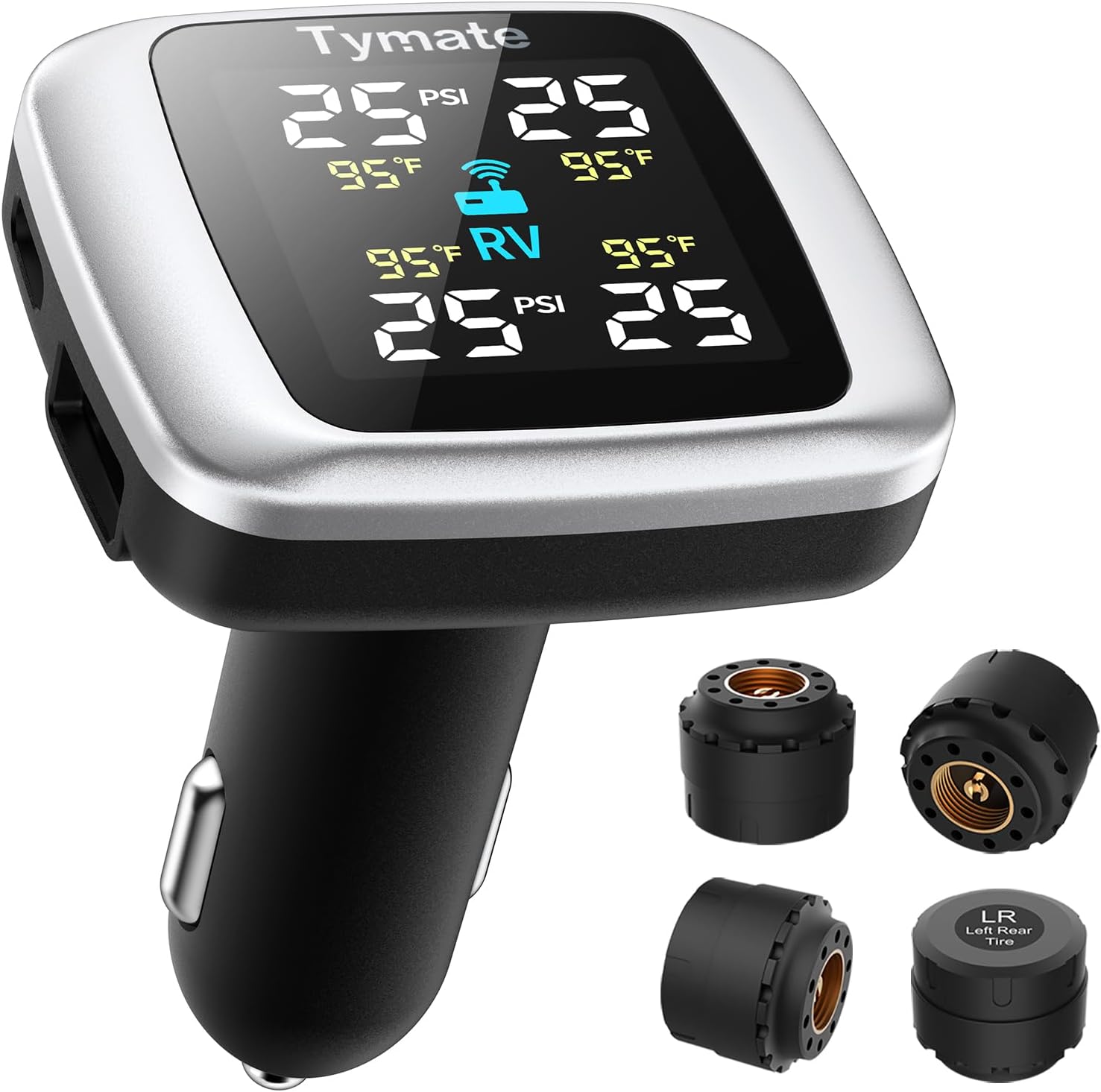
Tymate TM7 is a wireless tire pressure monitoring system that delivers real-time pressure and temperature readings for safer driving. It includes four external sensors, a bright color LCD display with adjustable backlight, and six alarm modes for high/low pressure, fast leakage, high temperature, and sensor signal or battery issues. The system covers a wide 0–144 PSI range and plugs into your vehicle’s cigarette lighter socket for quick DIY setup.
Combine Tire Rotation With Other Maintenance Tasks
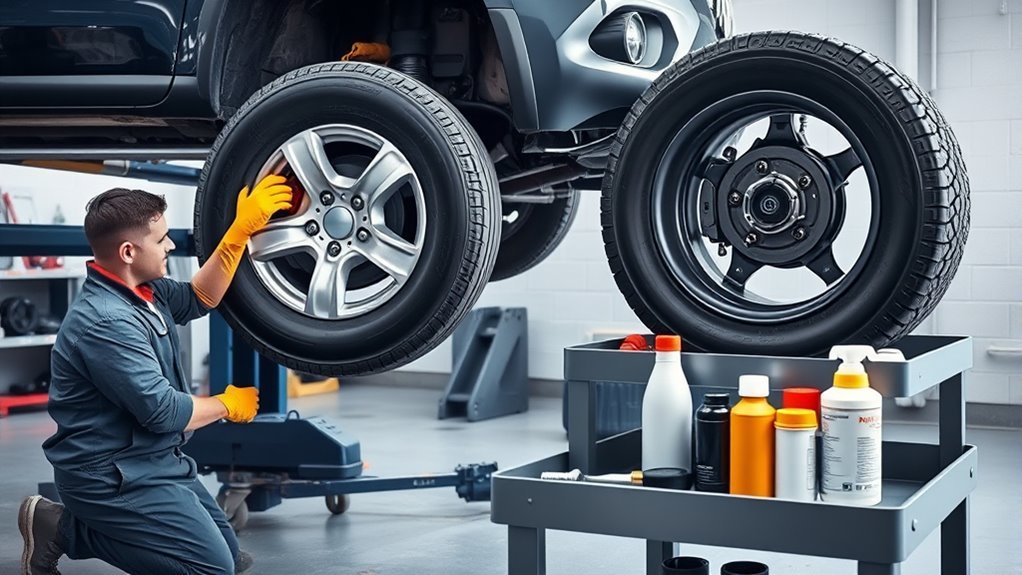
Pairing tire rotation with other routine maintenance saves time and helps catch problems early. Since many rotation intervals overlap with oil-change intervals, it is practical to ask for tire service whenever the vehicle is already in the shop.
- Combine tire rotation with oil changes to reduce extra service trips.
- Ask for a brake inspection while the wheels are off.
- Check tread depth and tire pressure at every service visit.
- Inspect suspension and steering parts if wear is uneven or noisy.
- Ask whether wheel alignment or balancing is needed if the vehicle vibrates or pulls.
- Record the mileage, date, tread depth, and rotation pattern in your service log.
This routine gives you a better picture of tire health and vehicle safety. It also helps prevent small issues, such as low pressure or slight alignment problems, from turning into premature tire replacement.
Frequently Asked Questions
How often do you actually need a tire rotation?
Most drivers should rotate tires every 5,000 to 7,500 miles, unless the owner’s manual or tire warranty recommends a different interval. Rotate sooner if you notice uneven tread wear, vibration, pulling, or unusual tire noise.
Should you rotate tires every 5,000 or 10,000 miles?
A 5,000- to 7,500-mile interval is safer for most vehicles. Some vehicles may allow longer intervals, but 10,000 miles can be too long for cars that wear tires quickly, drive mostly in the city, tow, carry heavy loads, or use all-wheel drive. Follow your manual first.
What happens if you do not rotate your tires?
Skipping rotations can cause uneven tread wear, more road noise, reduced traction, shorter tire life, and less predictable handling. It may also make it harder to qualify for treadwear warranty coverage if the warranty requires documented rotations.
Do all-wheel-drive vehicles need tire rotation more often?
They often need close attention because all four tires work with the driveline and traction systems. Follow the owner’s manual exactly, keep tread depths as even as possible, and rotate sooner if the vehicle maker or tire wear pattern calls for it.
Can rotating tires fix vibration?
Sometimes it can reduce vibration caused by uneven wear, but vibration may also come from wheel imbalance, bent wheels, tire damage, alignment problems, or worn suspension parts. If vibration continues after rotation, have the tires and wheels inspected.
Do directional tires rotate differently?
Yes. Directional tires are designed to roll in one direction, marked by an arrow on the sidewall. They usually rotate front-to-back on the same side of the vehicle unless they are demounted and remounted correctly.
Conclusion
Keep tire rotation on your regular maintenance schedule. For most vehicles, every 5,000 to 7,500 miles is a practical target, but your owner’s manual and tire warranty should guide the final interval. Use the correct rotation pattern for your drivetrain and tire type, inspect tread depth and pressure each time, and handle uneven wear early. A small routine service can protect traction, improve ride quality, and help your tires last longer.
Sources
- NHTSA TireWise — tire safety, pressure, tread, damage, and rotation guidance
- NHTSA Tire Safety Checklist — monthly pressure checks, tire inspections, load limits, and trip checks
- Tire Industry Association Tire Rotation — common rotation patterns by drivetrain and tire type
- Bridgestone Tire Rotation 101 — owner’s manual guidance and 5,000- to 7,000-mile fallback interval
- Goodyear Tire Rotation Guidance — directional tires, different tire sizes, and rotation limits
- 49 CFR 570.62 Tires — federal inspection language for tire condition and tread-depth measurement