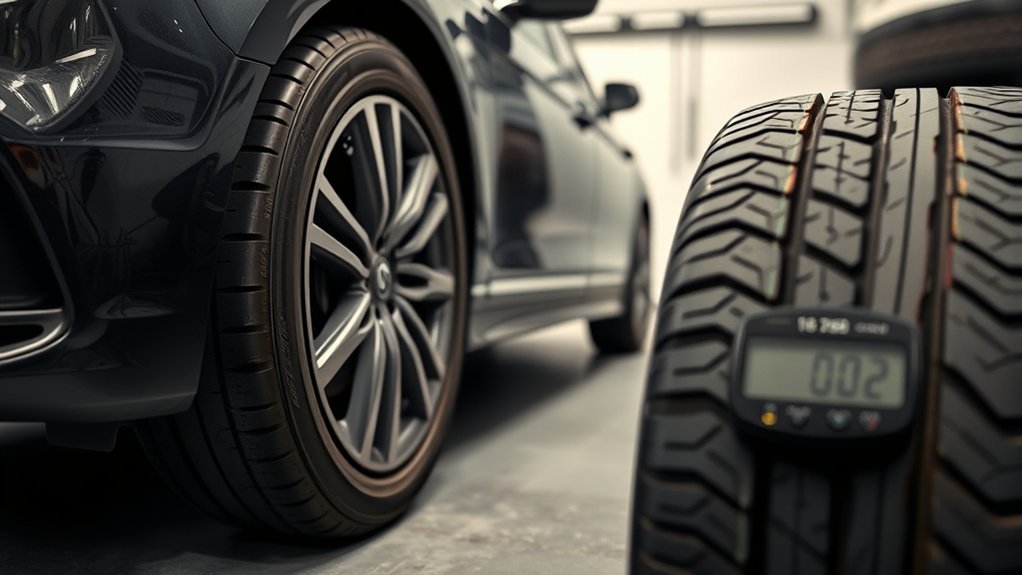
You do not need to replace every tire on a fixed 3- to 5-year schedule. The right time depends on tread depth, damage, tire age, performance, maintenance, climate, and the specific tire and vehicle manufacturer’s guidance. Some tires wear out from miles long before age matters, while low-mileage tires can age out with plenty of tread remaining.
Quick Answer
There is no universal 3- to 5-year tire replacement schedule. Replace a tire when it reaches 2/32 inch of tread, has unsafe damage, or no longer performs properly. Also follow the tire and vehicle maker’s age limit: some recommend replacement between 6 and 10 years, regardless of tread.
Key Takeaways
- Do not use mileage or age alone. Tread depth, damage, performance, and manufacturer guidance all matter.
- NHTSA says tires should be replaced when tread reaches 2/32 inch. For wet-weather performance, consider planning replacement earlier as tread approaches 4/32 inch.
- Bulges, exposed cords, severe cuts, structural damage, or a nonrepairable sidewall injury can require immediate replacement even when plenty of tread remains.
- Check the DOT Tire Identification Number to determine age. Some manufacturers recommend age-based replacement between 6 and 10 years.
- Check pressure and tread monthly, rotate according to the vehicle or tire maker’s schedule, and investigate irregular wear rather than simply replacing tires by mileage.
How Often Should You Replace Tires?
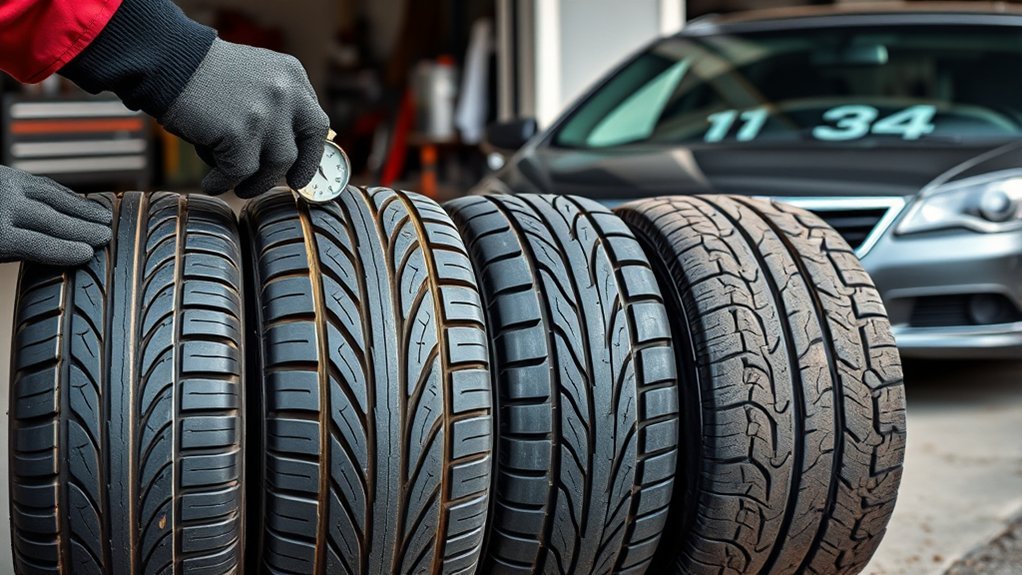
How often should you replace tires? There is no single interval that works for every driver. The safest approach is to replace a tire when wear, damage, age, or a noticeable performance problem makes it unsuitable for continued use.
NHTSA’s tire-safety guidance says tires are not safe and should be replaced when tread is worn to 2/32 inch. NHTSA also recommends checking tread and pressure at least monthly and watching for cuts, cracks, bulges, irregular wear, vibration, and other problems.
Age is a separate issue. NHTSA notes that vehicle and tire manufacturers may recommend replacing tires that are roughly 6 to 10 years old regardless of tread. That means you should check the recommendations for your vehicle and tire brand rather than applying one age limit to every tire.
For example, Michelin recommends having its tires thoroughly inspected by a trained tire professional at least annually after five years of service and replacing them by ten years from the manufacture date as a precaution.
Maintenance matters as well. Correct inflation, regular rotation when specified, proper wheel alignment, balanced wheels, and smoother driving can help tires wear more evenly. None of those practices override a safety problem, though: a damaged tire may need replacement immediately.
NHTSA reports that 511 people died in tire-related crashes in 2024, which is why tire condition should be treated as a safety issue rather than only a maintenance expense.
Tire Mileage Limits by Tire Type
You cannot safely assign one mileage limit to an entire tire category. A touring tire, performance tire, winter tire, and all-terrain tire are built for different priorities, but their actual lifespan still depends on the exact tire model, vehicle, alignment, inflation, load, climate, road surface, rotation schedule, and driving style.
A tire’s mileage warranty can be useful for planning costs, but it is not a safety guarantee. A tire may need replacement before its warranty mileage because of damage, age, irregular wear, or low tread. It can also reach a high mileage while remaining serviceable if its condition and manufacturer guidance allow it.
Note: Do not convert a treadwear grade or a broad tire category into a guaranteed mileage lifespan. Use the specifications and warranty for the exact tire model, then make replacement decisions from actual tread, condition, age, and manufacturer guidance.
[Products Worth Considering]

Monitor tire tread wear with a smart, color-coded depth gauge that shows clear condition ranges at a glance. The bar is range marked for fast, easy readings, helping you maintain safer traction and performance. Each gauge is portable with a pocket clip, and the set includes 20 units for daily use and sharing.

Steelman white tire marking crayons provide high-contrast, semi-permanent marks for repairing and inspecting tires and equipment. They write on wet or dry, smooth or coarse surfaces including rubber, metal, glass, and wood, making them ideal for puncture location and damage outlining. The lead- and zinc-free crayons resist weather and fading yet wipe away when you no longer need the marks.

This universal wheel alignment tool helps you accurately restore tire tilt angles after tire or suspension repairs using an adjustable camber gauge. It features a powerful magnetic base that firmly attaches to brake rotors for stationary, slip-free readings, improving consistency during measurement. Built from durable PC plastic, it resists wear and corrosion and is compact enough for car, truck, RV, and motorcycle alignment tasks.
Why Tire Type Changes Mileage
Different tire designs make different tradeoffs between grip, comfort, treadlife, cold-weather flexibility, heat resistance, and off-road durability.
| Tire type | Typical design priority | What to watch |
|---|---|---|
| Touring / all-season | Balanced treadlife, comfort, and year-round road use | Actual tread depth, irregular wear, age, and the model’s warranty or specifications |
| Performance / summer | Higher grip and handling capability | Shoulder wear, heat, aggressive cornering, and model-specific treadlife expectations |
| Winter | Cold-weather flexibility and snow/ice traction | Seasonal tread depth, warm-weather use, age, and loss of winter traction |
| All-terrain / off-road | Traction and durability on mixed surfaces | Cuts, chunking, impact damage, uneven wear, road use, and terrain |
Instead of asking whether a tire category should last a specific number of miles, compare the tire’s remaining tread and condition with the specifications for that exact product. If wear is much faster than expected, check inflation, alignment, suspension, rotation practices, and driving conditions before assuming the tire itself is the only cause.
Wear Patterns By Tire Type
Wear patterns often tell you more about a tire’s condition than the odometer does. Check the center, both shoulders, and several positions around each tire.
| Wear pattern | What it can suggest |
|---|---|
| Wear on both shoulders | Possible underinflation or heavy loading |
| Faster center wear | Inflation, fitment, load, or operating conditions should be checked |
| One-sided wear | Possible alignment or suspension issue |
| Cupping / scalloping | Possible balance, suspension, alignment, or other mechanical issue |
| Localized damage or exposed cords | Tire may be unsafe regardless of total mileage |
If you notice rapid, irregular, or unusual wear, have the tire and vehicle inspected. Replacing a tire without correcting an alignment, suspension, inflation, or loading problem can cause the replacement to develop the same pattern.
When Tire Age Matters More Than Miles
Low-mileage tires can still become unsuitable because rubber and other tire components change with time, heat, sunlight, storage, and environmental exposure. NHTSA specifically warns that tire aging can matter even when the tread has not worn out.
There is no single federal age at which every tire automatically becomes unusable. Instead, NHTSA advises consumers that some vehicle and tire manufacturers recommend replacement when tires reach about 6 to 10 years of age, regardless of treadwear.
Check both your vehicle owner’s manual and the tire manufacturer’s recommendations. If they specify different limits or inspection procedures, follow the guidance that applies to your vehicle and tire combination.
For Michelin tires, the company recommends a professional inspection at least annually after five years of service and replacement by ten years from the manufacture date as a precaution. Other brands or vehicle manufacturers can set different recommendations.
Do not forget the spare. A full-size spare can age even when it has spent most of its life unused.
Signs Your Tires Need Replacing Now
Tread depth is only one replacement trigger. A tire may need to come out of service sooner because of structural damage, irregular wear, repeated air loss, impact damage, or a serious change in handling.
Warning: Do not keep driving normally on a tire with exposed cords, a pronounced bulge or bubble, severe cut, major tread separation, or rapid pressure loss. Move to a safe location and use an appropriate spare or roadside assistance if necessary. Have the tire inspected before returning it to service.
[Products Worth Considering]

Measure tire tread depth quickly and accurately with this LUMITECO dial gauge that reads in 1/32" increments up to 14/32". The color-coded green/yellow/red zones make it easy to judge tire wear and know when replacement is needed. A rugged, compact design with a protective pouch helps keep the gauge ready for use on cars, trucks, motorcycles, and more.

Keep your tires properly inflated with this analog VONDIOR tire pressure gauge, designed for fast, easy readings without batteries. The swiveling, two-axis hose and large glow dial help you measure at any tire angle with instant visibility. Built with a protective rubber shield, it supports durable, low-maintenance use for cars and trucks.
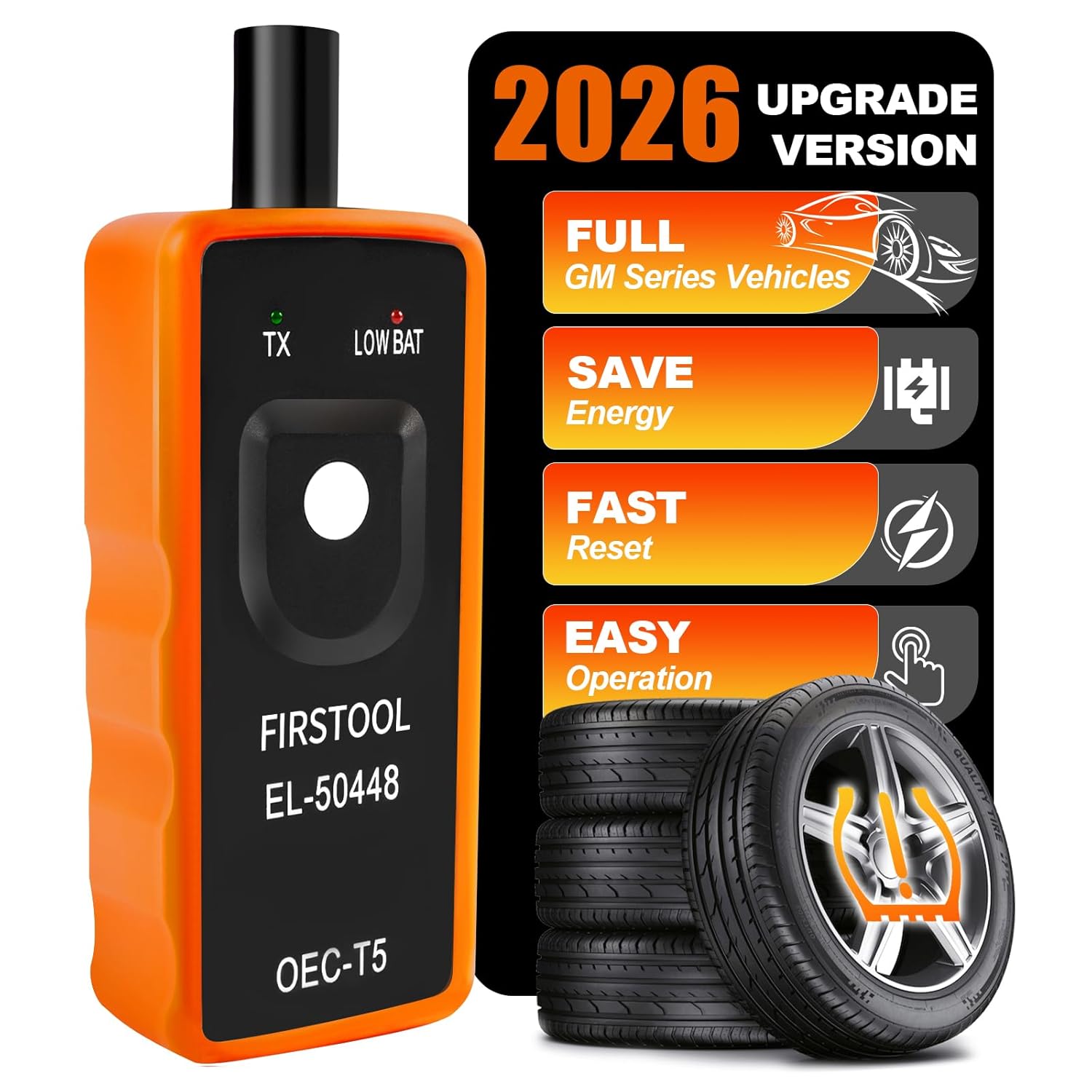
This TPMS relearn tool helps you quickly activate, match, and reset GM tire pressure sensors to keep the vehicle monitoring system working properly. It clears tire pressure alarms and dashboard warning lights after sensor replacement or tire rotation, and supports learning for common 315/433 MHz TPMS sensors. Designed for simple one-button operation, it can help you avoid unnecessary trips to repair shops.
Low Tread Depth
NHTSA says tires should be replaced at 2/32 inch of tread. At that depth, the tire’s built-in treadwear indicators should also be level with the surrounding tread.
However, 2/32 inch should not be treated as the only point that matters. AAA wet-weather testing found significant performance loss in all-season tires worn to 4/32 inch compared with new tires. That is why 4/32 inch is a useful point to begin planning replacement when wet braking and hydroplaning resistance are important.
Uneven tread also matters. A tire may measure above 2/32 inch in one groove while another part is badly worn. Measure several locations across the tread and around the tire.
Reduced wet grip, persistent vibration, unusual noise, or a change in handling deserves inspection even if measured tread remains above the final wear limit.
Visible Tire Damage
Inspect the tread and sidewalls for damage whenever you check pressure. Watch for:
- Bulges or bubbles
- Exposed cords or fabric
- Deep cuts or splits
- Cracks that appear severe or continue to grow
- Tread separation
- Embedded objects or punctures
- Damage following a pothole, curb, or other hard impact
- Repeated pressure loss
Not every tread puncture means the tire must automatically be discarded. According to USTMA repair guidance, a qualifying puncture in the repairable tread area may be repairable if the injury is no larger than 1/4 inch (6 mm), the tire can be safely inspected internally, and the repair follows proper procedures.
Standard puncture repair does not extend into the shoulder or sidewall area. A tire must be removed from the wheel for a proper internal inspection before a technician can decide whether it is safely repairable.
Check Tread Depth With the Penny Test
The penny test is a quick way to check whether tread has reached approximately the 2/32-inch end-of-life threshold.
- Insert a penny into a main tread groove.
- Point Lincoln’s head down toward the tire.
- If the top of Lincoln’s head remains completely visible, the tread is approximately 2/32 inch or less.
- Repeat the test in several grooves and at several points around each tire.
If any major tread area reaches the replacement threshold, do not rely on a deeper reading elsewhere to assume the tire is fine.
Pro Tip: A dedicated tread-depth gauge is more precise than a coin. Use a gauge to track all four tires over time. If wet-weather traction matters, start planning replacement as tread approaches 4/32 inch instead of waiting for the penny test to fail.
Also check the molded treadwear indicator bars. When the surrounding tread has worn level with the bars, the tire has reached its minimum tread depth and should be replaced.
Read the DOT Date Code on Tires
The tire’s DOT Tire Identification Number, often called the DOT code or TIN, helps you determine when it was manufactured. The last four digits identify the manufacturing week and year.
For example, a code ending in 3520 means the tire was manufactured in the 35th week of 2020.
- Find the DOT/TIN marking on the tire sidewall.
- Read the final four digits.
- Use the first two as the manufacturing week.
- Use the last two as the manufacturing year.
- Compare the tire’s age with your vehicle and tire manufacturer’s inspection and replacement recommendations.
Note: The complete DOT/TIN may appear on only one side of the tire. If you cannot find the four-digit date portion on the visible side, check the opposite side.
Age does not replace a physical inspection. A relatively young tire can still be unsafe because of impact damage, improper repairs, overloading, underinflation, or other problems.
Why Incorrect Tire Pressure Shortens Tire Life
Incorrect tire pressure changes how the tire flexes and contacts the road. That can increase heat, create irregular wear, reduce handling performance, and shorten usable treadlife.
Check the pressure of all tires, including the spare when applicable, at least monthly. Measure pressure when the tires are cold and use the pressure shown on the vehicle’s Tire and Loading Information label or in the owner’s manual.
Do not use the maximum pressure molded on the tire sidewall as your normal target pressure.
Proper Inflation Matters
Correct inflation helps the tire carry the intended load and maintain a more appropriate contact with the road.
- Check pressure at least once a month.
- Measure it when the tires are cold.
- Use the vehicle placard or owner’s manual.
- Check again after major temperature changes.
- Inspect tires before long trips.
- Do not wait for the TPMS warning light before performing routine pressure checks.
NHTSA notes that Tire Pressure Monitoring Systems warn when a tire is already significantly underinflated, so TPMS is not a substitute for regular checks with a gauge.
Underinflation And Wear
An underinflated tire flexes more than intended. That extra flex can create heat, affect handling, reduce fuel economy, and contribute to irregular or accelerated wear.
Underinflation can also make the tire more vulnerable to damage, especially when the vehicle is heavily loaded or driven for long periods at highway speed.
If one tire repeatedly loses pressure, do not simply keep topping it off. Have the tire, valve, and wheel checked for a puncture, leak, bead problem, or other damage.
Overinflation And Traction
Too much pressure can also affect ride quality, tire contact, impact resistance, and treadwear. The correct target is not “as much pressure as possible”; it is the cold inflation pressure specified for the vehicle and load.
- Use an accurate pressure gauge.
- Adjust pressure when the tires are cold whenever possible.
- Check for uneven wear.
- Follow different front/rear pressures when the vehicle placard specifies them.
If the vehicle is carrying an unusual load, follow the manufacturer’s load and pressure guidance instead of guessing.
How Driving Habits Affect Tire Wear
Your driving habits can change how quickly tires wear, but there is no trustworthy universal percentage by which aggressive driving shortens tire life.
Repeated hard acceleration, heavy braking, fast cornering, wheelspin, sustained high-speed driving, and curb or pothole impacts can increase tread wear and tire stress. Rough roads and frequent operation under heavy loads can do the same.
Fast cornering can produce greater shoulder wear, while repeated hard acceleration or braking can wear tread faster than smooth driving. High operating temperatures also add stress to the tire.
You can reduce unnecessary wear by accelerating and braking smoothly, avoiding potholes when safely possible, maintaining correct pressure, keeping the vehicle aligned, and rotating the tires according to the vehicle or tire maker’s schedule.
Replace All Four Tires or Just Two?
Replacing all four tires at the same time gives you the simplest way to maintain closely matched tread depth and performance. USTMA recommends replacing all four when practical.
If replacing only two tires, USTMA recommends putting the new pair on the rear axle. The deeper-tread tires generally provide better wet grip, and greater rear traction helps reduce the risk of an oversteer-related loss of stability.
- Use the size recommended by the vehicle manufacturer.
- Match appropriate load capacity and speed rating.
- Follow the owner’s manual for staggered tire sizes.
- If only two are replaced, install the new pair on the rear unless the vehicle manufacturer specifically directs otherwise.
- Check the age and condition of every tire, including the spare.
AWD and 4WD vehicles deserve extra attention because significant tread-depth or outside-diameter differences can affect the drivetrain. Some manufacturers impose strict limits on how different the four tires may be.
Before replacing only one or two tires on an AWD or 4WD vehicle, check the owner’s manual or manufacturer service information. A full matched set may be necessary even when the remaining tires still have usable tread.
[Products Worth Considering]

Measure tyre tread depth precisely with a digital gauge that reads in both MM and inches, helping you monitor safe driving conditions. The large LCD screen is easy to operate, and the compact tool fits for cars, trucks, and motorcycles. It provides high accuracy with a 0-25.4mm range and includes a 1-year warranty for added peace of mind.

The Ziopetru adjustable magnetic wheel alignment tool helps you check and restore camber and caster positioning after removing and reinstalling undercarriage components. With a clear leveling/bubble measurement system and an easy zeroing adjustment knob, it supports precise horizontal angle checking. The strong magnetic base mounts to metal surfaces for convenient use at home on cars, motorcycles, trucks, vans, and SUVs.

The ETENWOLF T600 digital tire pressure gauge delivers precise, manually calibrated readings to ANSI B40.7 Grade 2A standards with ±0.5% PSI accuracy. Its 360° rotating nozzle and display hold make it easy to check pressures from any angle, while a bleed button helps dial tires to the perfect level. With a 0–250 PSI range and support for PSI, BAR, and KPA, it’s a convenient tool for maintaining tire performance across many vehicles and seasons.
Why New Tires Beat Used Ones
New tires remove much of the uncertainty that comes with a tire that already has an unknown service history. You know the starting tread depth, manufacture information, and condition at installation, and new tires sold for highway use in the United States must meet applicable federal requirements.
Used tires can be harder to evaluate. According to USTMA, their previous use, maintenance, storage, repairs, impact history, and inflation history may be unknown.
Some damage cannot be identified from an exterior visual inspection alone. Problems involving the inner liner or an improper previous repair may become visible only after the tire is removed from the wheel.
If you consider a used tire, have a qualified tire service professional inspect its internal and external condition before installation. Also verify its size, load capacity, speed rating, age, tread depth, and compatibility with the other tires on the vehicle.
A used tire with uncertain history, unsafe age, exposed cords, structural damage, an improper repair, or nonrepairable injury should not be installed simply because it still has visible tread.
Frequently Asked Questions
Is 30,000 miles on a set of tires good?
It can be. Thirty thousand miles alone does not tell you whether the tires are near the end of their life. Compare the remaining tread, wear pattern, age, condition, maintenance history, and the expectations or warranty for the exact tire model.
Are 7-year-old tires too old?
Seven years is old enough that manufacturer-specific age guidance matters. NHTSA says some vehicle and tire manufacturers recommend age replacement between 6 and 10 years. Check both manufacturers’ guidance and have older tires professionally inspected even when the tread still looks good.
Should I replace tires at 6/32 inch?
Not necessarily because of tread depth alone. Six thirty-seconds is above NHTSA’s 2/32-inch replacement threshold and above the 4/32-inch point commonly used to plan ahead for wet-weather performance. Damage, irregular wear, age, winter conditions, or poor grip can still justify earlier replacement.
Is 40,000 miles a lot on tires?
It depends on the exact tire. Some tire models are designed for longer treadlife than others. At 40,000 miles, measure tread depth, inspect for irregular wear and damage, check tire age, and compare the condition with the tire manufacturer’s specifications rather than replacing it only because of the odometer reading.
How many years do tires usually last?
There is no universal number. Many tires wear out from use before age becomes the deciding factor. NHTSA says some vehicle and tire manufacturers recommend replacement between 6 and 10 years regardless of tread, so use the guidance for your exact vehicle and tire.
Can I replace only two tires?
Often, but compatibility matters. USTMA recommends installing the new pair on the rear axle when only two tires are replaced. AWD and 4WD vehicles may require much closer tread-depth matching or a complete set, so check the owner’s manual before replacing fewer than four.
How do I tell how old a tire is?
Find the DOT Tire Identification Number on the sidewall and read its final four digits. The first two digits identify the manufacturing week and the final two identify the year. For example, 3520 means the tire was manufactured in the 35th week of 2020.
Conclusion
Do not replace tires by mileage or a blanket 3- to 5-year rule alone. Replace them when tread reaches the end-of-life threshold, when damage makes them unsafe, when their performance changes significantly, or when they reach the age limit specified by the vehicle or tire manufacturer.
Check pressure and tread at least monthly, inspect the sidewalls for damage, read the DOT date code, and pay attention to vibration, unusual wear, or repeated air loss. At 2/32 inch, replacement is due; if wet-weather safety is important, start planning sooner as tread approaches 4/32 inch.
Older low-mileage tires deserve the same attention as heavily driven ones. Follow the manufacturer’s age recommendations, have aging tires professionally inspected, and never allow a mileage estimate to override visible damage or an unsafe tread measurement.
Sources
- National Highway Traffic Safety Administration — TireWise — tread depth, tire pressure, aging, DOT/TIN, maintenance, and replacement guidance.
- Michelin — When to Replace Tires — manufacturer guidance on five-year inspections, ten-year replacement, age, tread, and damage.
- U.S. Tire Manufacturers Association — Replacing Tires — replacing two versus four tires, rear-axle placement, size, load, and speed-rating guidance.
- U.S. Tire Manufacturers Association — Tire Repair Basics — repairable tread punctures and nonrepairable shoulder/sidewall areas.
- U.S. Tire Manufacturers Association — Used Tires — unknown service history and hidden internal damage in used tires.
- AAA — All-Season Tire Testing — wet braking and handling performance at 4/32-inch tread depth.