
Yes, expensive tires can be worth it, especially when the extra money buys better wet braking, predictable handling, low noise, or performance that matches your driving conditions. But price alone does not tell you whether a tire is good. The best value comes from comparing the exact tire model, its test results, expected tread life, fitment, and the conditions in which you drive.
Quick Answer
Expensive tires are worth it when their extra wet grip, braking, comfort, tread life, or specialized performance matters to you. Premium models often perform strongly in independent tests, but a higher price does not guarantee a better tire or a lower cost per mile. Compare individual models, not price tags alone.
Key Takeaways
- Premium tires often perform better in wet braking and handling tests, but the advantage varies by model.
- A higher price does not automatically mean longer tread life, greater puncture resistance, or a lower cost per mile.
- Correct tire size, load capacity, speed rating, and tire category matter more than simply buying the most expensive option.
- Mid-range tires can offer a strong balance of price, safety, comfort, and tread life for normal daily driving.
- Monthly pressure checks, regular rotation, correct alignment, and tread inspections help any quality tire last longer.
Are Expensive Tires Worth It?

Expensive tires can be worth the extra cost, but you should judge them by measurable performance rather than the brand name or price tag. Better tires may give you stronger wet grip, more predictable steering, lower road noise, better ride comfort, or longer tread life.
Wet-road performance is one area where the difference can become important. A 2026 analysis of 606 independent tire tests found that premium tires led most overall tests and showed a sizeable average wet-braking advantage over budget tires. That does not mean every expensive tire will beat every cheaper one, but it shows why exact-model test results matter.
Across 123 premium-versus-budget wet-braking comparisons in a 2026 test aggregation, budget tires needed an average of 7.7 meters more stopping distance.
At the same time, AAA testing makes an important point: tire performance varies by brand and model, and price is not necessarily an indicator of quality. You should therefore treat “premium,” “mid-range,” and “budget” as broad market labels rather than performance ratings.
Note: A cheaper tire that performs well in independent testing can be a better purchase than an expensive tire that does not suit your vehicle, climate, or driving style.
How Premium Tires Are Built Differently?
Higher-priced tires often receive substantial engineering work in areas such as rubber chemistry, tread geometry, casing design, noise control, and testing. However, there is no single construction feature that makes every expensive tire superior.
Tire engineers also have to balance competing goals. More grip can sometimes mean faster wear. A very stiff performance tire may steer sharply but ride more firmly. A low-rolling-resistance tire may be optimized differently from a maximum-performance summer tire.
Advanced Materials
Rubber compounds strongly affect tire behavior. Manufacturers can adjust natural and synthetic rubber, silica, carbon black, oils, polymers, and other ingredients to change wet grip, cold-temperature flexibility, rolling resistance, heat resistance, and wear.
Michelin’s tire-manufacturing guidance, for example, explains that compound choices influence grip and durability. A softer or more grip-focused compound can perform well in demanding conditions while wearing faster than a harder compound.
That is why “better material” should not automatically be translated into “longest lasting.” The important question is whether the compound is appropriate for the tire’s intended job.
Reinforced Construction
Tires contain multiple structural components, but construction varies according to load, speed, ride, handling, and durability requirements rather than price alone.
| Design area | What engineers may optimize |
|---|---|
| Casing and belts | Stability, load support, ride, and high-speed behavior |
| Sidewall | Steering response, comfort, and impact behavior |
| Tread package | Grip, wear, water evacuation, noise, and rolling resistance |
A premium touring tire and a premium performance tire can therefore have very different constructions even if both are expensive.
Engineered Tread Patterns
Tread design affects how a tire manages water, creates biting edges, controls tread-block movement, produces noise, and responds during braking and cornering.
Grooves and channels help move water through the tread, while sipes can create additional edges for wet or winter traction. However, deeper tread is not automatically better, and premium tires do not universally start with deeper tread than budget tires.
The useful comparison is how well the complete tread-and-compound design performs in standardized or independent testing.
Do Expensive Tires Perform Better?
Premium tires often perform better in demanding tests, particularly in areas such as wet braking and handling. But the correct answer is often, not always.
| Performance area | What to compare |
|---|---|
| Wet braking | Measured stopping distance on the same surface and test conditions |
| Wet handling | Lap time, lateral grip, stability, and driver feedback |
| Hydroplaning | Straight-line and cornering aquaplaning tests |
| Dry handling | Steering response, braking, and cornering stability |
| Comfort and noise | Cabin noise and ride-comfort measurements |
| Wear | Independent wear tests, warranty, and intended tire category |
Do not compare a premium summer performance tire with a budget touring tire and conclude that price caused every difference. They were designed for different jobs. When possible, compare tires of the same size and category under the same test conditions.
Does a Higher Tire Price Guarantee Better Quality?
No. Price can reflect research, manufacturing technology, brand positioning, distribution, warranty coverage, specialized compounds, or lower-volume performance designs. None of those factors guarantees that a particular tire is the best choice for you.
AAA’s wet-road research found substantial differences among tires but also cautioned that price is not necessarily an indicator of quality. That is why independent testing is more useful than simply choosing the highest-priced option.
Pro Tip: Search for tests of the exact tire model and size family you are considering. Compare it with competing tires in the same category instead of assuming one entire brand or price tier is better.
Do Expensive Tires Last Longer?
Some do, but price alone cannot tell you how long a tire will last. Premium touring tires may be engineered for long mileage, while premium maximum-performance tires may sacrifice some tread life to deliver stronger grip.
Material Quality And Longevity
Compound chemistry, tread design, vehicle weight, alignment, inflation pressure, road surface, temperature, driving style, and tire category can all affect lifespan.
For U.S. passenger tires covered by the system, you can also review the NHTSA Uniform Tire Quality Grading information. UTQG includes treadwear, wet-traction, and temperature grades.
A higher treadwear number indicates a slower relative wear rate in the standardized grading system. However, treat the number as one comparison point rather than a guaranteed real-world mileage figure.
Maintenance Effects On Lifespan
Even a well-engineered tire can wear rapidly if it is underinflated, overinflated, misaligned, overloaded, or never rotated.
Your driving behavior matters too. Hard acceleration, repeated heavy braking, fast cornering, pothole impacts, and sustained operation under inappropriate loads can shorten tire life.
Proper maintenance is therefore part of the value calculation. Paying more for a tire makes little financial sense if poor inflation or alignment causes it to wear out early.
How to Make Any Tires Last Longer?
Start with tire pressure. USTMA recommends checking tires at least monthly while they are cold. Use the pressure on your vehicle’s Tire and Loading Information label or in the owner’s manual rather than the maximum pressure molded on the tire sidewall.
Next, follow your vehicle manufacturer’s tire-rotation schedule. If no interval is specified, USTMA recommends rotation every 5,000 to 8,000 miles.
Watch alignment as well. A vehicle that pulls to one side, has an off-center steering wheel, or develops rapid uneven tread wear may need inspection and alignment correction.
Finally, inspect the tires for uneven wear, cracks, bulges, cuts, embedded objects, exposed cords, and other damage. NHTSA says tires should be replaced when tread reaches 2/32 inch.
Warning: A visible sidewall bulge, exposed structural material, major cut, or other serious damage can indicate a tire that is unsafe to continue using. Have questionable damage inspected by a qualified tire professional rather than judging it from price, age, or tread depth alone.
What Is the Cost Per Mile of Cheap vs Premium Tires?
There is no universal winner. The correct way to compare tire value is to divide the price by the realistic mileage you expect to get from that tire.
Cost per mile = tire purchase cost ÷ usable miles.
You can perform the same calculation for a set of four tires. If you want a fuller ownership estimate, add installation, expected rotations if they are not free, and other predictable tire-related charges.
| Factor | Why it matters |
|---|---|
| Purchase price | Sets the upfront cost |
| Realistic tread life | Determines how far the purchase may carry you |
| Wet and dry performance | Shows what you receive beyond mileage |
| Rolling resistance | Can affect energy or fuel use |
| Comfort and noise | May matter on long daily drives |
The 2026 independent-test aggregation cited earlier found that premium tires lasted longer on average than budget tires in its wear data. However, the higher purchase prices meant premium tires were still more expensive per 1,000 kilometers on average in that dataset. That is a useful reminder that longer life and lower cost per mile are not the same thing.
How Should You Compare Tires Before Buying?
Start with fitment, not price. USTMA recommends using replacement tires with the size, load index, and speed-rating designation specified by the vehicle or tire manufacturer and warns against using tires with less load-carrying capacity than required.
Then work through these factors:
- Tire category: Choose an all-season, summer, winter, touring, performance, all-terrain, or other category suited to your actual use.
- Climate: Prioritize wet grip where heavy rain is common and appropriate winter performance where snow and ice are regular conditions.
- Independent tests: Compare braking, handling, hydroplaning, comfort, noise, wear, and rolling resistance for the exact models you are considering.
- Tread life: Review independent wear tests, warranties, and UTQG information where applicable.
- Load and speed requirements: Never compromise required fitment specifications simply to save money.
- Price: Compare the complete installed cost after you know which tires meet your performance and safety needs.
For passenger tires covered by UTQG, NHTSA’s treadwear, traction, and temperature grades can provide additional information. Remember that the wet-traction grade is based on straight-line wet braking and does not describe every aspect of cornering or overall tire performance.
[Products Worth Considering]
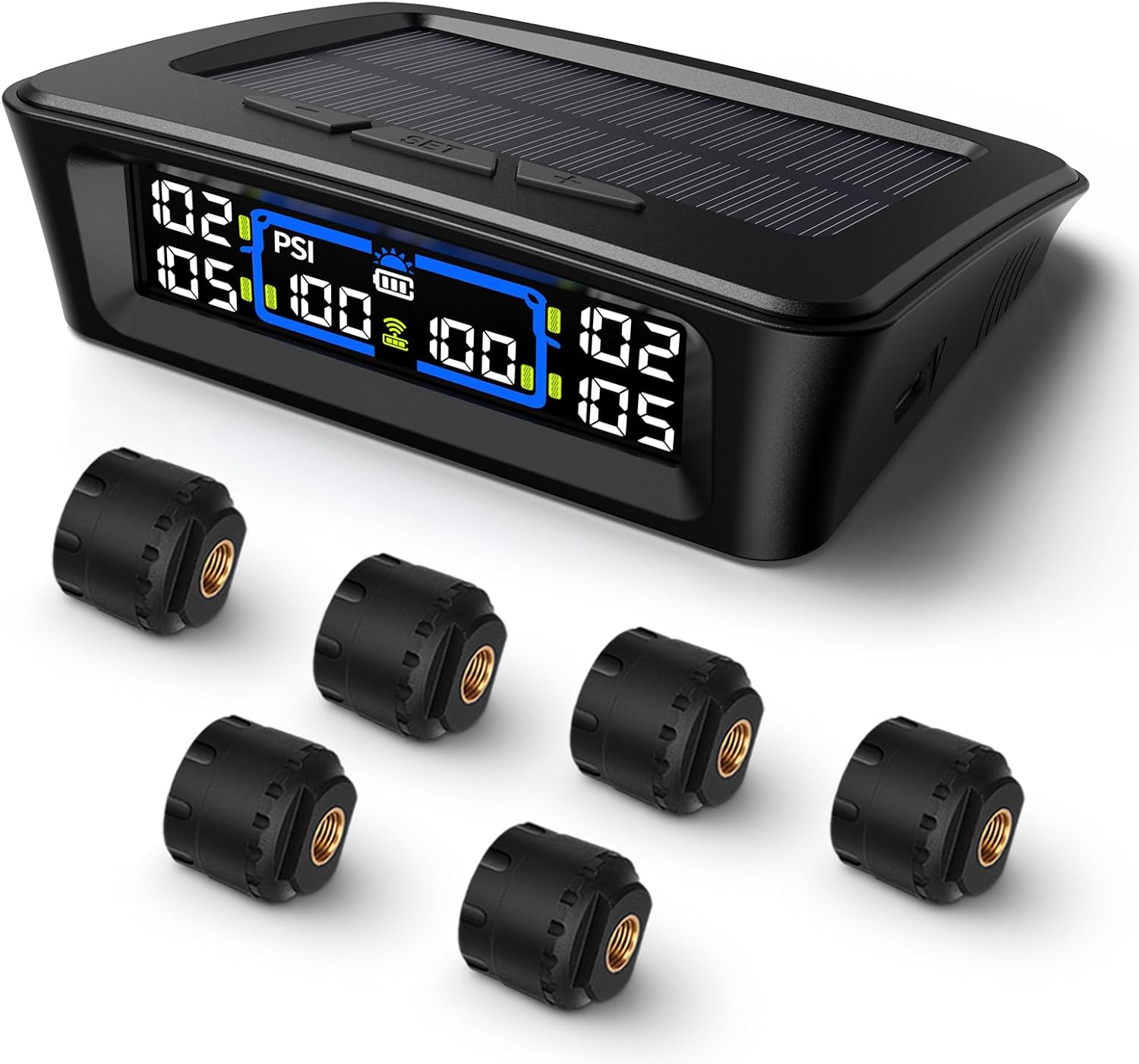
The Tymate TM12 RV TPMS delivers real-time tire pressure and temperature monitoring with a stable 433Hz display for safer long-distance driving. It supports simultaneous monitoring across vehicle and trailer zones, includes six alarm modes for pressure, temperature, leakage, battery, and signal loss, and features easy DIY installation with auto calibration. Power is supplied via USB-C charging or solar recharging, with a wide 0–144 PSI range and up to 50 ft signal coverage for RVs and towable trailers.

Measure tire tread depth quickly and accurately with this LUMITECO dial gauge that reads in 1/32" increments up to 14/32". The color-coded green/yellow/red zones make it easy to judge tire wear and know when replacement is needed. A rugged, compact design with a protective pouch helps keep the gauge ready for use on cars, trucks, motorcycles, and more.

The Big Rig Defense Tire Thumper is a truck tire pressure checker that lets you quickly check multiple tires by giving them a firm whack. Listen for a reassuring thump and feel the stick bounce when a tire is fully inflated, helping you get back on the road safely. It features a comfortable, glove-friendly handle and a secure wrist strap for confident use on busy routes.
When Do Expensive Tires Make Sense?
Premium tires make the most sense when the performance difference is useful in the conditions you actually face.
You may benefit from spending more if you regularly drive long highway distances, encounter heavy rain, want low road noise, own a performance-oriented vehicle, or need specialized summer, winter, EV, all-terrain, or heavy-duty characteristics that have been demonstrated by the specific tire.
A driver who frequently travels in difficult conditions may value extra braking and handling margin more than a driver who covers only a few low-speed local miles each week.
But spending more solely for a prestigious brand name is not automatically worthwhile. The tire still needs to perform well in tests and suit your vehicle.
When Can Mid-Range or Budget Tires Make Sense?
A good mid-range tire can make sense for normal commuting when it meets the vehicle’s specifications and performs well in independent tests. It may give you much of the everyday performance you need without the highest purchase price.
Budget tires can also be reasonable when money is limited, but avoid choosing solely by the lowest advertised price. Look for credible testing, correct fitment, appropriate ratings, and a tire category suited to your weather.
In many cases, moving from an unknown ultra-cheap option to a well-tested mid-range tire can be a more useful upgrade than moving from an already strong mid-range tire to the most expensive product on the shelf.
[Products Worth Considering]

Accurately measure tire tread depth with a calibrated gauge marked from 0 to 1 inch in 1/32 inch increments. The color-coded bar helps you quickly identify tread condition ranges, supporting safe driving for trucks, motorcycles, automobiles, and passenger vehicles.

The SAFELIFE dial tire tread depth gauge measures tread depth in 1/32 inch increments with clear, easy-to-read 2-inch dial face. Color zones using a traffic light system help you quickly judge whether tread is low, marginal, or ample for safer driving. Built with a durable zinc cast body and a metal detect probe for precise, comfortable use across cars, motorcycles, trucks, and buses.

Monitor tire tread wear with a smart, color-coded depth gauge that shows clear condition ranges at a glance. The bar is range marked for fast, easy readings, helping you maintain safer traction and performance. Each gauge is portable with a pocket clip, and the set includes 20 units for daily use and sharing.
Which Tires Fit Your Driving Needs?
The best tire depends on how you use your vehicle. Match the tire to the job before deciding how much to spend.
| Driving need | What to prioritize |
|---|---|
| Daily commuting | Balanced wet grip, wear, comfort, noise, and price |
| Frequent heavy rain | Strong independent wet-braking and hydroplaning results |
| Snow and ice | A tire specifically designed and rated for the winter conditions you face |
| Performance driving | Dry/wet grip, braking, steering response, and heat capability |
| Long highway trips | Wet braking, stability, noise, comfort, wear, and rolling resistance |
| Heavy loads or towing | Correct load capacity and vehicle-approved fitment first |
| Low-mileage local use | Safe, tested mid-range value may matter more than maximum tread mileage |
The safest buying approach is to narrow the list to tires that meet your vehicle’s requirements, select the correct category for your climate, compare credible tests, and only then compare prices.
[Products Worth Considering]

Milton S-921 pencil tire pressure gauge helps you maintain optimal tire pressure for passenger cars with accurate readings in PSI and kPa. It features a built-in deflator valve for convenient pressure adjustments, plus a single chuck head and nylon indicator bar for easy use on the go. Built from durable plated brass and designed for reliable performance, it’s a practical road trip and cold-weather maintenance tool.

Black Magic Tire Wet delivers a deep wet-look shine that makes tires appear dark, rich, and freshly detailed. Its long-lasting formula helps resist rain, dust, and road grime for weeks of glossy protection, not days. Apply by spraying onto clean, dry tires—no buffing or wiping required—with a low-sling design to reduce splatter on paint and wheels.

Vigorder rubber cement glue delivers superior adhesion and cures quickly within about 30 seconds for seamless rubber bonding. Once cured, it helps provide a strong, durable, waterproof seal that holds up to vehicle weight, pressure, and heat. Suitable for cars, motorcycles, trucks, bicycles, and off-road tires, it’s designed for emergency patch and maintenance repairs.
Frequently Asked Questions
Do More Expensive Tires Really Make a Difference?
They can. Premium tires frequently perform strongly in wet braking, handling, comfort, noise, or specialized performance tests. However, price alone does not guarantee better results. Compare the exact tire model with competitors in the same category.
What Is the 3% Rule for Tires?
The commonly used 3% tire rule concerns replacement tire sizing, not tread depth. It is a rule of thumb that aims to keep overall tire diameter close to the original when changing sizes. It does not override your vehicle manufacturer’s approved fitment, load capacity, clearance, or other requirements. For tread depth, NHTSA says tires should be replaced when they reach 2/32 inch.
Is $600 a Lot for Tires?
Not necessarily. A $600 total can be inexpensive, moderate, or high depending on the tire size, vehicle, tire category, brand, installation charges, and how many tires you are buying. Compare the complete installed price with equivalent tires that meet the same specifications.
Is $200 a Tire Expensive?
It depends on the size and tire type. Two hundred dollars can be a normal price for some larger, performance-oriented, specialty, or premium tires and relatively expensive for some smaller common sizes. Judge the price against comparable tires in the same size and category.
Do Premium Tires Always Last Longer?
No. Some premium touring tires are designed for long tread life, while premium performance tires may use grip-focused designs that wear faster. Look at the individual model’s category, treadwear information, warranty, and independent wear results.
Are Mid-Range Tires Good Enough for Daily Driving?
Often, yes. A well-tested mid-range tire that matches your vehicle and climate can provide a strong balance of braking, wet grip, comfort, tread life, and price. The exact model matters more than the market label.
What Should I Check Before Buying Tires?
Confirm the correct size, load capacity, speed rating, and tire type for your vehicle. Then compare independent wet and dry performance tests, wear, comfort, noise, warranty, and total installed cost.
Conclusion
So, are expensive tires worth it? They can be, especially when you are paying for proven improvements in wet braking, handling, ride comfort, noise, or specialized performance that you will actually use.
But the smartest purchase is not automatically the cheapest tire or the most expensive tire. Start with correct fitment, choose the right tire category for your climate and driving, compare exact-model test results, and calculate value using both price and expected life. A strong mid-range tire may be the best choice for one driver, while a premium model may be money well spent for another.
Sources
- National Highway Traffic Safety Administration — TireWise — tire selection, pressure, tread depth, UTQG basics, and tire safety.
- U.S. Tire Manufacturers Association — Tire Care Essentials — monthly pressure checks, rotation, alignment, inspection, and tread guidance.
- U.S. Tire Manufacturers Association — Replacing Tires — replacement size, load index, speed rating, and fitment guidance.
- AAA — Tread Lightly: Worn Tires Put Drivers at Risk — wet braking, worn-tire performance, and the limits of using price as a quality indicator.
- NHTSA — Consumer Guide to Uniform Tire Quality Grading — treadwear, traction, and temperature grades.
- Tire Reviews — 2026 Premium, Mid-Range, and Budget Tire Test Analysis — current independent-test aggregation covering braking, wear, handling, and cost.