Checking your Toyota Tundra’s tire pressure is one of the simplest ways to protect handling, tire life, fuel use, and towing stability. The key is to check the tires when they are cold, compare each reading with the Tire and Loading Information label on the driver’s doorjamb, and adjust before long trips, heavy loads, or trailer towing.
Quick Answer
Check your Toyota Tundra’s tire pressure at least once a month, before long trips, and before towing or hauling. Check it when the tires are cold, meaning the truck has been parked for at least three hours. During big temperature swings, check every two weeks.
Key Takeaways
- Use the cold PSI shown on your Tundra’s driver-door Tire and Loading Information label, not the maximum PSI printed on the tire sidewall.
- Check pressure monthly at minimum, and check more often during cold snaps, heat waves, towing, hauling, or long highway trips.
- Tire pressure can change about 1 to 2 PSI for every 10°F temperature change, so seasonal checks matter.
- Your TPMS warning light helps, but it does not replace manual checks with a tire pressure gauge.
- If one tire keeps losing air, has a bulge, shows cracks, or wears unevenly, have it inspected before you drive hard or tow.
At a Glance
| Time Required | 5 to 10 minutes |
| Difficulty | Easy |
| Tools Needed | Tire pressure gauge, air compressor or tire inflator, valve caps, and a flashlight for quick tire inspection |
| Cost | No cost if you already have a gauge and air source; low cost if you buy basic tire-pressure tools |
Why Tire Pressure Matters for Your Toyota Tundra
Proper tire pressure helps your Tundra steer, brake, carry weight, and wear its tires evenly. That matters even more on a full-size truck because passengers, cargo, off-road gear, and trailer tongue weight can add load quickly.
NHTSA explains that poor tire maintenance, including low tire pressure, can contribute to flats, blowouts, and tread separation. It also says proper pressure affects safety, tire durability, and fuel consumption.
Fuel economy is another reason to keep pressure correct. FuelEconomy.gov says proper inflation can improve gas mileage by 0.6% on average and up to 3% in some cases. It also notes that under-inflated tires can lower gas mileage by about 0.2% for every 1 PSI drop in the average pressure of all tires.
The correct tire pressure for your Tundra is the vehicle manufacturer’s cold PSI on the driver-door label, not the maximum pressure printed on the tire sidewall.
How Often Should You Check Your Tire Pressure?
Check your Toyota Tundra’s tire pressure at least once a month. If you drive often, tow, haul, commute long distances, or live where temperatures swing quickly, check every two weeks.
You should also check pressure before any long trip, before towing a trailer, before carrying a heavy load, and after a major temperature change. USTMA recommends checking tires before long trips, heavy loads, or towing.
Monthly Pressure Checks
A monthly check catches normal air loss before it turns into a handling or wear problem. Tires can lose pressure over time even when nothing is visibly wrong, so do not wait for the tire to look low.
Check all four tires and the spare if your Tundra has a serviceable spare tire. Use the same gauge each time when possible, because different gauges may read slightly differently.
Before Long Trips, Towing, and Heavy Loads
Check tire pressure before you leave, not after the tires are already hot from highway driving. Towing and hauling add stress and heat, so starting with the correct cold pressure helps the tire carry its load as designed.
Also check the Tire and Loading Information label for load limits. Correct pressure cannot make an overloaded truck safe. If you are near the payload, axle, or trailer limits, follow your Toyota owner’s manual and tire-load guidance carefully.
Warning: Do not inflate tires to the sidewall maximum unless the vehicle manufacturer or tire professional specifically instructs you to do so for your exact setup. The sidewall number is the tire’s maximum rating, not your Tundra’s normal recommended cold pressure.
Seasonal Adjustments Needed
Temperature changes can move tire pressure quickly. Bridgestone notes that pressure changes by about 1 PSI for every 10°F change in ambient temperature, while USTMA gives a range of about 1 to 2 PSI per 10 degrees.
That means your Tundra may need air after the first cold snap, even if the tires were correct a few weeks earlier. In hot weather, the pressure reading may rise after driving, so avoid bleeding air from hot tires unless you are correcting a clearly overinflated cold reading.
When to Check Tire Pressure
The best time to check pressure is in the morning or after the truck has been parked for at least three hours. NHTSA uses that three-hour window to define a cold tire pressure check.
Best Time of Day
Check before the sun heats one side of the truck and before driving adds heat to the tires. A cold reading gives you the cleanest comparison with the PSI on the doorjamb label.
If You Already Drove
If you already drove, the tires may read higher than the cold PSI. Do not release air just because a hot tire reads a little above the placard value. Let the truck sit, then recheck when the tires are cold.
If a hot tire reads at or below the recommended cold PSI, add air before driving farther, then recheck and fine-tune the pressure when the tire is cold. This is safer than continuing on a significantly under-inflated tire.
During Gas Fill-Ups
Gas stops can help you remember the habit, but they are not always the best time for an exact reading because the tires are usually warm. Use gas stops for quick checks before long drives, then confirm cold pressure later.
Pro Tip: Keep a pencil-style or digital tire pressure gauge in your glove box. Your Tundra’s TPMS can warn you when pressure gets low, but a gauge lets you catch small pressure changes before the warning light appears.
Adjusting Your Tire Pressure for Seasonal Changes
Cold weather usually lowers tire pressure, so check more often in fall and winter. A Tundra that was correct at 70°F may be several PSI low after a strong cold front.
Hot weather can raise readings, especially after highway driving or towing. The right approach is not to chase every hot reading. Set pressure when tires are cold, then monitor for unusual changes, uneven wear, vibration, or a TPMS warning.
Transport Canada also recommends measuring tire pressure at least monthly with a good-quality gauge when tires are cold. That same habit works well for a Tundra in both summer and winter.
Note: If you switch tire size, load range, wheels, or winter tires, do not assume the old pressure is still correct. Ask a qualified tire professional or Toyota service department to confirm the right cold pressure for the new setup.
[Products Worth Considering]

ETENWOLF T300 is a calibrated digital tire pressure gauge for accurate readings from 3 to 200 PSI across light and heavy-duty vehicles. It includes thermal compensation for reliable performance in extreme cold or heat, with an auto shut-off to extend battery life and an LED for easier reading. The sturdy design supports rugged everyday use, making it ideal for pickups, RVs, and industrial applications.

This digital tire pressure gauge with built-in inflator helps you accurately check and adjust tire pressure for safer driving and better fuel efficiency. It supports multiple units (PSI, KPA, BAR, KG/CM²) and reads within 1% for reliable results. The 3-in-1 design inflates, deflates, and measures, with a quick-connect air chuck and compatible hose setup for cars, trucks, SUVs, RVs, and motorcycles.
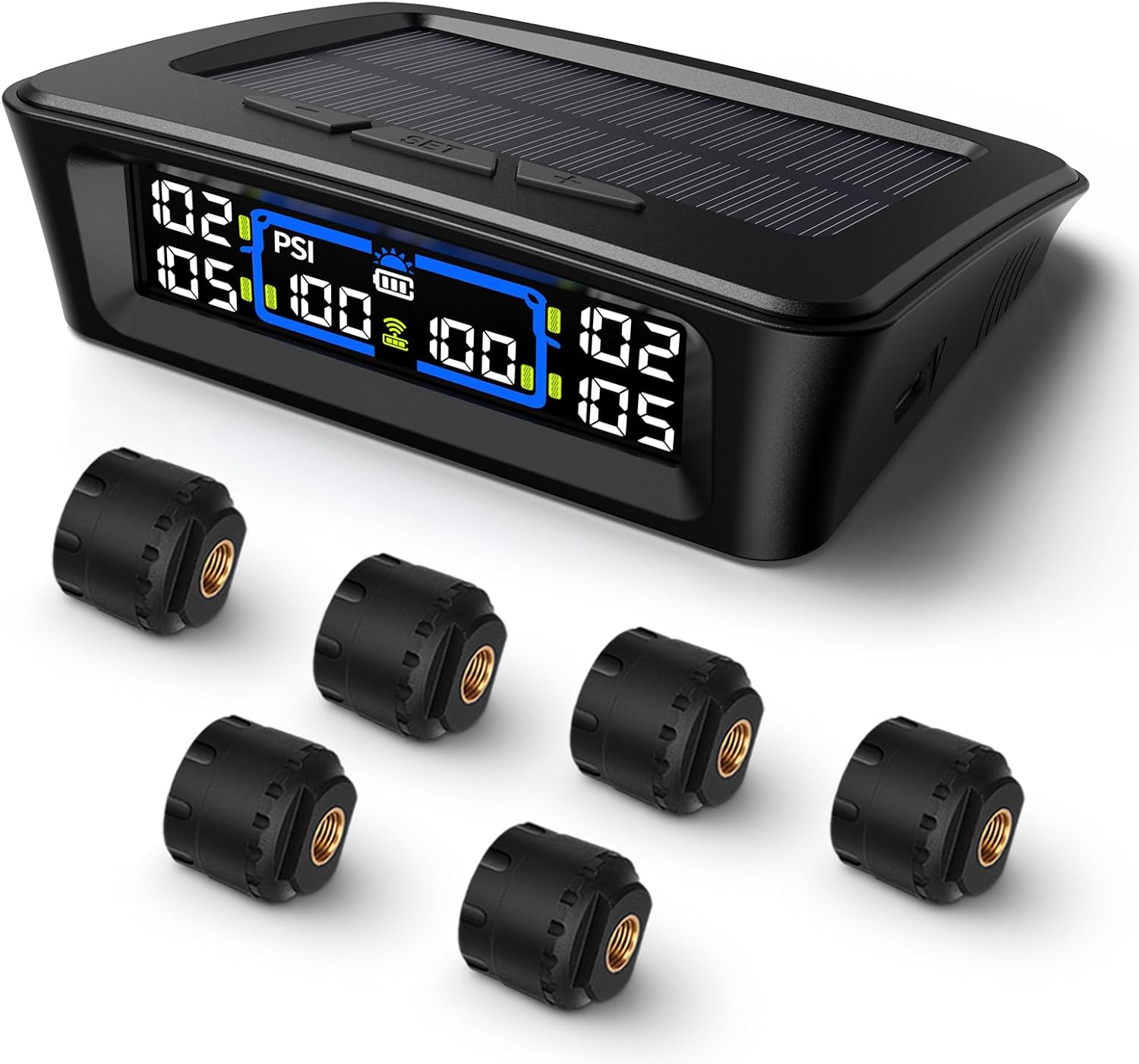
The Tymate TM12 RV TPMS delivers real-time tire pressure and temperature monitoring with a stable 433Hz display for safer long-distance driving. It supports simultaneous monitoring across vehicle and trailer zones, includes six alarm modes for pressure, temperature, leakage, battery, and signal loss, and features easy DIY installation with auto calibration. Power is supplied via USB-C charging or solar recharging, with a wide 0–144 PSI range and up to 50 ft signal coverage for RVs and towable trailers.
How to Check Your Tire Pressure: A Simple Guide
Checking tire pressure takes only a few minutes. For the most accurate result, park your Tundra on level ground and wait until the tires are cold.
- Find the correct PSI: Open the driver’s door and read the Tire and Loading Information label. You can also check the Toyota Tundra owner’s manual for model-specific guidance.
- Remove the valve cap: Keep it in your pocket so it does not roll away.
- Press the gauge firmly onto the valve stem: A brief hiss usually means the seal is not tight. Press straight until the gauge gives a stable reading.
- Compare the reading with the doorjamb PSI: Check front and rear values separately because some vehicles use different front and rear pressures.
- Add or release air: Add air if the tire is low. If a cold tire is too high, release a small amount and recheck.
- Recheck each tire: After adding air, measure again to confirm the pressure.
- Replace every valve cap: Valve caps help keep dirt and moisture out of the valve stem.
- Inspect while you are there: Look for nails, cuts, cracks, bulges, exposed cords, and uneven tread wear.
[Products Worth Considering]

ETENWOLF’s calibrated digital tire pressure gauges deliver accurate readings across a wide pressure range, from below 12 PSI to above 140 PSI. The built-in thermal compensation helps maintain performance in extreme cold and hot conditions, while the LED light improves visibility for quick checks. Includes replaceable AAA batteries for long-lasting use and convenience for everyday tire monitoring.

Milton S-921 pencil tire pressure gauge helps you maintain optimal tire pressure for passenger cars with accurate readings in PSI and kPa. It features a built-in deflator valve for convenient pressure adjustments, plus a single chuck head and nylon indicator bar for easy use on the go. Built from durable plated brass and designed for reliable performance, it’s a practical road trip and cold-weather maintenance tool.

The Topeak SmartGauge D2 delivers precise digital tire pressure readings for bikes, motorcycles, and sports equipment up to 250 psi (17 bar). Its rotating SmartHead works with both Presta and Schrader valves, so you can check pressure quickly without adapters. The LCD display makes it easy to read results in psi, bar, or kg/cm² with an included CR2032 battery for immediate use.
Key Signs of Tire Pressure Issues to Watch For
You cannot always see low pressure by eye, but your Tundra may give you clues. Watch for a TPMS warning light, steering pull, extra road noise, vibration, longer stopping feel, uneven tread wear, or a tire that looks softer than the others.
Under-inflation often causes extra shoulder wear and heat buildup. Over-inflation can cause more center tread wear and a harsher ride. A single tire that keeps dropping while the others stay steady may have a puncture, valve leak, bead leak, or wheel damage.
Warning: Do not drive on a tire with a sidewall bulge, exposed cords, deep cracks, or sudden rapid air loss. Install the spare if safe to do so, or call roadside assistance.
Common Tire Pressure Problems and Solutions
Tire pressure problems usually fall into a few common patterns. Use the symptoms below to decide whether you can adjust pressure yourself or need a tire shop.
- All tires are low after cold weather: Add air to the doorjamb cold PSI, then recheck the next morning.
- One tire is repeatedly low: Inspect for a nail, screw, valve leak, or bead leak. Have the tire checked if it keeps losing pressure.
- Pressure is high after highway driving: Let the tires cool before adjusting unless the cold reading was already too high.
- TPMS light turns on during a cold morning: Check every tire with a gauge. The light may turn off after correction, but do not ignore it.
- Center tread wears faster: Check for over-inflation, improper rotation, or tire mismatch.
- Outer shoulders wear faster: Check for under-inflation, alignment problems, or hard cornering under load.
- The truck vibrates after pressure correction: Look beyond PSI. Tire balance, alignment, suspension wear, or tire damage may be involved.
[Products Worth Considering]
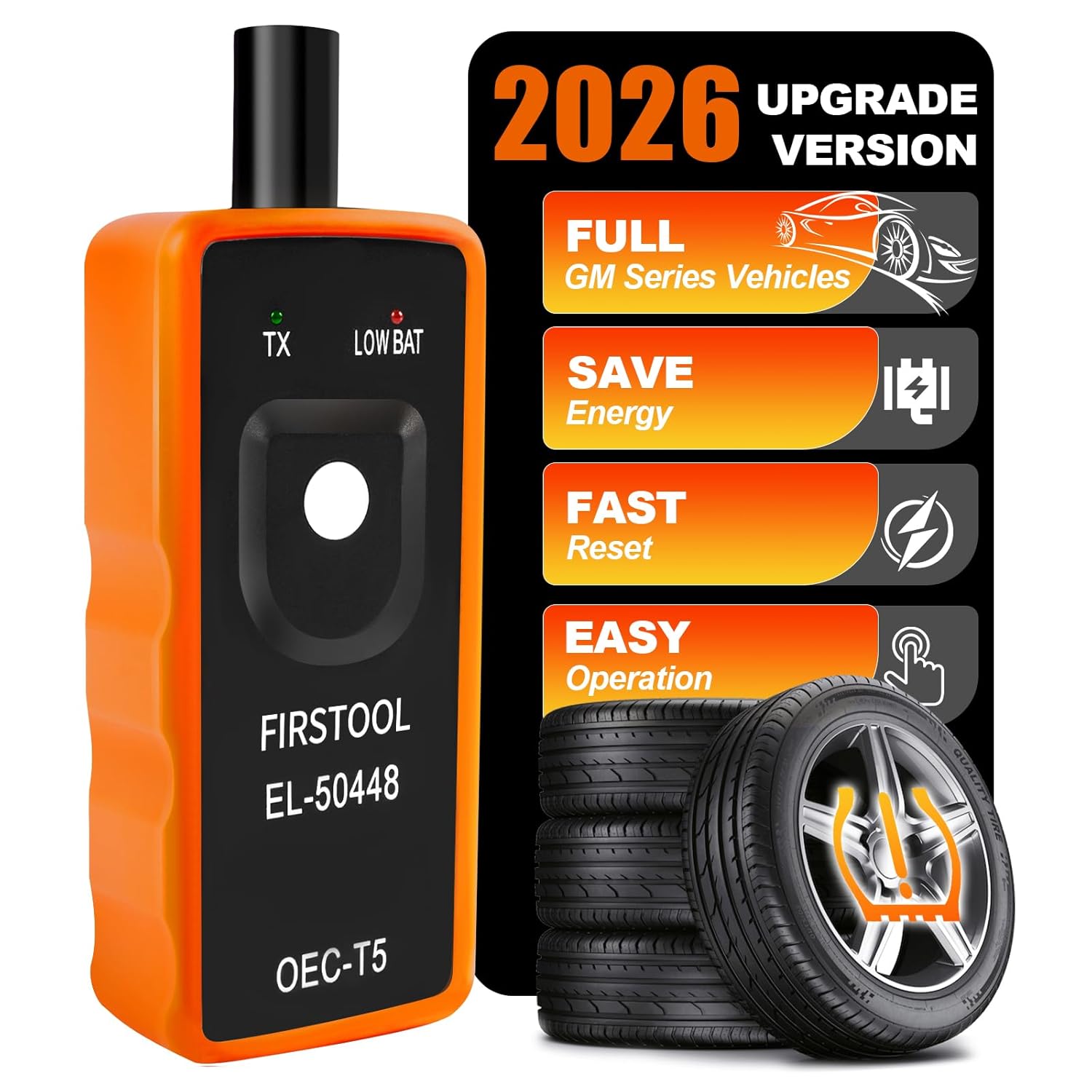
This TPMS relearn tool helps you quickly activate, match, and reset GM tire pressure sensors to keep the vehicle monitoring system working properly. It clears tire pressure alarms and dashboard warning lights after sensor replacement or tire rotation, and supports learning for common 315/433 MHz TPMS sensors. Designed for simple one-button operation, it can help you avoid unnecessary trips to repair shops.

Get precise tire readings with the ETENWOLF T300 Plus digital gauge, calibrated to ANSI B40.7 Grade 2A for reliable accuracy. It measures across a wide 3–200 PSI range and includes thermal compensation for dependable performance from extreme cold to heat. The bright LED display, LED illumination, and replaceable AAA batteries make it easy to check pressures quickly, even in low light.

The JACO FlowPro Tire Inflator measures, inflates, and airs down tires up to 100 PSI with battery-free operation and ±2% accuracy after calibration. It features a glowing pressure dial for night visibility, a heavy-duty steel build with a hybrid hose, and a precision push-to-inflate thumb trigger. The patented Lightning Air Chuck locks on for a secure seal, and the kit includes quick-connect hardware for easy inline use with your air compressor.
How Your Tundra’s TPMS Fits Into the Routine
Your Tundra’s Tire Pressure Monitoring System is useful, but it is not a replacement for a gauge. NHTSA explains that TPMS warnings usually activate when a tire is significantly underinflated, so smaller pressure losses may not trigger a warning right away.
If the TPMS light comes on, check all tires as soon as safely possible. If the light flashes and then stays on, your system may have a fault or sensor issue. Check your owner’s manual and have the system inspected if the warning does not clear after proper inflation.
Frequently Asked Questions
What tools do I need to check Toyota Tundra tire pressure?
You need a reliable tire pressure gauge and an air source, such as a gas-station compressor, home compressor, or portable tire inflator. A flashlight also helps you inspect tread, sidewalls, valve stems, and embedded objects.
Can I check tire pressure when the tires are hot?
You can do a quick safety check when the tires are hot, but you should set final pressure when the tires are cold. If a hot tire reads at or below the recommended cold PSI, add air before driving farther, then recheck when the tire is cold.
What is the ideal tire pressure for a Toyota Tundra?
The ideal pressure is the cold PSI printed on your Tundra’s driver-door Tire and Loading Information label or listed in the owner’s manual for your exact model, tire size, and configuration. Do not rely on a generic PSI range or the maximum PSI printed on the tire sidewall.
How does altitude affect tire pressure readings?
Large elevation changes can affect gauge readings, but temperature changes are usually more noticeable for everyday driving. After a major climb, descent, or climate change, check the tires cold and adjust them to the doorjamb PSI.
Are there apps for monitoring tire pressure?
Some factory systems and aftermarket Bluetooth TPMS sensors can display tire pressure through a vehicle screen or smartphone app, depending on model year, trim, equipment, and sensor type. Even with an app, check pressure monthly with a gauge.
Should I check the spare tire too?
Yes, check the spare if your Tundra has a serviceable spare tire. A spare that is low may not be safe or useful when you need it. Check the owner’s manual for the correct spare-tire pressure and service limits.
Should I reset TPMS after adding air?
That depends on your Tundra’s model year and tire setup. After setting all tires to the correct cold pressure, drive normally and see whether the warning clears. If your manual calls for a TPMS reset or the light stays on, follow Toyota’s procedure or have the system checked.
Conclusion
Check your Toyota Tundra’s tire pressure monthly, before long trips, and before towing or hauling. Use cold readings, follow the driver-door label, and treat the TPMS light as a warning rather than a maintenance schedule. A few minutes with a gauge can help you avoid uneven wear, poor fuel economy, unstable towing, and preventable tire trouble.
Sources
- NHTSA TireWise — monthly cold tire-pressure checks, TPMS limits, Tire and Loading Information label guidance, and tire safety risks.
- FuelEconomy.gov — fuel-economy impact of proper tire inflation and under-inflation.
- U.S. Tire Manufacturers Association Tire Care Essentials — temperature effects, monthly checks, and checks before towing, heavy loads, and long trips.
- Bridgestone Tire Inflation Guide — cold tire checks, temperature-related pressure changes, and sidewall maximum PSI warning.
- Transport Canada Riding on Air — monthly cold tire-pressure checks with a good-quality gauge.
- Toyota 2025 Tundra Owner’s Manual — model-specific Toyota owner reference for Tundra operation and tire-pressure guidance.