
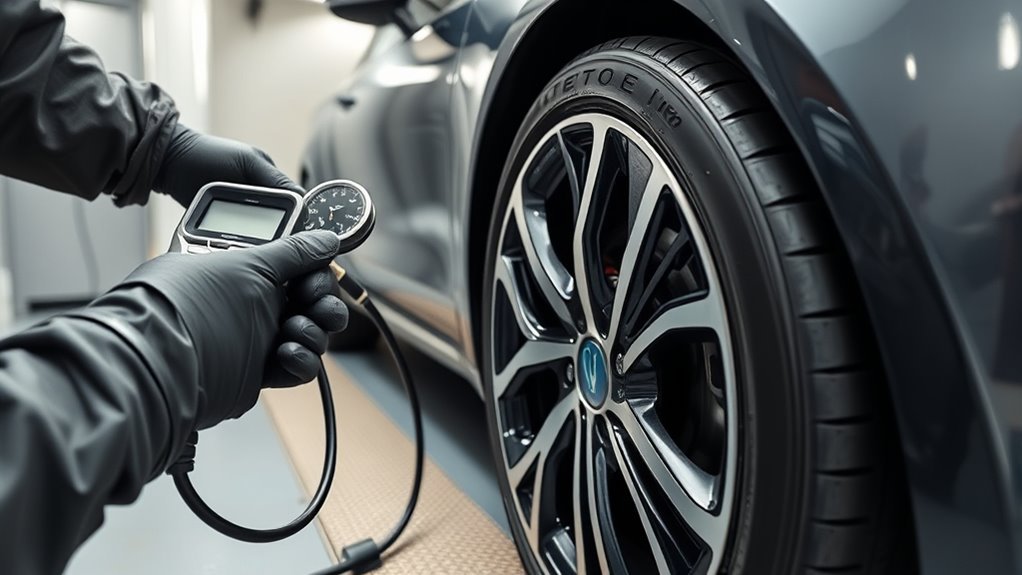
EV tire pressure matters more than many drivers expect. Too little air can waste range, heat the tire, and speed up uneven wear, while too much air can reduce grip and make the ride harsh. Start with the cold tire pressure on your vehicle’s door placard, then use careful checks to match pressure to load, temperature, and driving style.
Quick Answer
Run your EV tires at the cold pressure listed on the driver’s door placard or in the owner’s manual. Many EVs call for pressure in the 40 PSI range, but the correct number depends on the model, tire size, load, and tire rating. Check pressure when the tires are cold, adjust in small steps, and don’t exceed the tire or vehicle limits.
Key Takeaways
- Use the manufacturer’s cold PSI as your baseline, not a universal pressure target.
- Check EV tire pressure at least monthly and before long trips.
- Underinflation can raise rolling resistance, increase heat, reduce range, and speed up tire wear.
- Overinflation can reduce ride comfort, shrink the contact patch, and cause uneven center wear.
- Rotate EV tires on schedule because weight and instant torque can wear tread faster.
Quick Answer: Recommended EV PSI Ranges and Tradeoffs
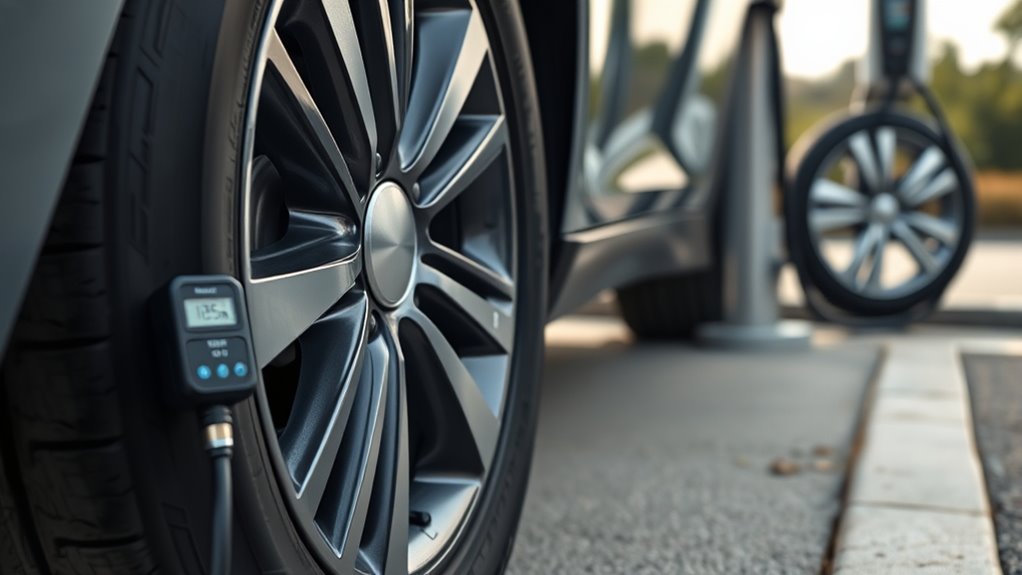
Most EVs need careful tire pressure management because battery weight, instant torque, and efficiency goals place more stress on the tires. Many models list cold pressures in the 40 PSI range, but you should follow the exact number on your vehicle’s door placard.
A few PSI can affect rolling resistance, tread wear, heat, ride comfort, and handling. Low pressure usually raises rolling resistance and heat. High pressure can make the ride harsh and may reduce the tire’s contact patch.
Warning: Never inflate beyond the vehicle placard limit or the tire sidewall maximum, whichever applies to your setup.
Use cold tire pressure readings because driving heats the tire and raises the displayed PSI. Check each tire monthly, before long trips, and when outdoor temperatures swing. Record the readings so you can spot slow leaks before they become safety risks.
Why EVs Usually Need Higher PSI (Weight, Torque, Regenerative Braking)
EVs often weigh more than similar gas cars because the battery pack adds mass. That extra load can increase tire flex, heat, and shoulder wear when pressure runs low. Proper cold PSI helps the tire carry the load with less wasted energy.
- Reduce deflection by limiting sidewall flex under battery weight.
- Control torque wear by helping the tread handle strong launches.
- Support regenerative braking by keeping the tread stable during repeated deceleration.
- Balance comfort and durability by using the manufacturer’s recommended pressure range.
Higher pressure doesn’t mean maximum pressure. You need enough air to support the vehicle, but you still need the tread to grip the road. The right setting balances range, tire life, braking, and comfort.
How Tire Pressure Affects EV Range and Efficiency
Tire pressure affects EV range because it changes rolling resistance. When a tire runs low, it flexes more and turns more energy into heat. Your motor then uses more current to keep the same speed.
Proper inflation helps low-rolling-resistance tires work as designed. It also spreads the load more evenly across the tread. That can improve range, slow uneven wear, and keep handling more predictable.
Underinflated tires can also build excess heat, which may damage the tire over time. Overinflated tires can wear faster in the center and feel less stable on rough pavement. Treat pressure as a simple maintenance habit, not a one-time setup.
Find the Right PSI for Your EV: Manufacturer Guidance vs. Real-World Tweaks
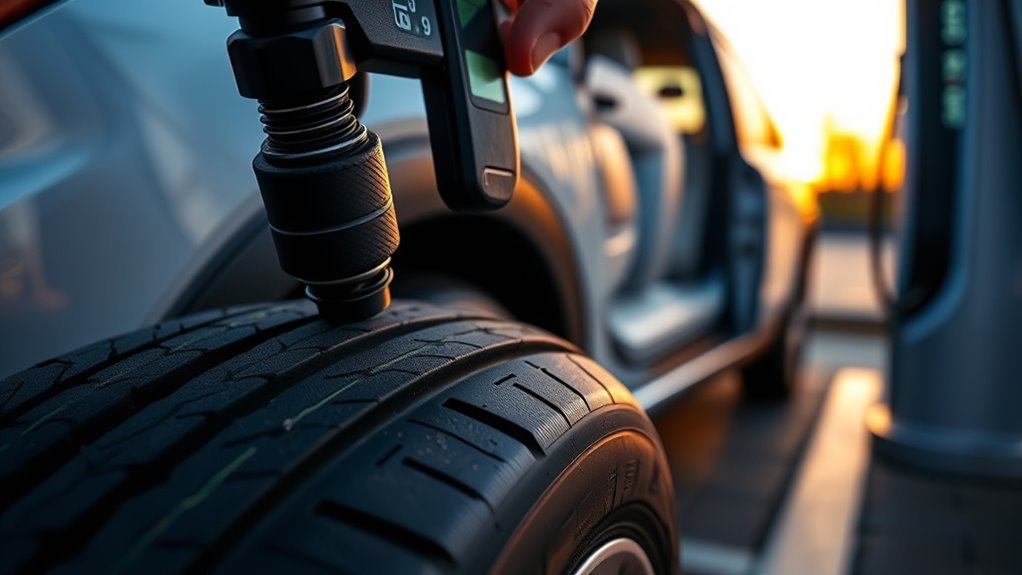
Start with the manufacturer’s cold PSI because engineers set it for your vehicle weight, tire size, load rating, and handling needs. You can usually find it on the driver’s door placard or in the owner’s manual. Don’t use the number molded on the tire sidewall as your normal target.
Start with the manufacturer’s cold PSI, then adjust only within safe limits for temperature, load, and driving style.
- Log the placard pressure for front and rear tires.
- Check pressure after the vehicle has been parked for at least three hours.
- Adjust for cargo or passengers only when the manual gives load guidance.
- Compare pressure changes with ride comfort, tread wear, and range.
Note: Tire pressure changes with temperature, so recheck PSI after major weather shifts.
Your tire pressure monitoring system (TPMS) helps catch large pressure changes, but a gauge still matters. A calibrated digital gauge can confirm exact pressure and reveal small differences between tires.
[Products Worth Considering]

Replace worn tires quickly with this universal 4.80/4.00-8 tire and inner tube set designed for wheelbarrows and outdoor utility carts. The ribbed tread helps reduce turf damage while the natural rubber construction supports longer service life. Compatible with 15.5-inch outer diameter, 4-inch width, and 8-inch rim diameter wheels, it uses a straight TR-13 valve stem for easy installation. For best results, inflate with a manual pump and do not exceed 25 PSI.
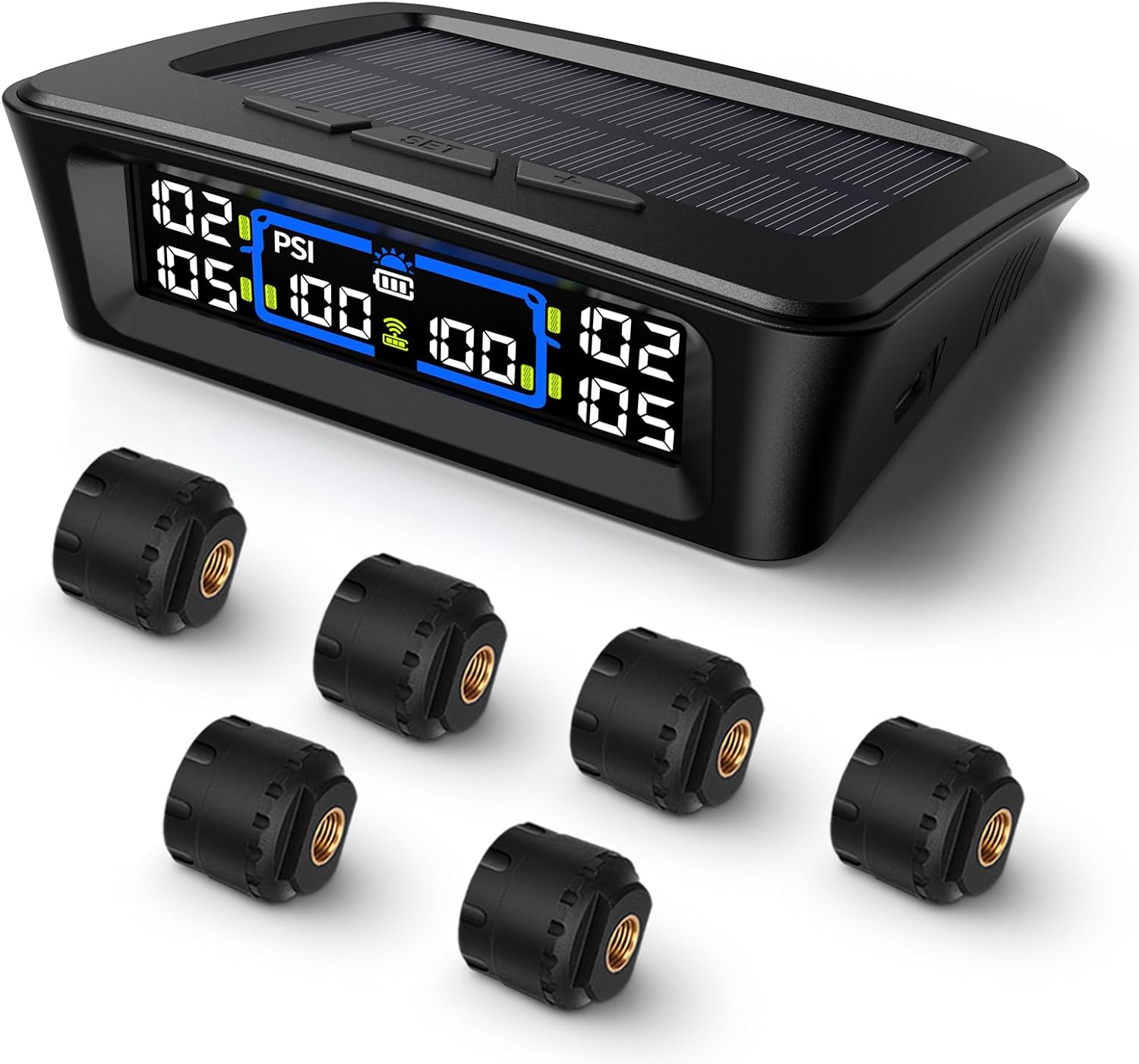
The Tymate TM12 RV TPMS delivers real-time tire pressure and temperature monitoring with a stable 433Hz display for safer long-distance driving. It supports simultaneous monitoring across vehicle and trailer zones, includes six alarm modes for pressure, temperature, leakage, battery, and signal loss, and features easy DIY installation with auto calibration. Power is supplied via USB-C charging or solar recharging, with a wide 0–144 PSI range and up to 50 ft signal coverage for RVs and towable trailers.

The TYAMATE TM8 solar-powered wireless TPMS delivers real-time tire pressure and temperature monitoring with six alarm modes for safer driving. A vibrant color LCD display shows readings clearly while windshield mounting keeps it hands-free and easy to read. With a wide 0–87 PSI range, strong 433.92 MHz signal transmission, and quick sensor pairing, it’s ideal for RV, sedan, SUV, MPV, and truck use.
Check and Maintain EV Tire Pressure: Tools, Timing, and Step-by-Step Checks
Check your EV tire pressure at least once a month and before long trips. Use the vehicle display as a guide, then verify with a calibrated digital gauge. Check pressure when the tires are cold for the most accurate reading.
- Park the vehicle for at least three hours before checking pressure.
- Remove each valve cap and press the gauge firmly onto the valve stem.
- Record the PSI for each tire, including the spare if your vehicle has one.
- Compare each reading with the driver’s door placard.
- Add air in 1 to 2 PSI increments if a tire reads low.
- Recheck the tire after filling and replace the valve cap tightly.
Inspect tread while you check pressure. Look for low tread depth, cracks, bulges, nails, or uneven wear across the tire. Schedule service if one tire loses pressure faster than the others.
[Products Worth Considering]

Monitor tire tread wear with a smart, color-coded depth gauge that shows clear condition ranges at a glance. The bar is range marked for fast, easy readings, helping you maintain safer traction and performance. Each gauge is portable with a pocket clip, and the set includes 20 units for daily use and sharing.

Measure tire tread depth quickly and accurately with this LUMITECO dial gauge that reads in 1/32" increments up to 14/32". The color-coded green/yellow/red zones make it easy to judge tire wear and know when replacement is needed. A rugged, compact design with a protective pouch helps keep the gauge ready for use on cars, trucks, motorcycles, and more.

The Topeak SmartGauge D2 delivers precise digital tire pressure readings for bikes, motorcycles, and sports equipment up to 250 psi (17 bar). Its rotating SmartHead works with both Presta and Schrader valves, so you can check pressure quickly without adapters. The LCD display makes it easy to read results in psi, bar, or kg/cm² with an included CR2032 battery for immediate use.
Tire Choices and Rotation Strategies That Protect Range and Tire Life
EV tire choice affects range, traction, noise, and tread life. Choose original equipment (OE) tires or EV-rated tires when your vehicle requires them. These tires often handle higher load, strong torque, and lower rolling resistance better than many standard tires.
- Choose OE or EV-rated low-rolling-resistance tires when they match your vehicle specs.
- Rotate tires every 5,000 to 7,500 miles, or follow your owner’s manual.
- Check pressure after rotation because front and rear targets may differ.
- Inspect tread for feathering, cupping, or faster wear on drive wheels.
Rotation helps spread wear from battery weight, torque, and braking forces. It also gives you a regular chance to inspect tire damage. Follow the pattern in your owner’s manual, especially if your EV uses staggered tire sizes.
[Products Worth Considering]
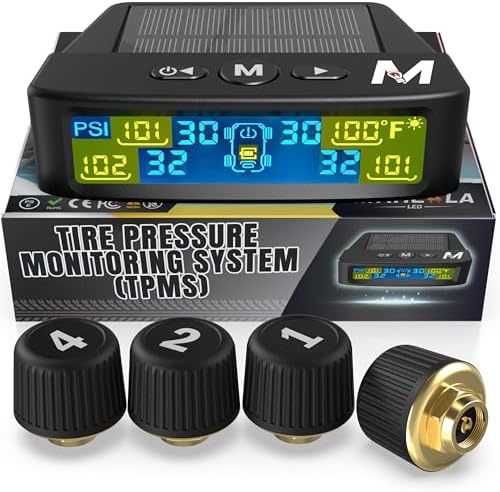
Marcala’s TPMS set of four sensors helps you monitor tire pressure and temperature in real time while driving, with updates every second. The bright color LCD uses auto-dimming for easy viewing, powered by dual solar and USB charging, and offers six alarm modes. Built for trailers, RVs, campers, trucks, and towing setups, the sensors support monitoring 1-4 wheels up to 98 PSI with IP67 waterproof protection.
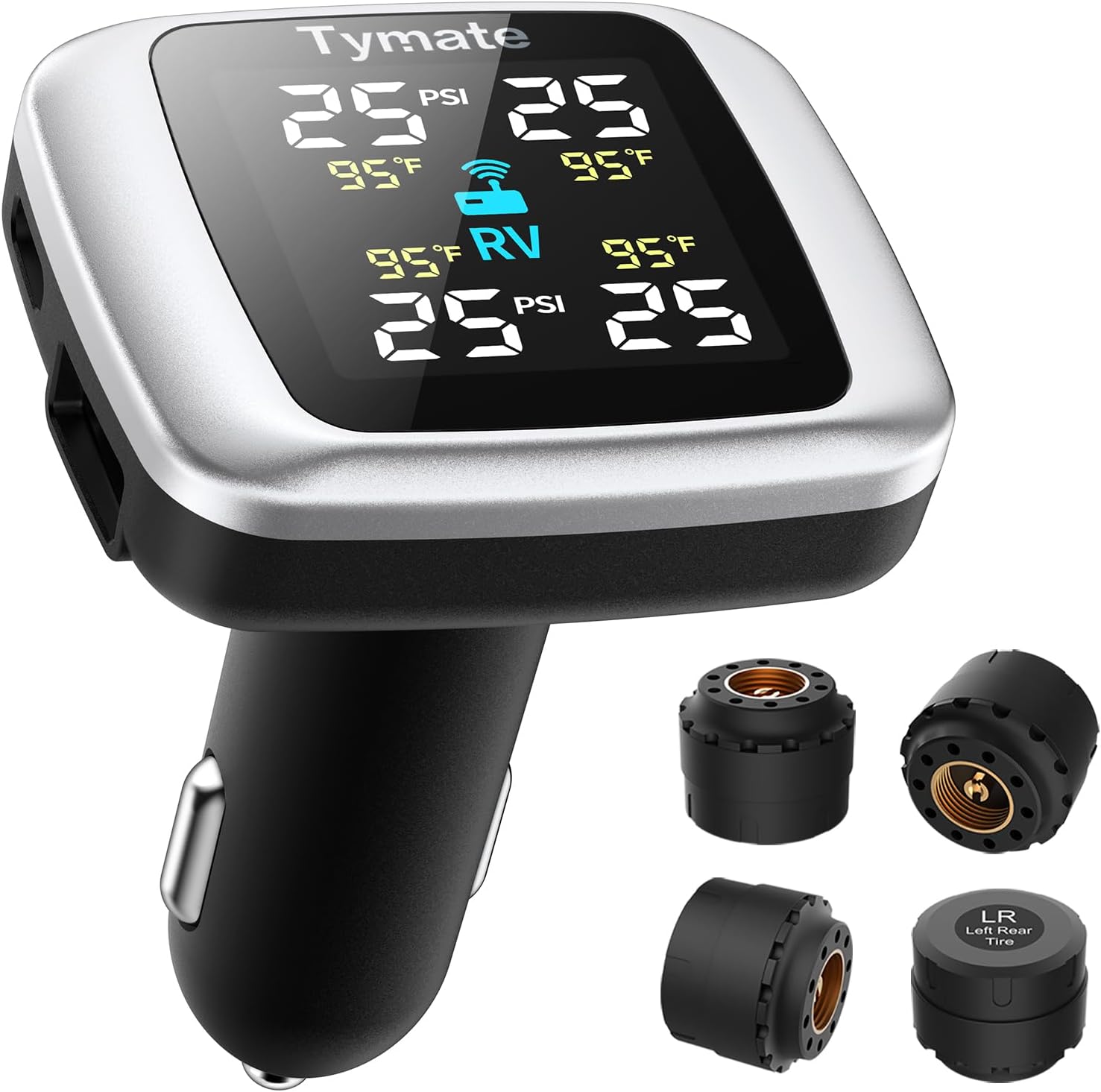
Tymate TM7 is a wireless tire pressure monitoring system that delivers real-time pressure and temperature readings for safer driving. It includes four external sensors, a bright color LCD display with adjustable backlight, and six alarm modes for high/low pressure, fast leakage, high temperature, and sensor signal or battery issues. The system covers a wide 0–144 PSI range and plugs into your vehicle’s cigarette lighter socket for quick DIY setup.

This TPMS sensor training and relearn reset tool is customized for Ford, Lincoln, and Mercury vehicles to help activate tire pressure programming after sensor replacement or tire rotation. It can activate individual tire pressure sensors with one-button operation, helping prevent TPMS warning light illumination. It is not a sensor programming tool and cannot program replacement sensors—use it to trigger/activate sensors only.
Common EV Tire Pressure Mistakes to Avoid
Many range and tire wear problems start with simple pressure mistakes. Avoid setting pressure from memory, guessing by sight, or using the sidewall maximum as the target. Tires can look normal while still running several PSI low.
- Don’t check pressure right after driving unless you only need a quick warning check.
- Don’t ignore small monthly pressure drops because they can point to leaks.
- Don’t assume all four tires use the same PSI if the placard lists different values.
- Don’t overinflate just to chase range because grip and comfort still matter.
Frequently Asked Questions
Why Do Electric Cars Have Higher Tire Pressure?
Many EVs use higher tire pressure than similar gas vehicles because they weigh more and need low rolling resistance for range. The exact pressure still depends on the manufacturer’s placard, tire size, and load rating.
Should I use 45 PSI in every EV tire?
No. Some EVs may list a pressure near that number, but others do not. Use the cold PSI on your driver’s door placard or in the owner’s manual.
Does higher tire pressure improve EV range?
Higher pressure can reduce rolling resistance when a tire starts low. But too much pressure can hurt comfort, traction, and wear. Stay within the manufacturer’s safe range.
How often should I check EV tire pressure?
Check pressure at least once a month, before long trips, and after big temperature changes. Use a cold reading for routine checks because warm tires show higher pressure.
Why does my TPMS show a different number after driving?
Driving heats the tire and raises pressure. That’s normal. Use cold readings for setting pressure, and use the tire pressure monitoring system mainly to spot changes or alerts.
Safety Disclaimer: This article is for informational purposes only and does not replace your vehicle owner’s manual or advice from a qualified tire professional. Always follow your vehicle manufacturer’s tire pressure, load, and tire replacement guidance.
Conclusion
Correct EV tire pressure gives you a simple way to protect range, tire life, and safety. Start with the cold PSI on your door placard, then check it monthly with a reliable gauge. Adjust only within safe limits for load and temperature. Small pressure habits can keep your EV more efficient, stable, and ready for the next drive.

