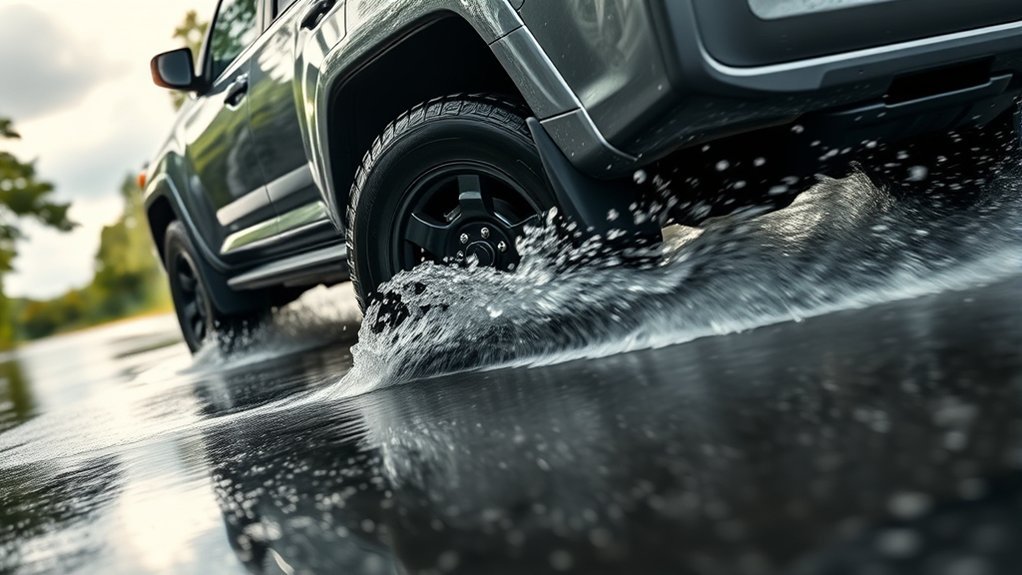
Hydroplaning can happen when your Toyota 4Runner’s tires cannot move water away quickly enough to maintain contact with the road. Four-wheel drive may improve acceleration on some slippery surfaces, but it cannot prevent hydroplaning once the tires begin riding on water. Your best protection is lower speed, healthy tires, smooth control inputs, and avoiding standing or moving water.
Quick Answer
To reduce hydroplaning risk in a 4Runner, slow down before reaching standing water, increase your following distance, avoid cruise control in heavy rain, and keep the tires properly inflated. Consider replacing tires near 4/32 inch for better wet performance. If you hydroplane, release the accelerator, avoid hard braking, and steer smoothly.
Key Takeaways
- Hydroplaning risk increases with speed, standing-water depth, worn tread, incorrect pressure, and abrupt steering or braking.
- Four-wheel drive does not prevent hydroplaning because it cannot create grip when the tires lose contact with the pavement.
- Check tire pressure when the tires are cold and use the pressure on the driver-side door-jamb placard, not the maximum pressure printed on the tire.
- A 4/32-inch tread depth is a sensible wet-weather replacement point, while 2/32 inch is the worn-out threshold identified by NHTSA.
- Never enter a flooded road or water of unknown depth, even in a lifted or four-wheel-drive 4Runner.
At a Glance
| Time Required | About 10 minutes for a tire, light, and wiper inspection |
| Difficulty | Easy |
| Tools Needed | Accurate tire-pressure gauge, tread-depth gauge or quarter, and a flashlight |
| Cost | No cost if you already own the gauges; tire repair or replacement costs vary |
What Hydroplaning Is and How to Prevent It in Your 4Runner
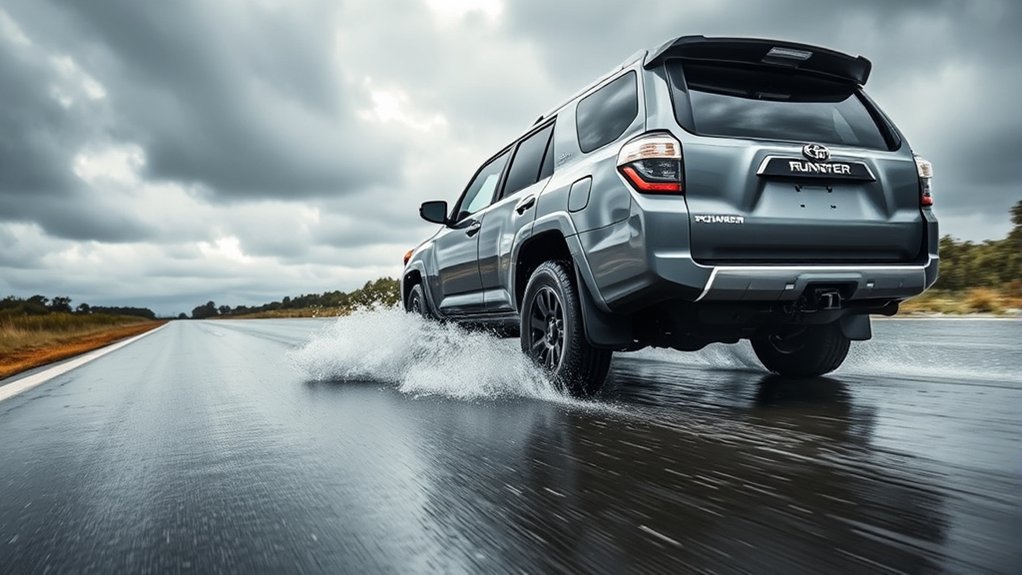
Hydroplaning occurs when water builds between a tire and the pavement faster than the tread can move it away. As the tire rises onto the water layer, steering, braking, and acceleration control can decrease sharply.
The risk depends on several conditions working together:
- Vehicle speed: The faster you travel, the less time the tire has to move water away.
- Standing-water depth: Deep wheel tracks, puddles, and poorly drained lanes increase risk.
- Tread depth and design: Worn or damaged tread leaves less space for water evacuation.
- Tire pressure: Incorrect pressure can reduce stability, distort the contact patch, and increase uneven wear.
- Road texture: Smooth, polished, contaminated, or poorly drained pavement may provide less grip.
- Control inputs: Abrupt steering, acceleration, or braking can make a loss of traction harder to manage.
Roads may be particularly slippery shortly after rain starts because water can mix with oil, rubber residue, dust, and other surface contamination. However, hydroplaning can also occur later during a storm wherever water accumulates.
Do not rely on a single speed threshold. The Federal Highway Administration notes that hydroplaning can occur at speeds around 30 mph when enough standing water is present. Slow down before reaching visible water rather than waiting for the 4Runner to feel unstable.
Why Four-Wheel Drive Does Not Stop Hydroplaning
A 4Runner’s four-wheel-drive system can distribute engine power to more wheels, which may help the vehicle accelerate on mud, snow, gravel, or other low-traction surfaces. It cannot force a hydroplaning tire back onto the pavement.
When water separates the tread from the road, the affected tire has little usable grip regardless of how many wheels receive power. Four-wheel drive also does not shorten wet-road braking distance or eliminate the need for healthy tires.
Note: 4Runner drivetrain controls vary by model year and trim. Some models use part-time four-wheel drive, while others have full-time systems. Follow the transfer-case instructions in your exact Toyota owner’s manual.
Smart Driving Techniques to Stay Safe in the Rain
[Products Worth Considering]

Accurately measure tire tread depth with a calibrated gauge marked from 0 to 1 inch in 1/32 inch increments. The color-coded bar helps you quickly identify tread condition ranges, supporting safe driving for trucks, motorcycles, automobiles, and passenger vehicles.

Monitor tire tread wear with a smart, color-coded depth gauge that shows clear condition ranges at a glance. The bar is range marked for fast, easy readings, helping you maintain safer traction and performance. Each gauge is portable with a pocket clip, and the set includes 20 units for daily use and sharing.

The SAFELIFE dial tire tread depth gauge measures tread depth in 1/32 inch increments with clear, easy-to-read 2-inch dial face. Color zones using a traffic light system help you quickly judge whether tread is low, marginal, or ample for safer driving. Built with a durable zinc cast body and a metal detect probe for precise, comfortable use across cars, motorcycles, trucks, and buses.
Reduce Speed Before Standing Water
Ease off the accelerator before entering a wet section, puddle, or visible wheel track. Do not make a sharp lane change to avoid water at the last moment. A smooth reduction in speed gives the tread more time to move water away and reduces the severity of a traction loss.
The posted speed limit is intended for favorable conditions. Heavy rain, poor visibility, standing water, worn pavement, or traffic may require a much lower speed.
Increase Your Following Distance
The familiar three-second following rule is a starting point for dry conditions, not a fixed wet-weather guarantee. Increase the gap to at least four or five seconds in rain, and leave even more room during heavy rain, darkness, towing, poor tire conditions, or limited visibility.
Choose a fixed roadside point. After the vehicle ahead passes it, count the seconds until your 4Runner reaches the same point. Increase the gap if you arrive too soon.
Avoid Cruise Control in Heavy Rain
Turn off cruise control when rain is heavy, water is collecting on the pavement, or traction is uncertain. Keeping direct control of the accelerator makes it easier to reduce power smoothly when conditions change.
Driver-assistance systems cannot judge every puddle or road-surface change. Stay ready to steer, slow down, or cancel assistance without abrupt input.
Use Lights and Wipers Correctly
Use low-beam headlights when rain reduces visibility and whenever local law requires them. Keep the windshield, mirrors, camera areas, and exterior lights clean.
Inspect the wiper blades regularly. Replace them when they streak, skip, chatter, split, or leave areas of the windshield uncleared. Top up the washer-fluid reservoir with a fluid suitable for the expected temperature.
Avoid Standing and Moving Water
Warning: Never drive into a flooded road or water of unknown depth. A 4Runner’s ride height and four-wheel drive do not protect it from hidden road damage, engine water ingestion, brake problems, loss of traction, or moving floodwater. Follow the NHTSA guidance to turn around rather than enter flooded roads.
Avoid the deepest part of visible wheel tracks when you can change position gradually and safely. Never swerve across traffic, brake hard, or enter another lane solely to avoid a shallow puddle.
Key Tire Maintenance Practices to Prevent Hydroplaning
[Products Worth Considering]

Vigorder rubber cement glue delivers superior adhesion and cures quickly within about 30 seconds for seamless rubber bonding. Once cured, it helps provide a strong, durable, waterproof seal that holds up to vehicle weight, pressure, and heat. Suitable for cars, motorcycles, trucks, bicycles, and off-road tires, it’s designed for emergency patch and maintenance repairs.

Add style while helping protect your tire valve stems with handmade crystal rhinestone caps and a durable plastic insert. These caps resist corrosion and help keep out rain, snow, and muddy water, extending tire life. Textured non-slip design makes them easy to grip for quick install and removal when checking tire pressure.

Measure tire tread depth quickly and accurately with this LUMITECO dial gauge that reads in 1/32" increments up to 14/32". The color-coded green/yellow/red zones make it easy to judge tire wear and know when replacement is needed. A rugged, compact design with a protective pouch helps keep the gauge ready for use on cars, trucks, motorcycles, and more.
Check Pressure When the Tires Are Cold
Check all four tires and the spare at least once a month and before a long trip. Measure pressure when the tires are cold, normally after the vehicle has been parked for at least three hours.
Use the recommended pressure on the driver-side Tire and Loading Information label or in the owner’s manual. Do not use the maximum pressure molded into the tire sidewall as the normal inflation target.
The tire-pressure monitoring system is a warning system, not a replacement for manual checks. A tire can be below the ideal pressure before the dashboard warning appears.
Pro Tip: Record the cold pressure before a rainy-season trip. If one tire repeatedly loses pressure, have it inspected for a puncture, wheel damage, valve leakage, or bead-sealing problem.
Measure Tread Across the Full Width
Measure each tire at several points across the inner, center, and outer tread. One section may be badly worn even when another section appears acceptable.
The National Highway Traffic Safety Administration says tires are worn out at 2/32 inch. For frequent rain driving, consider replacement around 4/32 inch because wet braking and water evacuation generally decline before a tire reaches the absolute minimum.
Replace or professionally inspect a tire sooner if you find:
- Cuts, punctures, bulges, exposed cords, or sidewall cracking.
- Uneven wear across the tread.
- Repeated pressure loss.
- Vibration, pulling, or new road noise.
- Treadwear bars that are level with the surrounding tread.
- Noticeably reduced wet grip even though measurable tread remains.
Rotate and Align the Tires
Rotate the tires according to your 4Runner’s model-year maintenance guide and the tire manufacturer’s warranty instructions. The correct interval and pattern can depend on the drivetrain, tire type, and whether the tires are directional or staggered.
Rotation can promote more even wear, but it cannot correct a bad alignment, damaged suspension part, bent wheel, incorrect pressure, or an already damaged tire. Have the alignment and suspension checked if one edge wears faster than the rest.
Here is a practical maintenance schedule:
| Maintenance Task | Frequency | Why It Matters |
|---|---|---|
| Check cold tire pressure | Monthly and before long trips | Supports proper handling, wear, and tire shape |
| Measure tread and inspect damage | Monthly and before wet-season travel | Finds worn, damaged, or unevenly worn areas |
| Rotate tires | Follow the model-year maintenance guide and tire warranty | Helps distribute wear when the tires are eligible for rotation |
| Inspect wipers and washer system | Before rainy seasons and whenever performance declines | Maintains visibility during spray and heavy rain |
| Check alignment or suspension | When wear, pulling, vibration, or impact damage appears | Corrects conditions that rotation alone cannot solve |
Choosing Tires to Prevent Hydroplaning in Wet Conditions
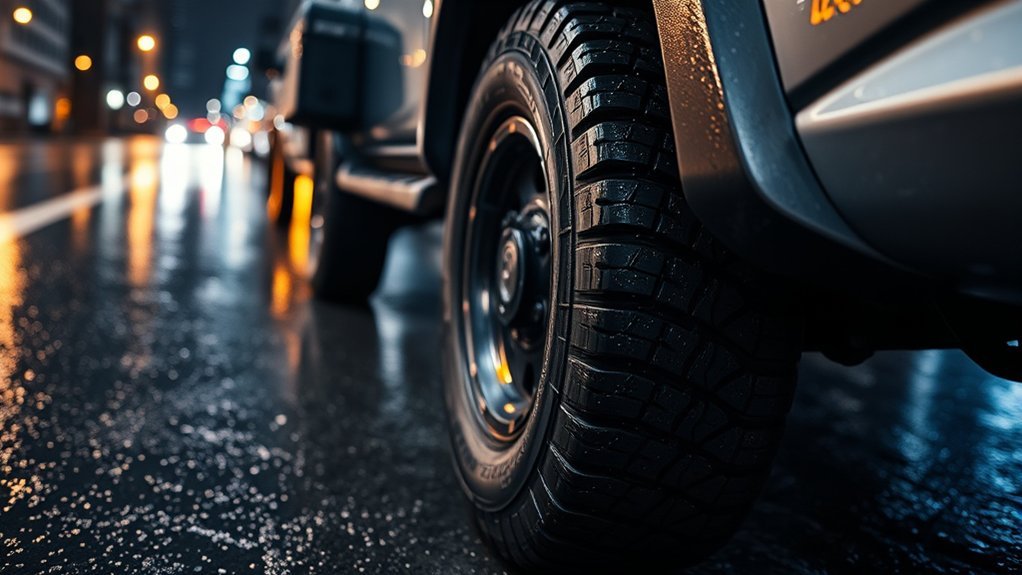
No tire is hydroplaning-proof. However, a tire with strong verified wet performance, sufficient tread depth, correct inflation, and the proper 4Runner fitment can reduce risk.
Consider the following when comparing tires:
- Correct size: Match the size approved for your model, trim, wheels, and load requirements.
- Load index: Select a tire that can safely support the vehicle, passengers, cargo, accessories, and towing load.
- Wet-braking results: Look for credible independent testing rather than relying only on marketing terms.
- Water-channeling grooves: Circumferential and lateral grooves provide paths for bulk water evacuation.
- Tread compound: The rubber compound affects wet grip, temperature behavior, wear, and braking.
- Tire category: Highway all-season, all-weather, and all-terrain tires involve different compromises in rain, snow, noise, wear, and off-road traction.
- Remaining tread: A tire that performed well when new may lose substantial wet capability as it wears.
NHTSA’s Uniform Tire Quality Grading traction grade can help compare straight-line wet stopping performance, but it does not fully rate hydroplaning resistance, wet cornering, or every real-road condition.
[Products Worth Considering]

Steelman white tire marking crayons provide high-contrast, semi-permanent marks for repairing and inspecting tires and equipment. They write on wet or dry, smooth or coarse surfaces including rubber, metal, glass, and wood, making them ideal for puncture location and damage outlining. The lead- and zinc-free crayons resist weather and fading yet wipe away when you no longer need the marks.
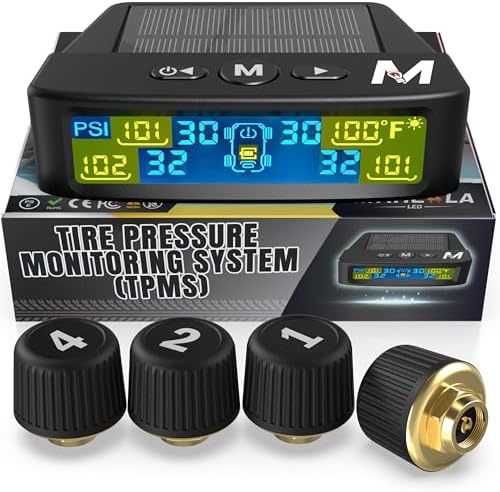
Marcala’s TPMS set of four sensors helps you monitor tire pressure and temperature in real time while driving, with updates every second. The bright color LCD uses auto-dimming for easy viewing, powered by dual solar and USB charging, and offers six alarm modes. Built for trailers, RVs, campers, trucks, and towing setups, the sensors support monitoring 1-4 wheels up to 98 PSI with IP67 waterproof protection.
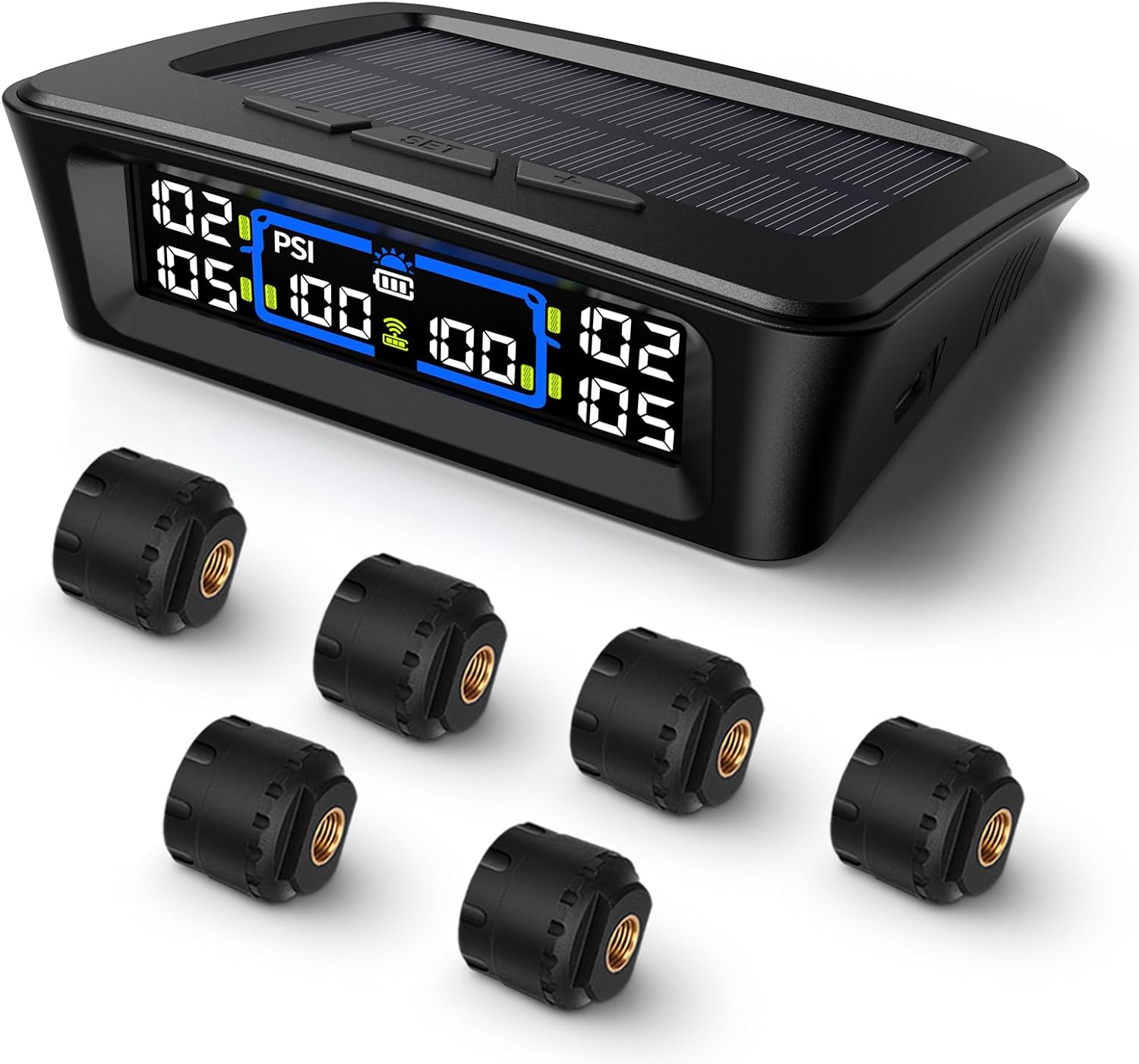
The Tymate TM12 RV TPMS delivers real-time tire pressure and temperature monitoring with a stable 433Hz display for safer long-distance driving. It supports simultaneous monitoring across vehicle and trailer zones, includes six alarm modes for pressure, temperature, leakage, battery, and signal loss, and features easy DIY installation with auto calibration. Power is supplied via USB-C charging or solar recharging, with a wide 0–144 PSI range and up to 50 ft signal coverage for RVs and towable trailers.
Match Tires on Four-Wheel-Drive Models
Use the same approved size and compatible tire type on all four positions unless Toyota specifically permits another setup. Large differences in brand, model, tread pattern, circumference, or tread depth may affect handling and can place stress on some four-wheel-drive systems.
If only one tire is damaged, ask a qualified tire professional whether the remaining tread-depth difference permits a single-tire replacement. Replacing two or four tires may be necessary depending on the drivetrain, wear difference, and Toyota’s model-specific instructions.
Using 2H, 4H, and 4L in Rain
Part-Time Four-Wheel Drive
On a part-time 4WD 4Runner, do not select 4H automatically just because it is raining. Use 4H only on surfaces that are slippery enough to permit tire slip and only when your model-year manual allows it.
Wet pavement can vary from lightly damp and high-grip to heavily covered with water. Selecting a locked part-time mode on a surface with too much traction can cause driveline binding during turns.
Full-Time Four-Wheel Drive
If your 4Runner has full-time four-wheel drive, it is designed to operate differently from a locked part-time system. Leave the vehicle in the normal road-driving mode unless the owner’s manual directs you to select another setting for the conditions.
Do not lock the center differential solely because rain begins. A locked setting can change handling and is generally intended for specific low-traction conditions.
Do Not Use 4L for Normal Rain
4L is a low-range setting for slow travel where maximum torque and controlled low-speed movement are needed, such as demanding off-road terrain, deep mud, steep grades, or vehicle recovery. It is not the correct mode for routine rain driving on paved roads.
Regardless of the selected drive mode, slow down and avoid standing water. Four-wheel drive may help the vehicle move forward, but it cannot guarantee steering or braking grip.
How to Respond When You Hydroplane?
A hydroplaning event may make the steering feel light or unresponsive, cause engine speed to change, or make the vehicle drift. Stay calm and avoid sudden corrective actions.
- Look where you want to go. Keep your attention on the open path ahead instead of staring at a puddle, barrier, or shoulder.
- Release the accelerator smoothly. Let the vehicle slow naturally. Do not snap the throttle closed and then immediately reapply power.
- Avoid hard braking. Abrupt braking may further disturb the vehicle while the tires have little road contact.
- Hold the steering wheel firmly. Make only small, smooth corrections. Do not turn sharply in an attempt to force the vehicle back into line.
- Wait for traction to return. Steering weight and tire response should begin to feel normal as the tires reconnect with the pavement.
- Reduce speed further. Once stable, continue at a lower speed and increase the distance from other traffic.
If only one side of the vehicle enters deep water, avoid jerking the wheel toward the dry side. A sudden steering input can create a skid when the wet tires regain grip.
Warning: If traffic, a curve, or an obstacle makes a collision imminent, use the controls as smoothly as the emergency permits. General hydroplaning advice cannot account for every crash-avoidance situation.
What to Check After Hydroplaning
After the vehicle is stable, stop in a safe location if you struck a deep pothole, curb, debris, or a large body of water. Inspect the tires and wheels for visible damage and check whether the steering wheel is off-center.
Arrange a professional inspection if you notice:
- A tire-pressure warning.
- New vibration or pulling.
- Steering that no longer feels centered.
- A bent wheel or damaged tire sidewall.
- Grinding, scraping, or unusual brake behavior.
- Water intrusion or an engine warning after entering deep water.
Brakes may feel different immediately after passing through water. Test them gently at low speed in a safe area. Seek professional help if braking remains weak, uneven, noisy, or abnormal.
Frequently Asked Questions
What are the two most important ways to avoid hydroplaning?
Reduce speed before reaching standing water and maintain tires with adequate tread and correct cold pressure. Speed determines how quickly the tire must move water, while tread condition and pressure affect the tire’s ability to maintain a stable road contact patch.
What is the three-second rule when driving in rain?
Three seconds is a basic dry-road starting point. Increase the gap to at least four or five seconds in rain, and leave more room during heavy rain, darkness, towing, poor visibility, or uncertain tire conditions. The safe distance depends on your speed and the road conditions.
Should you use 4H or 4L in rain?
Do not use 4L for ordinary rain driving. On a part-time 4WD 4Runner, use 4H only when the road is sufficiently slippery and your exact owner’s manual permits it. Full-time 4WD models operate differently, so use their normal road mode unless Toyota instructs otherwise.
Does four-wheel drive prevent a 4Runner from hydroplaning?
No. Four-wheel drive can distribute power to additional wheels, but hydroplaning occurs when water separates the tires from the pavement. Once that contact is lost, four-wheel drive cannot guarantee steering, acceleration, or braking control.
Should you brake when your 4Runner hydroplanes?
Avoid hard braking. Release the accelerator, hold the wheel firmly, and use small steering corrections until traction returns. Abrupt braking or steering can make the vehicle harder to control while the tires are riding on water.
At what speed can a 4Runner hydroplane?
There is no single hydroplaning speed. Risk depends on water depth, speed, tire pressure, tread condition, tire design, and road texture. Hydroplaning may occur at relatively low speeds when standing water is deep, so slow down before entering visible water.
Is 4/32 inch the legal minimum tire tread?
No. NHTSA identifies 2/32 inch as the worn-out threshold. However, replacing tires around 4/32 inch can be a prudent wet-weather decision because water evacuation and wet braking usually decline as tread wears. Local legal requirements may vary.
Conclusion
You can reduce hydroplaning risk in your 4Runner by slowing down before standing water, creating more space around the vehicle, keeping the tires correctly inflated, and replacing worn or damaged tires before wet performance becomes unacceptable.
Use the 4WD system only as directed in your model-year Toyota manual. Neither 4H nor full-time four-wheel drive can overcome a complete loss of tire contact. If water is deep, moving, or of uncertain depth, turn around and choose another route.
Sources
- NHTSA TireWise — tire pressure, tread-depth, tire inspection, TPMS, and wet-traction information.
- NHTSA Driving in Severe Weather — slower wet-weather driving, increased following distance, and flooded-road safety.
- Federal Highway Administration Driver Safety Guidance — hydroplaning causes, lower-speed risk, and recovery technique.
- Toyota Owner’s Manuals and Maintenance Guides — model-specific tire, pressure, maintenance, and four-wheel-drive instructions.
- AAA Hydroplaning Guidance — wet-weather tread recommendation, speed reduction, following distance, and recovery advice.