Disclosure: As an Amazon Associate, we earn from qualifying purchases. If you click a link on this page and make a purchase, we may receive a small commission at no extra cost to you.
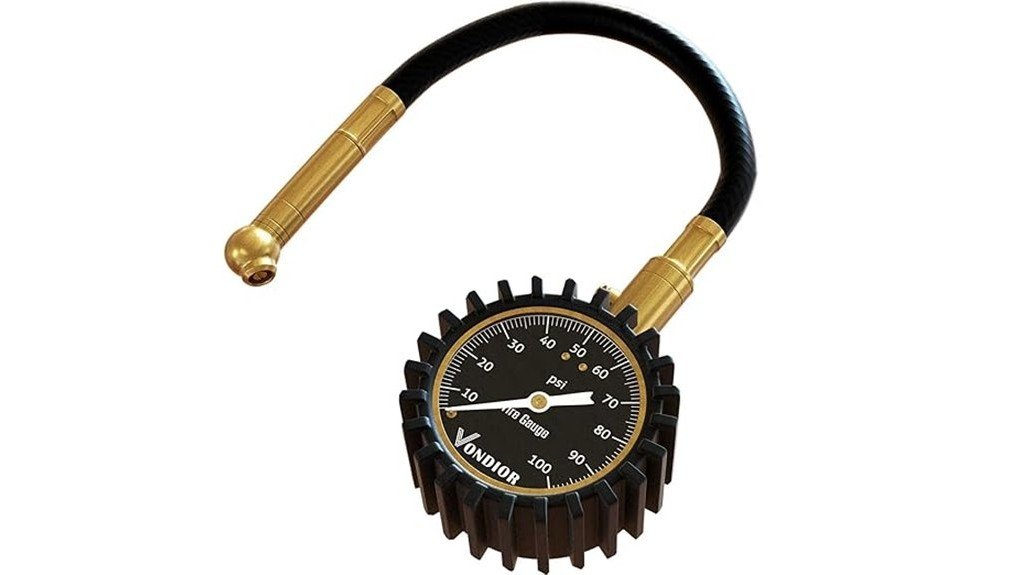
Checking tire pressure should be simple, but small dials, awkward valve angles, and dead batteries can turn a quick task into a nuisance. The Vondior Tire Pressure Gauge is a mechanical 0–100 PSI gauge with a 2-inch glow dial, a flexible hose, and a swiveling chuck designed to make routine checks easier. Its strongest points are clear readings, battery-free operation, and a built-in bleeder valve, while its larger size is less pocket-friendly than a pencil gauge. This review explains the verified specifications, real-world use, limitations, and whether it fits your vehicle-care routine.
| Specification | Detail |
|---|---|
| Brand | Vondior |
| Model | 100PSI-H |
| Part number | DM-Y5I9-ZAW5 |
| Product type | Mechanical analog tire pressure gauge |
| Pressure range | 0–100 PSI |
| Scale resolution | 1 PSI increments |
| Claimed accuracy | ±1% of full scale |
| Standard | Listed as ANSI B40.1 certified |
| Dial | 2-inch glow-in-the-dark face with pressure-hold reading |
| Valve connection | 360-degree swiveling chuck on a flexible hose |
| Pressure adjustment | Built-in air bleeder and reset button |
| Construction | Rubber-protected body with metal components and a brass stem |
| Listed dimensions | 1.3 × 2.9 × 17 inches |
| Power | No batteries required |
| Package quantity | One gauge |
| Guarantee | Manufacturer-listed 100% money-back guarantee |
Key Takeaways
- The Vondior 100PSI-H reads from 0 to 100 PSI in 1 PSI increments and does not need batteries.
- Its 2-inch glow dial holds the reading until you press the reset button, so you can move away from the valve before reading it.
- The flexible hose and 360-degree swiveling chuck help you reach valve stems at difficult angles.
- A built-in bleeder valve lets you release small amounts of air while watching the gauge.
- The rubber guard and metal construction suit regular garage or trunk storage, but the 17-inch listed length is not pocket-sized.
What Is the Vondior Tire Pressure Gauge?
The Vondior 100PSI-H is a mechanical tire pressure gauge made for checking air pressure without an electronic display or battery. Its analog dial covers 0 to 100 PSI, which is enough for most passenger cars, SUVs, light trucks, motorcycles, and many utility tires that use a standard Schrader valve.
The gauge connects through a flexible hose and rotating chuck rather than a rigid straight head. That design helps when a wheel cover, brake component, or valve angle leaves little room for your hand. The dial keeps the measured pressure visible until you press the release button, so you do not need to hold your face near the wheel while reading it.
Who Should Buy It?
Best For
- Drivers who prefer an analog gauge that is always ready without batteries.
- Owners of vehicles with recessed or awkwardly angled Schrader valve stems.
- People who want to measure pressure and bleed off excess air with one tool.
Skip If
- You need a compact gauge that fits easily in a pocket or small motorcycle tool roll.
- You need readings above 100 PSI or a digital display with multiple pressure units.
- Your bicycle uses a Presta valve and you do not want to carry a separate adapter.
Before You Buy: This gauge checks and releases pressure, but it does not add air. Confirm that your tires use Schrader valves, stay within the 0–100 PSI range, and keep an inflator available for underinflated tires.
[Products Worth Considering]

ETENWOLF’s tire pressure gauge helps you quickly and accurately check tire PSI across cars, trucks, motorcycles, bikes, and more. It’s manually calibrated to ANSI B40.1 Grade A for reliable readings, includes a large glow dial for easy nighttime viewing, and features a 360-degree swivel chuck for use at any valve angle. The gauge also works consistently in extreme hot or cold weather.

Keep your tires properly inflated with this analog VONDIOR tire pressure gauge, designed for fast, easy readings without batteries. The swiveling, two-axis hose and large glow dial help you measure at any tire angle with instant visibility. Built with a protective rubber shield, it supports durable, low-maintenance use for cars and trucks.

AstroAI’s tire pressure gauge with inflator helps you check and adjust car tire pressure accurately for safer, smoother driving. It offers 3-in-1 operation to inflate, deflate, or measure pressure, with an easy-to-read 2.5-inch glow dial and a heavy-duty air chuck for convenient use. Universal compatibility supports Schrader-valve tires and quick-connect 1/4" NPT air compressors for quick maintenance.
Vondior Tire Pressure Gauge Accuracy and Build Quality
Vondior states that this model is accurate to ±1% of its 100 PSI full scale and lists it as ANSI B40.1 certified. The 1 PSI markings are easy to interpret for normal passenger-vehicle pressures, although a gauge designed around a narrower range may provide more visual spacing when you only measure around 30 to 40 PSI.
The body uses metal components protected by a gear-shaped rubber guard. The chuck assembly includes a brass stem, while the hose keeps side force away from the dial when you connect to the valve. This construction feels more substantial than a basic pencil gauge, but you should still avoid dropping it, crushing the hose, or storing it under heavy cargo.
Any mechanical gauge can drift after impact or years of use. If readings suddenly differ from your vehicle’s usual pattern, compare the Vondior with another trusted gauge before adjusting all four tires.
How the Glow Dial, Pressure Hold, and Swivel Hose Help
The 2-inch dial is large enough to read without squinting, and the glow face helps during evening checks or in a dim garage. It is not an electronically backlit display, so you should not expect the constant brightness of a digital screen.
Once the chuck seals on the valve, the needle moves to the measured pressure and stays there after you disconnect. You can then bring the dial closer to eye level and press the reset button when finished. This pressure-hold design is especially useful when the valve stem faces inward or sits close to the ground.
The flexible hose and 360-degree swiveling chuck reduce the need to twist the entire gauge. They also make it easier to keep the chuck square to the valve stem, which helps prevent the brief hiss and low reading caused by a poor seal.
Built-In Air Bleeder and Pressure Control
The bleeder valve adds practical value when a tire is slightly overinflated. Keep the gauge attached, press the bleeder briefly, and watch the needle drop toward the vehicle manufacturer’s recommended pressure. Short presses give you better control than releasing air directly with a fingernail or separate tool.
The bleeder does not replace an inflator. If the reading is below the placard value, note the difference, add air with a compressor or pump, and check again. Repeating this measure-adjust-check cycle helps you avoid overshooting the target.
How It Performs in Real Use
For Weekly or Monthly Checks
The battery-free design means there is no power button, startup delay, or battery condition to check. Attach the chuck firmly, wait for the needle to settle, disconnect, and record the held reading. This makes the gauge well suited to a regular maintenance routine.
For Low-Light Garage Checks
The large glow dial is easier to read than the narrow scale on many pencil gauges. A phone flashlight can still help you find the valve cap and align the chuck, while the glow face keeps the pressure scale visible once you have a reading.
For Cars, SUVs, Light Trucks, and Motorcycles
The 100 PSI ceiling covers the normal operating range of many road vehicles and motorcycles. The swivel connection is helpful on crowded wheels, but always confirm the recommended cold pressure on the vehicle placard or owner’s manual rather than using the maximum number molded into the tire sidewall.
For Trunk or Garage Storage
The rubber guard helps protect the dial from routine bumps, and the analog mechanism avoids battery leakage during long storage. The tradeoff is size: the listed 17-inch length and flexible hose need more room than a stick gauge, so store it in a pouch or shallow tool drawer where the hose will not kink.
How to Use It Correctly
- Find the recommended cold tire pressure on the driver-side door placard or in the owner’s manual.
- Check the tires when they are cold, ideally before driving or after the vehicle has been parked for several hours.
- Remove the valve cap and press the swiveling chuck straight onto the Schrader valve until the hissing stops.
- Disconnect the gauge and read the held pressure on the dial.
- If pressure is high, reconnect the gauge and use short presses on the bleeder valve.
- If pressure is low, add air with a separate inflator, then measure again.
- Press the reset button to return the needle to zero, replace the valve cap, and check the remaining tires, including the spare when accessible.
Pro Tip: Keep the chuck square to the valve stem and listen for the hiss to stop. A crooked connection can leak air during the check and produce a reading lower than the tire’s actual pressure.
Compatibility and Safety
The Vondior gauge is intended for standard Schrader tire valves. Most cars, SUVs, pickups, and motorcycles use this valve type. Many bicycles use Presta valves, which require a suitable adapter, and high-pressure road-bike tires may approach or exceed the gauge’s 100 PSI limit.
Use the vehicle manufacturer’s cold-pressure specification, not the maximum pressure printed on the tire sidewall. The National Highway Traffic Safety Administration’s tire guidance also recommends checking every tire, including the spare, and measuring when tires are cold for the most useful comparison with the placard value.
A gauge can identify pressure loss, but it cannot diagnose the cause. If a tire repeatedly loses air, shows a bulge, has visible damage, or will not hold the specified pressure, have the tire and wheel inspected by a qualified tire professional.
Why Proper Tire Pressure Saves Fuel
Underinflated tires flex more and create extra rolling resistance. That can increase fuel use, speed up irregular wear, and make the tire run hotter. Regular checks help you catch gradual pressure loss before it becomes a larger maintenance or safety problem.
The U.S. Department of Energy’s FuelEconomy.gov maintenance guidance reports that proper tire inflation can improve gas mileage by about 0.6% on average and up to 3% in some cases. The exact benefit depends on how far the tires were underinflated, your vehicle, and driving conditions.
The gauge is useful because it makes the check repeatable. It does not automatically improve fuel economy, but it gives you the information needed to set each tire to the correct cold pressure.
Pros and Cons
Pros
- Battery-free analog operation is ready after long periods in storage.
- Large 2-inch glow dial holds the reading until reset.
- Flexible hose and 360-degree swivel chuck improve access.
- Built-in bleeder makes small pressure corrections easier.
- Rubber guard and metal components provide a sturdy feel.
Cons
- Larger and less pocketable than a pencil or compact digital gauge.
- Shows PSI only and does not provide a backlit digital display.
- Presta valves require an adapter, and pressures above 100 PSI are outside its range.
Is It Worth the Price?
The Vondior 100PSI-H sits in the practical mid-range of analog tire gauges. Its value comes from combining a readable dial, pressure-hold function, swivel hose, bleeder valve, and protective guard rather than offering the smallest possible tool.
It is a smart buy for everyday use when you check several vehicles or regularly adjust pressure after seasonal temperature changes. It is less compelling if you only want a tiny emergency gauge, need several pressure units, or routinely measure above 100 PSI.
The current manufacturer information supports a 100% money-back guarantee. Warranty and seller terms can change, so review the current product page before purchase instead of relying on an older warranty claim.
[Products Worth Considering]

ETENWOLF’s calibrated tire pressure gauge delivers accurate readings for cars, trucks, motorcycles, bikes, SUVs, RVs, and ATVs across a 0–75 PSI range. The large glow dial improves visibility in low light, while the 360° swivel chuck makes it easy to check valve pressure from any angle. It’s designed to stay accurate even in extreme hot or cold weather.

Inflate Presta and Schrader bike and car tires with one compressor attachment, including tubeless setups. The digital gauge lets you monitor 2–200 PSI readings in 0.1 PSI increments with ±2 PSI accuracy, while the adjustable lever and built-in bleed button help you dial in precise pressure. Quick-connect coupler, hose, and a complete Presta service kit with spare cores and caps make it ready for fast maintenance.

This tire inflator with pressure gauge delivers long-lasting performance with a durable rubber-protected gauge and sturdy build. The longer hose and 360 swivel air chuck help you seal the valve securely and keep your hands free while measuring, inflating, or deflating. It’s battery-free for reliable use and provides ±2 PSI accuracy in the mid-range for most typical tires, with universal compatibility for 1/4 NPT compressor outputs.
How It Compares to Alternatives
The JACO ElitePro 100 PSI is another full-size analog option that may appeal if you prefer its chuck and case design. The ETENWOLF 0–100 PSI analog gauge is worth comparing if you want a similarly large glow dial, while a compact digital gauge may suit you better when pocket size and an electronic display matter more.
The Vondior makes the most sense when you want a flexible hose, a rotating chuck, a held analog reading, and a bleeder valve in one battery-free tool. A narrower 0–60 PSI gauge can offer more dial spacing for passenger-car pressures, but it gives you less headroom for higher-pressure applications.
[Products Worth Considering]

The Milton S-693 straight foot dual head air chuck is designed for accurate tire pressure checks and quick, secure valve-core engagement with lock-on threads on both ends. With a 1/4" FNPT connection and a maximum 150 PSI rating, it’s built for use on inner duals and common vehicle tires, including trucks and RVs.
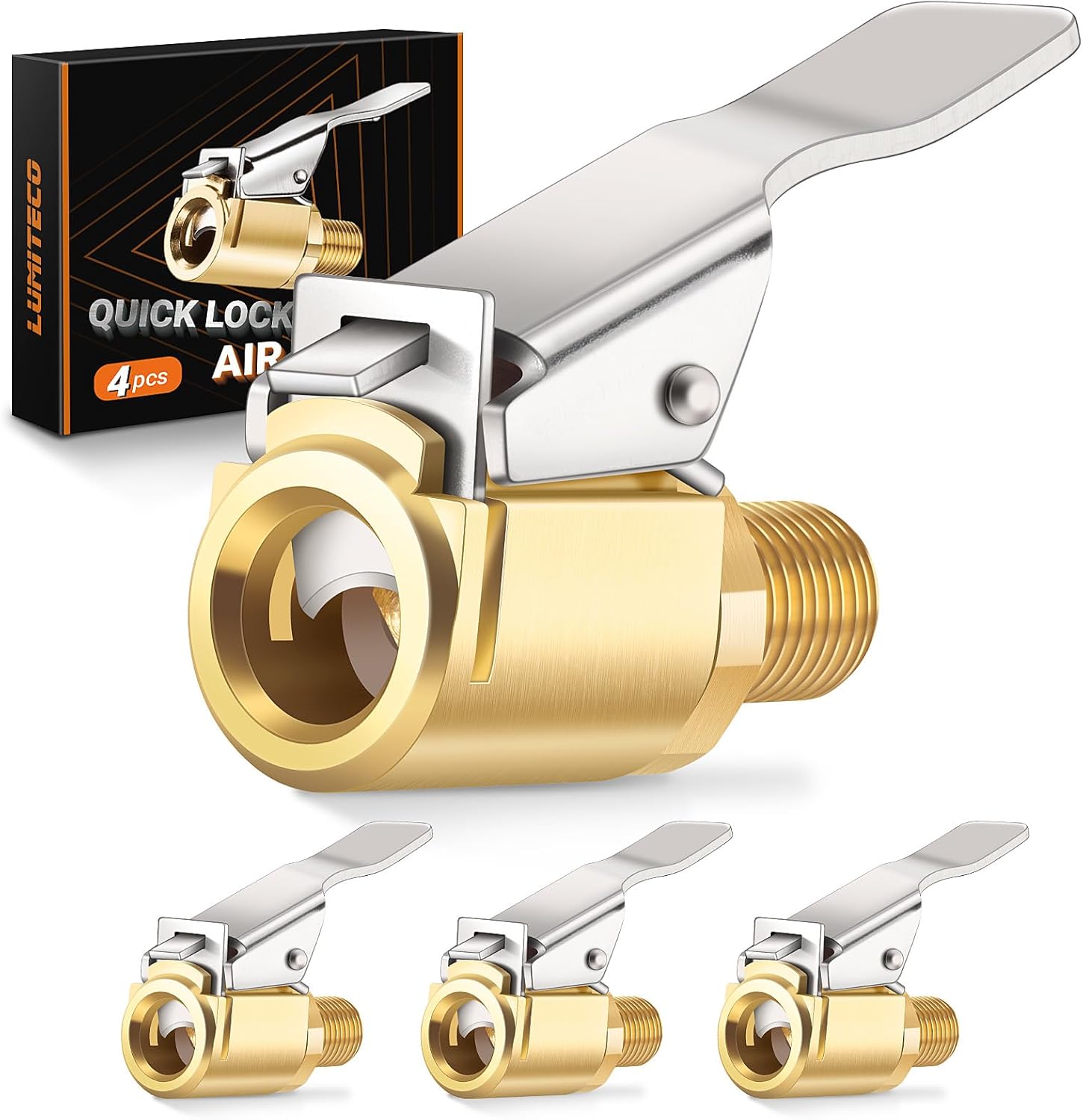
This brass air chuck adapter converts a screw-on inflator connection into a lock-on quick connect for hands-free, no-leak tire inflation. Clip the chuck onto Schrader valve stems and lock it in place to simplify inflating car, bike, and motorcycle tires. Built for durability with a corrosion-resistant brass body and strong quick operation.
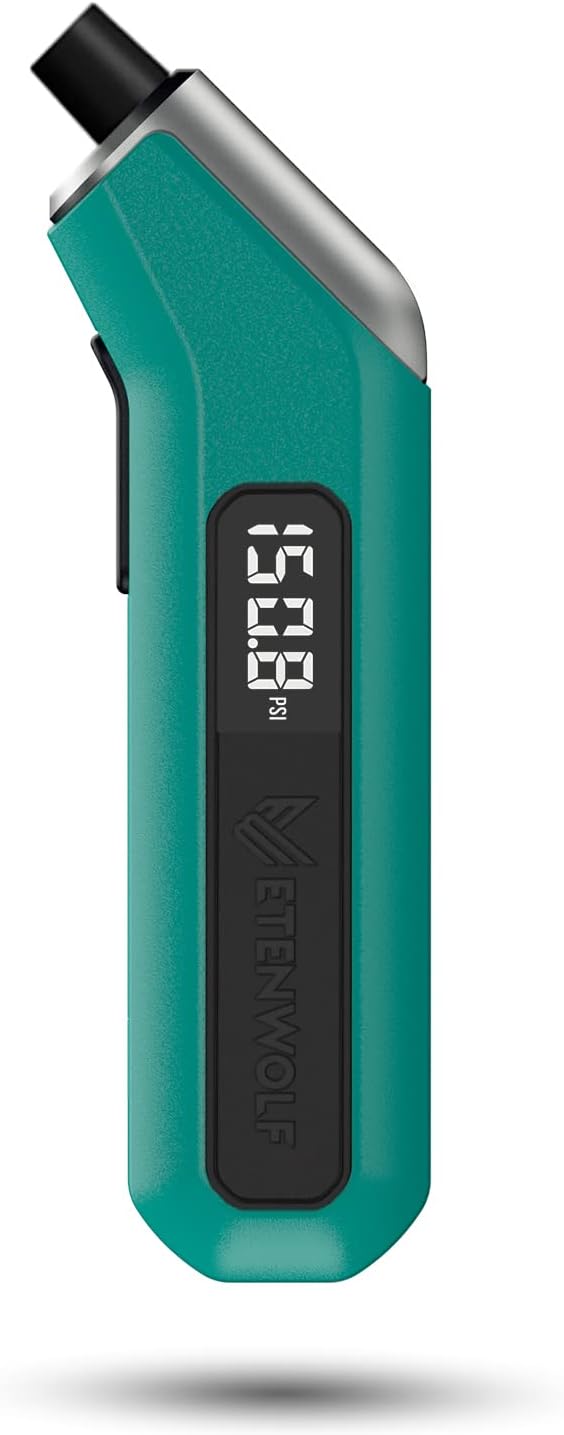
ETENWOLF T300 is a calibrated digital tire pressure gauge designed for reliable readings across low and high pressure ranges. It includes thermal compensation for stable performance in extreme cold or heat, an LED light for visibility, and an auto shut-off to help preserve battery life. Ideal for pickups, RVs, and heavy-duty vehicles, it delivers accurate PSI measurements with sturdy durability.
Frequently Asked Questions
Does the Vondior gauge work on cars, trucks, and motorcycles?
Yes, it is designed for tires with standard Schrader valves and reads from 0 to 100 PSI. Confirm that your vehicle’s recommended pressure is within that range and use the cold-pressure value on the vehicle placard.
Can it be used with Presta bicycle valves?
The chuck is made for Schrader valves. A compatible Presta-to-Schrader adapter is required, and you should verify that the bicycle tire’s target pressure does not exceed 100 PSI.
Does the gauge add air to a low tire?
No. It measures pressure and can release excess air through the bleeder valve, but you need a separate compressor or pump to inflate a low tire.
Why does the needle stay at the measured pressure?
The pressure-hold function keeps the reading visible after you remove the chuck. Press the reset button on the gauge to return the needle to zero before the next check.
Can the glow dial be read in complete darkness?
The dial is designed to glow in low light, but it is not a powered backlight. Keep a flashlight nearby when you need help locating the valve or when the dial has not had enough light exposure.
How can you check whether the gauge is still accurate?
Compare it with another trusted gauge on the same cold tire. If the difference is consistent and significant, inspect the hose and chuck for damage, then contact the seller or manufacturer about the current guarantee.
What is the most common mistake when checking tire pressure?
Using the tire sidewall’s maximum pressure instead of the vehicle placard is a common error. Another is checking immediately after driving, when heat has raised the pressure above the cold specification.
The Bottom Line
The Vondior 100PSI-H is recommended for drivers who want a durable, readable analog gauge with a flexible hose, swivel chuck, held reading, and bleeder valve. Skip it if you need a pocket-sized tool, multiple pressure units, Presta compatibility without an adapter, or a range above 100 PSI.
Its main strength is practical control without batteries. Its main limitation is bulk compared with simpler gauges, but the larger format is worthwhile when easy valve access and a clear dial matter most.