Disclosure: As an Amazon Associate I earn from qualifying purchases. If you click a link on this page and make a purchase, we may receive a small commission at no extra cost to you.
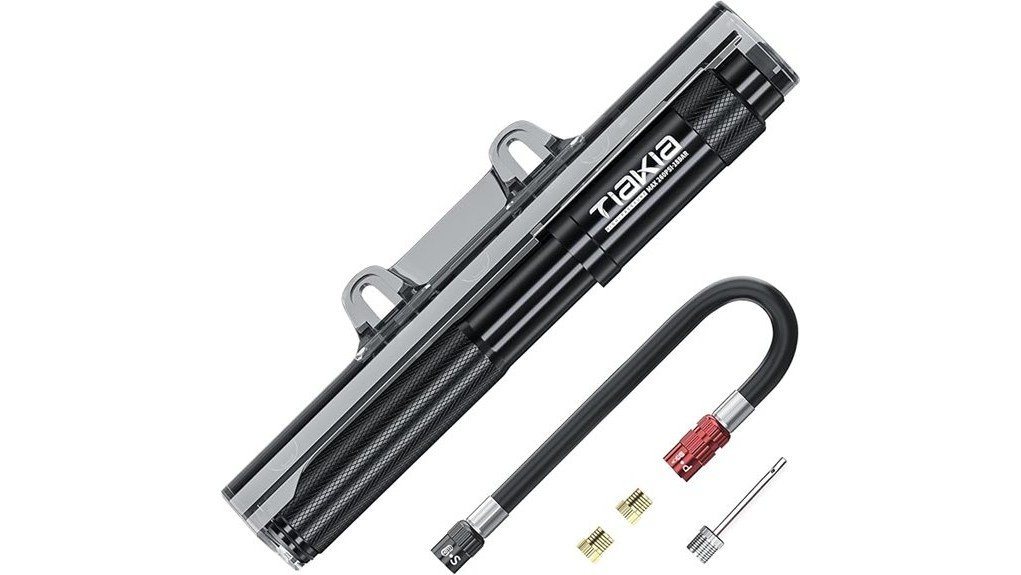
A flat tire can turn a short ride into a long walk, so a backup pump needs to be small enough to carry and capable enough to restore usable pressure. The Tiakia Mini Bike Pump is a 7.8-inch manual pump built around a lightweight aluminum alloy body, a flexible hose, and support for Presta, Schrader, and Woods/Dunlop valves. Its biggest strengths are portability and broad valve compatibility, while its main tradeoffs are the lack of a built-in gauge and the effort required to fill large-volume tires. This review helps you decide whether it belongs on your bike or in your repair kit.
Quick Verdict
Rating: 8.3/10, recommended with caveats
Best For: Commuters, road riders, gravel cyclists, and anyone who wants a compact emergency pump with multi-valve support
Bottom Line: The Tiakia Mini Bike Pump packs a claimed 260 PSI ceiling, about 44 ml of air per stroke, and three-valve compatibility into a 5.3-ounce package. It is a practical roadside backup, but it is not as fast or precise as a floor pump with a gauge.
Tiakia Mini Bike Pump Specs and Compatibility
| Specification | Detail |
|---|---|
| Brand | Tiakia |
| Model | HP SH-0501A |
| Product type | Manual mini bicycle pump |
| Length | 7.8 inches |
| Weight | 5.3 ounces |
| Body material | Anodized aluminum alloy |
| Claimed maximum pressure | Up to 260 PSI |
| Air delivery | About 44 ml per stroke |
| Valve compatibility | Presta, Schrader, and Woods/Dunlop |
| Weather protection | IPX4-rated construction |
| Included carry hardware | Mounting bracket and securing hardware |
| Best use | Roadside tire repair, pressure top-offs, commuting, touring, and selected sports inflatables |
Before You Buy: The 260 PSI figure is a maximum product claim, not a target for normal bicycle tires. This pump has no built-in pressure gauge, so use a separate gauge when exact pressure matters, and always follow the pressure range printed on your tire or rim.
[Products Worth Considering]

Get back on the road fast with this bike frame bag repair kit, featuring a 120 PSI mini pump, a 16 in 1 multi-function tool, and a glueless tire patch kit. The compact triangle bag provides 2L storage for essentials like phone, keys, and tools, while the included rasp and tire levers make quick flat repairs possible. Designed for commuting and trail riding, it supports both Presta and Schrader valves for versatile emergency inflation.

Tiakia’s mini high-pressure frame pump delivers up to 260 PSI for faster, more efficient inflations with an optimized intake volume. It features a double-head valve design compatible with Schrader and Presta, plus a conversion for Donlop, making it versatile for bikes and many inflatables. The lightweight anodized aluminum build includes a mounting bracket for convenient carry, while the flexible high-pressure hose and IPX4 waterproof body support outdoor use.

The TOOLITIN floor bike pump delivers high pressure performance with an easy-to-read gauge so you can dial in the right tire pressure for safer rides. It is compatible with both Presta and Schrader valves and features a stable, durable design for efficient pumping. Suitable for road, MTB, and hybrid tires as well as inflating sports balls and other inflatables, it also includes ball and bladder needles and convenient accessory storage.
What Is the Tiakia Mini Bike Pump?
The Tiakia Mini Bike Pump is a compact hand pump designed to stay with your bike until you need it. Its 7.8-inch body and 5.3-ounce weight make it easier to carry than a floor pump, while the included bracket gives you a frame-mounted option instead of taking up space in a saddle bag.
A detachable flexible hose connects the pump to the valve. That design reduces the amount of twisting force transferred to the valve stem while you pump, which can make roadside inflation easier to control. The hose supports Presta, Schrader, and Woods/Dunlop valves, so the pump can move between common road, hybrid, commuter, gravel, and mountain bike setups.
This is best viewed as an emergency and travel pump. It can restore pressure after a tube repair or provide a top-off before you continue riding, but it does not replace a full-size floor pump for regular home maintenance.
Who Should Buy It?
Best For
- Commuters who want a small pump mounted directly to the bike
- Road, gravel, and touring riders who need higher-pressure capability
- Households with bikes using more than one valve type
Skip If
- You need a built-in gauge for precise pressure readings
- You regularly inflate wide, high-volume tires from completely flat
- You need a pump that can reliably seat stubborn tubeless tire beads
Build Quality and Materials
The aluminum alloy body is the strongest part of the design. It keeps the pump lighter than many steel-bodied options while giving it a firm feel in your hand. The anodized finish is intended to improve resistance to wear and corrosion, which matters when the pump lives on a frame and sees road spray, dust, or sweat.
The listed IPX4 rating means the pump is built to handle splashing water, not submersion. You can carry it during wet rides, but you should still wipe it down and let the hose and connections dry before storage. Dirt around the threaded hose ends can affect the seal, so a quick inspection after muddy rides is worthwhile.
The flexible hose also helps protect the valve stem from side loading. A rigid pump head can move with every stroke, but a hose lets you stabilize the valve connection while moving the pump body separately. That is useful on narrow Presta stems, although you still need to avoid overtightening the threaded connection.
Valve Compatibility and Hose Design
The Tiakia pump supports Presta, Schrader, and Woods/Dunlop valves. Presta valves are common on road and gravel bikes, while Schrader valves appear on many mountain, hybrid, and children’s bikes. Woods/Dunlop compatibility gives the pump added usefulness for bikes that use that valve standard.
The dual-ended hose means you select the correct end for your valve rather than rebuilding the pump head. Screw the hose onto the tire valve until the connection is snug, then attach the other end to the pump body. A secure connection reduces air loss and keeps the hose from loosening during repeated strokes.
Threaded Presta connections require a little care. Make sure a removable valve core is tight before attaching the hose, and unscrew the hose slowly when you finish. This helps reduce the chance of loosening the core during removal.
Pressure and Air Delivery
Tiakia lists a maximum pressure of 260 PSI and air delivery of about 44 ml per stroke. The high pressure rating makes the pump suitable for common bicycle tire pressures, but the number should not be treated as a recommendation to inflate a tire anywhere near 260 PSI. Your tire sidewall, rim guidance, rider weight, tire width, and riding conditions determine the correct range.
Air volume matters as much as maximum pressure. At about 44 ml per stroke, the pump can handle a normal roadside repair, but a compact barrel still requires more strokes than a floor pump. Narrow road tires generally need less air volume than wide mountain bike tires, so the pump feels better suited to road, commuter, and gravel top-offs than repeated full inflation of large tires.
Because there is no integrated gauge, pressure has to be estimated by tire feel or checked with a separate gauge. Tire feel can help you reach a safe ride-home pressure, but it is not accurate enough for riders who tune pressure closely for grip, comfort, or rim protection.
Portability and Mounting
At 7.8 inches long and 5.3 ounces, the pump is compact enough for a jersey pocket, backpack, tool roll, or saddle bag. The included bracket lets you keep it on the bike, which reduces the chance of leaving it at home when you switch bags.
Before mounting, check that your frame has enough clearance around the bottle cage, crank, and front derailleur area. Tighten the bracket evenly and use the retaining strap so the pump cannot bounce out on rough roads. After the first few rides, check the fasteners again because vibration can loosen poorly seated hardware.
A frame-mounted pump collects more grit than one stored in a bag. Inspect the hose threads and valve ends before connecting them to a tire. A small amount of dirt can make the connection harder to thread and may damage soft valve components over time.
How It Performs in Real Use
For Road Bike Pressure Top-Offs
The pump’s compact barrel and high-pressure focus suit narrow road tires that need a moderate pressure increase. The flexible hose gives you room to brace the pump without bending the valve stem. Since there is no gauge, it works best for restoring enough pressure to continue riding, followed by a precise check with a floor pump later.
For Commuting and Flat-Tire Repairs
For commuters, the main benefit is availability. A pump mounted on the frame is ready after you install a spare tube or patch a puncture. The 5.3-ounce weight adds little to a daily setup, and the multi-valve hose is helpful when several bikes in a household use different valve standards.
For Gravel and Mountain Bike Tires
The pump can inflate wider tires, but the job takes more strokes because those tires hold more air. It remains useful as an emergency backup, especially when you only need enough pressure to ride carefully home. Riders who often run large-volume tires may prefer a high-volume mini pump, a compact floor-style pump, or a pump with a switchable high-volume mode.
For Sports Balls and Small Inflatables
The pump can handle compatible sports and inflatable accessories when you use the correct adapter. Keep the small adapters together in a pouch or the provided storage area so they do not disappear in a repair kit. Avoid forcing an adapter into an item that uses a different valve because that can damage both parts.
How to Use It Correctly
- Read the pressure range printed on the tire and confirm the valve type.
- Remove the valve cap. For Presta valves, loosen the small tip and press it briefly to confirm the valve opens.
- Select the correct hose end and screw it onto the valve until snug.
- Attach the opposite end of the hose to the pump body.
- Use full, steady strokes while keeping the hose free from sharp bends.
- Stop periodically to check tire firmness or use a separate pressure gauge.
- Disconnect the hose from the pump body first, then remove it carefully from the tire valve.
- Replace the valve cap and store the hose, adapters, and pump securely.
Pro Tip: Test the pump at home before relying on it during a ride. Practice connecting it to each bike’s valve, confirm the bracket stays tight, and make sure every adapter is in your repair kit.
Compatibility and Safety
Use the pump only with a compatible valve or adapter, and follow the pressure limits printed on the tire, rim, ball, or inflatable item. The pump’s maximum rating does not override the lower limit of the item you are inflating. Overinflation can damage tires, rims, tubes, or sports equipment.
Stop using the pump if the hose is cracked, the threaded ends are damaged, or air leaks from the connection. Do not submerge the pump, even with its IPX4 rating. Keep fingers clear of sliding sections, and allow the pump body to cool if it becomes hot during extended inflation.
This pump is not a dependable tool for seating a stubborn tubeless bead. That task often needs a rapid burst of higher air volume than a small manual pump can provide. It can still add pressure to a tubeless tire after the bead is seated and the valve connection is compatible.
Pros and Cons
Pros
- Compact 7.8-inch body is easy to pack or mount
- Light 5.3-ounce weight adds little bulk to a ride kit
- Supports Presta, Schrader, and Woods/Dunlop valves
- Flexible hose reduces stress on the valve while pumping
- Aluminum alloy body and IPX4-rated construction suit regular carry
Cons
- No built-in pressure gauge
- Wide tires require more time and repeated strokes
- Not the best choice for seating difficult tubeless beads
Is It Worth the Price?
The Tiakia Mini Bike Pump offers strong value for riders who want one compact pump that supports several common valve types. The included bracket, flexible hose, light aluminum body, and listed 44 ml air delivery make it more useful than a basic emergency pump with a single fixed head.
You get the most value if portability and valve versatility matter more than exact pressure readings. It is a smart buy for commuting, touring, or a shared household repair kit. It is not the best fit if you want floor-pump speed, a built-in gauge, or a high-volume tool for frequent mountain bike inflation.
[Products Worth Considering]

The Vibrelli Air Master mini bike pump locks securely to both Presta and Schrader valves, so you can inflate tires without changing adapters. It delivers high-pressure inflation up to 120 PSI for road bikes, MTB, BMX, and kids’ bikes, while staying compact and lightweight for easy carry. A frame mounting bracket with a Velcro strap helps keep the pump firmly in place with no rattles.

This PXZBLG bike repair kit helps you tackle common tire and on-the-ride issues with a compact, ride-ready tool collection. It includes a mini tire pump supporting both Presta and Schrader valves, a 16-in-1 bike multitool, tire levers, glueless patches with a plastic box, plus 4mm and 5mm Allen wrenches. A convenient bike bag stores everything so you can mount it on your road bike or mountain bike for lightweight, portable preparedness.
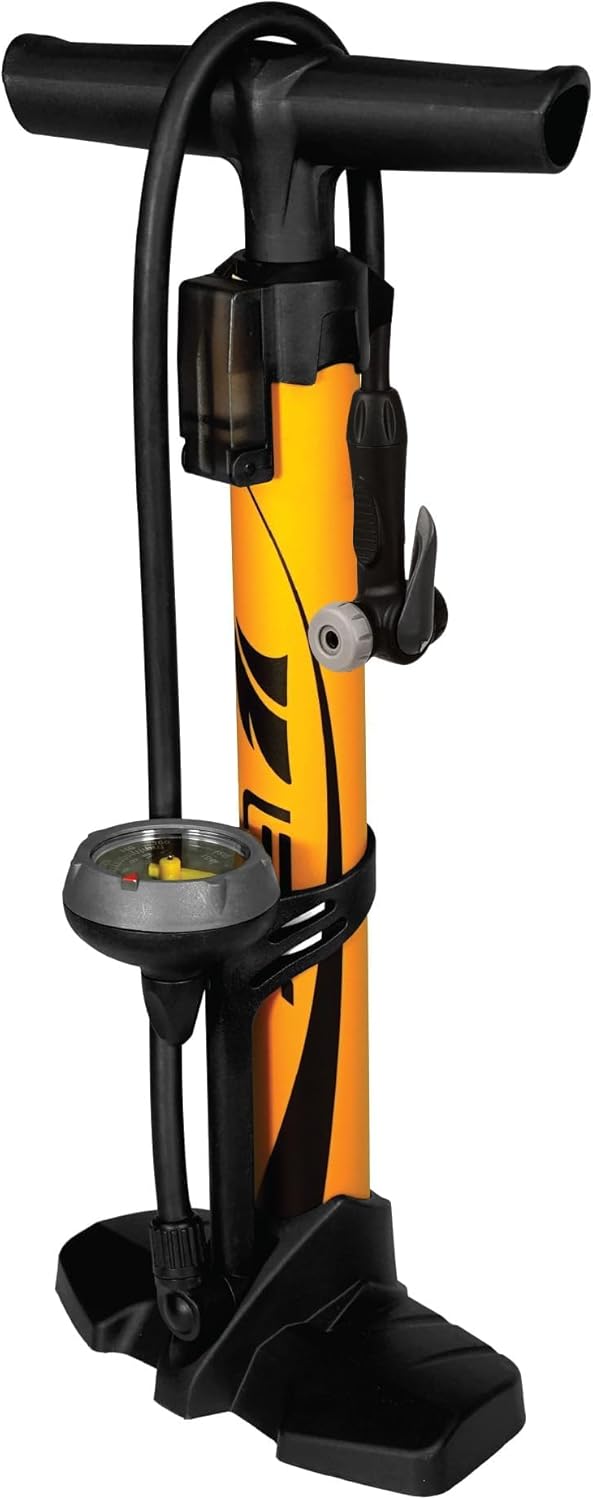
This durable BV floor pump delivers up to 160 PSI for confident inflation of bikes and other high-pressure uses. Its twin valve head lets you quickly switch between Presta and Schrader valves by reversing the components, with no compromise. The ergonomic handle makes pumping comfortable, and the compact size is easy to carry for rides and home storage.
How It Compares to Alternatives
The Topeak Roadie TT Mini is smaller and lighter, but it is designed for Presta valves and has a lower listed maximum pressure. The Lezyne Pressure Drive supports Presta and Schrader valves with a flexible hose, but it does not add Woods/Dunlop compatibility and is rated to a lower maximum pressure.
The Tiakia makes the most sense when you want broad valve support and a frame-mountable pump at a practical value. Choose a gauge-equipped pump when pressure accuracy is your priority, or a high-volume mountain pump when you regularly fill wide tires from very low pressure.
[Products Worth Considering]

A portable bicycle repair bag built for on-the-go maintenance, pairing a scalable mini tire pump with a multi-tool, crank and bone wrenches, tire levers, and self-adhesive glueless patches. The included patch set helps you quickly seal punctures using the integrated prep/rasp step, while the waterproof nylon bag keeps tools organized and easy to access. Ideal for road, mountain, and home bike emergencies, repairs, and routine adjustments.

This LUMITECO 33-inch air release extension hose set is designed to make tire inflating easier with a quick-lock air chuck and an air bleed button for fast deflation. The pack includes adapters for Presta (French/American) plus ball pump needle and additional nozzles for inflating bikes, tires, and everyday inflatables like sports balls and air beds.
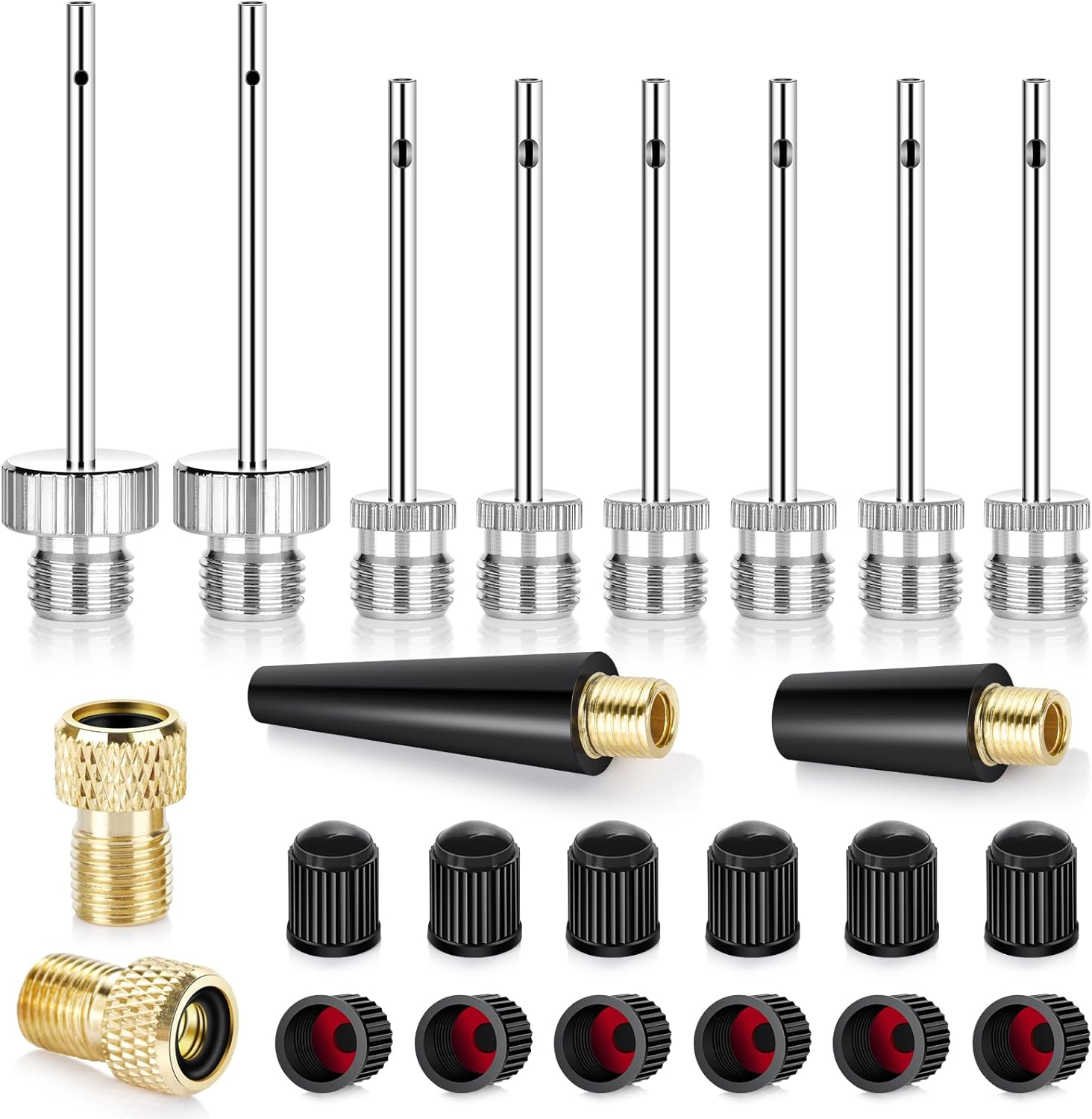
This ball pump needles kit includes brass ball needles for inflating footballs, soccer balls, basketballs, and volleyballs, plus conical nozzles for air mattresses, exercise balls, balloons, and swim rings. It also offers Presta to Schrader valve adapters for easy use with compatible bikes and rideables. The set includes sealed valve caps and a storage case, helping keep your equipment organized and ready to inflate quickly.
Frequently Asked Questions
Does the Tiakia Mini Bike Pump include a pressure gauge?
No built-in pressure gauge is listed. You can use the pump to restore rideable pressure, but a separate gauge or floor pump is better when you need an exact PSI reading.
Which bicycle valves does it support?
The hose supports Presta, Schrader, and Woods/Dunlop valves. Confirm the correct hose end before attaching it, and tighten the connection only until it is secure.
Is 260 PSI useful for normal bike tires?
The 260 PSI figure is the pump’s claimed maximum, not a recommended tire pressure. Inflate only within the range specified by your tire and rim manufacturer.
Can it inflate a completely flat mountain bike tire?
Yes, it can add air to a compatible mountain bike tire, but a wide tire takes more strokes than a narrow road tire. For frequent high-volume inflation, a larger mountain-specific pump will be faster.
Will it seat a tubeless tire bead?
It may add pressure after a tubeless bead is already seated, but it is not designed to deliver the sudden high-volume burst often needed to seat a stubborn bead. A compressor, booster pump, or tubeless inflator is more suitable for that job.
Is the mounting bracket included?
A mounting bracket and securing hardware are listed with the pump. Check your frame clearance and fastener spacing before installation, then use the retaining strap to reduce movement.
How should you clean and store the pump?
Wipe the body and hose with a damp cloth, remove dirt from the threads, and let all parts dry before storage. Inspect the hose and connections for cracks or leaks before a long ride.
Who should skip this pump?
Skip it if you need a built-in gauge, quick inflation of large tires, or a reliable way to seat tubeless beads. A floor pump or larger high-volume mini pump will fit those needs better.
The Bottom Line
The Tiakia Mini Bike Pump is a strong choice for commuters, road riders, gravel cyclists, and households that need one compact pump for several valve types. Its main strengths are low carry weight, a flexible hose, and broad compatibility, while the lack of a gauge and slower large-tire inflation are the main compromises. Skip it if you need floor-pump speed or tubeless bead-seating power.